How we built this comparison
This page combines traveler discussion patterns from Reddit, published price ranges, transit details, and seasonal data to make the Singapore vs Bangkok decision easier to navigate.
- Synthesized traveler opinions from r/singapore, r/Bangkok, r/ThailandTourism, r/solotravel, and r/travel covering the Singapore vs Bangkok debate.
- Verified numeric claims against Numbeo cost-of-living data, official transit authority pricing, and recent traveler reports from 2025–2026.
- Weather data from Open-Meteo monthly averages for both cities.
- All costs quoted in local currency with USD equivalent at current exchange rates (S$1 ≈ $0.74; ฿35.5 ≈ $1).
⚡ The TL;DR Verdict
Singapore wins for first-timers, safety, and polished ease. Bangkok wins on budget, food depth, temples, and raw Southeast Asia energy. Daily budget: Singapore S$150–300 ($110–220) vs Bangkok ฿1,800–4,000 ($50–115).
- Choose Singapore: First time in Asia, prioritizing safety and ease, spending 3–4 days, interested in multicultural food culture, or using it as a transit hub to other destinations.
- Choose Bangkok: Budget travel, temple culture, Thai food obsession, nightlife, longer trips (5+ days), or you've already done Singapore and want raw Southeast Asia chaos.
- Do both: The 2h20m flight is cheap ($30–80 on budget carriers). 3–4 days Singapore + 4–5 days Bangkok is one of the best Southeast Asia intro itineraries you can run.
🇸🇬 Singapore
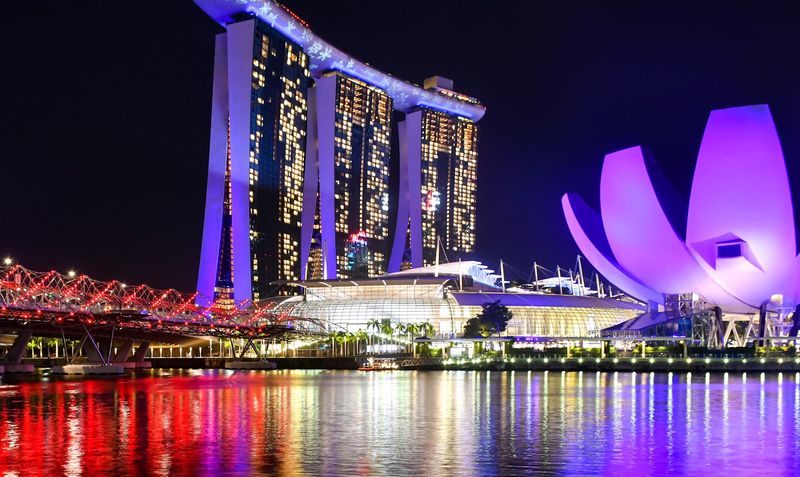
Ultra-clean, English-speaking city-state. Michelin-starred hawker stalls. Marina Bay Sands infinity pool. Best airport in the world. Expensive but worth it for 3–4 days.
🇹🇭 Bangkok
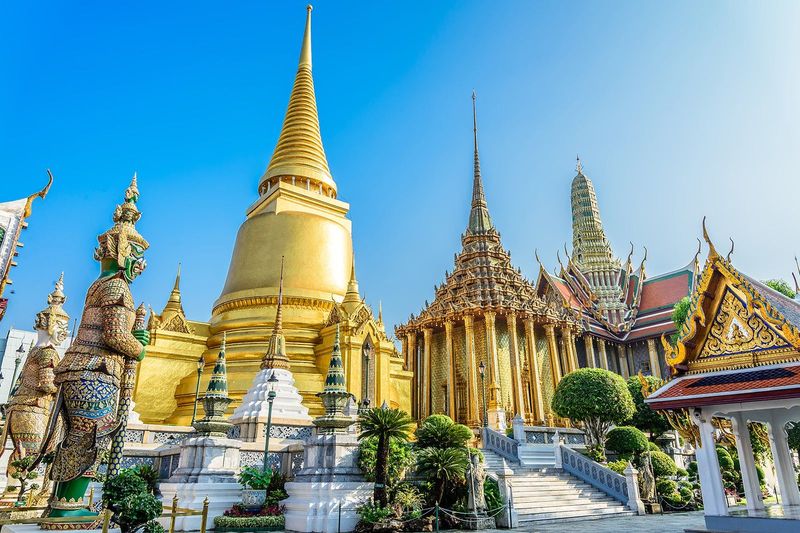
400+ Buddhist temples. Insane street food scene. Budget paradise at $50/day. Sky bars, Khao San Road, Chatuchak Market. Chaotic but electrifying.
Quick Comparison
| Category | 🇸🇬 Singapore | 🇹🇭 Bangkok | Winner |
|---|---|---|---|
| Daily Budget (mid-range) | S$150–300 ($110–220) | ฿1,800–4,000 ($50–115) | Bangkok |
| Budget Hostel | S$35–70/night ($26–52) | ฿350–700/night ($10–20) | Bangkok |
| Mid-range Hotel | S$120–280/night ($88–207) | ฿1,500–4,500/night ($43–130) | Bangkok |
| Street Food Meal | S$3–8 ($2–6) | ฿50–120 ($1.40–3.40) | Bangkok |
| Transit | MRT: S$0.80–2.50/ride | BTS: ฿17–62/ride ($0.48–1.75) | Singapore |
| Safety | One of the world's safest cities | Generally safe; petty crime exists | Singapore |
| Cultural Attractions | Gardens by the Bay, Chinatown, Sentosa | 400+ temples, Grand Palace, floating markets | Bangkok |
| Food Scene | Multicultural hawker stalls, Michelin stars | World-leading Thai street food | Tie |
| Nightlife | Rooftop bars, Clarke Quay, strict laws | Khao San Road, sky bars, world-class clubs | Bangkok |
| Day Trips | Batam (30 min), Johor Bahru (30 min), Bintan (1h) | Ayutthaya (90 min), Kanchanaburi (3h), Thai islands | Bangkok |
| First-timer Ease | Best "intro to Asia" experience | Easy but more chaotic | Singapore |
| Ideal Trip Length | 3–4 days (max 5) | 5–7 days (no upper limit) | Bangkok |
🍜 Food & Dining
Singapore has an argument to make as the most diverse food city in Southeast Asia. A city-state built from Chinese, Malay, and Indian immigrant communities, its hawker centers are UNESCO-recognized and serve some of the world's best-value food. Chicken rice at Tian Tian Hainanese Chicken Rice (Maxwell Food Centre) runs S$5–6 ($3.70–4.45). Char kway teow, laksa, roti prata, biryani, and chili crab sit side by side across Singapore's 100+ hawker centers. Two hawker stalls — Hill Street Tai Hwa Pork Noodle and Hawker Chan — hold Michelin stars. Chili crab at a proper seafood restaurant costs S$50–80 ($37–59) for two, but it's one of the best meals in Asia. See tabiji's Singapore hawker center guide for the best stalls.
Bangkok carries the world record for most Michelin Bib Gourmand restaurants in a single city — over 30 at last count — and that's before you factor in its staggering street food scene. Pad thai costs ฿60–120 ($1.70–3.40) from a roadside wok. Boat noodles: ฿40–60 ($1.10–1.70) per bowl. Mango sticky rice: ฿80–120 ($2.25–3.40). The sheer volume of options — Thai, Chinese, Vietnamese, Indian, Japanese, and international restaurants across every price tier — is overwhelming. Yaowarat (Chinatown) is one of the world's great street food neighborhoods. Check tabiji's best cheap eats in Bangkok and mango sticky rice guide.
"The food scene and restaurants in Bangkok is many times ahead of Singapore.. very good place if you want a vacation [dedicated to eating]." — u/TravelSEA, r/singapore
"Singapore is like Bangkok had a baby with Disneyland. It's clean, super easy to get around on public transit, everyone speaks English and the food is awesome." — r/travel commenter, r/travel
⛩️ Cultural Attractions
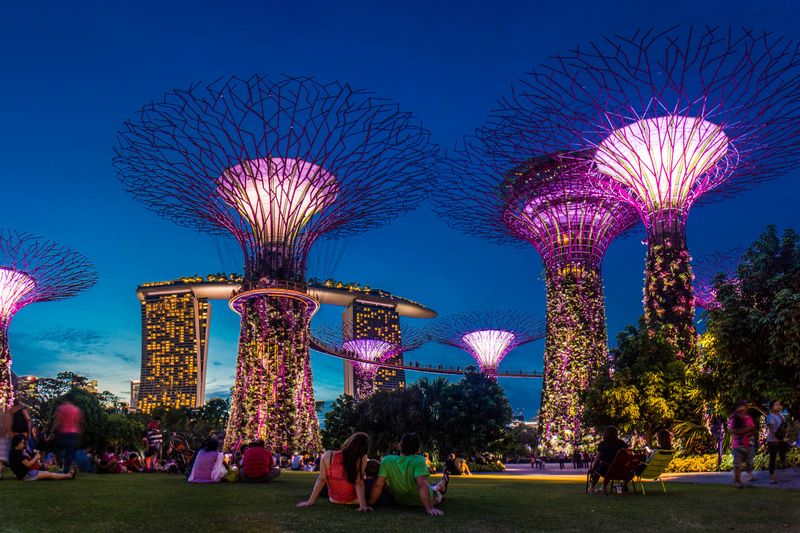
Singapore packs its cultural punch differently than most cities — it's ultra-modern spectacle combined with multicultural heritage neighborhoods. Gardens by the Bay (free to walk, S$20–28/$15–21 for the domes) is a sci-fi fever dream of 18-story supertrees and climate-controlled biomes. Marina Bay Sands SkyPark observation deck costs S$32 ($24) for a jaw-dropping skyline panorama. Culturally, the Chinatown Heritage Centre, Little India's Tekka Market, and Kampong Glam's Arab Street each represent distinct communities. The National Museum and Asian Civilisations Museum are both excellent and largely free. Sentosa Island adds beach clubs and Universal Studios for families.
Bangkok's cultural weight is ancient and overwhelming. The Grand Palace and Wat Phra Kaew (Emerald Buddha Temple) cost ฿500 ($14) entry and justify a full day on their own. Wat Pho (reclining Buddha + massage school, ฿200/$5.65) sits next door. Wat Arun's porcelain-encrusted spires are iconic from the Chao Phraya River. Beyond the temple circuit: Chatuchak Weekend Market (10,000+ stalls, free entry), the Jim Thompson House, the Damnoen Saduak floating market, and the Chinatown/Yaowarat strip all add cultural texture that could fill a week.
"Singapore has some cool things like the Gardens by the Bay, but its very expensive and there's not really enough to keep you occupied for a week since its main attraction is shopping. Bangkok has amazing temples, good nightlife, awesome food, super nice people." — r/travel commenter, r/travel
💰 Cost Comparison
This is where the comparison gets stark. Singapore is one of the most expensive cities in Asia — regularly ranked among the top 5 most expensive cities globally. Bangkok is a budget paradise. The gap is not subtle.
| Expense | 🇸🇬 Singapore | 🇹🇭 Bangkok |
|---|---|---|
| Budget hostel/dorm | S$35–70 ($26–52) | ฿350–700 ($10–20) |
| Mid-range hotel (3-star) | S$120–280 ($88–207) | ฿1,500–4,500 ($42–127) |
| Luxury hotel | S$350–800+ ($259–592+) | ฿5,000–15,000+ ($141–422+) |
| Hawker/street food meal | S$3–8 ($2.20–5.90) | ฿50–120 ($1.40–3.40) |
| Sit-down restaurant meal | S$15–40 ($11–30) | ฿200–600 ($5.65–17) |
| Local beer (bar) | S$10–18 ($7.40–13.30) | ฿80–150 ($2.25–4.25) |
| Grab/taxi ride (5km) | S$12–22 ($8.90–16.30) | ฿80–160 ($2.25–4.50) |
| MRT/BTS single ride | S$0.80–2.50 ($0.59–1.85) | ฿17–62 ($0.48–1.75) |
| Mid-range daily total | S$150–300 ($110–220) | ฿1,800–4,000 ($50–115) |
"Bangkok is about 1/4 the cost of Singapore. However, Singapore would be considered 'safer', as the general infrastructure is better." — u/solotravel_asia, r/travel
🚊 Getting Around
Singapore's MRT is one of the best urban rail systems in the world — clean, punctual, air-conditioned, and comprehensive. Six lines cover virtually every tourist area, airport included (Changi Airport to city center: 30 minutes, S$1.80–2.30/$1.33–1.70). A stored-value EZ-Link card makes multi-trip travel seamless. The island is small enough that most attractions are within 40 minutes of each other by MRT. Grab works perfectly as a backup. The only downside: it's one of the most expensive transit systems in Southeast Asia per ride, though still excellent value by global standards.
Bangkok's transit has improved dramatically in recent years. The BTS Skytrain covers Sukhumvit and Silom corridors (the main tourist belt) efficiently — ฿17–62 ($0.48–1.75) per ride. The MRT Metro extends to Chatuchak, Lumphini, and Old Town. A Rabbit Card (stored-value) spans both networks. Suvarnabhumi Airport Rail Link takes 30 minutes to central Bangkok for ฿45 ($1.25). Grab is widely used and reliable. Taxis are metered and cheap when the meter's running. The city is larger and more sprawling than Singapore — getting from Khao San Road to Sukhumvit by road during rush hour is painful; rail routing is smarter.
"Uh, no idea why people are treating Bangkok as some 'advanced' destination. It is one of the easiest cities to travel in Asia — fairly safe, English is widely spoken, the metro system covers most popular areas, Grab is very easy and convenient." — r/travel commenter, r/travel
🌤️ Best Time to Visit
Both cities are equatorial and hot year-round — high humidity is the default. But they have different rainfall patterns.
Singapore best months: February through April is Singapore's driest, sunniest period — temperatures of 25–34°C (77–93°F), minimal rain. December–January can be wet (northeast monsoon), though showers are typically short. Singapore doesn't really have a bad time to visit — its attractions are mostly indoor or shaded, and rain is rarely all-day. Chinese New Year (January/February) adds festive atmosphere to Chinatown. The Formula 1 Singapore Grand Prix (September) draws huge crowds and inflates hotel prices significantly.
Bangkok best months: November through February is peak season — cooler (24–32°C/75–90°F), low humidity, barely any rain. March–May is brutally hot (up to 38°C/100°F). June–October is monsoon season with heavy afternoon rains, but hotels are cheaper and temple crowds thinner. Songkran (Thai New Year, April 13–15) is the world's largest water fight — cities grind to a halt in a good way. Loy Krathong (November) is magical on the Chao Phraya.
"Singapore is pleasant pretty much year-round but gets crowded and expensive during holidays and the Grand Prix. Bangkok November–February is peak but for good reason — the weather is perfect." — Community thread, r/travel
🏨 Where to Stay
Singapore neighborhoods to know: Marina Bay/City Hall is central, walkable to the main sights, but hotels are expensive (S$200–400+/night). Bugis/Little India is excellent mid-range territory — great food, easy MRT access, more budget options. Chinatown offers character and cheaper eats. Orchard Road is the shopping district — convenient but soulless. Kampong Glam (Arab Street) is the most atmospheric neighborhood for boutique hotels and local cafes. For budget, the Little India/Lavender cluster around S$50–90/night for decent guesthouses.
Bangkok neighborhoods to know: Sukhumvit is the expat hub — BTS-connected, hundreds of restaurants and bars, excellent mid-range and luxury hotels. Silom/Sathorn is the business district with world-class rooftop bars. Ari is the local, neighborhood-feel option. Old Town/Rattanakosin places you near the Grand Palace and Wat Pho — convenient for temple visits, fewer transit options. Khao San Road is budget backpacker central — loud and sociable. Chinatown/Yaowarat is for food obsessives who don't mind basic rooms.
🍹 Nightlife & Entertainment
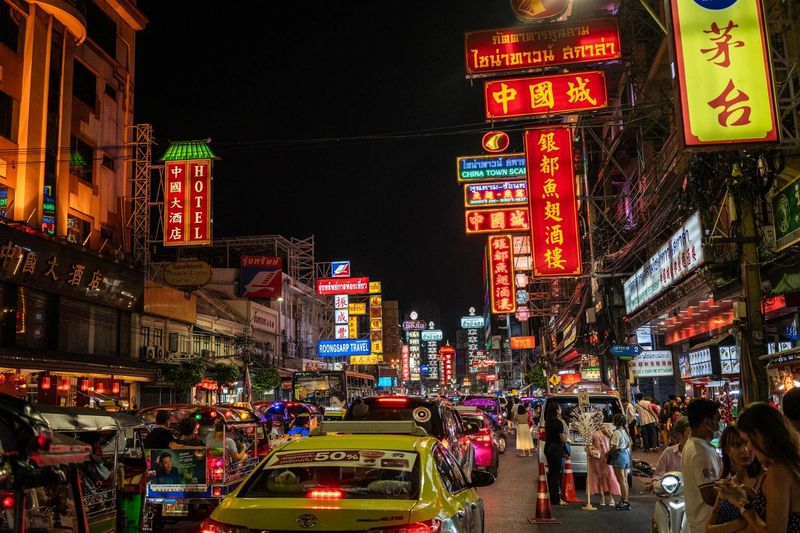
Bangkok's nightlife is one of its defining strengths. Khao San Road is backpacker central — fluorescent, cheap, chaotic, always full. Sukhumvit's sois (streets) pack rooftop bars, international clubs, and live music venues. RCA (Royal City Avenue) is the local club district with massive venues. The sky bar scene is world-famous: Vertigo at Banyan Tree, Sirocco at Lebua (used in "The Hangover Part II"), and Sugar Ray at Hotel Indigo all offer cinematic Bangkok skyline views. Check tabiji's Bangkok rooftop bars guide and rooftop pool guide.
Singapore's nightlife is good but hemmed in by its laws (last orders at 10:30pm for alcohol sales in most public areas under the Night Spot Policy) and prices. Clarke Quay is the riverfront bar district — fun, photogenic, but expensive (S$15–20/$11–15 for a cocktail). Rooftop bars at Marina Bay Sands and 1-Altitude are spectacular but pricey. The club scene at Zouk and Marquee is legitimate. Kampong Glam has craft cocktail bars in restored shophouses. Singapore doesn't have Bangkok's raw energy, but the after-dark atmosphere around Marina Bay is genuinely beautiful.
"Singapore is good if you want status and stability. Thailand is good if you prefer a bit more chaos and fun. Both are good paths, but they appeal to different kinds of people." — u/SEA_expat_life, r/Thailand
🧳 Day Trips
From Singapore: Singapore's day trips lean regional. Johor Bahru, Malaysia (30 minutes by taxi across the Causeway) is cheap shopping and Malaysian food at Bangkok-ish prices. Batam, Indonesia (30-minute ferry, S$35 round trip/$26) offers cheaper seafood and local markets. Bintan, Indonesia (1-hour ferry, S$50–80/$37–59) has beach resorts. Within Singapore itself, Pulau Ubin island gives a glimpse of old kampung life. The problem: none of these day trips are as compelling as what Bangkok offers. Melaka is the more interesting Malaysia option, but it's a 3-hour bus ride.
From Bangkok: Bangkok's day trip circuit is extraordinary. Ayutthaya — Thailand's ancient capital (1350–1767 AD), UNESCO World Heritage site, 80km north — is a 90-minute train ride for ฿20–50 ($0.55–1.40), one of the cheapest significant day trips anywhere in Asia. Kanchanaburi and the Bridge on the River Kwai (3h by bus). Damnoen Saduak floating market (1.5h). Koh Samet (3.5h + ferry) for a quick beach fix. Bangkok also works as a base for 2–3 day extensions to Chiang Mai, Pai, or Thai islands.
"I honestly don't feel like 7 days is enough for Thailand, and I think 7 days in Singapore is too long. If you're 7 days, I'd do 3 in Singapore and hop over to Malaysia for 4 days." — r/travel commenter, r/travel
🛡️ Safety
Singapore is one of the safest cities on earth — routinely ranking top 5 globally. Strict laws (including famously strict drug penalties, no jaywalking fines, and low tolerance for petty crime) create a city where violent crime is rare enough to be headline news. Walking alone at 2am in any neighborhood is generally fine. The biggest risk is being fined for minor infractions (S$500 for jaywalking, S$1,000 for littering). Singapore has a rep for being a "fine city in every sense."
Bangkok is safe by Southeast Asian standards but requires more awareness. The BTS and MRT areas are generally well-patrolled. Scams are the main risk: the gem scam (friendly stranger takes you to an "exclusive" gem shop), tuk-tuk to closed attraction (driver offers to take you somewhere, attraction is "closed," he has a cousin with a shop), and overcharging taxis all target tourists. Petty theft in crowded areas exists. The infamous Khao San Road late-night scene can get rowdy. Solo female travelers generally feel safe but use the same street awareness you'd apply in any major city.
🔀 Why Not Both?
Singapore and Bangkok pair beautifully in a single Southeast Asia trip. The flight between them (Changi → Suvarnabhumi or Don Mueang) takes about 2 hours 20 minutes, and budget carriers like Scoot, AirAsia, and Thai Lion Air routinely sell one-way fares for $30–80 USD. A classic first-timer's Southeast Asia week: fly into Singapore (3 nights), fly to Bangkok (4 nights), fly home from Bangkok — or continue to Thai islands.
Alternatively: use Singapore as an arrival hub (Changi is magnificent) and a soft landing in Asia, then let Bangkok be where you actually travel. Compare: Bangkok vs Ho Chi Minh City if you're considering adding Vietnam. Also see Hong Kong vs Singapore and Tokyo vs Singapore for other city-pairing decisions. For Thai island planning from Bangkok, check tabiji's Bali vs Thailand comparison.
🎯 The Decision Framework
If you're still on the fence, here's the clearest breakdown of who each city serves best:
🇸🇬 Choose Singapore if...
- This is your first time in Asia
- Safety and ease of navigation are top priorities
- You want multicultural food in one hawker center
- Your trip is 3–4 days only
- You're using it as a transit hub to Bali, Borneo, or Australia
- Gardens by the Bay and Marina Bay Sands are bucket-list items
- English-only comfort zone is non-negotiable
- Budget is $150+/day and you want premium experiences
🇹🇭 Choose Bangkok if...
- Budget travel is your priority ($50–100/day is doable)
- Thai food, temples, and culture are the draw
- You want 5+ days in a single destination
- Nightlife and sky bars matter
- You plan to add Thai island or Chiang Mai extensions
- You've already done Singapore and want more raw Southeast Asia
- Ayutthaya day trips appeal to you
- Raw, chaotic city energy energizes rather than stresses you
❓ Frequently Asked Questions
Is Singapore or Bangkok cheaper?
Bangkok is dramatically cheaper — roughly 3–4x for comparable travel styles. A mid-range day in Bangkok runs $50–115 USD vs Singapore's $110–220. Budget accommodation starts around $10–20/night in Bangkok vs $26–52 in Singapore. Reddit travelers consistently quote Bangkok as "about 1/4 the cost of Singapore."
How long do you need in Singapore vs Bangkok?
Most Reddit travelers agree 3–4 days is ideal for Singapore — it's small and 7 days feels like overkill unless you're using it as a base. Bangkok needs at least 4–5 days to scratch the surface, and a week goes by fast. The city has endless neighborhoods, day trips, and food to explore.
Which is better for first-time visitors to Southeast Asia?
Singapore is the classic first-timer recommendation. It's English-speaking, clean, safe, and has world-class transit. Bangkok is more chaotic but still very accessible — the BTS Skytrain covers tourist areas, Grab works perfectly, and English is widely spoken. Singapore eases you in; Bangkok is the more rewarding but slightly more intense option.
Is Singapore or Bangkok better for food?
Both are world-class food cities but very different. Singapore's hawker centers offer UNESCO-recognized multicultural variety (Chinese, Malay, Indian) at $2–6/meal. Bangkok has more street food volume, 30+ Michelin Bib Gourmand spots, and is significantly cheaper. Singaporeans visit Bangkok frequently specifically for the food. Reddit verdict: Bangkok wins on price and Thai food depth; Singapore wins on multicultural diversity.
How do you get from Singapore to Bangkok?
Flying is the only practical option. Singapore (Changi) to Bangkok (Suvarnabhumi or Don Mueang) takes about 2 hours 20 minutes. Budget carriers like Scoot, AirAsia, and Thai Lion Air offer fares from $30–100 USD one way. Changi Airport is consistently rated the world's best — even the transit experience is worth the trip.
Is Bangkok safe for solo female travelers?
Both cities are generally safe for solo female travelers. Singapore has some of the lowest crime rates in the world. Bangkok is safe overall but requires more street awareness — scams and petty theft exist. Stick to well-lit areas and use Grab instead of random taxis. Reddit's r/solotravel consistently rates Bangkok as accessible for first-time solo female travelers.
Should I visit Singapore or Bangkok first?
Start with Singapore if this is your first time in Asia — it's the gentlest entry point and Changi Airport is a magnificent gateway. Start with Bangkok if you're experienced or budget-focused. For a combined trip, many travelers fly into Singapore (3 nights), then Bangkok (4–5 nights), then continue to Thai islands or fly home.
Can you do a day trip from Singapore to Bangkok?
Not practically. The 2h20m flight makes day trips impractical. But many travelers do a 3–4 day Singapore stopover en route to Bangkok or Thai islands, which works well. Changi offers free layover city tours for 5.5h+ transits, making even a short stop worthwhile.
Ready to plan your Southeast Asia trip?
Get a free custom itinerary for Singapore, Bangkok, or both — built from real traveler insights, not generic templates.
🎟️ Book Tours & Experiences
Hand-picked tours and activities for both destinations — book with free cancellation
Experiences via Viator — free cancellation on most tours