How we built this comparison
This page combines traveler discussion patterns, published price ranges, flight schedules, and seasonal data to help you decide between St. Lucia and Martinique.
- Reviewed 50+ Reddit threads from r/travel, r/solotravel, r/StLucia, r/Martinique, and r/Caribbean.
- Verified costs and logistics against current booking platforms (Kayak, Expedia, Google Flights) and local tourism sites.
- Cross-referenced seasonal patterns and weather data from NOAA and local meteorological services to ensure accuracy.
⚡ The TL;DR Verdict
For those craving dramatic scenery, iconic luxury resorts, and a more classic Caribbean 'limin'' vibe, St. Lucia is your pick, budget anywhere from $150-400+ USD daily. If you prefer a sophisticated French flair, exceptional cuisine, and a more self-sufficient exploration, Martinique calls, expecting a daily budget of €120-€350 ($130-380+ USD).
- Choose St. Lucia: Choose St. Lucia if you're a couple seeking romance amidst breathtaking volcanic peaks, honeymooners, or adventurers looking for iconic hikes and luxury all-inclusive stays. It's also great for those who prefer English as the primary language.
- Choose Martinique: Opt for Martinique if you appreciate a blend of French sophistication with Caribbean charm, are a foodie seeking culinary delights, or enjoy independent exploration via rental car. It's perfect for travelers who speak some French and desire a slightly less tourist-centric experience.
- Choose Both: While distinct, both can be combined for a longer trip (10-14 days minimum) if you're keen to experience both the English-speaking Windward Islands and a French overseas department. Consider a short flight or ferry, though travel logistics can eat into time.
Quick Comparison
| Category | St. Lucia | Martinique | Winner |
|---|---|---|---|
| Nature & Adventure | Iconic Pitons, lush rainforests, volcanic mud baths, challenging hikes. | Mont Pelée volcano, Jardin de Balata, tropical forests, diverse marine parks. | St. Lucia |
| Beaches | Volcanic black sand, golden coves, iconic Piton backdrops. | Pristine white sand, calm turquoise waters, well-developed facilities. | St. Lucia |
| Food & Dining | Hearty Creole, fresh seafood, fine dining at resorts. | Sophisticated French-Creole fusion, boulangeries, rum distilleries, Michelin-level options. | Martinique |
| Culture & History | English-speaking, vibrant local markets, fishing villages, Carnival. | Strong French identity, historic plantations, rum distilleries, distinct architecture, Creole language. | Martinique |
| Costs & Budget | Can be done on a budget; luxury resorts are expensive; local transport is affordable. | Generally more expensive due to Euro pricing; rental cars are essential; dining is pricey. | St. Lucia |
| Accommodation | World-famous luxury resorts, romantic boutique hotels, all-inclusive options. | Charming gites, boutique hotels, rental villas, fewer large all-inclusives. | St. Lucia |
| Nightlife | Lively street parties, resort entertainment, Rodney Bay scene. | Sophisticated bars, live music, dance clubs in Fort-de-France, more relaxed vibe elsewhere. | Martinique |
| Getting There & Flights | Major international airport (UVF), good connections from North America and UK. | International airport (FDF), direct flights from France, decent North American connections. | Tie |
| Getting Around | Winding, narrow roads; left-hand drive; taxis are prevalent but pricey; local minivans. | Well-maintained roads; right-hand drive (European standard); rental car recommended; some public bus routes. | Martinique |
| Safety & Language | English is official, general safety with common sense, tourist areas are monitored. | French is official, general safety with common sense, less English spoken outside tourist hubs. | Tie |
⛰️ Nature & Adventure
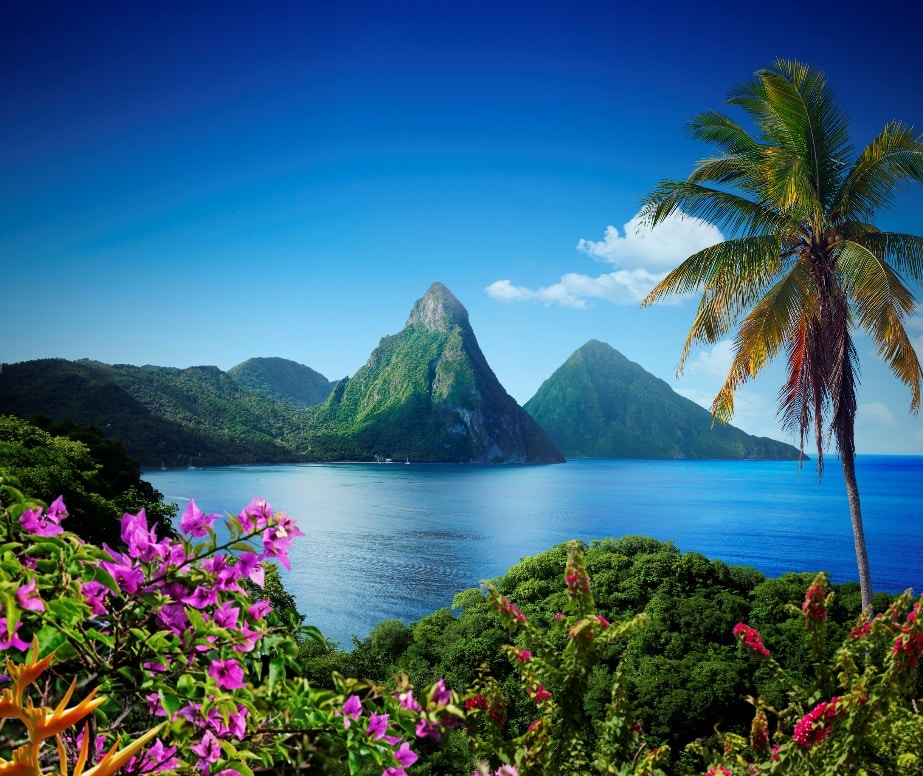
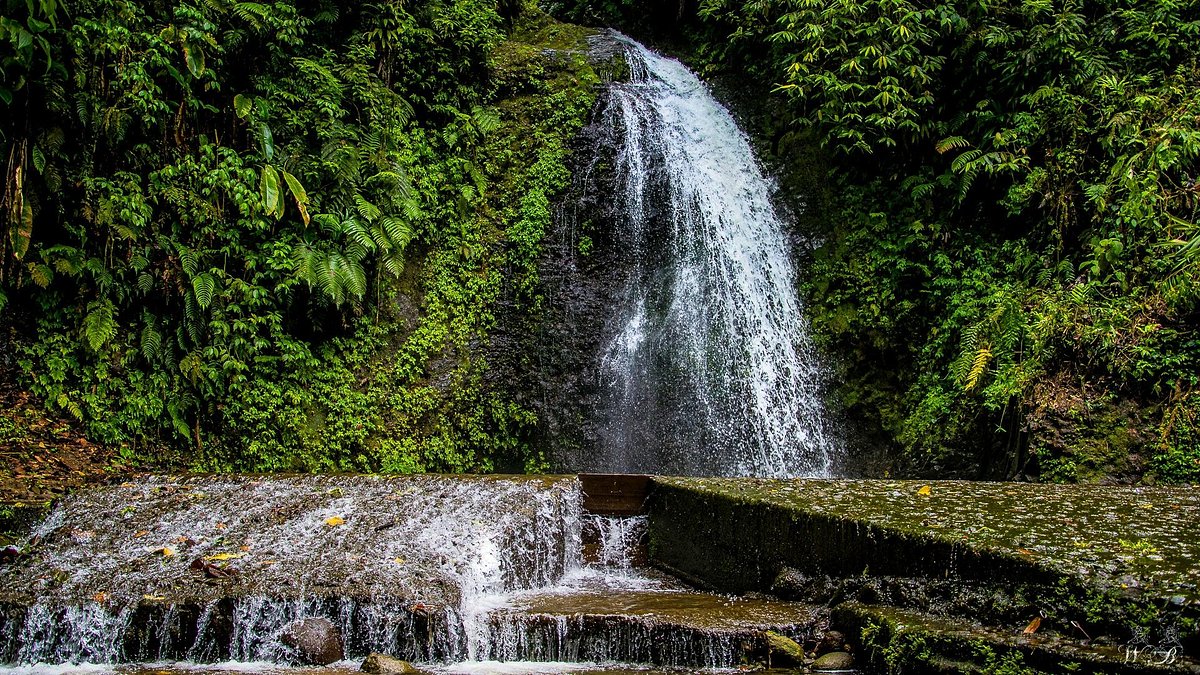
St. Lucia takes the crown for sheer dramatic natural beauty and accessibility to iconic adventures. The twin volcanic peaks of Gros Piton and Petit Piton offer unparalleled hiking (Gros Piton requires a guide, typically EC$100-150/$37-55 USD). You can literally drive into a volcano at Sulphur Springs, experiencing mud baths and hot springs for about EC$10 ($4 USD) entry. Rainforest ziplining (e.g., Treetop Adventure Park, $75-90 USD) and waterfall rappelling are readily available. Martinique counters with the formidable Mont Pelée, offering challenging hikes up its slopes, and the stunning Jardin de Balata, a botanical garden (entry €14/$15 USD) that's a marvel. While beautiful, Martinique's natural highlights feel a bit more spread out and less 'in-your-face' dramatic than St. Lucia's concentrated volcanic wonders. "Honestly, the hike up Gros Piton nearly killed me but the view from the top of Sugar Beach was so worth every sore muscle." The access to world-class snorkeling/diving around the Pitons, especially at Anse Chastanet and Anse Cochon, also gives St. Lucia an edge.
Winner takeaway
- Winner: St. Lucia
- Why: St. Lucia's iconic Pitons and accessible volcanic experiences offer more immediate and dramatic adventure opportunities.
- Who this matters for: Hikers, photographers, adventure seekers, and those who want easily accessible natural wonders.
🏖️ Beaches
While both islands boast stunning coastlines, St. Lucia's beaches, particularly those framed by the majestic Pitons, offer a unique, postcard-perfect experience. Sugar Beach (formerly Jalousie Beach), nestled directly between Gros and Petit Piton, is arguably one of the most beautiful beaches in the world, offering incredible snorkeling and views. Anse Chastanet and Anse Mamin provide a mix of volcanic black and golden sands with excellent reefs. Many beaches are public access, even those fronting luxury resorts, though getting to some can be an adventure. Martinique, on the other hand, is renowned for its picture-perfect white-sand beaches, particularly in the south. Les Salines, near Sainte-Anne, is consistently rated among the Caribbean's best for its powdery sand and calm, shallow waters, perfect for families. Diamant Beach is expansive and beautiful, offering views of Diamond Rock. While Martinique's beaches are incredibly beautiful and often less crowded than some St. Lucian spots, they generally lack the dramatic, iconic backdrops that make St. Lucia's so special. "Sugar Beach just hits different with those Pitons right there. Felt like I was in a movie."
Winner takeaway
- Winner: St. Lucia
- Why: St. Lucia's beaches, particularly Sugar Beach and Anse Chastanet, offer iconic, dramatic scenery unmatched by Martinique.
- Who this matters for: Travelers seeking dramatic backdrops for photos, honeymooners, and snorkelers/divers.
🍽️ Food & Dining
Martinique is a culinary paradise, blending classic French techniques with fresh Caribbean ingredients, making it a clear winner for foodies. You'll find genuine boulangeries and patisseries even in smaller towns, offering croissants and baguettes that rival Paris. Restaurants like Le Zandoli at La Suite Villa or Ti Sable in Anses d'Arlet (main courses €25-45 / $27-49 USD) offer sophisticated dining experiences. The local 'bokit' (fried bread sandwich) and 'accras de morue' (cod fritters) are street food staples. St. Lucia's cuisine is delicious and authentic, focusing on fresh seafood, hearty Creole stews, and 'saltfish and provisions.' Resorts like Jade Mountain's Dasheene Restaurant ($80-150 USD per person for dinner) offer exquisite fine dining, but outside of these, the dining scene is generally more casual and traditional. While you can find great local spots like Martha's Tables near Soufriere (main courses EC$35-60 / $13-22 USD), Martinique's overall culinary landscape, from casual bistros to high-end establishments, is simply more refined and diverse. "The food in Martinique blew me away. Every meal was incredible, even the random roadside stops for accras."
Winner takeaway
- Winner: Martinique
- Why: Martinique's deep French influence elevates its culinary scene, offering a sophisticated and diverse French-Creole fusion.
- Who this matters for: Foodies, gourmands, travelers who prioritize dining experiences, and those who appreciate French cuisine.
🏛️ Culture & History
Martinique’s identity as an overseas department of France gives it a distinctive cultural edge. Fort-de-France, the capital, boasts impressive colonial architecture, like the Schoelcher Library and St. Louis Cathedral, evoking a sense of European grandeur in the Caribbean. The island is dotted with historic rum distilleries (e.g., Habitation Clément, entry €13/$14 USD) where you can learn about its agricultural past and sample world-class agricole rum. The blend of French sophistication with African and Creole heritage is palpable in its art, music, and daily life. St. Lucia offers a vibrant English-speaking Creole culture, evident in its bustling Castries Market (especially on Saturdays), lively fishing villages like Anse La Raye and Dennery, and exuberant Carnival celebrations. While rich, St. Lucia's historical sites are less grand and preserved compared to Martinique's. The French influence in St. Lucia is more of a historical layer than a current, living identity. "Martinique felt like a mini-France in the Caribbean, but with way better weather and rum. The history at Habitation Clément was fascinating." Both islands have a strong Creole heritage, but Martinique's unique blend truly stands out.
Winner takeaway
- Winner: Martinique
- Why: Martinique's direct ties to France provide a more pronounced and preserved cultural and historical identity.
- Who this matters for: History buffs, architecture enthusiasts, rum connoisseurs, and those interested in European-Caribbean cultural fusion.
💰 Costs & Budget
St. Lucia, while home to ultra-luxury resorts like Jade Mountain where rooms can exceed $1500-2000 USD/night, offers more flexibility for budget travelers outside these enclaves. Guesthouses and local apartments can be found for $80-150 USD/night. Eating local at 'cook shops' or street vendors (e.g., Friday night Gros Islet 'Jump Up') can get you a meal for EC$25-40 ($9-15 USD). A taxi from UVF to Soufriere is around EC$100-120 ($37-45 USD). Martinique, being part of France, operates on the Euro, which generally means higher prices for everything from groceries to gasoline (€1.80-2.00/liter, ~$7.50-8.50/gallon) and dining. A basic meal at a casual restaurant starts at €15-25 ($16-27 USD), with nicer spots easily hitting €30-50 ($32-55 USD) for a main. Budget accommodation (gites, B&Bs) typically starts around €80-120 ($88-130 USD) per night. Car rental is almost a necessity, adding €30-50 ($32-55 USD) per day. "St. Lucia was surprisingly affordable if you ate local and stayed away from the resort areas. Martinique felt like Europe prices, which stung a bit." For a similar experience level, Martinique will often nudge your daily spend higher.
Winner takeaway
- Winner: St. Lucia
- Why: St. Lucia offers more opportunities for budget-conscious travel, particularly for local food and accommodation outside of high-end resorts.
- Who this matters for: Budget travelers, backpackers, families on a tighter budget, and those who prefer local experiences over luxury dining.
🏨 Accommodation
St. Lucia is synonymous with iconic luxury and romance, boasting some of the Caribbean's most renowned resorts. Jade Mountain, Ladera Resort, and Sugar Beach, A Viceroy Resort (rooms often $800-2000+ USD/night) are frequently lauded as top honeymoon destinations, offering infinity pools with Piton views and unparalleled service. The island also has a strong presence of all-inclusive resorts, including multiple Sandals properties (typically $400-800+ USD/night per couple), making vacation planning seamless for many. Martinique offers a different, more subdued accommodation scene. You'll find charming 'gites' (vacation rentals), boutique hotels, and villas (e.g., Hôtel Plein Soleil or Hotel Bakoua, €150-350/$165-380 USD/night) that cater to a clientele preferring independence and local immersion. Large, sprawling all-inclusive resorts are less common here, aligning with its more European travel style. While Martinique has lovely places, it doesn't quite hit the 'wow' factor or sheer volume of world-class romantic luxury that St. Lucia commands. "If you're going for a honeymoon, St. Lucia's resorts are just next level. Worth splurging for those Piton views." For variety and specific luxury niches, St. Lucia comes out ahead.
Winner takeaway
- Winner: St. Lucia
- Why: St. Lucia excels in offering a higher concentration of world-class luxury resorts and honeymoon-centric accommodations.
- Who this matters for: Honeymooners, couples seeking romantic getaways, luxury travelers, and those who prefer all-inclusive resort experiences.
🎉 Nightlife
Martinique, particularly its capital Fort-de-France, offers a more diverse and sophisticated nightlife scene than St. Lucia. You'll find a range of chic bars, lounges, and dance clubs that stay open late, catering to a local crowd with a European flair. Live jazz, zouk, and reggae music can be found in various venues. Outside the capital, towns like Sainte-Anne and Les Trois-Îlets have more relaxed beach bars and restaurants with occasional live music. St. Lucia's nightlife is largely centered around Rodney Bay in the north, known for its concentration of bars, pubs (e.g., The Jump Up, a famous Friday night street party in Gros Islet), and nightclubs. While vibrant and fun, it can feel a bit more tourist-focused and less varied than Martinique's offerings. Many resorts in St. Lucia also provide their own evening entertainment, which can be convenient but also keeps guests on property. "We hit up a few bars in Fort-de-France and it was a proper good time, not just tourist traps. Felt very authentic." For those seeking more options beyond resort bars and street parties, Martinique's urban and more varied scene takes the win.
Winner takeaway
- Winner: Martinique
- Why: Martinique provides a broader and more sophisticated range of nightlife options, especially in its capital, Fort-de-France.
- Who this matters for: Party-goers, urban explorers, those seeking diverse bar scenes and live music beyond resort entertainment.
✈️ Getting There & Flights
Both islands have international airports that are well-connected, albeit with slightly different primary markets. St. Lucia's Hewanorra International Airport (UVF) sees direct flights from major North American hubs like Miami (MIA - ~3.5 hrs), New York (JFK/EWR - ~4.5-5 hrs), Atlanta (ATL - ~4.5 hrs), Toronto (YYZ - ~5 hrs), and several UK cities (e.g., London Gatwick LGW - ~8 hrs). Martinique Aimé Césaire International Airport (FDF) has excellent direct connections from mainland France (Paris CDG/ORY - ~8 hrs) and also offers direct flights from cities like Miami (MIA - ~3.5 hrs), New York (JFK - ~4.5-5 hrs), and Montreal (YUL - ~5 hrs). For North American travelers, flight times and frequency are quite comparable. European travelers, especially from France, will find Martinique easier and often cheaper to reach due to it being a French department. "From the US, honestly, flights to both were pretty similar, just depended on the airline deals at the time." Neither island significantly outshines the other in terms of convenience for a general international audience, making this a tie.
Winner takeaway
- Winner: Tie
- Why: Both islands offer comparable direct flight options from their primary markets, balancing out overall accessibility.
- Who this matters for: Travelers from North America (equal access), travelers from France (Martinique slight edge), travelers from UK (St. Lucia slight edge).
🚗 Getting Around
Martinique boasts significantly better infrastructure for self-driving, making it the winner for independent exploration. Roads are generally well-maintained and clearly signposted, similar to mainland France, and driving is on the right side. Renting a car (from €30-50/$32-55 USD per day) is highly recommended and makes exploring the island's diverse regions a breeze. Public transport exists but is less comprehensive than a rental. St. Lucia, while navigable, has more challenging roads – they are often steep, winding, and narrow, and you drive on the left side of the road. While rental cars are available (around $40-60 USD per day), many tourists opt for taxis, which can quickly add up (e.g., UVF to Rodney Bay ~$80-90 USD), or rely on resort shuttles. Local mini-buses (EC$2-10/$0.75-3.75 USD for short routes) are affordable but might not serve all tourist spots. "Renting a car in Martinique was so easy, roads were decent. St. Lucia felt like I was white-knuckling it the whole time on those mountain roads, especially driving on the left!" For ease of movement and independent exploration, Martinique is superior.
Winner takeaway
- Winner: Martinique
- Why: Martinique's superior road infrastructure and right-hand drive make self-driving significantly easier and more enjoyable.
- Who this matters for: Independent travelers, those who prefer to explore at their own pace, and drivers accustomed to European road standards.
🗣️ Safety & Language
Both St. Lucia and Martinique are generally safe destinations for tourists, with common-sense precautions applicable to both. Petty crime, like pickpocketing or bag snatching, can occur, especially in busy areas or at night, but violent crime against tourists is rare. Tourists should avoid walking alone at night in unlit areas and secure valuables. Where they differ significantly is language. English is the official language of St. Lucia, making communication straightforward for most North American and UK travelers. While Kwéyòl (a French-based Creole) is widely spoken, English is universal in tourist interactions. Martinique's official language is French, which can present a barrier for non-French speakers, particularly outside of major tourist hubs like Fort-de-France or Les Trois-Îlets. Many locals in the tourism industry speak some English, but knowing basic French phrases will greatly enhance your experience. "I got by in Martinique with broken French and a lot of pointing, but it would have been way easier if I'd practiced more. St. Lucia was a breeze." For overall safety, they are comparable, but the language difference creates a split in ease of travel. This makes it a tie, as the 'winner' depends on the traveler's language proficiency.
Winner takeaway
- Winner: Tie
- Why: Both islands offer comparable levels of safety; the language difference creates a preference based on traveler's proficiency.
- Who this matters for: English speakers (St. Lucia), French speakers (Martinique), or those comfortable with language barriers (Tie).
❓ Frequently Asked Questions
Which island is better for a honeymoon?
St. Lucia is undeniably the honeymoon capital, famous for its romantic resorts like Jade Mountain and Sugar Beach, offering unparalleled Piton views and bespoke experiences. Martinique, while beautiful, leans more towards sophisticated exploration than a dedicated honeymoon vibe, but still offers charming boutique stays.
Is there a significant language barrier in Martinique?
Yes, French is the official language in Martinique. While many in the tourism sector speak some English, it's not universally spoken, especially outside of main towns. Knowing basic French phrases will greatly enhance your experience and interactions with locals.
Can I island hop between St. Lucia and Martinique?
Yes, you can island hop. There are generally direct ferry services (e.g., Express des Îles) between the two islands, taking about 1.5-2 hours. Flights are also an option but often require a connection through another hub like Barbados, making the ferry a more direct choice for short distances.
Which island is better for hiking?
St. Lucia takes the edge for hiking with its iconic Gros Piton climb (guided tours essential) and diverse rainforest trails. Martinique also offers fantastic hiking, particularly up the formidable Mont Pelée volcano, but St. Lucia's trails often come with more dramatic, immediate payoffs like stunning coastal views.
What's the best time to visit both islands?
The peak season for both islands is typically from December to May, offering drier weather and cooler temperatures (mid-70s to low 80s F). This avoids hurricane season (June to November), which brings higher humidity and greater rainfall, though travel during the shoulder seasons can offer good deals and fewer crowds.
Is St. Lucia or Martinique better for families?
It depends on the family. St. Lucia offers more family-friendly resorts with kids' clubs and activities, plus accessible nature like Sulphur Springs. Martinique, with its excellent roads and lovely white-sand beaches like Les Salines, is fantastic for families who enjoy self-exploring and a more independent vacation style.
Which island has better rum distilleries?
Martinique is renowned for its 'Rhum Agricole,' made directly from fresh sugarcane juice, and boasts numerous historic distilleries (like Habitation Clément) offering tours and tastings. While St. Lucia also produces rum (often molasses-based), Martinique's distilleries and specific rum style are a major cultural and culinary highlight.
Are taxis or rental cars better for getting around?
In St. Lucia, taxis are prevalent but can be expensive; local mini-buses are a budget option. Rental cars are available but roads are winding. In Martinique, renting a car is highly recommended due to excellent roads and right-hand driving, offering more freedom to explore at your own pace.
Ready to plan your Caribbean trip?
Get a free custom itinerary for St. Lucia, Martinique, or both — built from real traveler insights.
🎟️ Book Tours & Experiences
Hand-picked tours and activities for both destinations — book with free cancellation
Experiences via Viator — free cancellation on most tours