How we built this comparison
This page combines traveler discussion patterns, published price ranges, flight schedules, and seasonal data to help you decide between Torres del Paine and Fitz Roy.
- Reviewed 70+ Reddit threads from r/travel, r/solotravel, r/chile, r/argentina, and r/patagonia
- Verified costs and logistics against current booking platforms (booking.com, busbud.com, park websites)
- Cross-referenced seasonal patterns and weather data from multiple trekking forums and meteorological sources
- Incorporated personal travel experiences and insights from multiple trips to both regions
⚡ The TL;DR Verdict
For those craving a structured, multi-day trekking challenge with jaw-dropping, in-your-face granite spires and a higher budget, Torres del Paine is your winner. If you're after a more flexible, budget-friendly hiking experience with stunning day hikes and a vibrant climber's town feel, Fitz Roy is the clear choice. Expect daily budgets ranging from $70-120 USD in El Chaltén to $150-300+ USD in Torres del Paine.
- Choose Torres del Paine: Choose Torres del Paine if you prioritize iconic, dramatic scenery, don't mind a higher cost, and are ready for a multi-day trekking commitment like the 'W' or 'O' circuits, with accommodation often in refugios or pre-booked campsites.
- Choose Fitz Roy: Opt for Fitz Roy (El Chaltén) if you're looking for world-class day hikes, prefer a more laid-back and budget-conscious experience, and enjoy the flexibility of choosing your trails daily from a charming, walkable town base.
- Choose Both: If you have 2-3 weeks, doing both is absolutely epic! Start with El Chaltén (4-6 days) for its relaxed vibe and build up your hiking legs, then bus to Puerto Natales for Torres del Paine (5-9 days) to tackle a circuit. It’s the ultimate Patagonia pilgrimage.
Quick Comparison
| Category | Torres del Paine | Fitz Roy | Winner |
|---|---|---|---|
| Nature & Scenery | Dramatic granite spires, turquoise lakes, vast glaciers, and unique microclimates characterize Torres del Paine's breathtaking, 'in your face' landscapes. | Iconic, jagged peaks like Fitz Roy and Cerro Torre dominate the skyline, surrounded by pristine forests, rivers, and a more classic alpine feel with stunning, accessible viewpoints. | Torres del Paine |
| Trekking Experience & Trails | Offers structured multi-day circuits (W & O) requiring advanced booking for refugios/campsites, with challenging terrain and consistent 'wow' moments. | Primarily famous for accessible, well-marked day hikes to iconic viewpoints like Laguna de los Tres and Cerro Torre, all starting from El Chaltén. | Fitz Roy |
| Costs (Budget) | Significantly more expensive due to park entry fees, mandatory refugio/campsite bookings, limited food options, and higher transport costs. | Generally more budget-friendly with free park entry, abundant hostel options, and more competitive prices for food and services in El Chaltén. | Fitz Roy |
| Getting There & Logistics | Fly to Punta Arenas (PUQ) or El Calafate (FTE), then bus to Puerto Natales, then another bus into the park. More complex logistics. | Fly to El Calafate (FTE), then a direct 3-hour bus to El Chaltén. Simpler, more streamlined access. | Fitz Roy |
| Accommodation | Limited options within the park (refugios, pre-booked campsites, expensive hotels) or basic hostels/hotels in Puerto Natales. | Wide range of hostels, guesthouses, and hotels in El Chaltén, catering to all budgets, with easy access to town amenities. | Fitz Roy |
| Food & Drink | Limited, expensive options within the park; better variety in Puerto Natales, but requires leaving the park. | Excellent variety of restaurants, breweries, and bakeries in El Chaltén, offering good quality at various price points. | Fitz Roy |
| Weather & Seasons | Notoriously unpredictable, strong winds are common; shoulder seasons (Oct/Nov, Mar/Apr) offer fewer crowds and decent weather. | Also unpredictable with strong winds, but generally slightly less extreme than TDP. Shoulder seasons are also best here. | Tie |
| Crowds & Vibe | Can feel very structured and crowded, especially on the 'W' circuit, due to mandatory bookings and designated routes. | More relaxed, authentic 'hiker town' vibe in El Chaltén, with trails feeling less regulated and more wild, even with popular routes. | Fitz Roy |
| Permits & Planning | Requires significant advance planning and booking for park entry, refugios, and campsites, especially for multi-day treks. | Minimal planning required for trails, no permits needed for day hikes; simply show up in El Chaltén and start hiking. | Fitz Roy |
| Safety & Accessibility | Generally safe with well-marked trails, but requires higher fitness for multi-day treks; more remote, less immediate assistance. | Very safe, trails well-maintained and accessible from town; easier to get help due to town proximity and day hike focus. | Fitz Roy |
🏞️ Nature & Scenery
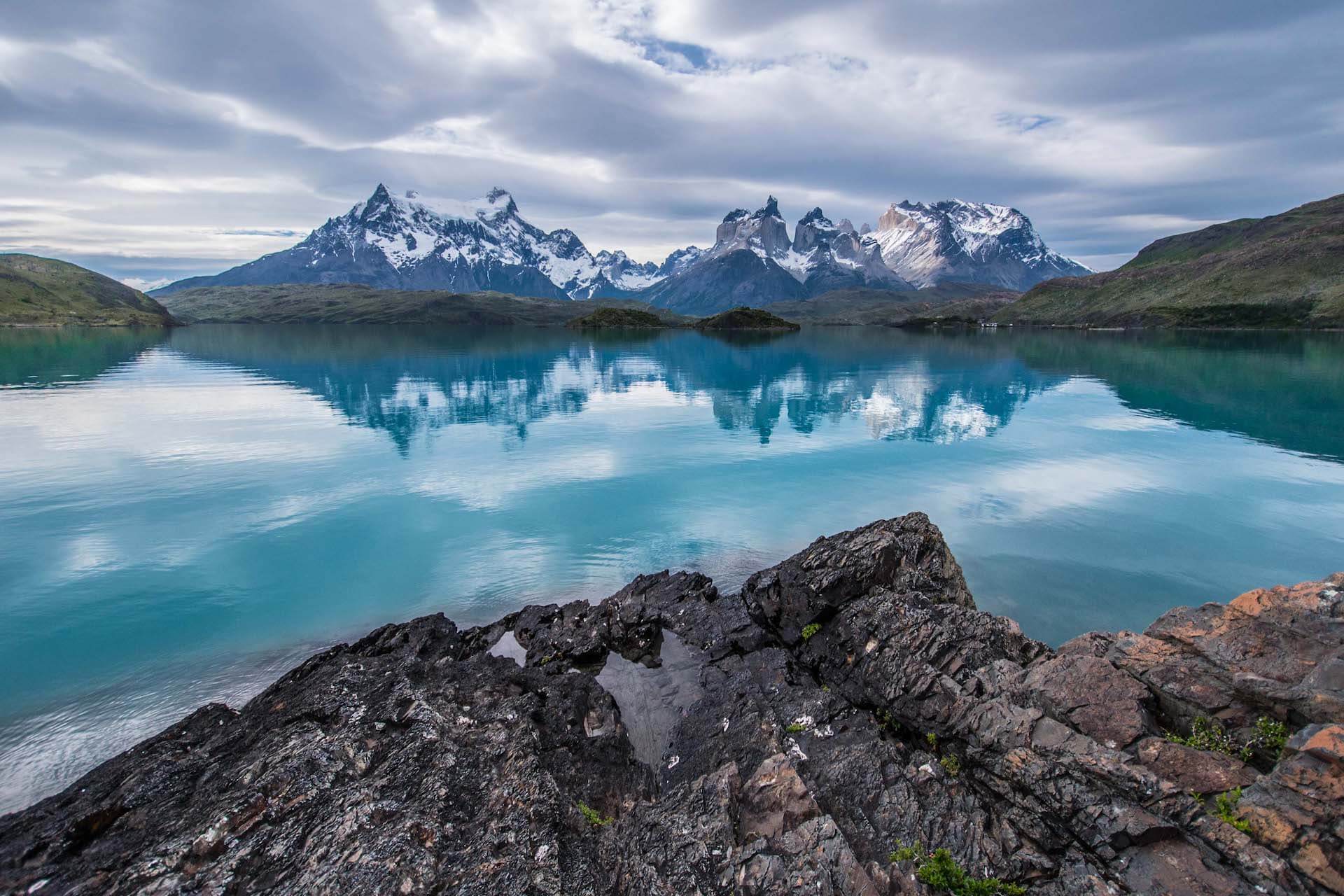
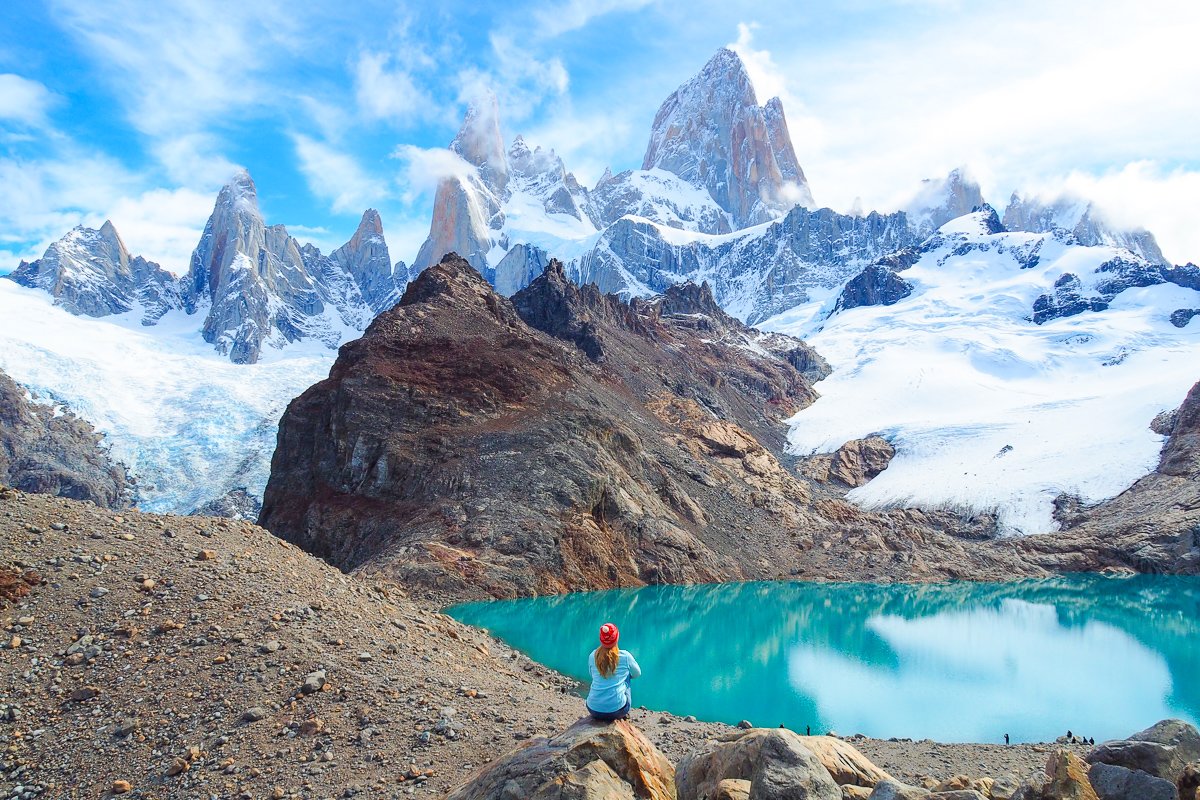
Torres del Paine National Park is renowned for its colossal granite peaks – Paine Grande, Cuernos del Paine, and the iconic Torres del Paine itself – which rise dramatically from the Patagonian steppe. The landscape here feels grander, more sculpted by ancient forces, with electric blue icebergs floating in Lago Grey and the vibrant turquoise waters of Lago Pehoé. The scale and sheer variety of ecosystems you traverse on a multi-day hike, from open steppe to dense Lenga forests and glacial valleys, is unparalleled. Meanwhile, Fitz Roy's allure lies in its perfectly framed, classic mountain vistas, especially the view of Laguna de los Tres and Laguna Capri. It's postcard-perfect, but perhaps less diverse than TDP. "Honestly, the Towers themselves are just mind-blowing in person. Nothing prepares you for that scale after a long hike." The sense of achievement reaching these viewpoints in Torres del Paine, especially after a challenging trek, feels more earned and raw.
Winner takeaway
- Winner: Torres del Paine
- Why: Torres del Paine wins for its sheer dramatic scale, diverse ecosystems, and the truly overwhelming presence of its iconic granite spires and glaciers.
- Who this matters for: Hikers seeking the most iconic, awe-inspiring, and varied geological formations with a strong sense of wilderness.
🚶♀️ Trekking Experience & Trails
Torres del Paine is famous for its 'W' (4-5 days) and 'O' (8-10 days) circuits, which are highly structured, often requiring reservations for refugios or campsites up to a year in advance, especially during peak season. The trails are well-maintained but can be demanding, with significant elevation gains and unpredictable weather. For example, a bunk in a refugio like Refugio Grey can cost $80-120 USD (€75-110) per night, or around $30-45 USD for a campsite. Fitz Roy, based out of El Chaltén, offers incredible flexibility. Most trails, like the 8-hour return hike to Laguna de los Tres or the 7-hour return to Laguna Torre, start directly from town and can be done as day trips. There are no entrance fees for the park itself. You can choose your adventure daily based on weather or energy levels, without the pressure of fixed bookings. "El Chaltén was amazing, just walked out of my hostel every morning and hit a new trail, no fuss." This freedom to explore at your own pace, combined with the accessibility of world-class vistas, makes Fitz Roy a more user-friendly trekking destination.
Winner takeaway
- Winner: Fitz Roy
- Why: Fitz Roy offers unparalleled flexibility with its network of stunning, free, and accessible day hikes directly from town, catering to a wider range of hikers without the intense pre-planning required by TDP.
- Who this matters for: Travelers who prefer flexibility, day hikes, and avoiding complex booking logistics, or those with less time for multi-day treks.
💸 Costs (Budget)
Torres del Paine is a more premium experience. Park entry alone for foreigners costs CLP 30,000 (approx. $32 USD) for 3+ days. Refugios can cost $80-120 USD per night for a bunk, or full board (accommodation, breakfast, dinner, packed lunch) can easily run $150-250 USD per person per day. Even camping (around $30-45 USD) still requires booking. Food in the park is marked up substantially (a simple sandwich can be $10-15 USD). Conversely, El Chaltén (Fitz Roy) offers incredible value. There's no park entry fee. Hostels start at $20-35 USD per night, guesthouses around $50-80 USD. You can find decent local meals (like 'lomo saltado' or pasta) for ARS 8,000-15,000 (approx. $8-15 USD at blue dollar rate, or $20-35 USD official rate – always check current rates). Supermarket prices are reasonable for packing lunches. "Man, TDP absolutely drained my wallet. El Chaltén felt like a steal for the quality of hikes." The cumulative savings in El Chaltén, especially for a week-long stay, are substantial, making world-class hiking accessible to a wider budget range.
Winner takeaway
- Winner: Fitz Roy
- Why: Fitz Roy offers a much more budget-friendly experience with free park entry, diverse and affordable accommodation, and competitive food prices in El Chaltén.
- Who this matters for: Budget-conscious travelers, backpackers, and anyone looking to maximize their Patagonian experience without breaking the bank.
✈️ Getting There & Logistics
Reaching Torres del Paine typically involves flying into Punta Arenas (PUQ) in Chile, then a 3-hour bus to Puerto Natales (approx. CLP 10,000 - $11 USD), and finally another bus or shuttle (approx. CLP 8,000-10,000 - $9-11 USD) into the park itself, which can take another 1.5-2 hours depending on the drop-off point. This often means two separate travel days to get in and out of the park proper. For Fitz Roy, the process is much more straightforward: fly into El Calafate (FTE) in Argentina, and then take a direct 3-hour bus ride to El Chaltén (approx. ARS 20,000-30,000 - $20-30 USD at blue dollar rate, or $50-70 USD official rate), which is the base town for all hikes. The town is small and walkable, with trailheads beginning right from the edge of town. "Getting to El Chaltén was a breeze compared to the whole multi-step dance for Torres del Paine." The consolidated travel and direct access from a major airport hub make Fitz Roy significantly less logistically challenging.
Winner takeaway
- Winner: Fitz Roy
- Why: Fitz Roy offers a simpler and more direct travel route from El Calafate, making the journey to the trailhead town much smoother and less time-consuming.
- Who this matters for: Travelers who prefer ease of access, minimal transfers, and want to start hiking quickly after arrival.
🛌 Accommodation
Accommodation within Torres del Paine is primarily restricted to the handful of privately-run refugios (like Refugio Las Torres, Refugio Grey, Refugio Paine Grande) and associated campsites, which must be booked months in advance. A bed in a dorm-style refugio can cost $80-120 USD, while a campsite averages $30-45 USD per night. Luxurious options like Hotel Las Torres or Explora Patagonia are extremely expensive (e.g., $1000+ USD per night). Outside the park, Puerto Natales offers more variety, but you're still an hour or two away from the park entrance. In stark contrast, El Chaltén is a town built for hikers. You'll find a plethora of hostels starting from $20-35 USD (e.g., Condor de los Andes, Rancho Grande), cozy guesthouses (e.g., Hostería Senderos) for $50-80 USD, and mid-range hotels for $100-180 USD, all within walking distance of trailheads, restaurants, and shops. "Loved just chilling at my hostel in El Chaltén, grabbing a beer, and planning the next day's hike from there." This variety, accessibility, and competitive pricing make El Chaltén a clear winner for accommodation.
Winner takeaway
- Winner: Fitz Roy
- Why: El Chaltén (Fitz Roy) offers a much broader, more accessible, and budget-friendly range of accommodation options, all conveniently located within a walkable town base.
- Who this matters for: Travelers seeking diverse lodging choices, from budget hostels to comfortable hotels, with easy access to amenities and trailheads.
🍔 Food & Drink
Dining within Torres del Paine is largely restricted to the refugio restaurants or expensive hotel dining rooms, where prices are inflated due to remote logistics. A basic dinner can easily cost $30-50 USD. Many trekkers pack all their own food for the circuits to save money. Puerto Natales, the nearest town, has good restaurants (like Santolla for king crab or El Asador Patagonico for lamb), but it's a separate journey. El Chaltén, despite being small, boasts an impressive culinary scene for its size. You'll find excellent patagonian lamb at Parrilla Mi Viejo, delicious pizzas at La Cerveceria, and hearty pasta dishes at La Tapera. Craft breweries like La Cerveceria Chaltén and BrewShop Chaltén offer local brews and a lively atmosphere. A good meal with a drink can range from ARS 10,000-25,000 (approx. $10-25 USD blue dollar rate, or $25-60 USD official), while a craft beer is around ARS 3,000-5,000 ($3-5 USD). "The bakeries in El Chaltén after a long hike? Absolute heaven. And the craft beer scene is surprisingly good!" This diverse and quality food scene, combined with reasonable prices, makes El Chaltén a foodie's delight after a day on the trails.
Winner takeaway
- Winner: Fitz Roy
- Why: El Chaltén (Fitz Roy) provides a superior and more varied culinary experience with a great selection of restaurants, bakeries, and craft breweries that are easily accessible and generally more affordable.
- Who this matters for: Foodies, craft beer enthusiasts, and travelers who appreciate a good meal and lively atmosphere after a day of hiking.
☀️ Weather & Seasons
Both Torres del Paine and Fitz Roy are located in Patagonia, meaning their weather is famously fickle. Expect four seasons in one day, year-round. Strong winds, especially in TDP's exposed valleys and passes like Paso John Gardner, are a constant factor and can make hiking challenging. Temperatures in summer (Dec-Feb) average 10-20°C (50-68°F), but can drop below freezing with wind chill. Rain is always a possibility. Shoulder seasons – October/November and March/April – are generally recommended for both destinations, offering slightly fewer crowds, better chances of stable weather, and still comfortable temperatures. January and February are peak season and can be very windy and crowded. "Don't underestimate the wind in TDP, it will literally try to blow you off the trail!" While El Chaltén can also experience strong winds, the trails are often more sheltered by forests, and the overall feeling is slightly less exposed than some of TDP's circuits. However, both demand layers, waterproof gear, and flexibility in planning. Neither destination has a reliably 'good' weather window, so preparation is key.
Winner takeaway
- Winner: Tie
- Why: Both destinations share the notoriously unpredictable and often challenging Patagonian weather, making it impossible to declare a clear winner.
- Who this matters for: Anyone planning a trip to Patagonia needs to be prepared for all weather conditions, regardless of their chosen destination.
👥 Crowds & Vibe
Torres del Paine, particularly the 'W' circuit, can feel quite crowded during peak season (Dec-Feb). The mandatory booking system for refugios and campsites, while necessary for conservation, creates a more structured and less spontaneous trekking experience. You're often sharing refugio dorms and designated campsites with many others. The trails, while stunning, can sometimes feel like a highway of fellow trekkers. El Chaltén, on the other hand, maintains a more authentic, laid-back 'hiker town' atmosphere. It's bustling, but with a friendly, communal vibe. Even on popular trails like Laguna de los Tres, the sheer size of the park and the option to explore various routes can spread out the crowds. "El Chaltén just felt more chill, like everyone was there for the same reason – to hike and enjoy the mountains, without all the park bureaucracy." The ability to choose your daily adventure from town contributes to a sense of freedom and a less 'managed' wilderness experience, which many outdoor enthusiasts prefer.
Winner takeaway
- Winner: Fitz Roy
- Why: Fitz Roy offers a more relaxed, authentic 'hiker town' atmosphere in El Chaltén and a greater sense of wild freedom on its trails, despite popularity.
- Who this matters for: Travelers who prefer a more laid-back atmosphere, a sense of community, and less structured, regulated outdoor experiences.
📝 Permits & Planning
Planning a trip to Torres del Paine, especially for the 'W' or 'O' circuit, involves a complex dance of booking. You must secure park entry (CLP 30,000 / ~$32 USD), and crucially, pre-book all your refugio beds or campsites through the various operators (Fantastico Sur, Vertice Patagonia, CONAF) months in advance – sometimes up to a year for peak season. Failure to have bookings can result in being turned away from trails. This requires meticulous itinerary planning and flexibility if your desired dates/accommodations aren't available. "I spent weeks trying to coordinate all my TDP bookings, it was a nightmare!" For Fitz Roy, the process is wonderfully simple. There are no park entry fees for the trails from El Chaltén, and no permits are required for the standard day hikes. You arrive in El Chaltén, check into your accommodation, and literally walk out to the trailheads. While it's always wise to check weather conditions, the spontaneity and ease of planning for Fitz Roy are a huge draw.
Winner takeaway
- Winner: Fitz Roy
- Why: Fitz Roy dramatically simplifies the planning process with no required permits or pre-bookings for its world-class day hikes, allowing for spontaneity and ease.
- Who this matters for: Travelers who prefer minimal pre-trip planning, spontaneity, and direct access to trails without administrative hurdles.
🚨 Safety & Accessibility
Both Torres del Paine and Fitz Roy are generally very safe destinations for travelers, with low crime rates. The primary 'dangers' come from the environment itself – unpredictable weather, strong winds, and challenging terrain. In Torres del Paine, while trails are well-marked, the multi-day nature of the treks means you are often several hours, if not a full day, from immediate assistance, and medical facilities are limited to basic first aid at refugios. The routes, particularly parts of the 'O' circuit, can be strenuous and exposed, requiring a good level of fitness and self-sufficiency. El Chaltén's trails, while also challenging, benefit from their proximity to town. Most popular trails are well-trafficked, and help is often more readily available if an emergency arises. The fact that most hikes are day trips means you return to town each evening, reducing exposure time. "Felt way safer doing the Cerro Torre hike knowing I'd be back in town for dinner, rather than stuck in a remote refugio if something went wrong." El Chaltén also has a small but functional hospital. For overall accessibility for a broader range of fitness levels and immediate access to support, Fitz Roy edges out TDP.
Winner takeaway
- Winner: Fitz Roy
- Why: Fitz Roy offers a slightly higher degree of safety and accessibility due to its day-hike focus, proximity to town, and more readily available assistance compared to the more remote and challenging multi-day circuits of TDP.
- Who this matters for: Travelers prioritizing immediate accessibility to facilities, those with varying fitness levels, and anyone seeking a slightly less remote trekking experience.
❓ Frequently Asked Questions
Which destination is better for solo female travelers?
Both Torres del Paine and Fitz Roy are very safe for solo female travelers. El Chaltén (Fitz Roy) might have a slight edge due to its friendly hostel culture, ease of meeting other hikers for day trips, and the comfort of returning to a vibrant town each evening. TDP's multi-day circuits, while safe, require more self-sufficiency and pre-planning.
Do I need a guide for the treks?
For most standard treks in both destinations (like the W/O circuit in TDP or Laguna de los Tres in Fitz Roy), a guide is not strictly necessary as trails are generally well-marked. However, hiring a guide can enhance your experience with local insights, ensure safety in adverse weather, and handle all logistics for TDP. For off-trail or glacier trekking, a certified guide is essential.
When is the best time to visit both?
The peak season is generally December to February (Patagonian summer), offering the warmest weather but also the strongest winds and largest crowds. The shoulder seasons (October/November and March/April) are often recommended as they offer a good balance of decent weather, fewer crowds, and stunning fall foliage (March/April in Fitz Roy is particularly beautiful).
Can I do both Torres del Paine and Fitz Roy in one trip?
Absolutely! Many travelers combine both. A common route is to fly into El Calafate (Argentina), bus to El Chaltén for 4-6 days, then bus back to El Calafate, then take another bus to Puerto Natales (Chile), and finally spend 5-9 days in Torres del Paine. Allow at least 2-3 weeks for a comfortable pace. Always factor in border crossing times.
What's the difficulty level of the hikes?
Both offer a range of difficulties. Fitz Roy has stunning day hikes from easy (Mirador de los Cóndores) to challenging (Laguna de los Tres). Torres del Paine's 'W' and 'O' circuits are definitely challenging multi-day treks, requiring good physical fitness, especially 'O' circuit's Paso John Gardner. Beginners can still enjoy shorter, easier sections in both parks.
What kind of gear do I need?
Regardless of destination, pack layers (base, mid, outer), waterproof and windproof outerwear, sturdy hiking boots, a good daypack (or multi-day pack), trekking poles, sun protection (hat, sunglasses, sunscreen), and plenty of water/snacks. For multi-day treks in TDP, you'll also need sleeping bags and cooking gear if camping.
Are there any entrance fees?
Yes, Torres del Paine National Park has an entrance fee for foreigners, currently around CLP 30,000 (approx. $32 USD) for visits over 3 days. There are no entrance fees for the trails in Los Glaciares National Park around El Chaltén, making it free to hike the Fitz Roy and Cerro Torre trails.
Which has better wildlife viewing opportunities?
Torres del Paine generally offers better wildlife viewing, particularly for guanacos, foxes, and the elusive puma, especially on the 'O' circuit. Condors are common in both. Fitz Roy has some unique bird species but less of the larger mammals compared to TDP's more diverse habitats. Keep an eye out for armadillos in both!
Ready to plan your Patagonia trip?
Get a free custom itinerary for Torres del Paine, Fitz Roy, or both — built from real traveler insights.
🎟️ Book Tours & Experiences
Hand-picked tours and activities for both destinations — book with free cancellation
Experiences via Viator — free cancellation on most tours