How we built this comparison
This page combines traveler discussion patterns, published price ranges, flight schedules, and seasonal data to help you decide between Toscana and Umbria.
- Reviewed 50+ Reddit threads from r/travel, r/solotravel, r/ItalyTravel, etc.
- Verified costs and logistics against current booking platforms (Booking.com, Trenitalia, Google Flights, rental car sites)
- Cross-referenced seasonal patterns and weather data from meteorological sources
- Consulted established travel guides and blogs specializing in Italian regions
⚡ The TL;DR Verdict
For first-timers seeking iconic Renaissance art, world-famous wines, and a vibrant, if sometimes crowded, experience, Toscana is your pick, budget €150-€250+ per day. If you crave authentic medieval towns, lush untouched landscapes, and incredible value without the tourist throngs, Umbria is calling, with a daily budget of €100-€180+.
- Choose Toscana: If you dream of iconic art cities like Florence and Siena, renowned vineyards in Chianti, and don't mind sharing the experience with many others (and paying a bit more for it).
- Choose Umbria: If you seek a more tranquil, authentic, and spiritual Italian experience, with stunning natural beauty, fewer crowds, and a significantly lower price tag, particularly for food and accommodation.
- Choose Both: If you have 10-14 days, start with Florence for 3-4 days, then rent a car and drive south into Val d'Orcia (Toscana) for 3-4 days before crossing into Umbria for another 4-5 days, hitting Assisi and Orvieto.
Quick Comparison
| Category | Toscana | Umbria | Winner |
|---|---|---|---|
| Costs & Budget | Generally 20-40% more expensive for accommodation, dining, and attractions. High demand drives prices. | Excellent value across the board, especially for food and charming agriturismo stays. Your Euro goes further. | Umbria |
| Culture & History | Home to the Renaissance, iconic art, architecture, and powerful city-states. Deeply influential globally. | Rich in medieval history, spiritual sites (St. Francis), Roman roots, and unique regional identity. | Toscana |
| Food & Wine | World-famous Chianti, Brunello, Super Tuscans. Hearty 'cucina povera', Florentine steak, truffle hunting. | Robust Sagrantino and Orvieto Classico wines. Black truffles, porchetta, lentils, wild boar. Authentic and less commercial. | Toscana |
| Nature & Landscapes | Iconic rolling hills of Val d'Orcia, cypress-lined drives, olive groves, and vineyards. Beautiful, but often curated. | The 'Green Heart of Italy' – rugged mountains, dense forests, pristine lakes (Trasimeno), waterfalls, and national parks. Wild and untamed. | Umbria |
| Crowds & Authenticity | Very popular, especially Florence, Siena, and Val d'Orcia viewpoints. Can feel touristy, especially in peak season. | Significantly fewer crowds, even in popular towns like Assisi. More local interactions, a genuine sense of undiscovered Italy. | Umbria |
| Getting Around | Good train network for major cities. Car essential for rural exploration (Chianti, Val d'Orcia). ZTLs are common. | A car is almost mandatory for exploring the region's scattered hill towns. Limited public transport. | Tie |
| Accommodation | Wide range from luxury hotels to charming B&Bs and agriturismi. Higher prices, especially in popular areas. | Abundant agriturismi, family-run B&Bs, and charming boutique hotels. Excellent value and often more authentic. | Umbria |
| Day Trips & Activities | Endless options: Florence, Siena, Pisa, Lucca, San Gimignano, Chianti wine tours, Val d'Orcia scenic drives. | Assisi, Orvieto, Perugia, Spello, Lake Trasimeno, Marmore Waterfalls, Sagrantino wine routes, truffle hunting. | Toscana |
| Getting There | Florence (FLR) or Pisa (PSA) airports, or easy train from Rome FCO. Direct flights from major hubs common. | Perugia (PEG) airport, or train/car from Rome FCO. Less direct, often requires connections. | Toscana |
| Best Seasons / Weather | Spring (April-May) and Fall (Sept-Oct) are ideal – pleasant weather, fewer crowds. Summers are hot and crowded. | Similar mild Spring/Fall. Summers are slightly cooler due to higher elevations, but can still be hot. Winters are colder, more peaceful. | Tie |
💸 Costs & Budget
Toscana's popularity comes at a price. Expect to pay €150-€250 ($160-$270) per night for a decent mid-range hotel in Florence or Siena, or a well-located agriturismo in Chianti. A pasta dish in a popular Florentine osteria might run you €18-€25 ($20-$27), while a full meal with wine can easily hit €50-€70 ($55-$75) per person. Attraction tickets like the Uffizi are €25. Umbria, however, offers incredible value. A charming B&B or agriturismo near Assisi or Orvieto can be found for €80-€150 ($85-$160) per night. A hearty Umbrian pasta dish with black truffles might cost €15-€20 ($16-$22), and a full, delicious meal with local wine can often be had for €35-€50 ($38-$55). Car rentals are similar for both regions, around €40-€80 ($44-$88) per day, but gas is expensive everywhere. "Seriously, I saved so much money in Umbria. My truffle pasta in Spello was half the price of a similar one in Florence, and it was better!" This means more room in your budget for experiences or simply a longer trip in Umbria.
Winner takeaway
- Winner: Umbria
- Why: Umbria provides significantly better value for money across accommodation, dining, and experiences.
- Who this matters for: Budget-conscious travelers, long-term travelers, and those seeking luxury for less.
🏛️ Culture & History
Toscana is, unequivocally, the birthplace of the Renaissance. Florence alone boasts the Uffizi Gallery, Accademia (David), Duomo, Ponte Vecchio, and countless other masterpieces. Siena's Piazza del Campo and Gothic Duomo are testaments to its medieval power. Pisa's leaning tower, San Gimignano's towers—it's a continuous feast for art and history lovers. Umbria's cultural offerings, while profound, lean more towards the medieval and spiritual. Assisi, the birthplace of St. Francis, features the stunning Basilica di San Francesco. Orvieto's Duomo is an architectural marvel with an incredible facade, and Perugia offers Etruscan and medieval layers. The focus is less on grand artistic movements and more on spiritual pilgrimage and well-preserved townscapes. "Florence is like a living museum, every corner has something iconic. Umbria is beautiful, but the sheer volume of world-changing art in Tuscany is unmatched." While Umbria offers a different, deeper historical resonance, especially for those interested in monastic life and regional Italian identity, Toscana's contribution to Western civilization is simply unparalleled.
Winner takeaway
- Winner: Toscana
- Why: Toscana's status as the heart of the Renaissance and its density of world-famous art and architecture are unmatched.
- Who this matters for: Art history buffs, first-time visitors to Italy, and those seeking iconic cultural landmarks.
🍷 Food & Wine
Both regions excel, but Toscana's global recognition for wine tips the scales. Chianti, Montalcino (Brunello), and Montepulciano are household names, offering countless vineyards for tours and tastings (expect to pay €30-€80 ($33-$88) per person). Food-wise, you'll find Bistecca alla Fiorentina, Pappardelle al cinghiale (wild boar ragu), Ribollita, and a focus on simple, high-quality ingredients. Umbria, often called the 'Land of Saints and Truffles,' has its own distinct, equally delicious, and perhaps more authentic culinary identity. Its Sagrantino di Montefalco is a powerful red wine gaining international acclaim, and Orvieto Classico is a delightful white. Truffles (black and white) are more prevalent and affordable here, featuring in dishes across the region. Porchetta, lentils from Castelluccio, and unique salumi are regional stars. "I loved the fancy wine tours in Chianti, but the family-run osteria in Montefalco served me the best homemade pasta and Sagrantino I've ever had, for half the price!" While Umbria offers incredible, earthy flavors and often better value, Toscana's iconic wines and more diverse, globally recognized culinary landscape make it a slightly stronger contender for the sheer 'wow' factor.
Winner takeaway
- Winner: Toscana
- Why: Toscana boasts more globally recognized wines and a diverse, influential culinary tradition, though Umbria offers incredible, authentic alternatives.
- Who this matters for: Wine connoisseurs, foodies seeking iconic dishes, and those desiring a mix of traditional and gourmet experiences.
🌳 Nature & Landscapes
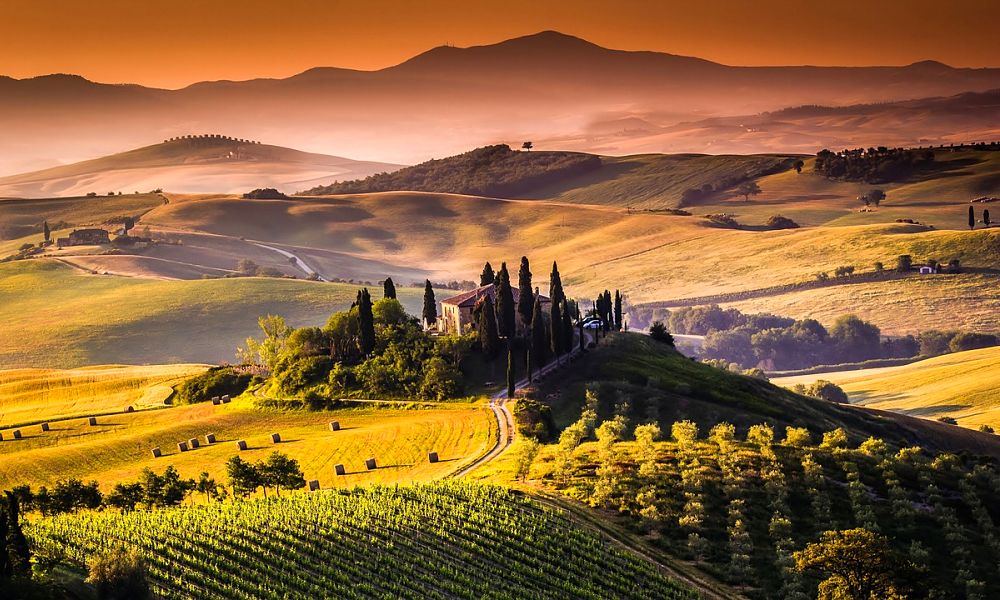
Toscana's Val d'Orcia is world-famous for its postcard-perfect, undulating hills, dotted with cypress trees, farmhouses, and golden fields – a landscape often featured in films and calendars. It's stunning, but can feel almost 'manicured' due to its fame and agricultural cultivation. Beyond Val d'Orcia, you have the more rugged Apennine foothills in Garfagnana, but the iconic image is the gentle, cultivated beauty. Umbria, by contrast, lives up to its 'Green Heart of Italy' moniker. It's wilder, more mountainous, and less densely populated. The Sibillini Mountains offer dramatic peaks, hiking trails, and stunning vistas. Lake Trasimeno is a peaceful haven for swimming and boating. The Marmore Waterfalls (Cascata delle Marmore) are Europe's tallest man-made waterfalls, a spectacular sight. "Umbria felt so much more wild and untouched. We hiked for hours near Montefalco and barely saw another soul, unlike the crowded viewpoints in Tuscany." If your idea of natural beauty leans towards pristine forests, dramatic mountains, and serene lakes rather than rolling vineyards, Umbria is the clear winner for its untamed, varied, and genuinely 'green' landscapes, offering more opportunities for outdoor adventure.
Winner takeaway
- Winner: Umbria
- Why: Umbria offers a more diverse, rugged, and untamed natural beauty, with mountains, forests, and lakes, appealing to outdoor enthusiasts.
- Who this matters for: Hikers, nature lovers, photographers seeking dramatic scenery, and those looking for peaceful, uncrowded natural escapes.
👥 Crowds & Authenticity
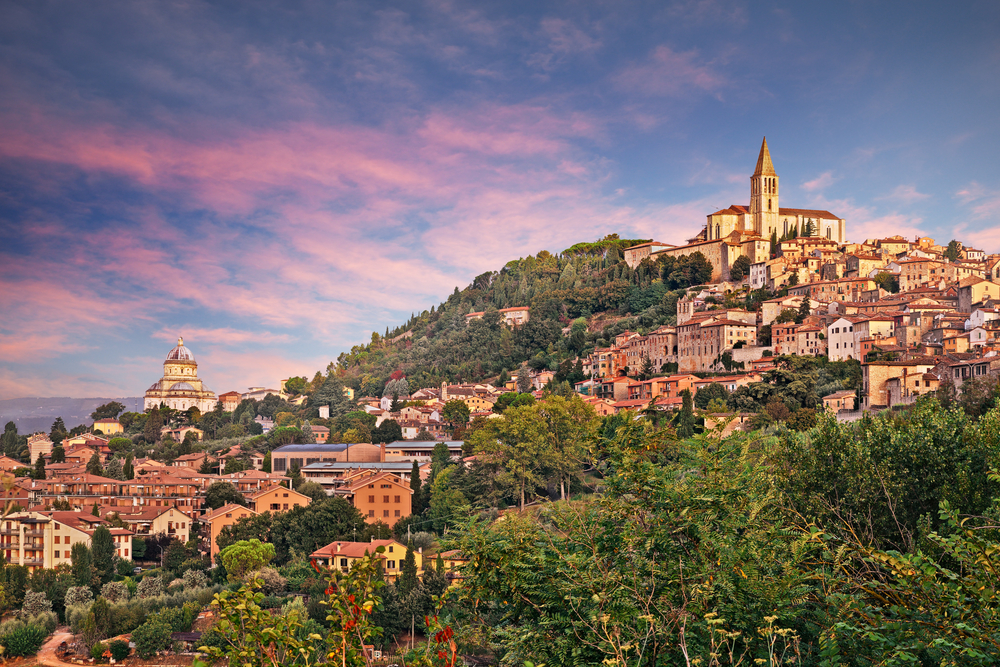
Toscana's popularity is a double-edged sword. Florence, especially, can be overwhelmingly crowded, with long lines for major attractions and packed streets. Siena, San Gimignano, and even key viewpoints in Val d'Orcia (like those near Pienza or Monticchiello) can be swarmed with tour buses and selfie sticks, particularly from April to October. This can detract from the feeling of authenticity, pushing local life to the periphery. Umbria offers a refreshing contrast. Even its most famous towns, like Assisi and Orvieto, manage to retain a calm, spiritual atmosphere without the intense tourist crush. Smaller towns like Spello, Montefalco, or Gubbio feel genuinely lived-in, with local markets, traditional festivals, and opportunities for genuine interaction with residents. "After fighting crowds in Florence, arriving in Spello felt like a breath of fresh air. We actually got to chat with shop owners and locals, it was amazing." For travelers seeking an authentic, less commercialized experience where you can truly feel immersed in Italian daily life, Umbria is the hands-down winner, providing a much more peaceful and intimate journey.
Winner takeaway
- Winner: Umbria
- Why: Umbria offers a more authentic experience with significantly fewer crowds, allowing for genuine local interactions and a peaceful atmosphere.
- Who this matters for: Travelers seeking local immersion, peace and quiet, and avoiding mass tourism; solo travelers and digital nomads.
🚗 Getting Around
For both regions, a rental car is highly recommended, if not essential, for true exploration of the countryside and smaller towns. In Toscana, you can easily get between major cities like Florence, Siena, Pisa, and Lucca by train (e.g., Florence to Siena, ~1.5 hours, €9.50). However, to truly experience Chianti or Val d'Orcia and its many agriturismi, a car is necessary. Be very aware of ZTLs (Limited Traffic Zones) in city centers, which can lead to expensive fines. Parking can also be a challenge. In Umbria, public transport is much more sparse outside of major hubs like Perugia. To visit Assisi, Orvieto, Spello, Montefalco, and truly enjoy the landscapes, a car is practically mandatory. Distances are shorter, making driving a joy. "We rented a car for both regions, and honestly, navigating the smaller roads and finding parking was equally tricky. But without it, we would've missed so much in both places." The need for a car and the challenges of ZTLs/parking make them quite similar in terms of logistics, though Toscana offers more train options if you stick to main cities.
Winner takeaway
- Winner: Tie
- Why: Both regions require a car for deep exploration, and both present similar challenges with driving, ZTLs, and parking, making it a tie.
- Who this matters for: Independent travelers, those comfortable driving abroad, and anyone planning to stay outside major city centers.
🛌 Accommodation
In Toscana, you'll find everything from five-star luxury hotels in Florence (e.g., Hotel Pitti Palace al Ponte Vecchio, €300+ ($330+)/night) and renovated castles in Chianti, to charming B&Bs and agriturismi. The quality is high, but so are the prices, particularly during peak season. A mid-range agriturismo with a pool in Val d'Orcia might set you back €180-€300 ($200-$330) per night. Umbria excels in offering authentic and high-value accommodation. The region is dotted with beautiful agriturismi (farm stays) that often include home-cooked meals, wine tastings, and stunning views, frequently for €100-€180 ($110-$200) per night. Many are family-run and offer a truly immersive experience. Boutique hotels in towns like Orvieto or Spello offer excellent quality at prices that would be hard to find in comparable Tuscan towns. "The agriturismo we stayed at near Assisi was pure magic – delicious breakfast, a pool overlooking olive groves, and the hosts treated us like family, all for a price I couldn't believe." For quality, authenticity, and overall value in accommodation, Umbria truly shines, allowing for more luxurious stays within a reasonable budget.
Winner takeaway
- Winner: Umbria
- Why: Umbria offers significantly better value for high-quality, authentic accommodation, particularly its abundant and charming agriturismi.
- Who this matters for: Travelers seeking authentic experiences, families, couples, and those wanting more for their accommodation budget.
🗺️ Day Trips & Activities
Toscana arguably offers a denser concentration of world-renowned day-trip destinations. From a base in Florence, you can easily reach Siena, San Gimignano, Pisa, and Lucca by train or bus. Renting a car opens up the iconic Chianti wine region and the breathtaking Val d'Orcia, with picturesque towns like Pienza and Montepulciano. There are countless organized wine tours, cooking classes (€80-€150 ($88-$165)), and art workshops. Umbria also boasts an impressive array of day trips, but they are generally less 'famous' globally. Assisi is a must-see for its spiritual significance, and Orvieto's Duomo is stunning. Perugia offers a vibrant university town atmosphere, while Spello and Montefalco are charming for leisurely strolls and wine tasting. Lake Trasimeno provides a peaceful escape, and the Marmore Waterfalls are a unique natural attraction. "We spent a week in Tuscany and felt like we barely scratched the surface with all the amazing towns and vineyards. Umbria was great, but the 'hits' were fewer and further between." While Umbria has wonderful, less crowded options, Toscana's sheer volume of iconic, diverse, and easily accessible day trips makes it the winner for variety and global appeal.
Winner takeaway
- Winner: Toscana
- Why: Toscana offers a greater number and diversity of world-renowned, easily accessible day-trip destinations and activities.
- Who this matters for: First-time visitors to Italy, those with limited time, and travelers seeking a packed itinerary of iconic sights.
✈️ Getting There
Accessing Toscana is generally more straightforward. Florence (FLR) and Pisa (PSA) have international airports with connections to major European hubs. From the US, you can fly into Rome Fiumicino (FCO), then take a direct high-speed train to Florence Santa Maria Novella (SMN) in about 1.5 hours (costing €30-€50 ($33-$55)). This is often the most efficient route. Perugia (PEG) has a smaller airport with fewer direct connections, mainly to other European cities (e.g., Ryanair from London Stansted). Most travelers to Umbria will fly into Rome FCO and then either rent a car directly or take a train to Orte, Foligno, or Perugia, which usually involves a change and a longer travel time (e.g., Rome to Perugia by train ~2.5-3 hours, €15-€25 ($16-$27)). "Getting to Florence from Rome was a breeze on the fast train, like clockwork. Getting to Assisi took a bit more planning with train changes and buses." While both are accessible from FCO, Toscana's better-connected airports and high-speed rail network offer more convenience and speed for arrival.
Winner takeaway
- Winner: Toscana
- Why: Toscana is easier and faster to reach due to better-connected airports and more efficient high-speed train links from major Italian hubs.
- Who this matters for: Travelers with limited time, those prioritizing convenience, and international visitors flying long-haul.
☀️ Best Seasons / Weather
Both regions share similar Mediterranean climates, making Spring (April-May) and Fall (September-October) the undisputed best times to visit. During these months, temperatures are pleasant (20-25°C / 68-77°F), the landscapes are verdant (Spring) or golden (Fall), and the major crowds of summer have either not yet arrived or have departed. Summers (June-August) in both regions can be very hot, often exceeding 30-35°C (86-95°F), especially in cities like Florence. However, Umbria's higher elevation in some areas can offer a slight respite from the heat compared to the Tuscan lowlands. Winters (November-March) are generally mild but can be chilly and damp, with some snow in higher elevations, particularly in Umbria's mountainous areas. "I went to Tuscany in May and Umbria in late September, and honestly, both were perfect! Great weather, not too crowded. I wouldn't do either in July or August though." The slight difference in summer heat due to Umbria's topography isn't significant enough to declare a clear winner, as both regions truly shine in the shoulder seasons.
Winner takeaway
- Winner: Tie
- Why: Both regions share similar ideal shoulder seasons (Spring and Fall) for travel, with summer being hot and winter being colder but peaceful, making it a tie.
- Who this matters for: Most travelers, especially those sensitive to extreme heat or crowds, and those interested in outdoor activities.
❓ Frequently Asked Questions
Is Umbria really that much less crowded than Toscana?
Yes, absolutely. While popular towns like Assisi attract visitors, the sheer volume of tourists in Umbria is a fraction of what you'll find in Toscana's major cities and famous valleys. You'll experience more local life and less congestion, even in peak season.
Can I do a day trip from Florence to Assisi?
Technically possible but not recommended. A train from Florence to Assisi takes about 2.5-3 hours with at least one change, making for a very long day trip (5-6 hours travel round trip). It's better to dedicate a few days to Umbria and stay overnight.
Which region is better for hiking and outdoor activities?
Umbria generally offers more rugged and diverse terrain for hiking, with the Sibillini Mountains and denser forests providing challenging trails and beautiful vistas. Toscana also has hiking, particularly in areas like Garfagnana, but Umbria is often considered the 'Green Heart' for a reason.
Do I need to speak Italian in these regions?
In major tourist areas of Toscana, English is widely spoken in hotels, restaurants, and attractions. In Umbria, especially in smaller towns, less English is spoken, so learning a few basic Italian phrases will be very helpful and appreciated by locals.
Is it safe to travel solo in Toscana or Umbria?
Both regions are very safe for solo travelers. Standard precautions against pickpocketing, especially in crowded Florentine areas, are advisable. In Umbria, you'll find an even more relaxed and welcoming atmosphere, making it an excellent choice for solo exploration.
What's the best way to get from Rome to Umbria?
From Rome Fiumicino (FCO) airport, you can rent a car directly for maximum flexibility. Alternatively, take a train from Rome Termini to major Umbrian cities like Perugia or Assisi, though you may need a local bus or taxi to reach specific towns upon arrival.
Are there good options for families with children?
Both regions are family-friendly. Toscana offers more iconic sights that kids might recognize (leaning tower, David), but Umbria provides more space, less crowded towns, and often more affordable and relaxed agriturismo stays with pools and farm animals, which can be ideal for children.
Can I find truffles easily in both regions?
While Toscana has truffles, Umbria is renowned as Italy's 'truffle heart,' especially for black truffles. You'll find more truffle-focused dishes, truffle hunting tours, and often more affordable truffle products in Umbria compared to Toscana.
Ready to plan your Central Italy trip?
Get a free custom itinerary for Toscana, Umbria, or both — built from real traveler insights.
🎟️ Book Tours & Experiences
Hand-picked tours and activities for both destinations — book with free cancellation
Experiences via Viator — free cancellation on most tours