How we built this comparison
This page combines traveler discussion patterns, published price ranges, transit details, and seasonal data to make the Ubud vs Canggu decision easier to resolve.
- Reviewed Reddit discussions from r/bali, r/BaliTravelTips, r/digitalnomad, r/travel, and r/backpacking.
- Cross-checked cost claims against Numbeo 2026 data and recent Reddit trip reports.
- Verified weather patterns against Open-Meteo monthly archive data.
Best read as a decision guide, not a universal truth: the right pick depends on your travel style, budget, and what kind of Bali experience you actually want.

⚡ The TL;DR Verdict
Ubud wins for culture, temples, and authentic Bali. Canggu wins for surf, cafés, and the digital nomad lifestyle. Do both — they're 1.5 hours apart and completely different experiences.
- Choose Ubud: Rice terraces, temples, spiritual experiences, day trips, yoga retreats, cooler climate, $35–65/day.
- Choose Canggu: Surf breaks, café culture, digital nomad community, beach clubs, nightlife, $50–100/day.
- Do both: 3–4 nights Ubud + 3–4 nights Canggu is the classic Bali combo for a 10–14 day trip.
Choose Ubud
The cultural heart of Bali — rice terraces, 20,000+ temples, sacred monkey forest, Tirta Empul holy springs, and the best day-trip access on the island.
Choose Canggu
Bali's hippest neighborhood — world-class surf at Batu Bolong, the best café density on earth for laptop workers, beach clubs, and a buzzing international community.
Quick Comparison
| Category | 🌿 Ubud | 🏄 Canggu | Winner |
|---|---|---|---|
| Daily Budget (mid-range) | $35–65 per person | $50–100 per person | Ubud |
| Beaches | None — inland location | Batu Bolong, Echo Beach, Berawa | Canggu |
| Surfing | No surf (25km from coast) | Beginner-to-intermediate breaks | Canggu |
| Culture & Temples | Sacred Monkey Forest, Tirta Empul, 10+ major temples | Tanah Lot (30 min), limited local temples | Ubud |
| Food Scene | Local warungs, healthy cafés, warung babi guling | World-class brunch cafés, international variety | Tie |
| Digital Nomad | Hubud coworking, quiet café scene | Dojo, BWork, Outpost — largest nomad community | Canggu |
| Nightlife | Quiet — bars, live music, early nights | Beach clubs, bars until 4am, Old Man's, The Lawn | Canggu |
| Day Trips | Excellent hub — volcano, waterfalls, east Bali | Good for south Bali — Seminyak, Uluwatu, Tanah Lot | Ubud |
| Accommodation Value | Jungle villas $25–70, great value | Pool villas $50–120, trend premium | Ubud |
| Traffic & Crowds | Busy Ubud center, quieter outskirts | Heavy traffic, very touristy | Tie |
| Climate | 26°C avg, cooler, misty — comfortable | 30°C avg, humid, sea-level heat | Ubud |
| Best For | Culture, wellness, first-timers, day trips | Surf, nomads, nightlife, beach clubs | — |
✨ Vibe & Atmosphere
Ubud and Canggu could not feel more different despite being on the same island. Ubud is the spiritual, cultural heart of Bali — an inland town at 200m elevation surrounded by rice paddies, jungle, and ancient temples. The air is noticeably cooler (26°C average vs 30°C on the coast), mornings are misty, and everywhere you look there are ceremonial offerings (canang sari) on doorsteps and temple gates. The energy is contemplative, artsy, and a little mystical. Ubud attracts yogis, artists, spiritual seekers, and people who want to go deeper into Balinese culture.
Canggu is Bali's coolest, most cosmopolitan neighborhood — a surf village that became a digital nomad hub that became a full-blown lifestyle brand. It's flat, beachside, hot, and buzzing with scooters, cafés, surf schools, and coworking spaces. The streets are lined with Instagram-worthy restaurants and boutiques. The crowd skews 25–35, international, laptop-toting, and sun-chasing. It's exciting, it's trendy, and it's gotten very busy in recent years.
🍜 Food & Dining
Ubud is a food lover's destination in two very different registers. At the local end: some of Bali's best traditional food — Ubud warungs serving babi guling (suckling pig), bebek betutu (slow-cooked duck), and nasi campur for IDR 25,000–50,000 ($1.50–$3). At the healthy end: an extraordinary concentration of organic cafés, smoothie bowl spots, vegan restaurants, and farm-to-table dining, driven by decades of wellness tourism. Sari Organik (rice field dining), Locavore (fine dining), and Clear Café are institutions. The restaurant scene in Ubud punches well above its weight.
Canggu is café culture perfected. This is where the world's best brunch spots happen to be: Revolver Espresso, Satu Satu, Shelter, and dozens of competitors with specialty coffee roasters, sourdough, grain bowls, and cold-pressed juice. International diversity is unmatched — Japanese ramen, Mexican tacos, wood-fired pizza, Ethiopian injera, and Balinese warungs all exist within a few streets. The downside: café meals run $8–20 per person, and Canggu's trendy reputation means prices climb fast. Canggu's beach clubs are also an attraction in themselves — cocktails at Old Man's and sunset at The Lawn are peak Bali moments.
💰 Cost Comparison
Ubud is meaningfully cheaper than Canggu, particularly for accommodation and local food. The key driver is Canggu's premium on the "lifestyle" — the café-brunch-beach-club scene inflates daily spending. In Ubud, you can have an outstanding day for $30–40; in Canggu, the same lifestyle costs $60–80.
| Expense | 🌿 Ubud | 🏄 Canggu |
|---|---|---|
| Budget guesthouse | $15–30/night | $25–50/night |
| Mid-range villa (pool) | $25–70/night | $50–120/night |
| Local warung meal | IDR 20,000–40,000 ($1.25–$2.50) | IDR 25,000–50,000 ($1.50–$3) |
| Café brunch | $6–14 | $10–20 |
| Beer (Bintang) | $2–3 (bar) | $3–5 (bar/beach club) |
| Scooter rental | IDR 60,000–80,000/day ($4–5) | IDR 70,000–100,000/day ($4–6) |
| Spa/massage (1hr) | IDR 100,000–150,000 ($6–9) | IDR 120,000–200,000 ($7–12) |
| Surf lesson (2hrs) | N/A | IDR 350,000–500,000 ($22–30) |
| Daily total (mid-range) | $35–65 | $50–100 |
💻 Digital Nomad & Remote Work
Canggu is one of the world's top digital nomad destinations, full stop. Dojo Canggu (Bali's most famous coworking space) runs $150–200/month for a hot desk and has fast fiber, excellent community events, and a rooftop pool. BWork, Outpost, and Serenity coworking are strong alternatives. The café density is extraordinary — dozens of spaces with fast WiFi, specialty coffee, and power outlets designed for laptop work. The community infrastructure is deep: weekly nomad meetups, Slack channels, long-term expat networks. Monthly costs: $1,200–$2,500 depending on villa type and spending habits.
Ubud is more of a hidden nomad gem. Hubud (a beautifully designed bamboo coworking space) is legendary — $150/month, excellent community, famous for hosting Bali's original nomad community. The café scene for working is excellent too (Seniman Coffee, Locavore's bar, Yellow Flower Café). Ubud's quieter atmosphere makes it great for deep work — fewer distractions, lower noise, more focus. Monthly costs: $900–$1,800. The tradeoff: smaller community, no beach access, and a more contemplative pace that some nomads love and others find isolating.
🏄 Beaches & Surfing
This section is straightforward: Ubud has no beach. It's 25km inland. You can't swim in the ocean from Ubud without a 45-minute transfer. If beaches or surfing are central to your Bali plans, you need a coastal base.
Canggu's surf scene: Batu Bolong is Canggu's most popular break — a beach break suitable for beginners and intermediate surfers, with consistent waves and a fun vibe. Echo Beach is a short ride away and tends to be better for intermediate and advanced surfers. Berawa and Pererenan are quieter options with more power. Surf schools are everywhere — lessons cost IDR 350,000–500,000 ($22–30) for 2 hours including board rental. Bali's best surf breaks span from Canggu's beginner-friendly waves to Uluwatu's expert reef breaks.
The beach itself: Canggu's beaches have dark volcanic sand, which can look dramatic in photos but isn't the white-sand paradise of Thailand or the Maldives. The water is warm year-round (~28°C). Sunsets at Batu Bolong are exceptional — this is where half of Canggu gathers every evening.
🛕 Culture & Temples
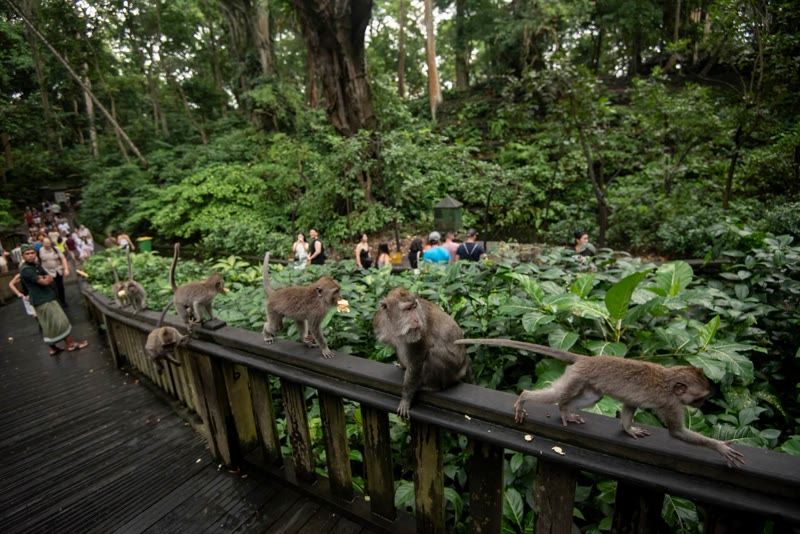
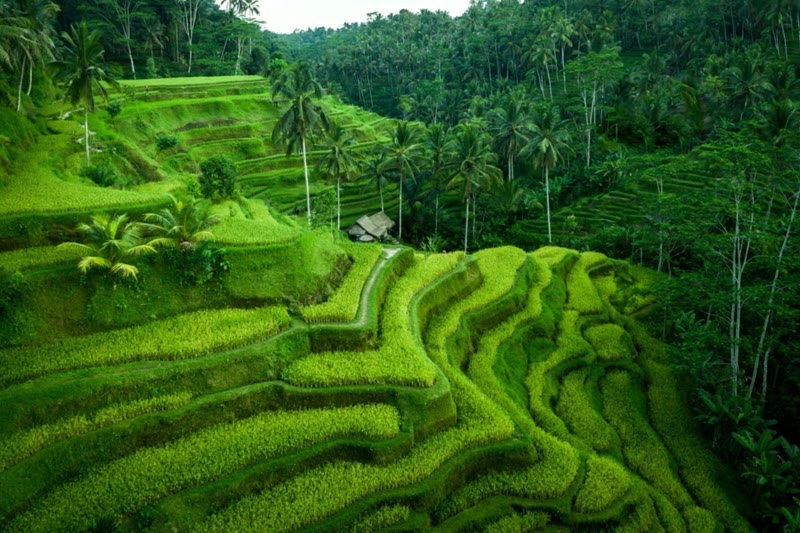
Ubud is the cultural epicenter of Bali, and there's no close second. Within a 30-minute radius, you have: the Sacred Monkey Forest Sanctuary (three active temples, 700+ long-tailed macaques), Tirta Empul Temple (sacred spring purification ritual, one of Bali's most moving experiences), Goa Gajah (11th-century Elephant Cave), Pura Gunung Kawi (royal funerary monument carved from rock), and Tegallalang Rice Terraces (the iconic staircase rice paddies). Ubud's art galleries preserve traditional Balinese painting, woodcarving, and silverwork. Kecak fire dances at sunset are performed nightly. This is the real Bali.
Canggu has cultural access but it's more limited. The nearest major temple is Tanah Lot (30 minutes by scooter) — one of Bali's most famous sea temples and a must-see for any Bali trip. Pura Batu Bolong is right on Canggu's beach. The surrounding rice paddy walks have become more Instagram set pieces than genuine cultural experiences given Canggu's development. Canggu is not where you go to understand Balinese Hindu culture — it's where you go to enjoy Bali's beach and café lifestyle.
☀️ Best Time to Visit
Ubud and Canggu share Bali's tropical climate but feel noticeably different due to elevation. Ubud sits at ~200m above sea level, making it 2–4°C cooler than Canggu on average — a meaningful difference during hot months. Both areas experience Bali's wet and dry seasons.
Dry season (June–September): The best months for all of Bali. Blue skies, low humidity, consistent surf in Canggu, excellent visibility for Ubud temple visits and rice terrace photos. July and August are peak season — expect higher prices and more crowds in both areas. Ubud can get surprisingly busy with day-trippers during peak season.
Wet season (November–March): Daily afternoon downpours, higher humidity, occasional flooding in Canggu's low-lying streets. Ubud's higher elevation means more dramatic misty mornings and lush green rice terraces — photogenic in a different way. Fewer tourists, lower prices (20–30% cheaper). Surf can be excellent in Canggu during wet season — offshore winds, clean waves. Many experienced Bali travelers actually prefer the wet season for authenticity and value.
Shoulder seasons (April–May, October): The best value windows — good weather, fewer crowds, lower prices. April–May is the sweet spot for both areas before wet season hits. October can be variable.
Ubud heat note: If you're sensitive to heat, Ubud's higher elevation makes it significantly more comfortable than Canggu during the hottest months (September–October). Working from a café in Ubud at 26°C beats sweating in Canggu at 32°C with heavy humidity.
🛵 Getting Around
Getting around Bali is one of the island's persistent frustrations, and both Ubud and Canggu are affected — in different ways.
Ubud's traffic is concentrated around the town center (Monkey Forest Road, Hanoman Street) and gets genuinely gridlocked during peak hours. The solution: base yourself in the outskirts (Penestanan, Campuhan, or Mas) and scooter in when needed. Grab is available in Ubud (unlike some Bali areas where it's restricted). Scooter rentals run IDR 60,000–80,000/day ($4–5) and are the best way to explore the rice terrace routes and surrounding villages. A private driver for the day (for temple circuits, Mount Batur, or the east coast) runs $30–40 — outstanding value and highly recommended for multi-stop day trips.
Canggu's traffic is arguably worse and more frustrating because it's a narrow beachside village with no main road grid. The main streets (Jalan Canggu, Jalan Batu Bolong) are permanently congested with scooters. Walking between coworking spaces and cafés is often the fastest option for short distances. Scooter rental is essential — $4–6/day. Grab can be harder to get than in Ubud. Moving between Canggu and the airport (35 minutes without traffic, 90 minutes with) should always be done in advance with a fixed-price driver.
Ubud to Canggu: The transfer runs about 1.5–2.5 hours depending on traffic and time of day. Pre-book a driver ($15–25) — don't rely on Grab for this route. Morning departures before 10am are fastest.
🎉 Nightlife & Entertainment
Canggu wins on nightlife breadth and energy. Old Man's (beach bar, friendly surf crowd, open until 2am), The Lawn (clifftop sunset cocktails, DJ nights), Pretty Poison (late-night bar), and dozens of craft beer spots and live music venues keep Canggu buzzing until the early hours. The beach club scene — Finns Beach Club and Batu Bolong's sunset bars — is genuinely world-class: pool day beds, DJs, cocktails, and the Indian Ocean at sunset. For those who want to combine surf days with party nights, Canggu delivers.
Ubud's nightlife is modest but has its own charm. It's an early-to-bed town by Balinese standards — most places wind down by 11pm or midnight. What it has: intimate live jazz at Night Rooster, Laughing Buddha Pub (great musicians nightly), Napi Orti Night Market (5pm–midnight, street food and local life), traditional Kecak fire dances at Uluwatu or Pura Dalem Ubud every night. The entertainment in Ubud leans cultural — fire dances, gamelan music, traditional theater — rather than club culture. You won't feel bored, but you will be in bed earlier.
🔀 Why Not Both?
The best Bali trips usually include both Ubud and Canggu — and the route matters. Here's the tried-and-tested formula that Reddit and experienced travelers recommend consistently:
Classic 10-night combo:
Nights 1–4: Ubud — arrive, recover from jetlag in cooler air, do Tegallalang terraces, Tirta Empul, Monkey Forest, a Mount Batur sunrise, and at least one full day trip (Nusa Penida or east Bali).
Nights 5–10: Canggu — move coast, surf, beach clubs, catch up with nomad community, do a Tanah Lot sunset, day trip to Uluwatu for Kecak dance at sunset.
Optional: 2 nights Ubud + 2 nights Canggu + 2 nights Uluwatu for a more varied south Bali circuit.
Start with Ubud, end with Canggu — this is the right order. Ubud grounds you in what Bali actually is culturally. Canggu is the fun finale. Doing it in reverse (Canggu first) can make Ubud feel like a step down — the pace is slower and there's no beach. Go cultural first, beach second.
Transfer logistics: Most guesthouses in both areas can arrange a driver. Typical Ubud → Canggu transfer: IDR 200,000–300,000 ($12–18) booked through your accommodation or Grab/GoJek if available. Allow 2+ hours with luggage during daytime.
🎯 The Decision Framework
Choose Ubud If…
- You want to understand Balinese Hindu culture — temples, ceremonies, offerings
- Rice terraces and jungle landscapes are on your must-see list
- You're on a tighter budget ($35–65/day is achievable)
- Day trips matter — Mount Batur, Nusa Penida, east Bali, waterfalls
- Yoga, wellness retreats, or meditation are part of your trip
- You prefer cooler temperatures (26°C vs 30°C in Canggu)
- You want deep work focus as a digital nomad (quieter, Hubud coworking)
- It's your first time in Bali and you want the iconic experience
- You're traveling for 5–7 days and can only pick one base
Choose Canggu If…
- You want to surf or learn to surf in Bali
- The digital nomad community and best coworking (Dojo) are priorities
- World-class café culture and brunch spots are non-negotiable
- Beach club nights and a buzzing social scene matter
- You're staying 1+ months and want the best lifestyle base
- You've already done Ubud on a previous trip
- Nightlife and late-night options are important
- You prefer a beach-adjacent, sea-level climate
- Your travel vibe is international and cosmopolitan over locally cultural
❓ Frequently Asked Questions
Should I stay in Ubud or Canggu for my first trip to Bali?
If this is your first Bali trip and you want the authentic, iconic experience — rice terraces, temples, monkey forest, spiritual vibes — start with Ubud. If you want beaches, surf, trendy cafés, and nightlife, Canggu is your spot. Most visitors do both: 3–4 nights in Ubud, then 3–4 nights in Canggu. They're about 1.5 hours apart by car. Reddit consensus: Ubud for culture first-timers, Canggu for the digital nomad and beach crowd.
Is Ubud or Canggu cheaper?
Ubud is generally cheaper for accommodation — jungle villas and boutique guesthouses run $25–70/night, and local warung meals cost IDR 20,000–40,000 ($1.25–$2.50). Canggu's trendy café and beach club scene pushes costs up — a single brunch can cost $12–20, and villa-with-pool rentals run $50–120/night. Daily budget in Ubud: $35–65; in Canggu: $50–100. Both can be done cheap, but Canggu's social scene tempts bigger spending.
Is Ubud or Canggu better for digital nomads?
Canggu wins for digital nomads overall — it has better coworking spaces (Dojo Canggu, BWork, Outpost), the best café density for working with laptops, stronger WiFi infrastructure, and the largest nomad community. Ubud has excellent options too (Hubud coworking, dozens of café-with-WiFi options) and many prefer its quieter, more focused atmosphere. Canggu for community and lifestyle; Ubud for focus and lower noise.
How far is Ubud from Canggu?
Ubud to Canggu is roughly 35–40km by road, but Bali traffic makes it a 1.5–2.5 hour journey depending on time of day. Morning (before 10am) or evening (after 7pm) trips are faster. A private driver for the transfer runs about $15–25. Grab can be hard to find between the two areas — book a driver in advance or ask your accommodation to arrange one.
Does Ubud have beaches?
No — Ubud is inland, roughly 25km from the nearest beach. It's in the highlands at about 200m elevation, surrounded by rice terraces and jungle. The closest beaches are around Sanur (45 min), Seminyak/Canggu (1.5 hrs), or Padangbai on the east coast (1 hr). If beaches are important to you, you'll need to add Canggu, Uluwatu, or Nusa Penida to your itinerary.
What is Canggu known for?
Canggu is famous for surf breaks (Batu Bolong, Echo Beach), world-class cafés (Revolver, Satu Satu, Shelter), digital nomad culture, beach clubs (Old Man's, The Lawn), Instagram-worthy rice paddy streets, and a young international crowd. It's Bali's hippest neighborhood — part surf village, part coworking campus, part brunch mecca. It's also known for bad traffic and high prices relative to the rest of Bali.
Can you do day trips from Ubud?
Ubud is the best base for Bali day trips. From Ubud you can easily reach: Tegallalang Rice Terraces (10 min), Mount Batur sunrise trek (1.5 hrs), Tirta Empul holy springs (20 min), Tegenungan Waterfall (20 min), Lempuyang Temple (1.5 hrs), and Nusa Penida by fast boat via Sanur (1.5 hrs total). Ubud's central location makes it the superior day-trip hub compared to Canggu.
Which is better for surfing, Ubud or Canggu?
Canggu wins easily — Batu Bolong and Echo Beach are right there, suitable for beginners to intermediate surfers. Surf lessons at Canggu run $25–40 for 2 hours. Ubud has no surfing — it's inland. If surfing is on your list, you need at least a few days on the coast. From Ubud, you'd have to transfer to Canggu (1.5 hrs) or Uluwatu (1.5 hrs) for surf.
Ready to plan your Bali adventure?
Get a free custom itinerary covering Ubud, Canggu, or both — built from real traveler insights, not generic templates.
🎟️ Book Tours & Experiences
Hand-picked tours and activities for both destinations — book with free cancellation
Experiences via Viator — free cancellation on most tours