📋 Our Methodology
This comparison is built from real sources, not AI guesswork:
- 10+ Reddit threads from r/travel, r/solotravel, r/Europetravel, r/Vienna, r/Prague synthesized
- Cost data from Numbeo (March 2026), cross-checked with recent Reddit trip reports
- Weather from Open-Meteo historical averages
- Transit times/costs from ÖBB (Austrian Rail) and Czech Railways official sources
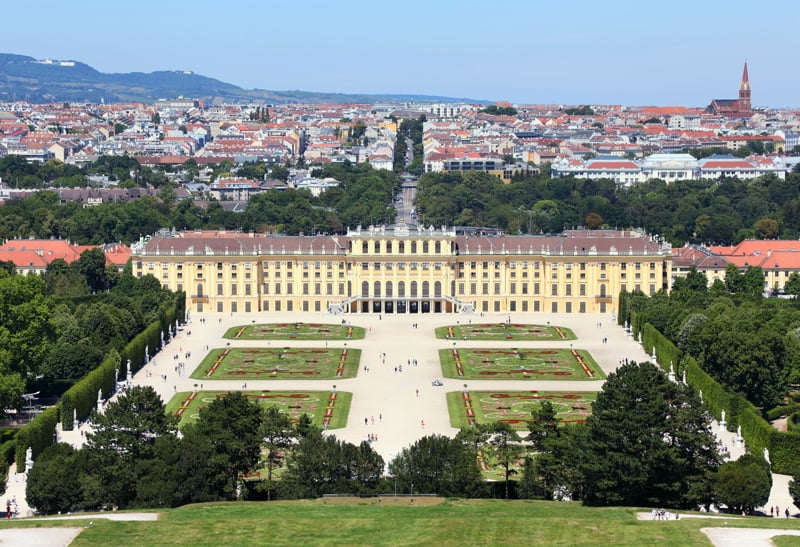
Vienna — Schönbrunn Palace
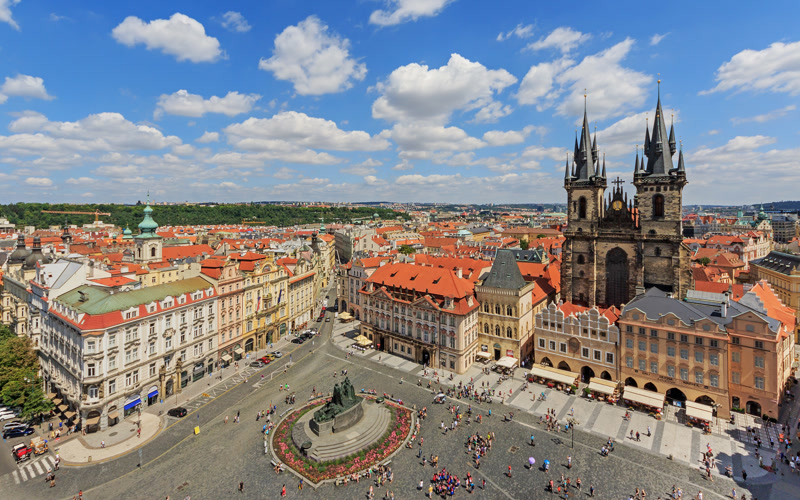
Prague — Old Town Square
⚡ The TL;DR Verdict
Prague wins on visual drama, budget, and medieval magic. Vienna wins on museums, coffee culture, and Imperial grandeur. Daily budget: Prague €60–80, Vienna €90–130.
- Go to Prague if you want the most photogenic medieval city in Central Europe, a world-class craft beer scene, and travel costs roughly half what Vienna charges.
- Go to Vienna if you want UNESCO-heritage coffee house culture, the Kunsthistorisches Museum's world-class art collection, and the grandest Imperial architecture in Europe.
- Go to both — the Railjet train connects them in under 4 hours and this is one of the great two-city combinations in Europe.
- Reddit verdict: Prague is the budget winner and more instantly beautiful; Vienna rewards those willing to invest more time and money in culture.
🏰 Choose Prague if...
You want fairy-tale medieval streets, the Charles Bridge at dawn, and craft beer for €2 a pint.
🎭 Choose Vienna if...
You want Klimt's The Kiss, Schönbrunn Palace, and marble coffee house tables with white-gloved waiters.
Quick Comparison
| Category | 🎭 Vienna | 🏰 Prague | Winner |
|---|---|---|---|
| Daily Budget (mid-range) | €90–130 per person | €60–80 per person | Prague |
| City Aesthetics | Imperial grandeur — Ringstrasse, palaces, monuments | Medieval fairy-tale — Gothic spires, Charles Bridge, cobblestones | Prague |
| Museums | World-class — Kunsthistorisches, Belvedere, Albertina | Good — National Museum, Mucha Museum, Jewish Museum | Vienna |
| Coffee Culture | UNESCO-listed Kaffeehaus tradition — unmatched | Excellent modern cafés, no equivalent tradition | Vienna |
| Nightlife | Good — Flex, Grelle Forelle, Naschmarkt bars | Excellent — craft beer bars, Žižkov, budget-friendly | Prague |
| Food Scene | Wiener Schnitzel, Tafelspitz, diverse international | Svíčková, trdelník, pork knuckle — hearty Czech cuisine | Tie |
| Ideal Stay Length | 4–5 days | 3–4 days | Prague |
| Getting Around | Excellent U-Bahn + trams, very walkable center | Compact metro + trams, Old Town fully walkable | Tie |
| Day Trips | Salzburg, Budapest, Bratislava, Hallstatt | Kutná Hora, Český Krumlov, Karlovy Vary | Tie |
| English Spoken | Widely spoken, especially in tourist areas | Good in tourist areas, limited outside | Vienna |
| Christmas Markets | Among Europe's best — Rathausplatz, Schönbrunn | Good — Old Town Square, Wenceslas Square | Vienna |
🏙️ City Character & Vibe
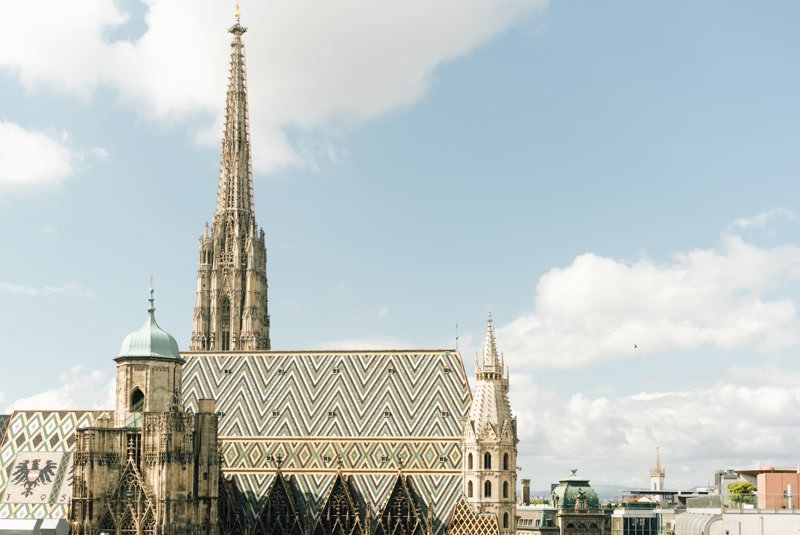
Vienna is a city that takes itself seriously — in the best possible way. The Habsburg Empire made it the capital of a domain stretching from Spain to Ukraine, and the city's architecture reflects every century of that ambition. The Ringstrasse, commissioned by Emperor Franz Joseph I in 1857, is one of the greatest urban planning projects in history: a sweeping boulevard lined with the Neo-Gothic Rathaus, the Neo-Classical Parliament, the Burgtheater, the State Opera, and the twin art history museums, all within easy walking distance. The Innere Stadt (First District) is dense with imperial palaces, Baroque churches, and the legendary coffee houses that have operated continuously since the 17th century.
Prague is something more intimate and immediately magical. The city's Old Town survived WW2 largely intact — unlike Vienna, Prague was never bombed, preserving its Gothic and Baroque fabric in extraordinary condition. Standing on Charles Bridge at 6am, before the tourist hordes arrive, with Hradčany Castle looming on the hill above and the Vltava river silent below, is one of Europe's great travel experiences. Prague's magic is more concentrated and compact than Vienna's; you feel it within an hour of arriving. It's a city that rewards wandering — turn down any lane in Malá Strana and you'll find painted Baroque facades, cobblestone passages, and courtyard gardens.
"Vienna vs Prague easily goes to Prague for me. I liked the architecture, food, and general atmosphere a fair bit more. Vienna was cool, but not my personal taste — it's a total fairy tale city." — r/solotravel
"Prague for vibes and the old town, Vienna for cafes and museums. In Prague I was drinking in cool bars and enjoying the small, walkable, well-preserved old town and felt right at home as a mid-20s traveler." — r/Europetravel
🎭 Museums & Cultural Attractions
Vienna has one of the highest museum densities in the world. The Kunsthistorisches Museum (€21) is a peer of the Louvre and the Prado — its collections span ancient Egypt, Greek and Roman antiquities, and European paintings including Vermeer, Rembrandt, Raphael, Bruegel, Caravaggio, and Velázquez. The Belvedere (€17–22) houses Klimt's The Kiss and Judith — two of the most recognizable paintings in Austrian history. The Albertina (€18) runs through Monet, Picasso, Dürer, and a permanent Egon Schiele collection. The Leopold Museum (€17) has the world's largest Schiele collection. Vienna also offers the Kunstkammer (Habsburg decorative arts treasury), the Vienna Natural History Museum, and the Naschmarkt food market — all within walking distance of each other.
Prague's cultural offer is solid but in a different tier. The Prague Castle complex (free exterior, €12–15 with palace/cathedral entry) is the largest ancient castle complex in the world by area — spanning Romanesque, Gothic, and Baroque architecture across a full hilltop. The Jewish Quarter (Josefov) (€15 combined ticket) preserves six synagogues and the Old Jewish Cemetery, one of the most evocative sites in Central Europe. The Mucha Museum (€12) celebrates Czech Art Nouveau master Alfons Mucha. What Prague lacks is the tier-one international art that Vienna offers in abundance.
"Vienna is the better choice if you want museums. Both cities are lovely to walk around but Vienna has endless amazing museums that could fill a full week." — r/Europetravel
🍽️ Food & Dining
Vienna's cuisine is rich, meat-forward, and deeply satisfying. Wiener Schnitzel — breaded veal escalope, pounded thin and pan-fried in clarified butter — is the dish Vienna claims ownership of, and at a traditional Gasthaus like Zum Wohl or Figlmüller, it's genuinely exceptional (€18–28). Tafelspitz (boiled beef with horseradish and apple sauce, €22–30) was Emperor Franz Joseph's favorite meal and remains a Viennese classic. The Naschmarkt — a 1.5km open-air market running along the Wienzeile — sells everything from Austrian cheeses to Turkish groceries to excellent stand-up lunch options (€6–12). Street food is improving but Vienna remains primarily a restaurant city.
Prague's food is similarly hearty Central European, but significantly cheaper. Svíčková (sirloin in cream sauce with bread dumplings and cranberry, 180–280 CZK / €7–11) is the essential Czech dish. Pečená kachna (roast duck with red cabbage and dumplings, 200–350 CZK / €8–14) is another classic. Prague's cheap eats scene is outstanding — lunch menus at neighborhood restaurants (polední menu) run 130–180 CZK (€5–7) for a two-course meal with soup. The craft beer scene has exploded — Lokál, Pivovarský klub, and Vinohradský pivovar serve some of the best unpasteurized Czech lager on earth for 50–70 CZK (€2–3) a pint.
"Prague is amazing. Lovely cafes and vibe. Vienna is incredible. World class city. Go to Vienna if you have a lot of money to spend. Go to Prague if you don't." — r/Europetravel
☕ Coffee & Café Culture
This is Vienna's calling card and one of the great travel experiences in Europe. The Viennese Kaffeehaus (coffee house) is a UNESCO Intangible Cultural Heritage — not a building or a recipe, but a way of being. The tradition is this: you enter, sit down at a marble-topped table, order a Melange (coffee with steamed milk, served with a glass of water on the side), and you stay as long as you like. Read the newspaper. Write. Play chess. Watch the world go by. Nobody rushes you. Legendary institutions include Café Central (opened 1876, Freud and Trotsky were regulars), Café Hawelka (opened 1939, unchanged since), and Café Schwarzenberg on the Ringstrasse. Pastries — Apfelstrudel, Sachertorte, Kipferl — are consumed at every table.
Prague has excellent coffee. The specialty coffee scene, centered around roasters like Doubleshot and EMA Espresso Bar, is genuinely world-class. The café atmosphere in neighborhoods like Vinohrady and Žižkov is warm, creative, and unhurried. But Prague doesn't have anything like Vienna's historic Kaffeehaus tradition — it's cafés by any other name, however good. If the idea of sitting for three hours in a 150-year-old coffee house surrounded by Jugendstil decor is your thing, there is no substitute for Vienna.
"I live in Vienna and it's a great city. My favorite thing about it is the coffee house culture — you can sit for hours with one coffee, read, and nobody bothers you. Nothing like it anywhere else." — r/solotravel — Vienna resident
💰 Cost Comparison
| Expense | 🎭 Vienna | 🏰 Prague |
|---|---|---|
| Hostel dorm (per night) | €30–55 | €15–30 (400–800 CZK) |
| Budget hotel (per night) | €80–140 | €45–90 (1,200–2,400 CZK) |
| Street food / cheap lunch | €8–15 | €3–7 (80–190 CZK) |
| Sit-down dinner (mid-range) | €20–40 | €10–20 (270–540 CZK) |
| Beer at a bar | €4–6.50 | €2–3 (50–80 CZK) |
| Coffee at a café | €4–6.50 | €2–4 (50–110 CZK) |
| Public transit (single) | €2.40 (Wiener Linien) | €1.50 (40 CZK) |
| Museum entry (major) | €17–22 | €10–15 (270–400 CZK) |
| Budget daily total | €90–130 | €60–80 |
Prague is around 30–40% cheaper than Vienna across almost every category. The most dramatic gap is food and drink — a round of Czech lagers at a Prague pub costs less than a single coffee in a Viennese Kaffeehaus. Budget travelers can live extremely well in Prague on €50/day; the same budget in Vienna means sacrificing significantly on accommodation and dining.
"Vienna has better museums (but Prague has some good ones too). I prefer Prague significantly more — it just felt like Vienna was a generic, beautiful European city. Nothing particularly stood out for me." — r/Europetravel
🚇 Getting Around
Vienna's public transit (Wiener Linien) is outstanding — a dense network of U-Bahn (subway), trams, and buses that covers the entire city reliably. A 24-hour transit pass costs €8.00; a 72-hour pass costs €17.10. The Innere Stadt (First District) is fully walkable — Schönbrunn, the Belvedere, the Prater, and the Ringstrasse museums are all reachable on foot or with one transit hop. Vienna is also very cycleable; the Donaukanal and Ringstrasse have good cycling infrastructure. Taxis and rideshare (Bolt, Uber) work normally but aren't necessary for most sightseeing.
Prague is even more compact and walkable. The Old Town, Malá Strana, and Hradčany are all reachable on foot from central accommodation. The metro (three lines) covers the broader city efficiently; a single ticket costs 40 CZK (€1.50); a 24-hour pass costs 120 CZK (€4.70). The tram network (especially tram 22) is the best way to reach Hradčany without climbing the hill. Prague's central areas are almost entirely pedestrianized, which makes wandering easy but can concentrate tourist foot traffic in the Old Town.
🌦️ Best Time to Visit
Both cities are best in spring (April–May) and early autumn (September–October) — pleasant temperatures, manageable crowds, and the best light for photography. Summer is peak tourist season for both; Prague's Old Town in July is genuinely swamped. December is worth considering for both cities: Vienna's Rathausplatz Christmas market is one of Europe's finest, and Prague's Old Town Square transforms into a fairy-tale market setting that's deeply atmospheric even in the cold.
🏘️ Where to Stay — Neighborhoods
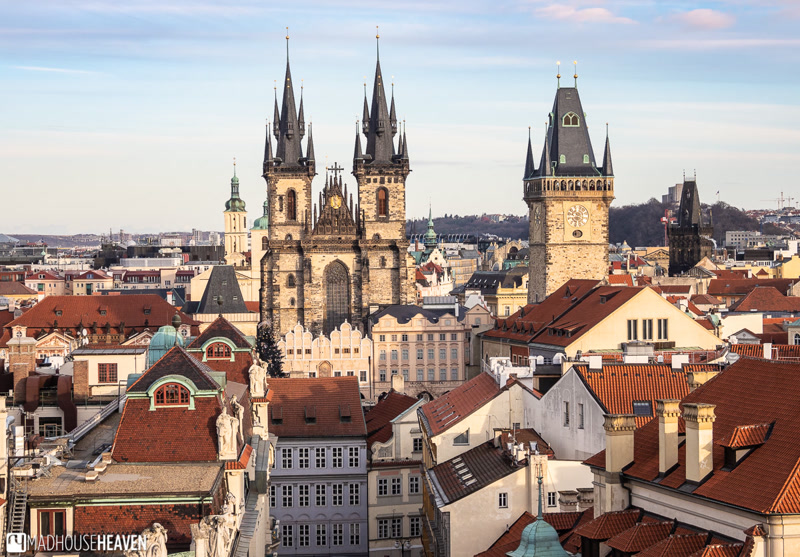
Vienna
Innere Stadt (1st District) — the historic center; walking distance to everything, but expensive and somewhat soulless at night. Neubau (7th District) — the hippest neighborhood, independent boutiques, excellent restaurants, good café scene; slightly more affordable than the center. Naschmarkt / Mariahilf (6th District) — near the famous market, excellent food options, central location without 1st District prices. Prenzlauer Allee / Josefstadt (8th District) — quiet, residential, excellent for longer stays; coffee houses and local restaurants. Avoid tourist trap hotels directly on the Ringstrasse unless budget is not a concern.
Prague
Vinohrady — the ideal base: safe, walkable, local feel with excellent restaurants and cafés; 10 minutes by metro from Old Town. Žižkov — grittier, more bohemian, excellent nightlife and bar scene, slightly cheaper. Malá Strana — the most atmospheric location (steps from Charles Bridge), but touristy and expensive. Old Town (Staré Město) — convenient but noisy, overcrowded, and overpriced; best reserved for very short stays. Nové Město — central, practical, Wenceslas Square hub; not pretty but well-connected.
"Stay in Vinohrady — it has a great local feel, excellent restaurants, and you're one metro stop from everything. Avoid the Old Town if you can." — r/travel
🚆 Day Trips
Vienna's location at the heart of Central Europe makes it one of Europe's great day-trip hubs. Salzburg (2h30 by Railjet, €30–50 return) is worth an overnight but also doable as a very long day. Bratislava (1h by Railjet or river boat, €15–25 return) — Slovakia's capital is often dismissed but genuinely charming for a half-day. Budapest (2h30 by Railjet, €30–50 return) — one of Europe's great cities and a natural extension of any Vienna trip. Hallstatt (3h by train + bus, €50+ return) — the picture-perfect lake village that inspired Frozen. Melk Abbey & Wachau Valley (1h30 by train or river boat, €20–35 return) — the Baroque monastery above the Danube is stunning.
Prague's day trip circuit is smaller but deeply rewarding. Kutná Hora (1h by train, €10–15 return) — the Sedlec Ossuary (Bone Church) and Gothic Cathedral of St. Barbara make this one of Europe's best day trips. Český Krumlov (2h30 by bus, €12–18 return) — arguably the most beautiful small town in Central Europe; a UNESCO World Heritage medieval castle town on a river bend. Karlovy Vary (2h by bus, €15–20 return) — the famous spa town with Baroque colonnades and mineral springs (and Becherovka, the Czech herbal liqueur). Terezín (1h by bus, €8–12 return) — the former Nazi concentration camp and ghetto is a sobering and important visit.
🔀 The Decision Framework
After synthesizing dozens of Reddit threads and real traveler accounts, here's who each city is right for:
🎭 Choose Vienna if...
- World-class art museums (Klimt, Rembrandt, Raphael, Schiele) are a priority
- You want to experience the UNESCO-heritage Viennese coffee house tradition
- Imperial architecture — Schönbrunn, the Hofburg, the Ringstrasse — appeals to you
- You're visiting in December for some of Europe's best Christmas markets
- You want easy access to Budapest, Salzburg, and Bratislava as day trips
- Wiener Staatsoper (State Opera) or classical music performances are on the itinerary
- You have 4–5 days and want to immerse in Habsburg history and culture
- Budget is secondary to experience quality
🏰 Choose Prague if...
- You want the most intact medieval city center in Central Europe
- Budget is a significant factor — Prague costs 30–40% less than Vienna
- Craft beer at €2 a pint (world-class Czech lager) is a personal priority
- You want fairy-tale architecture and Gothic streets for photography
- Day trips to Kutná Hora's Bone Church or Český Krumlov appeal to you
- A lively bar and nightlife scene without Berlin prices interests you
- You have 3–4 days and want the highlights without feeling rushed
- You prefer atmosphere over institutional culture
❓ Frequently Asked Questions
Is Vienna or Prague better for first-time visitors?
Both are excellent first-timer cities, but they deliver very different experiences. Prague wins on sheer visual drama — its medieval Old Town, astronomical clock, and hilltop castle create one of Europe's most photogenic city centers. You can cover the highlights in 3–4 days. Vienna is more manageable and polished, with world-class museums, the Ringstrasse boulevard, and the legendary coffee house culture — but it also costs more and takes 4–5 days to do properly. Reddit consensus leans toward Prague for pure beauty and budget-friendliness, and Vienna for those who want cultural depth and don't mind spending more.
Which is cheaper, Vienna or Prague?
Prague is meaningfully cheaper than Vienna. A mid-range daily budget in Prague runs €60–80/day (400–550 CZK hostel dorms, 150–200 CZK street food, affordable local restaurants). Vienna runs €90–130/day for equivalent travel — it's a Western European capital with Euro prices. A sit-down dinner in Prague costs 250–500 CZK (€10–20); the same meal in Vienna runs €20–40. Beer at a Prague pub costs 50–70 CZK (€2–3); a Viennese beer runs €4–6. If budget is any consideration, Prague is the easy winner.
How many days do you need in Vienna vs Prague?
Prague: 3–4 days covers the Old Town, Prague Castle, Malá Strana, Charles Bridge, the Jewish Quarter, and a day trip to Kutná Hora — without feeling rushed. Vienna: 4–5 days minimum to hit the Kunsthistorisches Museum, Belvedere Palace, Schönbrunn, the Ringstrasse, and the State Opera. Both cities reward longer stays — Prague for its atmospheric neighborhoods beyond the tourist center, Vienna for its outer palace gardens and coffee house culture. If you have 10 days, do both — the train is under 4 hours.
Which city has better coffee house culture?
Vienna wins this one decisively. The Viennese Kaffeehaus (coffee house) is a UNESCO Intangible Cultural Heritage — a tradition of sitting for hours with a single Melange, reading newspapers, writing, and watching the world go by. Legendary institutions like Café Central, Café Hawelka, and Café Schwarzenberg have been operating for 150+ years. Prague has excellent cafés, but they lack Vienna's formal coffee house tradition. A Vienna coffee experience — white-gloved service, marble tables, a glass of water on the side — is genuinely unique in the world.
Which city has better architecture?
Different periods, both stunning. Prague has arguably the most intact medieval city center in Europe — the Old Town Square, Charles Bridge, and Hradčany Castle Hill survived WW2 largely undamaged, creating an almost fairy-tale urban landscape. Vienna's architecture is Imperial and monumental: the Ringstrasse boulevard with its Neo-Gothic Rathaus, Neo-Classical Parliament, and Neo-Baroque State Opera is one of history's great urban planning feats. Reddit users note that Prague's architecture is more immediately photogenic and densely packed; Vienna's is grander but more spread out. If you want photos, Prague. If you want imperial scale, Vienna.
Can you visit Vienna and Prague on the same trip?
Absolutely — it's one of Europe's great two-city combinations. The Railjet train from Vienna Hauptbahnhof to Prague Main Station takes approximately 3h50m and costs €20–60 booked in advance (ÖBB or Czech Railways). The cities are perfectly complementary: Vienna for imperial grandeur and museum culture, Prague for medieval beauty and budget-friendly nightlife. A classic route: 3–4 days Vienna → train → 3–4 days Prague, or add Budapest for a three-capital Central European trip. See our Prague vs Budapest comparison for how to build the full itinerary.
Which has better museums, Vienna or Prague?
Vienna, and it's not close. The city has one of the highest museum densities in the world. The Kunsthistorisches Museum (€21) houses one of the world's great art collections — Vermeer, Rembrandt, Raphael, Caravaggio. The Belvedere (€17–22) has Klimt's The Kiss. The Albertina (€18) has Monet, Picasso, and Egon Schiele. The Natural History Museum and Kunstkammer Vienna round out an extraordinary offer. Prague's National Museum is solid but in a different league. If museums are a priority, Vienna is unambiguously the better choice.
Which city is better for nightlife?
Prague edges Vienna for younger, budget-conscious travelers. The city's craft beer scene (Lokál, Pivovarský klub) is world-class, and the nightlife around Žižkov, Vinohrady, and Nové Město is lively without being purely touristy. Prague is also significantly cheaper — bar tabs run half the price of Vienna. Vienna has excellent bars and a strong club scene (Flex, Grelle Forelle) but is more expensive and slightly more formal. The Naschmarkt area and Mariahilfer Strasse come alive at night. Both cities are good; Prague wins on value and volume.
Ready to plan your Central European adventure?
Get a free custom itinerary for Vienna, Prague, or both — built from real traveler insights, not generic templates.
🎟️ Book Tours & Experiences
Hand-picked tours and activities for both destinations — book with free cancellation
Experiences via Viator — free cancellation on most tours