How we built this comparison
This page combines traveler discussion patterns, published price ranges, flight schedules, and seasonal data to help you decide between Yellowstone and Grand Canyon.
- Reviewed 100+ Reddit threads from r/travel, r/solotravel, r/NationalParks, r/Yellowstone, r/GrandCanyon for authentic traveler experiences and advice.
- Verified costs for accommodation, car rentals, and flights against current booking platforms (Expedia, Booking.com, Kayak) for various seasons.
- Cross-referenced seasonal patterns, weather data, and park service advisories for accuracy on accessibility and optimal visiting times.
- Incorporated local insights and specific attraction details from park official websites and reputable travel blogs.
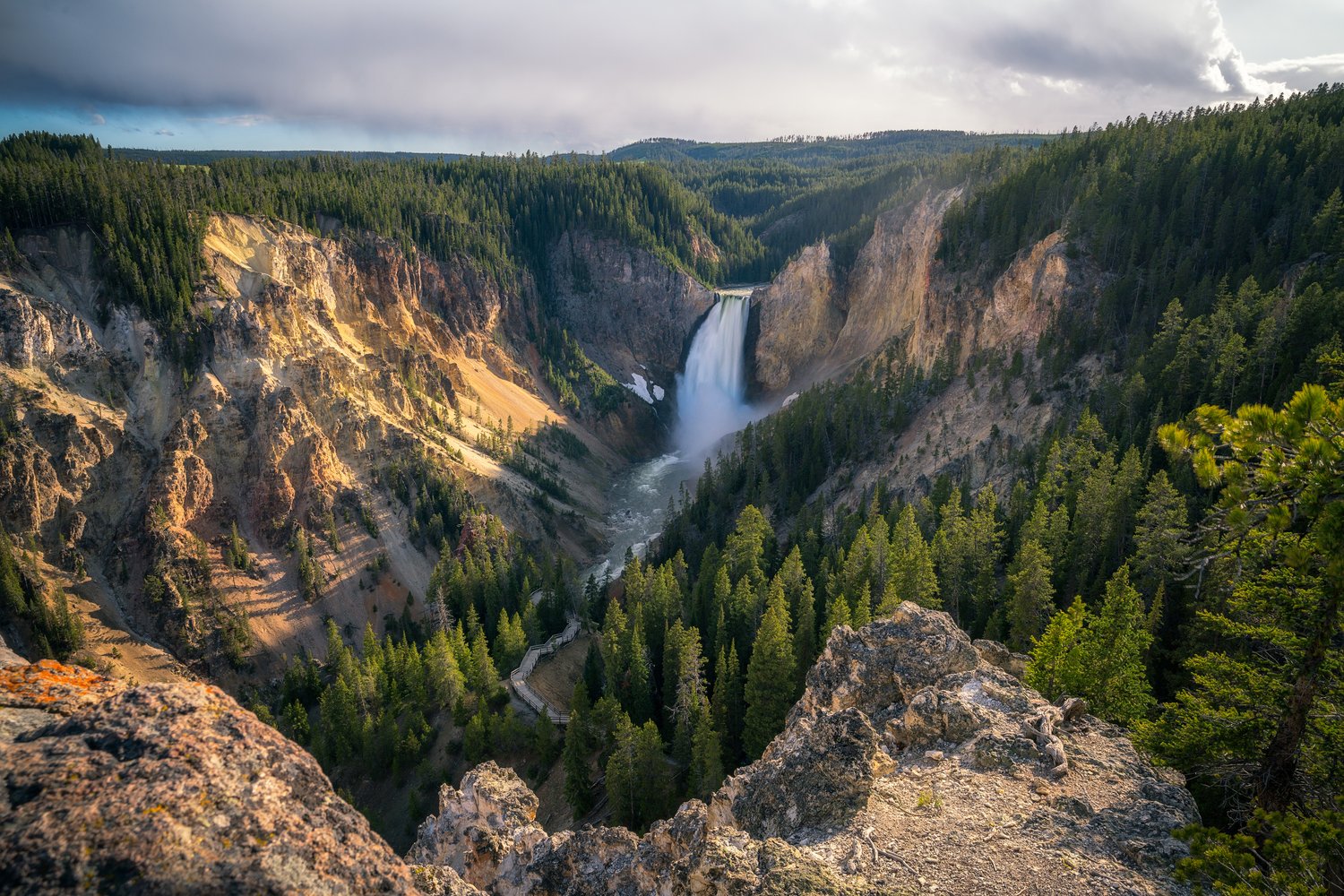
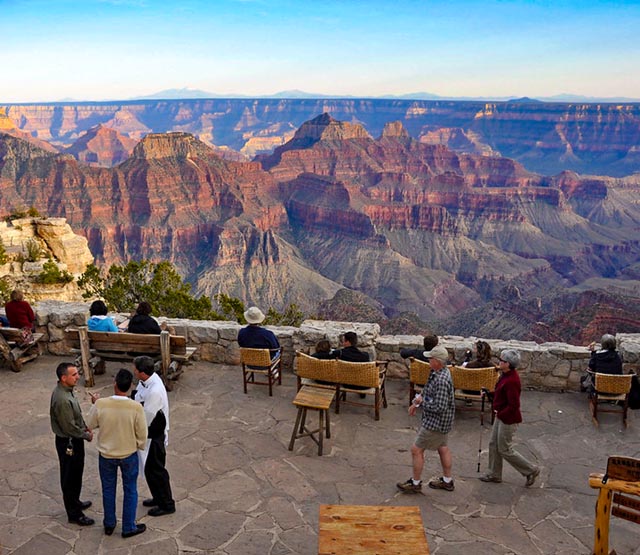
⚡ The TL;DR Verdict
For wildlife enthusiasts and those craving diverse geothermal features and vast, sprawling landscapes best explored by car, Yellowstone is your winner, typically costing $150-250 USD per person per day. If dramatic, awe-inspiring geological vistas and epic rim-to-river hiking are your priority, the Grand Canyon, with a similar daily budget of $150-250 USD, will leave you speechless.
- Choose Yellowstone: Pick Yellowstone if you're fascinated by geysers, hot springs, and abundant wildlife (bison, elk, bears). It's a driving park perfect for families and photographers, offering unique natural phenomena you won't see anywhere else.
- Choose Grand Canyon: Choose the Grand Canyon for its sheer scale and mind-bending geology. It's ideal for avid hikers looking for challenging trails down into the canyon, or those who want iconic, panoramic views and stunning sunrises/sunsets.
- Choose Both: While geographically distant, you could technically visit both on an extended two-week road trip if flying into a central hub like Denver or Salt Lake City. Dedicate at least 4-5 full days to each park to truly appreciate them, understanding it will involve significant driving (10-12+ hours between them).
Quick Comparison
| Category | Yellowstone | Grand Canyon | Winner |
|---|---|---|---|
| Nature & Scenery | Geothermal marvels (geysers, hot springs), diverse wildlife (bison, elk, bears), vast forests, waterfalls, and canyons within the park. | One of the world's most iconic geological formations, an immense canyon carved by the Colorado River, offering breathtaking scale and colorful rock layers. | Yellowstone |
| Activities & Experiences | Geyser basin boardwalks, wildlife viewing, scenic drives, hiking, fishing, and boating on Yellowstone Lake. Winter offers snowmobiling/snowcoaching. | Rim hiking (easy to moderate), challenging inner-canyon hikes (Bright Angel, South Kaibab), mule rides, scenic drives, helicopter tours, whitewater rafting. | Grand Canyon |
| Costs | Higher seasonal demand drives up lodging and car rental. Food can be pricey inside the park. Park entry: $35/vehicle. | Similar park entry ($35/vehicle), but more diverse lodging options outside the park. Can be slightly cheaper if staying in nearby Flagstaff or Williams. | Tie |
| Getting There | Nearest airports: Bozeman (BZN), Jackson Hole (JAC), Idaho Falls (IDA). All require car rental. Flights often involve connections. | Nearest airports: Flagstaff (FLG - regional), Phoenix (PHX - major hub, 3.5-4 hour drive), Las Vegas (LAS - major hub, 4-5 hour drive). Easier access from large cities. | Grand Canyon |
| Getting Around | Essential to have a car. Park is huge with extensive driving loops. No internal shuttle system for most areas. | A car is recommended but the South Rim has an excellent free shuttle bus system covering viewpoints and trailheads, reducing internal driving. | Grand Canyon |
| Accommodation | Limited lodging inside the park, booking 6-12 months in advance is critical. Options outside include West Yellowstone, Gardiner, Cody. | Several lodges directly on the South Rim, also requiring early booking. More varied and potentially cheaper options in nearby Tusayan, Williams, or Flagstaff. | Grand Canyon |
| Weather & Seasons | Short summer season (June-Sept), with cold nights even then. Snow closures common Oct-May. Can be rainy. | Year-round accessibility (South Rim). Spring/Fall are ideal (mild temps for hiking). Summer is hot (90s-100s °F in inner canyon), Winter is cold but often sunny. | Grand Canyon |
| Families | Fantastic for kids with geyser viewing, wildlife spotting, and easy boardwalks. Educational and interactive. | Iconic views and easy rim trails. Inner-canyon hiking is too strenuous for young kids. Ranger programs are engaging. | Yellowstone |
| Solo Travel | Easy to navigate solo, but large distances mean you're often alone in your car. Less opportunity for spontaneous social interaction. | Very solo-friendly due to shuttle system, well-marked trails, and frequent ranger programs. More opportunities to meet others on trails or shuttles. | Grand Canyon |
| Day Trips & Surroundings | Often combined with Grand Teton National Park (just south). Nearby towns like Jackson Hole and Cody offer cowboy culture. | Can be combined with Sedona (red rocks), Flagstaff (historic Route 66), or even Las Vegas. Petroglyph sites nearby. | Grand Canyon |
🏞️ Nature & Scenery
Yellowstone offers an unparalleled diversity of natural phenomena, making it feel like a living, breathing geology lesson. From the iconic Old Faithful erupting on schedule to the vibrant, otherworldly colors of Grand Prismatic Spring, the geothermal features alone are worth the trip. Beyond that, you'll encounter bison traffic jams, elk grazing in meadows, and potentially bears or wolves. The Grand Canyon, while undeniably awe-inspiring in its immense scale and geological grandeur, is more about one singular, magnificent view that changes with light and shadow. You stare into a vast abyss, whereas Yellowstone presents a series of distinct, interactive natural wonders. While the Grand Canyon's sheer size is incredible, Yellowstone's variety of natural spectacles and wildlife encounters provides a more dynamic and interactive experience for most visitors. "Yellowstone just felt more alive, with all the steam and the animals everywhere. Grand Canyon's a spectacle, but Yellowstone is an experience." The Grand Canyon is a profound visual, but Yellowstone is a full sensory immersion.
Winner takeaway
- Winner: Yellowstone
- Why: Yellowstone wins for its unparalleled diversity of unique natural phenomena and abundant wildlife encounters.
- Who this matters for: Wildlife enthusiasts, photographers, and those fascinated by active geology.
🗺️ Activities & Experiences
While both parks offer superb hiking and scenic drives, the Grand Canyon edges out Yellowstone for the sheer intensity and variety of its core experiences. The opportunity to hike *into* the canyon, whether for a few hours on the Bright Angel Trail or an epic rim-to-river-to-rim journey (which requires significant planning and fitness), is a truly unique and challenging adventure. Mule rides down into the canyon offer a different perspective for those not up for intense hiking. Helicopter tours provide a spectacular aerial view, and for the truly adventurous, multi-day whitewater rafting trips on the Colorado River are once-in-a-lifetime experiences. Yellowstone's activities are more focused on viewing and less on physical immersion into its main features. You walk *around* geysers and *spot* wildlife from a distance. "Hiking down into the Grand Canyon felt like stepping into another world. Nothing in Yellowstone gave me that same sense of scale and accomplishment." While Yellowstone has great hiking, none quite match the epic scope of an inner-canyon Grand Canyon trek or the thrill of rafting through its depths. The Grand Canyon offers more distinct 'bucket list' style activities.
Winner takeaway
- Winner: Grand Canyon
- Why: The Grand Canyon offers more iconic, intense, and physically immersive 'bucket list' experiences, especially its inner-canyon access.
- Who this matters for: Adventure seekers, serious hikers, and those looking for unique, challenging physical experiences.
💰 Costs
Both parks will cost you a pretty penny, especially during peak season. Park entry for both is $35 per private vehicle for a 7-day pass. The main cost drivers are accommodation and car rental. In Yellowstone, lodging inside the park (e.g., Old Faithful Inn, Mammoth Hot Springs Hotel) typically ranges from $250-500+ per night, and fills up 6-12 months in advance. Outside towns like West Yellowstone or Gardiner will run you $200-400+. Car rentals from Bozeman (BZN) or Jackson (JAC) can hit $100-200+ per day in summer. Grand Canyon's South Rim lodging (e.g., Bright Angel Lodge, Yavapai Lodge) is similarly priced at $200-450+ per night, also requiring advance booking. However, the Grand Canyon benefits from being closer to larger cities like Flagstaff (about 1.5-hour drive) or Williams (1-hour drive), where you might find more budget-friendly motels for $120-200, though you'll spend more on gas and travel time. "Don't underestimate how much gas you'll use in Yellowstone; it's massive. But Grand Canyon hotels near the rim are just as pricey." Food costs average $50-100 per person per day at both parks if you're eating out, but packing your own groceries can significantly cut this down. Overall, both parks are premium destinations, and budgeting $150-250 USD per person per day is a realistic baseline, not including flights.
Winner takeaway
- Winner: Tie
- Why: Costs for both parks are very similar, with high demand and remote locations driving up essential expenses like lodging and car rental.
- Who this matters for: Budget-conscious travelers will find both challenging to do cheaply without extensive planning and self-catering.
✈️ Getting There
The Grand Canyon generally offers easier and often cheaper access due to its proximity to major airline hubs. You can fly into Phoenix Sky Harbor (PHX) or Las Vegas McCarran (LAS) from almost anywhere in the US, with typical round-trip flights from NYC ranging from $300-600 USD. From PHX or LAS, it's a manageable 3.5-5 hour scenic drive to the South Rim. Flagstaff (FLG) is closer (1.5 hours) but a smaller airport with fewer direct flights and potentially higher prices. Yellowstone's main gateway airports – Bozeman (BZN), Jackson Hole (JAC), or Idaho Falls (IDA) – are smaller regional airports. Flights tend to be more expensive (e.g., $400-700+ USD round-trip from NYC) and almost always involve a connection. While beautiful, the drives from these airports to the park entrances are also typically 1-2 hours. "Getting to Grand Canyon was way smoother. Flew into Vegas, rented a car, and was at the South Rim by afternoon. Yellowstone felt like a whole day just for travel to get *near* the park." The ease of securing a direct flight to a major hub and then a straightforward drive gives the Grand Canyon a clear advantage, especially for those with limited travel time.
Winner takeaway
- Winner: Grand Canyon
- Why: The Grand Canyon is more accessible with better flight options to nearby major airport hubs, leading to potentially cheaper and easier travel.
- Who this matters for: Travelers prioritizing quick, direct flight access and shorter drives from the airport.
🚗 Getting Around
While both parks essentially require a car to get to, the Grand Canyon wins for its superior internal transportation once you're there. The South Rim of the Grand Canyon operates an incredibly efficient and free shuttle bus system that covers all the major viewpoints, trailheads (like Bright Angel and South Kaibab), and lodges. This means you can park your car once, avoid traffic, and easily hop on and off the buses, which run frequently. This significantly reduces stress, especially during peak season, and lessens your carbon footprint. Yellowstone, on the other hand, is a massive park with a figure-eight road system. A personal vehicle is absolutely essential for exploring, as there are no comprehensive internal shuttle services connecting the main attractions. You'll spend a lot of time driving between geyser basins, thermal features, and wildlife viewing spots, often covering hundreds of miles within the park over several days. "The Grand Canyon shuttles were a lifesaver. Didn't have to fight for parking at every viewpoint. Yellowstone, I felt like I lived in my car." The Grand Canyon's shuttle system enhances the visitor experience by making internal navigation effortless and enjoyable.
Winner takeaway
- Winner: Grand Canyon
- Why: The Grand Canyon's free and efficient shuttle system on the South Rim significantly reduces the need for constant driving and parking hassles within the park.
- Who this matters for: Families, older travelers, and anyone wanting to minimize driving once inside the park.
🏨 Accommodation
Both parks demand advanced planning for in-park lodging, which is generally expensive. However, the Grand Canyon offers a slightly better array of options and flexibility. On the South Rim, you have several distinct lodges operated by Xanterra (e.g., El Tovar, Bright Angel Lodge, Maswik Lodge, Yavapai Lodge), offering a range of styles from historic to more modern, typically from $200-450+ per night. What sets the Grand Canyon apart is the robust selection in nearby gateway towns. Tusayan, just outside the South Entrance, has numerous hotels and motels (e.g., Grand Canyon Plaza Hotel, Best Western Premier Grand Canyon Squire Inn) for $180-350+. Go a bit further to Williams or Flagstaff, and you'll find even more diverse and sometimes more affordable choices (e.g., Hampton Inn & Suites Flagstaff, Hotel Monte Vista) around $120-250+, albeit with a longer drive. Yellowstone's in-park lodging (e.g., Old Faithful Inn, Canyon Lodge) is equally sought after and expensive ($250-500+). Outside the park, towns like West Yellowstone and Gardiner are smaller and can feel saturated, leading to prices that often rival or exceed in-park options ($200-400+ for standard hotels like Kelly Inn West Yellowstone or Absaroka Lodge). "I found decent hotels in Flagstaff for half what I was seeing in West Yellowstone, even though it was a bit further drive to the canyon." The Grand Canyon's larger nearby urban centers provide more lodging diversity and capacity, offering a wider range of price points.
Winner takeaway
- Winner: Grand Canyon
- Why: The Grand Canyon offers slightly more diverse and potentially more budget-friendly lodging options, especially when considering nearby gateway towns with larger capacities.
- Who this matters for: Travelers looking for more choices or potentially lower prices outside the immediate park area.
☀️ Weather & Seasons
The Grand Canyon offers a significantly more flexible and predictable weather window, especially for year-round access to its South Rim. Spring (April-May) and Fall (September-October) are ideal, with mild temperatures (50s-70s °F / 10s-20s °C) perfect for hiking the trails. Summer can be scorching, especially inside the canyon (100s °F / 38°C+), making rim-to-river hikes dangerous, but the rim itself is still pleasant. Winter (December-February) is cold, often with snow, but the views are spectacular, and crowds are minimal. Yellowstone, by contrast, has a notoriously short and often unpredictable summer season, roughly from late May to early October. July and August are prime, with daytime highs in the 70s-80s °F (20s °C), but nights can still drop into the 30s-40s °F (0-10°C), and snow is not unheard of even in June or September. Most park roads are completely closed from early November to late April/early May due to heavy snow. "Yellowstone's weather is wild. We had sunshine, hail, and snow flurries all in one day in July. Grand Canyon in October was just perfect hiking weather." The Grand Canyon's extended shoulder seasons and year-round accessibility make it much easier to plan a trip with favorable conditions.
Winner takeaway
- Winner: Grand Canyon
- Why: The Grand Canyon offers a longer, more predictable window for pleasant weather, with the South Rim being accessible year-round, unlike Yellowstone's limited summer season.
- Who this matters for: Travelers who prefer to avoid extreme heat/cold, want year-round access, or have specific hiking goals that require mild temperatures.
👨👩👧👦 Families
Yellowstone is arguably more captivating and interactive for families with children of all ages. The constant anticipation of Old Faithful erupting, the bubbling mud pots, and the vibrant colors of the hot springs are like a natural playground that mesmerizes kids. Wildlife viewing is also a huge draw; spotting bison, elk, or even a bear from the car or a safe distance is incredibly exciting for youngsters. Many trails are easy boardwalks, perfect for strollers or little legs. The educational aspect, explaining geology and ecology in real-time, is also very strong. The Grand Canyon, while undeniably impressive, can be more challenging for families with younger children. The main activity is viewing the vast chasm, which can become repetitive for short attention spans. Inner-canyon hiking is generally too strenuous and dangerous for young kids (and even challenging for older ones). While the South Rim offers easy, paved paths and excellent ranger programs, Yellowstone provides more varied, dynamic, and direct interactions with its unique features that keep children engaged. "My kids were bored after an hour at the Grand Canyon, but in Yellowstone, they were constantly asking what geyser we'd see next or if we'd spot another bison!" Yellowstone's 'active' natural displays and abundant wildlife make it a more consistently engaging experience for most families.
Winner takeaway
- Winner: Yellowstone
- Why: Yellowstone offers a more diverse, interactive, and consistently engaging experience for children of all ages, with its unique geothermal features and abundant wildlife.
- Who this matters for: Families with young children or those seeking an educational and dynamic natural experience.
🚶♀️ Solo Travel
For solo travelers, the Grand Canyon, particularly the South Rim, offers a more accessible and socially integrated experience. The excellent shuttle system means you can easily get around without constantly driving and parking alone. You'll naturally encounter and chat with fellow travelers on the shuttle buses, at viewpoints, and along the well-trafficked rim trails. Hiking the Bright Angel or South Kaibab trails, while challenging, is rarely solitary, offering a sense of shared accomplishment and camaraderie with other hikers. Yellowstone, though perfectly safe for solo travelers, is such a vast driving park that you'll spend a lot of time alone in your car. While there are plenty of people at major geyser basins, the sheer distances between attractions mean fewer spontaneous social encounters compared to the Grand Canyon's concentrated South Rim. "As a solo traveler, I found it easier to strike up conversations on the Grand Canyon shuttles and trails. In Yellowstone, I felt more isolated in my rental car." Both parks are safe, but the Grand Canyon's layout and transportation facilitate more natural, casual interaction with other visitors, which can be a huge plus for solo explorers.
Winner takeaway
- Winner: Grand Canyon
- Why: The Grand Canyon's efficient shuttle system and concentrated South Rim create more natural opportunities for solo travelers to meet and interact with others.
- Who this matters for: Solo travelers looking for ease of navigation and more opportunities for casual social interaction.
🏘️ Day Trips & Surroundings
The Grand Canyon offers a wider and more varied array of compelling day trips and nearby attractions, giving it an edge in this category. From the South Rim, you can easily venture south to the stunning red rock country of Sedona (2-hour drive), offering incredible hiking and spiritual retreats. Historic Flagstaff (1.5-hour drive) provides a charming small-city experience with Route 66 nostalgia, craft breweries, and Lowell Observatory. Even a 4-5 hour drive to Las Vegas offers a complete change of pace with entertainment and dining. There are also smaller attractions like Bearizona Wildlife Park and ancient petroglyph sites (e.g., Walnut Canyon National Monument). Yellowstone's primary and most spectacular 'day trip' is undoubtedly Grand Teton National Park, which is essentially contiguous to its south, a must-do if you're in the area. Beyond that, gateway towns like Jackson Hole (high-end cowboy culture, expensive) and Cody (rodeo, Buffalo Bill Center of the West) offer some interest, but the variety of natural and cultural experiences isn't as broad or distinct as what's available around the Grand Canyon. "After a few days at the Grand Canyon, it was awesome to switch gears and explore Sedona's vortexes or walk around historic Flagstaff. Yellowstone felt a bit more isolated overall." The Grand Canyon's regional diversity allows for a more varied itinerary if you're looking to explore beyond just the national park.
Winner takeaway
- Winner: Grand Canyon
- Why: The Grand Canyon benefits from a more diverse range of compelling and distinct day trip options, including Sedona, Flagstaff, and even Las Vegas.
- Who this matters for: Travelers who want to combine their national park visit with other unique natural landscapes, cultural sites, or city experiences.
❓ Frequently Asked Questions
Which park is better for first-time national park visitors?
Yellowstone often makes a stronger first impression due to its sheer variety of active geothermal features and abundant wildlife. It feels more 'alive' and offers constant surprises, making it an excellent introduction to the wonders of the national park system for many.
How many days should I spend in each park?
For Yellowstone, plan at least 3-5 full days to cover the major loops and attractions without feeling rushed. For the Grand Canyon (South Rim), 2-3 full days are sufficient for rim views, short hikes, and ranger programs. If you plan an inner-canyon hike, add more time.
Is it possible to visit both parks on one trip?
Yes, but it requires significant travel time. The drive between Yellowstone and the Grand Canyon is roughly 10-12 hours, covering about 800 miles. It's best suited for a longer road trip (2+ weeks) and often involves flying into one region and out of another.
Which park is better for photography?
Both are incredible, but Yellowstone offers more diverse subjects: vibrant thermal features, diverse wildlife in natural settings, and sweeping landscapes. The Grand Canyon is unparalleled for grand vistas, sunrises, sunsets, and star photography, but the range of subjects is narrower.
What's the best time of year to visit each park?
Yellowstone is best from June to early October when all roads are open and wildlife is active. The Grand Canyon's South Rim is accessible year-round, with spring (April-May) and fall (Sept-Oct) offering the best hiking weather and fewer crowds than summer.
Are there good options for accessibility in both parks?
Yes, both parks strive for accessibility. Yellowstone has numerous boardwalks around geyser basins and paved paths. The Grand Canyon's South Rim has paved, relatively flat paths and accessible viewpoints along much of its length, with the shuttle system also being accessible.
Which park has better food options?
Neither park is renowned for gourmet dining, but both offer basic lodge restaurants, cafeterias, and snack bars. Yellowstone's Old Faithful Inn Dining Room offers a more upscale experience. For diverse culinary options, you'll find better choices in gateway towns like Flagstaff (for GC) or Jackson Hole (for Yellowstone).
Can I see both parks if I only have a week?
It's highly ambitious for a single week and not recommended if you want to truly experience either. You'd spend too much time traveling between them. Focus on one park for a week to have a more relaxed and immersive experience.
Ready to plan your USA National Parks trip?
Get a free custom itinerary for Yellowstone, Grand Canyon, or both — built from real traveler insights.
🎟️ Book Tours & Experiences
Hand-picked tours and activities for both destinations — book with free cancellation
Experiences via Viator — free cancellation on most tours