📋 Our Methodology
This comparison is built from real sources, not AI guesswork:
- 15+ Reddit threads from r/indonesia, r/solotravel, r/southeastasia synthesized
- Cost data from Numbeo (March 2026), cross-checked with recent Reddit trip reports
- Weather from Open-Meteo historical averages
- Train and transport costs from KAI (Indonesian Rail) official fares
- Accommodation ranges from Booking.com and recent traveler reports
⚡ The TL;DR Verdict
Yogyakarta wins for first-time visitors, temple seekers, and anyone who wants the classic Java experience. Solo wins for authentic local life, serious batik shopping, better street food, and travelers who've already done Yogyakarta.
- Go to Yogyakarta if: Borobudur and Prambanan are on your bucket list, this is your first Java trip, you want arts & wayang performances, or you only have 3–5 days
- Go to Solo if: You want a more authentic, less-touristy Java experience, you're a batik or food nerd, or you've already seen Yogyakarta's temples
- Budget: Yogyakarta ~Rp 300,000–500,000/day ($18–30 USD) mid-range; Solo ~Rp 200,000–400,000/day ($12–25 USD) — Solo is cheaper
- The best answer for most travelers: do both — they're 1 hour apart by cheap train and complement each other perfectly
🏛️ Choose Yogyakarta if...
Borobudur and Prambanan are on your bucket list, this is your first Java trip, you want arts and wayang performances, or you need a full backpacker infrastructure.
🎨 Choose Solo if...
You've already done Yogyakarta, you're a serious batik buyer, local food is your priority (nasi liwet, soto, timlo), or you want a slower, more authentic Javanese city experience.
Quick Comparison
| Category | 🏛️ Yogyakarta | 🏭 Solo (Surakarta) | Winner |
|---|---|---|---|
| Daily Budget (mid-range) | Rp 300,000–500,000 (~$18–30) | Rp 200,000–400,000 (~$12–25) | Solo |
| Temple Access | Borobudur (60km) + Prambanan (15km) | Cetho & Sukuh on volcano (45km) | Yogyakarta |
| Tourist Infrastructure | Full backpacker circuit, hostels, tours | Local-focused, fewer English menus | Yogyakarta |
| Food Scene | Gudeg, bakpia, warungs on Malioboro | Nasi liwet, soto Solo, Timlo — richer local food | Solo |
| Batik Shopping | Tourist batik on Malioboro Street | Pasar Klewer — Indonesia's batik capital | Solo |
| Atmosphere | Busy, touristy, university-city energy | Slower, more authentic, fewer crowds | Tie |
| Nightlife | Craft beer bars, live music, Jl. Prawirotaman | Very limited — mostly local warung culture | Yogyakarta |
| Royal Palace (Kraton) | Kraton Ngayogyakarta — active sultanate | Keraton Kasunanan — slightly smaller | Yogyakarta |
| Train Access from Jakarta | Direct trains, 6–8h, $8–25 | Direct trains, 7–8h, $7–20 | Tie |
| Recommended Stay | 3–5 days minimum | 2–3 days | Yogyakarta |
| Best For | First-timers, temple lovers, backpackers | Repeat visitors, foodies, authentic culture | Tie |
🏛️ City Character & Vibe
Yogyakarta is the undisputed cultural capital of Java and one of Indonesia's most visited cities. It's a living royal city — the Sultan of Yogyakarta is still active as both the traditional ruler and the elected governor, giving the city an unusual dual identity. The result: a city that feels simultaneously ancient and thoroughly modern, packed with students (Gadjah Mada University has 55,000+ students), backpackers, and cultural pilgrims. Malioboro Street is the beating heart — a chaotic, beautiful strip of batik stalls, becak (cycle rickshaw) drivers, street performers, and warungs that stays alive until midnight. The arts scene is extraordinary: wayang kulit (shadow puppet) performances, gamelan concerts, and traditional Javanese dance are all accessible and affordable.
Solo (Surakarta), just 65km east, is what Yogyakarta might have been if it hadn't become a major tourist destination. The second great royal city of Central Java, Solo has its own active sultanate — the Keraton Kasunanan and Pura Mangkunegaran palaces both host living royal courts. But the city hasn't chased the backpacker market. Warungs outnumber tourist restaurants 50-to-1. The batik markets feel like they serve Indonesian buyers first and tourists second. Locals will often tell you: Solo's food is better, the people are friendlier, and the atmosphere is more "real" Java. Reddit consistently calls Solo "what Yogyakarta used to be like 20 years ago."
⛩️ Temples & Heritage
This is Yogyakarta's strongest card — and it's not close.
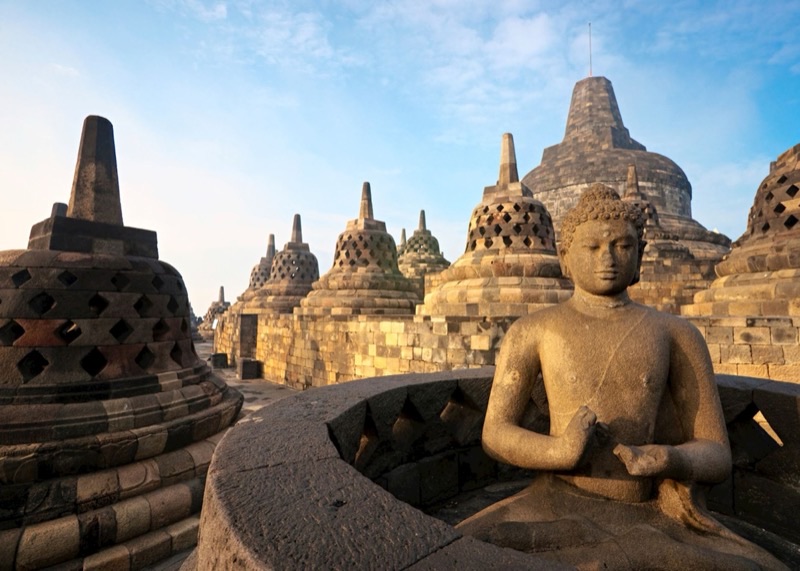
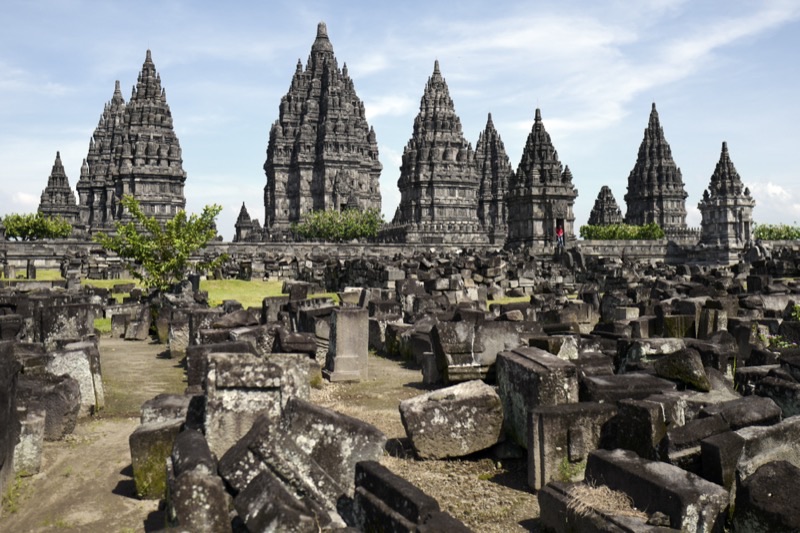
Borobudur (60km northwest of Yogyakarta, ~90 minutes) is one of the world's great archaeological monuments: a 9th-century Mahayana Buddhist temple built on a volcanic hill, with 504 Buddha statues, 2,672 relief panels, and 72 stupas arranged in nine stacked platforms. It's a UNESCO World Heritage Site and the largest Buddhist monument on Earth. Sunrise visits (entry from 4:30 AM) are particularly spectacular, with mist rolling through the surrounding jungle. Entry fee: Rp 350,000 ($22) for foreigners. A pre-dawn private tour runs $30–50. Prambanan (15km east of Yogyakarta center) is the Hindu counterpart: a 9th-century temple compound dedicated to the Trimurti (Brahma, Vishnu, Shiva), with 240 temples in the complex. The central Shiva temple rises 47 meters. Entry: Rp 350,000 ($22), or combo ticket with Borobudur. Both temples can be done in a single long day from Yogyakarta.
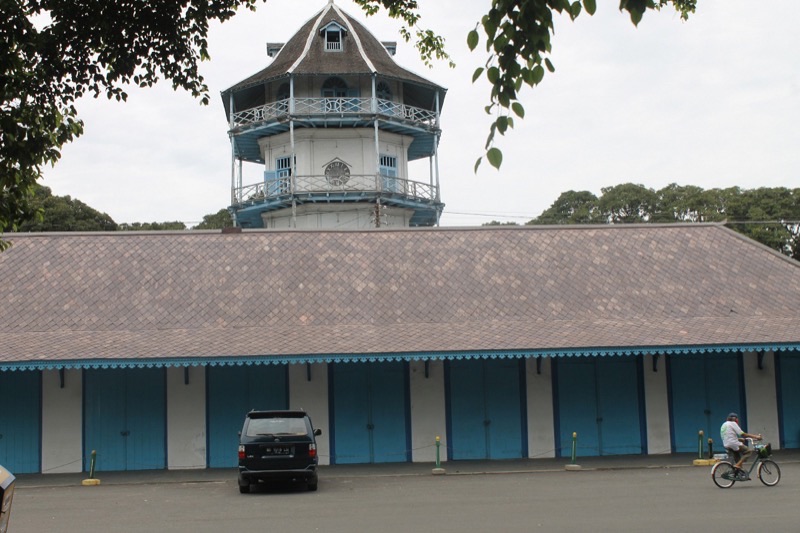
Solo's temple offerings are less dramatic but reward the adventurous. Candi Cetho and Candi Sukuh — two 15th-century Hindu temples on the slopes of Mount Lawu (45km from Solo) — are genuinely extraordinary and wildly undervisited. Cetho sits at 1,400 meters, often in cloud, surrounded by tea plantations. Sukuh is famous for its unusually explicit fertility carvings that look more Mayan than Javanese. Entry: Rp 25,000 each ($1.50). Solo also has two royal palaces: the Keraton Kasunanan (Sultan's palace, Rp 20,000 entry) and the Pura Mangkunegaran (Rp 20,000), both smaller but more intimate than Yogyakarta's Kraton, with living royal families still in residence.
🍜 Food & Dining
Both cities are in Central Java, which means they share the region's characteristic flavor profile — sweeter and milder than Padang or Sumatran food, with rice and tempeh as foundations. But the local specialties are distinct, and Reddit's verdict is clear: Solo has the better food scene.
Yogyakarta's signature dishes:
- Gudeg — young jackfruit cooked in coconut milk until tender and sweetish, served with rice, chicken, egg, and krecek (crispy beef skin). The city's most famous dish. Try it at Gudeg Yu Djum (Rp 15,000–25,000 / $1–1.50).
- Bakpia — small oval pastries filled with mung bean, chocolate, or cheese. The canonical Yogyakarta souvenir. Available everywhere on Malioboro for Rp 30,000–50,000 a box.
- Wedang uwuh — a spiced hot drink made with cloves, cinnamon, cardamom, and ginger. The original Javanese immune booster.
- Warung food on Malioboro — nasi campur (mixed rice) and soto for Rp 10,000–15,000 ($0.60–1).
Solo's food scene is what separates it. Locals and food writers consistently rank Solo as one of Indonesia's great food cities:
- Nasi liwet — Solo's signature: fragrant rice cooked in coconut milk, topped with ayam opor (coconut chicken), egg, and labu siam (chayote squash). Typically eaten on banana leaf. Rp 15,000–25,000 ($1–1.50). Try it at Nasi Liwet Wongso Lemu.
- Soto Solo — clear, clean chicken broth with vermicelli, bean sprouts, and boiled egg. Gentler than Betawi or Madura soto. Rp 12,000–20,000.
- Timlo — a uniquely Solo soup combining chicken, Chinese sausage, egg, and vegetables in a light broth. Only found properly in Solo.
- Serabi Solo — coconut-milk pancakes cooked on a clay griddle, topped with coconut sugar syrup. Rp 5,000 each.
💰 Cost Comparison
Both cities are among Indonesia's most affordable destinations, but Solo consistently undercuts Yogyakarta — particularly for accommodation.
| Expense | 🏛️ Yogyakarta | 🏭 Solo |
|---|---|---|
| Budget guesthouse | Rp 100,000–200,000 (~$6–12) | Rp 70,000–150,000 (~$4–9) |
| Mid-range hotel | Rp 250,000–500,000 (~$15–30) | Rp 200,000–400,000 (~$12–25) |
| Street food meal | Rp 10,000–25,000 ($0.60–1.50) | Rp 8,000–20,000 ($0.50–1.20) |
| Warung sit-down | Rp 25,000–55,000 ($1.50–3.50) | Rp 20,000–45,000 ($1.20–2.75) |
| Tourist restaurant | Rp 60,000–150,000 ($3.50–9) | Rp 40,000–100,000 ($2.50–6) |
| Grab/Gojek (city ride) | Rp 12,000–30,000 ($0.75–1.80) | Rp 10,000–25,000 ($0.60–1.50) |
| Borobudur entry | Rp 350,000 ($22) | Rp 350,000 ($22, same) |
| Prambanan entry | Rp 350,000 ($22) | Rp 350,000 ($22, from Solo too) |
| Cetho/Sukuh temples | N/A (far from Yogya) | Rp 25,000 ($1.50) each |
| Budget daily total | ~Rp 250,000–400,000 ($15–25) | ~Rp 180,000–300,000 ($11–18) |
The temple entry fee caveat: Borobudur and Prambanan are expensive by Indonesian standards at $22 each. These are one-time costs, but they significantly impact a 3-day Yogyakarta budget. Solo's main attractions (royal palaces, Pasar Klewer) cost Rp 20,000–25,000 each. If you're coming for temples, budget accordingly; if you're coming for authentic city life, Solo is very cheap.
🚃 Getting Around
Both cities are navigated primarily via Grab and Gojek (Indonesia's rideshare and ojek apps). Download both before you arrive — they're cheap, reliable, and handle everything from airport pickups to temple day trips.
Yogyakarta: The city is relatively compact but spread out enough that walking isn't always practical. Grab/Gojek: Rp 12,000–30,000 for short city rides. TransJogja city buses run on fixed routes for Rp 3,500 ($0.20) if you have patience. For Borobudur: chartered car (Rp 200,000–350,000 round trip / $12–21), shared minibus tour ($8–15), or hire a driver for the day ($25–35 covering multiple temples). For Prambanan: Grab direct from city center (~Rp 30,000) or bicycle if you're active (15km, flat). Bicycle rental: Rp 30,000–50,000/day ($2–3). Electric scooter rental: Rp 75,000–125,000/day ($4.50–7.50) — a great way to explore at your own pace.
Solo is similar in scale and even more walkable in the city center. Grab/Gojek work seamlessly. The Batik Solo Trans bus runs for Rp 3,500. For Cetho and Sukuh temples on Mount Lawu: you'll need a chartered vehicle (Rp 300,000–500,000 / $18–30 for the mountain roads) or join a tour. The train between Yogyakarta and Solo is the key transport link: KAI commuter trains run every hour, take 60–90 minutes, and cost Rp 8,000–15,000 ($0.50–1) — one of SE Asia's great value journeys.
🌸 Best Time to Visit
Yogyakarta and Solo share the same climate, which simplifies planning significantly.
Dry season (May–October) is the ideal window for both cities. June, July, and August see temperatures of 24–32°C with minimal rain and excellent visibility for temple photography. Borobudur at sunrise in July — clear skies, cool air, golden light on the stupas — is one of Java's great experiences. This is also peak tourist season for Yogyakarta, so Borobudur can get crowded by 8 AM; arrive pre-dawn.
Wet season (November–April) brings afternoon thunderstorms and higher humidity, but rarely ruins a trip. The temples remain accessible; muddy paths are the main inconvenience. Hotel rates drop 20–40%. January and February are the wettest months. The upside: Yogyakarta's famous Sekaten Festival (gamelan performances at the Grand Mosque) falls in February/March. Solo's Sekaten runs similarly, with massive pasar malam (night markets) around the Keraton.
Mount Merapi (active volcano north of Yogyakarta) occasionally erupts or emits ash clouds. Current activity level is always visible at magma.vsi.esdm.go.id — check before booking. At normal activity levels, the volcano is a spectacular backdrop; at elevated levels, some activities (Merapi sunrise jeep tours) may be restricted. Solo is unaffected by Merapi.
🏨 Where to Stay
Yogyakarta accommodation zones:
- Jalan Malioboro / Sosrowijayan area — the backpacker hub. Cheapest guesthouses, maximum street food and batik access, maximum noise. Budget: Rp 80,000–200,000/night ($5–12).
- Prawirotaman (Jl. Prawirotaman I & II) — the traveler's favorite: boutique guesthouses in Dutch colonial buildings, tree-lined streets, excellent restaurants and cafes, art galleries. Budget-mid: Rp 150,000–400,000/night ($9–24). This is where most experienced travelers stay.
- Kota Gede (south of center) — quieter, near the silver workshops, good for those who want to escape Malioboro's circus. Mid-range: Rp 200,000–500,000/night.
Solo accommodation is simpler and cheaper. The Keraton area has traditional guesthouses (penginapan) from Rp 70,000–150,000 ($4–9). The Purwosari area near the train station has comfortable budget hotels (Rp 120,000–250,000). Mid-range options include Sala View Hotel and The Sunan Hotel (Rp 400,000–800,000 / $24–48). Solo doesn't have Yogyakarta's boutique guesthouse scene, but what it lacks in Instagram-worthy stays it makes up for in price and authentic local neighborhood character.
🎒 Day Trips & Surroundings
Yogyakarta's day trips are among the best in Indonesia:
- Borobudur — 60km northwest, 90-min drive or guided tour. Sunrise entry from 4:30 AM. Non-negotiable.
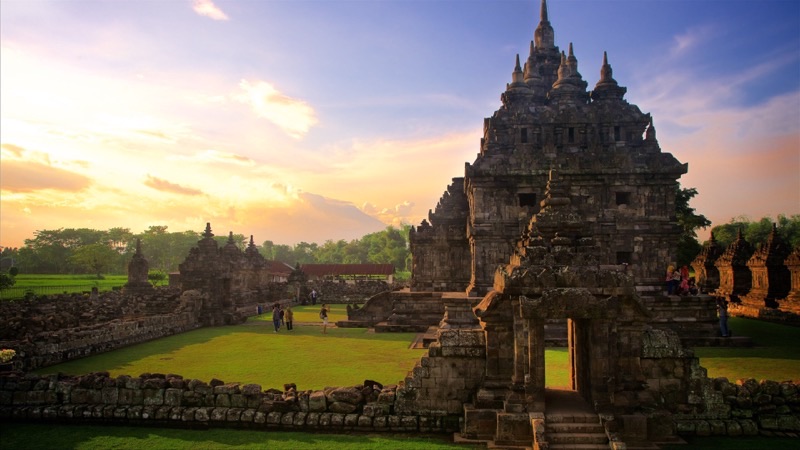
- Prambanan — 15km east. Can be done in a half-day, though a full day allows you to see Ratu Boko (hilltop sunset palace, 3km south of Prambanan, Rp 40,000) as well.
- Mount Merapi — active volcano visible from the city. Jeep tours to the 2010 eruption zone run Rp 350,000–450,000 ($21–27) from Kaliurang (30km north). Sunrise tours depart at 3:30 AM. Spectacular.
- Kaliurang — hill resort at the foot of Merapi. Cool air (600m altitude), hiking, and waterfalls. Day trip or overnight.
- Parangtritis Beach — black sand beach 27km south. Strong currents (don't swim), but dramatic scenery and working fishing fleet. Sand dune buggy rides available.
Solo's day trips are less famous but genuinely rewarding:
- Cetho & Sukuh temples (Mount Lawu, 45km) — 15th-century Hindu temples with dramatically different architecture from Prambanan. The road up passes through tea plantations; the temples sit in cloud forest. Best combined with a driver for Rp 350,000–500,000.
- Sangiran early human site (15km north) — UNESCO-listed archaeological site where Java Man fossils were found. Small but fascinating museum.
- Yogyakarta itself — the 1-hour train makes Yogyakarta a day trip from Solo (and vice versa). Many travelers base in Yogyakarta and day-trip to Solo for the food and markets.
🔀 Why Not Both? The Classic Java Loop
The strongest recommendation for most travelers: do both.
The Yogyakarta–Solo train corridor is one of SE Asia's great short-haul journeys: 1 hour, Rp 8,000–15,000 ($0.50–1), air-conditioned, running hourly. The cities are completely complementary — Yogyakarta's world-class temples + Solo's authentic city life = the full Central Java experience. A practical itinerary:
- Days 1–3: Yogyakarta — Borobudur sunrise, Prambanan, Kraton, Malioboro, Prawirotaman cafes
- Day 4: Mount Merapi jeep tour (morning) + take afternoon train to Solo
- Days 5–6: Solo — Pasar Klewer batik, Keraton Kasunanan, Pura Mangkunegaran, nasi liwet, Cetho/Sukuh temples
- Day 7: Train to Surabaya or fly home from Solo's Adisumarmo Airport
Alternatively, stay in Yogyakarta the whole time and do Solo as a day trip: take the 8 AM train, arrive 9 AM, spend the day in Solo's markets and palaces, eat nasi liwet for lunch, catch the 5 PM train back. Perfect day trip. Also see: Bali vs Vietnam if you're planning a longer SE Asia trip around these destinations.
🎯 The Decision Framework
Still can't decide? Here's how to think about it:
🏛️ Choose Yogyakarta If…
- Borobudur and Prambanan are on your bucket list
- This is your first trip to Java or Indonesia
- You want a functioning backpacker scene with English menus and hostel sociability
- Mount Merapi jeep tours or volcano watching interest you
- You want wayang kulit (shadow puppet) performances and Javanese dance
- You need reliable nightlife or café culture
- You prefer staying 1 city and day-tripping to Solo
🏭 Choose Solo If…
- You've already done Yogyakarta and want deeper Java authenticity
- You're a serious batik buyer — Pasar Klewer has the real selection
- Local food is your priority: nasi liwet, soto, and timlo are best here
- You prefer cities without tourist hustle
- Cetho and Sukuh temples on Mount Lawu appeal (genuinely underrated)
- You're on a tight budget — everything is cheaper
- You want to see an Indonesian city that feels like it hasn't changed in 20 years
❓ Frequently Asked Questions
Is Yogyakarta or Solo better for a first-time visitor to Java?
Yogyakarta is the better base for first-timers. It has the essential temples (Borobudur and Prambanan), a functional tourist infrastructure, English menus, reliable accommodation options at all price points, and a vibrant arts scene. Solo is more authentic but harder to navigate without some Indonesian and better suited as a second Java destination or day trip from Yogyakarta.
How far is Yogyakarta from Solo and how do I get there?
Yogyakarta and Solo (Surakarta) are 65km apart — about 60–90 minutes by train. The KAI commuter train runs hourly between Lempuyangan station (Yogyakarta) and Solo Balapan station for just Rp 8,000–15,000 ($0.50–1). This is one of SE Asia's best-value rail journeys. By car or Grab, the same route takes 90–120 minutes and costs Rp 80,000–150,000 ($5–9). Most travelers take the train.
Can you see Borobudur from Solo as well as Yogyakarta?
Yes — Borobudur is technically closer to Yogyakarta (60km) but accessible from Solo too (about 90km, 2–2.5 hours). Most travelers visiting both cities base themselves in Yogyakarta for the Borobudur sunrise visit, then train to Solo afterward. If you're only spending time in Solo, you can still do a Borobudur day trip, but it's a longer journey and harder to do with a pre-dawn sunrise start.
What is Solo (Surakarta) known for?
Solo is famous as Indonesia's batik capital — Pasar Klewer is the country's largest batik market, where fabric buyers from across Indonesia come to source traditional hand-drawn (tulis) and printed batik. Beyond batik, Solo is known for its authentic Javanese royal court culture (two active palaces), exceptional local cuisine (nasi liwet, soto Solo, timlo), and a more relaxed atmosphere than Yogyakarta. Travelers who've been to Yogyakarta often rate Solo as their favorite Java city.
How many days do you need in Yogyakarta and Solo?
Yogyakarta deserves 3–5 days to properly cover Borobudur, Prambanan, the Kraton, Malioboro, and a Merapi jeep tour. Solo deserves 1–2 days for the Keraton, Pasar Klewer, and nasi liwet. A combined trip of 5–7 days covers both cities well: 3–4 nights in Yogyakarta and 1–2 nights in Solo, or base in Yogyakarta the whole time and do Solo as a day trip.
Is Solo or Yogyakarta cheaper?
Solo is consistently cheaper. Budget guesthouses in Solo start at Rp 70,000–150,000 ($4–9) versus Rp 100,000–200,000 ($6–12) in Yogyakarta. Street food is slightly cheaper, and tourist markups are less prevalent. The main budget difference in Yogyakarta comes from temple entry fees: Borobudur (Rp 350,000 / $22) and Prambanan (Rp 350,000 / $22) are unavoidable costs for temple visitors. Solo's main attractions cost Rp 20,000–25,000 each.
Is Yogyakarta safe for solo travelers?
Yes — Yogyakarta is one of Indonesia's safest cities for solo travelers, including solo female travelers. The main risks are typical of any tourist destination: touts on Malioboro offering "free" batik factory tours (they're not free), becak drivers quoting tourist prices, and petty theft in crowded areas. The city is culturally conservative (it's primarily Muslim), so dress modestly at temples and in the Kraton area. Solo is similarly safe, if quieter and with fewer tourist-specific scams.
What is the best time to visit Yogyakarta and Solo?
May to October is the dry season and optimal for both cities. June, July, and August are peak months — clear skies, manageable temperatures (24–32°C), and perfect conditions for Borobudur sunrise photography. November to April brings afternoon rain but cheaper prices and thinner crowds at temples. If you visit during the wet season, mornings at temples are usually clear; plan accordingly.
Ready to Plan Your Java Trip?
tabiji builds personalized Indonesia itineraries that combine Yogyakarta and Solo with realistic pacing, Borobudur sunrise logistics, and recommendations from actual travelers.
🎟️ Book Tours & Experiences
Hand-picked tours and activities for both destinations — book with free cancellation
Experiences via Viator — free cancellation on most tours