How we built this comparison
This page combines traveler discussion patterns, published price ranges, flight schedules, and seasonal data to help you decide between Zion and Grand Canyon.
- Reviewed 50+ Reddit threads from r/travel, r/solotravel, r/NationalParks, r/ZionNationalPark, r/GrandCanyon for authentic traveler experiences and advice.
- Verified costs and logistics (flight times, accommodation rates, permit requirements) against current booking platforms and official park websites.
- Cross-referenced seasonal patterns and weather data with personal travel experiences to provide realistic expectations for visitor comfort and activity planning.
⚡ The TL;DR Verdict
Choose Zion if you crave active, immersive hikes and dramatic canyon exploration, best for those with a daily budget of $150-250 USD. Opt for the Grand Canyon if you seek unparalleled vastness and iconic panoramic views, ideal for budgets around $180-300 USD/day, especially if staying inside the park. Both offer incredible natural beauty, but cater to different styles of engagement.
- Choose Zion: For adventurers seeking challenging, unique hikes like The Narrows and Angels Landing (permit required), and a more 'hands-on' canyon experience. Great for families with older, active kids and those wanting to be *in* the canyon.
- Choose Grand Canyon: For those who want to witness one of the world's most breathtaking natural wonders, offering expansive, rim-side views, less strenuous walks, and stunning photography opportunities. Ideal for all ages, but less about deep, multi-day hiking for the average visitor.
- Choose Both: If you have 5-7 days, combining them is highly recommended and feasible via a road trip (approx. 5-6 hour drive between Zion's Springdale and Grand Canyon South Rim). Start with Zion for active immersion, then Grand Canyon for awe-inspiring views, ensuring a diverse Southwest adventure. Budget around $200-350 USD/day per person for a comfortable trip combining both.
Quick Comparison
| Category | Zion | Grand Canyon | Winner |
|---|---|---|---|
| Nature & Hiking | Immersive, strenuous hikes into the canyon's depths. Water features, slot canyons, and dramatic rock formations. | Expansive, awe-inspiring rim views. Hiking into the canyon is a multi-day commitment for most, but rim trails are easy. | Zion |
| Accessibility & Getting Around | Excellent free shuttle system within the main canyon. Roads outside are easy to navigate. | Multiple rims, vast distances. Shuttle system on the South Rim is good but covers limited areas. Driving is essential for other rims. | Zion |
| Accommodation | Springdale offers a range of options just outside the park, from budget motels to luxury lodges. | Limited options inside the park (Grand Canyon Village), requiring bookings far in advance. More options in Tusayan, just outside. | Tie |
| Costs & Budget | Generally slightly more affordable due to more diverse options in Springdale. | Can be pricier, especially if staying inside the park. Limited food options can drive up costs. | Zion |
| Crowds & Serenity | Main canyon can be extremely crowded, especially at shuttle stops and popular trails. | South Rim viewpoints can be busy, but the vastness makes it easier to find quiet spots. North Rim is much less crowded. | Grand Canyon |
| Family Friendliness | Great for active families with older kids. Some hikes are too strenuous or dangerous for very young children. | More accessible viewpoints and rim walks for all ages. Stroller-friendly paths and ranger programs. | Grand Canyon |
| Photography Opportunities | Dramatic light play on canyon walls, unique slot canyon compositions, river reflections. Intimate landscapes. | Expansive, iconic vistas. Sunrise/sunset over the vast canyon. Macro shots of desert flora/fauna. Grand, sweeping landscapes. | Tie |
| Food & Drink | Springdale offers a surprising variety of quality restaurants, cafes, and even a brewery. | Limited, often pricier options within the park. Tusayan offers mostly chain restaurants. | Zion |
| Best Time to Visit | Spring (April-May) and Fall (September-October) offer ideal weather and manageable crowds (but still busy). Summer is hot. | Spring (April-May) and Fall (September-October) are ideal. Summer is hot, but the higher elevation helps. Winter can be magical but roads may close. | Tie |
| Overall Experience & Vibe | An immersive, active adventure. You feel a part of the canyon, not just observing it. | A sense of overwhelming scale and awe. More about vast, iconic observation and reflection. | Zion |
🏞️ Nature & Hiking
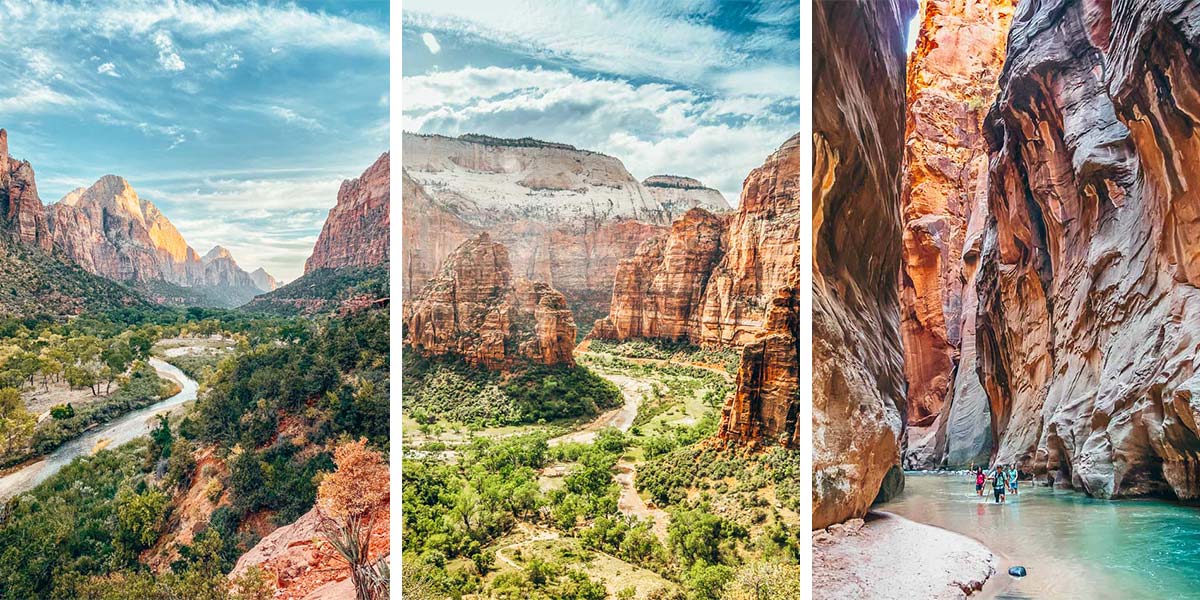
Zion truly shines for the active hiker looking to get *into* the landscape. Iconic trails like The Narrows (wading through a river in a slot canyon, often requiring rented gear like canyoneering shoes for about $25-35/day) and Angels Landing (a thrilling chain-assisted ascent, now permit lottery based) offer unparalleled adventure. Even easier trails like Emerald Pools provide stunning beauty. The shuttle system (free, runs March-November) grants access to trailheads along Zion Canyon Scenic Drive. Grand Canyon, while offering epic views, has a different hiking profile. Most visitors stick to the rim trails like the easygoing Rim Trail (13 miles, mostly paved, offers shuttle stops) or shorter segments around Mather Point. Descending into the canyon via Bright Angel Trail or South Kaibab Trail is serious business, requiring careful planning, water, and often an overnight stay at Phantom Ranch (booked a year in advance, ~$200/night for cabins) or backcountry permits. "We did a day hike down Bright Angel and it felt like another world, but seriously, going back up was brutal. Way harder than anything in Zion for sheer sustained effort," commented one Redditor. While both are spectacular, Zion's diverse and accessible challenging hikes give it the edge for sheer hiking variety and immersion.
Winner takeaway
- Winner: Zion
- Why: Zion offers a more diverse and immersive range of hiking experiences, allowing visitors to truly get *into* the canyon.
- Who this matters for: Active travelers, thrill-seekers, and those prioritizing unique hiking challenges.
🚌 Accessibility & Getting Around
Zion's main canyon is designed for accessibility via its incredibly efficient and free shuttle bus system, operating from March through November. Visitors park in Springdale (often $20-30/day at private lots) or near the Visitor Center and ride the shuttle directly to all major trailheads and viewpoints. This eliminates traffic and parking stress within the park's busiest areas. Renting bikes in Springdale (around $35-50/day) is also a popular way to explore the Pa'rus Trail. The Grand Canyon's South Rim also has a free shuttle system, which is great for navigating specific viewpoints and trailheads (like Bright Angel or Hermit's Rest) from Grand Canyon Village. However, the park itself is immense, and accessing different viewpoints like Desert View Watchtower or the North Rim (a 4-5 hour drive from the South Rim) requires a car. Navigating the sheer size and different sections of the Grand Canyon can be more overwhelming. "Zion's shuttle just makes everything so easy. Park once, forget about the car. Grand Canyon felt like I was constantly driving between viewpoints even with the shuttle," a traveler noted. For ease of access to its core attractions and reduced reliance on personal vehicles once there, Zion is the clear winner.
Winner takeaway
- Winner: Zion
- Why: Zion's robust and free shuttle system makes accessing its main attractions seamless and stress-free.
- Who this matters for: Travelers without a car, those who prefer not to drive, and families with young children.
🏨 Accommodation
Both parks present unique challenges and opportunities for lodging. In Zion, the town of Springdale sits right at the park's entrance, offering a wide array of accommodations from budget-friendly hotels like Bumbleberry Inn (from $150-250/night) to more upscale resorts such as Zion Canyon Lodge (from $250-400+/night, inside the park) or SpringHill Suites by Marriott (from $200-350/night). You can easily walk or take the free Springdale shuttle to the park entrance. Grand Canyon's South Rim offers limited, highly sought-after lodging *inside* the park at Grand Canyon Village (e.g., El Tovar, Bright Angel Lodge, Maswik Lodge, from $200-500+/night). These require booking 9-12 months in advance, especially for peak season. Just outside the South Rim entrance, the town of Tusayan provides more options, including chain hotels like Best Western Premier Grand Canyon Squire Inn (from $180-350/night), but it lacks Springdale's charming, walkable vibe. "Booking El Tovar was a victory, but it meant planning my trip over a year out. Tusayan felt a bit generic," one traveler shared. Both have their pros and cons, largely depending on how far in advance you plan and your budget, leading to a tie in overall convenience and availability once price is factored in.
Winner takeaway
- Winner: Tie
- Why: Both destinations offer competitive but challenging accommodation scenarios, requiring advanced planning and budget flexibility.
- Who this matters for: All travelers, as accommodation dictates convenience and cost for the trip.
💸 Costs & Budget
While both parks require a $35 USD per vehicle entrance fee (valid for 7 days), the day-to-day costs can vary. Zion benefits from Springdale's more competitive market for food and lodging. You can find a decent meal at Oscar's Cafe for $15-25 USD, and there are more grocery store options for packing lunches. Accommodation outside the park often starts around $150-200 USD/night for a standard hotel during shoulder season. The Grand Canyon, particularly if you manage to book inside the park, involves higher lodging costs ($250-500+ USD/night). Food options within Grand Canyon Village are also more limited and thus often pricier, with a sit-down meal easily costing $20-40 USD per person at places like the Arizona Room. Tusayan offers slightly cheaper hotels, but food options are mostly chain restaurants. Gas prices are also often inflated near both parks. "We saved a bunch in Zion by grabbing groceries at the market in Springdale and making our own sandwiches for hikes. Grand Canyon felt like we were eating out more because options were limited and far apart," a Reddit user mentioned. Zion offers more opportunities for budget-conscious travelers to save on food and lodging without sacrificing proximity to the park.
Winner takeaway
- Winner: Zion
- Why: Zion provides more varied and slightly more affordable options for food and lodging in its gateway town, Springdale.
- Who this matters for: Budget-conscious travelers and those looking to extend their trip duration.
🧘 Crowds & Serenity
Both parks draw millions, but their layouts affect the crowd experience differently. Zion's main canyon, while breathtaking, funnels visitors into a relatively narrow area, especially when the shuttle is running. Lines for the shuttle can be 30-60 minutes long during peak times (mid-day, spring/fall), and popular trails like Angels Landing and The Narrows feel very busy. To find serenity, you often need to venture to lesser-known trails (like the Kolob Canyons section, a 40-minute drive away) or visit in the off-season. The Grand Canyon's sheer scale works in its favor regarding crowds. While Mather Point and Grand Canyon Village can be bustling, the vastness of the South Rim means that a short walk along the Rim Trail, especially further from major shuttle stops, can quickly lead to quieter, more contemplative spots. The North Rim, open seasonally (mid-May to mid-October), is significantly less crowded, offering a more serene, remote experience, but requires a substantial drive. "Zion felt like a conveyor belt on Angels Landing. At Grand Canyon, I just walked a mile down the Rim Trail and suddenly it was just me and the canyon," one Redditor recalled. For finding moments of peace amidst natural grandeur, the Grand Canyon generally offers more opportunities.
Winner takeaway
- Winner: Grand Canyon
- Why: The Grand Canyon's immense size and multiple viewpoints make it easier to escape crowds and find moments of solitude.
- Who this matters for: Travelers seeking tranquility, photographers, and those sensitive to large crowds.
👨👩👧👦 Family Friendliness
Zion is fantastic for active families, especially those with adventurous kids aged 8 and up who can handle moderate to strenuous hikes. Trails like the Pa'rus Trail (paved, stroller-friendly) and the lower sections of the Emerald Pools Trail are accessible, but many of Zion's iconic hikes (The Narrows, Angels Landing) are unsuitable for young children due to difficulty, water hazards, or sheer drops. The Zion Human History Museum and Junior Ranger program are good educational stops. The Grand Canyon, particularly the South Rim, offers a more universally family-friendly experience. Numerous viewpoints along the rim are easily accessible, many are stroller-friendly, and there are paved paths perfect for short walks with little ones. The Junior Ranger program is robust, and daily ranger talks at various viewpoints are engaging for all ages. Kids can marvel at the vastness from secure overlooks without needing to embark on challenging hikes. "We took our 4-year-old to the Grand Canyon and it was perfect. He loved pointing out things from the viewpoints and the ranger talked about condors. Zion would have been too much for him," a parent shared. While both have their merits, the Grand Canyon's broader appeal to all ages, especially those with very young children or limited mobility, gives it the edge.
Winner takeaway
- Winner: Grand Canyon
- Why: The Grand Canyon offers more accessible viewpoints and easier trails suitable for families with very young children or those preferring less strenuous activities.
- Who this matters for: Families with young children, multi-generational groups, and those with limited mobility.
📸 Photography Opportunities
Both parks are a photographer's dream, offering vastly different yet equally stunning subjects. Zion excels in intimate landscape photography, capturing dramatic light on soaring sandstone cliffs, the unique textures of slot canyons (like The Narrows), and reflections in the Virgin River. Iconic shots include the Virgin River curving around the Watchman, the fiery hues of the Canyon Overlook Trail at sunset, or the subtle beauty of the Emerald Pools. Getting to these spots often involves more active hiking. The Grand Canyon, conversely, is all about the grand, sweeping vista. Photographers flock to Mather Point, Hopi Point, and Yaki Point for sunrise and sunset, capturing the immense scale and ever-changing colors of the canyon. The challenge here is conveying the sheer vastness in a two-dimensional image. "Zion gave me those incredible close-up shots of sandstone patterns and reflections. Grand Canyon was all about the epic, wide-angle panorama that makes you feel tiny," a travel photographer noted. Both offer world-class opportunities, but cater to different styles of landscape photography, making it an undeniable tie.
Winner takeaway
- Winner: Tie
- Why: Both parks offer unparalleled, but distinctly different, photographic opportunities that appeal to various styles and preferences.
- Who this matters for: Amateur and professional photographers, and anyone who appreciates capturing natural beauty.
🍽️ Food & Drink
Zion's gateway town, Springdale, genuinely impresses with its food scene, offering a welcome variety for a town of its size. You can find everything from excellent Southwestern fare at Oscar's Cafe (mains $15-25 USD), to casual American at Zion Canyon Brew Pub (brewery fare $14-22 USD), to surprisingly good pizza at Zion Pizza & Noodle Co. There are also several cafes for breakfast and coffee, and a well-stocked grocery store for picnic supplies. This variety allows for different dining experiences and budget levels. The Grand Canyon's South Rim, within Grand Canyon Village, has more limited options, primarily focused on the lodges. El Tovar Dining Room offers a more upscale experience (mains $30-50+ USD), while Maswik Cafeteria is a more casual, grab-and-go option (meals $12-20 USD). Tusayan, just outside the park, is dominated by chain restaurants like McDonald's, Wendy's, and a few sit-down options like Plaza Bonita (Mexican, mains $15-25 USD), which can feel less authentic. "After a long hike, grabbing a craft beer and some good food in Springdale felt like a real treat. Grand Canyon's food felt more like necessity than enjoyment," commented a traveler. For quality, variety, and overall dining experience, Zion takes the lead.
Winner takeaway
- Winner: Zion
- Why: Springdale, Zion's gateway town, provides a much more diverse and higher-quality dining experience than the Grand Canyon's limited options.
- Who this matters for: Foodies, travelers who enjoy a good meal after a day of hiking, and those who appreciate variety.
☀️ Best Time to Visit
Both parks share similar ideal shoulder seasons: Spring (April-May) and Fall (September-October). During these times, temperatures are generally pleasant for hiking in Zion (average highs 60s-80s °F / 15-27 °C) and exploring the Grand Canyon (South Rim average highs 50s-70s °F / 10-21 °C), and the crowds, while significant, are often more manageable than peak summer. Summer (June-August) brings very hot temperatures to Zion (often 90s-100s °F / 32-38 °C), making early morning or water hikes like The Narrows essential. The Grand Canyon's South Rim is at a higher elevation (around 7,000 ft / 2,100 m), so summer temperatures are hot but often more tolerable (80s-90s °F / 27-32 °C) than Zion, though afternoon monsoons can occur. Winter (November-March) can be magical at both parks, with snow offering stunning photographic opportunities and fewer crowds. However, Zion's Narrows become inaccessible due to cold water, and the Grand Canyon's North Rim is closed. Some roads in both parks may temporarily close due to snow. "We went to Zion in April and the weather was perfect, but the shuttle lines were still insane. Grand Canyon in October was stunning, and while busy, felt less claustrophobic," a traveler explained. The 'best' time largely depends on what you prioritize (weather, specific activities, crowd tolerance), making it a tie.
Winner takeaway
- Winner: Tie
- Why: Both parks offer distinct advantages during different seasons, with shoulder seasons generally being ideal for both.
- Who this matters for: All travelers, as weather and crowd levels significantly impact the overall experience.
✨ Overall Experience & Vibe
Zion offers an undeniable 'adventure' vibe. When you're hiking The Narrows, wading through water with towering canyon walls on either side, or clinging to chains on Angels Landing, you are *immersed* in the landscape. It feels dynamic, challenging, and profoundly interactive. The sheer variety of its geology, from verdant hanging gardens to stark sandstone cliffs, creates a constant sense of discovery. The small, vibrant town of Springdale at its doorstep contributes to this energetic, outdoor-focused atmosphere. The Grand Canyon, on the other hand, delivers unparalleled awe and grandeur. Its vastness is truly humbling, offering a profound sense of perspective. It's more about observation, contemplation, and soaking in an iconic vista that words and photos often fail to capture. While you can hike into it, for most, it's a rim experience. "Zion makes you feel like an explorer, pushing your limits. Grand Canyon just makes you feel tiny and insignificant in the best way possible," a traveler mused. While both are utterly magnificent, Zion's capacity to engage visitors directly with its environment through diverse activities gives it a slightly more active and 'personal adventure' feel.
Winner takeaway
- Winner: Zion
- Why: Zion's immersive hiking experiences and diverse landscape create a more active, 'hands-on' adventure vibe.
- Who this matters for: Adventure seekers, those looking for active engagement with nature, and travelers who enjoy unique, challenging experiences.
❓ Frequently Asked Questions
Which park is better for first-time national park visitors?
For first-timers seeking sheer awe and iconic views with minimal effort, the Grand Canyon (South Rim) is often more immediately accessible and impactful. For those eager to jump into active hiking and a more 'up close and personal' canyon experience, Zion is excellent, though some major hikes require more planning.
Can I visit both Zion and Grand Canyon on the same trip?
Absolutely! It's a very popular road trip combination. The drive from Zion's Springdale to the Grand Canyon's South Rim is about 5-6 hours. We recommend allocating 2-3 full days for Zion and 1.5-2 full days for the Grand Canyon to truly experience both without feeling rushed.
What's the best airport to fly into for both parks?
Las Vegas (LAS) is typically the most convenient and cheapest airport for both. From LAS, Zion's Springdale is about a 2.5-hour drive, and the Grand Canyon South Rim is about a 4.5-hour drive. Phoenix (PHX) is another option for the Grand Canyon (about a 3.5-hour drive) but further from Zion.
Are permits required for any hikes in these parks?
Yes. Zion requires a permit lottery for Angels Landing. The Narrows (top-down, overnight) also requires a permit. The Grand Canyon requires backcountry permits for any overnight hiking below the rim (e.g., camping or staying at Phantom Ranch). Check NPS websites for current regulations.
What should I pack for a trip to Zion or Grand Canyon?
Essentials include sturdy hiking shoes, plenty of water, sun protection (hat, sunscreen, sunglasses), layers of clothing (temperatures can fluctuate widely), and snacks. For Zion's Narrows, consider renting canyoneering shoes and a walking stick. A good daypack is crucial for both.
Is one park more dangerous than the other?
Both parks have inherent dangers due to their natural terrain. Zion's Angels Landing is known for its exposure and chain-assisted sections, while The Narrows carries flash flood risks. Grand Canyon's danger often comes from extreme heat on inner canyon trails and the sheer drop-offs along the rim, especially if not staying on marked paths. Always respect warnings and your own limits.
Are there good options for RV camping at either park?
Yes, both parks offer RV-friendly campgrounds. Zion has Watchman Campground (reservations essential) and the privately run Zion River Resort nearby. The Grand Canyon's South Rim has Mather Campground (tents/RV, reservations essential) and Trailer Village (full hookups, reservations essential). Book well in advance, especially for larger rigs.
What are the key differences in geology between them?
Zion National Park is characterized by its towering, narrow sandstone cliffs, formed by the Virgin River cutting down through Navajo sandstone, revealing vibrant red and white layers. The Grand Canyon, conversely, showcases immense, vast horizontal layers of rock, representing billions of years of geological history, carved primarily by the Colorado River, creating its iconic mile-deep, 18-mile-wide abyss.
Ready to plan your Southwest USA trip?
Get a free custom itinerary for Zion, Grand Canyon, or both — built from real traveler insights.
🎟️ Book Tours & Experiences
Hand-picked tours and activities for both destinations — book with free cancellation
Experiences via Viator — free cancellation on most tours