🇯🇵 Your Custom Itinerary

Tokyo → Hakone → Kyoto → Himeji → Tokyo — The Grand Japan Circuit: 12 days of neon-lit nights, private onsens, ancient temples, hidden ramen alleys & the world's greatest food culture

This isn't a Japan highlight reel — it's a deep-cut odyssey through four of the country's most rewarding cities, designed for two people who want everything: the electric chaos of Tokyo's neon canyons, the stillness of a private open-air onsen in Hakone with nothing but steam and mountain silence, the ancient layered beauty of Kyoto's temples and geisha quarters, the jaw-dropping perfection of Himeji Castle, and then back to Tokyo for a farewell from the 52nd floor of the Park Hyatt. You'll make your own chopsticks from Kyoto cedar, play oversized Game Boy games at the Nintendo Museum, wander through teamLab's digital dreamscapes at Azabudai Hills, and eat — constantly, brilliantly, obsessively. From ¥900 bowls of tsukemen in Shinjuku basement shops to multi-course kaiseki in a 120-year-old machiya, this itinerary treats food as culture, not fuel. October in Japan is perfect — summer's humidity is gone, autumn foliage is starting to turn, and the light has that golden, slanted quality that makes every temple photograph look like a painting. You land at Narita at 4:30 PM and hit the ground running. Twelve days later, you'll leave wondering how to move here.

Duration: 12 days
Dates: Oct 13 – Oct 24, 2026
Budget: $$$
Pace: Moderate–Full
Best for: Couples · Foodies · Culture Seekers · Night Owls

⚡ Before You Go — Essentials

🍂 October in Japan

October is one of the best months to visit Japan. Summer heat and humidity are gone, temperatures hover around 18-24°C (64-75°F) in Tokyo and Kyoto, and autumn foliage (kouyou) begins mid-to-late October — especially in Kyoto and Hakone. Pack layers: mornings can be cool (14°C), afternoons warm. A light rain jacket is wise. Comfortable walking shoes are essential — you'll average 15,000-20,000 steps daily.

🚄 Japan Rail Pass & Transport

A 14-day Japan Rail Pass (¥50,000/~$330) covers ALL your shinkansen rides (Tokyo↔Hakone area, Hakone↔Kyoto, Kyoto↔Himeji, Himeji/Kyoto↔Tokyo) plus local JR trains. Activate it on Day 1 at Narita. For Tokyo subway (Metro/Toei), get a rechargeable Suica or PASMO IC card — tap-and-go on all trains, buses, and convenience stores. The Narita Express (N'EX) to Shinjuku is covered by JR Pass (~90 min).

🎫 Book These in Advance

teamLab Borderless: Book timed-entry tickets 2-3 weeks ahead at teamlab.art (¥3,800/adult). Nintendo Museum: Tickets sell via lottery on museum.nintendo.com — apply 2 months ahead, a Nintendo Account is required. Gōra Kadan ryokan: Book 1-2 months ahead at gorakadan.com. Chopstick class: Book via GetYourGuide or japan-experience.com 1-2 weeks ahead. Himeji Castle: No advance booking needed, but arrive before 10 AM to avoid crowds.

💴 Money & Practicalities

Japan is increasingly cashless but many small restaurants, izakaya, and market stalls are still cash-only. Withdraw yen from 7-Eleven ATMs (they accept all foreign cards, no fee from their side). Budget ¥5,000-8,000/person/day for food if eating casual. Tipping does NOT exist in Japan — it can be considered rude. Convenience stores (konbini) are incredible: 7-Eleven, Lawson, and FamilyMart serve legitimately great food 24/7.

🏨 Accommodation Overview

Days 1-4 (Oct 13-16): Tokyo hotel near Shinjuku (recommend Shinjuku Granbell or HOTEL GROOVE SHINJUKU). Day 5 (Oct 17): Gōra Kadan ryokan, Hakone (private onsen). Days 6-9 (Oct 18-21): Kyoto hotel near Karasuma-Oike or Gion (recommend THE THOUSAND KYOTO or Hotel Resol Trinity Kyoto). Days 10-11 (Oct 22-23): Park Hyatt Tokyo, Shinjuku. The Park Hyatt is confirmed for your last two nights — the rest should be booked based on your budget.

📱 Connectivity

Get a Japan eSIM or pocket Wi-Fi before arriving. Ubigi, Airalo, or Mobal eSIMs work great (5-10GB for ~$15-25). Google Maps works perfectly for all train navigation in Japan — it shows exact platform numbers, transfer times, and costs. Download offline maps for Hakone (spotty signal in the mountains).

Day 1 Narita · Shinjuku

Touchdown Tokyo — Neon Welcome

Touchdown Tokyo — Neon Welcome, Japan

You land at Narita at 4:30 PM. By the time you clear immigration, grab bags, and activate your JR Pass, it'll be around 6 PM. The Narita Express whisks you to Shinjuku in 90 minutes — arriving just as Tokyo's neon switches on. Tonight is about absorbing the sensory overload: the Shinjuku skyline, the crossing chaos, and your first bowl of ramen in a city with 10,000 ramen shops.

Evening (6:00 PM – 7:30 PM)

Narita Express to Shinjuku

After clearing customs (~45 min), head to the JR ticket office in the basement of Terminal 1 or 2 to activate your Japan Rail Pass. The Narita Express (N'EX) departs every 30 minutes and takes you directly to Shinjuku Station — the world's busiest train station, handling 3.6 million passengers daily. The ride itself is your first taste of Japan: rice paddies giving way to suburbs giving way to the vertical density of Tokyo.

📍 JR Ticket Office: Narita Airport Terminal 1 B1F or Terminal 2 B1F
🚃 Narita Express to Shinjuku: ~90 min, covered by JR Pass
💳 Also activate your Suica/PASMO IC card at any station kiosk (¥500 deposit + charge)
💡 If your JR Pass hasn't started yet, a one-way N'EX ticket is ¥3,250
Evening (7:30 PM – 10:00 PM)

Check In & Shinjuku Night Walk

Drop your bags at the hotel and step into the sensory tsunami that is nighttime Shinjuku. The East Exit area is a canyon of neon — walk through the Kabukichō entertainment district (recently rebranded as the Kabukichō Tower area), peek down the narrow alleys, and soak in the energy. This isn't sightseeing — it's just arriving.

📍 Kabukichō: east of Shinjuku Station, follow the neon
📸 Godzilla Head: Hotel Gracery rooftop, Kabukichō 1-chome — visible from the street
🚶 Walk time from Shinjuku Station East Exit to Kabukichō: 5 min
💡 Don't worry about jet lag tonight — just eat, walk, and let Tokyo wash over you

First Ramen at Fuunji

Your first meal in Japan should be ramen, and Fuunji is the move. This tiny 20-seat tsukemen (dipping ramen) shop near Shinjuku Station has had a line since 2009 for good reason: their thick, rich fish-and-pork broth is concentrated to an almost paste-like intensity, and you dip springy noodles into it. The line moves fast (15-20 min). Order from the vending machine outside — hit the top-left button for the signature tsukemen.

📍 Fuunji: 3-35-7 Yoyogi, Shibuya (2 min walk from Shinjuku South Exit)
⏰ Open 11:00 AM – 3:00 PM, 6:00 PM – 10:00 PM (closed Sundays)
💰 ¥900-1,100 — cash only, order from ticket machine
🍜 Order: Tsukemen (regular size) + ajitama (seasoned egg)
💡 The broth is served hot with a side of soup stock to dilute and drink at the end — don't skip this
🍜 Dinner
Fuunji — Tsukemen
Tokyo's most famous tsukemen shop. Thick fish-pork broth, springy noodles, pure umami intensity. The line moves fast. Cash only, vending machine ordering.
💰 ¥900-1,100 · 📍 3-35-7 Yoyogi, Shibuya · 2 min from Shinjuku South Exit
Jet lag strategy: don't fight it tonight. Eat ramen, walk Shinjuku for an hour, then crash. Set an alarm for 8 AM tomorrow — forcing yourself onto Japan time from Day 1 is the move. If you wake up at 4 AM, that's fine: konbini (convenience store) onigiri at dawn is a legitimate Tokyo experience.
Day 2 Azabudai Hills · Roppongi · Shibuya · Ebisu

teamLab Borderless & Shibuya Electric

teamLab Borderless & Shibuya Electric, Japan

Today you experience two sides of Tokyo: the boundary-dissolving digital art of teamLab Borderless in the morning (before the crowds build), then the kinetic energy of Shibuya — the crossing, the backstreets, the vinyl shops, and the izakaya alleys of Ebisu. This is the day you understand why Tokyo is the greatest city on Earth for walking.

Morning (9:30 AM – 12:30 PM)

teamLab Borderless — Azabudai Hills

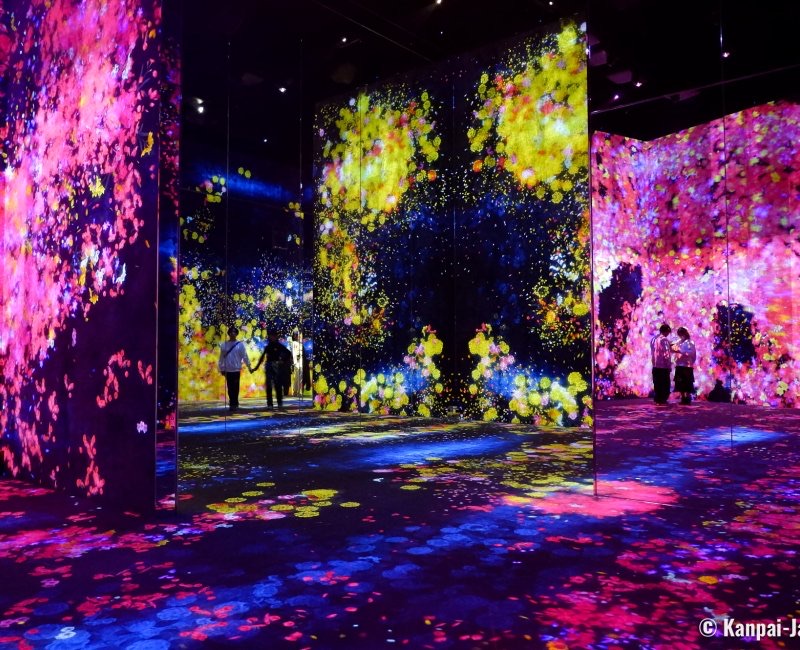
teamLab Borderless is not a museum — it's a 10,000 square meter labyrinth where digital artworks escape their frames, flow through corridors, merge with each other, and respond to your presence. The space at Azabudai Hills (opened February 2024) is their flagship: rooms of infinite waterfalls, fields of flowers that bloom and scatter as you walk through them, a universe of floating lanterns that change color when you touch them. The Biovortex installation creates a swirling vortex of light and organic forms. Book the earliest slot possible — by noon it's packed.

📍 teamLab Borderless: Azabudai Hills Garden Plaza B B1F, 5-6-2 Azabudai, Minato
⏰ Open 10:00 AM – 9:00 PM (last entry 8:00 PM) — book earliest slot at teamlab.art
🎫 ¥3,800/adult (¥4,800 holiday periods) — timed entry, book 2-3 weeks ahead
⏱️ Allow 2.5-3 hours — the space is massive and rewards slow exploration
👕 Wear dark clothing — white/light clothes glow under the projections (which can be cool or distracting)
📸 Photography encouraged — no flash, no tripods
🚇 Azabudai Hills: 4 min walk from Kamiyacho Station (Hibiya Line) or 6 min from Roppongi-itchome (Namboku Line)
💡 The EN TEA HOUSE inside serves tea that blooms with digital flowers in your cup — worth the wait
teamLab tip: don't follow a map or route — the whole point is getting lost. Wander aimlessly, sit in rooms for 10 minutes watching the cycles change, and revisit spaces. The art literally moves between rooms, so no two visits are the same. The Crystal Universe and Infinity Mirror rooms have the longest waits — hit them first.
Afternoon (1:00 PM – 5:30 PM)

Shibuya Crossing & Backstreet Exploration

Shibuya Crossing is the world's busiest pedestrian intersection — up to 3,000 people crossing simultaneously when the light changes. Stand on the second floor of the Starbucks at Shibuya Tsutaya for the classic aerial view, or just wade into it. But the real Shibuya is behind the crossing: Dogenzaka's love hotel hill, the narrow shopping streets of Center-Gai, the record shops of Udagawacho, and the Hachikō statue (Japan's most famous loyal dog).

📍 Shibuya Crossing: outside Shibuya Station Hachikō Exit
📸 Best photo spot: Shibuya SKY (rooftop observation, ¥2,200) or Starbucks 2F at QFRONT building
🐕 Hachikō statue: right outside the station exit — meet Japan's most famous Akita
🎵 Tower Records Shibuya: 1-22-14 Jinnan — 9 floors, Japan's largest music store, vinyl paradise
🛍️ Shibuya 109: iconic fashion department store — worth a walk-through even if you don't buy

Ebisu Yokochō — Hidden Food Alley

A 10-minute walk from Shibuya, Ebisu Yokochō is a covered alley of 20 tiny restaurants sharing a single indoor space — each specializing in one thing: yakitori, oden, gyoza, sashimi, kushikatsu. It's rowdy, smoky, convivial, and exactly the kind of place that makes Tokyo the best food city in the world. Grab a seat at any counter, point at what looks good, and order a highball (whisky soda).

📍 Ebisu Yokochō: 1-7-4 Ebisu, Shibuya (under the JR tracks, 2 min from Ebisu Station)
⏰ Most stalls open 5:00 PM – midnight
💰 ¥2,000-4,000/person for food + drinks
🍺 Order: Highball (ハイボール) + whatever the stall specializes in
💡 No English menus at most stalls — point, smile, and trust the chef
🍱 Lunch
Afuri — Yuzu Shio Ramen
Light, citrusy yuzu-salt ramen that's the perfect counterpoint to last night's rich tsukemen. Afuri's Roppongi or Ebisu locations are convenient post-teamLab. The broth is clear, fragrant, and utterly addictive.
💰 ¥1,100-1,400 · 📍 Multiple locations — Roppongi (1-1-9 Azabu-Jūban) or Ebisu (1-1-7 Ebisu) · Open 11 AM
🍢 Dinner
Ebisu Yokochō — Counter Crawl
Hit 2-3 stalls across the yokochō: yakitori at one, gyoza at another, finish with a bowl of oden. This is the Japanese art of hashigo (bar/restaurant hopping).
💰 ¥3,000-5,000/person · 📍 1-7-4 Ebisu, Shibuya · Open from 5 PM
Evening (8:00 PM – 11:00 PM)

Nonbei Yokochō (Drunkard's Alley) & Shibuya Nightlife

Tucked beside the Shibuya train tracks, Nonbei Yokochō is Golden Gai's lesser-known sibling — about 40 microscopic bars in a narrow alley that somehow survived Tokyo's relentless redevelopment. Each bar seats 4-8 people and has its own personality. After a drink or two here, explore Shibuya's nightlife: the cocktail bars on Dogenzaka, the DJ bars in Udagawacho, or just ride the energy of one of the world's most alive neighborhoods after dark.

📍 Nonbei Yokochō: beside JR Shibuya Station, east side of the tracks
🍶 Most bars have a seating charge (¥500-1,000) + drinks from ¥600
💡 Look for bars with English on the sign or an open-door policy — some are regulars-only
🍸 For cocktails: Bar Trench (1-5-8 Ebisu-Nishi) — one of Asia's best cocktail bars
Tokyo nightlife tip: Japanese bars are generally very safe and welcoming to foreigners, but some tiny bars in yokochō alleys are "members only" or regular-only — if there's no English sign or the door feels closed, just move to the next one. There are hundreds.
Day 3 Tsukiji · Asakusa · Akihabara · Ueno

Old Tokyo — Markets, Temples & Electric Town
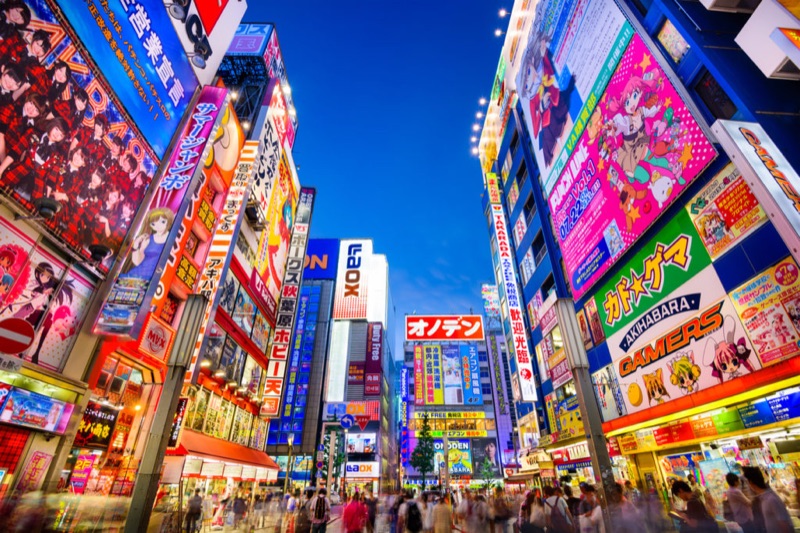
Old Tokyo — Markets, Temples & Electric Town, Japan

Today you swing from the ancient to the electric. Morning at Tsukiji Outer Market for the best sushi breakfast of your life, then the incense-clouded grandeur of Sensō-ji in Asakusa — Tokyo's oldest temple. Afternoon in Akihabara's neon-drenched anime and electronics paradise, then a sunset walk through Ueno's cultural corridor. This is the day you understand Tokyo isn't one city — it's fifty neighborhoods pretending to be one.

Morning (7:30 AM – 10:30 AM)

Tsukiji Outer Market — Sushi Breakfast

Tsukiji's inner wholesale market moved to Toyosu in 2018, but the outer market stayed — and it's still the heart of Tokyo's food culture. Over 400 stalls and small restaurants line the narrow streets, selling everything from fresh uni (sea urchin) to tamagoyaki (sweet Japanese omelette) to the best sushi you'll eat in your life. Come hungry and graze your way through.

📍 Tsukiji Outer Market: 4-16-2 Tsukiji, Chuo — 1 min from Tsukiji Station (Hibiya Line)
⏰ Most stalls open 5:00 AM – 2:00 PM (go before 9 AM for best selection)
🍣 Sushi Dai or Daiwa Sushi: legendary but 2-3 hour waits. Instead try Tsukiji Sushi Say (shorter wait, equally excellent)
🥚 Must-try: Tamagoyaki from Yamachō (fresh-grilled on a stick, ¥100)
🦪 Fresh oysters, uni on rice, grilled scallops — all from street stalls, all incredible
💰 Budget ¥2,000-4,000 for a full grazing breakfast
Tsukiji tip: Sushi Dai is famous, but the 3-hour wait is not worth it when equally excellent sushi is available with a 20-minute wait two stalls over. Ask any local which shop they eat at — it won't be the one with the longest line.
Late Morning (10:30 AM – 1:00 PM)

Sensō-ji Temple & Asakusa

Sensō-ji is Tokyo's oldest Buddhist temple (founded 628 AD) and still its most atmospheric. Approach through the Kaminarimon (Thunder Gate) with its giant red lantern, then walk the 250-meter Nakamise-dōri shopping street — selling traditional snacks, souvenirs, and handmade crafts for centuries. The main hall's incense cauldron is where you waft smoke over your body for good health. Behind the temple, explore the quiet backstreets of old Asakusa — traditional craft shops, old kissaten (coffee houses), and a neighborhood that still feels like Shōwa-era Tokyo.

📍 Sensō-ji: 2-3-1 Asakusa, Taito — 5 min from Asakusa Station
⏰ Temple grounds: always open. Main hall: 6:00 AM – 5:00 PM (Apr-Sep), 6:30 AM – 5:00 PM (Oct-Mar)
🎫 Free entry
📸 Kaminarimon gate: best photos early morning or at night when illuminated
🍡 Try: Kibi-dango (millet dumplings) at Azuma — a Nakamise institution since 1945
💡 Walk through to the five-story pagoda and Asakusa Shrine next door (Shinto, not Buddhist)
🍜 Lunch
Sometarō — Asakusa Okonomiyaki
A 70-year-old okonomiyaki (savory pancake) restaurant in a traditional wooden building in Asakusa. You cook your own on the table griddle. Cheap, fun, delicious, and about as authentic as it gets. The monjayaki (Tokyo-style runny version) is also excellent.
💰 ¥800-1,500 · 📍 2-2-2 Nishi-Asakusa, Taito · Open 12 PM – 10 PM
Afternoon (2:00 PM – 5:00 PM)

Akihabara — Electric Town

Akihabara is Tokyo's electronics and anime district — a sensory explosion of multi-story arcades, manga shops, retro game stores, maid cafés, and gadget emporiums. Even if anime isn't your thing, the energy is undeniable. Super Potato (retro gaming, 5 floors), Mandarake (rare manga/toys, 8 floors), and the Sega arcades are essential stops. The backstreets behind the main strip have smaller, more interesting shops.

📍 Akihabara: centered on Chuo-dōri, 1 min from JR Akihabara Station Electric Town exit
🕹️ Super Potato: Sotokanda 1-11-2 — 5 floors of retro games, playable consoles on top floor
📚 Mandarake Complex: Sotokanda 3-11-12 — rare manga, figures, cosplay, 8 floors
🎮 Hey (HEY) Arcade: Sotokanda 1-10-5 — serious gamers, retro cabinets, fighting game culture
💡 Don't buy electronics here for daily use (voltage/plug differences) — but retro gaming stuff is perfect

Ueno Park & Ameyoko Market

Walk from Akihabara to Ueno (15 min) and enter through the Ameyoko shopping street — a raucous outdoor market under the JR tracks selling everything from fresh fish to sneakers to dried fruits. Then decompress in Ueno Park, home to Japan's finest cluster of museums. The Tokyo National Museum is the crown jewel if you want one more cultural hit today.

📍 Ameyoko: 4-chome Ueno, Taito — stretches from Okachimachi to Ueno Station
📍 Ueno Park: 5-20 Uenokoen, Taito — open 5:00 AM – 11:00 PM
🏛️ Tokyo National Museum: ¥1,000, open 9:30 AM – 5:00 PM (Tue-Sun)
💡 Ameyoko is great for buying Japanese snacks, dried goods, and cheap street food to take home
Evening (6:00 PM – 10:30 PM)

Yakitori Alley & Golden Gai Night 1

Head back to Shinjuku for dinner at Omoide Yokochō (Memory Lane, also called Piss Alley — don't worry, the name is a relic). This narrow alley beside Shinjuku Station is lined with tiny yakitori shops, each with a smoking charcoal grill and counter seating. Grab a stool, order chicken skewers and a cold Asahi, and watch the grill master work. After dinner, it's time for your first Golden Gai crawl — 200+ tiny bars in six alleys. Start at Bar Albatross (3 floors, great rooftop) or Deathmatch in Hell (horror-themed, friendlier than it sounds).

📍 Omoide Yokochō: 1-2 Nishi-Shinjuku (west side of Shinjuku Station)
🍗 Best stalls: Asadachi (organ meats), Kabuto (whole sparrow — adventurous), Wakamatsu (classic yakitori)
💰 ¥1,500-3,000 for yakitori + beers
📍 Golden Gai: Kabukichō 1-1, Shinjuku — 5 min walk east
🍸 Bar Albatross: 1-1-7 Kabukichō, B1-3F — best rooftop in Golden Gai
⚠️ Golden Gai etiquette: some bars charge ¥500-1,000 cover (seating charge) — this is normal, not a scam
🍗 Dinner
Omoide Yokochō — Yakitori
Memory Lane's smoky yakitori alleys. Grab a counter seat, order skewers of negima (chicken thigh + scallion), tsukune (chicken meatball), and kawa (crispy chicken skin). Pair with cold draft beer.
💰 ¥1,500-3,000 · 📍 1-2 Nishi-Shinjuku · Open from 5 PM
Golden Gai protocol: peek in before sitting — if the bar has 6 seats and 5 are taken, you're probably fine. If it's full, move on. Order at least one drink per person per 30-40 minutes. Many owners are characters — musicians, artists, retired salary-men. The conversations are half the point.
Day 4 Harajuku · Omotesandō · Shimokitazawa · Nakameguro

Style Districts & Hidden Neighborhoods
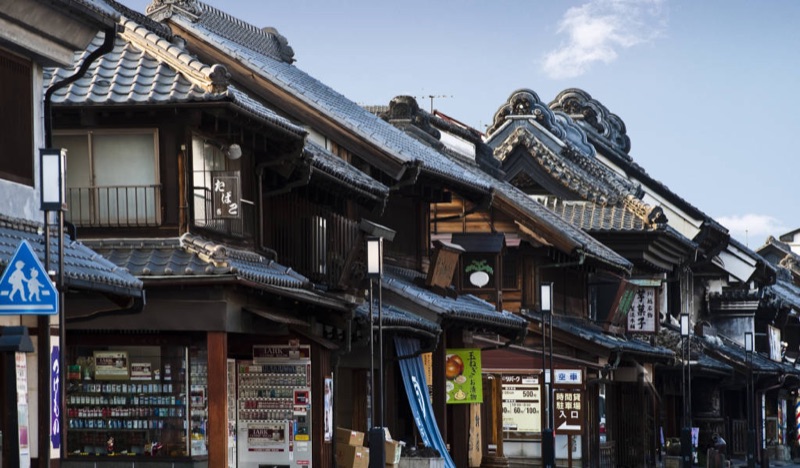
Style Districts & Hidden Neighborhoods, Japan

Today is about the Tokyo that doesn't appear on most itineraries: the tree-lined boutiques of Omotesandō, the chaotic youth culture of Harajuku, the vintage-shop labyrinth of Shimokitazawa, and the canal-side calm of Nakameguro. This is the day you stop being a tourist and start understanding how Tokyoites actually live, dress, and eat.

Morning (9:00 AM – 12:00 PM)

Meiji Shrine & Harajuku

Start at Meiji Shrine — a forest in the middle of the world's largest city, dedicated to Emperor Meiji. The 170-acre grounds are wrapped in 100,000 trees donated from across Japan. Walk the gravel path through the torii gates, watch a Shinto ceremony if one is in progress, and write a wish on an ema (wooden prayer tablet). Then exit south into Harajuku's Takeshita-dōri — a narrow pedestrian street of wild fashion, crêpe stands, and candy shops that is the absolute opposite of the shrine's serenity.

📍 Meiji Shrine: 1-1 Yoyogikamizonocho, Shibuya — next to Harajuku Station
⏰ Open sunrise to sunset (Oct: ~6:00 AM – 4:30 PM)
🎫 Free (ema tablets ¥500)
📍 Takeshita-dōri: starts directly across from Harajuku Station exit
🍦 Try: Marion Crêpes (Takeshita) or the cotton-candy shops — absurdly photogenic

Omotesandō — Tokyo's Champs-Élysées

The tree-lined boulevard of Omotesandō is Tokyo's most elegant shopping street — Tadao Ando's concrete Omotesandō Hills, the Prada crystal building by Herzog & de Meuron, and a parade of architectural showpieces from every luxury brand. But the real finds are in the narrow Cat Street backstreets — independent Japanese designers, vintage shops, and coffee bars.

📍 Omotesandō: from Meiji-jingumae Station to Omotesandō Station (~800m)
☕ Omotesandō Koffee: legendary minimalist coffee stand (now called Koffee Mameya) — single-origin pour-over
📍 Cat Street: parallel to Omotesandō, between Harajuku and Shibuya — independent boutiques
🍱 Lunch
Maisen — Tonkatsu
Japan's most famous tonkatsu (deep-fried pork cutlet) restaurant, housed in a converted 1960s bathhouse in Omotesandō. The kurobuta (black pork) cutlet is thick, juicy, and shatteringly crispy. The line moves fast. An absolute must.
💰 ¥1,500-2,500 · 📍 4-8-5 Jingumae, Shibuya · Open 11 AM – 10 PM
Afternoon (1:30 PM – 5:30 PM)

Shimokitazawa — Tokyo's Coolest Neighborhood

Shimokitazawa (Shimokita to locals) is what Williamsburg wishes it was: a labyrinth of vintage clothing stores, independent record shops, tiny live music venues, used bookstores, and some of Tokyo's best coffee roasters. The neighborhood has resisted redevelopment — the streets are narrow, the buildings are small, and every corner has something unexpected. This is where Tokyo's creative class actually hangs out.

📍 Shimokitazawa: Keio Inokashira Line or Odakyu Line from Shibuya (~5 min)
🛍️ New York Joe Exchange: excellent curated vintage (1 Chome-33-4 Kitazawa)
📚 B&B Bookstore: events + indie publishers (2-12-4 Kitazawa)
☕ Bear Pond Espresso: legendary single-origin espresso, Angel Stain latte (2-36-12 Kitazawa)
🎵 Shimokitazawa Garage: live music almost every night — check schedule

Nakameguro — Canal-Side Calm

Follow the Meguro River from Nakameguro Station — lined with independent boutiques, coffee roasters, and some of Tokyo's best small restaurants. In October, the trees are starting to turn amber. This neighborhood has a slow, residential feel that's the perfect counterpoint to Shinjuku's intensity. The Starbucks Reserve Roastery here (designed by Kengo Kuma) is worth a visit for the architecture alone.

📍 Nakameguro: Tōkyū Tōyoko Line from Shibuya (2 min) or walk from Ebisu (15 min)
☕ Onibus Coffee: 2-14-1 Kamimeguro — outstanding pour-over, rooftop seats
📍 Starbucks Reserve Roastery: 2-19-23 Aobadai, Meguro — Kengo Kuma design, 4 floors, stunning
Evening (6:30 PM – 10:30 PM)

Shinjuku Nightlife — Izakaya Deep Dive

Tonight is about proper izakaya culture. Head to Uoshin in Shinjuku for some of the freshest sashimi in Tokyo (they source directly from Tsukiji/Toyosu), or try Torikizoku for ¥350-per-item yakitori and beer — the ultimate casual experience. After dinner, explore the neon-lit streets of East Shinjuku.

📍 Uoshin: 1-16-3 Kabukicho, Shinjuku — excellent sashimi platters, casual vibe
💰 ¥3,000-5,000/person with drinks
📍 Alternative: Tsunahachi Tempura (3-31-8 Shinjuku) — 100-year-old tempura institution, ¥1,500 lunch set
🌃 Post-dinner: walk through East Shinjuku's neon canyons — this is peak Tokyo
🍣 Dinner
Uoshin — Sashimi & Izakaya
Fresh-from-market sashimi platters, grilled fish, and cold sake in a boisterous Shinjuku izakaya. The mixed sashimi plate is outstanding. Pure Japanese comfort dining.
💰 ¥3,000-5,000 · 📍 1-16-3 Kabukichō, Shinjuku · Open 4 PM – midnight
Pack tonight — tomorrow you leave for Hakone. Take only what you need for one night (the ryokan provides yukata/robes, toiletries, everything). Leave your main luggage at the hotel or use a coin locker at Shinjuku Station (¥500-800/day). Traveling light to Hakone makes the journey much more enjoyable.
Day 5 Hakone · Gōra

Hakone — Mountain Escape & Private Onsen
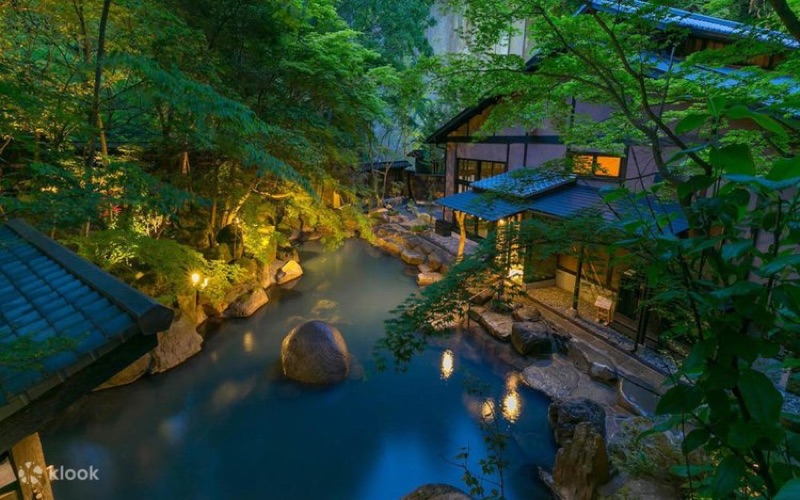
Hakone — Mountain Escape & Private Onsen, Japan

Leave Tokyo behind. Today you trade skyscrapers for volcanic mountains, neon for steam, and conveyor-belt sushi for multi-course kaiseki. The journey itself is spectacular: the Hakone Tozan Railway switchbacks up the mountainside, the ropeway floats you over steaming volcanic vents, and Lake Ashi appears through the mist below. Tonight you sleep at Gōra Kadan — a former Imperial summer villa where every room has a private open-air onsen. This is the relaxation day you've earned.

Morning (9:00 AM – 12:00 PM)

Shinjuku to Hakone-Yumoto

Take the Odakyu Romance Car limited express from Shinjuku Station directly to Hakone-Yumoto (85 min, smooth ride, reserved seats). At Hakone-Yumoto, switch to the Hakone Tozan Railway — Japan's steepest mountain railway, switchbacking up through forested gorges to Gōra Station. The autumn foliage in mid-October along this route is spectacular. At Gōra, the ryokan's shuttle picks you up (2-min ride).

🚃 Odakyu Romance Car: Shinjuku → Hakone-Yumoto, 85 min, ¥2,330 (not covered by JR Pass — buy at Odakyu counter)
🚃 Alternative: JR to Odawara (JR Pass covered) → Hakone Tozan Railway to Gōra
🚃 Hakone Tozan Railway: Hakone-Yumoto → Gōra, 40 min (switchback train)
📍 Gōra Kadan shuttle: 2 min from Gōra Station — call the ryokan on arrival
💡 Buy a Hakone Free Pass (¥6,100 from Shinjuku) if you want to do the loop course tomorrow morning before leaving
Afternoon (12:30 PM – 5:00 PM)

Hakone Loop Course (Partial)

Before checking into the ryokan, do part of the famous Hakone Loop: from Gōra, take the cable car up to Sōunzan, then the Hakone Ropeway over the volcanic Ōwakudani valley — sulfurous vents, steam plumes, and if the sky is clear, a jaw-dropping view of Mt. Fuji across Lake Ashi. At Ōwakudani, eat the famous black eggs (kuro-tamago) boiled in the volcanic sulfur springs — legend says each one adds 7 years to your life.

🚡 Gōra → Sōunzan (cable car, 10 min) → Ōwakudani (ropeway, 8 min)
📍 Ōwakudani: volcanic valley, boiling sulfur vents, black eggs ¥500/5 eggs
🗻 Mt. Fuji view: best on clear days — October mornings are ideal
🎫 Ropeway: ¥1,500 one-way Gōra to Ōwakudani (covered by Hakone Free Pass)
⚠️ Ōwakudani can close in high volcanic activity — check hakoneropeway.co.jp before going
💡 Return to Gōra by 3-4 PM for ryokan check-in — you want maximum onsen time

Check In to Gōra Kadan

Gōra Kadan occupies the grounds of the former summer villa of the Kan'in-no-miya Imperial family. It is consistently rated one of Japan's finest ryokans. Check in, change into your yukata (cotton robe), and head straight for your room's private open-air onsen — a stone bath on your private deck, fed by natural hot spring water, with mountain forest views. This is the Japan experience most people only read about. Let the volcanic mineral water unknot every muscle from four days of Tokyo walking.

📍 Gōra Kadan: 1300 Gōra, Hakone-machi, Ashigarashimo-gun, Kanagawa
📞 Book at gorakadan.com — rooms with private open-air onsen from ¥80,000-150,000/night (2 guests, includes dinner + breakfast)
⏰ Check-in: 2:00 PM – 5:00 PM
♨️ Private room onsen: 24-hour access, natural alkaline spring water
♨️ Also has communal indoor/outdoor baths and a rock garden onsen
👘 Yukata (cotton robe) provided — wear it everywhere in the ryokan
💡 Alternative ryokans: Hakone Ginyu (modern luxury, from ¥60,000) or Yama no Chaya (forest retreat, from ¥50,000)
Onsen etiquette: shower thoroughly before entering the bath. No swimsuits. Tattoos are traditionally not allowed in public onsen — but your room's private onsen has no restrictions, which is why Gōra Kadan is perfect. The water temperature is usually 40-42°C (104-108°F). Soak for 15-20 min, cool off, repeat. Drink water between soaks.
Evening (6:00 PM – 9:00 PM)

Kaiseki Dinner at Gōra Kadan

Kaiseki is the pinnacle of Japanese cuisine — a multi-course meal that follows the seasons, with each dish a work of art in presentation, texture, and flavor. At Gōra Kadan, the kaiseki dinner uses ingredients sourced from Hakone's mountains and Sagami Bay. Expect 8-12 courses: a delicate appetizer (sakizuke), seasonal sashimi, a grilled course, a steamed course, rice, and a dessert that looks too beautiful to eat. The meal is served in your room or in the private dining room.

🍽️ Kaiseki dinner: served 6:00 PM or 6:30 PM (choose at check-in)
🍶 Pair with local sake or Japanese wine — the sommelier will guide you
⏱️ Allow 2-2.5 hours — this is a slow, ceremonial meal
💡 After dinner, do a final evening soak in your private onsen under the stars. October nights in Hakone are cool and clear — the contrast of hot water and cold air is transcendent.
🍽️ Dinner
Gōra Kadan Kaiseki
8-12 course seasonal kaiseki: sakizuke appetizer, mountain vegetable preparations, Sagami Bay sashimi, grilled fish, steamed course, Hakone mountain rice, and a dessert course. Served in-room with ceremony and grace.
💰 Included in room rate · 📍 In-room or private dining room · Served 6:00/6:30 PM
Day 6 Hakone · Kyoto

Hakone Morning → Kyoto by Bullet Train
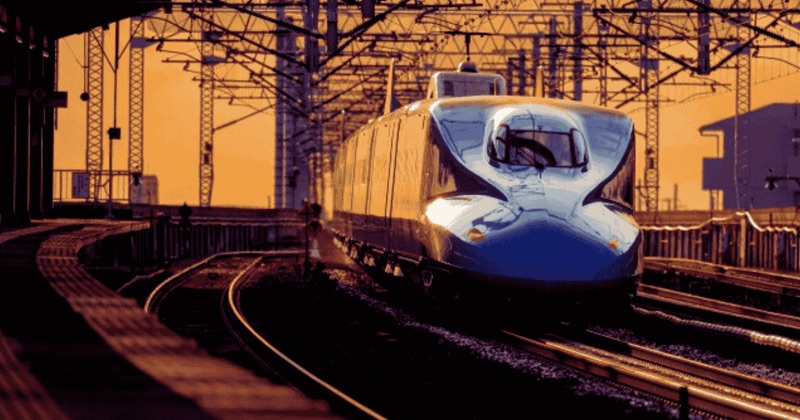
Hakone Morning → Kyoto by Bullet Train, Japan

Wake up early, soak in your private onsen one last time as morning mist rises off the mountains, then enjoy the ryokan's traditional Japanese breakfast — grilled fish, miso soup, rice, pickles, tamagoyaki. After checkout, travel to Kyoto via Odawara on the shinkansen (2 hours). By mid-afternoon you're in the ancient capital, with the rest of the day to explore Kyoto's mesmerizing Gion district at dusk.

Morning (7:00 AM – 10:30 AM)

Morning Onsen & Ryokan Breakfast

Rise early for a final morning soak in your private onsen — the morning light through the forest, the steam rising off the water, the silence of the mountains. Then head to breakfast: a full traditional Japanese breakfast spread (washoku) served in courses — grilled salmon, dashimaki tamago (rolled omelette), miso soup, tsukemono (pickles), rice, nori, and small seasonal dishes. This meal alone justifies the ryokan stay.

🍽️ Breakfast: 7:30 AM or 8:00 AM (choose at check-in)
⏰ Check-out: 11:00 AM
🚃 Shuttle to Gōra Station → Hakone Tozan Railway to Hakone-Yumoto → train to Odawara (or direct bus to Odawara)
💡 From Odawara: Hikari or Kodama shinkansen to Kyoto (~2 hours, covered by JR Pass)
Midday (11:00 AM – 2:00 PM)

Shinkansen to Kyoto

The bullet train from Odawara to Kyoto is one of the world's great train rides. The Tokaido Shinkansen passes through Nagoya and along the coast — on a clear day, Mt. Fuji appears on the right side about 15 minutes after departure. Book a window seat on the right (mountain) side. The journey takes about 2 hours at 285 km/h, and you arrive at Kyoto Station — a futuristic glass-and-steel cathedral designed by Hiroshi Hara.

🚄 Odawara → Kyoto: Hikari shinkansen ~2 hours (covered by JR Pass)
💺 Sit on the right side (seats D/E) for Mt. Fuji views
🍱 Buy an ekiben (station bento box) at Odawara Station for the ride — the seafood ones are excellent
📍 Kyoto Station: massive, modern, 15 floors — your Kyoto hub
🍱 Lunch
Ekiben (Station Bento) on the Shinkansen
Station bento boxes are a Japanese art form — beautifully arranged meals in lacquered boxes, sold at every major station. Odawara's specialty is seafood bento. Eat it on the bullet train watching Japan blur past the window at 285 km/h.
💰 ¥1,000-1,500 · 📍 Odawara Station shops · Buy before boarding
Afternoon (3:00 PM – 6:00 PM)

Check In & Explore Gion at Dusk

Drop your bags at the hotel and head to Gion — Kyoto's geisha district. As the afternoon light turns golden, the wooden machiya (traditional townhouses) along Hanami-koji glow. If you're lucky, you'll spot a maiko (apprentice geisha) in full regalia hurrying to an evening engagement. Walk from Shijō-dōri down Hanami-koji, then explore the narrow backstreets — Shinbashi-dōri is one of the most photographed streets in all of Japan.

📍 Gion: centered on Hanami-koji-dōri, east of Shijō Bridge
📸 Shinbashi-dōri: the stone-paved street with willow trees and teahouses — peak atmospheric
👘 Maiko spotting: best between 5-6 PM as they walk to evening appointments
⛩️ Yasaka Shrine: at the east end of Shijō-dōri — vermilion gates, lantern-lit at night
⚠️ Don't photograph geisha/maiko without permission — it's rude and increasingly restricted
Evening (6:30 PM – 9:30 PM)

Pontocho Alley Dinner

Pontocho is a narrow stone-paved alley running parallel to the Kamogawa River, lined with restaurants, bars, and teahouses. Many restaurants have riverside terraces (kawayuka) — elevated platforms over the water where you dine as the river flows beneath you. In October, the kawayuka season has just ended, but the indoor riverside seats are still magical. Choose a casual izakaya for your first Kyoto dinner.

📍 Pontocho: narrow alley between Shijō-dōri and Sanjō-dōri, west of the Kamogawa River
🍽️ Top pick: Pontocho Robin (Italian-Japanese fusion) or Manzara Pontocho (traditional izakaya with river view)
💰 ¥3,000-5,000/person for izakaya dinner
🍶 Try Kyoto-style obanzai — home-style seasonal small plates, unique to Kyoto
💡 Walk the full length of Pontocho (about 500m) before choosing — peer into each restaurant
🍽️ Dinner
Pontocho Izakaya
Pontocho's narrow lantern-lit alley holds dozens of intimate restaurants. Try obanzai (Kyoto home cooking): simmered vegetables, grilled tofu, seasonal tempura, and cold sake by the river.
💰 ¥3,000-5,000 · 📍 Pontocho Alley, Nakagyō-ku · From 5 PM
Kyoto pace tip: Kyoto rewards slowness. Don't try to see everything — the beauty is in the details. Walk the backstreets, not the main roads. The best discoveries in Kyoto are the ones you stumble on.
Day 7 Fushimi · Higashiyama · Gion

Fushimi Inari at Dawn & Chopstick Making
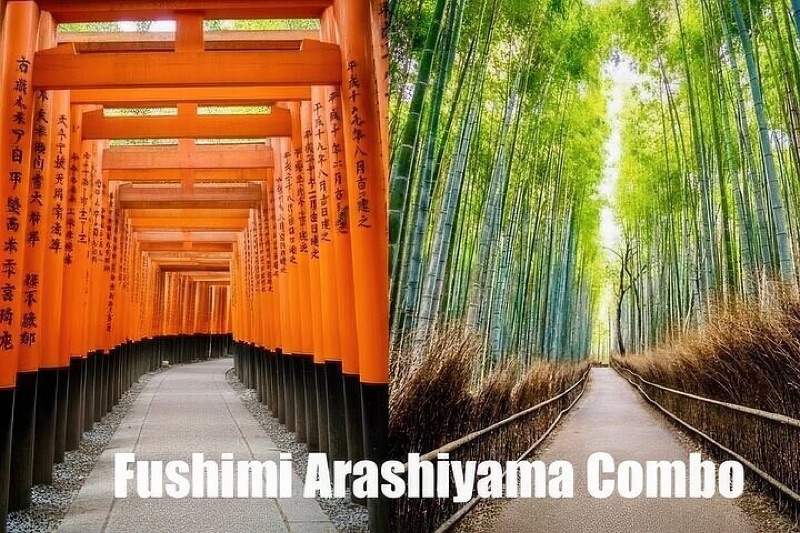
Fushimi Inari at Dawn & Chopstick Making, Japan

Today you experience two of Kyoto's most profound encounters: walking through the 10,000 vermilion torii gates of Fushimi Inari at dawn (before the crowds arrive), then crafting your own pair of chopsticks from Kyoto cedar in a 120-year-old machiya. The afternoon is for the temples of Higashiyama — the Philosopher's Path, bamboo groves of quiet side streets, and the layered beauty of Kyoto in autumn.

Early Morning (6:00 AM – 9:30 AM)

Fushimi Inari Taisha at Dawn

Fushimi Inari is Kyoto's most iconic sight — thousands of vermilion torii gates snaking up Mt. Inari through dense forest. The shrine is dedicated to Inari, the god of rice and prosperity, and the gates are donated by businesses and individuals. The path to the summit is 4 km and takes 2-3 hours round trip. But here's the secret: at 6 AM, you'll have the lower gates almost entirely to yourself. The light filtering through the vermilion tunnels in early morning is otherworldly. Go before 7 AM or don't bother — by 9 AM it's a tourist conga line.

📍 Fushimi Inari: 68 Fukakusa Yabunouchicho, Fushimi — 5 min from JR Inari Station
⏰ Open 24 hours, free entry — go at 6:00 AM for empty gates
🥾 Full loop to summit: 4 km, 2-3 hours. Half-loop to Yotsutsuji intersection: 1 hour (best views)
📸 Best photos: the tight corridor of gates in the first section (Senbon Torii)
⛩️ Fox statues everywhere — foxes (kitsune) are Inari's messengers
💡 Wear good shoes — the path is paved but steep in sections. Bring water.
Fushimi Inari dawn tip: take the JR Nara Line from Kyoto Station to Inari Station (5 min, 2 stops, covered by JR Pass). The first train is around 5:30 AM. At 6 AM in October, it's just getting light — the gates glow in the dawn. By 6:30 you might see fox-masked shrine attendants beginning their morning rituals. This is sacred Japan, not tourist Japan.
Late Morning (10:00 AM – 12:30 PM)

Chopstick Making Class — Gion Workshop

In a 120-year-old kyomachiya (traditional Kyoto townhouse) in the Higashiyama district near Yasaka Pagoda, you'll carve your own pair of chopsticks from Kitayama cedar — the prized wood of Kyoto's northern mountains. The workshop takes about 60-90 minutes: you'll plane, shape, and sand the wood, then optionally add a Yuzen-dyed fabric chopstick holder. Your instructor speaks English and guides you through each step. The finished chopsticks are yours to keep — the best souvenir you'll bring home from Japan.

📍 Waraku Workshop: Higashiyama-ku, Kyoto (near Yasaka Pagoda) — exact address provided at booking
⏰ Sessions: 9:00 AM – 4:00 PM, book your preferred time
💰 ¥3,000-4,500/person (includes materials and chopstick rest)
⏱️ Duration: 60-90 minutes
🎯 Book via japan-experience.com, GetYourGuide, or Rakuten Experiences
💡 The workshop is walking distance from Gion — combine with the Yasaka Pagoda photo spot
🍜 Lunch
Omen Kodaiji — Udon
Kyoto-style udon in a beautiful traditional building near Kodai-ji temple. Their signature dipping udon comes with a basket of seasonal vegetables and a rich dashi broth. Light, elegant, pure Kyoto.
💰 ¥1,200-1,800 · 📍 3-477 Ishibeikōji, Shimokawara-dōri, Higashiyama · Open 11 AM
Afternoon (1:30 PM – 5:30 PM)

Higashiyama Temple Walk

Higashiyama is Kyoto's most atmospheric district — a series of temples connected by stone-paved lanes climbing the eastern hills. Start at Kiyomizu-dera (the famous wooden terrace jutting out over the hillside), then walk down through Ninenzaka and Sannenzaka — two of the most perfectly preserved historic streets in Japan, lined with traditional shops, tea houses, and not a modern building in sight. Continue to Kodai-ji temple (beautiful evening illuminations in autumn) and the Yasaka Pagoda.

📍 Kiyomizu-dera: 1-294 Kiyomizu, Higashiyama — 15 min walk uphill from bus stop
⏰ Open 6:00 AM – 6:00 PM (extended hours during autumn illumination)
🎫 ¥400 entry
📍 Ninenzaka & Sannenzaka: stone-paved slopes below Kiyomizu — perfect for photos
📍 Yasaka Pagoda (Hōkan-ji): 388 Yasaka Kami-machi — Kyoto's most photographed pagoda
💡 The autumn foliage at Kiyomizu in mid-October is starting to turn — the colors will be magical
Evening (6:00 PM – 9:30 PM)

Nishiki Market & Kyoto Nightlife

Nishiki Market is Kyoto's 700-year-old kitchen — a 400-meter covered arcade of 130+ shops selling Kyoto specialties: pickled vegetables (tsukemono), yuba (tofu skin), mochi, wagashi (traditional sweets), fresh seafood on sticks, and matcha everything. Many stalls offer samples. After grazing, head to the backstreet bars around Kiyamachi-dōri for Kyoto's low-key but excellent nightlife.

📍 Nishiki Market: Nishikikōji-dōri between Teramachi and Takakura — 5 min from Shijō Station
⏰ Most shops open 9:00 AM – 5:00 PM (some until 6 PM)
🍢 Must-try: dashi-maki tamago at Tanaka Keiran, grilled mochi at Konna Monja, matcha warabi mochi
🍺 Kiyamachi-dōri nightlife: narrow riverside street with bars, izakaya, and late-night restaurants
📍 Sake Bar Yoramu: Nijo Kiyamachi — Israeli owner, incredible sake selection, English-friendly
💡 L'Escamoteur: Kiyamachi — speakeasy-style cocktail bar, tiny, excellent
🍽️ Dinner
Nishiki Market Grazing + Kiyamachi Izakaya
Graze through Nishiki Market's stalls in the early evening, then settle into a Kiyamachi riverside izakaya for sake, obanzai, and grilled fish.
💰 ¥2,000-4,000 · 📍 Nishiki Market → Kiyamachi-dōri · Evening
Day 8 Arashiyama · Uji · Central Kyoto

Bamboo Forest, Nintendo Museum & Kyoto Nights
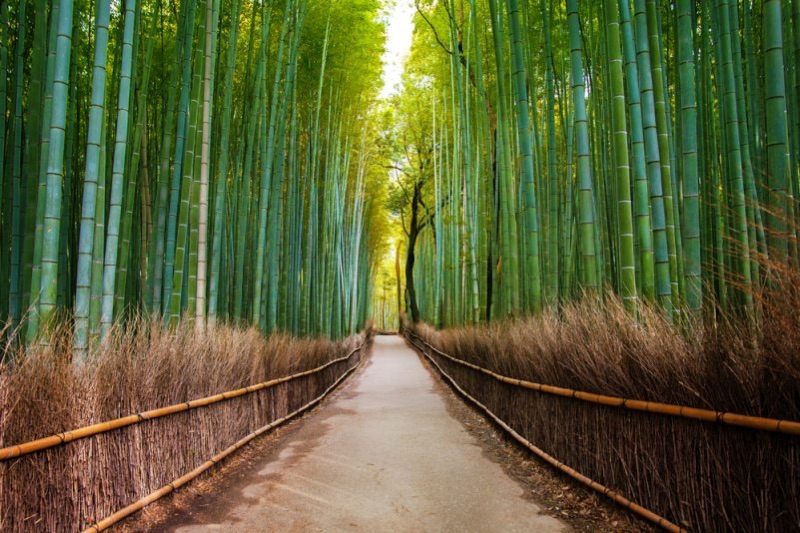
Bamboo Forest, Nintendo Museum & Kyoto Nights, Japan

Today splits between Kyoto's most iconic natural landscape and its newest cultural attraction. Morning in the Arashiyama bamboo grove — towering stalks swaying overhead, dappled light, silence. Then south to Uji for the Nintendo Museum — 135 years of gaming history in an interactive playground where you can play oversized Game Boy games and build with giant controller parts. Evening back in Kyoto for the best ramen in the city.

Morning (7:30 AM – 11:30 AM)

Arashiyama Bamboo Grove & Monkey Park

The Arashiyama bamboo grove is one of those places that photos can't capture — you have to be inside it, surrounded by the sound of bamboo creaking in the wind, the light filtering through 30-meter stalks in green stripes. Go early (before 8 AM) for near-solitude. After the grove, walk to the Iwatayama Monkey Park (15-min uphill hike) for views over Kyoto and close encounters with 120 wild Japanese macaques. Cross the scenic Togetsukyo Bridge.

📍 Bamboo Grove: Sagaogurayama Tabuchiyamacho, Ukyo — 15 min walk from JR Saga-Arashiyama Station
⏰ Open 24 hours, free — go before 8 AM for empty paths
📍 Iwatayama Monkey Park: south end of Togetsukyo Bridge — ¥550, 15 min hike up
🐒 Monkeys are wild — don't show food, don't stare, don't touch. You can feed them peanuts from inside the shelter at the top.
🌉 Togetsukyo Bridge: iconic curved bridge over the Hozu River — beautiful in autumn

Tenryū-ji Temple

Right at the entrance to the bamboo grove, Tenryū-ji is a UNESCO World Heritage Zen temple with one of the most beautiful gardens in all of Japan. The 14th-century garden, designed by Musō Soseki, uses 'borrowed scenery' (shakkei) — the Arashiyama mountains become the garden's backdrop. In October, the maples are starting to turn. The garden alone is worth the visit.

📍 Tenryū-ji: 68 Sagatenryūji Susukinobabachō, Ukyō — at bamboo grove entrance
🎫 Garden ¥500, main hall ¥800 (garden is the main event)
⏰ 8:30 AM – 5:00 PM
🍜 Lunch
Arashiyama Yoshimura — Soba
Handmade soba noodles with a view of Togetsukyo Bridge and the Hozu River. The tempura soba set is excellent. A perfect Arashiyama lunch.
💰 ¥1,200-1,800 · 📍 3 Sagatenryūji Susukinobabachō · Overlooking the river
Afternoon (12:30 PM – 5:00 PM)

Nintendo Museum — Uji

The Nintendo Museum (opened October 2024) is housed in a former Hanafuda card factory in Uji, 30 minutes south of Kyoto. It spans Nintendo's entire 135-year history — from handmade playing cards to the Switch. The interactive exhibits are extraordinary: play games on a giant Game Boy, build with oversized controller components, explore rooms dedicated to each console era. There's an entire floor of playable retro games. Tickets sell via lottery on the Nintendo Museum website — apply with your Nintendo Account 2 months before your visit.

📍 Nintendo Museum: 56 Kaguraden, Ogura-cho, Uji-shi, Kyoto 611-0042
🚃 From Kyoto: JR Nara Line to JR Ogura Station (25 min), then 8 min walk north
🚃 Or: Kintetsu Kyoto Line to Ogura Station (20 min), then 5 min walk east
⏰ Open 10:00 AM – 6:00 PM (closed Tuesdays)
🎫 ¥3,300/adult — timed entry, lottery-based tickets on museum.nintendo.com
⏱️ Allow 2.5-3 hours — there's more than you expect
🎮 Bring your Nintendo Account QR code — it links to interactive exhibits
💡 Apply for tickets exactly 2 months before (Oct 20 = apply by mid-Aug). A Nintendo Account is required — create one free at nintendo.com
⚠️ Tickets are extremely popular — apply as early as possible. If lottery fails, check for cancellation availability 1-2 days before.
Nintendo Museum tip: the ground floor covers the early history (hanafuda cards, love hotels, taxi company — yes, Nintendo did all of these before video games). The upper floors have the interactive exhibits. The gift shop is world-class — limited-edition merch only available here. Budget time for it.
Evening (6:30 PM – 10:00 PM)

Ichijōji Ramen Street & Night Walk

Ichijōji, in northeast Kyoto, is the city's unofficial ramen district — a single street with over 20 ramen shops, many of them legendary. Menya Gokkei serves thick, intense bowls unlike anything you've had before. Takayasu serves the classic Kyoto-style chicken broth (tori paitan) that's rich but clean. After ramen, walk back through Kyoto's quiet nighttime streets — the temple roofs lit up, the canal paths empty, the old city settling into darkness.

📍 Ichijōji Ramen Street: Kitashirakawa area, Sakyō-ku — Eizan Railway to Ichijōji Station
🍜 Menya Gokkei: Ichijōji Sagarimatsuchō 20-4 — thick, unique, intense (open 11:30 AM – 2 PM, 6 – 9 PM)
🍜 Takayasu: Ichijōji Satonomaechō — silky tori paitan chicken broth
🍜 Alternative: Shinpuku Saikan (downtown, near Kyoto Station) — established 1938, old-school chuka soba
💰 ¥800-1,200 per bowl
💡 Lines are shortest on weekday evenings — arrive by 6:30 PM
🍜 Dinner
Ichijōji Ramen
Kyoto's ramen district. Menya Gokkei for thick intensity or Takayasu for silky chicken broth. This is the other side of Kyoto — not delicate, not refined, just pure ramen soul.
💰 ¥800-1,200 · 📍 Ichijōji, Sakyō-ku · From 6 PM
Day 9 Himeji · Kyoto → Tokyo

Himeji Castle & Return to Tokyo

Himeji Castle & Return to Tokyo, Japan

Today is about Japan's greatest castle and the journey back to Tokyo. Himeji Castle is a UNESCO World Heritage masterpiece — the largest and most visited castle in Japan, with soaring white walls that earned it the nickname 'White Heron Castle'. You'll take the shinkansen from Kyoto to Himeji (50 min), spend the morning exploring the castle and gardens, then continue by shinkansen to Tokyo (3.5 hours from Himeji) to check into the Park Hyatt for your final two nights.

Morning (7:30 AM – 8:30 AM)

Kyoto to Himeji by Shinkansen

Check out of your Kyoto hotel and take the Hikari shinkansen from Kyoto to Himeji — 50 minutes westbound along the Tokaido-Sanyo Shinkansen line. Store your luggage in coin lockers at Himeji Station (available in multiple sizes at the north exit) so you can explore hands-free. The castle is visible from the station — a straight 15-minute walk north along Otemae-dōri boulevard.

🚄 Kyoto → Himeji: Hikari shinkansen, ~50 min (covered by JR Pass)
🧳 Coin lockers at Himeji Station north exit: ¥300-700 depending on size
🚶 Walk to castle: 15 min straight north on Otemae-dōri — the castle grows more impressive with every step
Morning (9:00 AM – 12:30 PM)

Himeji Castle — The White Heron

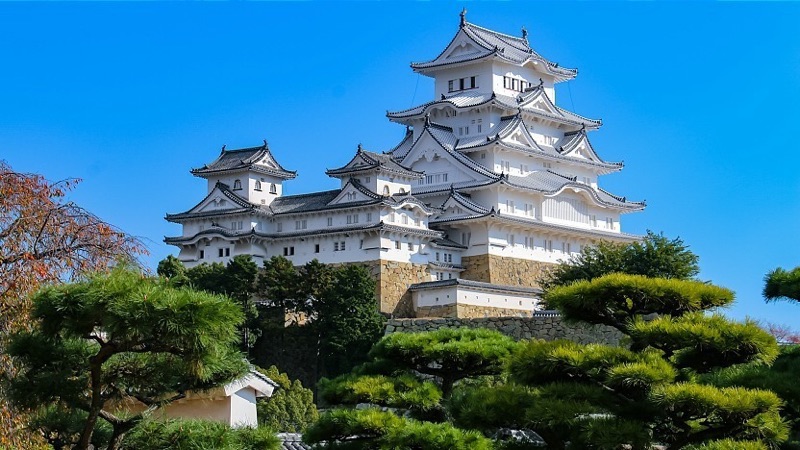
Himeji-jō is Japan's most spectacular castle — and one of only 12 original castles in the country (most were destroyed in WWII). The main keep soars 46 meters high, its white plaster walls curving like a bird in flight. Inside, climb the steep wooden stairs through six floors of defensive architecture — arrow slits, stone-dropping windows, hidden rooms for samurai. The castle complex includes 83 buildings, extensive stone walls, and the beautiful Koko-en Garden next door (9 Edo-period garden styles in one). Arrive before 10 AM to beat the tour groups.

📍 Himeji Castle: 68 Honmachi, Himeji — 15 min walk from JR Himeji Station
⏰ Open 9:00 AM – 5:00 PM (last entry 4:00 PM)
🎫 Castle: ¥1,000/adult. Castle + Koko-en combo: ¥1,040
⏱️ Allow 2-2.5 hours for castle + Koko-en Garden
🏯 6 floors to climb — steep wooden stairs, remove shoes at entrance
📸 Best photo spot: from the Sannomaru plaza (approach area) or from Koko-en Garden
💡 The third floor has original wooden architecture untouched since 1609 — look for the graffiti carved by Edo-period guards

Koko-en Garden

Built on the site of the former samurai quarters, Koko-en is actually nine separate gardens, each representing a different Edo-period garden style. The main garden has a tea house where you can sip matcha overlooking a koi pond. In October, the maples are beginning to turn — the combination of castle views and autumn foliage is extraordinary.

📍 Koko-en: 68 Honmachi, Himeji — adjacent to castle, west side
🎫 ¥310 or ¥1,040 combo with castle
🍵 Tea house: matcha + wagashi (sweet) for ¥500
⏱️ Allow 45-60 min for a relaxed walk through all nine gardens
🍱 Lunch
Menya Butahige — Himeji Ramen
Himeji's local specialty is lighter shoyu (soy sauce) based ramen with thin noodles. Menya Butahige is a local favorite near the station — no-frills, delicious, fast. The perfect fuel before your shinkansen to Tokyo.
💰 ¥800-1,000 · 📍 Near Himeji Station south exit · Open 11 AM – 9 PM
Afternoon (1:30 PM – 5:30 PM)

Shinkansen to Tokyo & Park Hyatt Check-In

Board the Hikari or Nozomi shinkansen from Himeji to Tokyo Station (3-3.5 hours). At Tokyo, transfer to the JR Yamanote Line or take a taxi to the Park Hyatt Tokyo in Nishi-Shinjuku. Check in, ride the elevator to the 41st floor lobby, and take in the view that made Lost in Translation iconic. You're home for your last two nights in the best hotel in Tokyo.

🚄 Himeji → Tokyo: Nozomi ~3 hours (not covered by JR Pass) or Hikari ~3.5 hours (JR Pass covered)
📍 Park Hyatt Tokyo: 3-7-1-2 Nishi-Shinjuku, Shinjuku — in the Shinjuku Park Tower (39th-52nd floors)
⏰ Check-in from 3:00 PM
🏊 Pool on 47th floor (Club on the Park) — swim with the Tokyo skyline below you
🍸 New York Bar: 52nd floor — craft cocktails, live jazz nightly from 8 PM, Shinjuku skyline panorama
💡 Request a room with a Mt. Fuji view (west-facing) — on clear October evenings, Fuji appears at sunset
Park Hyatt tip: the New York Bar has a cover charge of ¥2,750 after 8 PM (when the jazz starts), but it's waived if you dine at the New York Grill on the same floor. Either way, the view alone is worth it — this is the bar where Bill Murray sat in Lost in Translation, and it looks exactly the same.
Evening (7:00 PM – 10:30 PM)

New York Bar — Lost in Translation Night

Your first night at the Park Hyatt deserves the New York Bar. Take the elevator to the 52nd floor — the doors open to floor-to-ceiling windows, a jazz trio playing, and a 360° panorama of Tokyo's infinite skyline. Order a Japanese whisky (Yamazaki 12 or Hakushu) and watch the city stretch to the horizon. After drinks, walk through the quiet streets of Nishi-Shinjuku — the skyscraper district has a completely different energy from East Shinjuku's chaos.

📍 New York Bar: Park Hyatt 52F, 3-7-1-2 Nishi-Shinjuku
⏰ Open 5:00 PM – midnight (Sun-Wed), 5:00 PM – 1:00 AM (Thu-Sat)
🎵 Live jazz from 8:00 PM nightly (cover ¥2,750 after 8 PM)
🥃 Must-try: Yamazaki 12 Year (¥2,200) or Hibiki Japanese Harmony (¥1,800)
💰 Drinks ¥1,500-3,000 each
🍽️ Dinner
New York Grill or Kozue — Park Hyatt
Two options in-hotel: New York Grill (52F) for steaks and city views, or Kozue (40F) for refined Japanese cuisine with tatami seating and Shinjuku views. Both are excellent — Kozue is the more unique Kyoto-to-Tokyo transition.
💰 ¥8,000-15,000/person · 📍 Park Hyatt 40F (Kozue) or 52F (New York Grill) · Reservations essential
Day 10 Shinjuku · Yanaka · Kagurazaka

Hidden Tokyo — Off the Tourist Trail

Hidden Tokyo — Off the Tourist Trail, Japan

Your second-to-last full day in Tokyo, and it's time to see the side most visitors miss entirely. Morning at Shinjuku Gyoen — one of the world's most beautiful urban gardens, especially in October when the chrysanthemums bloom. Then north to Yanaka — a neighborhood that survived the 1923 earthquake and WWII firebombing, preserving old Edo-era atmosphere. Finish in Kagurazaka, Tokyo's secret French-Japanese quarter. Tonight is your farewell dinner and a final bar crawl.

Morning (9:00 AM – 12:00 PM)

Shinjuku Gyoen National Garden

Shinjuku Gyoen is a masterpiece of garden design — 58 hectares combining three styles: a French Formal Garden (symmetrical paths and rose beds), an English Landscape Garden (rolling lawns and great trees), and a Traditional Japanese Garden (ponds, bridges, pagodas). In October, the chrysanthemum exhibition fills the garden with hundreds of varieties. The greenhouse contains tropical plants from Japan's southern islands. This is the antidote to Tokyo's intensity — vast, quiet, green, and barely touched by tourists at opening time.

📍 Shinjuku Gyoen: 11 Naitomachi, Shinjuku — 5 min walk from Shinjuku-gyoenmae Station (Marunouchi Line)
⏰ Open 9:00 AM – 4:30 PM (closed Mondays) — entry until 4:00 PM
🎫 ¥500/adult
🌺 October: chrysanthemum exhibition + early autumn color
🚫 No alcohol, no sports equipment allowed (it's a contemplative space)
⏱️ Allow 1.5-2 hours for a relaxed walk

Yanaka — Edo-Era Tokyo Survivor

Yanaka is the neighborhood that time forgot. While most of Tokyo was destroyed by earthquake (1923) and firebombing (1945), Yanaka survived — its narrow streets, wooden houses, and temple-dotted hillsides look much as they did a century ago. Walk Yanaka Ginza (a retro shopping street with local bakeries, cat-themed shops, and street food), visit the atmospheric Yanaka Cemetery, and soak in a neighborhood where Tokyo still feels like a village.

📍 Yanaka: north of Ueno, walk from JR Nippori Station west exit
📍 Yanaka Ginza: shopping street starting from Yuyake Dandan staircase (sunset steps)
🐱 Cat Street (non-official): Yanaka is famous for its cats — they sunbathe on temple walls everywhere
🍡 Try: Yanaka melon pan (freshly baked, crunchy-sweet) at any local bakery
📸 Yuyake Dandan: the staircase at the top of Yanaka Ginza — famous sunset spot
🍜 Lunch
Kagura — Kagurazaka Soba
In Kagurazaka, Tokyo's hidden French-Japanese quarter, find a traditional soba restaurant in the cobblestone backstreets. Hand-cut buckwheat noodles, cold dipping broth, a side of tempura. Simple, ancient, perfect.
💰 ¥1,200-1,800 · 📍 Kagurazaka backstreets, Shinjuku · Lunch from 11:30 AM
Afternoon (1:30 PM – 5:00 PM)

Kagurazaka — Tokyo's Hidden French Quarter

Kagurazaka is one of Tokyo's best-kept secrets — a steep cobblestone street with narrow alleys (yokocho) branching off in every direction, hiding French bistros, traditional ryotei (high-end Japanese restaurants), artisanal shops, and tiny bars. The neighborhood has attracted French residents for decades (the Institut Français is here), creating a unique Franco-Japanese fusion culture. Walk the main slope, then explore every alley — each one is a discovery.

📍 Kagurazaka: between Iidabashi Station and Ushigome-Kagurazaka Station
☕ Mugimaru 2: charming café in a converted Shōwa-era house, excellent matcha
🧀 Canal Café: terrace on the Kanda River — wine, cheese, moat views
📍 Hyōgo Yokochō: the most atmospheric alley — black wooden walls, geisha tea houses, stone paths
💡 On Thursday evenings, the street has a local market with artisan food and crafts

Last-Minute Shopping — Shinjuku & Isetan

Head back to Shinjuku for any final shopping. Isetan Shinjuku (the legendary department store) has a basement food hall (depachika) that is one of the great food experiences in Japan — every prefecture represented by its finest products, with free samples everywhere. Buy wagashi (traditional sweets), matcha, sake, and dried goods to bring home.

📍 Isetan Shinjuku: 3-14-1 Shinjuku — east side of Shinjuku Station
🍱 Depachika (B1-B2): Japan's finest food hall — free samples, gift packaging, premium products
🎁 Good souvenirs: Toraya yōkan (traditional sweet), matcha from Ippodo, sake from Hasegawa Saketen
⏰ Open 10:00 AM – 8:00 PM
Evening (6:30 PM – 11:00 PM)

Farewell Dinner — Gonpachi (Kill Bill Restaurant)

For your penultimate dinner, go to Gonpachi Nishi-Azabu — the restaurant that inspired the crazy 88 fight scene in Kill Bill. The two-story wooden interior with its soaring ceiling and open kitchen is spectacular. The food is excellent too: yakitori, soba, tempura, and sashimi. It's touristy, but deservedly so — the atmosphere is electric. After dinner, one final Golden Gai session or a quiet drink at the Park Hyatt's Girandole bar.

📍 Gonpachi Nishi-Azabu: 1-13-11 Nishi-Azabu, Minato
💰 ¥4,000-7,000/person
📞 Reserve at gonpachi.jp — popular, especially on weekends
🍜 Must-order: hand-pulled soba, robata-grilled skewers, tempura
🎬 Tell the staff you're fans of Kill Bill — they're used to it
🍽️ Farewell Dinner
Gonpachi Nishi-Azabu
The Kill Bill restaurant — soaring wooden interior, open kitchen, excellent yakitori and soba. A fitting penultimate dinner in Tokyo.
💰 ¥4,000-7,000 · 📍 1-13-11 Nishi-Azabu, Minato · Reservations recommended
Tomorrow is your last full day. If there's anything you missed — a specific shop, a neighborhood, a restaurant — tomorrow's schedule is flexible. Make a list tonight of any must-dos before you leave Japan.
Day 11 Toyosu · Ginza · Roppongi · Shinjuku

Last Full Day — Toyosu, Ginza & Final Night
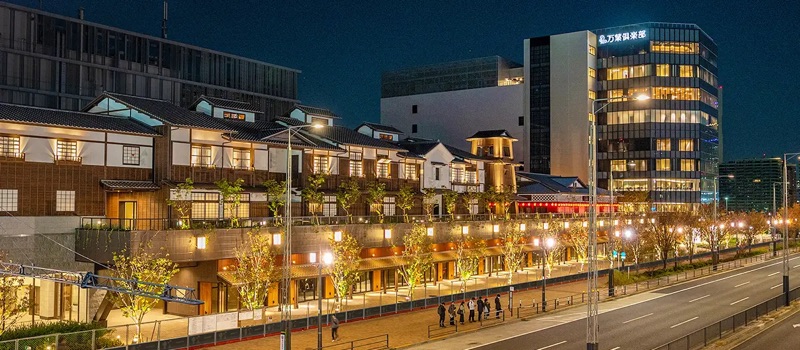
Last Full Day — Toyosu, Ginza & Final Night, Japan

Your last full day in Japan. Make it count. Early morning at Toyosu Fish Market to watch the tuna auction and eat the freshest sushi in the world. Afternoon in Ginza — Tokyo's most elegant shopping district — for any final gift buying. And tonight: your grand farewell, whatever that means to you. A final ramen? One more Golden Gai bar? Sunset cocktails at the Park Hyatt before one last soak in the city's energy? This is the day you say goodbye.

Early Morning (6:00 AM – 9:30 AM)

Toyosu Fish Market

Toyosu is where Tokyo's fish market moved in 2018 — a state-of-the-art facility handling 480+ species of seafood daily. The tuna auction viewing gallery (lottery entry, apply ahead) lets you watch bluefin tuna worth ¥1-20 million being sold in seconds. Even without the auction, the market's sushi restaurants serve the freshest fish in the world — the sushi here is leagues beyond anything in the tourist areas. Come early.

📍 Toyosu Market: 6-6-2 Toyosu, Koto — Yurikamome Line to Shijō-mae Station
⏰ Market tours: from 5:30 AM. Restaurants: from 5:00 AM. Closed Sun/Wed + holidays.
🐟 Tuna auction gallery: apply online at shijou.metro.tokyo.lg.jp (lottery, apply 1 month ahead)
🍣 Sushi Dai (Toyosu branch): legendary, expect 1-2 hour wait from 5 AM. Worth it.
🍣 Alternative: Daiwa Sushi or Iwasa Sushi — shorter lines, nearly as good
💰 Omakase sushi set: ¥3,500-5,000 (10-12 pieces of the freshest sushi you'll ever eat)
Toyosu sushi tip: order the omakase (chef's choice) set — the chef selects whatever is best that morning. The uni (sea urchin), otoro (fatty tuna belly), and ikura (salmon roe) here will ruin sushi for you everywhere else. This is the meal you'll remember 10 years from now.
Late Morning (10:30 AM – 1:30 PM)

Ginza — Tokyo's Most Elegant District

Ginza is Tokyo's answer to Fifth Avenue — wide boulevards, flagship stores (Uniqlo's 12-floor global flagship, Muji's enormous multi-story store, the Sony showroom), art galleries, and some of Japan's most prestigious restaurants. On weekends, the main Chuo-dōri becomes pedestrian-only. For gifts, the basement food halls of Mitsukoshi and Matsuya are extraordinary.

📍 Ginza: centered on Chuo-dōri between Ginza 1-chome and 8-chome
🛍️ Uniqlo Ginza: 6-9-5 Ginza — 12 floors, Japan-exclusive items
🛍️ Muji Ginza: 3-3-5 Ginza — hotel, restaurant, bakery built into the store
🎁 Itoya: 2-7-15 Ginza — legendary stationery store since 1904 (12 floors of paper, pens, washi)
🍱 Mitsukoshi Ginza depachika: B2-B3 food halls — wagashi, bento, sake
🍱 Lunch
Ginza Kagari — Chicken Ramen
Tiny 10-seat ramen shop in the Ginza backstreets, famous for its tori paitan (chicken broth) soba — creamy, rich, and soul-warming. Frequently rated one of Tokyo's best bowls. The line is long but moves fast.
💰 ¥1,000-1,300 · 📍 Ginza 6-chome (under the tracks) · Open 11 AM
Afternoon (2:00 PM – 5:30 PM)

Free Time — Your Tokyo

This afternoon is intentionally unstructured. Revisit your favorite neighborhood, find a jazz kissaten (old-school coffee shop where you listen to vinyl records in silence), sit in a park, get a final konbini haul of Japanese snacks to pack, or just walk. Some suggestions: the Nezu Museum in Omotesandō (stunning garden), the Mori Art Museum in Roppongi Hills (city views + contemporary art), or simply sit in a Shinjuku café and watch Tokyo happen.

🏛️ Nezu Museum: 6-5-1 Minami-Aoyama, Minato — beautiful garden + Asian art (¥1,300)
🏛️ Mori Art Museum: Roppongi Hills 53F — contemporary art + Tokyo City View observation deck (¥1,800)
☕ Jazz kissaten: Café de l'Ambre (Ginza 8-10-15) — since 1948, perfectly aged coffee, jazz vinyl, silence
🛒 Don Quijote Shinjuku: 1-16-5 Kabukichō — Japan's wildest discount store, open 24 hours, buy everything
Evening (6:30 PM – Late)

Grand Farewell Night

This is your last night in Japan. Make it unforgettable. Start with sunset drinks at the Park Hyatt's New York Bar (you know the drill by now). Then head out for a farewell dinner — we recommend Nakajima in Shinjuku (Michelin-starred sardine kaiseki for ¥800 at lunch, but dinner is also incredible and affordable) or splurge on wagyu yakiniku at Yoroniku in Minami-Aoyama. End the night with a final Golden Gai bar, a 7-Eleven Strong Zero from the konbini, and one last walk through the neon canyons of Shinjuku.

🍷 Sunset drinks: New York Bar, Park Hyatt 52F — arrive by 6:30 PM for window seats
🥩 Yoroniku: 6-6-22 Minami-Aoyama — Tokyo's best yakiniku (wagyu BBQ), ¥12,000-18,000/person, reservations months ahead
🍽️ Budget alternative: Nakajima (3-32-5 Shinjuku) — Michelin-starred, sardine-focused, incredibly affordable
🍺 Final konbini run: Strong Zero chuhai (9% lemon sour) + premium onigiri + Japanese KitKats for the flight home
🍽️ Grand Farewell Dinner
Yoroniku or Nakajima
Two paths: Yoroniku for the ultimate wagyu yakiniku splurge (A5 beef, cooked tableside), or Nakajima for Michelin-starred sardine kaiseki at a fraction of the price. Both are peak Tokyo dining.
💰 ¥3,000-18,000 · 📍 Minami-Aoyama (Yoroniku) or Shinjuku (Nakajima) · Book ahead
Pack tonight — you need to leave for Narita by noon tomorrow. Put your souvenirs and snacks in your checked bag (Japanese packaging is sturdy). Set two alarms. Have your hotel arrange a Narita Express reservation or taxi for tomorrow morning.
Day 12 Shinjuku · Narita

Sayōnara, Japan ✈️

Sayōnara, Japan ✈️, Japan

Your flight departs NRT at 5:20 PM. You need to be at Narita by 3:00 PM for international departure, which means leaving the Park Hyatt by noon at the latest. This morning is a gentle farewell — a final breakfast, a last walk through Shinjuku, and the journey to the airport. You'll be back. They always come back.

Morning (8:00 AM – 11:30 AM)

Final Morning at the Park Hyatt

Sleep in — you've earned it. Then head to the Park Hyatt's Girandole restaurant (41F) for breakfast: a spectacular buffet with both Western and Japanese options, floor-to-ceiling windows, and Shinjuku sprawling below. After breakfast, take a final swim at the 47th-floor pool, or simply sit in the lobby with a coffee and watch Tokyo wake up one more time. Check out by 11:30 AM.

🍽️ Girandole breakfast: 41F, 7:00 AM – 10:30 AM (included or ¥4,800/person)
🏊 Club on the Park (pool): 47F, open from 6:00 AM — final swim with the skyline
⏰ Check-out: 12:00 PM (request late checkout at front desk — often granted for Park Hyatt guests)
🧳 Bell desk will hold luggage while you explore

Last Shinjuku Walk

If you have time, take one final walk. Shinjuku Gyoen is nearby, or just wander the streets you've come to know. Stop at a konbini for flight snacks — Japanese 7-Elevens sell onigiri, sandos, and desserts that would be restaurant-quality elsewhere. Get one last melon pan from a bakery. Say goodbye.

🏪 7-Eleven travel haul: onigiri (salmon, tuna mayo), egg sando, matcha latte, Tokyo Banana (souvenir snack)
💡 Final souvenir: Tokyo Banana or Shiroi Koibito (Hokkaido cookies) from the Shinjuku Station gift shops — classic omiyage (gifts)
Midday (12:00 PM – 3:00 PM)

Narita Express to Airport

Take the Narita Express from Shinjuku Station at 12:30 PM or 1:00 PM — arriving at Narita Terminal 1 or 2 around 2:00-2:30 PM. This gives you 2.5-3 hours before your 5:20 PM flight, which is plenty for international departure. The N'EX is covered by JR Pass. At Narita, tax-free shops in the departure area have a final chance to buy Japanese whisky, matcha, and snacks.

🚃 Narita Express: Shinjuku → Narita Airport, ~90 min (covered by JR Pass)
💡 Book a reserved seat on the N'EX — Shinjuku departures: every 30 min
✈️ Flight: 5:20 PM from NRT — aim to arrive by 2:30 PM
🛍️ Narita duty-free: Japanese whisky (Suntory, Nikka) is often cheaper here than in the city
🍱 If hungry: the ramen shops in Narita Terminal 1 departure area are surprisingly excellent
At Narita, if you have leftover yen, the basement convenience stores accept it — stock up on Japanese snacks, face masks, and KitKats (Japan has 300+ seasonal flavors). The duty-free whisky selection at Narita is better than most city shops. Sayōnara, Japan — until next time. 🇯🇵

Love this format? Get your own.

Every tabiji itinerary is custom-built from real traveler intelligence — specific restaurants, actual addresses, local timing tricks.

Get Your Personalized Itinerary — $1

Delivered within 24 hours. 2 free revisions. 100% satisfaction guaranteed.

📄 Export to Google Docs

Get an editable Google Doc of this itinerary — perfect for sharing with your travel group and adding your own notes.

The doc will be shared to your email as an editor.

✅ Your Google Doc is ready!

We've shared it with . Check your Google Drive or click below.

Open Google Doc →

Tip: You can edit, add notes, and share it with your travel group!