⚡ Before You Go — Essentials
🚗 Getting Around
Renting a car is essential for this itinerary — public transit doesn't reach the hidden spots. International Driving Permit required. Drive on the left. Rent from a Toyota or Times Car location near Naha Airport. Budget ¥7,000-10,000/day for a compact car. The Okinawa Expressway runs from Naha to Nago (¥1,000 toll) and saves 30+ minutes to the north.
💵 Money
Japanese Yen (JPY). Cash is king in Okinawa — many local restaurants and small shops don't take cards. Load up at 7-Eleven ATMs (international card friendly). Budget ¥15,000-25,000/day for food, gas, and activities for the group. IC cards (OKICA) work on the Yui Rail monorail in Naha.
🗣️ Language
Japanese. English is limited outside resort areas and Naha. Download Google Translate with Japanese offline pack — the camera translation feature is a lifesaver for menus. Learn: Arigatou gozaimasu (thank you), Hai (yes), Oishii (delicious).
🌤️ Weather in July
Hot and humid — 28-33°C (82-91°F) with tropical rain showers. This is typhoon season, so check forecasts regularly. Bring reef-safe sunscreen (SPF 50+), a hat, and a light rain jacket. Start activities early (7-8am) to beat midday heat. Hydrate constantly.
🤿 Snorkeling Tips
Bring your own mask and snorkel if you can — rental quality varies. Reef-safe sunscreen only (normal sunscreen kills coral). Water shoes essential for rocky entries. Sea turtles are common around Zamami and Maeda — swim gently and keep your distance.
🍜 Okinawan Food Culture
Okinawan cuisine is distinct from mainland Japan — influences include Chinese, Southeast Asian, and American. Must-try: goya champuru (bitter melon stir-fry), Okinawa soba, rafute (braised pork belly), taco rice, sata andagi (fried doughnuts), and beni imo (purple sweet potato) everything. Many restaurants close between lunch and dinner (2-5pm).
Naha: Kokusai Dori, Street Food & Makishi Market
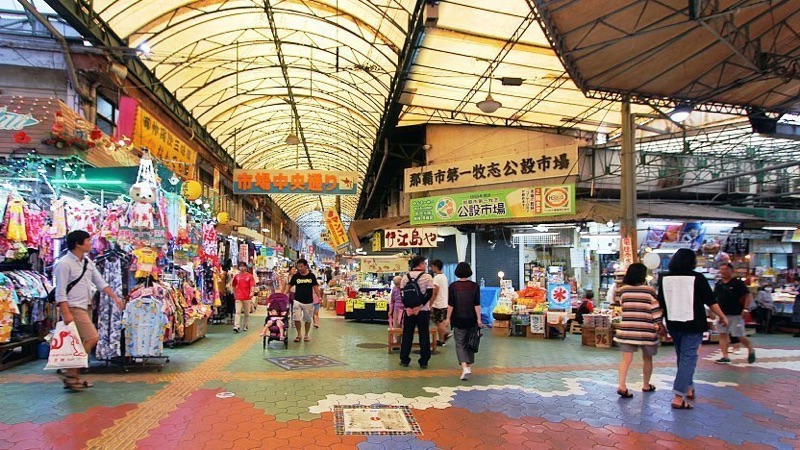
Land in Naha, pick up your rental car, and dive straight into Okinawa's electric capital. Explore the famous Kokusai Dori, lose yourself in the covered Heiwa Dori arcade, and eat your way through Makishi Public Market — Okinawa's kitchen.
Arrive at Naha Airport & Pick Up Rental Car
Naha Airport (OKA) is compact and efficient. Most rental car counters are on the first floor of the domestic terminal. With your International Driving Permit in hand, grab a compact car (Wish, Aqua, or similar) and you'll be on the road in 30 minutes. The drive into central Naha takes 15-20 minutes.
Kokusai Dori (International Street)
Naha's 1.6km main boulevard — nicknamed "The Mile of Miracles" after its rapid post-WWII reconstruction. The street pulses with souvenir shops, department stores, live music venues, and the smell of sata andagi (Okinawan doughnuts) wafting from stalls. It's touristy but essential — this is where Okinawa presents itself to the world.
Heiwa Dori Shopping Arcade
Branch off Kokusai Dori near Makishi Station into this covered arcade — a time capsule of postwar Naha. Narrow lanes overflow with ceramics, pickled vegetables, traditional fabrics, secondhand kimono shops, and tiny eateries serving local favorites. Far more character than the main drag.
Tsuboya Pottery District
A five-minute walk from Kokusai Dori, Tsuboya was the official pottery quarter of the Ryukyu Kingdom for over 300 years. Cobblestone lanes wind past historic kilns, working studios, and galleries selling handcrafted yachimun ceramics and shisa guardian lions. The Tsuboya Yachimun-dori street has been beautifully preserved.
Relax at Ukishima Garden or Naminoue Beach
A small urban beach and shrine perched on a cliff above the sand, Naminoue-gu is where Okinawan fishermen have prayed for safe voyages for centuries. The beach below is small but refreshing for a quick dip after a hot afternoon of walking. Alternatively, find a cafe on Kokusai Dori and recharge with iced beni-imo (purple sweet potato) latte.
Dinner on Kokusai Dori & Night Market
Kokusai Dori transforms at night — neon lights, street performers, and izakayas spill onto the sidewalk. The Yatai Mura (food stall village) near Makishi Station offers a rotating cast of local vendors selling everything from taco rice to Okinawan soba to grilled skewers. Eat standing up, drink Orion beer, and soak in the energy.
Shurijo Castle, Bingata Dyeing & Ryukyu Heritage
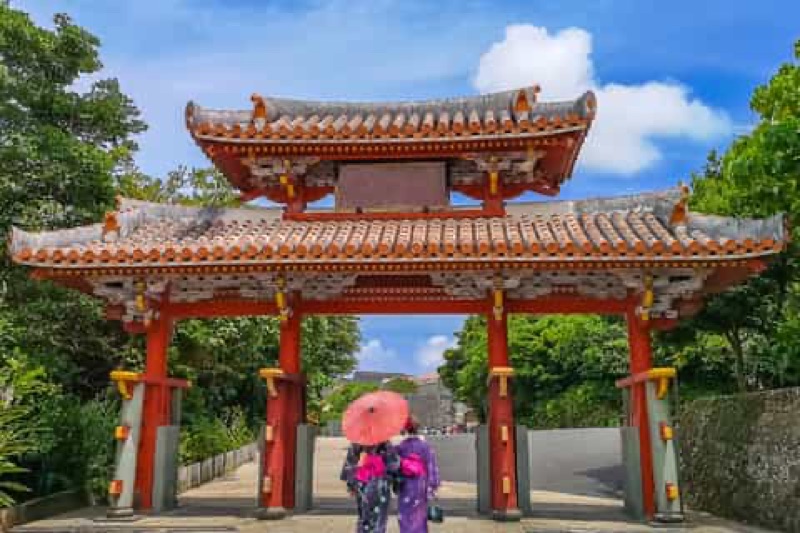
Ascend to the hilltop seat of the Ryukyu Kingdom. Explore Shurijo Castle (restored after a devastating 2019 fire — the main hall rebuild is underway), walk the Kinjo-cho stone path, try your hand at bingata dyeing, and end with an Eisa dance experience that will have the whole family moving.
Shurijo Castle Park (Shurijo Seiden-ato)
The spiritual and political heart of the Ryukyu Kingdom for 450 years. While the main Seiden hall is still being rebuilt after the 2019 fire (expected completion around 2026), the castle park's stone walls, gates (Shureimon, Kankaimon, and Zuisenmon), and surrounding structures are open and magnificent. The view from the castle grounds across Naha to the sea is breathtaking.
Kinjo-cho Stone Paved Path
One of Japan's "100 Best Roads" and almost completely overlooked by tourists. This ancient stone path winds downhill from Shuri through a quiet residential neighborhood lined with old stone walls, banyan trees, and tiny cafes. It feels like stepping back centuries. The path is uneven — wear good shoes.
Bingata Dyeing Workshop
Bingata is Okinawa's traditional resist-dye technique — once reserved exclusively for Ryukyu royalty. In a 60-90 minute workshop, you'll create your own colorful bingata piece using traditional stencils and dyes. Perfect for families — even young kids can create something beautiful. Choose from tote bags, T-shirts, or traditional fabric squares.
Okinawa Prefectural Museum
The best primer on Okinawan culture anywhere. Start here and everything else on the trip makes more sense. Exhibits cover Ryukyu Kingdom history, indigenous religion, sanshin music, traditional bingata textiles, yachimun ceramics, and the WWII Battle of Okinawa. The building itself is a architectural statement — designed to resemble a gusuku (Okinawan fortress).
Eisa Dance Experience
Eisa is Okinawa's powerful drumming dance tradition — performed during Obon to honor ancestors. In a 90-minute workshop, your family will learn the basics of eisa drumming and choreography, try on traditional costumes, and get a genuine feel for Okinawan performing arts. The energy is infectious.
Matsuyama District & Local Izakaya
Naha's Matsuyama district comes alive at night with izakayas (Japanese pubs) serving Okinawan small plates and awamori (Okinawan distilled spirit). Find a tiny spot with a handwritten menu, order whatever the chef recommends, and experience the warm, boisterous hospitality that Okinawans are famous for.
Kerama Islands: Zamami & the Legendary Kerama Blue
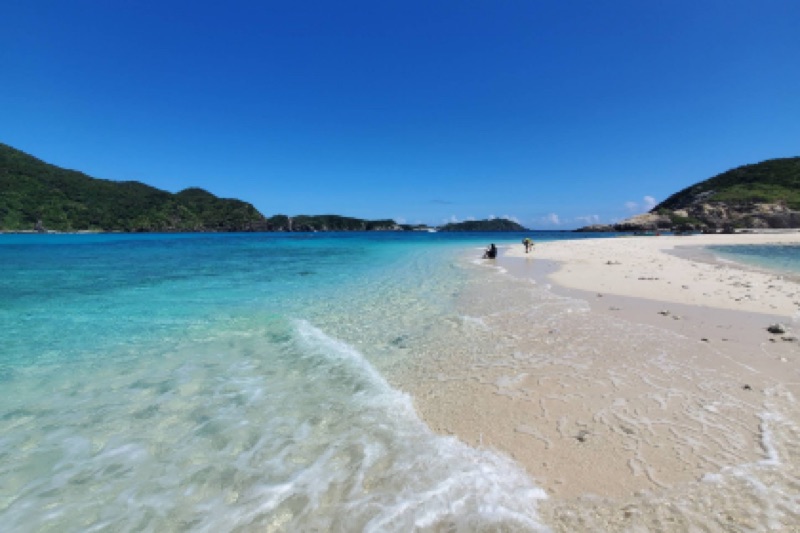
Take a ferry to another world. The Kerama Islands are a national park with water so blue they named a color after it — "Kerama Blue." Spend the day snorkeling coral reefs, walking empty white-sand beaches, and looking for sea turtles. This is the Okinawa most people only see in photos.
Ferry to Zamami Island
The high-speed ferry from Naha's Tomari Port reaches Zamami in 35-50 minutes (¥4,170 round trip). The crossing itself is stunning — the water shifts from deep blue to impossible turquoise as you approach the islands. In July, the sea is at its calmest and clearest. Bring motion sickness pills if you're sensitive — the crossing can be choppy.
Ama Beach — Sea Turtle Snorkeling
Walk from Zamami port (15 min) to Ama Beach — a sheltered bay where green sea turtles graze on seagrass in shallow, crystal-clear water just 50 meters from shore. You don't need a tour — just mask, snorkel, and patience. Turtles surface every few minutes. The water is calm enough for kids and beginners.
Furuzamami Beach
A 20-minute walk through Zamami village brings you to Furuzamami Beach — consistently rated one of Japan's most beautiful. The white sand slopes gently into transparent turquoise water filled with tropical fish. Rent a beach umbrella and float the afternoon away. There are showers, restrooms, and a small snack bar.
Zamami Observatory (Takatsukiyama)
A short but steep hike from the village center leads to an observatory with sweeping views over Zamami, Aka, and Geruma islands — the full Kerama archipelago spread out below you in every shade of blue. The "Kerama Blue" makes total sense from up here. Go before the return ferry for the best light.
Return Ferry & Sunset from the Water
The last high-speed ferry back to Naha departs around 4-5pm (check current schedule). Time it right and you'll watch the sun set over the Kerama Islands from the ferry deck — golden light on turquoise water, the islands silhouetted behind you. One of Okinawa's unforgettable moments.
Yomitan Village, Zakimi Castle & Cape Zanpa Sunset
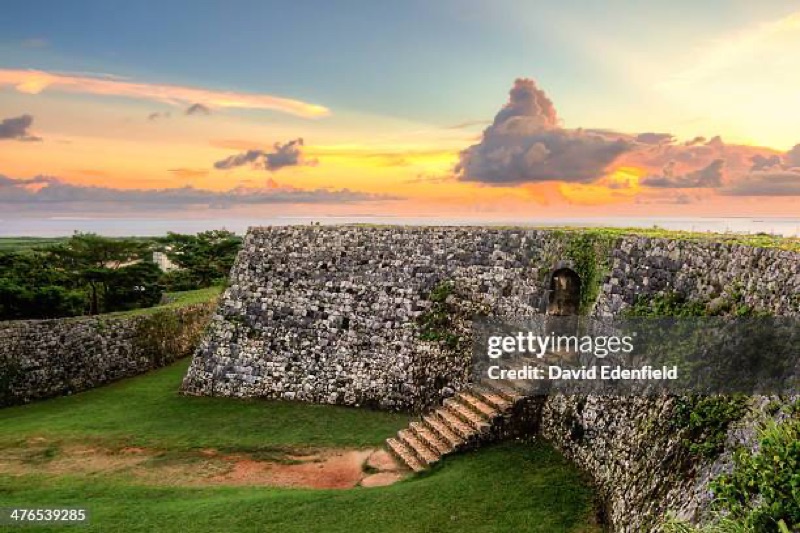
Drive north along the west coast to Yomitan — a village of potters, surfers, and sunset chasers. Explore a UNESCO castle ruin, shop for local pottery, visit a glass workshop, and end the day watching the sun melt into the East China Sea from Cape Zanpa's dramatic cliffs.
Zakimi Castle Ruins (UNESCO)
A 15th-century castle built by the legendary Gosamaru, featuring stunning curved stonework — among the best-preserved examples of Ryukyu castle architecture. The ruins sit on a hilltop with panoramic views of the west coast and, on clear days, the Kerama Islands shimmering offshore. Far less crowded than Shuri Castle, and arguably more atmospheric.
Yomitan Pottery Village (Yachimun no Sato)
A cluster of working pottery studios in the hills above Yomitan. Watch artisans throw pots on traditional kick wheels and browse kilns selling everything from shisa lions to dinner plates. The pottery here is earthier and more rustic than Tsuboya's refined style — this is daily-use Okinawan ceramics. Many studios welcome visitors to watch the process.
Ryukyu Glass Village
Watch artisans blow colorful Ryukyu glass — a craft born from recycling Coca-Cola and beer bottles after WWII. Families can try glassblowing or make photo frames and keyrings from recycled glass fragments. The colors are gorgeous — deep blues, greens, and the signature amber. Great souvenir opportunity.
Zanpa Beach & Relax
A stretch of white sand below Cape Zanpa with calm, shallow water perfect for families. Rent a beach parasol, let the kids play in the waves, and cool off in the East China Sea. Less crowded than resort beaches to the north.
Cape Zanpa Sunset
The west coast's premier sunset spot. A dramatic headland with 30-meter cliffs, a white lighthouse you can climb, and unobstructed views of the sun dropping into the East China Sea. There's a park with walking paths, the largest shisa statue in Okinawa, and plenty of space for kids to run. The sky turns pink, orange, and purple — bring a camera.
Churaumi Aquarium, Nakijin Castle & Bise Village
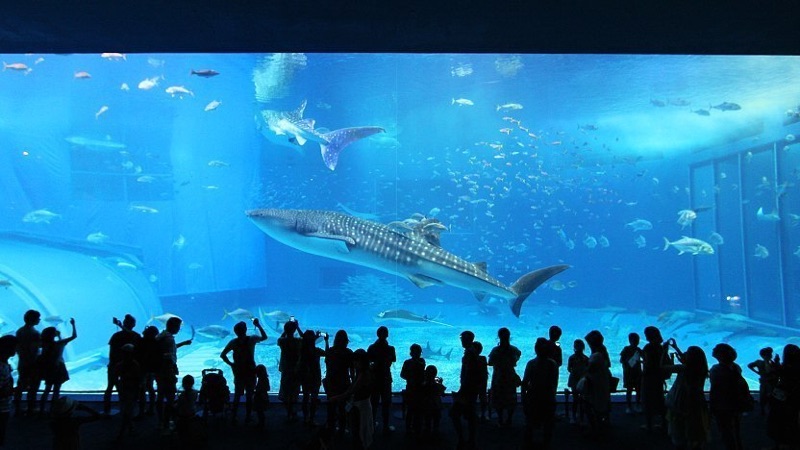
Head to the Motobu Peninsula for Okinawa's most famous attraction — the Churaumi Aquarium with its whale sharks and manta rays — then escape the crowds at the UNESCO Nakijin Castle ruins and the impossibly serene Bise Fukugi tree-lined village.
Okinawa Churaumi Aquarium
One of the world's greatest aquariums, home to the massive Kuroshio Tank — 7,500 cubic meters of water housing whale sharks, manta rays, and hundreds of tropical fish. The acrylic viewing panel (8.2m × 22.5m) is mesmerizing. But don't stop at the main tank: the coral reef exhibit, deep sea creatures, and jellyfish rooms are equally stunning. Part of Ocean Expo Park, which has free outdoor areas including a dolphin show and manatee pool.
Nakijin Castle Ruins (UNESCO)
A 13th-15th century castle that was the seat of the Hokuzan (Northern Kingdom) before the Ryukyu unification. The stone walls curve elegantly along the ridge, built without mortar using Ryukyu stonemasonry. Climb to the highest point for sweeping views of the Motobu Peninsula and East China Sea. Far more peaceful than Shuri — you might have the ruins to yourself.
Bise Fukugi Tree Road
One of Okinawa's most enchanting hidden gems. The village of Bise is crisscrossed by sandy lanes lined with massive fukugi trees — some over 300 years old — forming a green tunnel that filters the harsh subtropical sun into dappled light. Traditional red-roofed Okinawan houses peek through the foliage. Walk or rent a bicycle (¥300/hr) to explore. The lanes lead to a quiet beach.
Sesoko Beach
A hidden gem beach on nearby Sesoko Island (connected by bridge to the Motobu Peninsula). Crystal-clear, shallow water with excellent transparency and far fewer visitors than resort beaches. The sand is fine and white, the vibe is quiet and local. Perfect for a late-afternoon swim.
Orion Happy Park (Brewery Tour)
If time permits, stop at Orion Happy Park in Nago for the Orion Brewery tour. See the brewing process, walk among massive beer tanks, and taste beer that was packaged just days ago. The gift shop sells Orion merchandise you can't find elsewhere. A fun, low-key way to end the northern day.
Yanbaru: Mangrove Kayaking, Cape Hedo & Jungle

Enter Yanbaru — Okinawa's UNESCO-listed subtropical forest in the far north. Kayak through mangrove channels, stand at the northernmost point of the island where two oceans meet, and explore one of Japan's last wild places. This is the off-the-beaten-path Okinawa that most tourists never see.
Gesashi Bay Mangrove Kayak Tour
Paddle through the largest mangrove forest on Okinawa's main island — a designated national natural monument. Guided kayak tours (1.5-2.5 hours) wind through narrow channels between dense mangrove roots, where fiddler crabs scuttle, mudskippers flop, and herons fish. Some tours exit the mangroves into the open ocean. Suitable for beginners and families with kids 6+.
Cape Hedo (Hedo Misaki)
Okinawa's northernmost point — where sheer coral cliffs drop into the ocean at the meeting point of the Pacific Ocean and East China Sea. The contrast between the deep blue Pacific and turquoise East China Sea is visible on calm days. Wind-sculpted trees, dramatic rock formations, and a sense of being at the edge of the world. There's a monument and small viewpoint.
Daisekirinzan (Yanbaru National Park)
A rugged, ancient mountain park with hiking trails through subtropical forest and bizarre limestone rock formations. The "promenade" course is family-friendly (30-40 min) and passes through jungle-like forest with massive banyan trees and fern-covered rocks. The "adventure" course involves rock scrambling with chains — more thrilling but doable for older kids.
Ada Beach (Hidden Gem)
A tiny, empty beach near the village of Ada in far-northern Kunigami. No facilities, no crowds, no vendors — just white sand, turquoise water, and jungle backdrop. The kind of spot that makes you feel like you've discovered something. Bring your own water and snacks. Swim at your own risk (no lifeguards).
Drive South & Stargazing
The drive back south from Yanbaru along Route 58 is one of Okinawa's most scenic — coastal cliffs, tiny fishing villages, and the setting sun painting the East China Sea. Stop at a viewpoint for stargazing. Yanbaru has some of the darkest skies in Japan — on a clear night, the Milky Way is visible.
Southern Okinawa: Peace Memorial, Seifa Utaki & Sacred Coast
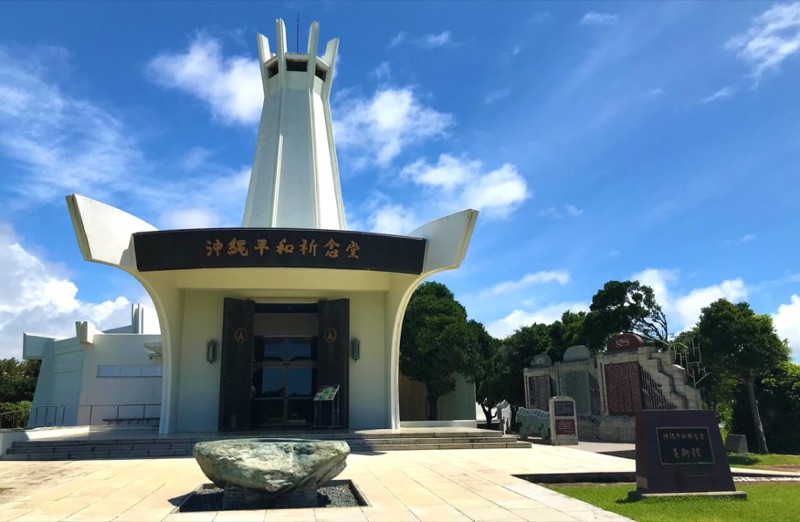
The south of Okinawa is where history runs deepest. Visit the Peace Memorial Park and Himeyuri Museum to understand the Battle of Okinawa, then ascend to Seifa Utaki — the most sacred site in Ryukyu spirituality. End at Cape Chinen with views of "God's Island" Kudaka-jima. A day that's powerful, contemplative, and beautiful.
Okinawa Prefectural Peace Memorial Park
A sprawling, beautifully maintained park on the southern coast dedicated to the 240,000+ lives lost in the Battle of Okinawa (1945). The Cornerstone of Peace monument lists every known casualty — Japanese, American, Korean, Taiwanese — carved into stone walls arranged in concentric arcs. The Peace Museum provides essential historical context. This is heavy but essential. Okinawa's identity is inseparable from this history.
Himeyuri Peace Museum & Monument
The tragic story of 240 schoolgirls and teachers mobilized as battlefield nurses during the Battle of Okinawa — most did not survive. The museum tells their story through personal letters, photographs, and reconstructed cave hospitals. The Himeyuri Monument marks the cave where many spent their final days. This is Okinawa's most visited memorial and deeply moving.
Seifa Utaki (UNESCO World Heritage)
The most sacred site in Okinawan indigenous religion — a forested ridge where Ryukyu kings came to pray and receive divine blessing. A walking path leads through ancient trees to a series of sacred spaces marked by enormous stalactite-like rock formations. The views through the rock "gates" to Kudaka Island below are iconic. Unlike anything else in Japan — this is animist Ryukyu spirituality at its most powerful.
Cape Chinen Park
Perched on the southern tip of Okinawa's main island, this free park offers breathtaking views of the ocean stretching to the horizon and Kudaka Island offshore. The cliff walk is peaceful and uncrowded — most tourists don't make it this far south. Let the kids run on the grass while you take in the vast Pacific views.
Gangala Valley
A lush, mysterious valley formed by the collapse of a limestone cave 200,000 years ago. Accessed only via guided tour (90 min), the valley is a subtropical forest with ancient ruins, giant banyan trees, and a café built into a cave. The guides explain the geological and archaeological significance. Feels like entering a lost world.
Drive Back to Naha & Final Night
The drive from Nanjo back to Naha takes about 30-40 minutes. Use your last evening for anything you missed — a second visit to Kokusai Dori, souvenir shopping, or just sitting at a café watching the Naha nightlife. This is your last full day — savor it.
Last Morning: Naha Markets, Sata Andagi & Goodbye

One last morning in Naha for any final explorations, souvenirs, and the essential Okinawan doughnut. Return the rental car, fly home with sand still in your shoes and beni-imo KitKats in your bag.
Morning Walk Through Makishi Market
One last pass through the market for anything you missed — fresh tropical fruits (dragon fruit, shikuwasa citrus), pickled vegetables, dried seaweed snacks, and that shisa figurine you were debating. The market is at its most authentic in the early morning when locals do their shopping.
Sata Andagi Breakfast
You can't leave Okinawa without eating sata andagi — deep-fried doughnuts that are crispy outside, cakey inside, and subtly sweet. Find a street vendor on Kokusai Dori or visit Miyagi Sata Andagi (a Naha institution). Get the classic brown sugar flavor and the beni-imo (purple sweet potato) variety. Grab a few extra for the plane.
Return Rental Car & Depart from Naha Airport
Return the rental car at the airport (most companies have a drop-off lot right at the terminal). Naha Airport is small and efficient — arrive 2 hours before your flight for domestic, 3 hours for international. Do last-minute souvenir shopping at the airport — they stock beni-imo everything, Orion beer, and awamori.
💰 Budget Breakdown
| Category | Budget | Notes |
|---|---|---|
| Rental Car (8 days) | $400 – $700 | Compact car with insurance + gas + tolls |
| Food & Drink | $600 – $1,200 | Mix of street food, local restaurants, and izakayas for 3-4 people |
| Activities & Experiences | $300 – $600 | Snorkeling, kayak tour, workshops, aquarium, brewery |
| Kerama Islands Day Trip | $150 – $300 | Ferry + snorkel rental for 3-4 people |
| Attractions & Entries | $100 – $200 | Castle ruins, museums, Seifa Utaki, Daisekirinzan |
| Shopping & Souvenirs | $100 – $300 | Pottery, shisa, bingata crafts, food gifts |
| Gas & Tolls | $100 – $150 | Expressway toll + gas for 8 days of driving |
✈️ Airport & Arrival
- Naha Airport (OKA) is the main gateway — served by ANA, JAL, Peach, Jetstar, and international carriers
- Direct flights from Tokyo (2.5 hrs), Osaka (2 hrs), Taipei (1.5 hrs), and Seoul (2.5 hrs)
- Rental car counters on 1st floor of domestic terminal — pre-book for July peak season
- International Driving Permit (1949 Geneva format) required for car rental
🚗 Driving in Okinawa
- Drive on the LEFT — same as mainland Japan
- Speed limits: 40-60 km/h on regular roads, 80 km/h on expressway
- The Okinawa Expressway runs Naha ↔ Nago (¥1,000, ~50 min) — worth it for northern days
- Parking is generally easy and affordable (¥200-500 at attractions, often free at beaches)
- GPS: use Google Maps — it works well in Okinawa
📱 Connectivity
- Buy a Japanese eSIM or SIM card at the airport — Ubigi, Airalo, or Sakura Mobile
- Pocket WiFi also available for rental at the airport (~¥500/day)
- Coverage is good on the main island but can be spotty in remote Yanbaru areas
🌊 July Weather Warning
- July is peak summer — 28-34°C (82-93°F) with high humidity
- Typhoon season: monitor weather apps regularly. Have backup indoor plans
- Reef-safe sunscreen only (normal sunscreen kills coral and is banned at some beaches)
- Start activities by 7-8am, rest indoors 12-3pm, resume 3-6pm
🍽️ Dining Tips
- Many local restaurants close between 3-5pm — plan lunch accordingly
- Cash is essential — many small restaurants don't accept cards
- Look for "自家製" (homemade) and "地元" (local) signs for the best food
- convenience stores (7-Eleven, Lawson, FamilyMart) are surprisingly excellent for quick meals
🐬 Family Tips
- Okinawa is extremely family-friendly — kids are welcome everywhere
- Beaches have no lifeguards except at major resort beaches — supervise children closely
- Japanese convenience stores stock baby supplies, snacks, and kids' drinks
- The Yui Rail monorail in Naha is fun for kids and stroller-accessible