⚡ Before You Go — Essentials
🚃 Getting There
Take the Fuji Excursion limited express from Shinjuku Station (departs ~7:30 AM, arrives Shimoyoshida ~9:30 AM). It's a direct, reserved-seat train — no transfers needed. Buy tickets at JR ticket machines or online via the JR-EAST Train Reservation site. Alternatively, highway buses run from Shinjuku Expressway Bus Terminal (Busta Shinjuku) every 30–60 minutes (~2 hours, ¥2,100 one-way). For the return, take the Fuji Excursion back from Kawaguchiko Station (last train ~5:30 PM) or a highway bus (last bus ~8:00 PM).
🚌 Getting Around Locally
Buy the Kawaguchiko Sightseeing Bus 2-Day Pass (¥1,500) at Kawaguchiko Station — it covers the Red Line and Green Line buses that loop around the lake and major attractions. Buses run every 15–30 minutes. For Oshino Hakkai, take the Fujikko-gō bus from Kawaguchiko Station (~25 min). Taxis are available but pricier (¥3,000–5,000 per ride).
🌤️ March Weather
Mid-March around the lakes is crisp and clear — daytime highs of 8–12°C (46–54°F), chilly mornings near 0°C. Layer up: a warm jacket, scarf, and comfortable walking shoes are essential. The air is dry and visibility is often excellent — ideal conditions for Mt. Fuji photography. Cherry blossoms typically arrive in mid-April here, so March is pre-bloom but beautifully serene.
💴 Money & Practicalities
Carry cash (¥10,000–15,000 for the day). Many small shops, restaurants, and bus fare machines in the Fuji area are cash-only. Convenience stores (7-Eleven, Lawson) near Kawaguchiko Station have ATMs that accept international cards. IC cards (Suica/Pasmo) work on local buses.
Pagodas, Panoramas & Spring-Fed Ponds
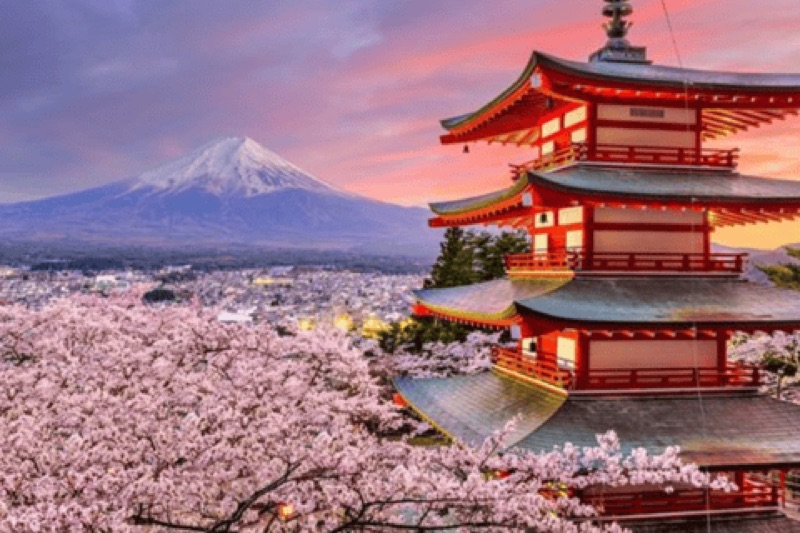
A full day exploring the best of the Fuji Five Lakes region — from the iconic Chureito Pagoda at sunrise-ish to a lakeside ropeway ride, a soul-warming bowl of hōtō noodles, and the tranquil spring ponds of Oshino Hakkai. Every moment framed by Japan's most famous mountain.
Fuji Excursion Train from Shinjuku
Head to JR Shinjuku Station and board the Fuji Excursion limited express (Platform 9/10). This direct train takes you all the way to Shimoyoshida Station in about 2 hours — no transfers, reserved seats, and gorgeous views of the Japanese countryside as you approach the mountains.
Chureito Pagoda (Arakurayama Sengen Park)
Get off at Shimoyoshida Station and walk 15 minutes to the base of Arakurayama Sengen Park. Climb the 398 stone steps to the five-storey Chureito Pagoda — the reward is one of Japan's most photographed views: the crimson pagoda with Mt. Fuji towering behind it. Take your time on the steps; there are rest spots along the way.
Train to Kawaguchiko Station
Take the Fujikyu Railway from Shimoyoshida to Kawaguchiko Station (3 stops, ~13 minutes, ¥260). At the station, pick up the Kawaguchiko Sightseeing Bus Pass at the ticket counter.
Mt. Fuji Panoramic Ropeway (Kachi Kachi Yama)
Walk 10 minutes from Kawaguchiko Station to the ropeway base (or take the Red Line bus 1 stop). The 3-minute cable car ride whisks you up to an observation deck at 1,075 meters with jaw-dropping 360° views of Mt. Fuji, Lake Kawaguchiko, and the surrounding mountains. The deck has benches and photo spots — perfect for resting and absorbing the panorama.
Ōishi Park (Lake Kawaguchiko North Shore)
Take the Red Line sightseeing bus from Kawaguchiko Station to Kawaguchiko Natural Living Center / Ōishi Park (~25 min). This beautiful lakefront park offers one of the clearest, most unobstructed views of Mt. Fuji reflected across the lake. In spring, the park is lined with flower beds; in March, the lavender and herb gardens are just beginning to wake up. A flat, paved promenade makes it easy and relaxing to stroll.
Bus to Oshino Hakkai
Take the bus from Kawaguchiko Station to Oshino Hakkai (Fujikko-gō bus, ~25 minutes). This traditional village is home to eight sacred spring-fed ponds, each with impossibly clear, turquoise water filtered through Mt. Fuji's volcanic rock over 80 years. Wander between the ponds, cross wooden bridges, browse thatched-roof souvenir shops, and sample spring-water tofu and mochi.
Bus back to Kawaguchiko Station & Return Train
Take the bus back from Oshino Hakkai to Kawaguchiko Station (~25 min). From there, board the Fuji Excursion limited express back to Shinjuku (departs ~5:08 PM or 5:38 PM, arrives Shinjuku ~7:30 PM). Alternatively, highway buses depart until ~8:00 PM.
💰 Budget Breakdown
| Category | Budget | Midrange | Luxury |
|---|---|---|---|
| Train (Shinjuku↔Kawaguchiko) | ¥4,260 (highway bus RT) | ¥8,260 (Fuji Excursion RT) | ¥8,260 + Green Car |
| Local Transport | ¥1,500 (bus pass) | ¥1,500 (bus pass) | ¥5,000–8,000 (taxi) |
| Ropeway | — | ¥1,000/person RT | ¥1,000/person RT |
| Meals | ¥2,000–3,000/person | ¥3,000–5,000/person | ¥5,000–8,000/person |
| Oshino Hakkai Entry | ¥300/person | ¥300/person | ¥300/person |
| Day Total (per person) | ¥8,000–10,000 | ¥12,000–16,000 | ¥20,000–25,000 |
🚃 Transport Summary
- Fuji Excursion from Shinjuku: ~7:30 AM → Shimoyoshida ~9:26 AM (¥4,130 one-way)
- Shimoyoshida → Kawaguchiko: Fujikyu Railway (~13 min, ¥260)
- Red Line Sightseeing Bus loops Lake Kawaguchiko every 15–30 min
- Fujikko-gō bus to Oshino Hakkai (~25 min from Kawaguchiko Station)
- Return Fuji Excursion: ~5:08 PM or 5:38 PM → Shinjuku ~7:30 PM
- Highway bus alternative: Busta Shinjuku ↔ Kawaguchiko (~2h, ¥2,100 each way)
🌡️ March Weather at the Lakes
- Daytime: 8–12°C (46–54°F) — cool but sunny
- Morning/evening: near 0°C — layer up warmly
- UV can be strong at altitude — bring sunglasses
- Clear skies are common in March — excellent Mt. Fuji visibility
- Cherry blossoms arrive mid-April (not yet in March)
💴 Money Tips
- Carry ¥10,000–15,000 in cash per person — many shops are cash-only
- 7-Eleven and Lawson ATMs near Kawaguchiko Station accept international cards
- IC cards (Suica/Pasmo) work on local buses and trains
- The Ropeway and Hōtō Fudō accept credit cards
📱 Useful Info
- Download Google Maps offline for the Kawaguchiko area — cell reception is good but helps for walking directions
- Kawaguchiko Station has coin lockers (¥300–600) — drop heavy bags before exploring
- Restrooms available at every major stop (station, ropeway, Ōishi Park, Oshino Hakkai)
- Mt. Fuji visibility is best before noon — clouds often roll in by afternoon