⚡ Before You Go — Essentials
🚗 Rental Car
A car is essential for this itinerary. Pick up at Avignon TGV station (AVF) on April 20 and drop off at Nice Côte d'Azur Airport (NCE) on May 3. Book with Hertz, Europcar, or Sixt — compare via Rentalcars.com. Automatic transmission costs more but is worth it on Luberon mountain roads. Budget around €500–800 for 13 days.
🏡 Your Base: Le Thor
Le Thor is an authentic Provençal village on the Sorgue River with a beautiful Romanesque church and easy access to everything. From here, Avignon is 15 min, L'Isle-sur-la-Sorgue 10 min, and Gordes 25 min. No need for lodging — your friend's place is the perfect local base.
🍷 Dining Culture
Lunch is the main meal in Provence — most restaurants offer a plat du jour at great value (€14–20). Dinner is more leisurely. Markets (Tuesday–Sunday) are the soul of Provençal food culture: grab chèvre, tapenade, socca, and fresh bread for impromptu picnics. Book dinner at popular spots a few days ahead, especially weekends.
🌸 Late April in Provence
Late April is gorgeous — cherry blossoms, wild poppies, and bright green vineyards. Lavender won't peak until late June/July. Temperatures 18–24°C. Pack light layers for evenings. Markets peak on Sundays. Some hilltop villages (Baux-de-Provence, Gordes) are still uncrowded before the summer rush.
🏨 Nice Lodging (Apr 30 – May 2)
For 3 nights in Nice, stay in or near Vieux Nice (Old Town) for the best atmosphere. Recommendations: Hotel Aston La Scala (4★, great views), Villa La Tour (charming boutique in the Old Town), or Hôtel Beau Rivage (beachfront, walk to everything). Budget €120–250/night.
Arrival — Avignon & Settling In
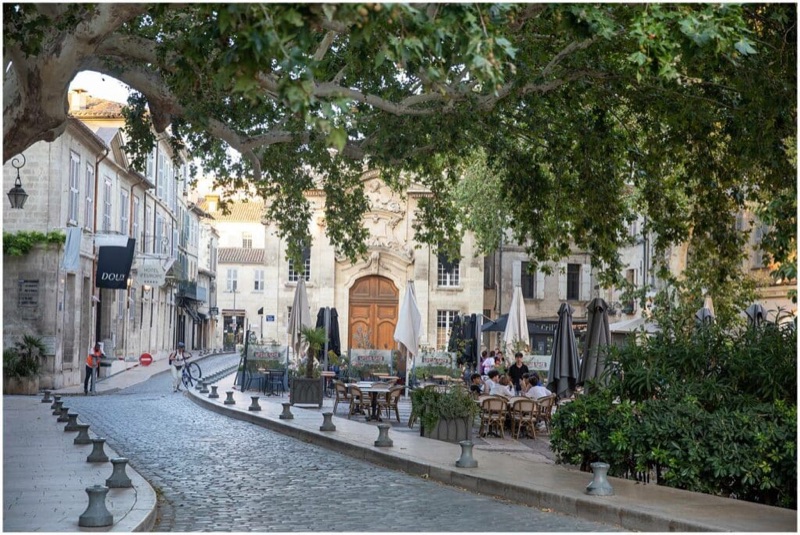
Collect your rental car at Avignon TGV station and arrive in Le Thor. After settling in, take a gentle stroll to get your bearings, find a local brasserie, and raise a glass of Côtes du Rhône to Provence.
Pick Up Your Rental Car
Collect your pre-booked rental car at Avignon TGV station (Gare d'Avignon-Centre is also an option if arriving by train). Familiarise yourself with the GPS — French roundabouts are everywhere.
Arrive in Le Thor
Drive to Le Thor (about 15 min west of Avignon). The village sits on the Sorgue River — park and walk the old centre, admire the 12th-century Romanesque church Notre-Dame-du-Lac, and start breathing that Provençal air.
First Walk: Le Thor Village
Wander through Le Thor's quiet streets. The village has a medieval core with a lovely stone bridge over the Sorgue. Find the local market square and browse any open shops.
Avignon — The City of Popes
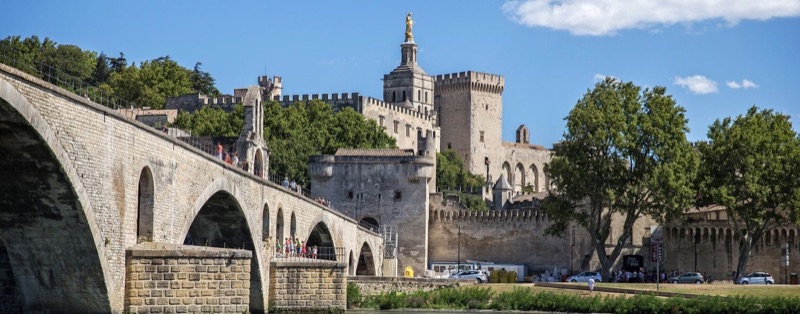
A full day in Avignon — medieval city walls, the colossal Palais des Papes, the famous broken bridge, and the vibrant market streets within the ramparts. One of France's most magnificent medieval cities.
Palais des Papes
The largest Gothic building in the world — this 14th-century papal palace is extraordinary. Allow 1.5–2 hours to explore the Grand Tinel, the Papal Chambers, and climb to the rooftop terrace for sweeping views over the Rhône.
Pont d'Avignon (Pont Saint-Bénézet)
The famous "broken bridge" of the nursery rhyme — half its arches collapsed into the Rhône centuries ago. Walk out as far as it goes for views back to the Palais des Papes. Iconic Avignon.
Rocher des Doms & Rampart Walk
Stroll up to the Rocher des Doms gardens above the palais — free entry, beautiful rose garden, and the best views over the Rhône. Then walk a section of the medieval ramparts that encircle Avignon's entire old town.
Rue des Teinturiers & Old Town Browse
Wander through Avignon's atmospheric old town streets. Rue des Teinturiers (Street of the Dyers) follows a small canal lined with plane trees and artisan workshops — the most photogenic street in the city.
Canal Town & the Mysterious Spring
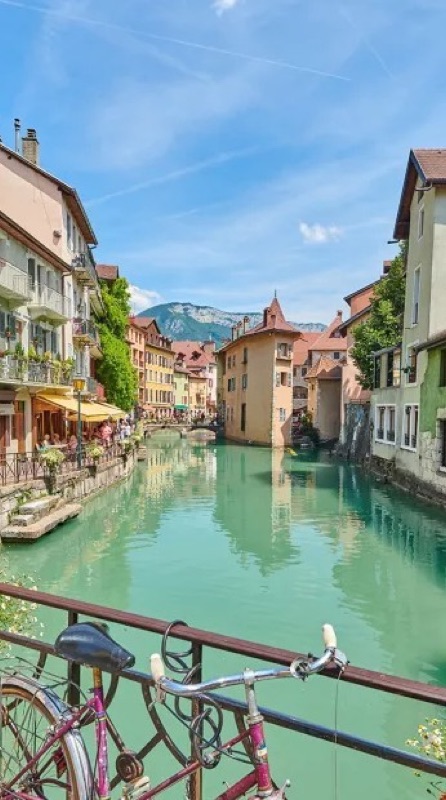
L'Isle-sur-la-Sorgue is the Venice of Provence — a town criss-crossed by canals where the Sorgue River splits into four branches. Then drive upstream to the source: Fontaine-de-Vaucluse, one of the most powerful natural springs in the world.
L'Isle-sur-la-Sorgue: Canals & Antique Quarter
Even on a non-market day, L'Isle-sur-la-Sorgue is enchanting. The town has over 300 antique dealers, moss-covered water wheels still spinning in the canals, and beautiful cafés overlooking the water. Stroll the quays, cross the little bridges, and browse the antique shops.
Fontaine-de-Vaucluse
Drive 8km up the Sorgue valley to Fontaine-de-Vaucluse — a village at the base of a sheer cliff where the Sorgue springs from a bottomless underground lake. The spring is one of the most powerful in the world, and in spring (April–May) the water roars out in emerald-green torrents. A genuinely otherworldly sight.
Sunset Stroll Along the Sorgue
Return to Le Thor and take an evening walk along the Sorgue riverbank. The river glows golden at sunset and the willows trail in the current. The ideal antidote to a busy day of sightseeing.
The Greatest Sunday Market in Provence
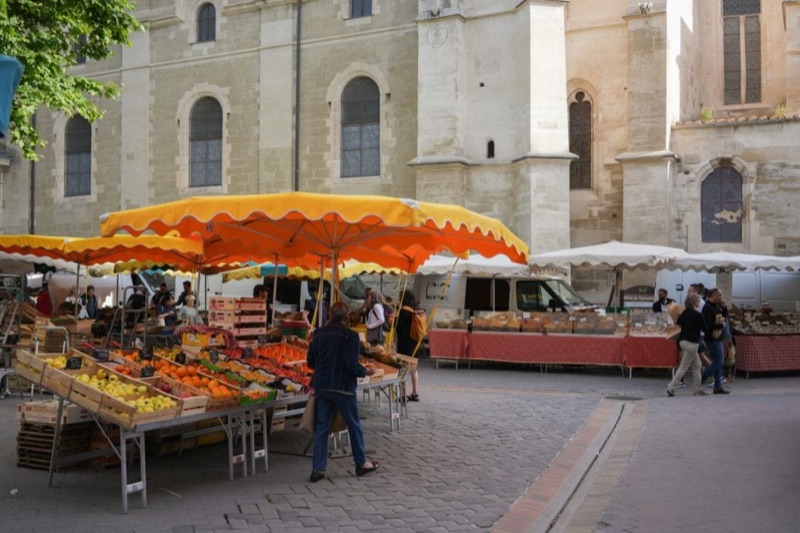
Sunday in L'Isle-sur-la-Sorgue is a bucket-list experience. The antique and brocante market takes over the entire town — canals lined with dealers, food stalls overflowing with local produce, and the whole town humming with life. This is quintessential Provence.
L'Isle-sur-la-Sorgue Sunday Market
The Sunday antique and brocante market at L'Isle-sur-la-Sorgue is one of the finest in all of France — up there with the Marché aux Puces in Paris. Hundreds of dealers spread across the quays, bridges, and squares. Antiques, vintage linens, Provençal fabrics, old maps, wine paraphernalia, farm tools, jewellery. Allow 2–3 hours minimum.
Coustellet Farmers' Market (morning extension)
If you want the pure local produce market (as opposed to antiques), the Coustellet market (Sunday mornings, just south of L'Isle-sur-la-Sorgue) is where Luberon farmers sell directly. Incredible goat cheeses, honey from lavender hives, fresh herbs, and seasonal vegetables.
Afternoon Rest & Village Exploration
After a big market morning, take a slow afternoon. Find a café terrace in L'Isle-sur-la-Sorgue for a long leisurely lunch, then perhaps a brief visit to the magnificent baroque Collégiale Notre-Dame-des-Anges church inside the town.
Hilltop Villages & Ochre Cliffs
The Luberon's two most iconic sights in one golden day: Gordes, the eagle's nest village that commands a valley view like no other, and Roussillon, the village built entirely from ochre — the most vivid landscape in all of Provence.
Gordes — The Most Beautiful Village in Provence
Gordes cascades down a hillside of white limestone, each house appearing to grow from the rock itself. The fortified Renaissance château dominates the village square. Walk up through the steep lanes, duck into artisan galleries, and climb to the top for the famous panorama over the Luberon valley.
Abbaye Notre-Dame de Sénanque
Just 4km from Gordes down a winding road through oak scrub, the 12th-century Cistercian Abbey of Sénanque is surrounded by lavender fields. In late April the lavender isn't in full bloom, but the young green rows and the ancient stone are breathtaking. Active monks still live here.
Roussillon & the Ochre Cliffs
Roussillon sits atop the largest ochre deposit in the world. The cliffs cycle through 17 shades of red, orange, yellow, and pink. The Sentier des Ocres hiking trail takes you through the sculpted formations — 30–45 minutes and utterly unlike anywhere else on earth. The village itself has good art galleries and lovely views.
Golden Hour Drive Back
The drive back from Roussillon to Le Thor at golden hour is genuinely spectacular. The ochre light on the limestone hills, the cherry orchards, the lavender fields stretching to the horizon. Roll down the windows and take it slow.
Wine Country & Roman Theatre
Châteauneuf-du-Pape is one of France's most famous wine appellations — a sun-scorched plateau of massive galets (rounded stones) that hold heat and produce extraordinary red wines. Pair your tasting with a visit to the majestic Roman theatre in Orange.
Châteauneuf-du-Pape Wine Tasting
Drive 30 min north to Châteauneuf-du-Pape. The village sits on a plateau and the ruins of its papal castle overlook a sea of vines. Visit two or three domaines for morning tastings — many are family-run and welcoming.
Théâtre Antique d'Orange
The best-preserved Roman theatre in the world — so well preserved that Louis XIV called its stage wall "the finest wall in my kingdom." The theatre still holds 10,000 people and hosts summer opera. Walk through the massive south wall and sit in the ancient tiers.
Van Gogh Country & Les Alpilles
The Alpilles are a dramatic chain of white limestone peaks just south of Avignon — Van Gogh territory. Visit the fortress village of Les Baux-de-Provence perched on a cliff, and the beautiful market town of Saint-Rémy where Van Gogh spent a crucial year of his life.
Les Baux-de-Provence
One of Provence's most dramatic villages — a medieval fortress town on a rocky spur of the Alpilles. The medieval citadel is remarkable (medieval siege engines, towers, views) and the village itself has excellent art galleries, olive oil producers, and the famous carrières de lumières light show.
Saint-Rémy-de-Provence & Glanum
Van Gogh checked himself into the Saint-Paul-de-Mausole asylum in Saint-Rémy in 1889 and painted over 150 works in a single year. Visit the asylum (now a museum), then stroll the beautiful old town — the liveliest market town in the Alpilles with excellent restaurants and boutiques.
Arles — Van Gogh's City & the Camargue
Arles was Van Gogh's happiest period and it's easy to see why — this sun-drenched Roman city has a magnificent 2,000-seat amphitheatre, ochre buildings, and that specific flat golden light. An afternoon detour into the Camargue wetlands for flamingos and white horses rounds out an unforgettable day.
Arles: Arènes & Roman City
Arles' amphitheatre (Les Arènes) is one of the best-preserved in the world — it still hosts bullfighting events and concerts. Climb to the top tier for views over the city and the Rhône. Then explore the Roman theatre, the Alyscamps (ancient necropolis), and the beautiful Romanesque church of Saint-Trophime.
Camargue Detour: Flamingos & White Horses
Drive 30 min south from Arles into the Camargue — Europe's largest river delta, a vast wetland of salt marshes, lagoons, and rice paddies. This is where pink flamingos breed and the famous white Camargue horses run free. The Pont de Gau ornithological park is excellent for flamingo viewing.
Roman Aqueduct & the Most Charming Market Town
The Pont du Gard is one of humanity's greatest engineering achievements — a three-tiered Roman aqueduct standing 49 metres tall, built without mortar. Pair it with Uzès, the perfectly preserved medieval duchy that's been called the 'little Versailles of Provence.'
Pont du Gard
Arrive early at the Pont du Gard to beat the crowds and catch the morning light reflecting on the stone in the Gardon River below. You can walk across the second tier for free with your entry ticket, and swim in the river below the aqueduct in season.
Uzès — Medieval Duchy
Just 14km from the Pont du Gard, Uzès is a hidden gem — a perfectly preserved medieval town with ducal towers, a beautiful central arcaded square (Place aux Herbes), and a Saturday market that rivals anything in Provence. On non-market days it's delightfully quiet.
Return via Villeneuve-lès-Avignon
On the return from Uzès, cross the Rhône to Villeneuve-lès-Avignon — the 'city of Cardinals' that faces Avignon from the opposite bank. Fort Saint-André on the hilltop has exceptional views over Avignon and the Palais des Papes.
Luberon Villages Loop
A leisurely loop through the Luberon's most beautiful villages — Lourmarin with its Renaissance château, Bonnieux perched dramatically on a ridge, and tiny Lacoste with the ruined castle of the Marquis de Sade. A perfect blend of history, scenery, and café terraces.
Lourmarin — Village of Authors
Albert Camus chose Lourmarin as his home and is buried in the village cemetery. The 15th-century château is one of the most interesting in Provence (Gothic-to-Renaissance transition in one building). The village itself has excellent restaurants and an unusually lively bookshop culture.
Bonnieux & Lacoste
Bonnieux commands a ridge of the Luberon — its old church perch gives extraordinary views across the valley to Lacoste opposite. Walk up to the Vieux Clocher (old bell tower) for the panorama. Then drive the short distance to Lacoste, where the ruined castle of the Marquis de Sade looms dramatically above a tiny village that's now home to a Savannah College of Art and Design campus.
Final Provence Sunset
This is your last evening in Le Thor — savour it. Drive to a high point on the Luberon ridge (the D36 above Ménerbes is perfect) and watch the sun go down over an impossible patchwork of vineyards, orchards, and stone villages. Take a mental photograph.
Au Revoir Provence — Driving to Nice
A morning to soak up Le Thor one last time, then a beautiful drive east along the A8 autoroute toward Nice — with an optional coastal detour through the Var. Arrive in Nice, check into your hotel, and take your first stroll along the Promenade des Anglais.
Final Provençal Morning
A slow final morning in Le Thor — one last boulangerie run, a final walk by the Sorgue, maybe a quick browse of any local market open on a Thursday. Take in the quietness and the sound of the river before hitting the road.
Drive to Nice — A8 or Coastal Route
The A8 autoroute (La Provençale) cuts through Aix-en-Provence and the Var in about 2.5 hours. For a scenic alternative, drop off the autoroute at Saint-Raphaël and take the stunning N98 coast road through Fréjus and Cannes before arriving in Nice. You'll arrive late afternoon — perfect for a first Riviera stroll.
First Evening in Nice — Promenade des Anglais
Arrive, check in, and take your first walk along the Promenade des Anglais. The sweep of the Baie des Anges, the turquoise water, the pastel buildings behind you, the pebble beach — welcome to the Côte d'Azur. Stroll all the way to the Old Town as the sky turns pink.
A Day in Nice — Markets, Sea & the Vieille Ville
A full day to discover Nice — the Cours Saleya flower and food market, the tangle of baroque alleyways in Vieux Nice, a climb to Castle Hill for the city's best view, and a long lunch in the sun. May 1st is a French public holiday (Fête du Travail) — the city relaxes even more than usual.
Cours Saleya Market
The Cours Saleya is Nice's legendary flower and food market — one of the most beautiful markets in France. Stalls overflow with flowers, mimosa, Niçois olives, fresh pasta, socca (chickpea pancake), and the famous tarte aux courgettes. May 1st note: the flower stalls give away lily-of-the-valley (muguet) — the French tradition for the day.
Vieux Nice (Old Town) Walk
Wander the baroque labyrinth of Vieux Nice — paint-faded palazzi, ornate doorways, tiny squares, and street food stalls. Don't miss: Place Rossetti (the baroque cathedral), Rue de la Boucherie (the old meat market), and the Rue du Marché for food shops.
Castle Hill (Colline du Château)
Climb Castle Hill — the rocky promontory that divides the Old Town from the port. The views are spectacular: the entire sweep of the Baie des Anges and the Promenade des Anglais on one side, and the Vieux-Port on the other. The artificial waterfall and gardens are a bonus.
Promenade des Anglais Sunset
Stroll the full length of the Promenade at sunset — 7km of pure Mediterranean elegance. The light on the Baie des Anges at dusk is extraordinary: turquoise water, pastel buildings, the mountains rising behind. This is the Côte d'Azur at its most perfect.
The Corniche — Èze, Villefranche & Monaco
The final full day brings the most dramatic drive on the French Riviera: the Grande Corniche and its succession of breathtaking headlands. Visit the eagle's nest village of Èze, swim in Villefranche's azure bay, and see Monaco's legendary casino and palace.
Villefranche-sur-Mer
Just 10 minutes east of Nice, Villefranche has one of the most beautiful deep-water bays on the entire Mediterranean — the intense cobalt of the bay has inspired artists for centuries. Walk the ancient covered street (Rue Obscure, 13th century), watch the fishing boats, and swim off the town beach.
Drive the Grande Corniche to Èze
Take the Grande Corniche (the highest of three cliff roads) for the most dramatic views. Stop at Belvedere d'Èze for a photograph of Èze perched impossibly on its rock, then descend to the village.
Èze Village
Èze sits 427m above the sea on a rocky peak — a perfectly preserved medieval village with extraordinary views. Walk up through the steep lanes to the Jardin Exotique at the top (cactus garden on the ruins of a castle) for a 360° panorama from the Alps to the sea. Then wind back down through fragrant gardens and artisan boutiques.
Monaco — Casino & Old Town
Monaco is 15 minutes from Èze. See the legendary Casino de Monte-Carlo (walk the terrace, admire the Belle Époque architecture), stroll past the collection of supercars, then take the elevator up to Monaco-Ville (the Rock) to see the Grimaldi Palace and the magnificent view over the port.
Return to Nice — Final Riviera Evening
Drive back along the Basse Corniche for sunset views, then spend your last evening in Vieux Nice — a final aperitivo on Cours Saleya, a long dinner, and one more walk along the Promenade as the lights reflect on the Baie des Anges.
💰 Budget Breakdown
| Category | Budget | Midrange | Luxury |
|---|---|---|---|
| Rental Car (13 days, Avignon→Nice) | €500–700 | €700–900 | €1,000+ |
| Lodging Nice (3 nights) | €120–160/night | €180–250/night | €300–500/night |
| Meals (per couple/day) | €40–70 | €80–130 | €200+ |
| Activities & Entry Fees | €10–20/day | €20–40/day | €50–100/day |
| Market Purchases & Wine | €50–100 total | €100–200 total | €300+ total |
| 13-Day Total (couple) | €2,200–3,500 | €3,500–5,500 | €7,000+ |
✈️ Getting Here & Away
- Arrive at Avignon TGV station (fast rail from Paris, Lyon, or Marseille) — pick up rental car here
- Fly home from Nice Côte d'Azur Airport (NCE) — 20 min from the city centre
- Return your rental car at Nice Airport — one-way rental surcharge applies (€50–100 depending on company)
🚗 Driving in Provence
- Provençal roads are wonderful — wide autoroutes, scenic departementales, and tiny village lanes
- Roundabouts (ronds-points) are everywhere — yield to traffic already in the circle
- Speed cameras are common — obey speed limits strictly
- Parking in villages: use the free car parks at the village entrance (never block a gate or lane)
- Fuel: fill up on the autoroute — village stations often close at noon and on Sundays
🌡️ Late April / Early May Weather
- Provence: 18–24°C days, 10–14°C evenings — pack light layers for after dark
- Nice & Riviera: 20–26°C days — warmer and more reliable than inland
- Rain is possible but rare — the Mistral wind can make it feel cooler, especially in the Rhône valley
- Lavender: NOT in bloom in late April — peak is late June/July. But the countryside is brilliantly green
🏨 Nice Hotels (Apr 30 – May 2)
- Hotel Aston La Scala: 4★, rooftop pool, excellent location near the Promenade (€180–250/night)
- Villa La Tour: charming boutique hotel inside Vieux Nice — old town atmosphere (€140–200/night)
- Hôtel Beau Rivage: directly on the Promenade, private beach access (€220–300/night)
- Le Negresco: legendary palace hotel if you're splurging (€450+/night)
🍷 Provençal Wine to Know
- Côtes du Rhône: the everyday red — usually Grenache-based, great value
- Châteauneuf-du-Pape: the great red wine of Provence — complex, powerful, age-worthy
- Ventoux Rosé: the perfect Provence picnic wine — dry, pale, and delicious
- Gigondas & Vacqueyras: lesser-known Rhône neighbours — better value than Châteauneuf, equally good