🇯🇵 Your Custom Itinerary

Summer in Tokyo — Festivals, Flavor & Neon Nights: 7 days of ancient temples, electric neighborhoods & unforgettable food for a crew of 5+

Tokyo in August is intense — blazing heat, explosive summer festivals, and a city that never stops moving. This itinerary is built for a group: big enough for izakaya feasts, flexible enough for everyone to find their thing. You'll explore ancient Asakusa at dawn before the heat hits, dive into Shibuya's scramble crossing at golden hour, eat your way through Shinjuku's Memory Lane, cool off in Akihabara's arcades, and escape to Kamakura's bamboo groves. August means Obon festival season, fireworks over the Sumida River, and shaved ice on every corner. Embrace the sweat — this is Tokyo at its most alive.

Duration: 7 days
Dates: Aug 7 – Aug 13, 2026
Budget: $$–$$$
Pace: Moderate
Best for: Groups & Friends

⚡ Before You Go — Essentials

🥵 August Heat

Tokyo in August averages 33°C (91°F) with brutal humidity — it feels like 40°C+. Start mornings early (before 9am), take midday breaks in air-conditioned spaces (department stores, museums, arcades), and hydrate constantly. Convenience stores sell frozen drinks, cooling neck towels, and ice packs. Don't fight the heat — work around it.

🚇 Getting Around

Get a Suica or Pasmo IC card (tap-and-go for all trains, buses, even convenience stores). Tokyo Metro + JR lines cover everything. Google Maps gives perfect train directions in English. For a group of 5+, trains are still cheaper and faster than taxis. Avoid rush hour (7:30–9:30am) on weekday mornings.

🎆 Obon Season

Mid-August (around Aug 13-16) is Obon — Japan's festival of the dead. Many locals leave Tokyo to visit hometowns, so the city is actually quieter than usual. Some small family-run restaurants may close, but major attractions stay open. Bon Odori dance festivals happen across the city — join in!

💴 Cash & Cards

Japan is increasingly cashless, but many smaller restaurants, izakayas, and market stalls are still cash-only. Withdraw yen from 7-Eleven ATMs (English interface, no fees from most international banks). Budget ¥5,000–8,000 per person per day for food if eating well. Tipping is not done in Japan — don't do it.

🍻 Group Dining Tips

For groups of 5+, make reservations at sit-down restaurants (use Tabelog or Google Maps to call ahead). Izakayas are perfect for groups — order a bunch of small plates to share. Many places offer nomihodai (all-you-can-drink) for ¥1,500–2,500 per person for 2 hours. Say 'sumimasen' to get your server's attention.

📱 Connectivity

Rent a pocket WiFi at the airport (recommended for groups — everyone connects to one device) or get eSIMs. Free WiFi exists but is unreliable. Download Google Maps offline for Tokyo, and the Navitime or Japan Transit apps for train schedules.

Day 1 Asakusa · Ueno · Akihabara

Ancient Tokyo & Electric Town

Ancient Tokyo & Electric Town, Tokyo, Japan

Start with Tokyo's oldest and newest sides in one day. Morning at Senso-ji temple when it's still cool, Ueno Park and its museums for midday AC, then plunge into Akihabara's neon-lit arcades and anime shops as evening falls.

Morning

Senso-ji Temple at Sunrise

Tokyo's oldest temple is magical before 8am — the massive Kaminarimon gate, the incense-filled main hall, and Nakamise-dori shopping street are virtually empty. Light incense, draw an omikuji fortune, and explore the five-story pagoda. By 10am it's packed and sweltering — early is everything.

⛩️ Free entry, open 24/7 — the grounds are most atmospheric at dawn
🎋 Draw an omikuji (fortune slip) for ¥100 — if it's bad luck, tie it to the rack
📸 Kaminarimon Gate's giant red lantern — the iconic Tokyo photo

Nakamise-dori & Asakusa Backstreets

After the temple, browse Nakamise-dori for traditional snacks — freshly grilled senbei rice crackers, melon pan, and ningyo-yaki cakes. Then duck into the quieter backstreets of Asakusa for craft shops, old-school kissaten coffee houses, and views of Tokyo Skytree across the river.

🍘 Must-try: Kibidango mochi dumplings (¥350 for 5 skewers)
☕ Kissaten Angelus — retro coffee shop operating since 1946
🗼 Walk to Sumida River bank for Skytree photos
🍜 Breakfast
Sometaro
Classic monjayaki and okonomiyaki spot in Asakusa — you grill your own savory pancakes on the table griddle. Perfect group activity to start the trip.
💰 $$ · 📍 2-2-2 Nishi-Asakusa, Taito · Open from 11:30am (brunch timing)
Arrive at Senso-ji by 7am to beat both the crowds and the heat. The temple grounds are gorgeous in early morning light. Grab canned coffee from a vending machine on the way.
Afternoon

Ueno Park & Tokyo National Museum

Escape the midday heat in Ueno Park's world-class museums. The Tokyo National Museum has the finest collection of Japanese art and artifacts anywhere — samurai armor, ancient ceramics, ukiyo-e woodblock prints. The building itself is stunning. Shinobazu Pond's lotus flowers are in full bloom in August.

🏛️ Tokyo National Museum — ¥1,000 entry, allow 2-3 hours
🪷 Shinobazu Pond lotus bloom peaks in August — gorgeous pink carpet
❄️ All museums are gloriously air-conditioned
🍱 Lunch
Innsyoutei
Traditional Japanese restaurant inside Ueno Park, operating since 1875. Beautiful garden setting with refined bento boxes and seasonal kaiseki courses.
💰 $$$ · 📍 Inside Ueno Park · Reservations recommended for groups
Evening

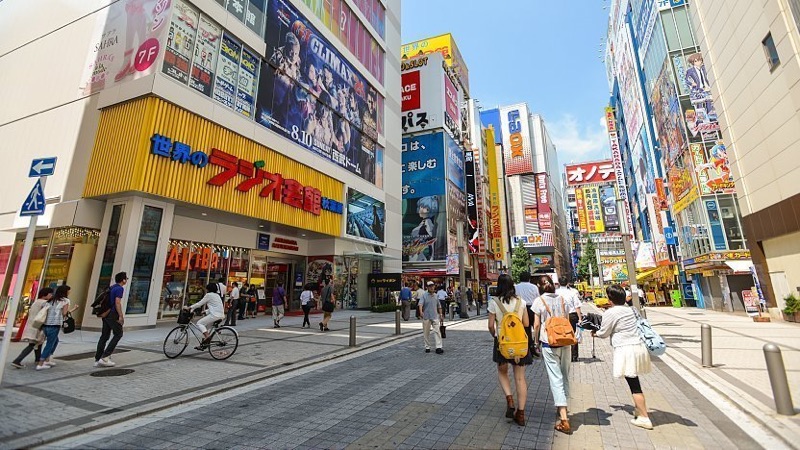
Akihabara Electric Town

As the sun drops, Akihabara comes alive with neon. This is the epicenter of otaku culture — multi-story arcades, anime shops, manga stores, retro game floors, and gacha machine alleys. Even if you're not into anime, the sheer sensory overload is unforgettable. Hit up a multi-story arcade like GiGO or Super Potato for retro games.

🎮 Super Potato — retro game paradise across 5 floors (play vintage consoles)
🕹️ GiGO arcades — claw machines, rhythm games, purikura photo booths
🛒 Mandarake Complex — 8 floors of manga, anime, and collectibles
📍 Akihabara is air-conditioned everywhere — perfect afternoon escape
🍺 Dinner
Kanda Matsuya
One of Tokyo's finest soba noodle restaurants, near Akihabara. Hand-cut buckwheat noodles served cold with dipping sauce — the perfect summer meal. Operating since 1884.
💰 $$ · 📍 1-13 Kanda Sudacho, Chiyoda · Cash only
Day 2 Shibuya · Harajuku · Omotesando

Youth Culture, Fashion & Shibuya After Dark
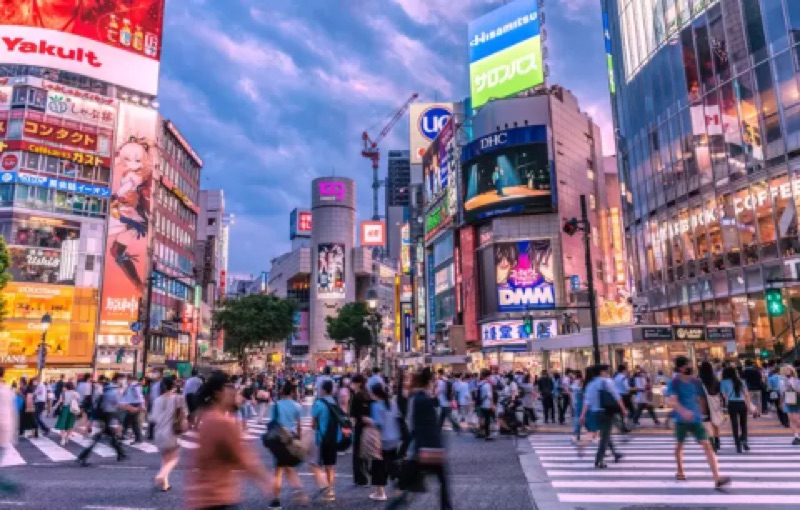
Youth Culture, Fashion & Shibuya After Dark, Tokyo, Japan

Today is pure Tokyo pop culture — Harajuku's wild street fashion, Meiji Shrine's ancient forest, Omotesando's designer architecture, and the electrifying chaos of Shibuya Crossing at sunset. End with rooftop drinks 230 meters above it all.

Morning

Meiji Shrine (Meiji Jingu)

Walk through the towering torii gate into a 170-acre forest in the heart of Tokyo. Meiji Shrine is dedicated to Emperor Meiji and feels like stepping into another century. The gravel paths through ancient trees are 2-3°C cooler than the surrounding city. Write a wish on an ema wooden plaque.

⛩️ Free entry · Opens at sunrise, closes at sunset
🌳 The forest was planted in 1920 with 100,000 trees from across Japan
📝 Ema wish plaques — ¥500, write your wish and hang it
🍶 The sake barrel wall near the entrance is incredible for photos

Harajuku & Takeshita Street

From the shrine's serenity, plunge into the candy-colored chaos of Takeshita Street. This narrow pedestrian lane is packed with crepe shops, kawaii fashion boutiques, vintage stores, and the most outrageous street style in the world. Try a rainbow cotton candy or a Harajuku crepe.

🍦 Marion Crepes — the original Harajuku crepe, queue moves fast
👗 Vintage shops on Cat Street (parallel to Takeshita) for unique finds
🧁 Totti Candy Factory — giant rainbow cotton candy for the gram
☕ Breakfast
Bills Omotesando
The famous Australian café known worldwide for ricotta hotcakes. Bright, airy space on Omotesando with a menu that's group-friendly. Perfect fuel for a big day.
💰 $$ · 📍 Omotesando Hills, Shibuya · Reserve for groups
Afternoon

Omotesando Architecture Walk

Omotesando is Tokyo's Champs-Élysées, but with better architecture. Stroll the tree-lined boulevard and admire buildings by Tadao Ando (Omotesando Hills), Kengo Kuma (Sunny Hills pineapple cake shop), and Herzog & de Meuron (Prada flagship). Even if you don't shop, the architecture is world-class.

🏗️ Prada Aoyama — the crystal honeycomb building by Herzog & de Meuron
🍍 Sunny Hills — get a free pineapple cake tasting in Kengo Kuma's wooden lattice building
🏢 Omotesando Hills — Tadao Ando's spiraling interior

Cat Street & Vintage Shopping

Duck off Omotesando onto Cat Street — a hidden pedestrian lane packed with independent boutiques, vintage shops, and tiny cafes. This is where Tokyo's fashion-forward locals actually shop. Great for the group to split up and explore.

👟 2nd Street, Ragtag, Chicago — vintage and designer resale
☕ The Roastery by Nozy Coffee — single-origin espresso in a sleek space
🎨 Design Festa Gallery — free entry, rotating art from indie artists
🍜 Lunch
Afuri Harajuku
Light, refreshing yuzu shio (citrus salt) ramen — the perfect summer bowl. This chain started in Harajuku and the yuzu broth is lighter than typical heavy tonkotsu.
💰 $ · 📍 1-1-36 Jingumae, Shibuya · Ticket machine ordering
Evening

Shibuya Scramble Crossing & Shibuya Sky

Time your arrival at Shibuya Crossing for golden hour — watching 3,000 people cross from every direction at once is mesmerizing. Then head up to Shibuya Sky, the open-air observation deck at 230m, for 360° views of Tokyo as the city lights up. The sunset and blue-hour views are extraordinary.

📸 Best crossing photos: Shibuya Scramble Square 2F terrace or Starbucks
🌅 Shibuya Sky — ¥2,000, book tickets online to skip the queue
⏰ Go 30-45 min before sunset for golden hour → blue hour → night views
🌃 On a clear day you can see Mt. Fuji from the rooftop
🍺 Dinner
Uobei Shibuya
High-speed sushi on conveyor belts — order on a touchscreen and plates zoom to your seat on a bullet-train track. Absurdly fun for groups, crazy cheap, and the sushi is actually solid. Peak Tokyo experience.
💰 $ · 📍 2-29-11 Dogenzaka, Shibuya · No reservations, short waits
After dinner, explore Shibuya's backstreets — Nonbei Yokocho ('Drunkard's Alley') is a tiny lane of cramped bars just behind Shibuya Station. Each bar fits 5-8 people. Perfect for your group to claim an entire bar.
Day 3 Tsukiji · Ginza · Odaiba

Fish Market Feast, Ginza Glam & Digital Art
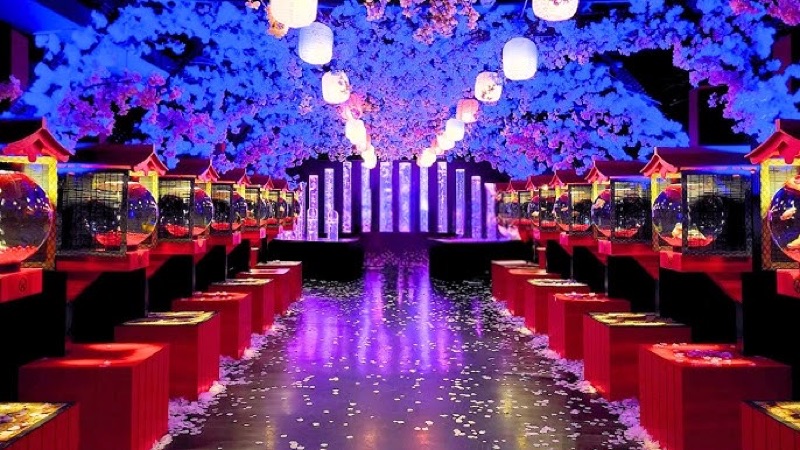
Fish Market Feast, Ginza Glam & Digital Art, Tokyo, Japan

Eat like royalty at Tsukiji Outer Market, explore Ginza's upscale department stores (with the best AC in Tokyo), then cross Rainbow Bridge to Odaiba for teamLab Planets — the immersive art experience that makes you walk through water and float in infinite space.

Morning

Tsukiji Outer Market Food Crawl

The inner wholesale market moved to Toyosu, but Tsukiji Outer Market is still the beating heart of Tokyo food culture. Dozens of stalls selling the freshest seafood, tamagoyaki (rolled egg), wagyu skewers, and strawberry daifuku. Eat your way through — this is breakfast AND an activity.

🐟 Sashimi stands — tuna, salmon, uni (sea urchin) on the spot
🥚 Yamachou — famous for jiggly, sweet tamagoyaki on a stick
🍓 Strawberry daifuku — seasonal mochi with fresh strawberry inside
🦀 Grilled crab legs and scallops on the half shell — eat standing up
🍣 Breakfast
Sushi Dai (Toyosu Market)
For the ultimate sushi breakfast, brave the early morning queue at Sushi Dai inside Toyosu Market. The omakase (chef's choice) set is legendary — 10 pieces of the freshest fish in Tokyo. Get there by 5:30am or accept a 2-3 hour wait.
💰 $$$ · 📍 Toyosu Fish Market, Bldg 6 · Cash only · Queue from 5am
Group strategy: Split up. Send the early risers to Sushi Dai at Toyosu (5:30am), have the rest meet at Tsukiji Outer Market at 8am for the street food crawl. Both are incredible.
Afternoon

Ginza Luxury Stroll

Tokyo's most upscale district is also its best air-conditioned escape. Browse the legendary Mitsukoshi and Ginza Six department stores, admire the flagship stores' architecture (Chanel, Dior, Uniqlo's massive 12-floor flagship), and visit the free Sony Park showroom. The depachika (basement food halls) are incredible.

🏬 Ginza Six — rooftop garden with free Tokyo views
🍰 Depachika (B1 food halls) — sample wagashi, chocolates, bento boxes
👕 Uniqlo Ginza — 12 floors, including UT graphic tee customization
🎮 Sony Park — free interactive tech exhibits
🍱 Lunch
Ginza Kagari
Michelin-starred ramen (yes, really). Their tori paitan (creamy chicken broth) ramen is rich, silky, and unforgettable. Tiny shop with a queue, but it moves fast.
💰 $$ · 📍 6-4-12 Ginza, Chuo · Ticket machine · Queue 20-40 min
Evening

teamLab Planets Tokyo

Walk barefoot through knee-deep water in rooms of infinite digital koi fish, float in a universe of light, and stand in a field of digital flowers that bloom at your feet. teamLab Planets is a full-body immersion experience and one of the best things in Tokyo. Book tickets in advance — it sells out.

🎫 ¥3,800 — book online at least 1 week ahead for August
👣 You go barefoot and walk through water — wear shorts or roll-up pants
📱 Waterproof phone case recommended
⏰ Allow 2 hours · Late afternoon visits have shorter queues
🍽️ Dinner
Monja Street (Tsukishima)
Just one stop from teamLab, Tsukishima's Monja Street has 70+ restaurants serving monjayaki — Tokyo's signature runny, savory pancake. Perfect group food: order multiple varieties and grill them together on the table hotplate.
💰 $$ · 📍 Tsukishima Monja Street, Chuo · No reservation needed
Day 4 Shinjuku · Kabukicho · Golden Gai

Shinjuku — Gardens, Ramen & Neon Nights
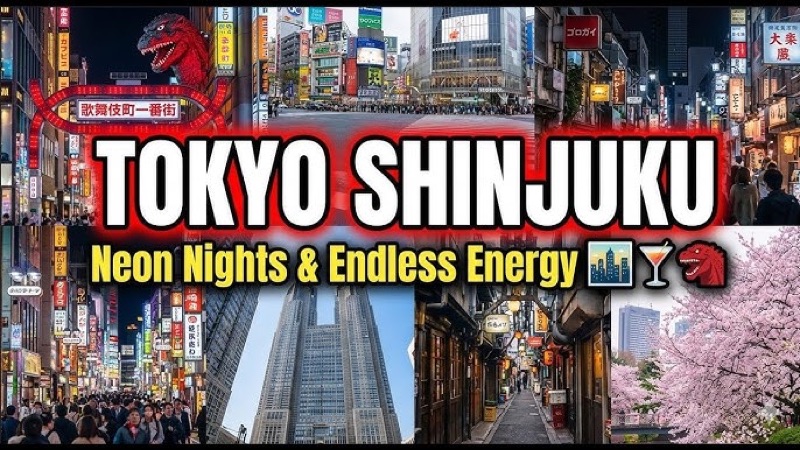
Shinjuku — Gardens, Ramen & Neon Nights, Tokyo, Japan

Shinjuku is Tokyo's beating heart — a sensory overload of neon towers, underground malls, serene gardens, and the wildest nightlife in Asia. Today goes from tranquil morning gardens to the controlled chaos of Golden Gai's tiny bars and Memory Lane's smoky yakitori stalls.

Morning

Shinjuku Gyoen National Garden

One of Tokyo's most beautiful parks — 144 acres of Japanese, English, and French formal gardens. The greenhouse is spectacular, and the Japanese garden with its tea house is pure zen. In August, the tropical greenhouse and shaded Japanese garden are the coolest spots.

🌺 ¥500 entry · Opens 9am · No alcohol allowed
🍵 Japanese garden tea house serves matcha and wagashi
📸 The French formal garden is gorgeous in morning light
🌳 Massive shade trees — this is the coolest outdoor spot in Shinjuku
☕ Breakfast
Fuglen Tokyo
Oslo's beloved coffee bar, transplanted to a tiny wooden house in Tomigaya (10 min walk from Shinjuku Gyoen). World-class specialty coffee by day, cocktail bar by night. The group can sit on the terrace.
💰 $$ · 📍 1-16-11 Tomigaya, Shibuya · Opens 8am
Afternoon

Shinjuku Station & Underground City

The world's busiest station serves 3.5 million people daily. Explore the massive underground shopping network — department stores, electronics shops, and food courts stretching for blocks beneath the streets. Isetan department store's food hall is possibly Japan's finest.

🏬 Isetan Shinjuku — iconic department store, legendary depachika food basement
🎌 Don Quijote Shinjuku — 8 floors of tax-free Japanese goods (open 24/7)
📍 Shinjuku is the best area to stock up on souvenirs and snacks

Samurai Museum & Kabukicho Exploration

Walk into Kabukicho — Tokyo's famous entertainment district — in daylight to appreciate the massive signage and Robot Restaurant building. The area around Godzilla Head (Toho Cinema building) is great for photos. The Samurai Museum offers hands-on armor experiences.

🦖 Godzilla Head — look up at the Toho Cinema building on Kabukicho Ichiban-gai
⚔️ Samurai Museum — try on replica armor, ¥1,900 entry
📸 Kabukicho's neon signage is most photogenic at dusk
🍜 Lunch
Fuunji
Legendary tsukemen (dipping ramen) — thick, chewy noodles with an intensely flavorful fish-pork broth for dipping. The queue is always long but moves fast. One of the best bowls in Tokyo.
💰 $ · 📍 2-14-3 Yoyogi, Shibuya (near Shinjuku South exit) · Cash only
Evening

Memory Lane (Omoide Yokocho) Yakitori

Also called 'Piss Alley' — a narrow maze of tiny yakitori stalls right next to Shinjuku Station. Squeeze onto a stool, order skewers and beer, and experience old-school Tokyo street food. Each stall seats 6-8 people, so your group might fill an entire shop.

🍢 Must-order: tsukune (chicken meatball), negima (chicken & leek), liver with salt
🍺 Pair with draft beer or hoppy (Showa-era shochu highball)
📍 Enter from the JR west exit side — look for the smoky alley

Golden Gai Bar Hopping

Six narrow alleys packed with over 200 bars, each seating 5-10 people. Every bar has a theme — jazz, punk rock, horror movies, poetry, 80s pop. Some charge a small cover (¥500-1000). This is where Tokyo's creative underground drinks. Your group can split up and compare notes.

🍸 Cover charge: ¥300-1000 at most bars — just ask before sitting down
🎵 Bar Albatross — three floors, stained glass, most famous Golden Gai bar
🎭 Each bar has strict personality — respect the vibe, don't be loud
📸 The neon-lit alleyways are incredibly photogenic (ask before shooting inside bars)
🍺 Dinner
Memory Lane Yakitori Stalls
Your dinner IS the activity — hop between 2-3 stalls in Memory Lane, ordering a few skewers and a beer at each. Chicken hearts, cartilage, skin, liver — be adventurous. It's cheap, smoky, and absolutely unforgettable.
💰 $ · 📍 Omoide Yokocho, Shinjuku · Cash only · Open from 5pm
Day 5 Kamakura · Enoshima

Day Trip — Great Buddha, Bamboo & the Sea
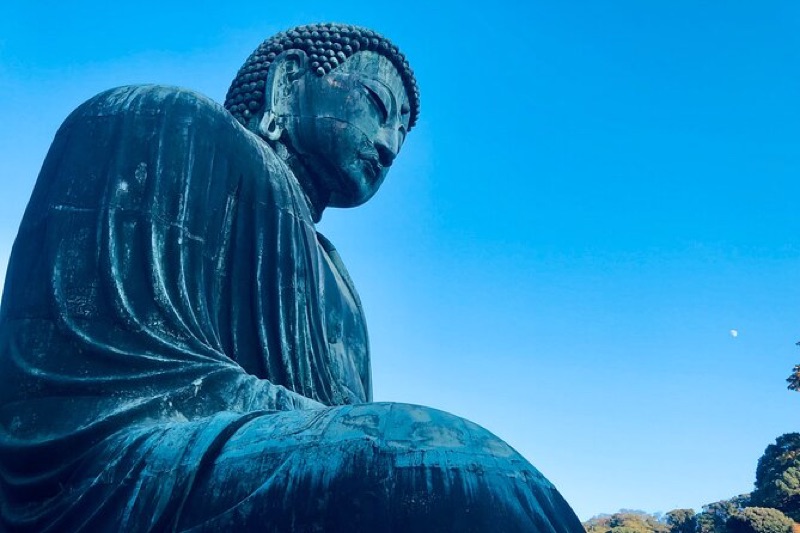
Day Trip — Great Buddha, Bamboo & the Sea, Tokyo, Japan

Escape Tokyo's heat for the ancient capital of Kamakura — a coastal town packed with temples, hiking trails, and a 13-meter bronze Buddha. The bamboo forest at Hokokuji Temple rivals Kyoto's, and you'll end the day with fresh shirasu (whitebait) by the ocean on Enoshima Island.

Morning

Train to Kamakura & Hokokuji Bamboo Temple

Take the JR Yokosuka Line from Shinjuku (1 hour). Start at Hokokuji Temple — the 'Bamboo Temple' — where 2,000 moso bamboo stalks create a surreal green corridor. Sit in the open-air tea house inside the bamboo grove and sip matcha. This is the most serene place you'll visit all week.

🚃 JR Yokosuka Line from Shinjuku → Kamakura (58 min, ¥950)
🎋 Hokokuji Temple — ¥300 entry, ¥600 with matcha tea
🍵 The matcha tea house inside the bamboo grove is unforgettable
📍 Take bus #5 from Kamakura Station east exit (8 min)

Tsurugaoka Hachimangu Shrine

Kamakura's most important Shinto shrine sits at the top of a dramatic stone staircase, flanked by lotus ponds (in full August bloom). Walk Wakamiya-oji, the grand approach road lined with torii gates, from Kamakura Station.

⛩️ Free entry · Lotus ponds are stunning in August
🦌 The approach road has traditional shops and rice cracker vendors
📸 The view from the top of the stairs looking down the tree-lined boulevard is iconic
☕ Breakfast
Kamakura Station area
Grab onigiri and coffee from the convenience stores near Kamakura Station, or stop at one of the charming cafes on Komachi-dori shopping street.
💰 $ · 📍 Komachi-dori, Kamakura
Afternoon

Great Buddha of Kamakura (Kotoku-in)

The 13-meter, 93-ton bronze Buddha has been sitting in the open air since a tsunami destroyed its temple hall in 1498. You can actually go inside the hollow statue for ¥50. Standing before it is genuinely awe-inspiring — photos don't capture the scale.

🧘 ¥300 entry, ¥50 to go inside the statue
📏 13.35 meters tall, 93 tons of bronze — cast in 1252
📸 Best photo angle: slightly to the right with some distance
🚶 20-minute walk from Hase Station on the Enoden line

Hase-dera Temple

Just a 5-minute walk from the Great Buddha, Hase-dera has a massive golden Kannon statue, beautiful hillside gardens, and a sea-view terrace. The hydrangea garden is famous in June but the ocean views are spectacular year-round.

🌊 The observation terrace has panoramic views of Sagami Bay
🏮 ¥400 entry · Cave of Benten has atmospheric carved stone halls
📸 The jizo statues dressed in tiny red caps are deeply moving
🍜 Lunch
Bowls Kamakura
Fresh shirasu-don (whitebait rice bowl) — Kamakura's signature dish. The tiny, translucent fish are caught that morning from Sagami Bay. Get the half-raw, half-cooked version for the best of both worlds.
💰 $$ · 📍 Near Hase Station · Seasonal — shirasu is freshest in summer
Evening

Enoshima Island Sunset

Take the charming Enoden tram from Kamakura to Enoshima — a small island connected by a bridge, packed with seafood restaurants, shrines, and a botanical garden. Climb to the Sea Candle lighthouse for 360° sunset views over the Pacific, with Mt. Fuji silhouetted on clear days.

🚃 Enoden tram from Kamakura → Enoshima (25 min, ¥310) — sit on the right for ocean views
🌅 Sea Candle lighthouse — ¥500, stunning sunset spot
🐙 Grilled octopus senbei (crackers) from the stalls on the approach
🗻 On a clear day, Mt. Fuji appears at sunset
🍽️ Dinner
Tobiccho Enoshima
Famous for raw shirasu, sashimi platters, and seafood bowls right on the island. Eat on the terrace as the sun sets over the ocean. The shirasu pizza is surprisingly incredible.
💰 $$ · 📍 Enoshima Island · May close early some days
The Enoden tram from Kamakura to Enoshima runs right along the beach — it's one of the most scenic short train rides in Japan. Sit on the ocean side (right when heading toward Enoshima).
Day 6 Shimokitazawa · Yanaka · Roppongi

Hidden Tokyo — Vinyl, Temples & Art After Dark
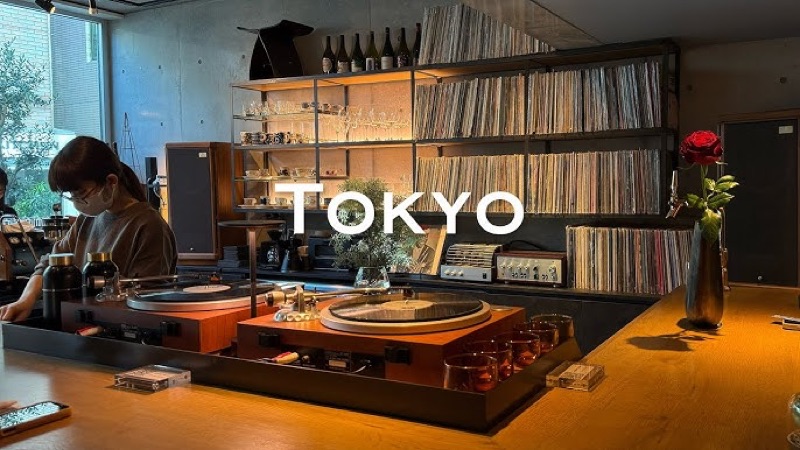
Hidden Tokyo — Vinyl, Temples & Art After Dark, Tokyo, Japan

Leave the tourist trail behind. Morning in Shimokitazawa — Tokyo's coolest neighborhood for vintage fashion, vinyl records, and indie coffee. Afternoon in Yanaka — an old-school Edo-era neighborhood that feels like 1960s Tokyo. Night at Roppongi for Mori Art Museum and skyline views.

Morning

Shimokitazawa — Vintage & Vinyl

Tokyo's answer to Brooklyn — narrow streets packed with vintage clothing shops, record stores, tiny live music venues, and some of the best curry in the city. This is where Tokyo's creative class hangs out. Spend the morning wandering between Flash Disc Ranch (vinyl records), New York Joe Exchange (vintage fashion), and Bear Pond Espresso.

💿 Flash Disc Ranch — legendary vinyl shop, great Japanese jazz and city pop section
👕 New York Joe Exchange — curated vintage in a former bathhouse
☕ Bear Pond Espresso — the owner is legendarily grumpy but the espresso is perfect
🍛 Shimokitazawa is curry capital — dozens of incredible curry shops
☕ Breakfast
Bear Pond Espresso
Tiny, legendary coffee shop where the owner hand-pulls every espresso with surgical precision. The Angel Stain espresso is famous. Cash only, no photos of the barista, respect the craft.
💰 $ · 📍 2-36-12 Kitazawa, Setagaya · Cash only · Opens 11am weekends
Afternoon

Yanaka — Old Tokyo Time Warp

One of the few neighborhoods that survived WWII bombing, Yanaka feels like stepping back 60 years. The Yanaka Ginza shopping street is a retro high street with cat statues, croquette shops, and friendly shopkeepers. The area's temples and old wooden houses are a photographer's dream.

🐱 Yanaka is the 'cat town' — look for wooden cat sculptures and real strays
🍩 Yanaka Ginza — try menchi-katsu (fried meat cutlet) from the street stalls
⛩️ Yanaka Cemetery — peaceful walks among old tombstones and cherry trees
🏚️ SCAI The Bathhouse — contemporary art gallery in a 200-year-old bathhouse

Nezu Shrine

One of Tokyo's most beautiful shrines, hidden in the backstreets near Yanaka. The corridor of miniature orange torii gates rivals Kyoto's Fushimi Inari on a smaller, more intimate scale. Almost no tourists.

⛩️ Free entry · The torii gate tunnel is magical in afternoon light
📸 Way fewer crowds than Fushimi Inari in Kyoto
🌺 Azalea garden blooms in spring, but the shrine grounds are beautiful year-round
🍛 Lunch
Curry Spice Gelateria KALPASI
Mind-bending fusion of South Indian curry and gelato. The curry is legit complex (not Japanese-sweet), and the spice gelato flavors like cardamom and black pepper are wild. A Shimokitazawa institution.
💰 $$ · 📍 Shimokitazawa · Small portions, order a set
Evening

Mori Art Museum & Tokyo City View

On the 52nd and 53rd floors of Roppongi Hills, the Mori Art Museum has rotating contemporary art exhibitions and Tokyo City View — an indoor/outdoor observation deck. The Sky Deck (rooftop, weather permitting) is the most dramatic nightscape viewpoint in Tokyo.

🎫 ¥2,200 (includes museum + observation deck) · Sky Deck extra ¥600
🌃 Open until 10pm (Fri-Sat until midnight) — perfect for night views
📸 Tokyo Tower glows orange right in front of you
🗼 Clear summer nights: you can see Skytree, Rainbow Bridge, and more
🍽️ Dinner
Gonpachi Nishi-Azabu
The restaurant that inspired the 'Crazy 88' fight scene in Kill Bill. Multi-level izakaya with hand-made soba noodles, yakitori, and tempura in a dramatic traditional interior. Perfect for a group — reserve the second floor.
💰 $$$ · 📍 1-13-11 Nishi-Azabu, Minato · Reservations essential for groups
After dinner, if the group has energy, Roppongi has Tokyo's most international nightlife. But for a mellower vibe, grab drinks at the Roppongi Hills outdoor terrace — great people-watching spot.
Day 7 Toyosu · Asakusa · Shinjuku

Last Day — Final Bites, Souvenirs & Sayonara
Last Day — Final Bites, Souvenirs & Sayonara, Tokyo, Japan

Your final day is about savoring what you love most. Morning at the Toyosu tuna auction, last-chance shopping in Shinjuku, a farewell kaiseki dinner, and a final walk through neon-lit streets. Leave nothing uneaten, unbought, or unexperienced.

Morning

Toyosu Fish Market Tuna Auction

See the world's most famous fish auction from the observation gallery. Massive frozen bluefin tuna — some worth over $100,000 — are auctioned in rapid-fire Japanese at dawn. The gallery opens at 5:30am, and the auction starts around 5:45am. Then eat the freshest sushi of your life downstairs.

🐟 Observation gallery opens 5:30am — first come, first served
🏷️ Tuna can sell for millions of yen — the New Year auction is legendary
🍣 After watching, eat at one of the market's sushi restaurants
📍 Toyosu Market Station on the Yurikamome line
🍣 Breakfast
Sushi Yoshitake (Toyosu)
Another excellent sushi counter inside the Toyosu Market complex. Less famous than Sushi Dai means shorter waits, equally incredible fish — nigiri melts on your tongue.
💰 $$$ · 📍 Toyosu Fish Market · Opens early · Cash recommended
Afternoon

Last-Chance Shopping & Souvenir Run

Hit the spots you missed and stock up on souvenirs. Nakamise-dori in Asakusa for traditional gifts, Don Quijote for Japanese snacks and gadgets, and Tokyo Station's underground shopping streets for premium wagashi and KitKat flavors. The Character Street in Tokyo Station has official stores for every anime/character brand.

🍫 Tokyo Banana, limited-edition KitKats, wagashi gift boxes at Tokyo Station
🎌 Don Quijote — tax-free for tourists, open 24/7, everything you can imagine
🏮 Kappabashi-dori (near Asakusa) — the kitchen street, buy fake food samples as souvenirs
📦 Pro tip: buy a packing cube at Don Quijote for all your souvenirs
🍜 Lunch
Ichiran Shibuya
The famous solo-booth tonkotsu ramen — customize every element (broth richness, noodle firmness, garlic level, spice) on a paper form. Individual curtained booths let you focus purely on the ramen. A perfect Tokyo ritual.
💰 $$ · 📍 Multiple locations · No reservations needed · Ticket machine
Evening

Farewell Kaiseki Dinner

End this trip the way Japan does — with intention and beauty. A kaiseki dinner is a multi-course seasonal Japanese meal where every dish is a work of art. For your last night, this is the ultimate way to honor the trip. Many kaiseki restaurants accommodate groups with private rooms.

🍽️ Expect 8-12 courses over 2+ hours
🎋 Seasonal August ingredients: hamo (pike conger), edamame, myoga ginger, watermelon
🍶 Pair with sake — ask for the chef's recommendation
📸 Each dish is designed to be photogenic — ask before photographing

Final Tokyo Night Walk

After dinner, take one last walk through whichever neighborhood stole your heart. Shinjuku's neon canyons, Shibuya's crossing, or the quiet lantern-lit streets of Asakusa. Tokyo reveals different faces at night — soak it in one last time.

🌃 Shinjuku east side is most dramatic at night — the neon signs stack 10 stories high
📸 Last photos at your favorite spots — the city is even more photogenic after dark
🍽️ Dinner
Ishikawa
Three Michelin-starred kaiseki in Kagurazaka — an intimate counter with just 8 seats, serving exquisite seasonal courses. Chef Hideki Ishikawa sources directly from farmers and fishermen. Book well in advance.
💰 $$$$ · 📍 5-37 Kagurazaka, Shinjuku · Reservations mandatory · ¥25,000+ pp
If Ishikawa is booked, alternatives: Kohaku (2 Michelin stars, Kagurazaka), Tempura Kondo (Ginza, legendary tempura), or Den (Jimbocho, creative kaiseki with a playful edge). All require advance booking.

💰 Budget Breakdown

CategoryBudgetMidrangeLuxury
Accommodation¥8,000–15,000/night¥15,000–35,000/night¥40,000–100,000/night
Meals (per person)¥3,000–5,000/day¥5,000–10,000/day¥15,000–30,000/day
Transport¥1,000–1,500/day¥1,500–3,000/day¥5,000–10,000/day (taxi)
Activities¥0–2,000/day¥2,000–5,000/day¥5,000–15,000/day
Day Trip (Kamakura)¥3,000pp¥5,000pp¥10,000pp (private car)
7-Day Total (per person)¥100,000–150,000¥180,000–300,000¥400,000–700,000

✈️ Getting There

  • Narita Airport (NRT) — 60-90 min to city center via Narita Express (¥3,250) or Skyliner (¥2,520)
  • Haneda Airport (HND) — 30-45 min to city center via monorail or Keikyu Line (¥500)
  • Haneda is much closer — choose it if you have the option
  • Airport limousine buses run to major hotel areas (¥1,300-3,200)

🏨 Where to Stay (Groups)

  • Shinjuku — best base for nightlife, transport hub, endless food options
  • Shibuya — younger vibe, great for shopping and Harajuku access
  • Asakusa — traditional feel, quieter at night, close to Skytree
  • Consider an Airbnb apartment for 5+ people — much cheaper than multiple hotel rooms
  • Capsule hotels are fun for one night but impractical for groups

🌡️ August Weather

  • Average high: 33°C (91°F), feels like 38-42°C with humidity
  • Afternoon thunderstorms are common but pass quickly (carry a small umbrella)
  • Cool towels, handheld fans, and frozen drinks from konbini are lifesavers
  • Most indoor spaces are heavily air-conditioned — bring a light layer for trains and museums

💳 Money & Tipping

  • ¥1 ≈ $0.007 USD (roughly ¥150 = $1 as of 2026)
  • Cash is still king at small restaurants and market stalls
  • 7-Eleven ATMs accept all international cards, English interface
  • DO NOT TIP — it can actually cause confusion or offense

📱 Connectivity & Apps

  • Pocket WiFi rental at the airport — best for groups (¥800-1,200/day)
  • Google Maps works perfectly for train navigation in English
  • Tabelog — Japan's #1 restaurant review app (higher standards than Google ratings)
  • Suica/Pasmo IC cards work on all trains, buses, and at convenience stores

🗣️ Language Tips

  • Most signs have English, but menus at small restaurants may not
  • Key phrases: sumimasen (excuse me), arigatou gozaimasu (thank you), oishii (delicious)
  • Point-and-order is perfectly acceptable — no one will judge you
  • Google Translate camera mode reads Japanese menus in real-time

Love this format? Get your own.

Every tabiji itinerary is custom-built from real traveler intelligence — specific restaurants, actual addresses, local timing tricks.

Get Your Personalized Itinerary — $1

Delivered within 24 hours. 2 free revisions. 100% satisfaction guaranteed.

📄 Export to Google Docs

Get an editable Google Doc of this itinerary — perfect for sharing with your travel group and adding your own notes.

The doc will be shared to your email as an editor.

✅ Your Google Doc is ready!

We've shared it with . Check your Google Drive or click below.

Open Google Doc →

Tip: You can edit, add notes, and share it with your travel group!