⚡ Before You Go — Essentials
📱 The Great Firewall
Google, Instagram, WhatsApp, and most Western apps are blocked in China. Download a VPN before you arrive (Astrill or ExpressVPN work best). WeChat is essential — download it and set it up before landing. It's your wallet, taxi app, translator, and social media all in one.
💳 Cash Is Dead
China runs on mobile payment (WeChat Pay / Alipay). As a foreign tourist, you can now link an international Visa/Mastercard to either app. Set this up on Day 1. Most street vendors, taxis, and tiny restaurants ONLY accept mobile payment — cash is increasingly refused. Keep ¥200-500 in cash as emergency backup.
🚇 Getting Around
Both cities have world-class metro systems — ¥3-7 per ride. Use Amap (高德地图) or Baidu Maps for navigation (Google Maps doesn't work). DiDi is the Chinese Uber — reliable and cheap. Beijing→Shanghai high-speed train: ~4.5 hours, ¥553 second class (~$75 USD). Book via Trip.com or 12306.cn.
🗣️ Language Tips
Very few people speak English outside of international hotels. Download offline Chinese on Google Translate before your VPN stops working, or use the WeChat translate feature. Learn: 你好 (nǐ hǎo = hello), 谢谢 (xièxie = thanks), 多少钱 (duōshao qián = how much?), 买单 (mǎidān = bill please). Showing a photo of your destination to taxi drivers works wonders.
💰 Budget Reality Check
China is incredibly affordable for travelers. Street food meals: ¥15-40 ($2-6). Restaurant dinner for two: ¥100-200 ($14-28). Craft cocktails: ¥50-80 ($7-11). Metro ride: ¥3-7 ($0.50-1). Budget hotel: ¥200-400/night ($28-55). Your $1-2k budget for two is genuinely comfortable here — you'll eat like royalty.
🛂 Visa & Entry
Check current visa policy — China has been expanding visa-free transit (144-hour TWOV) for many nationalities. If you qualify, you can visit both Beijing and Shanghai visa-free. Apply for a tourist visa (L visa) if needed — processing takes 5-7 business days. Bring passport photos.
Imperial Beijing — Forbidden City & First Night Out
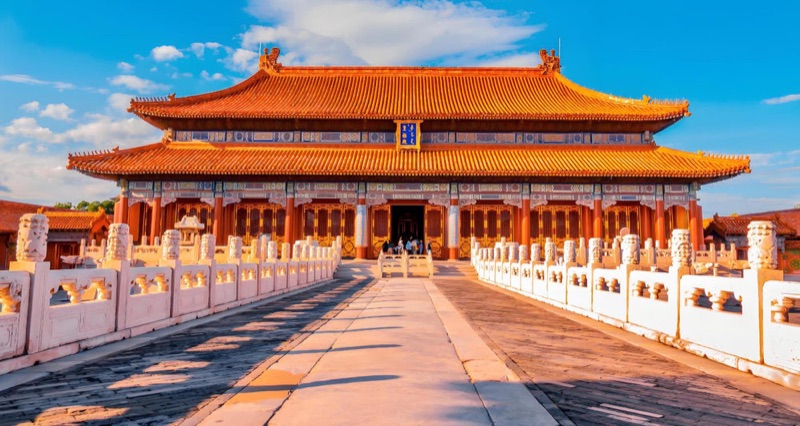
Land in Beijing and dive straight into 600 years of imperial history. The Forbidden City is overwhelming in the best way — 980 buildings across 178 acres of palace complex. Tonight, ease into Beijing nightlife with Wangfujing's night snack scene and your first taste of hutong bar culture.
Arrive & Check In — Dongcheng District
Fly into Beijing Capital (PEK) or Daxing (PKX) airport. Take the Airport Express metro line or DiDi to your hotel in Dongcheng — the historic heart of Beijing, walking distance to everything on Day 1-4. Budget hotels here run ¥200-400/night ($28-55).
The Forbidden City (故宫)
Enter through the Meridian Gate and spend 2-3 hours exploring the largest palace complex on Earth. Walk the central axis from the Hall of Supreme Harmony to the Imperial Garden. The treasure galleries and clock museum (¥10 extra each) are worth it. April is perfect — cherry blossoms frame the ancient walls.
Jingshan Park (景山公园) — The Best View in Beijing
Exit the Forbidden City's north gate and walk straight into Jingshan Park. Climb the hill (5 minutes) for the single best panoramic view in all of Beijing — the entire Forbidden City spread below you, with the modern city beyond. Golden hour here is legendary.
Wangfujing Night Market & Snack Street
Wangfujing is touristy, yes — but on your first night it's a sensory explosion worth experiencing. Grilled scorpions and starfish are for the Instagram crowd; the real move is lamb skewers (羊肉串), jianbing (煎饼 — Chinese crepe), stinky tofu, and tanghulu (candied hawthorn).
Temples, Hutongs & Houhai Bar Crawl
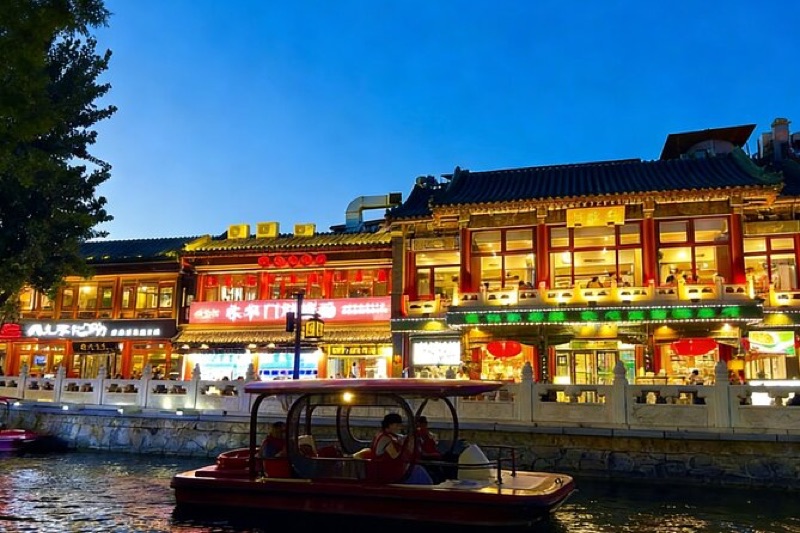
Today is a tale of two Beijings: ancient sacred geometry at the Temple of Heaven, then the living, breathing hutong alleyways where old Beijing still thrives. Tonight, the lakeside bars of Houhai glow with red lanterns — grab a beer and watch the reflections dance on the water.
Temple of Heaven (天坛) — Sacred Geometry at Dawn
Arrive when the park opens to see elderly Beijingers practicing tai chi, sword dancing, and opera singing in the ancient cypress groves. The Hall of Prayer for Good Harvests is China's most perfect building — a triple-gabled circular temple where emperors prayed for bountiful crops. The Echo Wall and Circular Mound Altar are acoustic marvels.
Nanluoguxiang Hutong (南锣鼓巷)
This 800-year-old hutong lane is one of Beijing's most vibrant. Yes, the main drag is touristy — but duck into the side alleys (东棉花胡同, 帽儿胡同) and you'll find hidden courtyards, traditional residences, and tiny tea shops. The real hutong life is one lane off the main street.
Drum & Bell Towers (鼓楼 & 钟楼)
Climb the steep wooden stairs of the Drum Tower for sweeping views over the hutong rooftops — grey tiles stretching to the horizon. The drum performance happens every hour and the view from up top is one of Beijing's most romantic.
Houhai Lake Bar Crawl (后海酒吧街)
As darkness falls, Houhai transforms. Red lanterns reflect on the lake, live music drifts from open-air bars, and the atmosphere is pure magic. Start at the east shore and work your way around. The key: ignore the aggressive touts trying to drag you inside, and find the bars with actual locals in them.
The Great Wall & Beijing Rock 'n' Roll
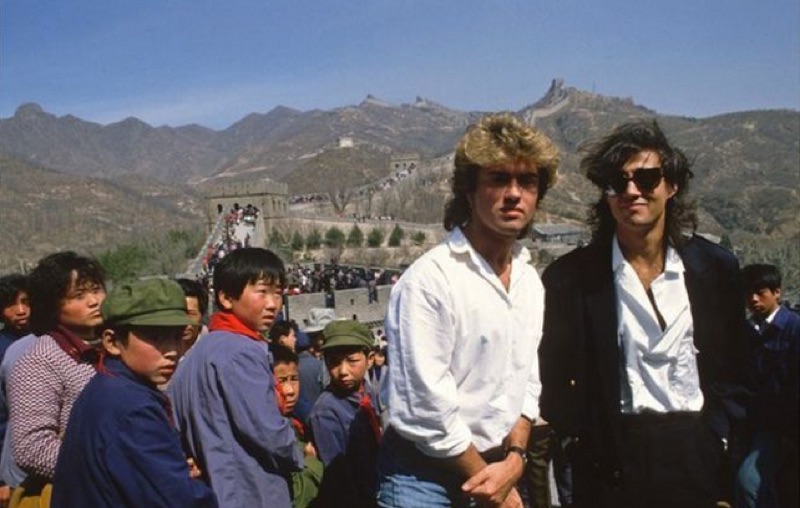
Today you conquer one of humanity's greatest achievements — the Great Wall at Mutianyu, where restored battlements snake along forested ridgelines with far fewer tourists than Badaling. Tonight, trade ancient stones for electric guitars in Beijing's underground rock scene around Gulou.
Great Wall at Mutianyu (慕田峪长城)
Skip Badaling (tourist hell) and go to Mutianyu — beautifully restored, surrounded by forested mountains, and a fraction of the crowds. Take the cable car up, walk the wall in both directions, and ride the toboggan slide back down (yes, really). April weather is ideal: clear skies, 15-20°C, wildflowers blooming.
Return to Beijing & Rest
Head back to the city by early afternoon. Take a hot shower, rest your legs from the wall climb, and recharge. The Great Wall takes it out of you — tonight's going to be big.
Gulou Nightlife — Beijing's Rock 'n' Roll Heart
The Gulou (Drum Tower) neighborhood is Beijing's indie music and dive bar district. Start at School Bar for live punk/indie shows, or DDC (Dusk Dawn Club) for the best underground acts. This isn't polished nightlife — it's gritty, authentic, and the crowd is 90% local musicians and artists.
Imperial Gardens, Modern Art & Sanlitun After Dark
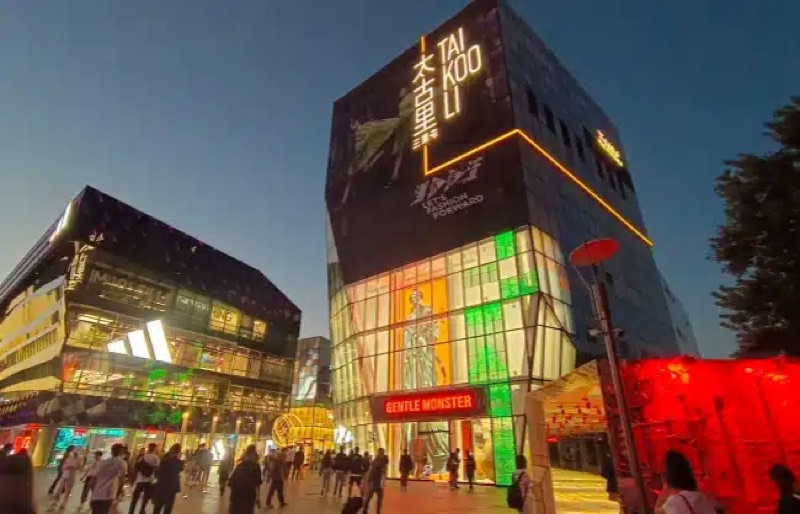
Your final Beijing day spans three centuries: the 18th-century Summer Palace lakeside gardens, the 20th-century industrial-chic 798 Art District, and the 21st-century neon playground of Sanlitun — Beijing's premier nightlife district where the party runs till dawn.
Summer Palace (颐和园)
The emperors' countryside retreat is a masterpiece of landscape design — Kunming Lake covers three-quarters of the 700-acre park, with Longevity Hill rising above. Walk the 728-meter Long Corridor (世界最长的画廊) with its 14,000 painted scenes, take a dragon boat across the lake, and find Suzhou Street — a recreated Qing dynasty canal market.
798 Art District (798艺术区)
A massive former military electronics factory turned into China's most important contemporary art zone. Bauhaus-era factory buildings now house galleries, studios, and cafés. UCCA (Ullens Center for Contemporary Art) is world-class. Wander the lanes and stumble into free gallery shows, massive outdoor sculptures, and artist studios.
Sanlitun Nightlife District (三里屯)
Beijing's premier nightlife zone — a dense grid of bars, clubs, restaurants, and late-night energy. Start with cocktails at the sophisticated spots, then let the night evolve. Sanlitun ranges from rooftop lounges to underground clubs — there's something for every mood.
Bullet Train to Shanghai & The Bund at Night
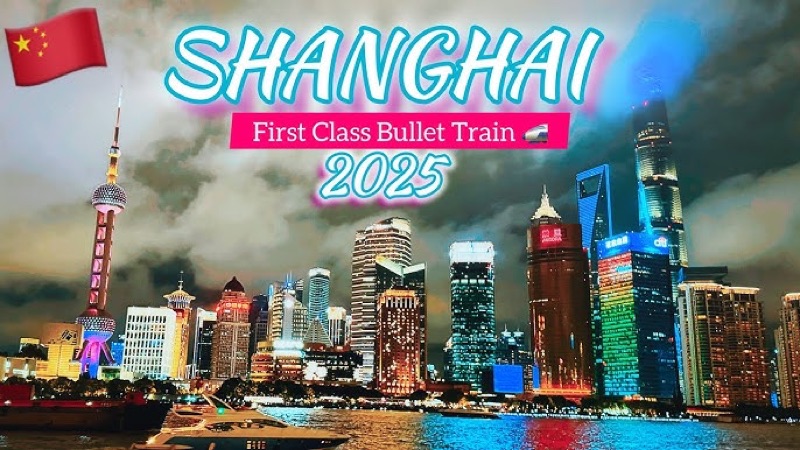
Board the Fuxing Hao — China's 350 km/h bullet train — and watch the landscape transform from northern plains to southern river deltas. In 4.5 hours, you'll swap imperial Beijing for electric Shanghai. Tonight, walk The Bund promenade as the Pudong skyline explodes with light.
Beijing → Shanghai High-Speed Train
Take a G-train from Beijing South Station to Shanghai Hongqiao. The Fuxing Hao is one of the world's fastest trains — 350 km/h of smooth, silent engineering across 1,300 km. Second class is comfortable with legroom, power outlets, and a dining car. Book via Trip.com or 12306.cn app.
Arrive Shanghai & Check In — French Concession
Arrive at Shanghai Hongqiao station and take Metro Line 10 or a DiDi to your hotel. Stay in the French Concession (Fuxing Road/Huaihai Road area) — Shanghai's most walkable, atmospheric, and bar-dense neighborhood. Tree-lined boulevards, Art Deco architecture, and the city's best restaurants are your doorstep.
French Concession Walking Exploration
Once checked in, walk the plane tree-lined streets. The Former French Concession is Shanghai's most beautiful neighborhood — 1920s-30s architecture, hidden gardens, boutique shops, and coffee roasters on every corner. Wander Wukang Road, Yongkang Road, and Fuxing Road.
The Bund (外滩) at Night
Walk the 1.5-km Bund promenade along the Huangpu River as the Pudong skyline lights up — the Oriental Pearl Tower, Shanghai Tower (632m, China's tallest), and the glowing canyon of skyscrapers. Across the river, the Bund's own Art Deco buildings are illuminated in golden light. This is the single most jaw-dropping urban skyline view on Earth.
Old Shanghai, Yu Garden & Neon Nanjing Road
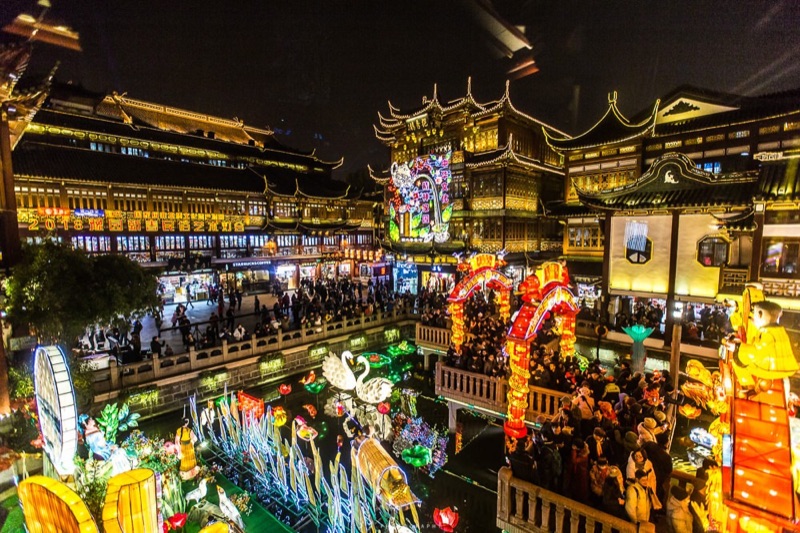
Dive into old Shanghai — Ming dynasty gardens, incense-clouded temples, and the chaotic energy of the Old City bazaar. Then walk the full length of Nanjing Road, from People's Square to The Bund, as neon signs and LED screens turn the street into a river of light.
Yu Garden (豫园) & Old City
A 400-year-old classical Chinese garden hidden in the heart of modern Shanghai. Rockeries, koi ponds, dragon walls, and pavilions create a world of tranquility. The surrounding Old City bazaar is a maze of shops, tea houses, and snack stalls. Visit the garden early before tour groups arrive, then explore the bazaar.
Shanghai Museum (上海博物馆)
One of China's greatest museums, recently relocated to a stunning new building. World-class collections of bronzes, ceramics, calligraphy, and jade spanning 5,000 years. The ancient Chinese bronze collection is considered the finest in the world. Free entry, 2 hours well spent.
People's Square & Nanjing Road East
Walk north from the museum to People's Square — Shanghai's central hub. Then head east on Nanjing Road (南京路步行街), China's most famous shopping street. It's 5.5 km of department stores, snack shops, and neon stretching all the way to The Bund. The walk takes about 45 minutes without stops.
Tianzifang (田子坊) Evening Stroll
A labyrinth of narrow lanes in the French Concession packed with art galleries, craft shops, tiny bars, and street performers. It's touristy but atmospheric — especially at night when the lanterns come on and the lanes glow. Grab a craft beer and people-watch from a rooftop terrace.
Jing'an Temple, Xintiandi & Speakeasy Night
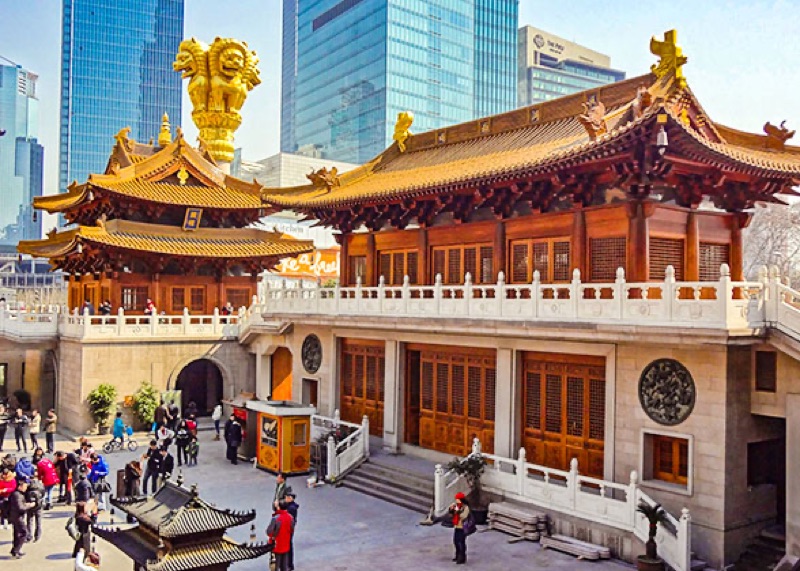
A day of contrasts: a golden Buddhist temple surrounded by glass skyscrapers, the stylish stone-gate lanes of Xintiandi, and finally, Shanghai's world-class cocktail bar scene. Tonight you go deep into the speakeasy underground — unmarked doors, password entries, and drinks that'd cost triple in New York.
Jing'an Temple (静安寺)
A 1,200-year-old Buddhist temple completely rebuilt in gleaming gold, sitting incongruously among the glass towers of Jing'an district. The contrast is pure Shanghai — ancient spirituality surrounded by hyper-modernity. The sandalwood incense, chanting monks, and golden halls are genuinely beautiful.
Xintiandi (新天地)
Shanghai's most stylish neighborhood — 1920s shikumen (stone-gate) lane houses beautifully restored into restaurants, galleries, and shops. It's upscale but worth a walk for the architecture alone. The Shikumen Open House Museum shows how these lanes originally looked inside.
Shanghai Propaganda Poster Art Centre
Hidden in the basement of a residential apartment building, this museum houses 6,000+ original Chinese propaganda posters from the 1950s-80s. It's bizarre, fascinating, and completely unique. The owner personally curated every piece.
Shanghai Speakeasy Bar Crawl
Shanghai's cocktail scene is genuinely world-class — multiple bars regularly appear on Asia's 50 Best Bars and World's 50 Best Bars lists. Tonight, you hunt for hidden doors.
Shanghai Skyline, Last Bites & Departure
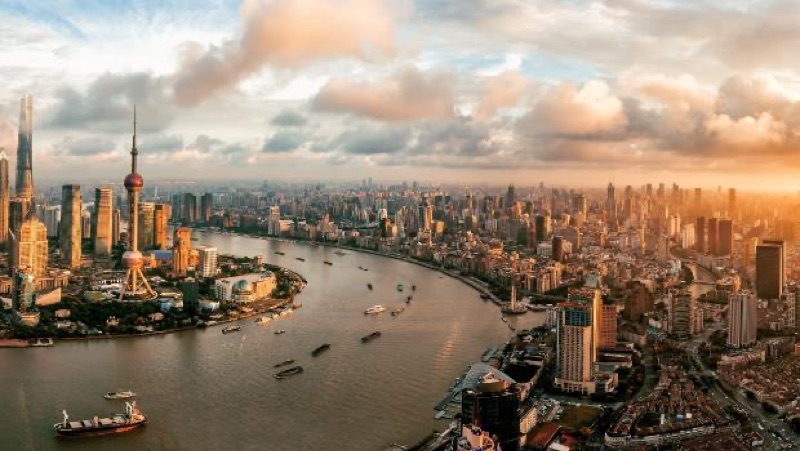
Your final day in China starts 632 meters above the ground — on the observation deck of Shanghai Tower, the world's second-tallest building. Soak in one last panoramic view of this impossible city, squeeze in final food stops, and leave with a suitcase full of memories (and probably some tea and snacks).
Shanghai Tower Observation Deck (上海中心大厦)
Take the world's fastest elevator (74 km/h!) to the 118th floor, 632 meters above Shanghai. On a clear April morning, you can see the entire city — The Bund, the rivers, the endless urban expanse. The glass floor section is terrifying and wonderful.
Last-Minute Shopping & Souvenir Run
Head back to the French Concession for last shopping. Pick up tea from a specialty tea shop (Tianshan Tea City has the best selection and prices), silk products, and snacks to bring home.
One Last Walk — The Bund by Day
If you saw The Bund at night, see it by day. The Art Deco and neoclassical architecture along the waterfront is even more impressive in daylight. Walk the stretch and admire the Customs House clock tower, the Peace Hotel's green copper roof, and the Pudong skyline across the river.
Departure or Final Night Out
If your flight is tonight, head to the airport. If you have one more evening, make it count — return to the French Concession for one last speakeasy cocktail at Speak Low, or find a rooftop bar on The Bund for a farewell drink with the skyline.
💰 Budget Breakdown
| Category | Budget | Midrange | Luxury |
|---|---|---|---|
| Accommodation | ¥200-400/night ($28-55) | ¥400-800/night ($55-110) | ¥800-2000/night ($110-280) |
| Meals (per couple/day) | ¥100-200 ($14-28) | ¥200-400 ($28-55) | ¥400-800 ($55-110) |
| Transport (per day) | ¥20-50 ($3-7) | ¥50-150 ($7-21) | ¥150-400 ($21-55) |
| Activities | ¥30-80/day ($4-11) | ¥80-200/day ($11-28) | ¥200-500/day ($28-70) |
| Beijing→Shanghai Train | ¥553/pp 2nd class ($77) | ¥933/pp 1st class ($130) | ¥1,748/pp business ($243) |
| Nightlife (per night) | ¥50-100 ($7-14) | ¥100-300 ($14-42) | ¥300-600 ($42-83) |
| 8-Day Total (couple) | $800-1,200 | $1,500-2,500 | $3,000-5,000 |
✈️ Getting There
- Beijing: Capital Airport (PEK) or Daxing Airport (PKX)
- Shanghai: Pudong Airport (PVG) or Hongqiao Airport (SHA)
- Open-jaw ticket (fly into Beijing, out of Shanghai) is the smartest booking
- Airport Express trains are cheap and efficient in both cities
🏨 Where to Stay
- Beijing: Dongcheng District near Nanluoguxiang — walkable to hutongs, bars, and Forbidden City
- Shanghai: French Concession (Fuxing/Huaihai Road area) — best food, bars, and atmosphere
- Budget: ¥200-400/night ($28-55) — clean, modern hotels on Booking.com or Trip.com
- Hostels: ¥60-120/night ($8-17) — both cities have excellent hostels
🌡️ April Weather
- Beijing: 10-22°C (50-72°F), mostly dry, occasional dust from Gobi Desert
- Shanghai: 12-22°C (54-72°F), can be rainy — pack a light rain jacket
- Both cities are beautiful in spring — cherry blossoms, clear skies, comfortable walking weather
- Layer up — mornings and evenings are cool, midday is warm
💳 Money & Payments
- Currency: Chinese Yuan (CNY/RMB). ¥1 ≈ $0.14 USD (approx)
- Mobile payment (WeChat Pay/Alipay) is essential — link your international card on arrival
- ATMs: widely available, ¥10-20k daily limit. Look for Bank of China or ICBC
- Most vendors prefer mobile payment over cash — some actively refuse cash
📱 Connectivity & Apps
- Get a VPN before arriving (Astrill, ExpressVPN, or Surfshark)
- Download WeChat — it's your wallet, taxi app, translator, and social media
- DiDi (Chinese Uber) for taxis — English interface available
- Amap (高德地图) or Baidu Maps for navigation (Google Maps is blocked)
- Trip.com for train tickets, hotels, and attraction bookings
⚠️ Scam Watch
- Tea ceremony scam: strangers invite you for "tea" → bill is ¥1000+. Always refuse
- Art student scam: "students" invite you to see their gallery → pressure to buy overpriced art
- Rickshaw overcharging: agree on price BEFORE getting in. Should be ¥20-50 for a hutong ride
- Taxi meter: always insist on the meter. No meter = find another taxi. Or just use DiDi