⚡ Before You Go — Essentials
🍃 Vegetarian Travel
Australia has an excellent vegetarian scene, especially in Melbourne, Sydney, and Byron Bay. Darwin and Uluru/Kakadu are more limited — plan ahead and stock up at supermarkets. New Zealand's cities have good options too. Always ask at restaurants and most will accommodate.
✈️ Domestic Flights
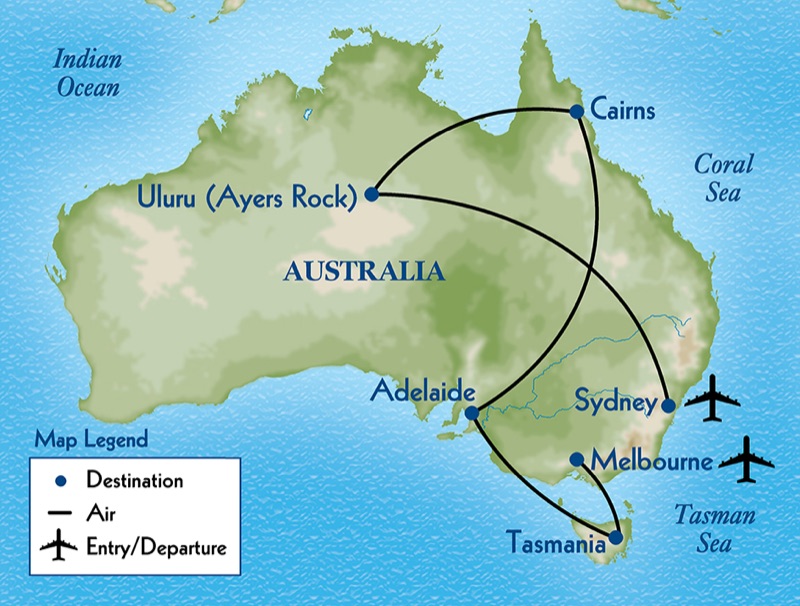
Budget airlines Jetstar and Bonza connect Australian cities cheaply. Key flights: Sydney→Cairns (~$80-150), Cairns→Darwin (~$100-180), Darwin→Adelaide (~$150-250), Adelaide→Melbourne (~$60-120), Melbourne→Hobart (~$60-100), Hobart→Sydney (~$80-130). Book in advance for best prices. For NZ, Air New Zealand Sydney→Wellington and Wellington→Auckland.
🗺️ Getting Around
Rent a car for Great Ocean Road, Yamba/Byron Bay, and Tasmania. Public transport is excellent in Sydney, Melbourne, and Auckland. In Uluru and Kakadu, organised tours or a hire car are essential. Buses and trains connect most towns within states.
💰 Budget Tips
For $2,000-5,000 total: use Airbnb or hostels ($40-80/night), cook meals occasionally, prioritise free attractions (national parks, beaches, markets). Australia's national parks have modest entry fees. The bulk of costs will be domestic flights — book early. Camping is an option in Tasmania and Kakadu.
📅 May-June in Australia
Autumn in SE Australia (Sydney, Melbourne, Tasmania) — perfect weather, 15-22°C. Tropical north (Cairns, Darwin) is in dry season — ideal! Uluru is comfortable (20-25°C days, cold nights). Tasmania can be chilly (10-15°C) — bring layers.
Arrival in Sydney — Harbour Icons & First Steps
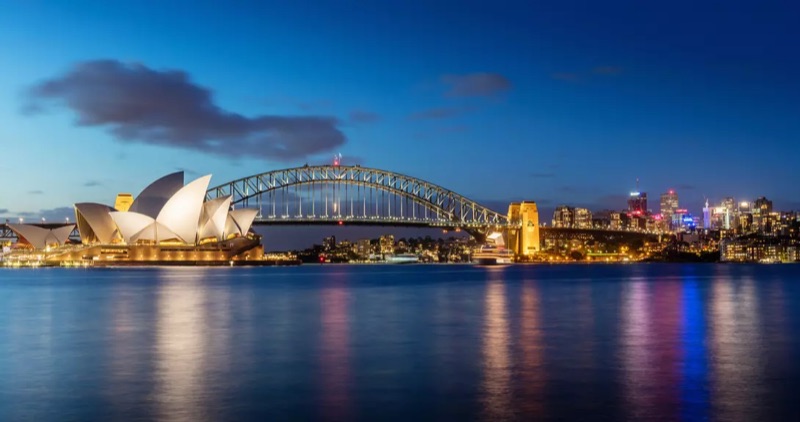
Touch down in Sydney and let the harbour cast its spell. Drop bags, breathe the salt air, and take a slow evening walk through The Rocks to the Opera House forecourt. Your epic journey has begun.
Arrive & Settle In
Sydney Kingsford Smith Airport (SYD) is 8km south of the CBD. Train to Central Station takes 13 minutes ($19.28 Opal). Check into your accommodation near Circular Quay or The Rocks for the most walkable access to the harbour icons.
The Rocks & Harbour Foreshore Walk
Stroll Sydney's oldest neighbourhood — cobblestone laneways, colonial sandstone buildings, and artisan galleries. Walk the foreshore towards Circular Quay and let the Opera House gradually reveal itself around the bend.
Opera House Forecourt at Sunset
Walk to the Opera House forecourt for golden-hour views of the Harbour Bridge. This is one of the world's great urban experiences — the sails catch the setting sun perfectly.
Bondi to Coogee Coastal Walk
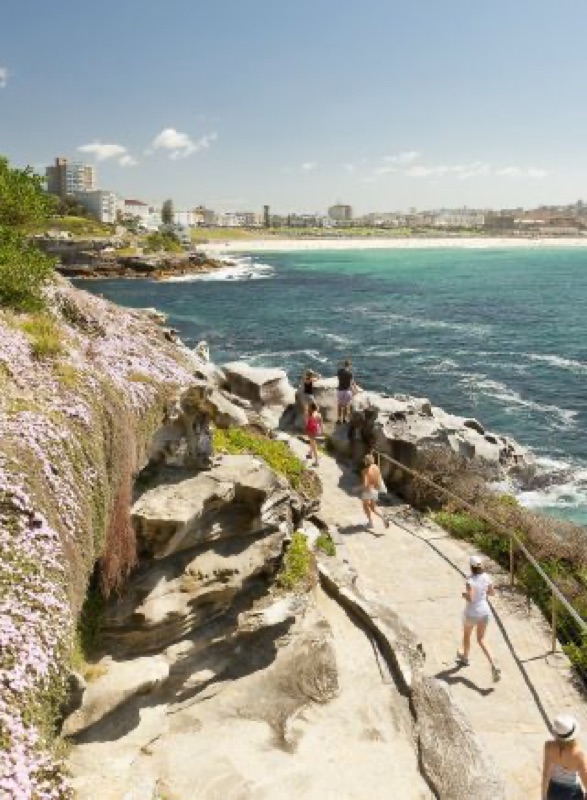
One of Australia's great urban walks — 6km of dramatic sandstone cliffs, hidden beaches, and ocean pools linking Bondi to Coogee. Stop for a swim at Bronte or Clovelly. Autumn light over the Pacific is spectacular.
Bondi Beach Morning
Take the bus from the city to Bondi. Walk the entire beach, watch the Bondi Icebergs ocean pool, and have a coffee overlooking the waves. May is quieter than summer but the beach is still beautiful.
Bondi to Coogee Coastal Walk
Walk south from Bondi along the spectacular coastal path. Tamarama ('Glamarama') is a tiny, beautiful cove. Bronte has a lovely ocean pool and grassy park. Clovelly is great for snorkelling. End at Coogee Beach for a well-earned swim.
Return to City via Coogee
Bus back from Coogee to the city. Clean up and explore Darling Harbour or Chinatown for the evening.
Manly Ferry & Northern Beaches
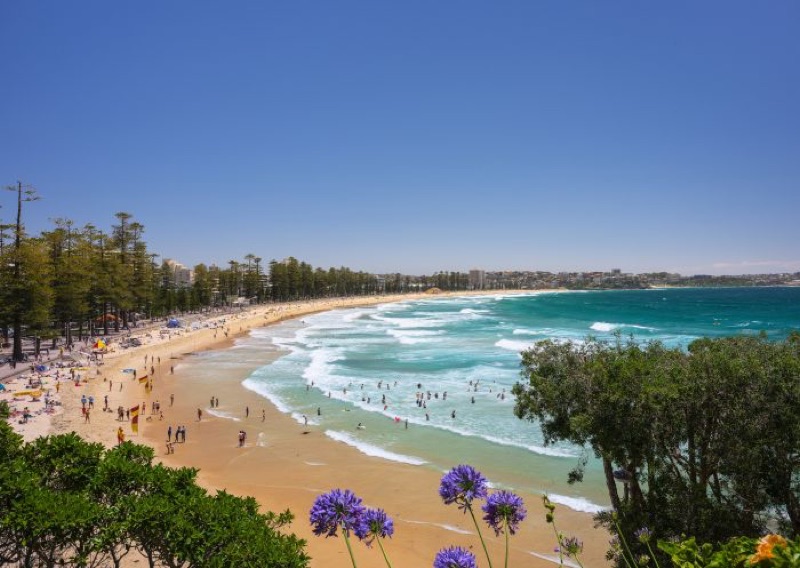
The Manly Ferry from Circular Quay is one of the world's great commuter rides — 30 minutes across the sparkling harbour. Manly Beach is a beautiful stretch of golden sand backed by Norfolk pines. Explore Shelly Beach and the Manly Scenic Walkway.
Manly Ferry from Circular Quay
Board the ferry at Wharf 3, Circular Quay. Sit on the right side (port) for Opera House and Bridge views departing. 30 magical minutes across the harbour.
Manly Beach & Shelly Beach
Manly Beach faces the ocean with consistent surf. Walk south to the sheltered Shelly Beach cove — it's a marine reserve with excellent snorkelling. The walk between them is beautiful.
Manly Scenic Walkway
Walk the Manly Scenic Walkway along the harbour — a beautiful 10km track through bushland above the harbour, past historic gun emplacements and secluded beaches. Do a section of it (Manly Cove to Spit Bridge).
Ferry Return & Darling Harbour
Return ferry to the city. Explore Darling Harbour in the evening — the foreshore has free public art, restaurants, and harbour views.
Blue Mountains Day Trip
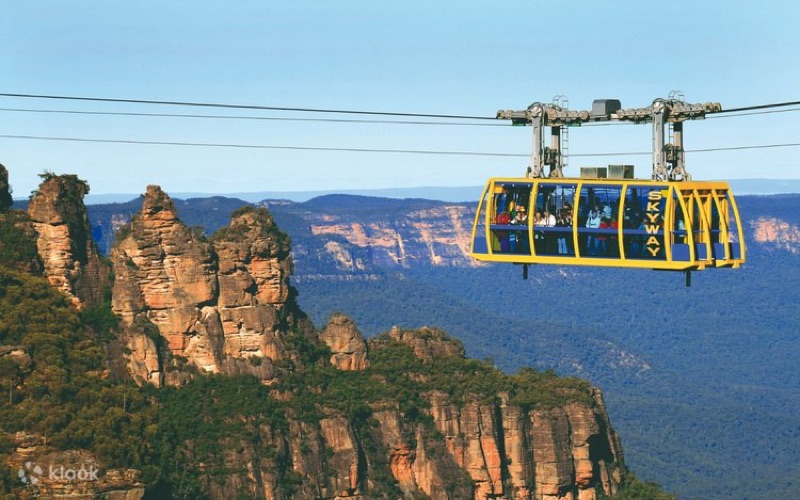
The Blue Mountains are a UNESCO World Heritage wilderness 90 minutes from Sydney. Towering cliffs, ancient rainforest, and the iconic Three Sisters rock formation. The eucalyptus haze that gives the mountains their name turns them blue in autumn light.
Train to Katoomba
Take the Blue Mountains line from Central Station to Katoomba — 2 hours through increasingly dramatic mountain scenery. The train is scenic and cheap (covered by Opal).
Echo Point & Three Sisters
The Three Sisters sandstone formation against the vast Jamison Valley — one of Australia's most photographed views. Walk down the Giant Stairway (800+ steps) for a closer perspective of the formation and valley floor.
Scenic World
Ride the Scenic Railway — the world's steepest funicular at 52° — down into the ancient Jurassic rainforest. Walk the boardwalk through towering tree ferns. Take the Cableway back up for valley panoramas.
Leura Village & Blackheath Lookouts
Stroll Leura's charming main street and pick up local produce. If time allows, drive/bus to Blackheath for the Govetts Leap Lookout — arguably the most dramatic viewpoint in the Blue Mountains.
Return Train to Sydney
Return train from Katoomba to Central. Arrive back in Sydney for a relaxed evening.
Sydney Inner West — Culture, Markets & Farewell
Sydney's inner west is where the real city lives — Newtown's eclectic King Street lined with vegan cafes and vintage shops, Glebe markets on Saturday morning, and the Australian Museum for some cultural grounding before heading north.
Glebe Markets (Saturday)
If it's Saturday, Glebe Markets at Glebe Public School are a Sydney institution. Local producers, vintage clothing, crafts, street food — very vegetarian-friendly with loads of plant-based stalls.
Newtown's King Street
Australia's most eclectic street — bookshops, vintage stores, Aboriginal art galleries, and a remarkable density of vegetarian restaurants. Walk end to end and stop wherever calls you.
Australian Museum
Australia's first and oldest museum — natural history, Aboriginal culture, and Pacific Islander collections. The First Australians gallery is particularly moving and important context for the journey ahead.
Pack & Prepare for Yamba
Pack for the road trip north. Tomorrow you drive to Yamba to visit friends and family — about 5.5 hours up the NSW Pacific Highway. Get an early night.
Drive North to Yamba — Family, Beaches & Village Charm
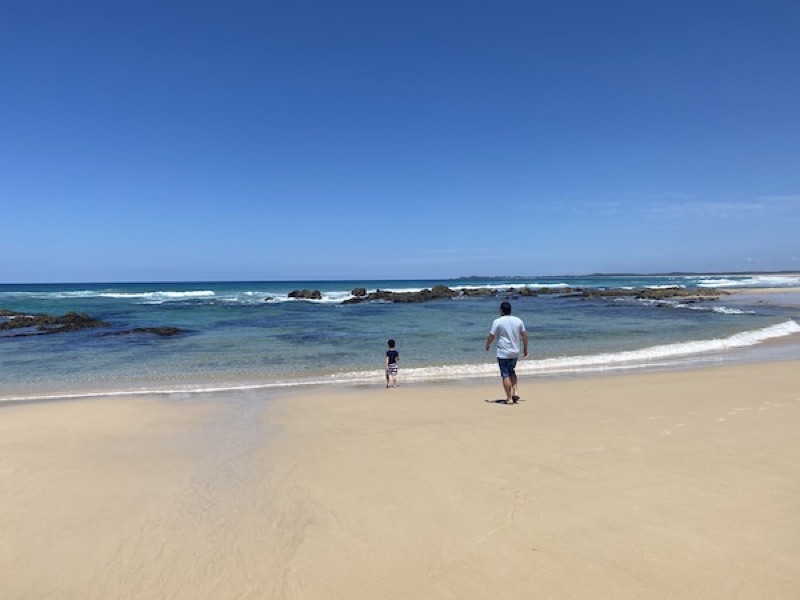
Drive the Pacific Highway north to Yamba — a gorgeous little fishing village at the mouth of the Clarence River. Often voted Australia's best small town. Your friends and family are here, and the town itself is a gem with excellent surfing beaches and one of NSW's finest coastal experiences.
Drive Sydney → Yamba
Head north on the Pacific Motorway (M1). It's about 5.5 hours to Yamba. Break the drive at Coffs Harbour (~3.5hrs from Sydney) for coffee and a leg stretch at the marina or the famous Big Banana.
Arrive Yamba & Reconnect with Friends/Family
Yamba is a laid-back paradise at the Clarence River mouth. Drop bags, then spend the afternoon with your friends and family here — they know all the local secrets. The main beach is right in town.
Sunset at Yamba Lighthouse Reserve
Walk to the Yamba Lighthouse for sunset — the views over the Clarence River mouth and Pacific Ocean are magnificent. One of NSW's best sunset spots.
Angourie Blue Pools & Coastal Magic
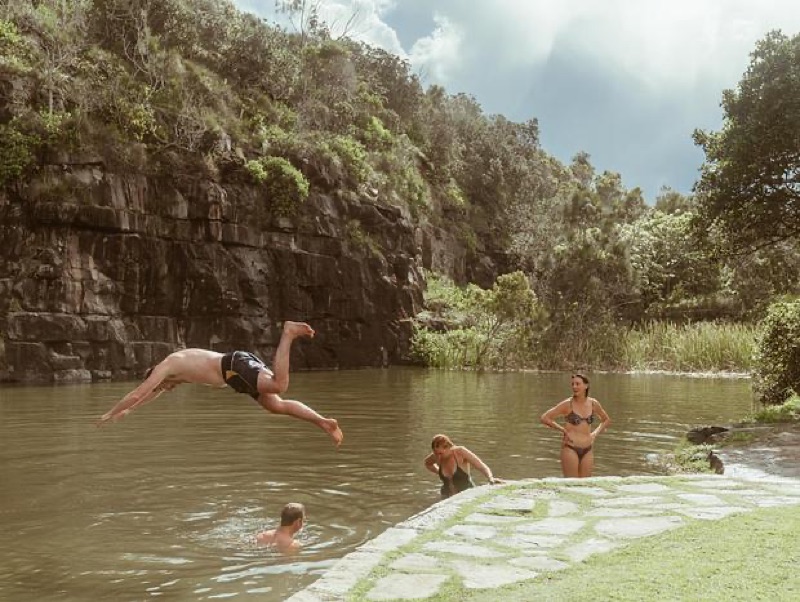
Spend a full day exploring Yamba and its surrounds with your friends. Angourie — 3km south of Yamba — is famous for its stunning Blue Pool, a natural rock pool with crystal-clear water, and one of Australia's best beginner surf breaks.
Angourie Blue Pool & Rainforest Walk
The Angourie Blue Pool is a former quarry now filled with clear fresh water, surrounded by ancient rainforest. A short walk leads to the Green Pool nearby. The whole area feels otherworldly.
Clarence River Dolphin Watch Cruise
Take a short cruise on the Clarence River — one of Australia's best spots to see wild bottlenose dolphins. The river is vast and beautiful, lined with wetlands and mangroves.
Farewell Evening with Yamba Friends
Last evening in Yamba — enjoy time with your friends and family here. Tomorrow you drive south to Byron Bay.
Byron Bay — Australia's Most Easterly Point
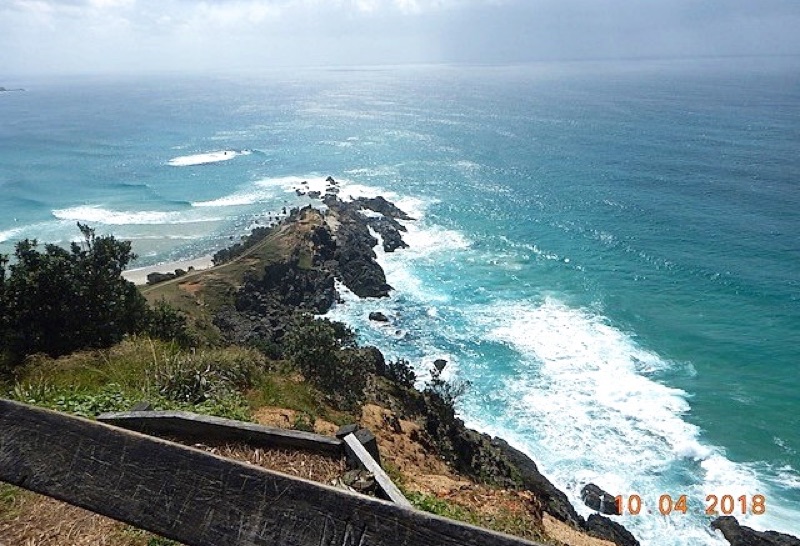
Drive south from Yamba to Byron Bay — about 1 hour. Byron is a lively, spiritual coastal town with excellent vegetarian food, beautiful beaches, and the iconic Cape Byron Lighthouse at Australia's most easterly point. Connect with your Byron friends and family.
Drive Yamba → Byron Bay
Easy 1-hour drive south on the Pacific Highway. Arrive in Byron Bay and check in, then head straight to the beach.
Cape Byron Lighthouse Walk
Walk the Cape Byron Coastal Walk from the car park to Australia's most easterly mainland point. The 3.7km path skirts dramatic headlands with spectacular ocean views. The lighthouse itself is 1901 heritage-listed. Spot dolphins in the bay below.
Reunite with Byron Bay Friends/Family
Spend the evening with your friends and family in Byron. The town comes alive at sunset on Main Beach, and the pub scene is friendly and relaxed.
Byron Hinterland & Markets
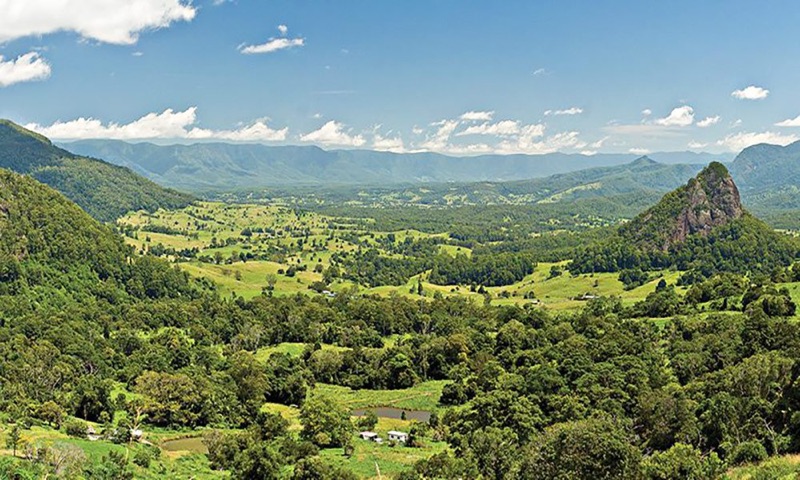
Explore Byron Bay's magic hinterland — the rolling green hills behind town are dotted with organic farms, artisan producers, and quirky villages. Byron Bay's farmers market and Bangalow village are highlights.
Byron Bay Farmers Market (Thursday)
If it's Thursday, the Byron Bay Farmers Market at the Cavanbah Centre is magnificent — local organic produce, vegan street food, artisan goods. One of Australia's best farmers markets.
Bangalow Village
Drive 15 minutes into the hinterland to Bangalow — a gorgeous heritage village with excellent cafes, a legendary pub, independent bookshops, and antique stores. Saturday has its own lovely markets.
Byron Bay Surf Lesson or Kayak
Byron Bay is a world-renowned surf destination. Take a beginner surf lesson on the gentle waves of Belongil Beach, or join a sea kayaking tour where dolphins often follow the boats.
Sunset at The Pass & Final Byron Evening
Watch sunset from The Pass — Byron's best surf break. The long headland walk and clear water make it the most beautiful spot in Byron. Say farewell to your friends here.
Travel Day — Australia to Wellington, New Zealand
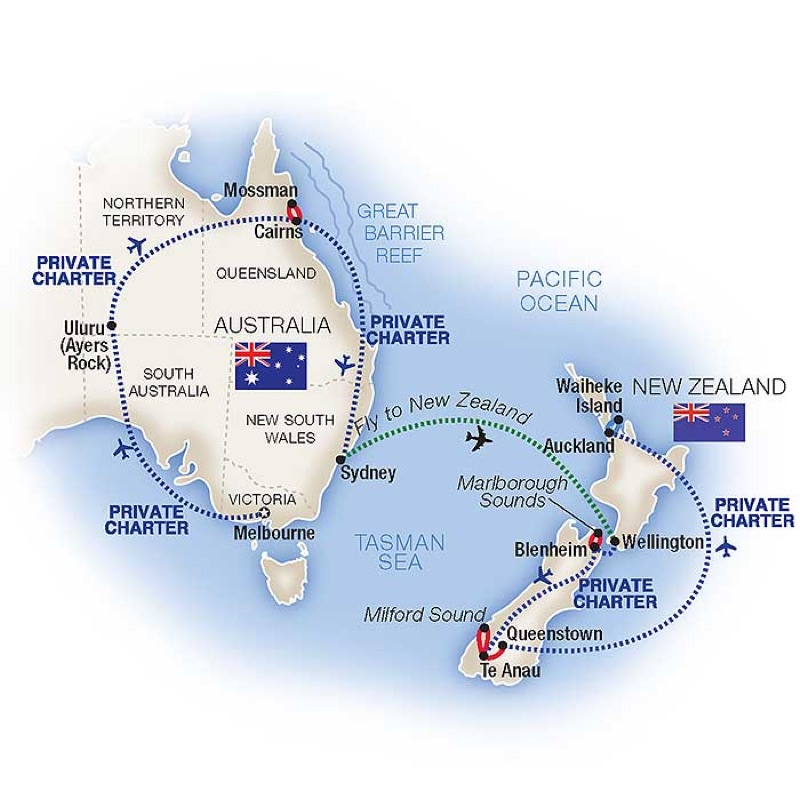
Return car in Byron/Gold Coast, fly to Sydney or directly to Wellington. The conference starts tomorrow — arrive rested and ready. Wellington is New Zealand's compact, vibrant capital city.
Drive to Gold Coast Airport (Coolangatta)
Gold Coast Airport (OOL) is 35 minutes north of Byron Bay and has good direct connections to Wellington. Alternatively, fly via Sydney — but direct is easier.
Arrive Wellington & Explore Te Aro
Wellington is famously windy but endlessly charming — New Zealand's cultural capital. Check into your hotel and spend the afternoon exploring the Te Aro neighbourhood, Wellington's arts and culture heart.
Wellington Conference — Day 1

Conference Day 1. Between sessions, Wellington's compact CBD has world-class coffee and vegetarian food on every corner. The waterfront is minutes from the conference precinct.
Conference Day 1
Attend your conference. Wellington Convention Centre (Tākina) is one of New Zealand's premier conference facilities, opened in 2023.
Wellington Waterfront Walk
After the conference day, walk Wellington's gorgeous harbourfront. The Cable Car up to the Botanical Garden gives sweeping harbour views at sunset.
Wellington Conference — Day 2 & Evening Exploration

Final conference day. After sessions wrap, explore Wellington's film district (Wētā Workshop, WETA Cave) or climb Mount Victoria for a 360° panorama of the city and harbour.
Conference Day 2
Final day of the Wellington conference. Attend your sessions and make the most of the networking opportunities.
WETA Workshop Cave (Optional)
Wellington is the home of Peter Jackson's film empire. The WETA Cave and Workshop in Miramar has props and costumes from Lord of the Rings, The Hobbit, and more. A genuinely fascinating behind-the-scenes experience.
Mount Victoria Lookout
Walk or take a short taxi to Mount Victoria summit for a 360° panorama of Wellington — harbour, bays, and cityscape. Free, and stunning at any time of day.
Final Wellington Evening
Last night in Wellington. The city has a wonderful bar and restaurant scene — enjoy a slow, relaxed evening before the train/bus/flight to Auckland tomorrow.
Travel Wellington to Auckland — Arrival in the City of Sails
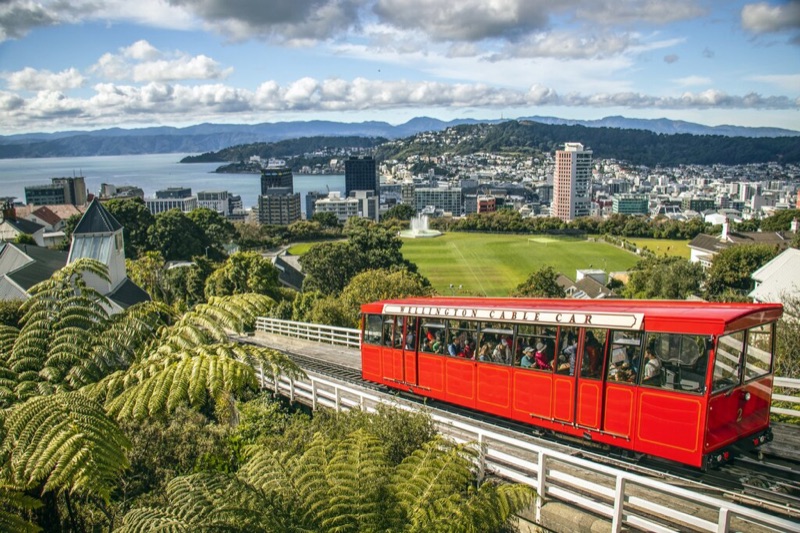
Head north to Auckland — New Zealand's largest city and a vibrant multicultural metropolis. The journey by plane is just 1 hour. Settle in and explore the waterfront.
Wellington → Auckland
Fly or take the Interislander/Overlander (scenic but slow). Recommend flying for time efficiency — Air NZ or Jetstar, 1-hour flight.
Auckland Waterfront & Viaduct Harbour
Auckland's waterfront is stunning — the Viaduct Harbour with superyachts, the Ferry Building, and views across the Waitematā Harbour. Take a ferry to Waiheke Island (35 min) for vineyards and beaches, or explore Ponsonby.
Auckland Research for Tomorrow's Visit
Tonight, review your research on Auckland's cemeteries to prepare for your ancestral visit tomorrow. The Auckland Council cemetery database is searchable online — confirm the location of your great-grandfather's grave before visiting.
Auckland — Ancestral Pilgrimage to Great-Grandfather's Grave
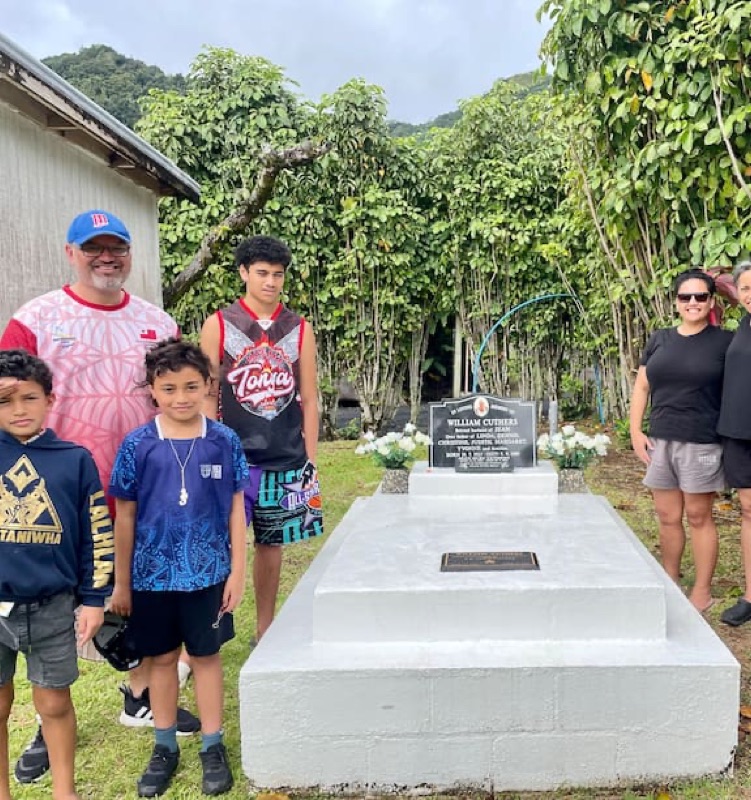
Today is a deeply personal and meaningful day. You'll visit your great-grandfather's grave in Auckland — a moment of connection across generations, from wherever in the world your family's story began, to this corner of the Pacific. Take your time. Bring flowers. Be present.
Prepare & Travel to the Cemetery
Pick up fresh flowers from a local market or florist (Grey Lynn Farmers Market on Saturday, or any florist). Then travel to the cemetery where your great-grandfather rests. If you're unsure of the exact location, contact Auckland Council cemeteries in advance.
At the Grave — A Moment of Remembrance
Spend as much time as you need here. This is a private, sacred moment. Leave your flowers. Share any family stories you know. Take photos if you wish — this is part of the family history. Reflect on the journey your ancestor made to arrive in this place.
Auckland Museum & Te Mahurehure
After the grave visit, ground yourself in Auckland's remarkable history at the Auckland War Memorial Museum (Te Papa Whakahiku). The Māori and Pacific galleries are world-class — an important context for understanding New Zealand and the Pacific.
Auckland Harbour at Dusk
Return to the city and walk the waterfront at dusk. The Harbour Bridge lights up, ferries cross the harbour, and the Waitematā glows. A peaceful close to a meaningful day.
Auckland — Sky Tower, Devonport & Departure
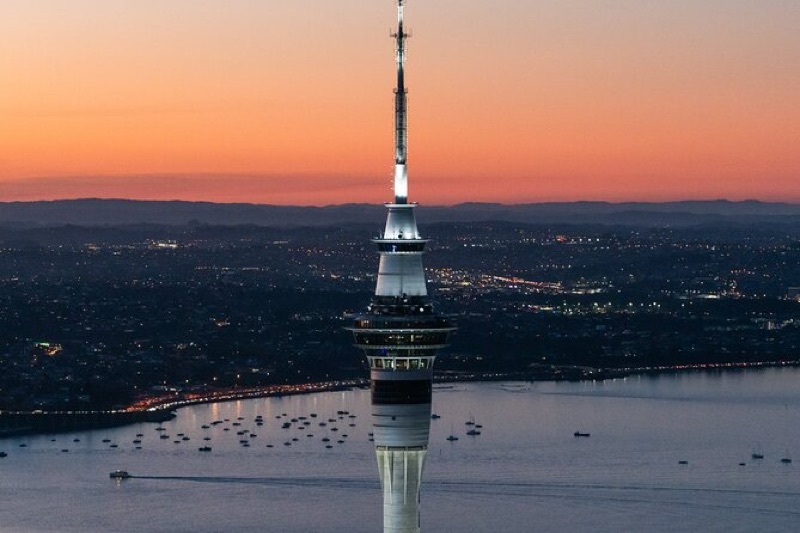
A final day in Auckland to see the highlights before flying back to Australia. Climb the Sky Tower for 360° views over the city, take a ferry to charming Devonport, and explore the café-rich streets before heading to the airport.
Sky Tower & Auckland CBD
Auckland's Sky Tower is 328 metres tall and offers incredible panoramas over the city, Waitemata Harbour, and on a clear day, all the way to Rangitoto Island. The view helps you appreciate Auckland's unique volcanic geography.
Ferry to Devonport
A 12-minute ferry from the Ferry Building takes you to Devonport — a charming Victorian seaside village on the North Shore with bookshops, cafes, and volcanic hills to climb for city views.
Return to Auckland & Fly to Cairns
Head to Auckland Airport (AKL) for your trans-Tasman flight to Cairns, Queensland. The next chapter of the journey — tropical Australia — begins!
Arrive Cairns — Tropical Queensland
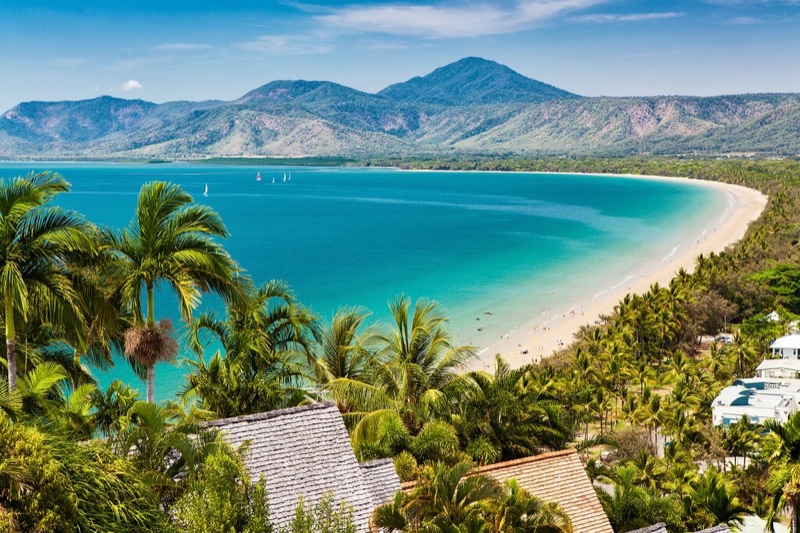
Land in Cairns — the gateway to the Great Barrier Reef and Daintree Rainforest. May is the very best time to visit: dry season, lower humidity, and the ocean is calm and crystal-clear. Explore the Cairns Esplanade and prepare for reef adventures.
Arrive Cairns & Esplanade
Cairns has a wonderful free Esplanade Lagoon — a huge saltwater swimming pool right on the waterfront, free to use, perfect for the heat. Walk the 3km Esplanade boardwalk and take in the tropical atmosphere.
Rusty's Markets (Saturday)
If you arrive on Saturday or Friday, Rusty's Markets is a tropical sensory explosion — exotic fruits, Thai street food, vegetables you've never seen, and excellent vegetarian snacks. Best market in Far North Queensland.
Great Barrier Reef — Snorkelling the World's Largest Living Structure
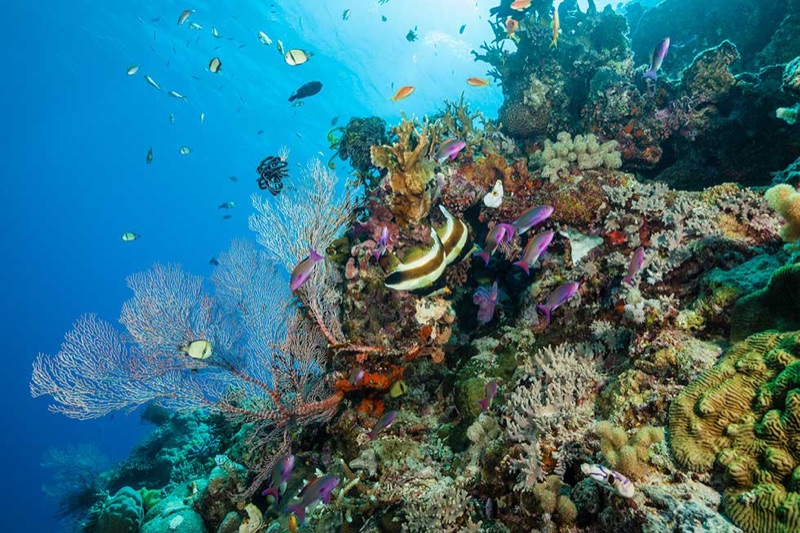
Today you snorkel the Great Barrier Reef — one of the Seven Natural Wonders of the World. Take a day boat to the outer reef platforms where visibility is best: 20-30 metres of crystal water, thousands of fish species, and coral formations older than civilisation.
Depart Cairns for the Reef
Board your reef cruise boat from Reef Fleet Terminal (Cairns). Most boats depart 8am and return by 5:30pm. The journey out takes 1.5-2 hours — watch flying fish and spot seabirds.
Snorkel the Outer Reef
Swim among coral bommies, sea turtles, reef sharks, and thousands of colourful fish. The outer reef has the best hard coral formations — ancient structures that have been growing for thousands of years.
Second Snorkel Session & Return
Most reef boats visit two or three reef sites during the day — each has its own character. The afternoon session is often magical with changing light through the water.
Kuranda Village — Rainforest Skyrail & Scenic Railway
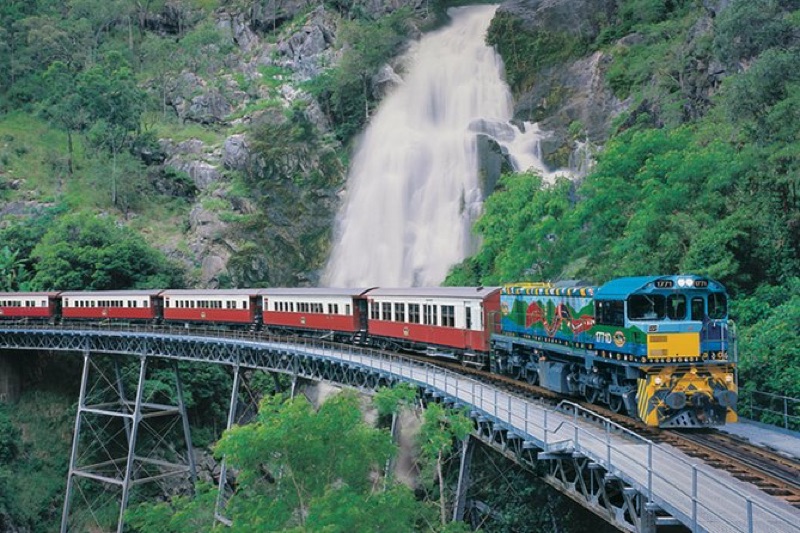
Take the world-famous Skyrail Rainforest Cableway through the canopy of the Wet Tropics rainforest, descend into Kuranda village, and return on the historic Kuranda Scenic Railway — a half-day journey through one of the world's most ancient ecosystems.
Skyrail Rainforest Cableway
Glide 7.5km in gondola cars just above the rainforest canopy — an extraordinary perspective on one of Earth's oldest living ecosystems. Mid-stations at Red Peak and Barron Falls let you walk rainforest boardwalks.
Kuranda Village
Kuranda is a charming rainforest village — markets, wildlife sanctuaries (koalas, cassowaries), Aboriginal cultural experiences, and artisan galleries. The Kuranda Original Markets have excellent handmade goods.
Kuranda Scenic Railway Return
The Kuranda Scenic Railway is one of Australia's great heritage train journeys — 37km of track built in the 1880s through rainforest gorges, tunnels, and waterfalls. The engineering feat is remarkable.
Daintree Rainforest — Earth's Oldest Tropical Rainforest
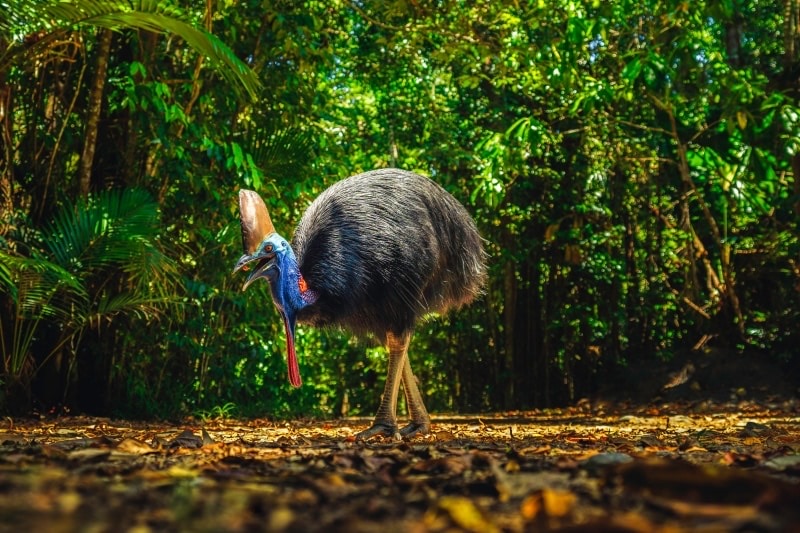
Drive north of Cairns to the Daintree Rainforest — 180 million years old and a UNESCO World Heritage site. Mossman Gorge has pristine river swimming. Cross the Daintree River by cable ferry into the most ancient forest on Earth.
Drive North: Cairns → Mossman Gorge
Drive the Captain Cook Highway north from Cairns — one of Australia's most scenic coastal drives, hugging the Coral Sea. Mossman Gorge is about 75km north (1.5hrs).
Mossman Gorge Swim
Mossman Gorge is a sacred site of the Eastern Kuku Yalanji people. The gorge has crystal-clear rainforest-filtered water — swimming in the rock pools is an unforgettable experience.
Daintree River Ferry Crossing
Cross the Daintree River by cable ferry — a short crossing that takes you across into one of Earth's most biodiverse ecosystems. The river itself has saltwater crocodiles — spot one from the bank!
Rainforest Walks — North of the Daintree
Walk the Marrja Boardwalk, Jindalba, or Dubuji boardwalks — each winds through ancient rainforest. Spot Boyd's forest dragons, southern cassowaries, and tree kangaroos.
Return to Cairns
Drive back south in the late afternoon, stopping at Port Douglas for a sunset beer or snack.
Cape Tribulation — Where Rainforest Meets Reef
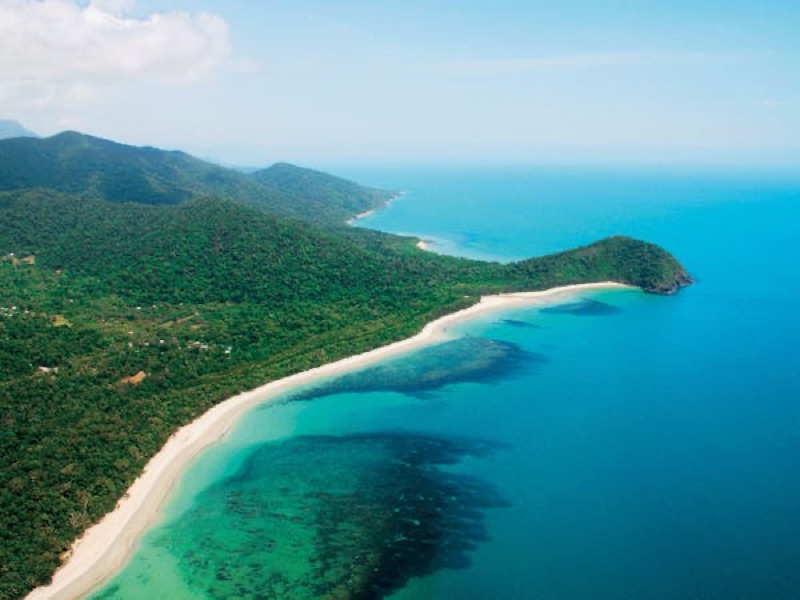
Cape Tribulation is the only place on Earth where two UNESCO World Heritage sites meet: the Great Barrier Reef and the Daintree Rainforest. Pristine beaches, ancient forest, and the raw beauty of tropical North Queensland at its most dramatic.
Drive to Cape Tribulation
Take the Daintree ferry and drive north on the unsealed road to Cape Tribulation — about 1 hour from the ferry. The road is manageable in a regular car in dry season. Dramatic coastal scenery all the way.
Myall Beach & Snorkelling
Cape Tribulation's beaches are World Heritage listed — no development, no crowds, just ancient forest meeting turquoise water. Snorkel the fringing reef (in Wet season, jellyfish are a hazard — May is safe as dry season).
Cape Tribulation Beach & Rainforest Walk
Spend the afternoon exploring on foot — the Kulki Boardwalk at Cape Tribulation lookout is a short rainforest walk to an ocean overlook. Spot cassowaries, butterflies, and giant tree frogs.
Night Walk & Return or Overnight
If budget allows, stay overnight at Cape Trib Beach House or Jungle Lodge — night walks in the Daintree reveal glowworms, tree frogs, and possums. Otherwise, drive back to Cairns (2.5 hours).
Fly Cairns to Darwin — Into the Top End
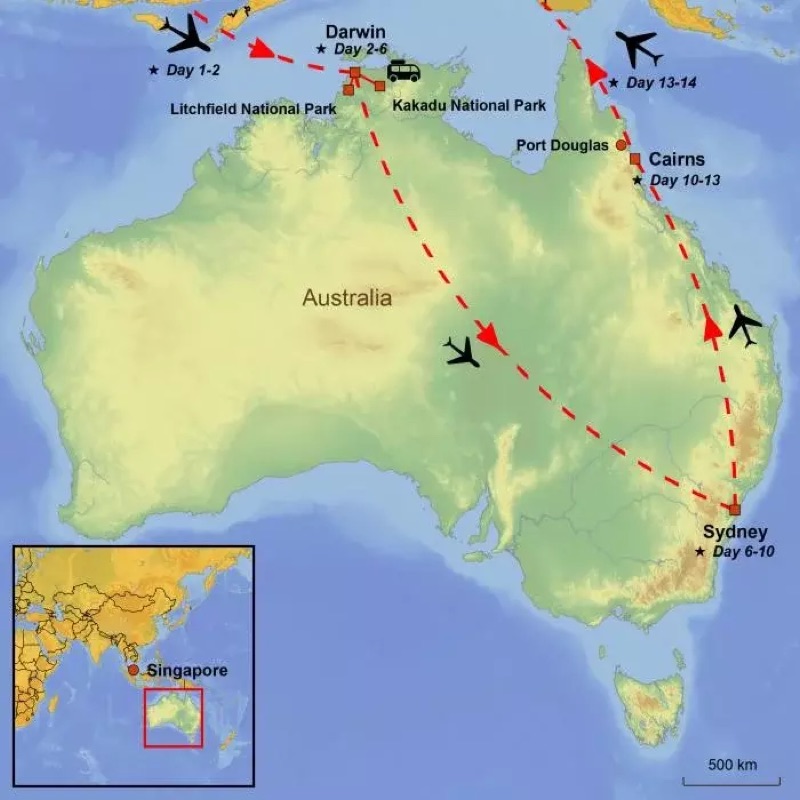
Fly west to Darwin, the Northern Territory's tropical capital. Darwin is unlike anywhere else in Australia — part frontier town, part multicultural hub, with deep Aboriginal history and extraordinary natural surrounds. Your friends are here.
Cairns → Darwin Flight
Morning flight from Cairns (CNS) to Darwin (DRW). About 3 hours. Darwin is in the ACST time zone (+9.5hrs UTC), 1.5 hours behind Brisbane.
Arrive Darwin & Reconnect with Friends
Check in, freshen up, and meet your Darwin friends and family. Darwin is a small city where everyone knows everyone — let your friends show you around.
Darwin Waterfront Precinct
The Darwin Waterfront is a great afternoon destination — wave pool, dining precinct, and views over the harbour. The area was redeveloped beautifully and is the social heart of modern Darwin.
Mindil Beach Sunset Markets
Darwin's most famous institution — the Mindil Beach Sunset Markets run Thursday and Sunday evenings during dry season (May-October). An extraordinary multicultural street food market with 70% Asian-influenced food. Excellent vegetarian options.
Darwin — WWII History, Culture & Incredible Sunsets
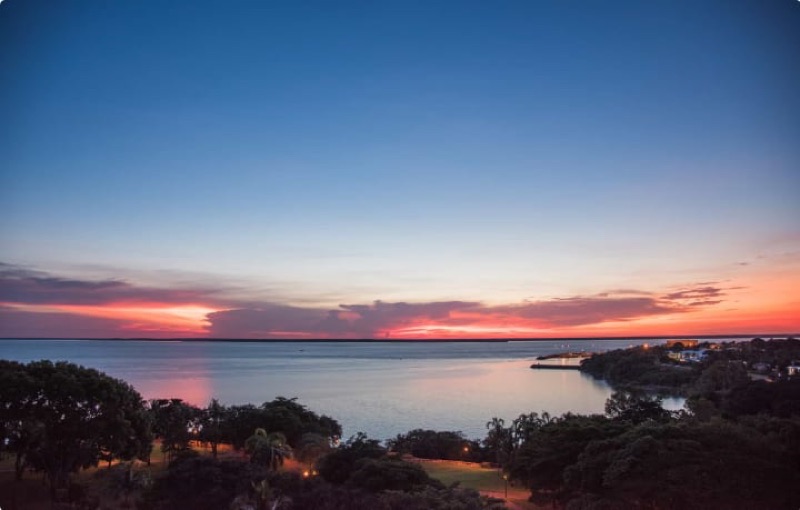
Spend a full day in Darwin with your friends — exploring its remarkable WWII history (Darwin was the only Australian city bombed in WWII), Aboriginal art galleries, and the magnificent Territory Wildlife Park.
Darwin Military Museum & WWII Heritage
On 19 February 1942, Darwin was bombed by the same Japanese force that attacked Pearl Harbour — but with more planes. The Darwin Military Museum has an extraordinary collection of WWII aircraft and artefacts.
Aboriginal Art Galleries & Museum
Darwin has excellent Aboriginal art galleries — the NT Museum and Art Gallery has a world-class Tiwi Islands and bark painting collection. Free entry.
Parap Village Markets (Saturday)
The Parap Village Markets on Saturday morning are Darwin's most loved market — Asian food, tropical fruit, local produce, and a genuinely multicultural crowd. Perfect for vegetarians.
Darwin Sunset from the Esplanade
Darwin has some of the most spectacular sunsets in Australia — the flat horizon over the Timor Sea creates extraordinary colour shows. Watch from the Esplanade or Cullen Bay Marina.
Litchfield National Park — Waterfalls & Termite Cathedrals
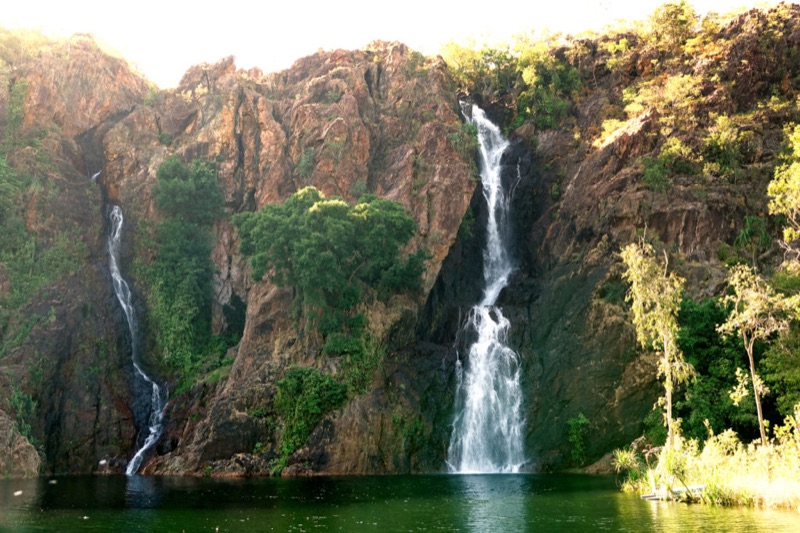
Drive 90 minutes south of Darwin to Litchfield National Park — perhaps the most accessible and spectacular national park in the Northern Territory. Magnetic termite mounds the size of tombstones, thundering waterfalls, and crystal-clear swimming holes surrounded by ancient sandstone.
Drive to Litchfield & Magnetic Termite Mounds
Drive south on the Stuart Highway to Batchelor, then enter Litchfield. The first stop: the famous Magnetic Termite Mounds — hundreds of flat tombstone-shaped mounds all perfectly aligned north-south by the termites to regulate temperature.
Florence Falls Swim
Walk down the 135 steps to Florence Falls — a stunning double waterfall plunging into a crystal-clear plunge pool. Swimming here is safe and magnificent.
Wangi Falls
Wangi Falls is Litchfield's most popular swimming hole — twin waterfalls dropping into a large, gorgeous pool. Surrounded by ancient monsoon forest. Check signs for crocodile status (generally croc-free in dry season).
Tolmer Falls Lookout & Return to Darwin
Stop at Tolmer Falls lookout (can't swim here — it's a bat colony habitat) before the drive back to Darwin. The falls into the gorge are beautiful from the viewing platform.
Into Kakadu — Ancient Rock Art & Sacred Floodplains
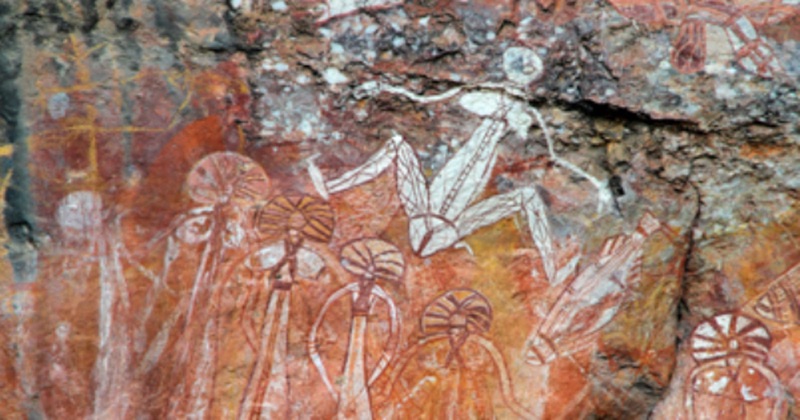
Drive east from Darwin into Kakadu National Park — one of the world's great wilderness areas and Australia's largest national park. Kakadu is simultaneously a UNESCO World Heritage cultural site (for its Aboriginal rock art) and natural site (for its biodiversity). This is ancient, sacred land.
Farewell Darwin, Drive to Kakadu
Say farewell to your Darwin friends and family. Drive the Arnhem Highway east from Darwin — about 3 hours to the heart of Kakadu.
Bowali Visitor Centre
The Bowali Visitor Centre in Jabiru is an excellent introduction to Kakadu — the geology, culture, and wildlife explained beautifully. Watch the orientation film before exploring.
Ubirr Rock Art Site
Ubirr is one of Kakadu's most sacred sites — thousands of years of Aboriginal rock art paintings on sandstone overhangs. X-ray style fish, Mimi spirits, and contact-period paintings of ships and Europeans are mind-blowing.
Kakadu — Nourlangie Rock Art & Yellow Water Cruise
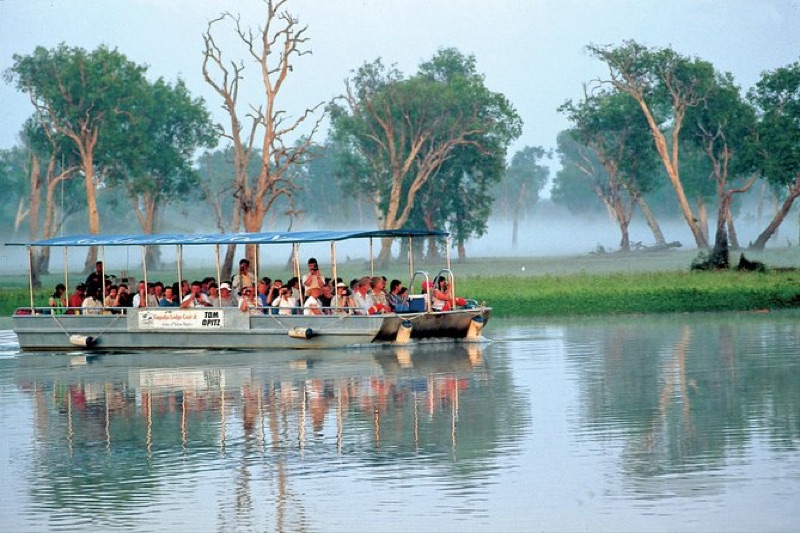
A full day in the heart of Kakadu. Nourlangie has some of the most accessible and spectacular rock art galleries in the world. Then join a Yellow Water Billabong cruise — an extraordinary wildlife experience on a floodplain wetland.
Nourlangie Rock Art Walk
Nourlangie (Burrunguy) is a massive sandstone outcrop with multiple rock art galleries. The Anbangbang Gallery has paintings of Namarrgon (the Lightning Man) and Namondjok in the main overhang — magnificent cultural art.
Yellow Water Billabong Cruise
The Yellow Water Billabong cruise is one of Australia's great wildlife experiences. Glide through vast paperback wetlands teeming with life: saltwater crocodiles, jabirus, sea eagles, agile wallabies, and kaleidoscopic bird life.
Jim Jim Falls Drive (Dry Season Access)
If the Jim Jim Falls road is open (dry season — May is usually accessible), the drive to Jim Jim Billabong is worthwhile. The falls themselves may be reduced in May but the gorge and plunge pool are magnificent.
Travel to the Red Centre — Uluru at Last
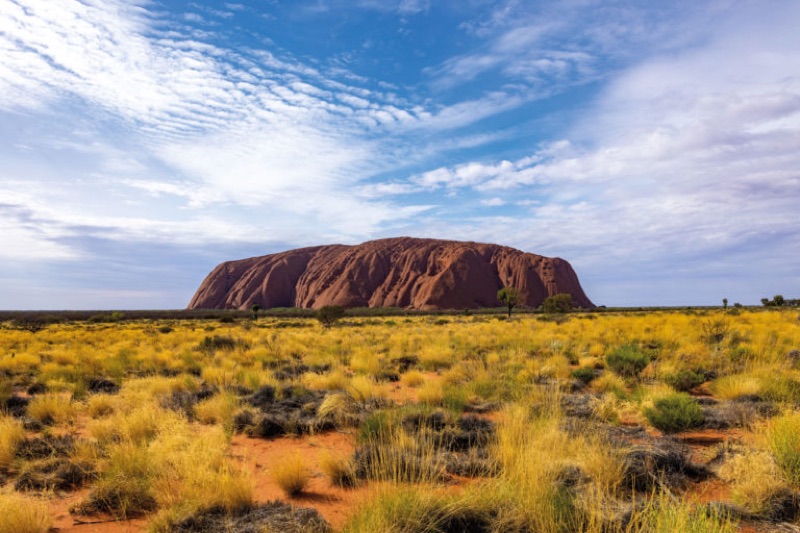
Fly from Darwin to Uluru via Alice Springs. As the plane descends into the Red Centre, the ancient red earth of the Australian interior stretches endlessly. When Uluru finally appears — rising from the flat desert — it is genuinely overwhelming. This is one of Earth's most sacred places.
Fly Darwin → Uluru (via Alice Springs)
Fly from Darwin Airport. Most routes connect via Alice Springs (ASP) then to Connellan Airport (AYQ) near Uluru. The approach over the desert is extraordinary.
Arrive Yulara & Uluru First Views
Check into Yulara (Ayers Rock Resort) — the only accommodation within the park. As you drive to the resort, Uluru rises from the plain. Stop at the first roadside lookout for an immediate, awe-inspiring view.
Uluru Base Walk Introduction
Do a short section of the Uluru Base Walk this afternoon — the full circuit is 10.6km but even a 2km section gives a profound sense of Uluru's scale and the sacred nature of the site.
Uluru Sunset — Sunset Viewing Area
The Sunset Viewing Area, 10km from Uluru, allows you to watch the rock cycle through extraordinary colours as the sun sets — from ochre orange to blood red to deep purple. It is one of the most moving natural spectacles on Earth.
Uluru Sunrise & Kata Tjuta — The Valley of the Winds
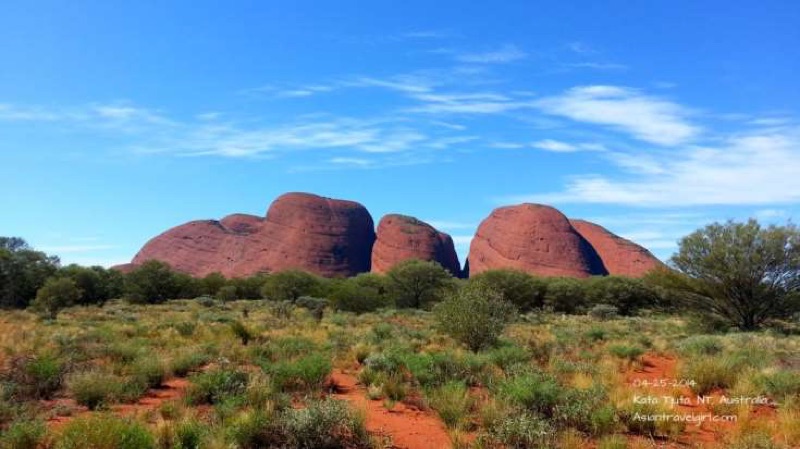
Watch the sun rise over Uluru — possibly the most profound natural sunrise experience on Earth. Then drive to Kata Tjuta (The Olgas) for the spectacular Valley of the Winds walk through ancient domed rock formations.
Uluru Sunrise
Rise before 5am and drive to the Sunrise Viewing Area (facing east, opposite side from sunset). As the first light touches Uluru, it ignites in golden fire — a moment of pure, wordless awe.
Uluru Base Walk — Sacred Sites
Complete more of the Uluru Base Walk in the morning. The western side has the Mutitjulu Waterhole (a sacred waterhole with rock art), the Cultural Centre, and the deeply moving Tjukurpa (Dreaming) interpretive panels.
Kata Tjuta — Valley of the Winds Walk
Drive 25km west to Kata Tjuta (The Olgas) — 36 domed rock formations that are, in some ways, even more spectacular than Uluru. The Valley of the Winds walk (7.4km) passes through narrow gorges between the domes — extraordinary.
Kings Canyon Rim Walk — Spectacular Red Centre Finale
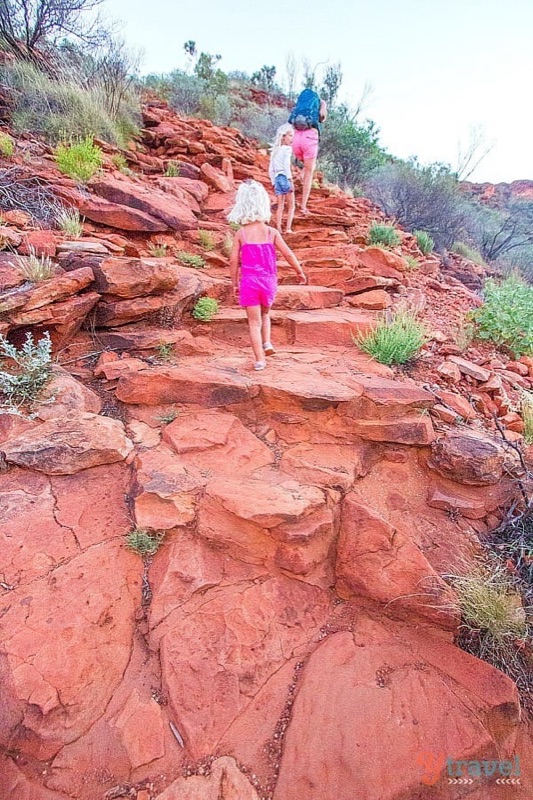
Drive north to Kings Canyon in Watarrka National Park — a 3.5-hour drive from Uluru. The Rim Walk along the canyon edge is one of Australia's great walks: sheer sandstone walls, the Garden of Eden, and Lost City rock formations.
Drive Uluru → Kings Canyon
Depart early from Yulara. The drive north on the Ernest Giles Road passes through magnificent red desert country. Arrive at Kings Canyon by mid-morning.
Kings Canyon Rim Walk
The Rim Walk (6km, 3-4 hours) begins with the steep Heartbreak Hill, then follows the canyon rim with jaw-dropping views. The Garden of Eden — a hidden waterhole in the canyon bowl — is a magical oasis. The Lost City of beehive-shaped sandstone domes is surreal.
Drive to Alice Springs & Fly to Adelaide
Drive 300km east to Alice Springs, return the hire car, and fly south to Adelaide. The Red Centre chapter concludes.
Arrive Adelaide — South Australia's Elegant City
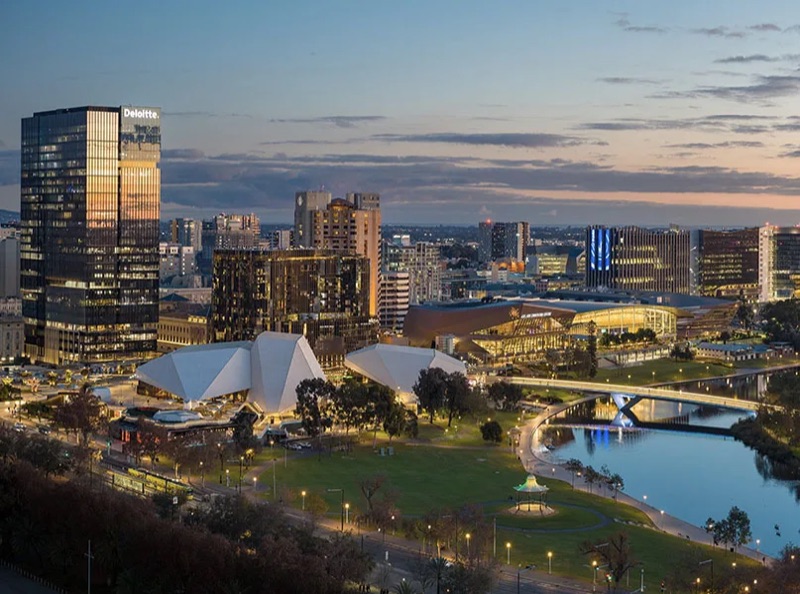
Land in Adelaide — one of Australia's most underrated cities. Beautiful parklands encircle the entire CBD, a world-class food and wine scene fills laneways and markets, and your friends and family are here. Adelaide is a city that rewards slow exploration.
Fly to Adelaide & Arrive
Arrive in Adelaide (ADL) — a beautifully planned grid city surrounded by parklands. The CBD is compact and supremely walkable.
Adelaide Central Market
Adelaide Central Market is one of the Southern Hemisphere's largest and finest fresh produce markets. Vegetarians will love it — dozens of stalls selling fresh produce, artisan foods, cheese, bread, and prepared meals.
Reconnect with Adelaide Friends/Family
Meet up with your Adelaide friends and family. Let them guide the evening — they know the best spots in their city.
Barossa Valley — Australia's Greatest Wine Region
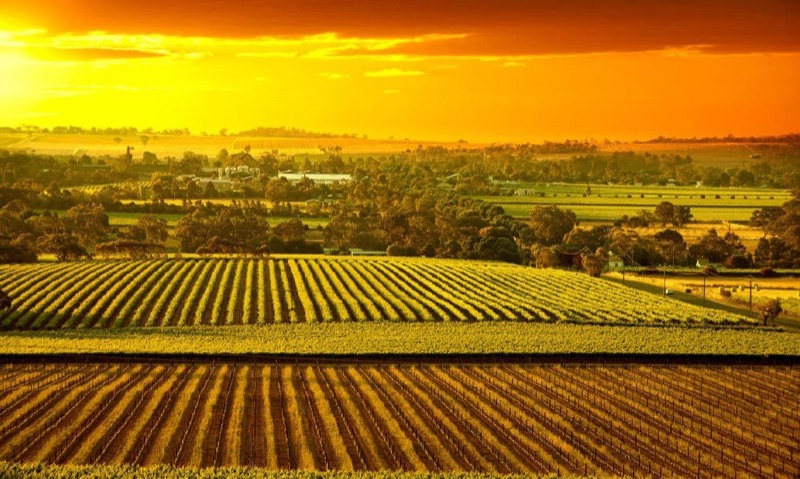
Drive 60km north of Adelaide to the Barossa Valley — Australia's most famous wine region, home to the world's oldest continuously producing Shiraz vines. Even as a non-drinker, the Barossa's rolling hills, sandstone villages, and extraordinary food scene are enchanting.
Drive Adelaide → Barossa
Head north on the highway to the Barossa Valley. The valley is gorgeous in June — autumn colours on the vines, clear air, and quiet roads.
Henschke & Seppeltsfield — Iconic Estates
Visit two of the Barossa's most significant properties. Henschke's Hill of Grace produces one of the world's great wines. Seppeltsfield's 1878 founding winery is a magnificent heritage property with a driveway lined with date palms.
Tanunda Village & Artisan Producers
Tanunda is the Barossa's main town — a lovely collection of Lutheran heritage buildings, galleries, and excellent produce stores. The Barossa Farmers Market (Saturday morning) is one of South Australia's best.
Return to Adelaide
Head back to Adelaide for the evening — or stay overnight in the Barossa for a more relaxed experience.
Adelaide — Hills, Heritage & Farewell to SA
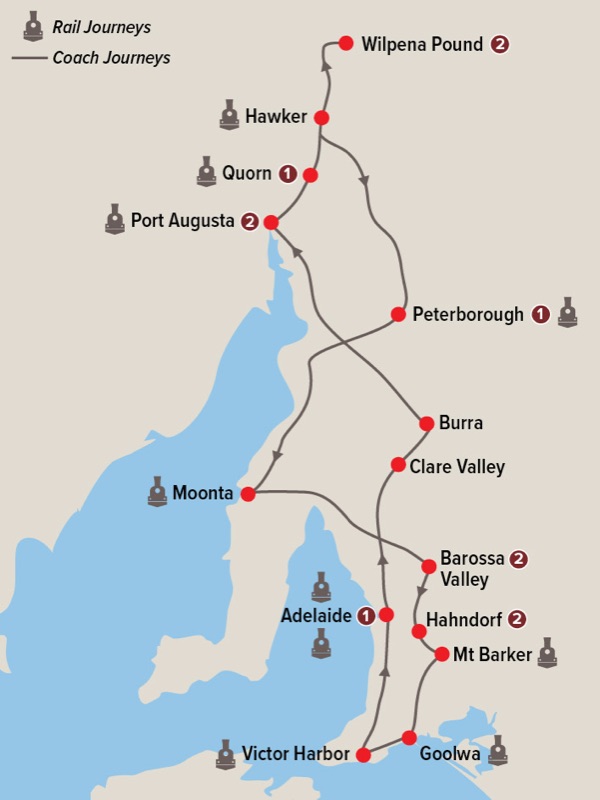
A final day in South Australia: visit the charming German-heritage village of Hahndorf in the Adelaide Hills, or head to Glenelg Beach for a beach walk. Farewell dinner with your Adelaide family before flying to Melbourne tomorrow.
Adelaide Hills — Hahndorf Village
Drive 30 minutes into the Adelaide Hills to Hahndorf — Australia's oldest surviving German settlement, founded in 1839. Charming village with excellent pastry shops, galleries, and heritage architecture.
Glenelg Beach & Moseley Square
Catch the tram from the city centre to Glenelg — Adelaide's beloved seaside suburb. Walk the jetty, swim in the shallow Gulf St Vincent water, and enjoy the village atmosphere of Moseley Square.
Farewell Adelaide Dinner with Friends
Last evening with your Adelaide friends and family. Adelaide's restaurant scene is excellent — let your friends choose their favourite spot.
Fly Adelaide to Melbourne — Coffee, Laneways & Culture
Fly south to Melbourne — Australia's cultural capital and the world's most liveable city (repeatedly). Melbourne's extraordinary cafe culture, street art, live music, and vegetarian dining scene are legendary. Your Melbourne adventure begins.
Adelaide → Melbourne Flight
Short flight from Adelaide (ADL) to Melbourne (MEL or Avalon AVV). Jetstar from Adelaide to Avalon is very cheap. Melbourne's CBD has a free tram zone.
Melbourne Laneways & Street Art
Melbourne's hidden laneways are the soul of the city — AC/DC Lane, Rutledge Lane, Caledonian Lane, and the famous Hosier Lane covered floor-to-ceiling in world-class street art.
Fitzroy & Brunswick Evening
Spend the evening in Fitzroy — Brunswick Street is packed with excellent vegetarian restaurants, bars, and live music venues. Brunswick (further north) has an even more eclectic scene.
Melbourne Culture — NGV, Southbank & St Kilda
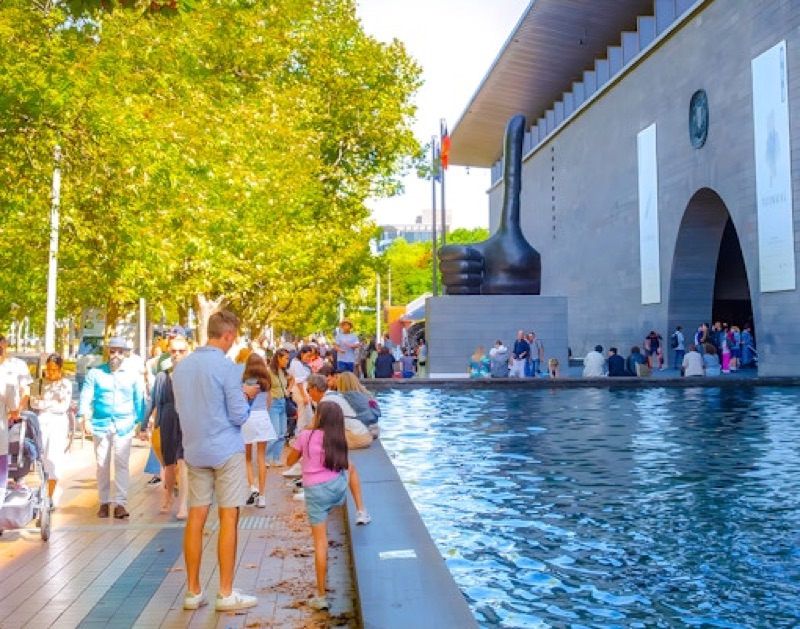
Melbourne's cultural institutions are world-class and mostly free. The National Gallery of Victoria is the Southern Hemisphere's largest art museum. St Kilda has a beautiful beach foreshore, amazing cafe scene, and the most photographed café street in Australia.
National Gallery of Victoria (NGV)
The NGV on St Kilda Road is the Southern Hemisphere's largest and most-visited art museum — free entry to the permanent collection. The European collection, Aboriginal art, and design galleries are extraordinary.
Southbank & Yarra River
Southbank is Melbourne's riverside cultural precinct. Walk the promenade, visit the Arts Centre Melbourne, and watch the Yarra River life from a café terrace.
St Kilda Foreshore & Fitzroy Street
Take the tram to St Kilda — Melbourne's beach suburb with a beautiful foreshore, Luna Park amusement park, and the legendary Acland Street cake shops.
Melbourne — Markets, Carlton Gardens & the MCG
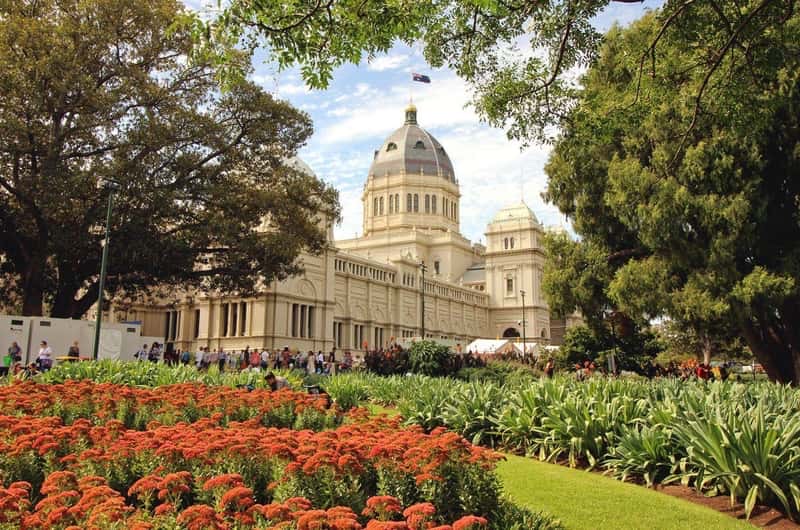
Explore Melbourne's magnificent Queen Victoria Market (the Southern Hemisphere's largest open-air market), walk through Royal Exhibition Building and Carlton Gardens, and wander the Italian precinct of Carlton.
Queen Victoria Market
Queen Vic Market is Melbourne's heart — 7 hectares of fresh produce, international food, clothing, and crafts. The international food hall is a vegetarian paradise.
Royal Exhibition Building & Carlton Gardens
Melbourne's Royal Exhibition Building (1880) is a UNESCO World Heritage site — one of the world's great Victorian-era buildings. Walk through the Carlton Gardens surrounding it.
Lygon Street — Melbourne's Little Italy
Walk south down Lygon Street — Melbourne's Italian precinct. Espresso bars, pasta restaurants, and gelato shops line this historic street.
Melbourne Surrounds — Healesville Sanctuary & Dandenongs
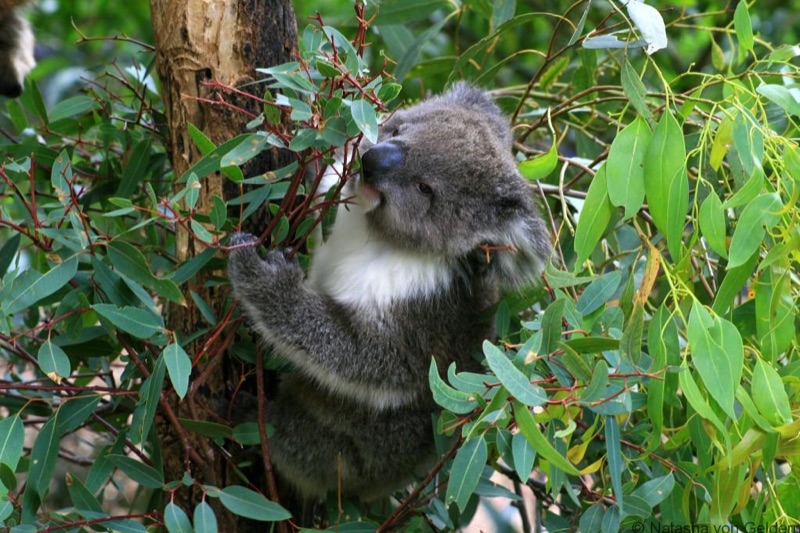
Take a day trip to the Yarra Valley east of Melbourne. Healesville Sanctuary is Australia's best native wildlife park — see koalas, wombats, platypuses, and Tasmanian devils up close. The Dandenong Ranges have beautiful fern gully walks.
Healesville Sanctuary
Healesville Sanctuary is Australia's finest wildlife sanctuary — you can observe native animals in natural bush settings, see platypuses in their habitat (rare!), and get close to koalas and wombats.
Dandenong Ranges & Fern Gully Walk
Drive into the Dandenong Ranges — cool-temperate rainforest with giant tree ferns, mountain ash trees, and lyrebirds. The 1000 Steps Kokoda Track Memorial Walk is a popular forest walk.
Great Ocean Road — Day 1: Lorne & Apollo Bay
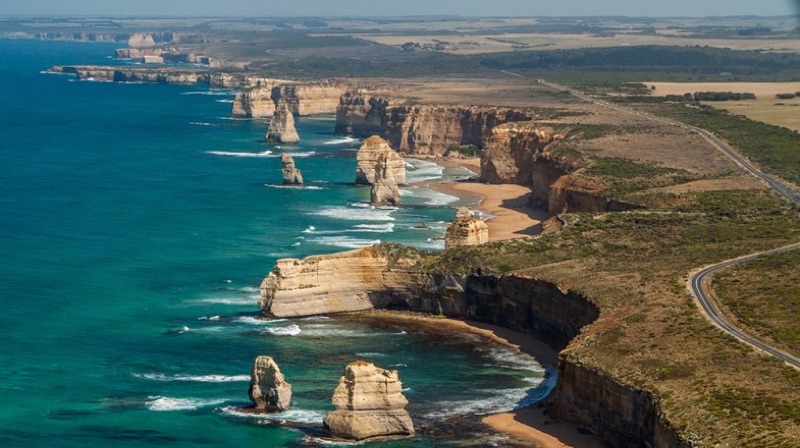
Begin the Great Ocean Road — one of the world's great coastal drives. Hire a car and head west from Melbourne along the cliffs, through the charming towns of Lorne and Apollo Bay. The road was carved by returned WWI soldiers as a memorial — it is engineering, nature, and history combined.
Drive Melbourne → Torquay → Lorne
Head west from Melbourne through Geelong to the official start of the Great Ocean Road at Torquay — Australia's surf capital. Stop at Bells Beach (world's most famous surf break) before continuing to Lorne.
Lorne Rainforest Walks
Lorne is a gorgeous seaside town backed by the Otway Ranges. Walk to Erskine Falls — a stunning 30m waterfall 10 minutes drive from town. The Erskine River valley has ancient rainforest walks.
Drive to Apollo Bay & Overnight
Continue west to Apollo Bay — a beautiful fishing village with a great atmosphere. Stay overnight here as a base for the Twelve Apostles tomorrow.
Great Ocean Road — Twelve Apostles & Return to Melbourne
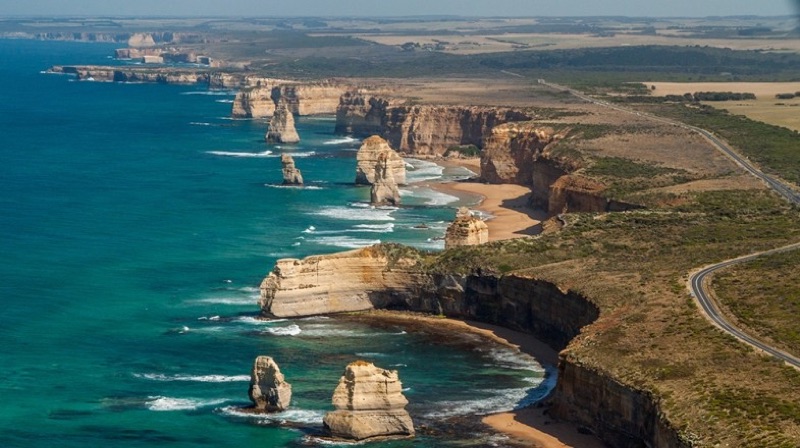
The climax of the Great Ocean Road: the Twelve Apostles — towering limestone stacks rising from the Southern Ocean. Plus Cape Otway Lighthouse (highest koala density in Victoria) and the dramatic Port Campbell cliffs. Return to Melbourne this afternoon.
Cape Otway Lighthouse & Koalas
Drive west from Apollo Bay through the Otway National Park. Cape Otway has the highest density of koalas in Victoria — look in the gum trees along Lighthouse Road. The 1848 Cape Otway Lighthouse is Australia's oldest surviving.
Twelve Apostles
The Twelve Apostles are a collection of offshore limestone stacks in Port Campbell National Park. There are currently 8 remaining (they erode into the sea over time). The view from the clifftop walkway is one of Australia's most iconic.
Loch Ard Gorge & Return Drive
Just 2km from the Apostles, Loch Ard Gorge is a dramatic narrow gorge named after the 1878 shipwreck of the iron clipper Loch Ard. Then begin the return drive to Melbourne via the inland highway.
Fly to Hobart — Tasmania's Vibrant Small Capital
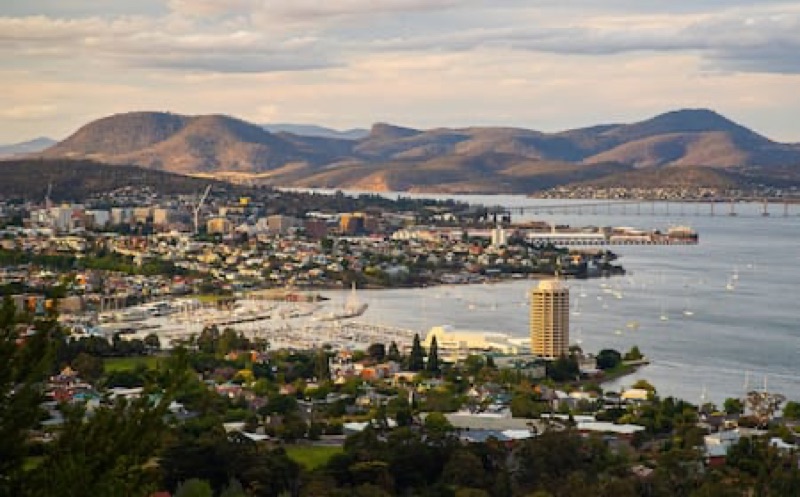
Fly south across the Bass Strait to Hobart — one of Australia's most beautiful and underrated cities, set on the Derwent River below Mount Wellington. Tasmania is wild, ancient, and extraordinary. Your friends are here.
Melbourne → Hobart Flight
Morning flight from Melbourne (MEL) to Hobart (HBA). 1 hour 20 minutes over the wild Bass Strait.
MONA (Museum of Old and New Art)
MONA is one of the world's most extraordinary and provocative private art museums. Built underground into a sandstone cliff on a Derwent River peninsula, it houses the eccentric, challenging, and magnificent collection of David Walsh. The ferry there is part of the experience.
Battery Point & Salamanca Place
Hobart's historic Battery Point is one of Australia's most intact colonial precincts — Georgian sandstone cottages, maritime heritage, and excellent restaurants. Salamanca Place's Georgian warehouses line the waterfront.
Hobart — Salamanca Markets & Mount Wellington
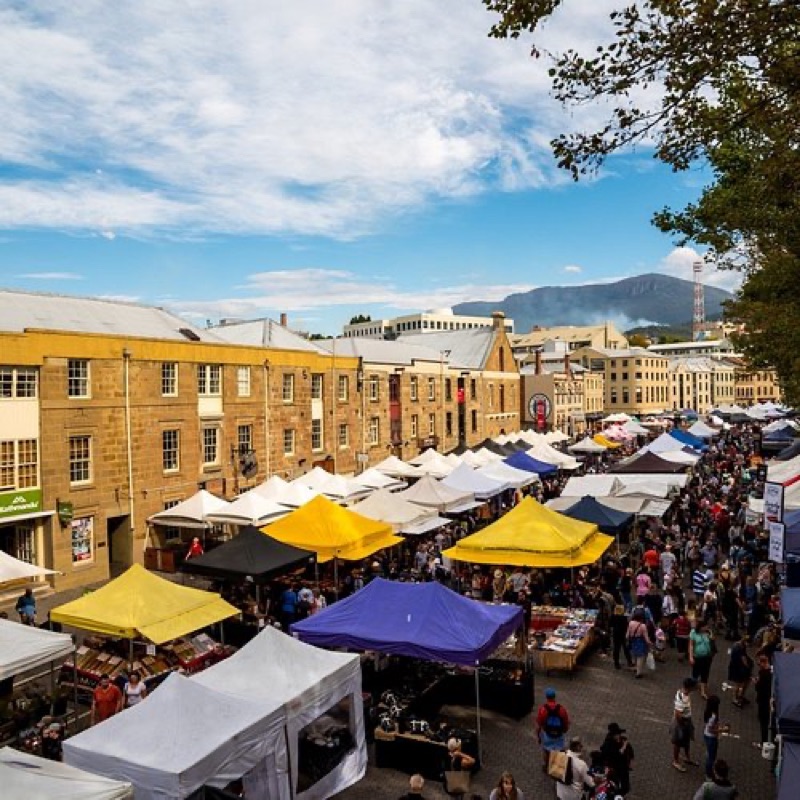
Hobart's Salamanca Market runs every Saturday — 300 stalls of Tasmanian food, art, and craft in the most beautiful market setting in Australia. Then climb or drive up Mount Wellington (kunanyi) for stunning views over Hobart and the Derwent.
Salamanca Markets (Saturday)
Salamanca Market is one of Australia's great weekend markets — 300 stallholders set up along the Georgian sandstone waterfront every Saturday. Exceptional Tasmanian food, art, crafts, and street performers.
Mount Wellington (kunanyi) Summit
Drive or take the Bus + walk up to the summit of kunanyi/Mount Wellington at 1271m. The view from the summit is extraordinary — Hobart, the Derwent River, the Tasman Peninsula, and on a clear day, the wild Southern Ocean.
Salamanca Waterfront Dinner with Tasmania Friends
Connect with your Tasmanian friends and family this evening. Hobart's restaurant scene has exploded in recent years — it's a genuinely excellent food city.
Cradle Mountain — Ancient Wilderness at Its Finest
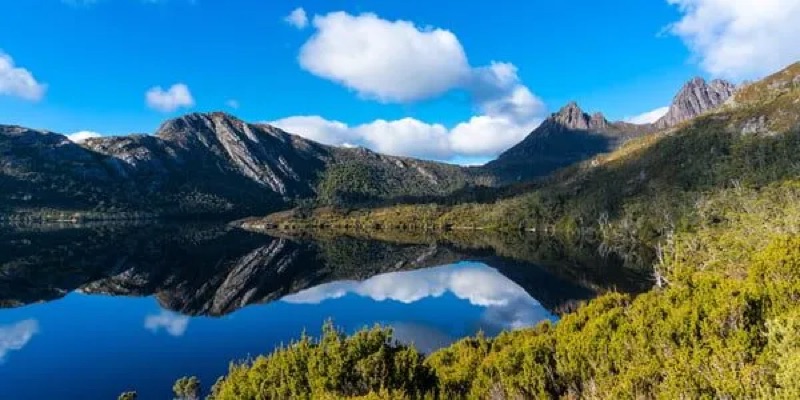
Drive 2.5 hours northwest to Cradle Mountain-Lake St Clair National Park — one of the great wilderness areas of the world. The Dove Lake Circuit walks beneath the jagged dolerite peaks reflected in an impossibly beautiful alpine lake. This is Tasmania at its most primordial.
Drive Hobart → Cradle Mountain
Drive north through the midlands, turning west towards the Central Highlands. The landscape becomes more dramatic with each kilometre — open farmland giving way to eucalyptus forest and then the ancient button-grass moorlands of the highlands.
Dove Lake Circuit
The Dove Lake Circuit (6km, 2.5 hours) circumnavigates the stunning Dove Lake with Cradle Mountain reflected in its mirror-still water. This is one of Australia's great walks — the dolerite peaks, the moorland, the ancient pencil pines.
Wombat Watch at Dusk
As dusk falls, wombats emerge to graze in the button-grass plains near the Visitor Centre. Stay on the boardwalks and you'll have multiple wombats grazing just metres from you — one of the most heartwarming wildlife experiences in Australia.
Launceston & Cataract Gorge
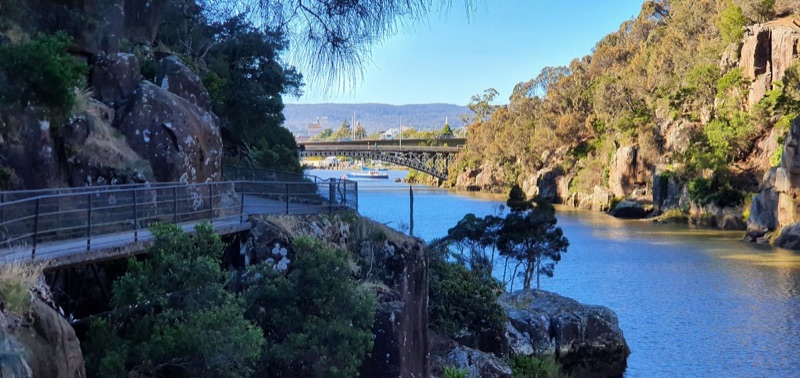
Head to Launceston — Tasmania's second city with a stunning natural attraction right at its heart. Cataract Gorge is a dramatic dolerite gorge cut by the South Esk River just minutes from the CBD, with the world's longest single-span chairlift.
Drive Cradle Mountain → Launceston
Spectacular drive east from Cradle Mountain through the Great Western Tiers to Launceston. The highland scenery is extraordinary in winter — mist in the valleys, snow-dusted peaks.
Cataract Gorge
Cataract Gorge is Launceston's extraordinary secret — a dramatic gorge with sheer rock walls, a chairlift, free-roaming peacocks, and beautiful gardens. Walk the South Esk river path from the city to First Basin.
Launceston CBD & Seaport
Explore Launceston's compact CBD — excellent cafes on Brisbane Street, the Launceston Seaport precinct on the North Esk River, and the historic red brick architecture. QVMAG (Queen Victoria Museum and Art Gallery) is worth a visit — free.
Tamar Valley Wine Region
If time allows, drive 20 minutes north into the Tamar Valley wine region — cool-climate Pinot Noir and Chardonnay country. Josef Chromy and Jansz are standout estates with beautiful grounds.
Tasmania's East Coast — Bay of Fires & Freycinet
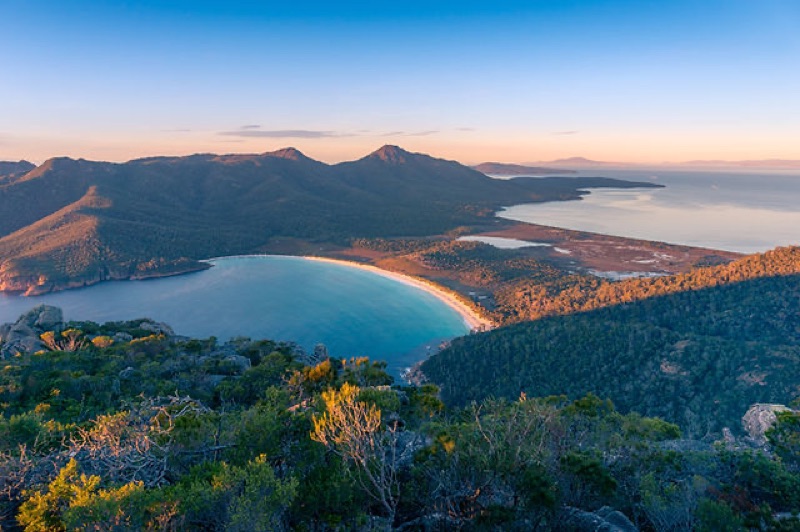
Drive east to the Bay of Fires — arguably the most beautiful stretch of coast in Australia. Lichen-covered orange boulders, pure white sand, and turquoise water in one of the world's most remote-feeling settings. Then explore Freycinet National Park and Wineglass Bay.
Drive to Bay of Fires
From Launceston, drive east to the Bay of Fires — a 2-hour drive through the Tasmanian midlands to the northeast coast.
Bay of Fires Walk
Walk along the spectacular Bay of Fires coast — orange lichen-covered boulders, white sand, and impossibly blue water. In June there are almost no other visitors here.
Freycinet National Park — Wineglass Bay
Drive south to Freycinet National Park. The lookout walk (30 min return) gives the classic overhead view of Wineglass Bay — perfectly shaped horseshoe of white sand. The full circuit down to the beach is 2.5 hours.
Return to Hobart
Drive south back to Hobart for the night. Last evening with your Tasmanian friends and family.
Fly Home to Sydney — The Journey Comes Full Circle
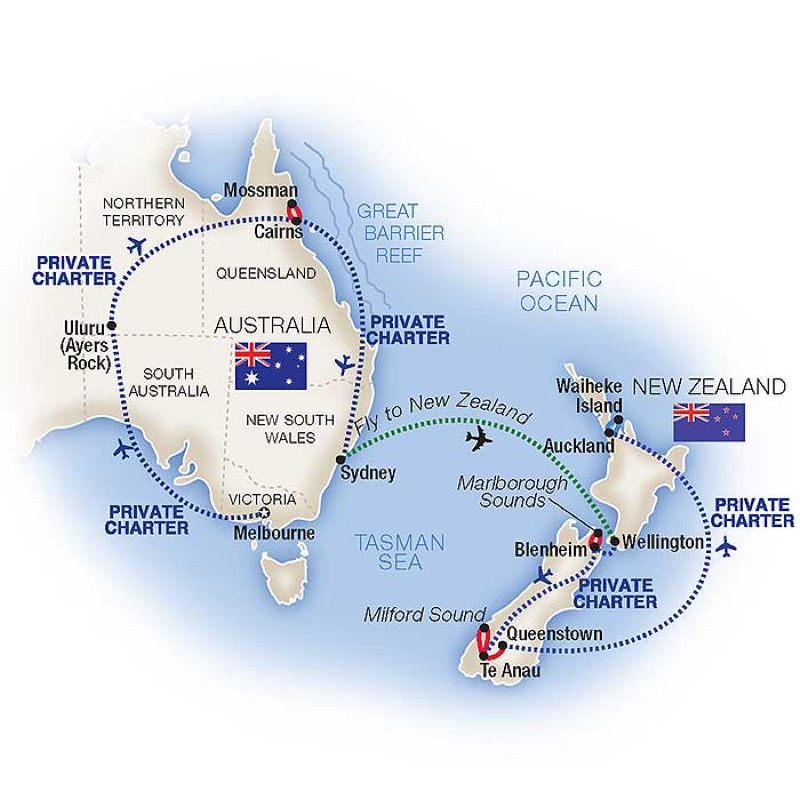
Fly back to Sydney — your starting point, now transformed by 43 days of extraordinary experiences. The city looks different through eyes that have seen Uluru, the Barrier Reef, ancient Kakadu, and your family's grave in Auckland. These final days are for reflection, rest, and savouring Sydney.
Hobart → Sydney Flight
Morning flight from Hobart (HBA) to Sydney (SYD). 1 hour 20 minutes — a quick hop across Bass Strait.
Sydney Maritime Museum & Darling Harbour
The Australian National Maritime Museum in Darling Harbour tells Australia's seafaring story — including the vessels that carried the first European settlers and the Indigenous watercraft that navigated these coasts for 65,000 years. Free entry to the main galleries.
Welcome Back Harbour Drinks
Welcome yourself back to Sydney with harbour views. Opera Bar at the base of the Opera House is the perfect setting to toast the journey that was — and the journey home ahead.
Sydney — Watsons Bay & Harbour Farewell
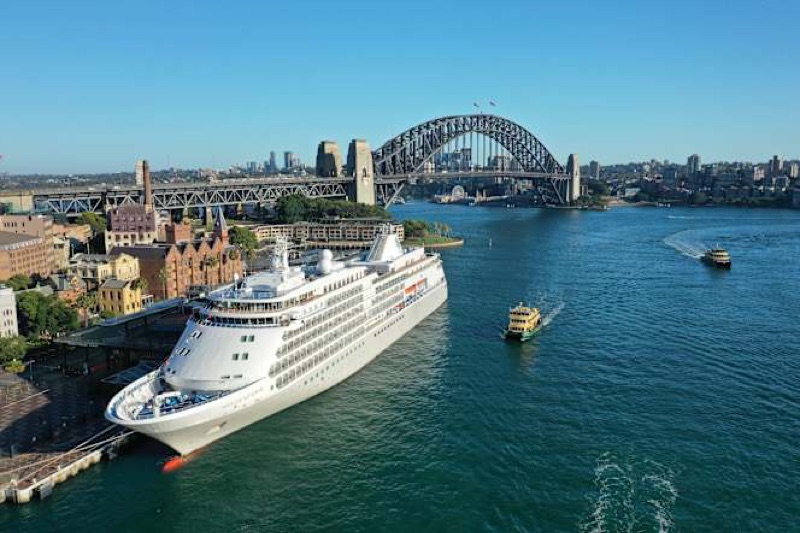
One of Sydney's most beautiful days out: take the ferry to Watsons Bay and walk the South Head Heritage Trail along the dramatic ocean cliffs. Return via the Opera House and have a long, slow dinner overlooking the harbour.
Ferry to Watsons Bay
Catch the Watsons Bay ferry from Circular Quay. 25 minutes across the sparkling harbour, past Garden Island naval base, and through a scattering of moored yachts into this gorgeous harbour village.
South Head Heritage Trail
Walk the South Head Heritage Trail from Watsons Bay to the South Head — dramatic sandstone cliffs above the entrance to Sydney Harbour. The Hornby Lighthouse at the headland gives you the classic view of ships entering the harbour.
Nielsen Park & Shark Beach
Return ferry or walk to Nielsen Park at Vaucluse — one of Sydney's most beautiful harbour beaches, shark-netted and calm. Have a swim in the cold June harbour water if you're brave enough.
Circular Quay & Opera House Farewell Walk
One last evening walk from Circular Quay to the Opera House. At night, the sails are lit and the harbour glitters. This is the image you'll carry home.
Sydney — Taronga Zoo & North Shore Final Day
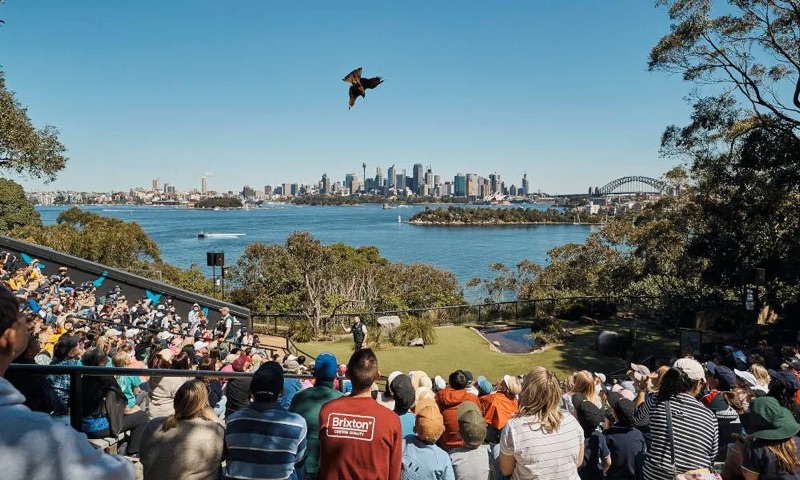
A magical final full day: Taronga Zoo with its extraordinary setting above the harbour (the views behind the animals are unforgettable), then a walk along Cremorne Point for the classic Sydney panorama. Pack, celebrate, and rest.
Taronga Zoo & Wildlife Retreat
Taronga Zoo is set on a harbour headland at Mosman with jaw-dropping views. The zoo's collection of Australian wildlife is world-class — but the backdrop of the Opera House and CBD behind the giraffes, elephants, and kangaroos is what makes it unique.
Cremorne Point Walk
Walk the gorgeous Cremorne Point harbour foreshore walk from Mosman Wharf. The 3km waterfront path circles Cremorne Point and gives some of the best views of the Opera House, Harbour Bridge, and CBD.
Final Packing & Celebration Dinner
Pack your bags for tomorrow's departure. Then go out for a final celebration dinner — 46 days of extraordinary Australia and New Zealand is worth honouring.
Departure Day — 46 Days Well Spent
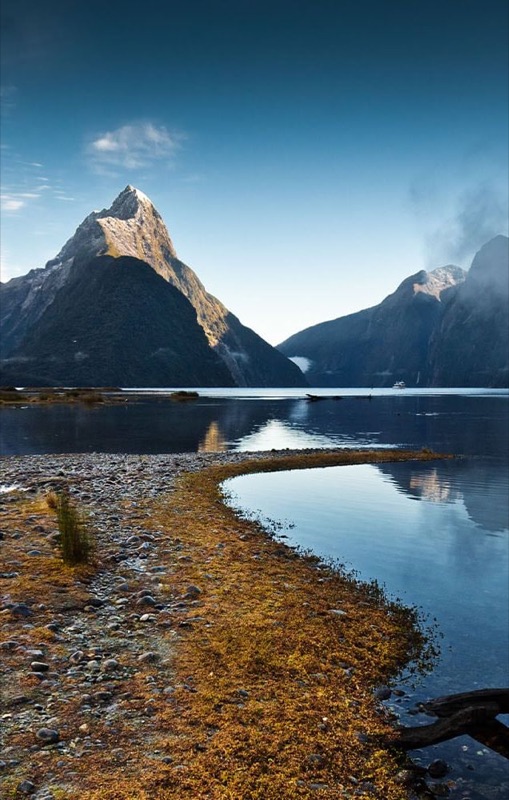
The last morning. A slow breakfast, a final walk along the harbour foreshore, and then the airport. You've crossed six Australian states and territories, stood at Australia's most easterly point, visited your great-grandfather's grave, attended a Wellington conference, snorkelled the Great Barrier Reef, watched the sun rise over Uluru, and made memories that will last a lifetime.
Final Sydney Morning Walk
Rise early and take one last walk along Circular Quay. Watch the ferries fan out across the harbour, coffee in hand, Opera House glowing in the morning light. Sydney is extraordinary — and you've had the best of it.
Transfer to Sydney Airport
Allow 3+ hours before international departure. The Airport Link train from Circular Quay to International Terminal takes about 20 minutes.
✈️ Key Domestic Flights
- Sydney → Cairns: Jetstar ~$80-150
- Cairns → Darwin: Jetstar ~$100-180
- Darwin → Alice Springs: ~$120-200
- Uluru → Adelaide: Regional + connection ~$200-300
- Adelaide → Melbourne: Jetstar ~$60-120
- Melbourne → Hobart: Jetstar ~$60-100
- Hobart → Sydney: Jetstar ~$80-130
- Book ALL flights 4-8 weeks ahead for best prices
🌡️ Weather by Region
- Sydney May-June: Autumn, 14-20°C — perfect weather
- Cairns May: Dry season, 28°C — best time to visit
- Darwin May: Dry season, 30°C — low humidity
- Uluru May: 23°C days, 2°C nights — pack warm layers!
- Adelaide May-June: Cool, 12-18°C — pleasant
- Melbourne May-June: Autumn/Winter, 10-16°C — layers needed
- Tasmania June: 7-14°C, possible snow at altitude — winter clothing essential
🌿 Vegetarian Travel Tips
- Australia has an excellent vegetarian scene in cities
- Melbourne and Sydney have the most options
- Byron Bay and Newtown (Sydney) are vegetarian paradise
- Remote areas (Kakadu, Uluru, Outback) have limited options — self-cater
- Always ask — Australian restaurants are accommodating
- Indian, Thai, and Japanese restaurants are your best bets everywhere
💳 Money & Budget
- Budget $2,000-5,000 total for 2 people over 46 days is tight but doable
- Focus: free nature (beaches, national parks, markets), budget accommodation, cook occasionally
- Domestic flights will be ~$500-800 each for the full route
- National park passes: NT (Kakadu + Uluru: $40+$40 pp), Tasmania ($60 8-week pass)
- Tap-and-go cards work everywhere — no cash needed
- Opal card covers all Sydney transport (tap bank card directly)
📱 Apps & Resources
- Transport NSW: Sydney trains, buses, ferries
- PTV: Melbourne public transport
- Metro Tasmania: Hobart buses
- Google Maps: works excellently in all cities
- Seek out the Hungry Planet app for best vegetarian restaurant finders
- GovReady: national park conditions and bookings