⚡ Before You Go — Essentials
📷 Photography Gear
Bring a wide-angle lens (16-35mm) for alpine panoramas, a telephoto (70-200mm) for peak details, and a sturdy travel tripod for golden-hour and reflection shots. Polarizing filter essential for cutting glare on lakes. ND filter useful for waterfall long-exposures in Lauterbrunnen. Sunrise is around 6:15-6:30 AM, sunset around 8:30-8:45 PM in late April/early May.
🚂 Swiss Travel Pass
A 15-day Swiss Travel Pass (CHF 583/person) covers all trains between cities, most lake boats, city transit, and gives 50% off mountain railways (Jungfraujoch, Gornergrat, etc.). Buy it — it pays for itself on day 3. Activate for Apr 28 (day you start moving between cities) for maximum coverage. Seat reservations not required on most Swiss trains.
🌸 Spring Conditions
Late April/early May is magical: snow on peaks, wildflowers blooming in valleys, waterfalls at peak flow from snowmelt. Temps range 8-18°C in valleys, below freezing at high altitude. Layer up. Some mountain lifts may have spring maintenance closures — Jungfraujoch and Gornergrat run year-round. Check jungfrau.ch and zermatt.ch for latest schedules.
💰 Budget Tips
Switzerland is expensive — expect CHF 40-60 for a nice dinner, CHF 5-6 for a coffee. Your $10k+ budget for 19 days is comfortable for quality dining and experiences. Lunch at mountain huts (Bergrestaurants) is excellent and more affordable than valley fine dining. Coop and Migros supermarkets have surprisingly good prepared food sections for picnic lunches.
Arrival in Zurich — Old Town & Lindenhof Golden Hour
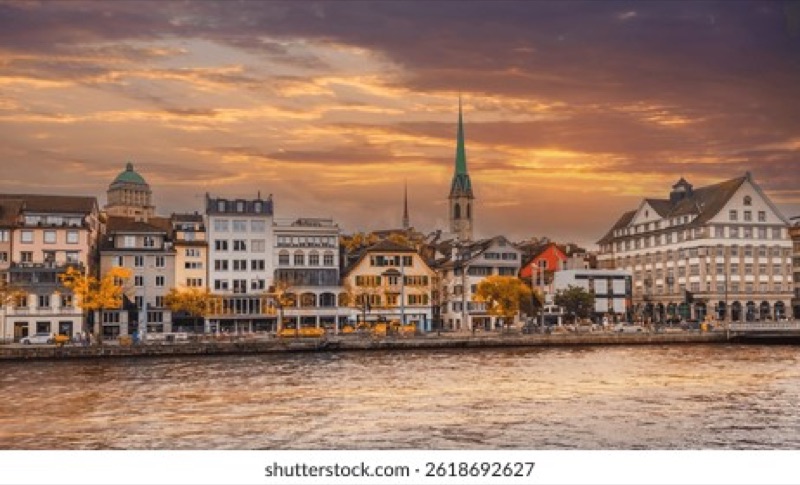
Arrive in Switzerland's largest city and head straight for the medieval Old Town. Your first golden hour at Lindenhof — the elevated viewpoint where Romans once stood — will set the tone for 19 days of extraordinary photography.
Check In & Explore Niederdorf
After settling into your hotel near the Old Town, wander through Niederdorf — Zurich's atmospheric pedestrian quarter. Narrow cobblestone lanes twist between medieval guild houses, boutique shops, and hidden courtyards. The low afternoon light filtering between the buildings creates beautiful shadow play.
📷 Golden Hour at Lindenhof
Lindenhof is a shaded hilltop square on the west bank of the Limmat — the most important photography viewpoint in Zurich. From here you have an unobstructed panorama over the Old Town rooftops, the Grossmünster twin towers, the university, and the river. In late April, the sun sets around 8:15 PM and casts warm golden light across the entire east bank.
Lake Zurich, Zürichberg Forest & City Scenes
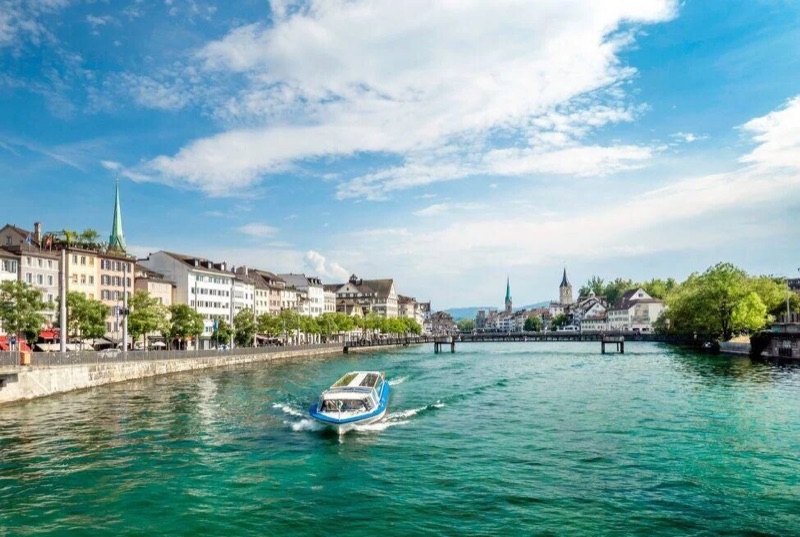
A full day exploring Zurich's waterfront and hillside viewpoints. Morning light on the lake, an elevated forest walk with mountain panoramas, and evening along Europe's most expensive shopping street.
📷 Sunrise at Zürichhorn Park
If you're up for a 6:15 AM start, Zürichhorn park on the east shore of Lake Zurich offers a spectacular sunrise composition: the sun rises over the Alps beyond the lake, with the city skyline silhouetted to the west. Le Corbusier's colorful Pavillon sits right here too — a modernist gem.
Lake Zurich Promenade Walk
Stroll along the Utoquai promenade from Zürichhorn back toward the city center. The morning light on the water is gorgeous, and on clear spring days, you can see snow-capped peaks behind the southern end of the lake. Stop at Bürkliplatz — the main lakefront plaza with fountain and mountain views.
Zürichberg & Polyterrasse Viewpoint
Take the Polybahn funicular (1-minute ride, free with Swiss Travel Pass) up to the ETH university terrace — the Polyterrasse. This south-facing viewpoint delivers a sweeping panorama across Zurich's rooftops, the lake, and the Alps. Then walk through the Zürichberg forest for peaceful nature shots.
Kunsthaus Zurich
If you want an art break, the Kunsthaus has Switzerland's most important art collection — Monet, Picasso, Giacometti, and a stunning Chipperfield extension. Great for rainy-afternoon contingency.
📷 Blue Hour Along the Limmat
As evening falls, walk along the Limmat River from Lindenhof to the train station. The churches, guildhalls, and bridges light up beautifully. The reflection of Grossmünster and Fraumünster in the still river at blue hour is Zurich's most classic photo composition.
Uetliberg Panorama & Farewell to Zurich
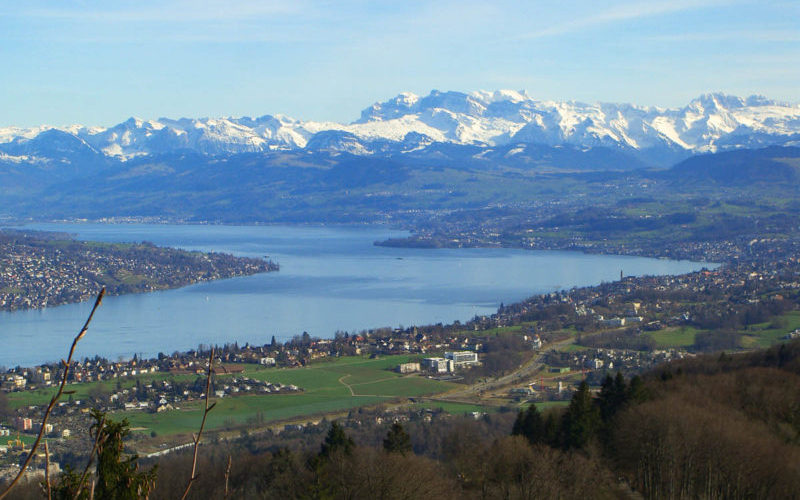
Your last Zurich morning takes you to the city's highest viewpoint — Uetliberg mountain — for a breathtaking dawn panorama. Then a leisurely farewell afternoon before the evening journey toward Lucerne.
📷 Sunrise from Uetliberg Summit
Take the first S10 train (runs from ~5:30 AM) from Zurich HB to Uetliberg station, then a 10-minute walk to the summit tower at 871m. The 360° view encompasses the entire city, Lake Zurich, and on clear mornings, the full chain of Alps from Säntis to the Bernese Oberland. In late April, mist often blankets the valleys at dawn, creating dramatic 'sea of fog' conditions.
Fraumünster & Chagall Windows
Visit Fraumünster church in the Old Town for its famous Marc Chagall stained-glass windows — five luminous panels of jewel-toned biblical scenes. The afternoon light streaming through them is mesmerizing. No photography allowed inside, but the exterior is stunning from the river.
Swiss National Museum
If time permits, the Swiss National Museum near the train station covers Switzerland's cultural history beautifully. The building itself — a fairy-tale castle from 1898 — is incredibly photogenic.
Train to Lucerne
Board the direct train from Zurich HB to Lucerne — just 45 minutes through rolling green hills. Sit on the right side for views of Lake Zug as you approach. Arrive in Lucerne by early evening with time to catch sunset over the lake.
Lucerne — Chapel Bridge, Lion & Lakeside Magic
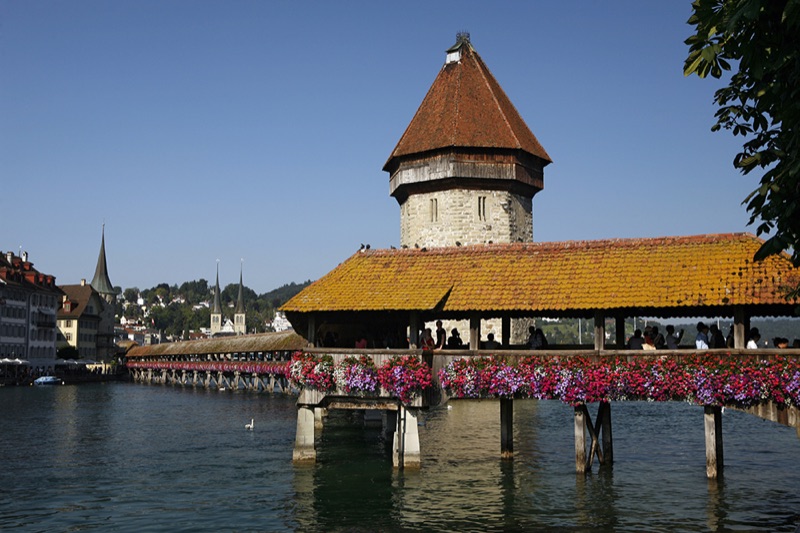
Lucerne is Switzerland's most photogenic city — a medieval gem on a turquoise lake framed by mountains. Today you explore its iconic landmarks, starting with the world's oldest covered wooden bridge and ending with a lakeside sunset.
📷 Sunrise at Seebrücke & Chapel Bridge
Chapel Bridge (Kapellbrücke), built in 1333, is Europe's oldest covered wooden bridge. In late April it's adorned with flower boxes just beginning to bloom. Arrive at sunrise to have it nearly to yourself — the morning light illuminates the water tower perfectly and the Reuss River glows turquoise.
Old Town Walking Photography
Lucerne's Old Town has painted medieval facades, hidden squares, and covered bridges everywhere. Walk through Weinmarkt (wine market square) with its frescoed buildings, then along the Musegg Wall — the medieval fortification with nine towers, several open for climbing.
Lion Monument & Glacier Garden
The Lion Monument (Löwendenkmal) is a dying lion carved into natural rock — Mark Twain called it 'the most mournful and moving piece of stone in the world.' The reflecting pool in front creates a perfect mirror image. Next door, the Glacier Garden has 20-million-year-old glacial potholes.
📷 Sunset at Schweizerhofquai
The Schweizerhofquai lakefront promenade faces west-southwest — directly into the setting sun. The sunset paints Lake Lucerne in shades of gold and pink, with the mountains silhouetted behind. Locals and visitors gather on the benches to watch — it's a communal moment.
Mt. Pilatus — Dragon Mountain Above the Clouds
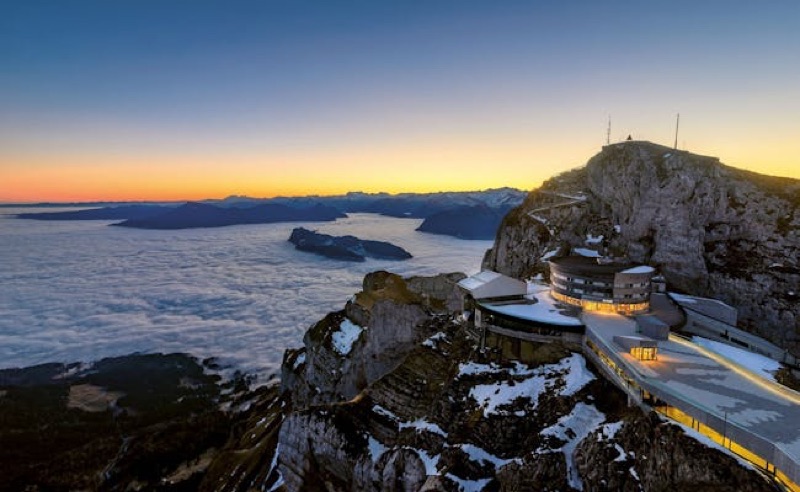
Take the world's steepest cogwheel railway to the summit of Mt. Pilatus (2,128m) for one of Switzerland's most dramatic panoramas. On clear days, you see 73 Alpine peaks. Combine it with a lake cruise for the classic 'Golden Round Trip.'
📷 Golden Round Trip to Mt. Pilatus
Start with the aerial gondola from Kriens (bus 1 from Lucerne, 15 min) up to Pilatus Kulm. The gondola ride itself is spectacular — you rise through spring-green meadows into craggy peaks. At the summit, a network of panoramic walkways and tunnels carved into the rock offers viewpoints in every direction.
Descent & Lake Lucerne Cruise
Descend via the cogwheel railway to Alpnachstad (the steepest cog railway in the world — 48% gradient!), then board a paddle steamer across Lake Lucerne back to the city. The lake cruise is pure Swiss romance — emerald water, mountain reflections, and tiny villages on the shore.
Spreuer Bridge & Evening Stroll
Back in Lucerne, walk to the lesser-known Spreuerbrücke (Spreuer Bridge) — a covered wooden bridge from 1408 with macabre 'Dance of Death' paintings on its ceiling. Far fewer tourists than Chapel Bridge, and equally atmospheric.
Mt. Rigi — Queen of the Mountains & Swiss National Day Spirit
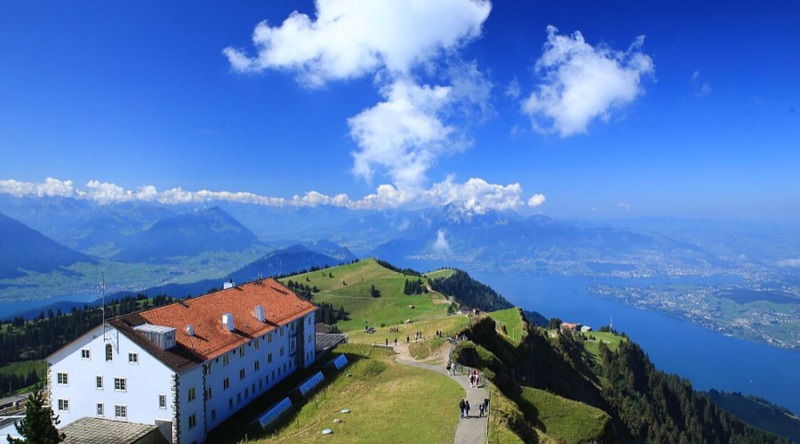
May 1st on the 'Queen of the Mountains' — Rigi offers one of Switzerland's most accessible and rewarding summit experiences. Take a cogwheel train from the lakeside, hike the panoramic ridge, and descend through spring meadows back to the lake.
📷 Early Boat & Cogwheel to Rigi Kulm
Take the early lake boat from Lucerne to Vitznau (40 min), then the cogwheel railway — Europe's first mountain railway (1871) — up to Rigi Kulm (1,798m). The summit viewpoint delivers a 360° panorama over Lake Lucerne, Lake Zug, and the full Alpine chain from Jungfrau to Säntis.
Rigi Panorama Ridge Walk
The ridge walk from Rigi Kulm to Rigi Kaltbad (1 hour, easy) is one of Switzerland's most scenic gentle hikes. You walk along a panoramic ridge with lakes visible on both sides — Vierwaldstättersee (Lake Lucerne) to the south and Zugersee to the north. In early May, the alpine meadows are starting to bloom with crocuses and gentians.
Descend to Weggis & Lake Lucerne Evening
Take the gondola from Rigi Kaltbad down to Weggis — a charming lakeside resort village. Walk along the promenade, then take the lake boat back to Lucerne. The evening return cruise through the fjord-like arms of Lake Lucerne is unforgettable.
Into the Jungfrau Region — Lauterbrunnen Valley of Waterfalls
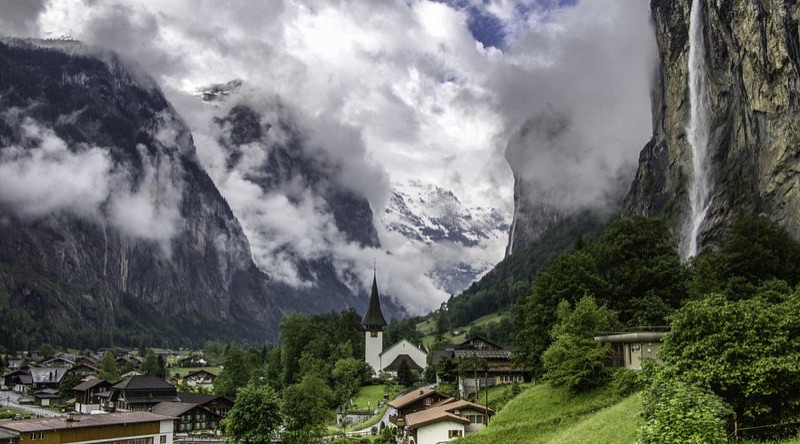
Travel from Lucerne into the heart of the Bernese Oberland. The Lauterbrunnen Valley — Tolkien's inspiration for Rivendell — is one of the most dramatic landscapes in Europe: a narrow U-shaped valley with 72 waterfalls cascading from sheer 300m cliffs.
Train to Lauterbrunnen via Interlaken
Board the Golden Pass-adjacent train from Lucerne to Interlaken Ost (2 hours), then the BOB train up to Lauterbrunnen (20 min). The journey through the Brünig Pass is stunning — lakes, waterfalls, and the first views of the Eiger, Mönch, and Jungfrau as you approach Interlaken.
📷 Lauterbrunnen Valley & Staubbach Falls
Drop your bags in Wengen (one more train stop up the mountain, 15 min) and come back down to Lauterbrunnen village to photograph the valley. Staubbach Falls (297m) plunges right next to the village — in spring, it's at peak flow and the spray catches rainbows in afternoon light. The valley view looking south from the village is the iconic shot.
Trümmelbach Falls
Inside the cliff, 10 glacial waterfalls have carved a series of dramatic spiral gorges. These are the only glacier waterfalls in Europe accessible inside the mountain — 20,000 liters per second crashing through carved rock. It's dark, loud, and astonishing.
📷 Sunset from Wengen
Take the train up to Wengen (15 min) — a car-free village perched on a sun terrace 400m above the valley floor. The evening view from Wengen looking across to the Lauterbrunnen cliffs, with the Jungfrau massif glowing pink at sunset, is unforgettable.
Jungfraujoch — Top of Europe at 3,454m
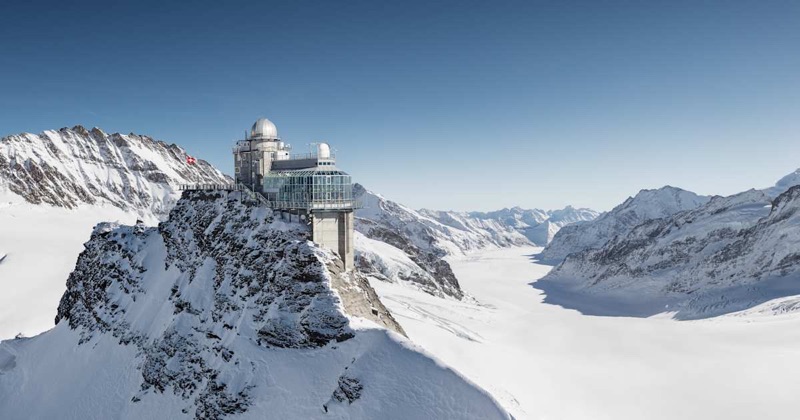
The pinnacle of Swiss mountain experiences: ride the cogwheel train through the heart of the Eiger to the highest railway station in Europe. At 3,454m, you step out onto an observation deck surrounded by the Aletsch Glacier, the Jungfrau, and an eternal world of ice and snow.
📷 Train to Jungfraujoch via Kleine Scheidegg
Take the early train from Wengen to Kleine Scheidegg (25 min), then transfer to the Jungfrau Railway which climbs through a tunnel inside the Eiger to Jungfraujoch. The train pauses at Eismeer station — a window carved into the north face of the Eiger with a jaw-dropping glacier view.
📷 Jungfraujoch Summit Experience
At the top: the Sphinx Observation Terrace (3,571m) offers a 360° panorama over the Aletsch Glacier — Europe's longest at 23km — and the peaks of Jungfrau, Mönch, and Eiger. The Ice Palace has tunnels carved into the glacier. Step outside onto the snow plateau for photos in a surreal high-altitude landscape.
📷 Kleine Scheidegg Photography
Descend to Kleine Scheidegg (2,061m) and spend time photographing from this legendary pass. The north face of the Eiger looms directly above you — one of the most famous walls in mountaineering. In spring, the meadows are still snow-patched, creating beautiful contrast patterns.
Gentle Walk Back to Wengen
If the trail is clear of snow (check locally), walk from Kleine Scheidegg back to Wengen — about 1.5 hours of gentle downhill through alpine meadows with the Jungfrau massif glowing in late afternoon light. Otherwise, take the train (25 min).
Mürren & Schilthorn — James Bond's Piz Gloria
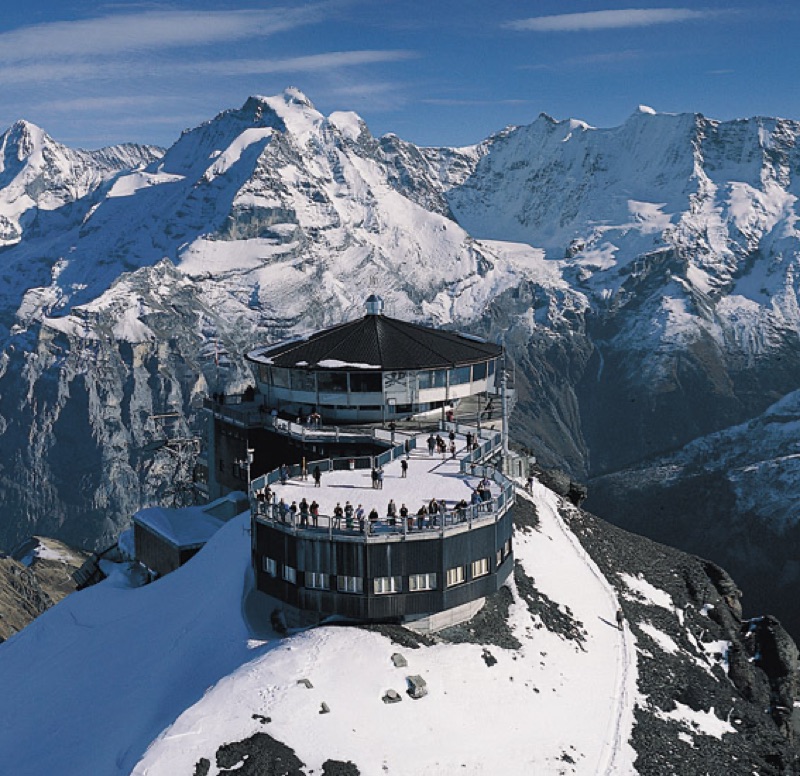
Cross the valley to Mürren — another car-free mountain village with even more dramatic views — and ride to the Schilthorn summit (2,970m), made famous as the Bond villain's lair in 'On Her Majesty's Secret Service.' The Birg cliff walk and Thrill Walk add adrenaline to the views.
Train to Lauterbrunnen & Cable Car to Mürren
From Wengen, train down to Lauterbrunnen (15 min), then take the Stechelberg cable car up to Mürren on the opposite side of the valley. Mürren sits on a cliff edge with the most dramatic unobstructed view of Eiger, Mönch, and Jungfrau you'll find anywhere.
📷 Schilthorn Piz Gloria
Continue by cable car from Mürren to Birg (2,677m) and then Schilthorn (2,970m). The revolving restaurant Piz Gloria — filmed in the 1969 Bond film — rotates 360° and the panorama encompasses 200 peaks including Eiger, Mönch, Jungfrau, and even Mont Blanc on clear days.
📷 Birg Thrill Walk & Cliff Walk
On the way down, stop at Birg station (2,677m). The Thrill Walk is a steel-grate walkway bolted onto the sheer cliff face — glass floor panels, rope bridges, and a tunnel through the rock. The Skyline Walk platform juts out into the void with a glass floor 800m above the valley.
Mürren Village Stroll
Back in Mürren, wander the peaceful car-free lanes. The village has the feel of a Swiss mountain fairy tale — flower-box chalets, grazing cows with bells, and the constant backdrop of the Jungfrau massif.
Return to Wengen via Lauterbrunnen
Cable car and train back to Wengen. Watch the evening light paint the valley.
Grindelwald First & Bachalpsee — Alpine Lake Reflections
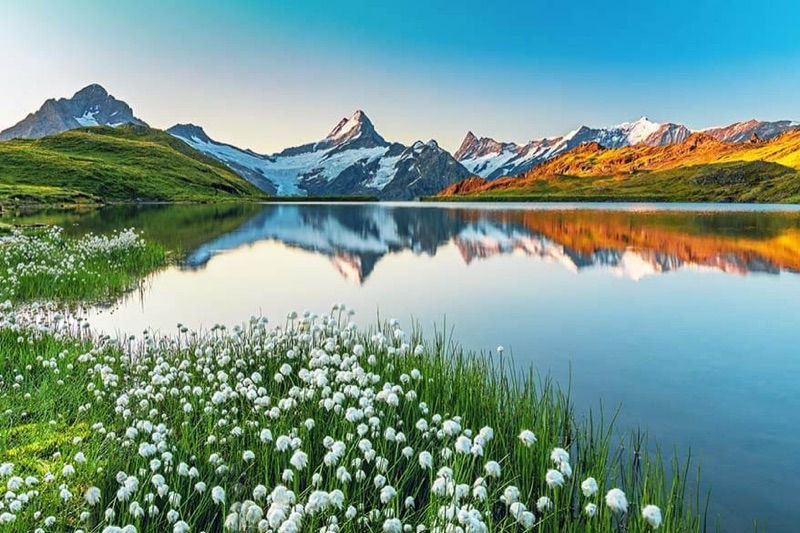
Cross to the other side of the Jungfrau region for Grindelwald — the 'village of glaciers.' Take the gondola to First and hike to Bachalpsee, one of Switzerland's most photographed alpine lakes, where the Wetterhorn and Schreckhorn reflect in crystal-clear water.
Train to Grindelwald & First Gondola
From Wengen, train to Kleine Scheidegg, then down to Grindelwald (about 1 hour total with connection). Take the First gondola from Grindelwald village up to First (2,168m). The gondola ride offers incredible views of the Grindelwald glacier and the Wetterhorn.
📷 Hike to Bachalpsee
From First, the hike to Bachalpsee is a gentle 50-minute walk along a well-marked trail. The lake at 2,265m is ringed by peaks — in still morning or afternoon light, the Wetterhorn and Schreckhorn reflect perfectly in the clear water. In early May, there may still be snow patches and ice on the lake — which creates otherworldly compositions.
First Cliff Walk & Flyer
Back at First station, walk the cliff trail — a metal walkway bolted to the cliff with a glass platform extending into the void. If you're up for thrills, the First Flyer is a 800m zip line across the valley, and the First Glider is a paraglider-style ride.
Grindelwald Village & Return
Descend to Grindelwald village and stroll the charming main street. If time permits, walk to the glacier gorge (Gletscherschlucht) — a 1km tunnel carved by meltwater through the rock. Then train back to Wengen.
Valley Floor Exploration & Farewell Wengen
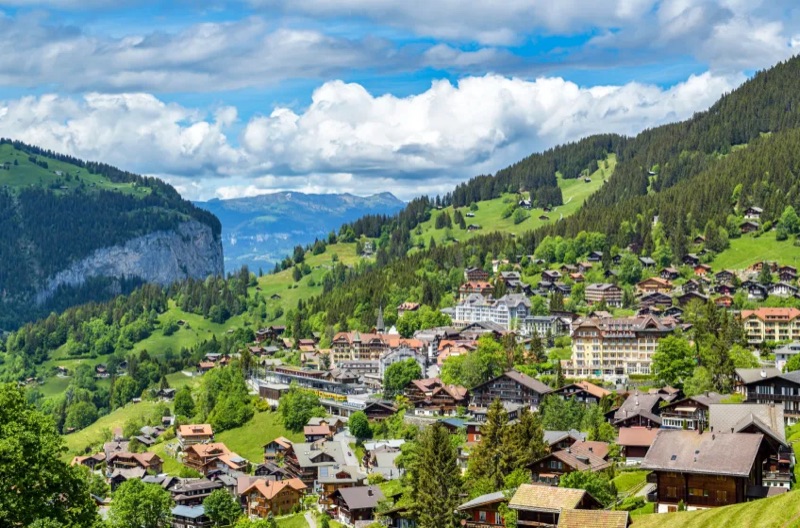
A gentler day exploring the Lauterbrunnen Valley floor, the village of Stechelberg at the road's end, and a farewell sunset from Wengen. Tomorrow you move to Zermatt.
📷 Lauterbrunnen Valley Floor Walk
Walk the valley floor from Lauterbrunnen to Stechelberg (about 1 hour, flat). This easy path follows the Lütschine river past meadows, waterfalls cascading from the cliffs above, and rustic farms. In May, the meadows are full of wildflowers and the waterfalls are at maximum spring flow.
Interlaken Afternoon (Optional)
If you want a town break, take the train to Interlaken (35 min from Wengen). The Höheweg promenade between the two lakes has a famous view of the Jungfrau, and the town has excellent shopping and cafés. Paragliding is also available — tandem flights from Harder Kulm land on the Höheweg.
📷 Farewell Sunset from Wengen
Your last evening in the Jungfrau region. Watch the alpenglow paint the Jungfrau and Silberhorn peaks pink and gold from Wengen's south-facing terraces. Pack your bags for tomorrow's journey to Zermatt.
Zermatt Arrival — The Matterhorn Reveals Itself
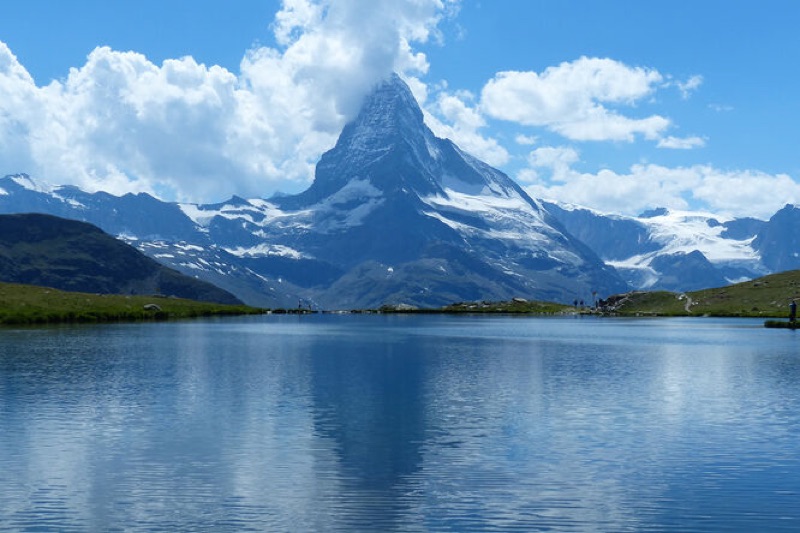
Travel from the Jungfrau region to Zermatt — home of the most photographed mountain on Earth. The car-free village sits at 1,620m in a narrow valley, and when the Matterhorn appears above the rooftops, nothing can prepare you for its presence.
Train to Zermatt via Bern & Visp
Route: Wengen → Interlaken → Bern → Visp → Zermatt. Total about 3.5 hours with connections. The final stretch from Visp to Zermatt on the Matterhorn Gotthard Railway is spectacular — you wind up a narrow valley, cross viaducts, and then suddenly the Matterhorn appears framed perfectly ahead.
📷 Kirchbrücke — The Classic Matterhorn Shot
After checking in, head straight to Kirchbrücke — a small bridge over the Vispa River in the old village. This is THE most famous Matterhorn photo location: the pyramid peak framed between dark wooden chalets with the river in the foreground. In late afternoon, the Matterhorn catches beautiful side-light.
📷 Oberdorf & Hinterdorf — Old Zermatt
Behind Kirchbrücke, wander into Hinterdorf — the oldest part of Zermatt with blackened timber granaries (Stadel) raised on stone mushroom pillars. These medieval storage buildings are unique to the Valais region and make extraordinary photographic subjects with the Matterhorn behind.
📷 Sunset from Mürini Hill
Walk 15 minutes uphill to Mürini — a small hill above the village with the most sweeping sunset view. The Matterhorn is directly ahead, and as the sun drops behind you, the peak turns orange, then pink, then purple. Free, open 24 hours, and far less crowded than Kirchbrücke.
Gornergrat — 360° Glaciers & the Matterhorn Mirror Lake
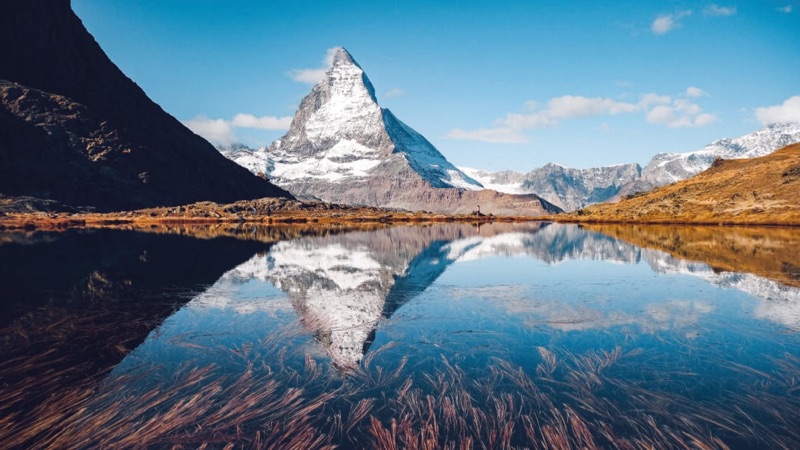
Take the Gornergrat Railway to 3,089m for the most epic Alpine panorama on this trip: 29 peaks over 4,000m, the Gorner Glacier, and a 360° view that defies description. On the descent, stop at Riffelsee for the legendary Matterhorn reflection.
📷 Sunrise Gornergrat Train
For the ultimate photography experience, take the first Gornergrat Railway departure (check schedule — usually around 7 AM). The 33-minute ride from Zermatt to Gornergrat is one of the world's great rail journeys — you rise through forest, past treeline, and emerge into a world of rock, ice, and sky. At the summit: 29 four-thousanders including Monte Rosa (4,634m), the Matterhorn, and the vast Gorner Glacier.
📷 Riffelsee Reflection Hike
On the way down, exit at Rotenboden station (2,815m) and walk 10 minutes to Riffelsee — the lake where the Matterhorn creates a perfect reflection. In early May, the lake may still be partially ice-covered, which creates even more dramatic compositions. This is one of the most photographed spots in all of Switzerland.
📷 Kirchbrücke Sunrise Setup (Scouting)
Tomorrow morning, you'll want to capture sunrise at Kirchbrücke when the first light turns the Matterhorn's east face orange. Tonight, scout the exact angle and plan your sunrise position. The Matterhorn catches first light about 10 minutes after official sunrise.
Sunrise Kirchbrücke, Stellisee & Farewell Zermatt
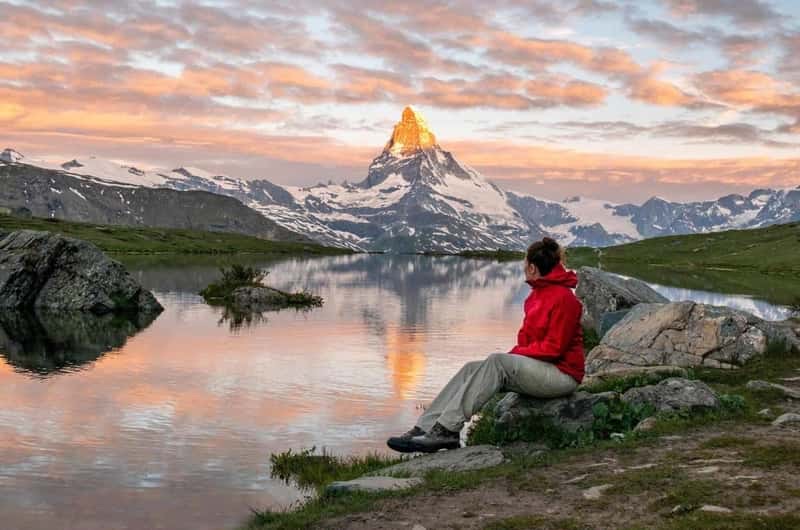
Wake before dawn for the magical Kirchbrücke sunrise, then take the funicular to Sunnegga and hike to Stellisee — the most tranquil Matterhorn reflection lake. Your farewell to Zermatt and the Matterhorn.
📷 Sunrise at Kirchbrücke
This is the shot you came for. Arrive at Kirchbrücke 30 minutes before sunrise (5:45 AM). As the sun rises behind you, the Matterhorn's east face catches the first light and turns from grey to orange to gold. The whole transformation lasts about 10 minutes — be ready.
Sunnegga Funicular & Stellisee Hike
After breakfast, take the Sunnegga funicular (3 min underground ride to 2,288m), then hike to Stellisee (about 45 min, moderate). Stellisee is considered the most beautiful of Zermatt's five lakes — when still, it creates a flawless Matterhorn reflection framed by wildflowers and boulders.
Matterhorn Glacier Paradise (Optional)
If clear weather holds, ride to Matterhorn Glacier Paradise (3,883m) — the highest cable car station in Europe. An ice tunnel, a viewing platform, and views stretching to Mont Blanc and the Gran Paradiso. It's cold and otherworldly at nearly 4,000m.
📷 Farewell Sunset Walk
One last sunset with the Matterhorn. Walk up to the Zen Stecken viewpoint (10 min above the village) for a final golden-hour composition. This angle shows the full east and north faces of the Matterhorn — different from Kirchbrücke.
Arrival in Montreux — The Swiss Riviera
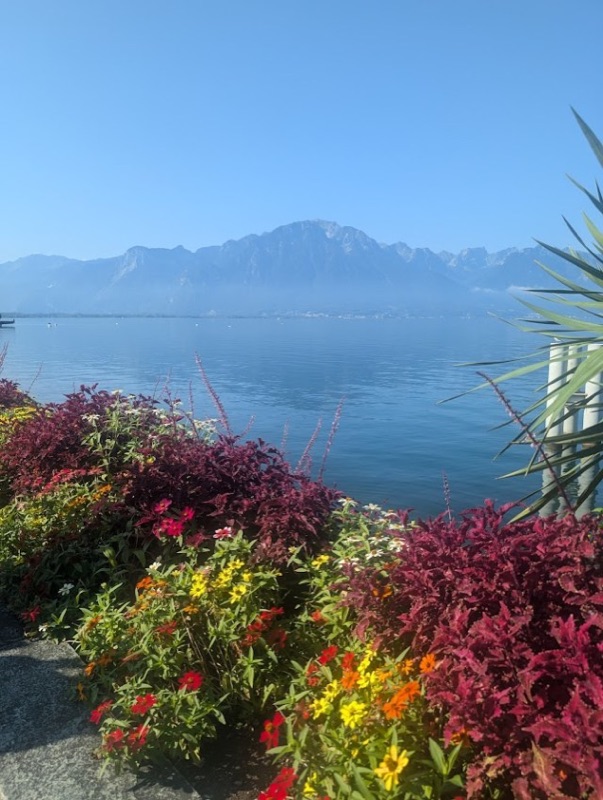
Travel from the high Alps to the gentle shores of Lake Geneva. Montreux has a Mediterranean microclimate — palm trees, Belle Époque hotels, and vineyards cascading to the water. The contrast with the mountain villages is striking and delightful.
Train from Zermatt to Montreux
The route Zermatt → Visp → Montreux is one of the most scenic rail journeys in Switzerland. From Visp, you pass through the Rhône Valley vineyards, then the train skirts Lake Geneva — suddenly you're in another world: palm trees, Mediterranean light, and a vast blue lake.
📷 Montreux Lakefront Promenade
The Grand Quai lakefront promenade stretches for 7km along Lake Geneva, lined with palm trees, flower gardens, and Belle Époque hotels. The famous Freddie Mercury statue stands overlooking the lake — he lived here and recorded at Mountain Studios. The afternoon light on the lake with the French Alps across the water is stunning.
📷 Sunset at the Lakefront
Montreux faces south-southwest across the lake — sunset paints the French Alps pink and the lake turns molten gold. Find a bench near the Freddie Mercury statue or walk east toward Château de Chillon for the sunset light on the castle.
Château de Chillon & Rochers-de-Naye
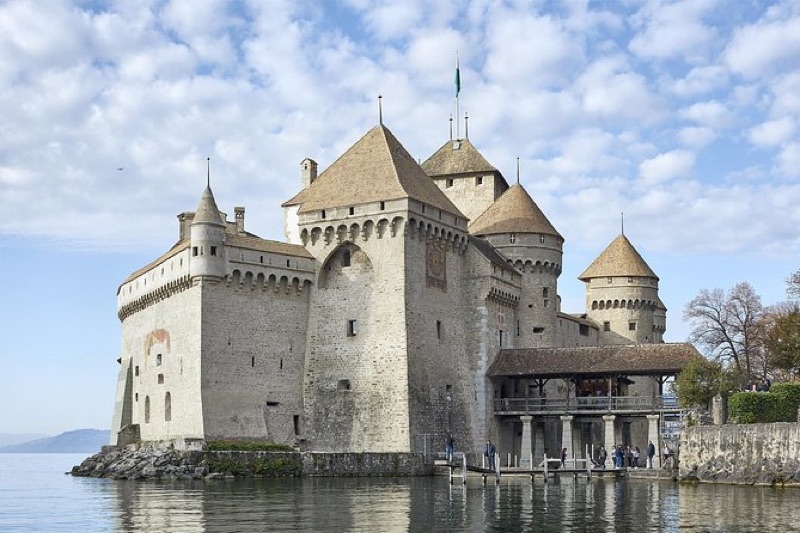
Visit Switzerland's most visited castle — the medieval Château de Chillon floating on Lake Geneva — then ride the mountain railway to Rochers-de-Naye (2,042m) for a panoramic view over the entire Lake Geneva basin.
📷 Château de Chillon
Walk or take bus 201 from Montreux to Château de Chillon (3km east). This 13th-century fortress on a rocky island in Lake Geneva is one of Europe's best-preserved medieval castles. Arrive early for reflections of the castle in the still morning water — with the Dents du Midi peaks behind.
📷 Rochers-de-Naye Mountain Railway
From Montreux station, take the cogwheel railway up to Rochers-de-Naye (2,042m) — a 55-minute scenic ride through vineyards, forests, and alpine pastures. At the summit, you have a panoramic view over the entire Lake Geneva basin, the Chablais Alps, and on clear days, Mont Blanc.
Montreux Old Town Stroll
Back in Montreux, explore the steep Old Town above the lakefront. Narrow medieval streets climb the hillside with views peeking between buildings. The covered market hall hosts food vendors, and there are excellent wine bars featuring local Lavaux wines.
Lavaux UNESCO Vineyards — Terraces of Gold
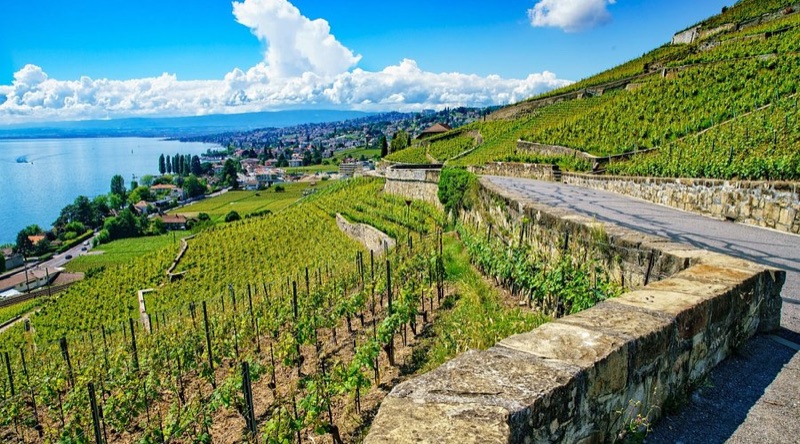
The Lavaux vineyard terraces — a UNESCO World Heritage site — cascade in steep tiers from the villages above down to Lake Geneva. This is one of Switzerland's most extraordinary landscapes and a photographer's paradise, especially in late-afternoon light when the stone terraces glow gold.
📷 Lavaux Vineyard Walk: Lutry to Saint-Saphorin
Take the train from Montreux to Lutry (20 min), then walk the marked Lavaux vineyard trail to Saint-Saphorin (about 3 hours, moderate, with plenty of stops). You'll walk through steep terraced vineyards built in the 12th century by Cistercian monks, passing through charming wine villages with fountains and medieval churches. The lake sparkles below and the Alps rise across the water.
📷 Saint-Saphorin Village
Saint-Saphorin is possibly the most beautiful small village in the Lavaux — a tiny cluster of medieval stone buildings cascading down to the lake with a 6th-century church. The narrow streets, vine-covered walls, and lake glimpses between buildings are endlessly photogenic.
Wine Tasting in Lavaux
No visit to Lavaux is complete without tasting the Chasselas — the signature white grape of the region. Several domaines offer tastings. Lavaux wines are almost never exported (the Swiss drink them all!) so this is a rare opportunity.
📷 Golden Hour in the Terraces
If you can arrange it, be back in the terraces between Rivaz and Saint-Saphorin for golden hour (7-8 PM). The late afternoon sun hits the terraces from the west, turning the stone walls golden and the lake into liquid amber. This is arguably the single most photogenic moment in all of Lavaux.
Vevey, Chaplin's World & Lake Geneva Cruise
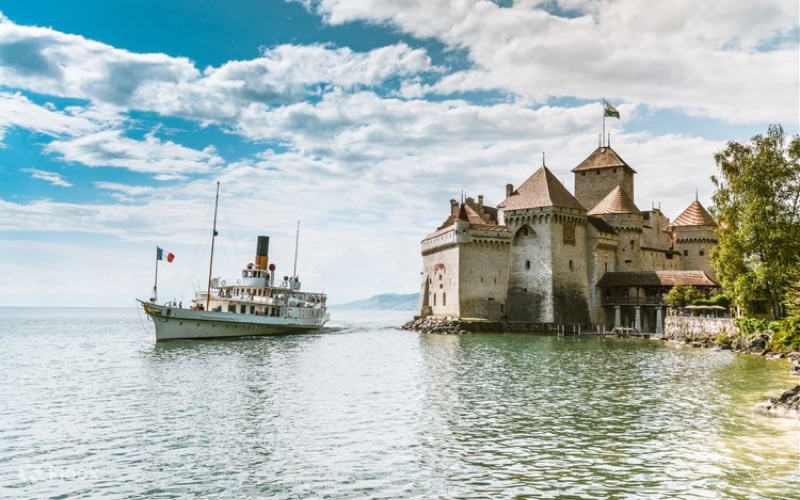
Explore the elegant town of Vevey — Nestlé headquarters and Charlie Chaplin's chosen home — then take a Belle Époque paddle steamer across Lake Geneva. A gentler day to enjoy the Swiss Riviera lifestyle.
Vevey Town & Market
Train from Montreux to Vevey (5 min). Vevey's lakefront Grand Place hosts the famous fork sculpture — a giant 8m fork planted in the lake. The Saturday market (if your visit lands on one) is legendary, but the town is charming any day. Walk along the lakefront with views across to the Savoy Alps.
Chaplin's World
Charlie Chaplin lived in Vevey for the last 25 years of his life. Chaplin's World is a charming museum in his former estate — the grounds, mansion, and a studio recreation. The gardens overlooking the lake are beautiful in May.
📷 Lake Geneva Belle Époque Cruise
Board a CGN paddle steamer from Vevey or Montreux for a cruise across Lake Geneva. These beautifully restored 19th-century steamers have polished wood, brass fittings, and open upper decks. Cruise to Lausanne or do a shorter round trip. The lake, vineyards, and mountains from the water are breathtaking.
📷 Final Montreux Sunset
Your last sunset on the Swiss Riviera. Walk the lakefront one more time, stop at the Freddie Mercury statue, and watch the Dents du Midi glow pink across the water. Tomorrow you depart for Geneva.
Geneva — Final Morning & Departure
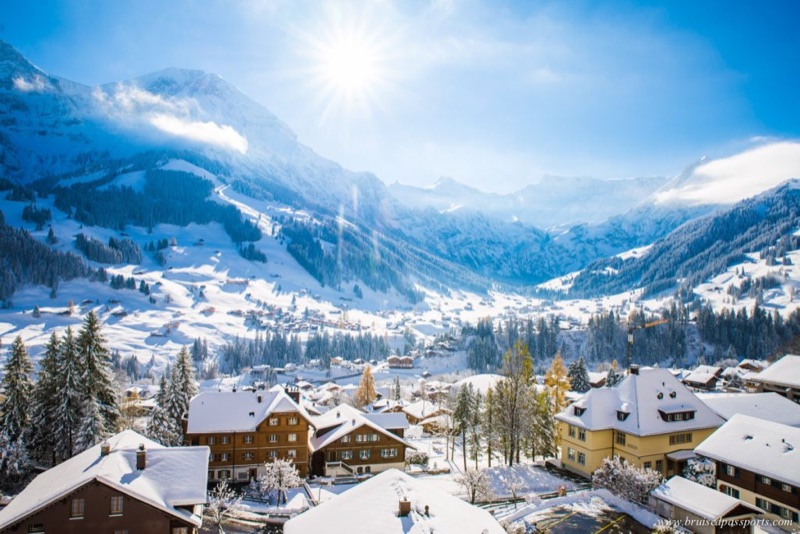
An early train to Geneva gives you a few hours in Switzerland's most international city before your departure. The Jet d'Eau fountain, the Old Town, and one last Swiss coffee.
Train to Geneva & Final Exploration
Take the early train from Montreux to Geneva (1 hour, lovely lake views). Drop bags at Geneva station lockers, then explore. The Jet d'Eau — a 140m water fountain in the lake — is Geneva's icon and visible from everywhere.
Geneva Old Town
Wander the compact, hilly Old Town — cobblestone streets, the 12th-century St. Pierre Cathedral (climb the tower for panoramic views), and the charming Place du Bourg-de-Four, Geneva's oldest square.
Departure from Geneva
Collect your bags and head to Geneva Airport (GVA) — 6 minutes by train from Cornavin station. Take one last look at the Alps through the terminal windows. You'll be back.
💰 Budget Breakdown
| Category | Budget | Midrange | Luxury |
|---|---|---|---|
| Accommodation (per night) | CHF 150–250 | CHF 250–400 | CHF 400–800 |
| Meals (per couple/day) | CHF 80–120 | CHF 150–250 | CHF 300–500 |
| Swiss Travel Pass (15-day) | — | CHF 1,166 (2 pax) | CHF 1,166 (2 pax) |
| Mountain Railways (extra) | CHF 30–50/day | CHF 50–100/day | CHF 50–100/day |
| Activities & Entrance | CHF 20–40/day | CHF 40–80/day | CHF 80–150/day |
| 19-Day Total (couple) | CHF 8,000–12,000 | CHF 12,000–18,000 | CHF 18,000–30,000 |
✈️ Getting There
- Fly into Zurich Airport (ZRH) — 10 min by train to Zurich HB
- Depart from Geneva Airport (GVA) — 6 min by train from Geneva Cornavin
- Open-jaw flight (ZRH→GVA) is ideal for this route
🚂 Swiss Travel Pass
- 15-day consecutive pass: CHF 583/person (2nd class)
- Covers all inter-city trains, lake boats, city transit
- 50% off most mountain railways (Jungfraujoch, Gornergrat, Schilthorn, Pilatus, Rigi, etc.)
- Free museum entry at 500+ museums
- Buy at sbb.ch or at Zurich Airport on arrival
🌡️ Weather (Late Apr – Mid May)
- Valleys: 8–18°C (46–64°F), mix of sun and spring showers
- Mountains: -5 to 5°C (23–41°F) above 3,000m
- Snow remains on peaks and high trails — bring warm layers
- Waterfalls at peak spring flow — pack a rain jacket for spray
- UV is intense at altitude — sunscreen, hat, and sunglasses essential
💳 Money & Tipping
- Currency: Swiss Franc (CHF) — roughly 1 CHF = 1.10 USD
- Cards accepted almost everywhere — contactless widely used
- Tipping: round up or add 5-10% for good service (not obligatory)
- ATMs dispense CHF — no need to exchange cash
📱 Connectivity
- Buy a Swisscom or Sunrise eSIM at the airport or online
- Free WiFi at stations, hotels, and most cafés
- Mobile coverage excellent even in mountain villages
- SBB app essential for real-time train schedules
📷 Photography Tips
- Golden hour: 6:45–7:30 AM and 7:30–8:30 PM in late April/May
- Blue hour: 30 min after sunset — city lights + mountain silhouettes
- Polarizing filter: essential for lake reflections and cutting haze
- ND filter: for waterfall long exposures in Lauterbrunnen
- Altitude: above 2,500m, UV makes photos very contrasty — consider bracketing
- Weather: mist and clouds add drama — don't put the camera away on cloudy days