⚡ Before You Go — Essentials
Best Time to Visit
November to March is Patagonian summer. December-February is peak season with 17+ hours of daylight but stronger winds. March has autumn colors and fewer crowds.
Getting There
Fly into Buenos Aires (EZE), then domestic flights to El Calafate (FTE) or Punta Arenas (PUQ). Book internal flights early.
Currency
Argentina uses ARS; Chile uses CLP. ATMs work in major towns. Check the parallel exchange rate in Argentina for 20-30% savings.
What to Pack
Layers are essential. Bring waterproof shell, fleece, hiking boots, trekking poles, sunscreen, and buff for wind. Temps range 0-20C even in summer.
W Trek Booking
Refugios and campsites sell out months in advance. Book through CONAF or operators like Vertice and Fantastico Sur as soon as dates open.
Arrival in Buenos Aires
Fly into Buenos Aires and soak in the capital energy before heading south. Settle into San Telmo or Palermo. Walk La Boca colorful streets and eat the best steak of your life.
Arrive and Settle In
Land at Ezeiza Airport (EZE) and transfer to your hotel in Palermo or San Telmo. Both are walkable, full of character, with great food.
Explore San Telmo
Walk the cobblestone streets — Buenos Aires oldest neighborhood. Browse antique shops, watch street tango dancers, and grab a cafe cortado.
Buenos Aires to El Calafate
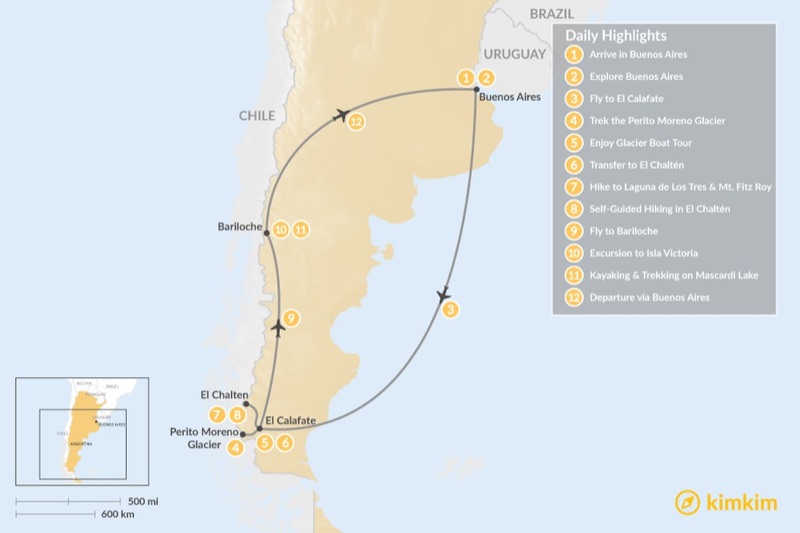
Morning flight south to El Calafate, gateway to Los Glaciares National Park. Walk the lakefront, browse gear shops, and fuel up with your first cordero al asador.
Fly to Patagonia
Catch the early flight from Aeroparque (AEP) to El Calafate (FTE) — about 3 hours. The descent reveals the vast steppe and turquoise Lago Argentino.
Explore El Calafate
Walk Avenida del Libertador along the lake — shops, chocolate stores, and restaurants. Visit the Glaciarium museum for glacier science and an ice bar.
Perito Moreno Glacier
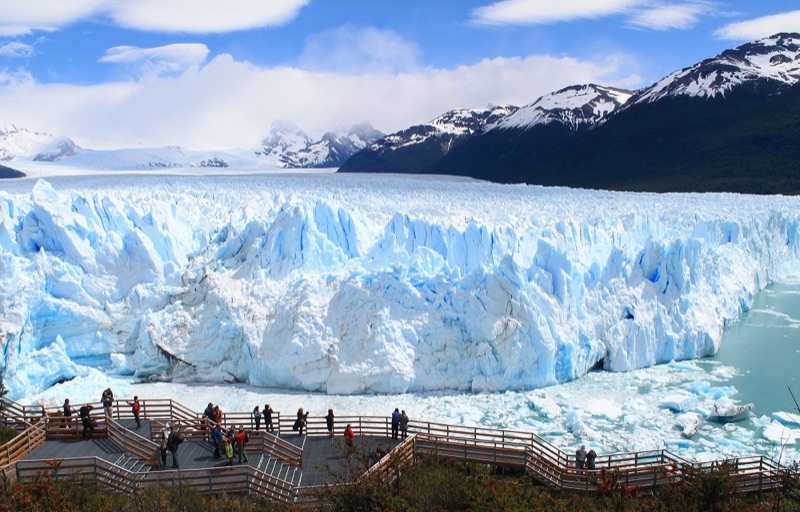
One of the only advancing glaciers in the world — a 5-km-wide, 60-meter-tall wall of ice that regularly calves massive chunks into Lago Argentino with thunderous cracks.
Drive to the Glacier
Depart El Calafate for Perito Moreno (80 km, about 1.5 hours). Walk the extensive boardwalk system — multiple levels and viewpoints.
Big Ice or Mini Trekking (Optional)
Strap on crampons and walk ON the glacier. Big Ice (3.5 hours) goes deep; Mini Trekking (1.5 hours) is a shorter taster. Both by Hielo and Aventura.
Boardwalk Exploration
Spend the afternoon at different viewpoints. Calving is random but more frequent on warm afternoons — the crack of ice breaking echoes across the lake.
El Calafate to El Chalten
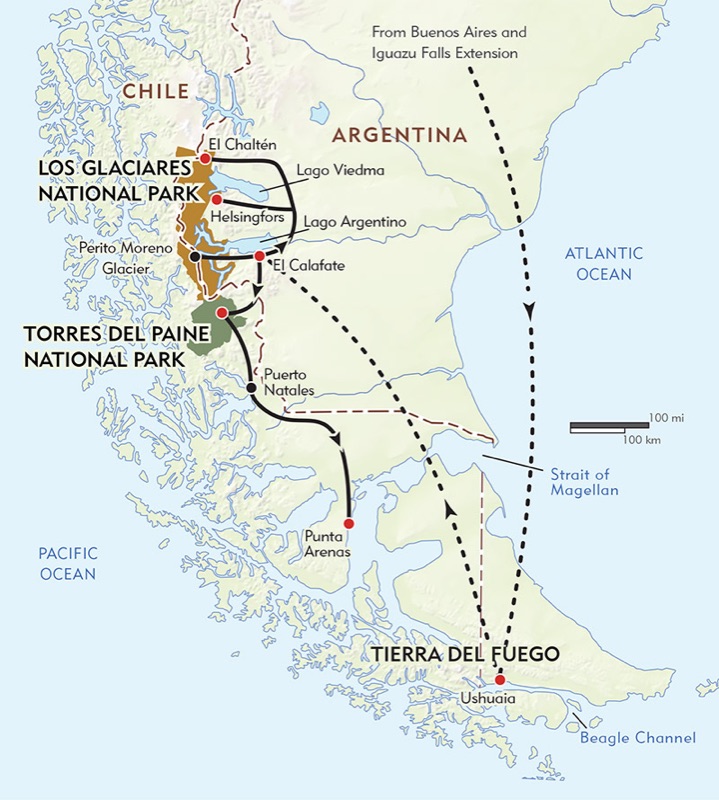
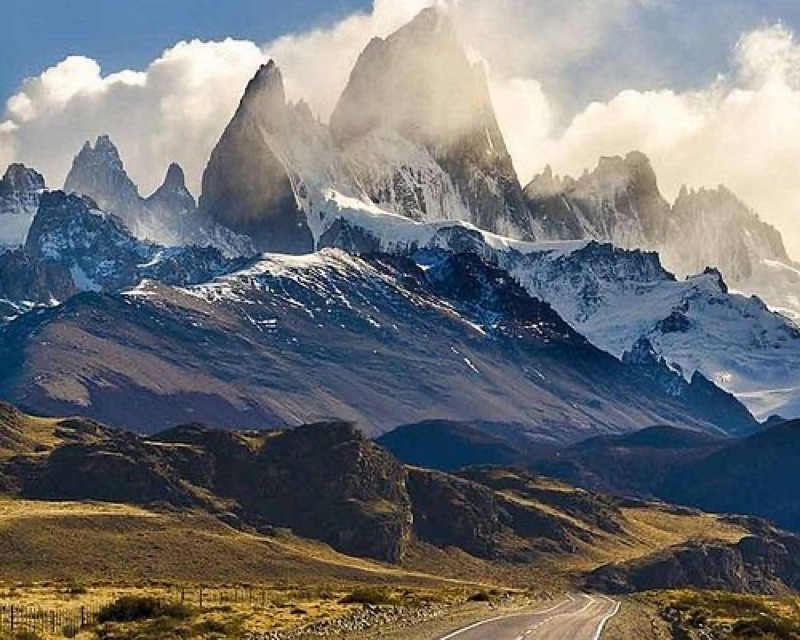
North to El Chalten, Argentina trekking capital. The 3-hour bus follows Route 40 through vast steppe. On a clear day, Fitz Roy appears long before you arrive.
Bus to El Chalten
Take the 8 AM bus (about 3 hours). Route 40 through Patagonian steppe — endless grasslands, guanacos, massive skies. Watch for Fitz Roy on the horizon.
Warm-Up Hike
After checking in, hike to Chorrillo del Salto — a 20m waterfall in lenga forest, 1 hour round trip. All trailheads start from town — no car needed.
Laguna de los Tres (Fitz Roy)
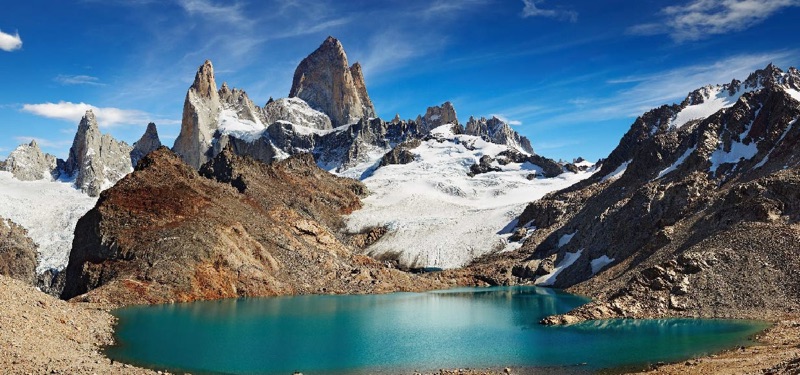
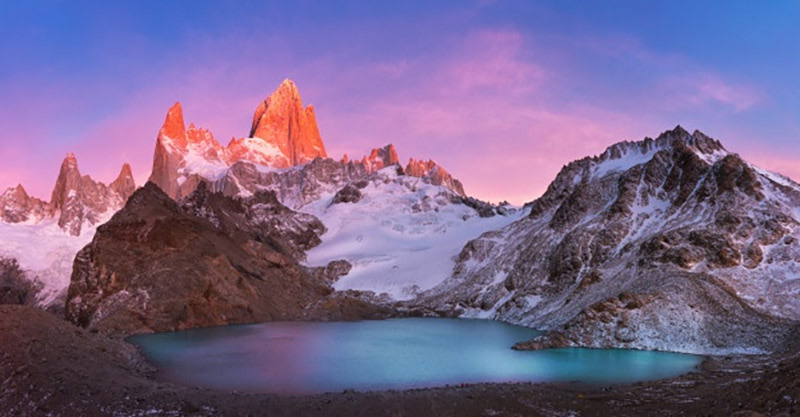
The crown jewel. 25-km round trip through lenga forests to Monte Fitz Roy, where Laguna de los Tres sits in a glacial cirque at 1,170m. One of the greatest mountain views on earth.
Start the Fitz Roy Trek
Begin at 6 AM from the trailhead. First 3 hours through lenga forests along the Rio Blanco. Well-marked and moderate until the final push.
The Final Ascent
The last kilometer is a brutal 400m vertical scramble on loose scree. At the top, Laguna de los Tres — turquoise glacial lake with Fitz Roy 3,405m granite spires towering above. The Patagonia poster shot.
Laguna Sucia and Descent
On the way down, detour to Laguna Sucia — rated 9/10 by experienced hikers, equally stunning with far fewer people. Continue via Laguna Capri for Fitz Roy reflections.
Laguna Torre and Cerro Torre
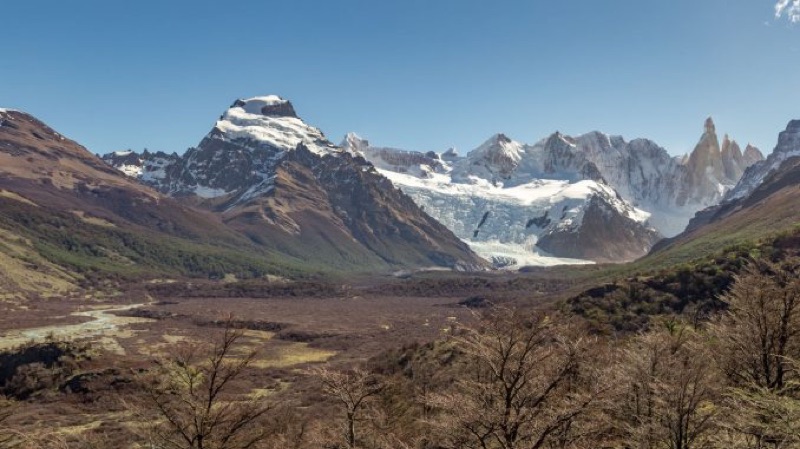
Hike to the base of Cerro Torre, a granite needle considered one of the hardest summits in the world. The 18-km trail is gentler than yesterday, with icebergs floating in the lagoon.
Trek to Laguna Torre
Depart 7:30 AM from the trailhead. The 9-km trail is flatter and more forgiving — perfect for tired legs. Icebergs float in the glacial lagoon with Cerro Torre needle rising behind.
Mirador Maestri and Picnic
Continue past the lagoon to Mirador Maestri (30 min) for an elevated panorama above the icebergs and glacier. Picnic lunch by the lagoon with a postcard view.
Rest Day or Lago del Desierto
After two big hiking days, choose your adventure. Rest in town or day trip to Lago del Desierto — a pristine glacial lake 37 km north with kayaking and hidden glaciers.
Option A: Rest and Recover
Sleep in, linger over pastries at Domo Blanco (the best bakery in town), browse the craft market, visit the mountaineering museum.
Option B: Lago del Desierto
Shuttle to Lago del Desierto (1 hour, about $30 USD round trip). This pristine lake was disputed between Argentina and Chile until 1994. Short hike to Glaciar Huemul viewpoint, optional kayaking.
El Chalten to Puerto Natales
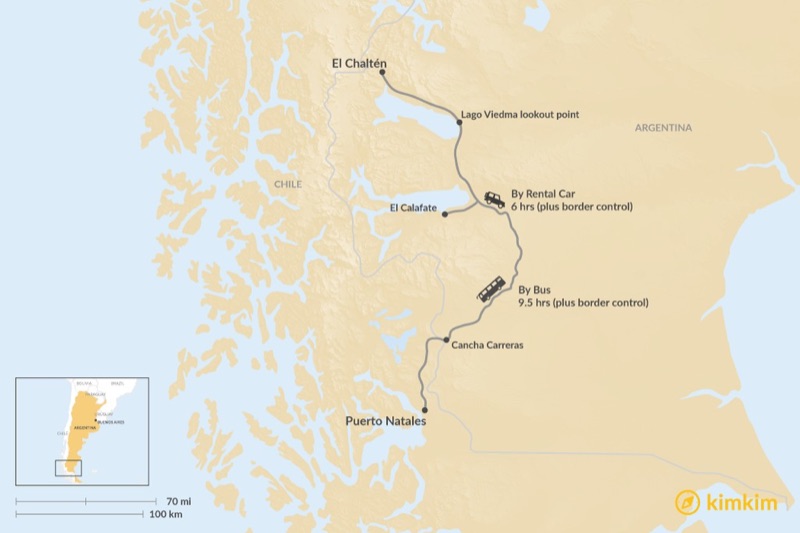
Big transit day crossing from Argentina into Chile. Patagonian steppe scenery is hauntingly beautiful — endless grasslands, guanacos, condors. Puerto Natales is a cozy harbor town on Last Hope Sound.
Bus to El Calafate
Take the 7:30 AM bus back to El Calafate (about 3 hours). Quick lunch in town before the afternoon connection.
Cross into Chile
Bus from El Calafate to Puerto Natales (about 5 hours including Cerro Castillo border crossing). Have passport ready — immigration is quick but can take 30-60 min in peak season.
Sunset on Last Hope Sound
Walk the Puerto Natales waterfront at sunset — the light on Last Hope Sound is magical. Small, charming, walkable, and the base for Torres del Paine.
W Trek Day 1 — Base Torres
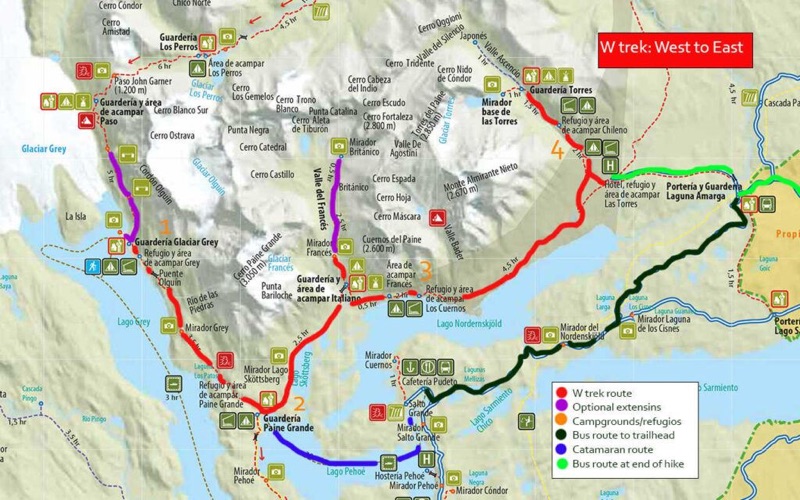
Enter Torres del Paine National Park. Start the W Trek with its defining hike — 22 km round trip to the iconic Base Torres viewpoint. Three granite towers above turquoise lake.
Enter Torres del Paine
Take the 6:30 AM bus from Puerto Natales (about 2 hours). Register at Laguna Amarga entrance, pay park fee (~$40 USD). Transfer to Hotel Las Torres.
Hike to Mirador Base Torres
22-km round trip, about 9 hours. Hike through forests and rivers to Refugio Chileno (halfway rest), then the steep final scramble. Three massive granite towers above a turquoise glacial lake — the iconic image of Patagonia.
W Trek Day 2 — French Valley
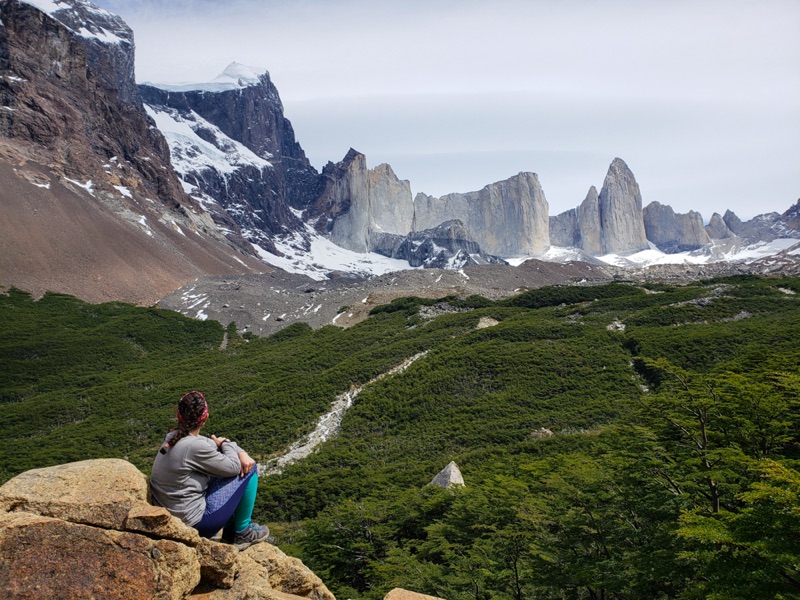
Many hikers' favorite day. Trek along the Cuernos del Paine, then enter the French Valley — a hanging valley surrounded by glaciers, waterfalls, and sheer rock walls.
Into the French Valley
Depart from Refugio Los Cuernos and trek to Campamento Italiano. Leave your heavy pack and travel light into the French Valley — a cathedral of granite, ice, and waterfalls. The valley is wind-protected, making it one of the best hiking days in Patagonia.
Mirador Britanico
The steep 2-hour climb to Mirador Britanico is absolutely worth it. At the top, a 360-degree panorama of the entire Paine massif — towers, glaciers, lakes — spreads in every direction. Have lunch and take it all in.
Continue to Paine Grande
Descend from the French Valley and continue west along the lake to Refugio Paine Grande — the major hub of the W Trek and departure point for the catamaran.
W Trek Day 3 — Grey Glacier
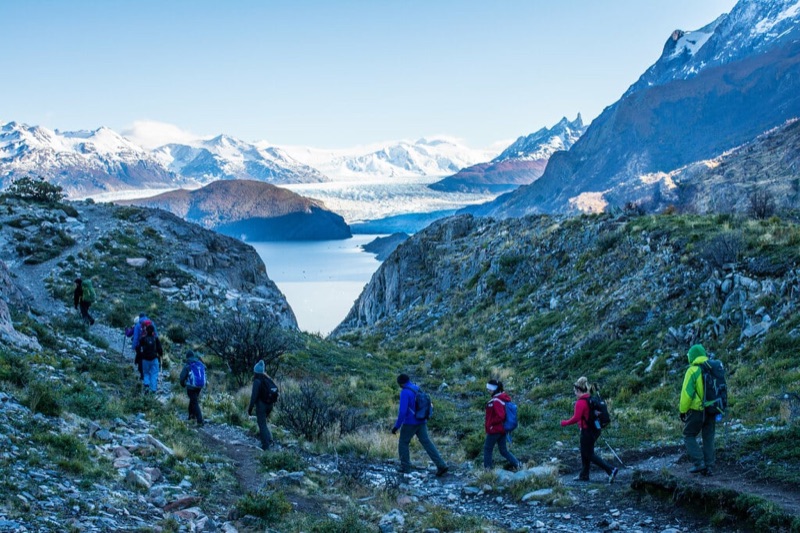
Final arm of the W along Lago Grey to Grey Glacier — a massive river of ice from the Southern Patagonian Ice Field. Icebergs in every shade of blue.
Trek to Grey Glacier
Depart Refugio Paine Grande toward Grey Glacier. The trail hugs the shore of Lago Grey, passing icebergs in surreal shades of blue. At the viewpoint, the full face of Grey Glacier stretches before you.
Ice Hiking on Grey Glacier (Optional)
If you booked in advance with Big Foot Patagonia, spend 3 hours walking on the glacier through crevasses, ice caves, and frozen rivers. This was rated 10/10 by travelers and is one of the most memorable activities in all of Patagonia.
Catamaran Across Lago Pehoe
Return to Refugio Paine Grande and catch the catamaran across Lago Pehoe to Pudeto. The crossing is spectacular — the Paine massif towers above turquoise water. Connect to the bus back to Puerto Natales.
Puerto Natales Recovery Day
Your legs earned this. Sleep in, explore Puerto Natales, and eat everything. Optional Balmaceda and Serrano glaciers boat trip for a relaxed day on the water.
Late Start & Explore
Sleep in. Walk to Cafe Kaiken for a late breakfast, then visit the Museo Historico for the story of Patagonian settlement — from indigenous peoples to European pioneers. Walk the waterfront where dolphins sometimes appear in Last Hope Sound.
Optional: Balmaceda & Serrano Glaciers Boat Trip
A relaxed full-day boat trip through Bernardo O'Higgins National Park to see the Balmaceda and Serrano glaciers. The scenery is lush and green — a nice contrast to the stark beauty of Torres del Paine. Spot seals and waterfalls along the way.
Fly to Ushuaia — End of the World
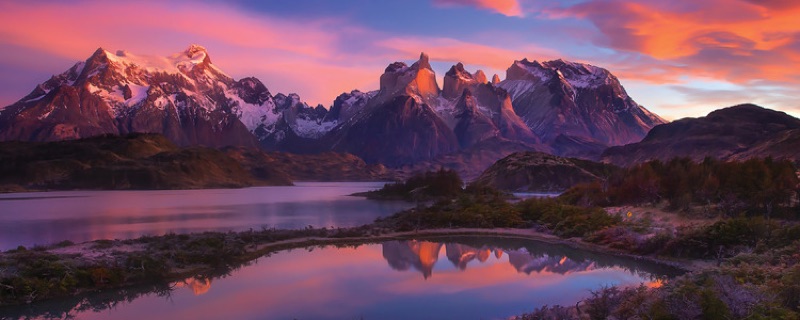
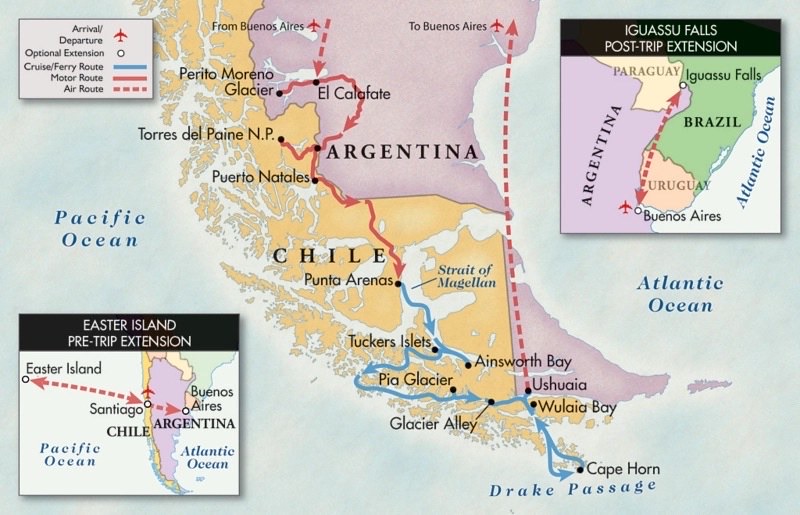
Fly from Punta Arenas to Ushuaia, the southernmost city in the world. Nestled between the Martial Mountains and the Beagle Channel, Ushuaia feels like the edge of civilization.
Transit to Ushuaia
Bus from Puerto Natales to Punta Arenas (about 3 hours), then fly to Ushuaia (about 1 hour). The approach into Ushuaia is dramatic — mountains plunge into the Beagle Channel as the city appears below.
Explore Ushuaia & Martial Glacier
Walk the waterfront and harbor — fishing boats and expedition ships bound for Antarctica line the docks. Visit the Museo del Fin del Mundo (End of the World Museum), then hike to the Martial Glacier viewpoint for sweeping views over the city and Beagle Channel.
Tierra del Fuego & Beagle Channel
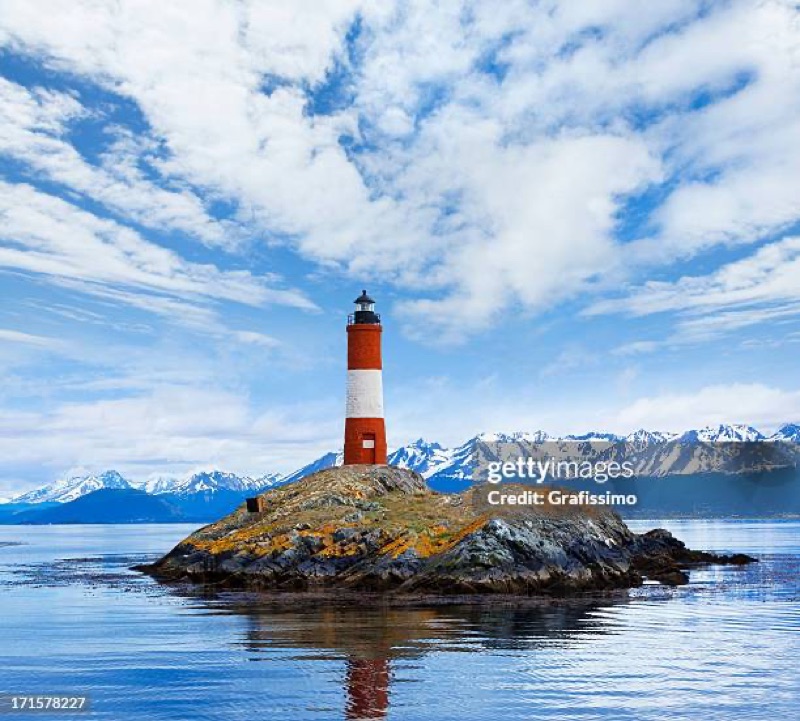
Your final day in Patagonia. Morning in Tierra del Fuego National Park at the end of the Pan-American Highway. Afternoon Beagle Channel cruise past sea lions, cormorants, and the iconic Les Eclaireurs lighthouse.
Tierra del Fuego National Park
Hike the Costera Trail to Bahia Lapataia — the official end of Route 3, the Pan-American Highway that stretches from Alaska to here. Take the obligatory photo at the End of Route 3 sign. Continue to Hito XXIV trail along Lago Roca to the Chilean border marker.
Beagle Channel Cruise
Board a catamaran for a Beagle Channel cruise — past Isla de los Lobos (sea lions), Isla de los Pajaros (cormorants), and the iconic Les Eclaireurs lighthouse (often mistakenly called the End of the World lighthouse). If it's penguin season (Oct-Mar), add a stop at Isla Martillo to see Magellanic and Gentoo penguins nesting on the shore.
Final Dinner at the End of the World
Your last night in Patagonia. Reflect on 14 days of glaciers, granite spires, and windswept wilderness over one final feast.
💰 Budget Breakdown
| Category | Item | Cost |
|---|---|---|
| International flights (round trip) | $800-1,500 | |
| Domestic flights | $200-400 | |
| Accommodation (13 nights) | $800-1,500 | |
| W Trek refugios (3 nights) | $300-600 | |
| Food and dining | $500-800 | |
| Activities | $200-500 | |
| Buses and transport | $150-300 | |
| Park entrance fees | $80-120 |
Border Crossings
- Cross the Argentina-Chile border at Cerro Castillo. Have your passport ready. Quick but can take 30-60 min in peak season.
Weather and Wind
- Patagonian wind is legendary — 80+ km/h gusts are normal. Weather changes from sunshine to rain to snow in an hour. Always carry rain gear.
Cash vs Cards
- Cards work in tourist hubs. Carry cash for buses, small shops, and park fees. ATMs can run out in small towns.
Connectivity
- Wi-Fi in hotels and cafes but can be slow. Cell service spotty outside towns. Download offline maps before heading to parks.