⚡ Before You Go — Essentials
🕌 Halal & Muslim-Friendly Dining
Osaka has a growing halal food scene. Key spots on this itinerary: Matsuri (certified halal takoyaki, okonomiyaki, Kobe beef — prayer space available), Chibo Diversity in Dotonbori (halal okonomiyaki with halal Otafuku sauce, no alcohol served, prayer room), Ramen Honolu in Namba (Osaka's first halal ramen shop), and Kinkan in Nara (Muslim-friendly tempura and soba). For konbini snacks: look for the Japan Halal Association logo, or stick to onigiri with plain fillings (ume/plum, kelp). Always confirm at the counter if unsure — staff are accustomed to the question.
🌡️ December Weather
Osaka in late December averages 5–10°C (41–50°F) with crisp, dry days. It rarely snows, but the wind off the bay can bite. Layer up: a warm coat, scarf, and gloves are essential. The upside: winter light is gorgeous, crowds are smaller than spring/autumn, and the illuminations turn the whole city into a wonderland. Temples and shrines are peaceful in December.
🚆 Getting Around
Get an Osaka Metro 1-day pass (¥820 weekdays, ¥620 weekends — your Dec 23 start is a Wednesday). For the Nara day trip: JR Yamatoji Line from Osaka Station to Nara (50 min, ¥820). IC cards (ICOCA) work on all trains, buses, and konbini — pick one up at any station. Google Maps transit is reliable in Osaka.
💴 Money & Tipping
Japan is still largely cash-based at smaller restaurants and market stalls. 7-Eleven ATMs accept international cards 24/7. There is NO tipping in Japan — it can cause confusion or offence. Tax-free shopping (¥5,000+ purchases) at major stores with your passport.
📱 Connectivity
Rent pocket WiFi at Kansai Airport (~¥900/day) or buy an eSIM (Airalo/Ubigi, ~$15/5 days). Essential apps: Google Maps (transit), Google Translate (camera mode reads Japanese menus and signs), Muslim Pro (for prayer times and nearby halal restaurants), Tabelog (Japanese Yelp — ratings above 3.5 are excellent).
Neon Welcome, Street Food & Christmas Lights

Land in Osaka and dive straight into the electric heart of the city: Dotonbori's neon canyon, Kuromon Market's food stalls, and the Midosuji Illumination lighting up the city in gold.
Kuromon Market Food Crawl
Osaka's 'kitchen of the people' — a 600-metre covered market with 150+ stalls selling fresh seafood, wagyu skewers, tamagoyaki (sweet rolled omelette), seasonal fruits, and mochi. December means oysters, crab, and hot amazake (sweet rice drink). Walk and graze — this is how Osakans do breakfast. Most stalls are cash-only and close by 4 PM.
Sennichimae Doguyasuji Shopping Arcade
A 150-metre covered arcade selling every kitchen tool and cooking gadget imaginable — from takoyaki pans to fake food samples to professional chef knives. Even if you don't cook, it's a fascinating window into Osaka's food obsession. Pick up a takoyaki pan as a souvenir.
Shinsaibashi-suji Shopping Arcade
A 600-metre covered shopping street — Osaka's answer to the Champs-Élysées but with way more character. Department stores (Daimaru, Parco), Uniqlo flagship, indie boutiques, and hundreds of smaller shops. In December, the arcade is decorated with Christmas lights and seasonal window displays.
Midosuji Illumination Walk
Osaka's main boulevard transforms from Umeda to Namba into a 4-kilometre corridor of champagne-gold lights strung through the ginkgo and zelkova trees. The 2025-2026 season runs November through December 25 — you're catching it at peak brilliance. Walk from Shinsaibashi south toward Dotonbori as the lights come on around 4:30 PM.
Dotonbori by Night
The neon soul of Osaka: a canal-side entertainment strip blazing with thousands of illuminated signs. The Glico Running Man, the giant moving crab, the dragon — these are Osaka's landmarks. The energy is electric in December with Christmas illuminations layered on top of the permanent neon. Walk both sides of the canal, cross the Ebisu Bridge for the classic photo, and follow the steam from street food stalls.
Hozenji Yokocho
A narrow stone-paved alley one block from Dotonbori's chaos, lined with tiny restaurants and bars. The moss-covered Fudo-myoo statue at Hozenji Temple is constantly splashed with water by visitors making wishes. In December, lantern light and steam from the restaurants create an otherworldly atmosphere. A 30-second walk from the neon, but it feels centuries away.
Castles, Sky Views & Retro Christmas Eve
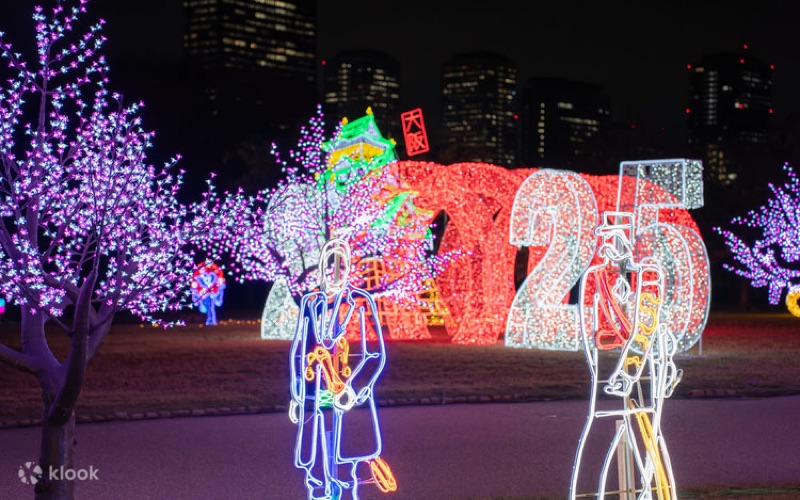
Christmas Eve in Osaka: the golden castle against winter sky, the city spread beneath your feet from the Umeda Sky Building, and the retro charm of Shinsekai's kushikatsu alleys lit up for the holidays.
Osaka Castle & Nishinomaru Garden
One of Japan's most iconic landmarks — a magnificent castle with golden roof ornaments rising above stone walls and a moat. The main tower (rebuilt in 1931) houses a museum of samurai history, Hideyoshi Toyotomi's story, and panoramic views from the 8th-floor observation deck. In December, the bare winter trees frame the castle beautifully and the crowds are thin. Walk through Nishinomaru Garden (¥200) for the classic photo angle with the castle reflected in the moat.
Osaka Castle Park Winter Walk
The surrounding park is enormous and peaceful in December — joggers, families, and the occasional street performer. The plum grove (though blooming in February) is still scenic with its gnarled branches. The east moat is particularly photogenic in morning light.
Umeda Sky Building — Kuchu Teien Observatory
Two 40-storey towers connected by a floating garden observatory at the top — one of Osaka's most dramatic pieces of architecture. The open-air rooftop (173m up) offers 360° views of the city, and on clear December days you can see all the way to Awaji Island and the Akashi Kaikyo Bridge. Arrive before sunset to watch the city light up — it's magical on Christmas Eve. The basement has Takimi Koji, a recreated Showa-era (1920s) alley of restaurants.
Shinsekai — Retro Osaka
A district frozen in the 1920s, modelled after New York (the north) and Paris (the south) but now pure Osaka grit and charm. The centrepiece is Tsutenkaku Tower (103m), painted in gaudy colours and lit up at night. The streets are lined with kushikatsu (fried skewer) restaurants, retro arcades, and old-school shops selling senbei (rice crackers) and taiyaki. In December, the area has a melancholy beauty — steam rising from fryers, neon buzzing, locals huddled over counters.
Tsutenkaku Tower Christmas Lights
The tower puts on special Christmas illumination displays in December — the observation deck (5th floor, open-air) offers a nostalgic view of southern Osaka's cityscape lit up for the holidays. Less glamorous than Umeda Sky, but infinitely more character.
Sacred Deer, Great Buddha & Christmas in an Ancient Capital
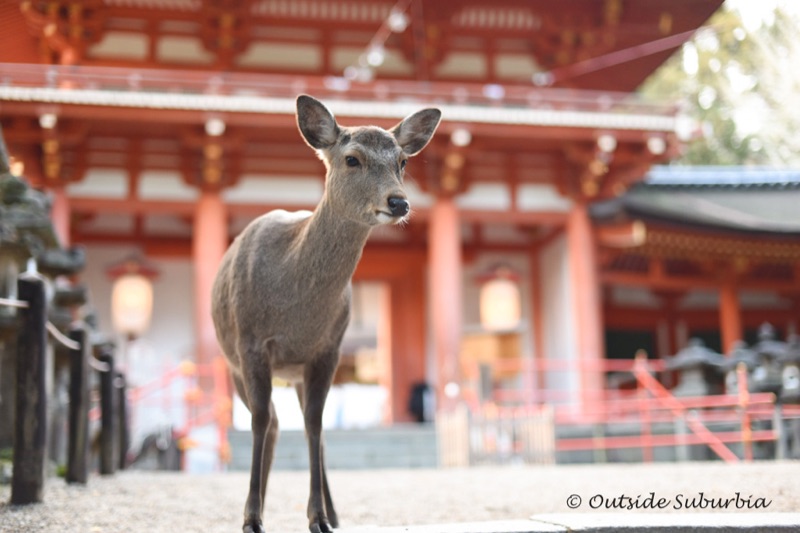
Take a day trip to Nara — Japan's first permanent capital (710 AD) — where sacred deer roam free, the world's largest bronze Buddha sits inside the world's largest wooden building, and centuries-old lanes hold halal-friendly soba restaurants. Back in Osaka for Christmas night illumination.
Nara Park & Sacred Deer
Over 1,000 free-roaming sika deer considered divine messengers in Shinto tradition. Buy deer crackers (shika senbei, ¥200) from vendors and the deer will literally bow to you for treats. December means fewer tourists, crisp air, and the deer are more active in the cool weather. The park is vast and beautiful — walk from the station through the grounds toward Tōdai-ji.
Tōdai-ji Temple & Great Buddha
The world's largest wooden building houses a 15-metre (49-foot) bronze Buddha (Daibutsu) weighing 500 tonnes, cast in 749 AD. The sheer scale defies description. Inside the Great Buddha Hall, there's a wooden pillar with a hole at the base said to be the size of the Buddha's nostril — crawl through for enlightenment (and good luck). December's thin crowds mean you can actually sit and absorb the space.
Naramachi — Old Merchant Quarter
Nara's historic merchant district — narrow lanes of restored townhouses (machiya), tiny museums, craft shops, and the Naramachi Koshi-no-Ie (a restored Edo-period townhouse you can enter for free). The area has a slower, more intimate feel than the temple zone. Great for picking up Nara's famous calligraphy brushes, indigo textiles, and cedar products.
Kasuga Taisha Shrine
Nara's most beautiful Shinto shrine — established in 768 AD, famous for its 3,000 stone and bronze lanterns lining the approach through the forest. Twice a year (February and August) all 3,000 are lit simultaneously for the Mantoro Festival. In December, the forest approach is magical — moss-covered lanterns, filtered winter light, and barely any crowds. The inner sanctuary (¥500) has hundreds of hanging bronze lanternes.
Return to Osaka — Tennoji Illuminations
Take the JR Yamatoji Line back to Osaka (50 min). Get off at Tennoji Station and walk through Tennoji Park, which has its own winter illumination display. Then head to Abeno Harukas — Japan's tallest building (300m) — where the 16th-floor observation area (free) and the 60th-floor Harukas 300 observatory (¥1,500) offer a spectacular Christmas night panorama of Osaka's lights.
Whale Sharks, Bay Sunsets & Osaka Farewell
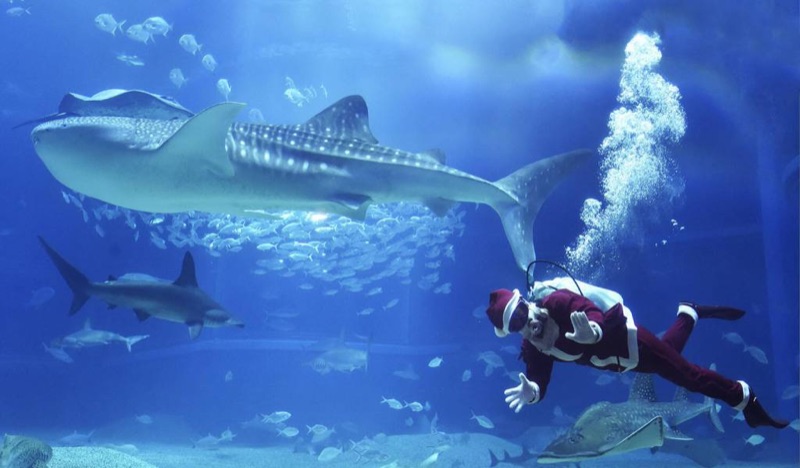
The final day: come face-to-face with whale sharks at one of the world's greatest aquariums, ride the Tempozan Ferris wheel over the bay, explore the Umeda food halls for last-minute treats, and say goodbye to Osaka with a memorable farewell dinner.
Osaka Aquarium Kaiyukan
One of the world's largest aquariums — 30,000 animals across 620 species in tanks recreating the Pacific Ring of Life. The centrepiece is a 9-metre-deep, 5,400-tonne Pacific Ocean tank housing whale sharks, manta rays, and hundreds of schooling fish. The path spirals down from the surface to the ocean floor. December is ideal — smaller crowds, and the cold outside makes the warm aquarium even cozier. Don't miss the jellyfish exhibit and the interactive touch pool.
Tempozan Ferris Wheel
A 112-metre Ferris wheel next to the aquarium with views over Osaka Bay, the city skyline, and (on clear days) the Akashi Kaikyo Bridge and Awaji Island. In December, the wheel is illuminated with LED displays. The ride takes 15 minutes — do it right after the aquarium while you're already in Tempozan.
Namba Yasaka Shrine
A quirky, unforgettable shrine featuring a 12-metre-tall, 11-metre-wide giant lion head (the Ema-den) with its mouth wide open — believed to swallow evil spirits and grant success. One of Osaka's most photogenic and unusual spots. The contrast between this massive stone lion and the quiet residential streets around it is pure Osaka oddity.
Umeda Department Store Food Halls (Depachika)
Osaka's department store basements are legendary — the finest wagyu, artisan mochi, seasonal Japanese sweets, and beautifully packaged gift foods. Daimaru Umeda and Hankyu Umeda have the best food halls. This is where to buy edible souvenirs: matcha Kit-Kats, yuzu pepper paste, dashi packets, Japanese whisky, and exquisite wagashi (traditional sweets). Many items are beautifully gift-wrapped for free.
Umeda Sky Building — Farewell Sunset
If you loved the Sky Building on Day 2, return for a final sunset view — or try a different angle. The basement Takimi Koji alley has Showa-era restaurants if you want a nostalgic last dinner. Alternatively, the nearby Grand Front Osaka complex has modern dining with bay views.