⚡ Before You Go — Essentials
🚄 Getting Around
This route covers ~800km from Hakuba to Tokyo. A 7-day JR Pass (¥50,000/~$330) is worth it if you start it on Day 1 — it covers the Nagano→Nagoya shinkansen, Nagoya→Ise (via JR), Ise→Shizuoka, and Hakone→Kamakura→Tokyo segments. For Izu Peninsula, you'll use the Izuhakone Railway (not covered by JR Pass, ~¥500-1,000). Alternatively, buy individual tickets if you prefer flexibility — the route is efficient enough that either way works.
💵 Money
Japanese Yen (¥). Many places on this route (especially Ise, Izu, and Kamakura) are cash-heavy. ATMs at 7-Eleven and post offices accept international cards. Budget ¥10,000-15,000/day for food, transport top-ups, and activities. IC card (Suica/Pasmo) works everywhere for trains and konbini.
🏨 Accommodation Strategy
Mix of business hotels (¥5,000-8,000/night in Nagoya/Shizuoka), one ryokan splurge in Izu (¥12,000-20,000 with dinner/breakfast), and capsule or budget hotels elsewhere. Book the Izu ryokan in advance — spring weekends fill up. Hakone has great mid-range guesthouses.
🌸 Cherry Blossom Intel
Nagoya's first bloom: March 17. Full bloom: ~March 28. You'll catch the exciting first buds opening in Nagoya, early blooms in Shizuoka, and Tokyo's first flowers by March 25. The sakura front moves northeast — you're literally following it home to Tokyo.
🗣️ Language
Outside Nagoya and Kamakura, English signage drops significantly. Google Translate camera mode is essential for menus in Ise and Izu. Learn: sumimasen (excuse me), onegaishimasu (please), oishii (delicious), ikura desu ka (how much?). Most people are incredibly helpful even without shared language.
🎒 Packing Tips
Mid-March temps range 8-16°C. Layers are essential — mornings are chilly, afternoons pleasant. Bring a compact umbrella (spring showers are common). Pack light — use takkyubin luggage forwarding (¥2,000-3,000) to ship your bag ahead to Tokyo so you can travel with just a daypack.
First Blossoms: Hakuba to Nagoya's Sakura Debut
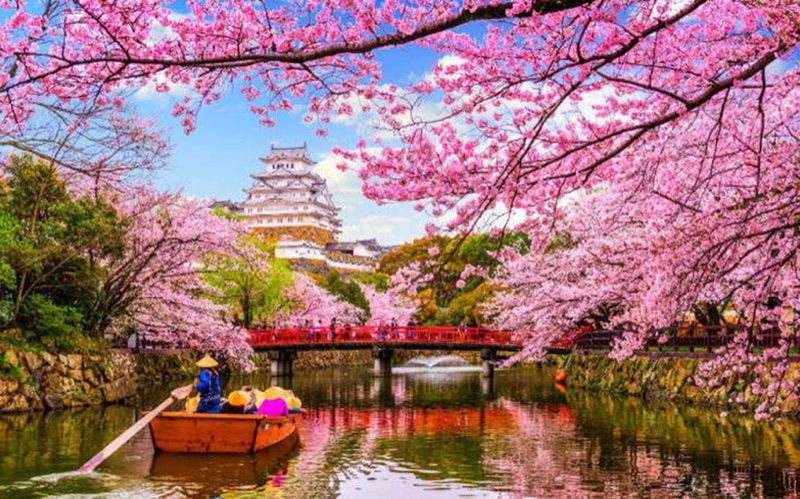
Leave the mountains behind and head south to Nagoya — Japan's fourth-largest city and, according to the 2026 forecast, the very first place in Japan where Somei Yoshino cherry blossoms will open today. You're witnessing the start of sakura season.
Hakuba → Nagano → Nagoya by Train
Take the JR Oito Line from Hakuba to Nagano Station (~2 hours through beautiful mountain scenery), then transfer to the Hokuriku Shinkansen → Tokaido Shinkansen to Nagoya (~2.5 hours with transfer in Tokyo or via Shiojiri). Alternatively, take the limited express Shinano from Nagano to Nagoya directly (~3 hours, scenic route through Kiso Valley). The Shinano route is recommended — it winds through the dramatic Kiso Valley gorge, a route you won't take again.
Nagoya Castle & First Cherry Blossoms 🌸
Nagoya's cherry blossoms are forecast to open TODAY (March 17). Head straight to Nagoya Castle, where ~1,000 cherry trees surround the castle grounds. You might witness the kaika (first bloom) declaration — the meteorological moment Japan has been waiting for. The castle grounds include Honmaru Palace, a stunning reconstruction of a feudal lord's residence with gold-leaf sliding doors.
Meijō Park (名城公園)
Adjacent to Nagoya Castle, this expansive park has over 2,500 cherry trees and is where locals come for hanami. In mid-March, the plum blossoms are still going strong and the first sakura buds are appearing — you get both. The tonarinowa area has great cafés overlooking the park.
Ōsu Kannon & Ōsu Shopping District
Nagoya's most vibrant neighborhood — a covered arcade district centered around the 1,200-year-old Ōsu Kannon Temple. The streets are packed with vintage clothing shops, retro game arcades, international street food, maid cafés, and tiny izakayas. It's Nagoya's answer to Shimokitazawa meets Akihabara, but grittier and more real.
Nagoya's Soul: Ancient Shrines, Artisan Craft & Nagoya-meshi
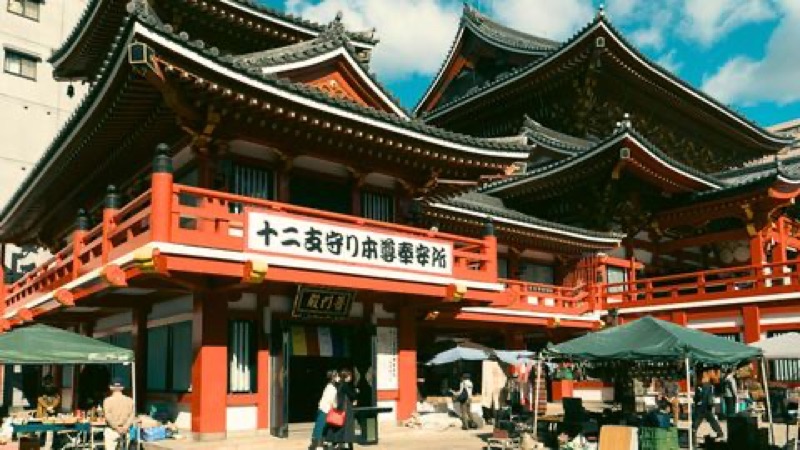
Go deeper into Nagoya — beyond the castle. Visit one of Japan's most important shrines, explore the city's artisan heritage, and eat your way through Nagoya's legendary food scene. This is a city most tourists skip entirely, which means you get the real thing.
Atsuta Shrine (熱田神宮)
One of Japan's most sacred Shinto shrines, said to house the Kusanagi no Tsurugi — one of the three Imperial Regalia of Japan (a legendary sword). The shrine sits in a dense forest of ancient camphor trees, some over 1,000 years old. Unlike the touristy shrines of Kyoto, Atsuta feels genuinely sacred and deeply local. Over 9 million people visit annually for hatsumode (New Year), but in mid-March it's peaceful.
Noritake Garden
The headquarters and museum of Noritake, Japan's most famous porcelain company (founded 1904). Tour the craft center to watch artisans hand-painting china, explore the museum of historic designs, and browse the outlet shop for factory-second deals. The red-brick industrial buildings are beautiful.
Tsuruma Park (鶴舞公園) Cherry Blossoms 🌸
Nagoya's most popular hanami park — ranked among Japan's top 100 cherry blossom spots. The park has over 750 Somei Yoshino trees and a beautiful Western-style fountain garden. Even if full bloom hasn't hit yet, the atmosphere of early spring — locals setting up picnic spots, food vendors arriving, the anticipation — is wonderful.
Sakae & Hisaya-ōdōri Park
Nagoya's central shopping and entertainment district. The recently renovated Hisaya-ōdōri Park is a 2km-long tree-lined promenade with specialty shops, cafés, and the iconic Nagoya TV Tower (the oldest TV tower in Japan, built 1954). Walk the park, stop for coffee, and watch the city come alive.
Tebasaki & Izakaya Crawl in Sakae
No visit to Nagoya is complete without tebasaki — crispy, twice-fried chicken wings seasoned with pepper and salt. The two legendary tebasaki chains, Sekai no Yamachan and Furaibō, have been feuding for decades over who's best. Try both and decide for yourself. Then wander the tiny izakayas of Sumiyoshi area.
The Sacred Road: Nagoya to Ise Grand Shrine
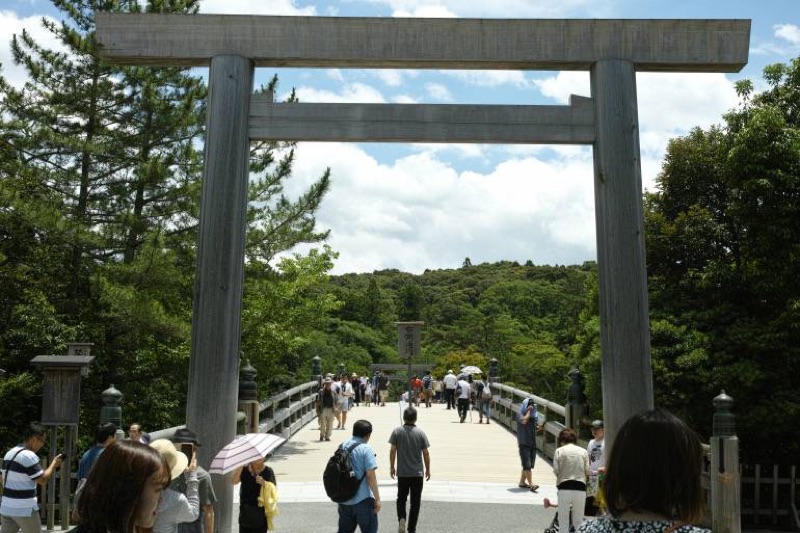
Head south to the Shima Peninsula for one of the most profound experiences in Japan — Ise Grand Shrine (Ise Jingū), the spiritual heart of Shinto and the most sacred site in all of Japan. This is the shrine that every other shrine in the country faces toward.
Nagoya → Ise by Train
Take the JR Rapid Mie from Nagoya Station to Iseshi Station (~1 hour 40 minutes). This is a comfortable, scenic ride through the Mie countryside. You'll arrive right at the Outer Shrine (Geku).
Ise Jingū — Gekū (Outer Shrine)
Begin your pilgrimage at the Outer Shrine, dedicated to Toyouke-Ōmikami, the deity of food and agriculture. Traditional etiquette says you visit Geku first, then Naiku. The shrine sits in a serene old-growth forest — the buildings are rebuilt every 20 years in an unbroken tradition spanning 1,300 years. The current buildings were last rebuilt in 2013; the next reconstruction is 2033.
Ise Jingū — Naikū (Inner Shrine)
The holiest site in Shinto, dedicated to Amaterasu-Ōmikami, the sun goddess and mythical ancestor of the Imperial family. Cross the elegant Uji Bridge over the Isuzu River, purify your hands in the river's clear water, and walk through towering cryptomeria trees to the main hall. You can't see inside the innermost sanctuary — only the Imperial family and head priests may enter. The mystery is part of the power.
Okage Yokochō & Oharai-machi
The charming traditional street leading to Naiku's entrance has been welcoming pilgrims since the Edo period. Oharai-machi is an 800m stone-paved street lined with wooden buildings housing shops, teahouses, and restaurants. Okage Yokochō is the lively section with food stalls and souvenir shops. Try everything: Akafuku mochi (the 300-year-old signature sweet), Ise udon, and matsusaka beef skewers.
Ise City Evening & Accommodation
Stay in Ise city near the stations. The area around Iseshi Station has several good business hotels and a few ryokan. Take an evening walk along the Seta River, or head to the small entertainment district near Ujiyamada Station for local izakayas.
Sacred Rocks, Pearl Divers & the Sea
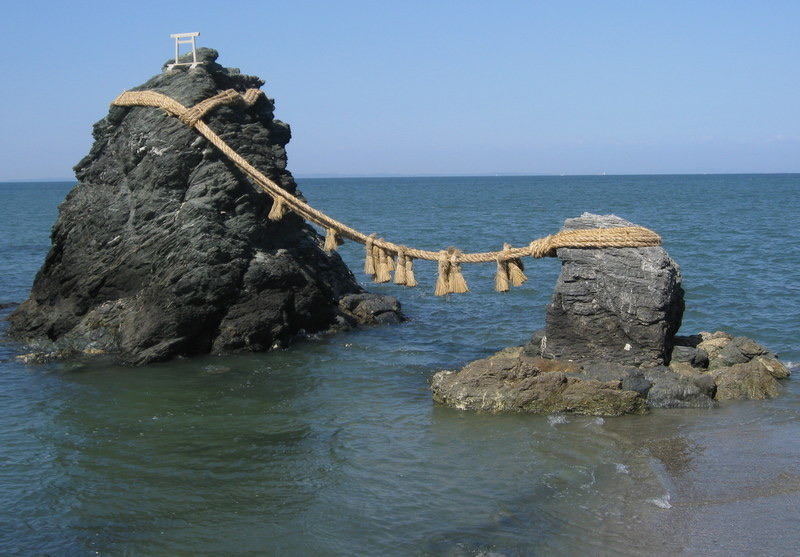
Explore the coastal side of the Shima Peninsula — the sacred Wedded Rocks at sunrise, Toba's pearl diving heritage, and the legendary ama women free-divers who've been harvesting the sea for 2,000 years. This is a Japan most visitors never see.
Meoto Iwa (Wedded Rocks) at Futami
Two sacred rocks in the sea connected by a massive shimenawa rope, symbolizing the union of the creator gods Izanagi and Izanami. Visit at dawn if possible — on clear mornings, the sun rises directly between the rocks, and in winter/spring you can sometimes see Mt. Fuji in the distance. The adjacent Futami Okitama Shrine is covered in frog statues (kaeru means both "frog" and "return" in Japanese).
Mikimoto Pearl Island
The birthplace of cultured pearls. In 1893, Mikimoto Kōkichi successfully cultivated the world's first cultured pearl here in Toba Bay. The museum tells this fascinating story, and you can watch live demonstrations of ama divers in traditional white diving outfits harvesting oysters from the bay — a tradition that predates pearl cultivation by millennia.
Toba Bay Cruise or Toba Sea-Folk Museum
Option A: Take a short cruise around Toba Bay's islands (¥1,800, 50 min) — the views of the rocky coast and pearl rafts are beautiful. Option B: Visit the Toba Sea-Folk Museum (¥800), which has an extraordinary collection documenting the ama diving tradition, fishing culture, and maritime life of the region. It's one of Japan's most unique museums.
Travel to Shizuoka (or stay overnight in Toba)
Option A: Head back to Nagoya by train (1h40m), then shinkansen to Shizuoka (1h). Stay in Shizuoka tonight. Option B: Stay another night in Toba/Ise area and leave early tomorrow. If you choose Option A, the evening shinkansen ride passes through beautiful countryside as the sun sets.
Shizuoka: Tea Fields, Mt. Fuji Views & Shogun Legacy
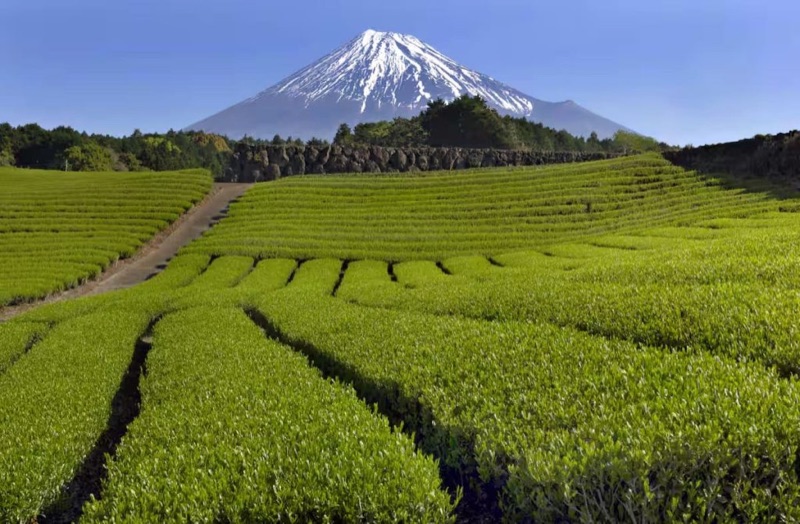
Shizuoka is Japan's tea capital, produces the country's best wasabi, and has stunning views of Mt. Fuji from Nihondaira plateau. It's also home to a remarkable Tokugawa-era shrine that rivals Nikkō in beauty but sees a fraction of the tourists.
Nihondaira Plateau & Mt. Fuji View
Take a bus to the top of Nihondaira — a plateau that offers one of the most famous views of Mt. Fuji in all of Japan. On a clear March morning, the snow-capped peak rises above Suruga Bay and the tea fields below. There's a modern observation deck (Nihondaira Yume Terrace, free) designed by Kuma Kengo, and the area is surrounded by tea plantations.
Kunozan Tōshō-gū Shrine (久能山東照宮)
The ORIGINAL Tōshō-gū — the first shrine built to enshrine Tokugawa Ieyasu (the shogun who unified Japan). Ieyasu was originally buried here before being moved to Nikkō. Take the ropeway down from Nihondaira to reach it. The ornate architecture features stunning lacquerwork and gold details in a style called gongen-zukuri. It's a National Treasure and far less crowded than Nikkō.
Sunpu Castle Park & Shizuoka City Walk
Return to central Shizuoka and visit Sunpu Castle Park — Tokugawa Ieyasu's retirement residence. The castle is being reconstructed (completion ~2030s) but the gardens and moats are beautiful, and there's a small museum about Ieyasu's life. Then walk the Gofuku-chō shopping arcade — Shizuoka's main covered shopping street.
Mariko-juku (丸子宿) — Tokaido Post Town
A 30-minute bus ride west of Shizuoka Station is Mariko-juku, one of the 53 stations of the old Tokaido road connecting Edo (Tokyo) to Kyoto. The tiny post town has a famous tororojiru (grated yam soup) restaurant, Chōjiya, that's been serving the same dish to travelers since 1596. This is walking the same road the samurai and merchants walked.
Izu Peninsula: Volcanic Coast & Hot Spring Sanctuary
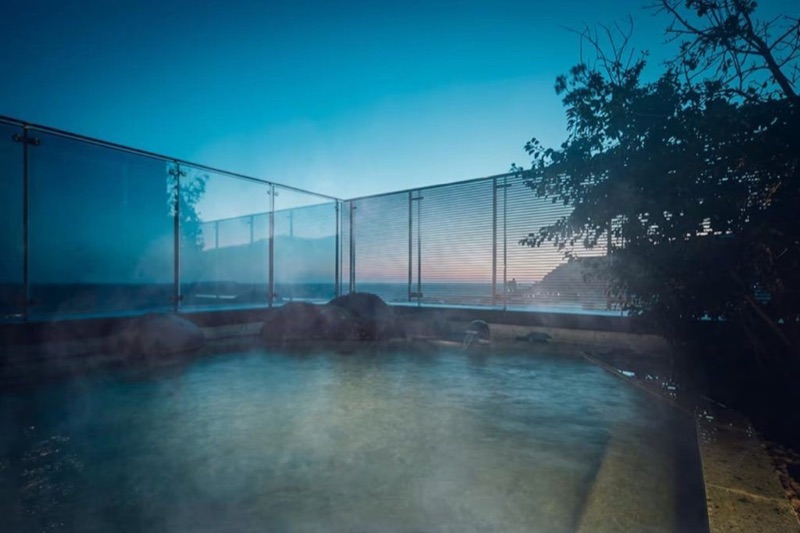
Head south to the Izu Peninsula — a rugged volcanic landscape of dramatic cliffs, hidden coves, bamboo forests, and some of Japan's finest onsen. Shuzenji, the peninsula's most atmospheric hot spring town, is where you'll spend the night in a traditional ryokan.
Shizuoka → Atami → Shuzenji
Take the JR Tokaido Line to Atami (1 hour), then transfer to the Izuhakone Railway to Shuzenji (35 min). If time allows, stop in Atami for a quick walk — this seaside onsen town has been Japan's favorite hot spring resort since the Edo era. The Atami Plum Garden may still have late-blooming plum trees.
Shuzenji Temple (修禅寺)
The 1,200-year-old temple that gives this town its name. Founded in 807 by the monk Kūkai (who also founded Kōyasan), the temple sits at the heart of the hot spring town alongside the Katsura River. The surrounding streets are lined with ryokan, red bridges, and stone paths. In March, plum and early cherry blossoms decorate the grounds.
Shuzenji Bamboo Grove (竹林の小径)
A tranquil path lined with tall bamboo on both sides, running alongside the Katsura River. It's smaller than Kyoto's Arashiyama grove but far more intimate and peaceful — you might have it entirely to yourself. Red bridges, stone lanterns, and the sound of the river create a meditative atmosphere.
Tokko-no-Yu & Riverside Walk
The legendary hot spring where Kūkai first struck the ground in 807. While the original open-air bath is now just a monument (bathing stopped years ago), the riverside walk connecting it to the temple and bamboo grove is one of the most beautiful strolls in Japan. Stop at the public foot baths along the way.
Check into Ryokan & Onsen
Your ryokan experience tonight is a highlight of the trip. Choose a place with private or semi-private onsen baths, yukata robes, and kaiseki (multi-course) dinner. Change into your yukata when you arrive, soak in the hot springs, and prepare for an extraordinary evening.
Hakone: Art in the Mountains & Volcanic Hot Springs
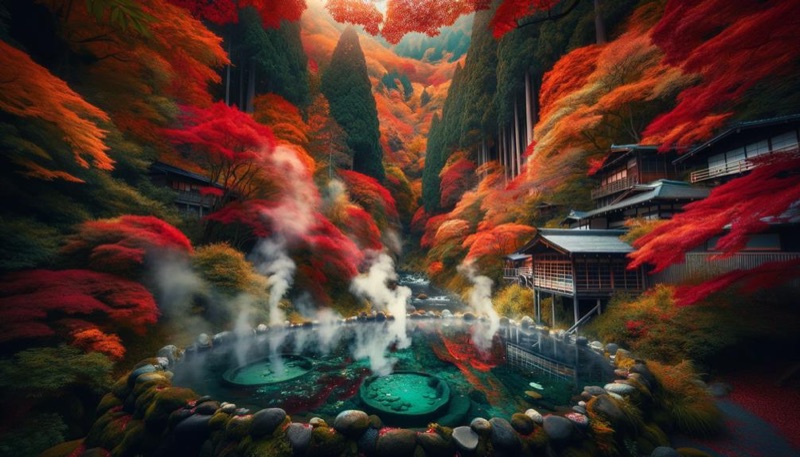
Leave the Izu coast and head to Hakone — the volcanic valley where art, nature, and onsen converge. The Open-Air Museum is one of Japan's finest, Lake Ashi offers Mt. Fuji reflections, and the Ōwakudani volcanic valley reminds you this is one of the most geologically active places on Earth.
Shuzenji → Hakone
Take the Izuhakone Railway back to Mishima, then a bus or taxi to Hakone (about 1.5 hours total). Alternatively, take a bus directly from Shuzenji through the mountains to Hakone if available. Store extra luggage in Hakone-Yumoto Station lockers.
Hakone Open-Air Museum (彫刻の森美術館)
One of Japan's most extraordinary museums — a vast outdoor sculpture park set against the Hakone mountains, featuring over 120 works by Picasso, Henry Moore, Rodin, and contemporary Japanese artists. The Picasso Pavilion houses 300+ works. There's a stained-glass tower you can climb inside, foot baths to rest tired feet, and sculptures scattered across manicured lawns with mountain backdrop.
Ōwakudani (大涌谷) Volcanic Valley
Take the Hakone Ropeway from Gōra up to Ōwakudani — an active volcanic zone where sulfurous steam billows from the mountainside. The landscape is otherworldly: barren rock, yellow sulfur deposits, and boiling pools. Try the famous kuro-tamago (black eggs) — hard-boiled in the volcanic springs, the shell turns black from sulfur. Legend says each one adds 7 years to your life.
Lake Ashi (芦ノ湖) & Mt. Fuji Views
Continue on the ropeway down to Tōgendai on the shore of Lake Ashi. Take the iconic pirate ship (Hakone Sightseeing Cruise) across the lake — on clear days, Mt. Fuji is reflected perfectly in the lake's surface. The vermillion torii gate of Hakone Shrine standing in the water is one of Japan's most photographed scenes.
Hakone Shrine (箱根神社)
Walk from Moto-Hakone to Hakone Shrine, set in a dense cryptomeria forest on the lake shore. The famous lakeside torii gate (heiwa no torii) is magical at dusk when the crowds thin out. The shrine itself, dating to 757 AD, is a center of spiritual power associated with the Hakone mountains and lake.
Hakone Onsen Evening
Stay at a guesthouse or small hotel with onsen in the Hakone-Yumoto or Gōra area. Hakone's hot springs are fed by 17 different sources, each with different mineral compositions. Soak away the day.
Kamakura: Warrior Capital, Great Buddha & Enoshima Sunset
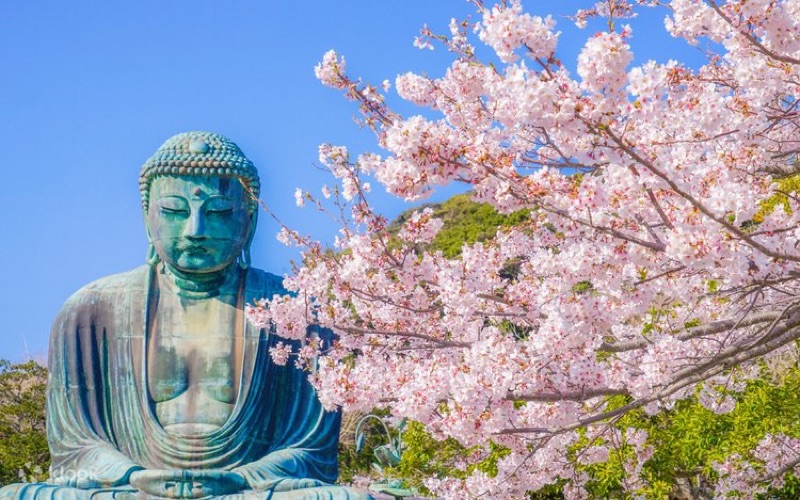
From Hakone's mountains to Kamakura's coast — Japan's medieval warrior capital. For 150 years (1185-1333), Kamakura was the seat of power that shaped samurai culture. Today its temples, Great Buddha, and bamboo groves sit between forested hills and the Pacific Ocean. End the day on Enoshima Island with spring's first shirasu and a legendary sunset.
Hakone → Kamakura
Take the train from Hakone-Yumoto to Odawara (15 min), then JR Tokaido Line to Ōfuna, and transfer to JR Yokosuka Line to Kita-Kamakura (total ~1.5 hours). Start in Kita-Kamakura, the quieter northern temple district.
Engaku-ji Temple (円覚寺)
One of Kamakura's Five Great Zen Temples, founded in 1282 to honor those who died in the Mongol invasion attempts. The main gate (Sanmon) is one of the most beautiful in Japan. The temple grounds are dotted with sub-temples, a bell designated as National Treasure, and moss-covered stone paths through forest. In late March, early cherry blossoms frame the ancient buildings.
Hōkoku-ji Temple — The Bamboo Temple (報国寺)
A Zen temple famous for its stunning bamboo grove — over 2,000 towering bamboo stalks surrounding a hidden tea house. Drink matcha in the bamboo garden (¥600 including tea) while listening to the bamboo creak in the wind. It's genuinely one of the most peaceful places in Japan.
Kamakura Great Buddha (鎌倉大仏)
The iconic 13.35m bronze Buddha at Kōtoku-in temple, cast in 1252. Originally housed inside a great hall, the hall was destroyed by a tsunami in 1498, and the Buddha has sat in the open air ever since. You can go inside the hollow statue (¥50). Standing before this 770-year-old bronze figure in the open air is a profoundly moving experience.
Hasedera Temple (長谷寺)
Just 5 minutes from the Great Buddha, Hasedera has stunning views of Sagami Bay from its hillside terrace, a massive golden Kannon statue (the largest wooden sculpture in Japan at 9.18m), a cave with tiny carved Buddhist figures, and beautiful gardens that bloom year-round.
Enoshima Island (江の島)
Take the Enoden tram to Enoshima — a small tidal island connected to the mainland by a bridge. Climb up through the hillside shrine to the Samuel Cocking Garden and Sea Candle lighthouse for panoramic sunset views over Sagami Bay. On clear evenings, Mt. Fuji is silhouetted against the orange sky. The island has caves, shrines, and hawks circling overhead.
Welcome Home: Kamakura Coast to Naka-Meguro
Your final morning by the sea, then a short train ride to your new home in Naka-Meguro. Tokyo's cherry blossoms are forecast to have started blooming around March 20 — by now, the famous Meguro River should have its first sakura. You're arriving just in time.
Kamakura Morning Beach Walk
Before heading to Tokyo, take a morning walk along Yuigahama Beach. The Pacific air is fresh, surfers are catching early waves, and the Kamakura hills rise behind you. This is the same beach where Kamakura's samurai warriors once trained. Grab a coffee from one of the beach-side cafés.
Tsurugaoka Hachiman-gū (鶴岡八幡宮)
Kamakura's most important shrine, founded in 1063 and central to samurai culture. Walk down the pine-lined Wakamiya Ōji approach from the beach, climb the dramatic stone staircase to the main hall, and look back over the city toward the ocean. The shrine's cherry trees should be showing early blooms.
Kamakura → Naka-Meguro
Take the JR Yokosuka Line from Kamakura to Shibuya (1 hour), then transfer to the Tokyo Metro Hibiya Line one stop to Naka-Meguro. Or take the Tokyu Toyoko Line from Shibuya. Welcome to your new neighborhood.
Settle into Naka-Meguro & Explore Your New Neighborhood
Drop your things and go explore. Naka-Meguro is one of Tokyo's coolest neighborhoods — a mix of independent coffee shops, bookstores, select shops, and riverside restaurants. Walk along the Meguro River to see the cherry trees that will soon be at full bloom. Check out Tsutaya Books, the boutiques on Meguro-dōri, and the tiny bars under the train tracks.
Welcome Dinner on the Meguro River 🌸
Celebrate the end of your journey and the start of your Tokyo life with dinner along the Meguro River. The riverbank restaurants are lively in cherry blossom season — grab a seat by the water at one of the many excellent spots.
💰 Budget Breakdown
| Category | Low | Mid | High | Notes |
|---|---|---|---|---|
| Accommodation (8 nights) | ¥40,000 | ¥65,000 | ¥100,000 | Mix of business hotels + 1 ryokan night in Izu |
| Transport (JR Pass + local) | ¥55,000 | ¥60,000 | ¥65,000 | 7-day JR Pass (¥50,000) + local trains/buses |
| Food & Drinks | ¥54,000 | ¥81,000 | ¥120,000 | ¥6,000-13,000/day — street food to izakaya |
| Activities & Admissions | ¥8,000 | ¥15,000 | ¥22,000 | Shrines, museums, ama experience, onsen |
| Miscellaneous | ¥5,000 | ¥10,000 | ¥15,000 | Luggage forwarding, souvenirs, snacks |
| TOTAL | ~¥162,000 (~$1,080) | ~¥231,000 (~$1,540) | ~¥322,000 (~$2,150) | Moderate comfort with one splurge night |
🚄 JR Pass Strategy
- 7-Day JR Pass (¥50,000/~$330) — activate on Day 1 (March 17). Covers: Nagano→Nagoya (Shinano), Nagoya→Ise (JR Rapid Mie), Toba→Nagoya→Shizuoka (shinkansen), Shizuoka→Atami, Odawara→Kamakura→Tokyo segments.
- NOT covered: Izuhakone Railway (Shuzenji), Hakone Tozan Railway, Enoden tram line, Tokyo Metro.
- The pass expires March 23, so Days 8-9 transport (Hakone→Kamakura→Tokyo) would be out of pocket (~¥2,500). Still worth it overall.
- Alternative: Buy individual tickets. Total would be ~¥35,000-40,000 but less flexible.
🏨 Accommodation Summary
- Night 1-2: Nagoya — Hotel Mystays Nagoya Sakae (¥5,500/night) or Nishitetsu Inn Nagoya Nishiki (¥6,500/night)
- Night 3: Ise — Hotel Isey (¥6,000/night) near Iseshi Station
- Night 4: Shizuoka — Hotel Associa Shizuoka (¥7,000/night) or stay extra night in Toba
- Night 5: Shuzenji, Izu — Ryokan with onsen (¥12,000-20,000 with meals)
- Night 6: Hakone — Hakone Tent (¥5,000/night) or K's House Hakone (¥4,000/night)
- Night 7: Kamakura/Enoshima area — WeBase Kamakura (¥4,500/night, surf-culture hostel) or business hotel
- Night 8: First night in Naka-Meguro! 🏠
- ⚠️ Book Izu ryokan and Hakone in advance — spring weekends fill quickly.
📦 Luggage Forwarding (Takkyubin)
- Japan's amazing luggage delivery service lets you send bags ahead to your next stop.
- Cost: ¥2,000-3,000 per suitcase, next-day delivery.
- Send from any hotel front desk, convenience store, or post office.
- Recommended: Send your main bag from Nagoya directly to your Naka-Meguro address. Travel the middle section (Ise→Izu→Hakone→Kamakura) with just a backpack.
- Companies: Yamato (Kuroneko/Black Cat), Sagawa, Japan Post Yu-Pack.
📱 Connectivity & Apps
- eSIM: Ubigi or Airalo (~¥1,500 for 10GB) — set up before you leave Hakuba.
- Google Maps: Essential for train routing. Download offline maps for Ise/Izu areas.
- Hyperdia or Jorudan: Best for complex train connections (better than Google for JR Pass routes).
- Tabelog: Japan's #1 restaurant review app — find the best local spots. Score of 3.5+ = excellent.
- Japan Travel by NAVITIME: Free transit app with English UI.
🌸 Cherry Blossom Calendar (2026 Forecast)
- March 17: Nagoya first bloom (kaika) — you're here! 🌸
- March 18: Kōchi (Shikoku) first bloom
- March 20: Tokyo and Fukuoka first bloom
- March 23: Kyoto first bloom
- March 28: Nagoya full bloom (mankai)
- March 27-30: Tokyo full bloom (you'll be in Naka-Meguro!)
- You're literally riding the sakura front northeast from Nagoya to Tokyo. 🌸→🚄→🌸
🎌 Cultural Notes for Someone Living in Japan
- Since you've been here 3-4 months, you know the basics. A few deeper notes for this route:
- Ise etiquette: Walk on the left, center is for gods. Bow before torii. No photography near inner sanctuaries. This is the most sacred site in Shinto — treat it accordingly.
- Ryokan tip: Tip is not expected but a small omiyage (gift) for exceptional staff is appreciated.
- Onsen in Izu/Hakone: More relaxed about tattoos than city onsen, but still best to check. Private baths (kashikiri) are always tattoo-friendly.
- Kamakura on weekends: Can be very crowded. You're there on Tuesday (Day 8) — perfect timing.
- Naka-Meguro local tip: The best izakayas are on the small streets south of the station, not along the river (those are more tourist-oriented during sakura season).