⚡ Before You Go — Essentials
☀️ August in Vienna
August is warm and sunny — expect 25–30°C (77–86°F) with long daylight hours (sunrise ~5:45 AM, sunset ~8:30 PM). Pack sunscreen, comfortable walking shoes, and a light layer for air-conditioned museums. Occasional summer thunderstorms pass quickly — carry a small umbrella. Many Viennese take their own holidays in August, so some local-favorite restaurants may close for a week or two, but the main attractions and tourist infrastructure run at full steam.
🚇 Getting Around
Vienna's public transport is excellent — U-Bahn (subway), trams, and buses cover the entire city. Buy a 72-hour Vienna City Card (€25) for unlimited rides plus museum discounts. Single tickets are €2.40. The U-Bahn runs until about 12:30 AM (all night on weekends before holidays). The Ringstrasse tram (Line 1) circles the entire historic center in 30 minutes — a great orientation ride on your first day. Walking is the best way to explore the Innere Stadt (1st district) — most major sights are within a 20-minute stroll of each other.
🍽️ Food & Budget Tips
Vienna is surprisingly affordable for a capital city. Würstelstände (sausage stands) serve excellent Käsekrainer (cheese-filled sausage) for €4–5 — the ultimate budget lunch. Naschmarkt food stalls offer meals for €8–12. Traditional Beisln (taverns) serve hearty mains for €10–16. Coffee house cakes run €4–6. Splurge on one nice dinner (€25–40/person) and eat well cheaply the rest of the time. Tap water is excellent and free at restaurants — just ask for "Leitungswasser." Tipping: round up 10% or leave €1–2 per person.
💶 Money & Practicalities
Austria uses the Euro (€). Card payment is accepted almost everywhere — contactless is universal. ATMs are plentiful. Vienna is one of the safest capital cities in Europe — walk anywhere at any hour with confidence. Most shops close on Sundays (museums, restaurants, and some tourist shops remain open). Pharmacies take turns staying open on nights/weekends — look for the "Apothekennotdienst" sign.
Imperial Vienna — Palaces, Cathedrals & First Schnitzel
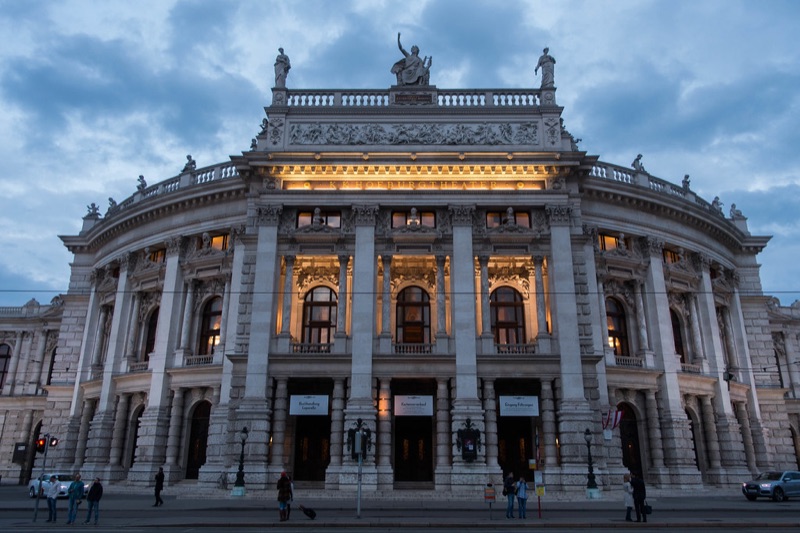
Start in the beating heart of Vienna. The Innere Stadt (1st district) is a compact maze of cobblestone streets, grand plazas, and hidden passageways that was once the entire city behind its medieval walls. Today you'll see the two icons — Hofburg Palace and St. Stephen's Cathedral — but also discover the courtyards and cafes between them that most tourists walk right past. End with your first proper Wiener Schnitzel at the place that invented it.
Hofburg Palace & Imperial Apartments
The Hofburg was the winter residence of the Habsburgs for over 600 years — a palace so vast it has 2,600 rooms. You won't see all of them, but the Imperial Apartments and Sisi Museum give you the essential story: the gilded rooms where Emperor Franz Joseph worked 14-hour days, the private chambers of Empress Elisabeth ('Sisi'), and the Imperial Silver Collection showing what state dinners looked like when your empire spanned half of Europe. The Sisi Museum is surprisingly moving — Elisabeth was a complex, rebellious woman trapped in a gilded cage, and the exhibits tell her real story, not the fairy tale.
Lunch at Figlmüller — The Schnitzel Institution
Figlmüller has been serving Wiener Schnitzel since 1905, and it's not just a restaurant — it's a Vienna institution. The schnitzel is so large it hangs off both sides of the plate (they use a 300g veal cutlet pounded paper-thin). The secret is in the breading: light, crispy, and shatters when you cut it. Served with potato salad and a slice of lemon. The original location on Wollzeile has wood-paneled walls covered in vintage photos and a warm, convivial atmosphere. It's tourist-famous but beloved by locals too — the quality has never dropped.
St. Stephen's Cathedral & Hidden Courtyards
St. Stephen's Cathedral (Stephansdom) has watched over Vienna since the 12th century — its diamond-patterned tile roof is the city's most recognizable symbol. Go inside (free) to see the Gothic nave, then take the elevator up the South Tower (€6) for a panoramic view of the city. But the real discovery starts when you exit: Vienna's 1st district is honeycombed with hidden courtyards (Höfe) that most visitors never find. Walk through Blutgasse (Blood Alley) to reach the Blutgassendistrict — a series of connected courtyards with pastel facades, ivy, and quiet cafes. Enter the Fresco Courtyard at Schönlaterngasse 7 to see a medieval fresco of a dragon slayer still on the wall. The Franziskanerhof (Franciscan Courtyard) has a peaceful garden hidden behind an unassuming door.
Ringstrasse Walk at Golden Hour
The Ringstrasse is Vienna's magnificent 5-kilometer boulevard that replaced the city walls in the 1860s. Walk it at golden hour and you'll see why Vienna was considered the most beautiful city in Europe. Start at the Opera House (Staatsoper), pass the Kunsthistorisches Museum and Natural History Museum (twin palaces facing each other across a fountain-filled square), continue past the Parliament building, the Rathaus (City Hall — a Gothic fantasy), and the Burgtheater. The buildings glow in the evening light, and the wide sidewalks have benches where Viennese couples sit and watch the trams go by.
Schönbrunn Day — Empress Summer Palace, Gloriette Views & the World's Oldest Zoo
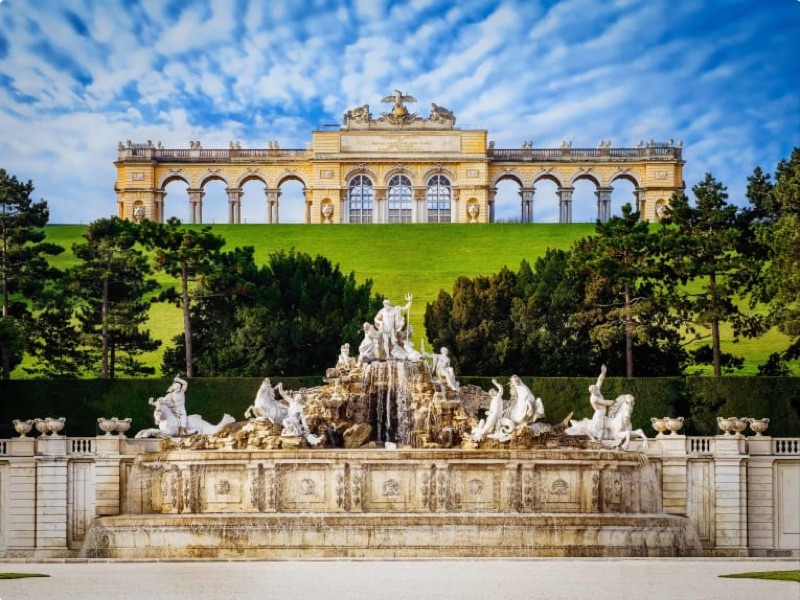
Today is dedicated to Schönbrunn — the Habsburgs' beloved summer palace and one of Europe's most stunning royal residences. The palace itself is magnificent, but the real magic is the 160-hectare estate: manicured baroque gardens, a hilltop Gloriette with panoramic views, a palm house, a labyrinth, and Tiergarten Schönbrunn — the world's oldest continuously operating zoo. August means the gardens are lush, the fountains are flowing, and the Gloriette terrace is perfect for a coffee with an imperial view.
Schönbrunn Palace Grand Tour
Arrive when the doors open to experience the palace before the crowds build. The Grand Tour (40 rooms) takes you through the state rooms where Maria Theresa held court, the rooms where a young Mozart performed for the Empress, and the private apartments where Franz Joseph and Sisi lived. The Great Gallery — a 40-meter-long hall of mirrors and gold stucco — is where the state dinners and balls were held. The Millions Room is named after its priceless Turkish-inspired wood paneling. The Blue Chinese Salon is where Emperor Charles I signed his abdication in 1918, ending the 640-year Habsburg monarchy. Audio guides are excellent and included.
Gardens, Gloriette & Hilltop View
The Schönbrunn gardens are free to wander and absolutely spectacular in August — the parterre (formal flower beds) are in full bloom, the Neptune Fountain dominates the center axis, and the tree-lined avenues provide welcome shade. Walk up the hill to the Gloriette — a triumphal arch structure at the top of the gardens that gives you a sweeping view over the entire palace and across Vienna. There's a café inside the Gloriette where you can have lunch with one of the best views in Austria.
Tiergarten Schönbrunn — World's Oldest Zoo
Founded in 1752 as the imperial menagerie, Schönbrunn Zoo is the oldest continuously operating zoo in the world — and it's genuinely excellent, not just historically interesting. It's been named Europe's best zoo multiple times. The giant panda enclosure (Vienna is one of the few places in Europe where pandas have bred naturally) is the star attraction, but the rainforest house (a massive glass dome where you walk through tropical forest with free-flying birds and bats), the polarium (watch penguins swim underwater through glass), and the elephant park are all world-class. The zoo is beautifully landscaped within the palace grounds — it feels like walking through a garden that happens to have animals.
Return to the City & Naschmarkt Evening
Take the U4 back to the city center and head to the Naschmarkt — Vienna's legendary food market. During the day it's a produce market; in the evening, the restaurant row along the eastern edge comes alive. Sit at one of the many open-air terraces (Oswald & Kalb, Neni, or Naschmarkt Deli) and enjoy the warm August evening with mezze, wine, and people-watching. The Naschmarkt has a multicultural vibe that's completely different from the imperial city center — it's where Vienna's international community gathers.
Art, Markets & Klimt's Golden Masterpiece
Vienna is one of the world's great art cities, and today is about experiencing why. Start at the Kunsthistorisches Museum — if you only visit one museum in Vienna, make it this one. Then explore the MuseumsQuartier, Vienna's creative campus housed in former imperial stables. In the afternoon, head to the Belvedere to stand in front of Klimt's The Kiss. Between museums, eat your way through the Naschmarkt at lunch and end the day in a Heurigen wine tavern.
Kunsthistorisches Museum (Museum of Art History)
This museum was built by Emperor Franz Joseph in 1891 to house the Habsburgs' art collection — and it is staggering. The building itself is a work of art: a grand staircase under a dome of gold and marble, with murals by Gustav Klimt. The Picture Gallery has one of the world's finest collections: Pieter Bruegel the Elder (the largest collection anywhere, including his masterpiece The Tower of Babel), Vermeer's The Art of Painting, Raphael's Madonna in the Meadow, and Caravaggio's Madonna of the Rosary. The Kunstkammer (Chamber of Art) is a jaw-dropping collection of 2,200 Renaissance curiosities — golden salt cellars, automatons, ivory carvings, and the Cellini Salt Cellar, one of the most valuable sculptures on Earth.
Naschmarkt Food Crawl
The Naschmarkt is Vienna's culinary soul — a 1.5-kilometer stretch of over 120 stalls selling everything from fresh produce and Austrian cheeses to Vietnamese pho, Persian saffron, and Georgian wine. During lunchtime, the food stalls at the center of the market are packed with office workers grabbing quick, delicious meals. Build your own lunch crawl: start with a Langos (Hungarian fried bread with garlic, sour cream, and cheese) from the stand near the eastern entrance, grab a falafel wrap from the Middle Eastern section, pick up some olives and fresh bread, and finish with a kürtőskalács (chimney cake) or a fruit tart from the bakery stalls. Saturday is the best day (the flea market adds extra energy) but any day is delicious.
Belvedere Palace & Klimt's The Kiss
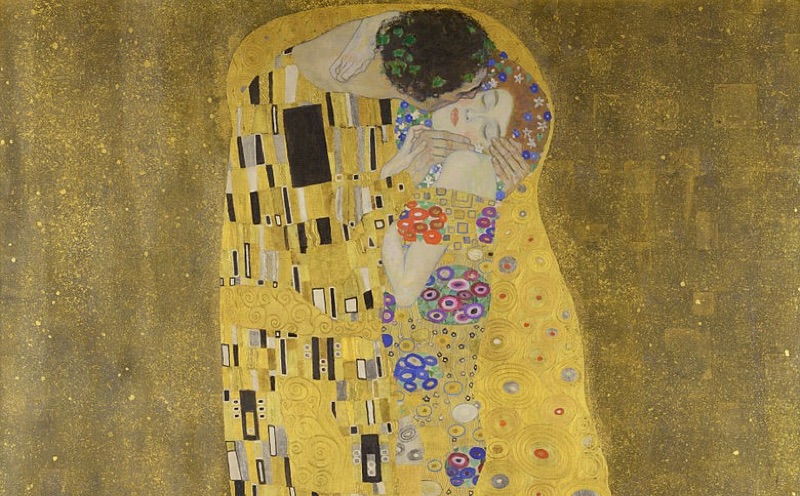
The Belvedere is actually two palaces (Upper and Lower) connected by gorgeous terraced gardens — built by Prince Eugene of Savoy, the Habsburgs' greatest military commander, as his summer residence. The Upper Belvedere houses the world's largest Klimt collection, and The Kiss (1907–1908) is the star: a golden masterpiece showing two lovers wrapped in elaborate golden robes against a flower-covered cliff edge. Seeing it in person — the gold leaf actually shimmers under the gallery lights — is one of Vienna's defining experiences. But don't skip the other works: Egon Schiele's raw, emotive self-portraits, Oskar Kokoschka's expressive landscapes, and French Impressionists (Monet, Renoir) on the upper floor. The gardens between the palaces are free and beautiful — terraced fountains, sculpted hedges, and views of the palace facades.
Heurigen Wine Tavern in Grinzing
No visit to Vienna is complete without an evening at a Heuriger — a traditional wine tavern where local winemakers serve their young wines alongside simple, homemade food. Grinzing, in Vienna's 19th district, is the most charming Heurigen district, reachable by tram 38 from Schottentor. The taverns have outdoor garden seating under grape arbors, and the atmosphere is convivial and relaxed. Order a flight of young Grüner Veltliner and Gemischter Satz (field blend — Vienna's signature wine), then add a cold platter (Aufschnittplatte) of local meats and cheeses, Liptauer cheese spread with bread, and a warm Schweinsbraten (roast pork). Musicians often stroll between tables playing Schrammelmusik (traditional Viennese folk). It's convivial, affordable, and uniquely Viennese.
Coffee Houses, Art Nouveau & a Concert to Remember
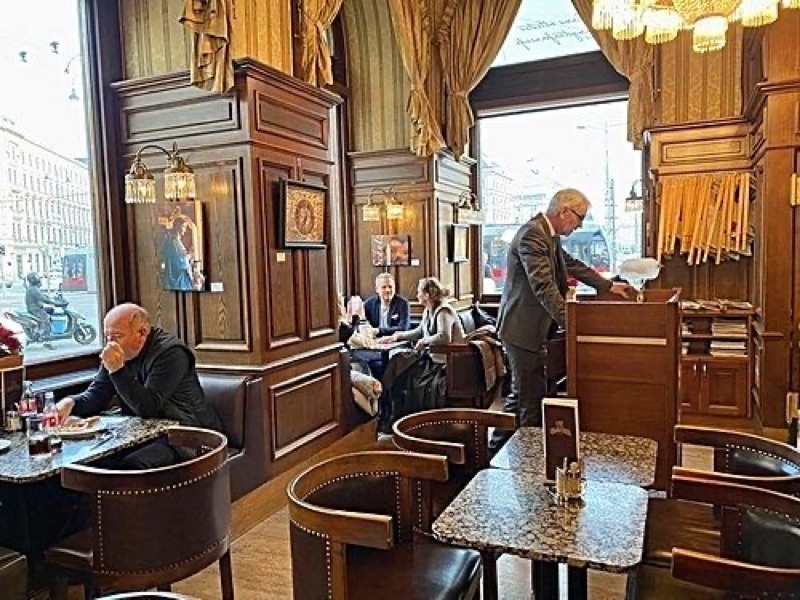
Your final full day in Vienna is about the experiences that make this city irreplaceable: the coffee house culture (UNESCO-recognized Intangible Heritage), the art and architecture of the Secession movement, and a classical music performance in the evening. Start slow with a legendary breakfast, discover Vienna's Art Nouveau treasures, and end with music in one of the most acoustically perfect halls on Earth.
Breakfast at Café Central
Café Central has been serving coffee on Herrengasse since 1876 — and its marble columns, vaulted ceilings, and piano player make it the most atmospheric of Vienna's grand cafés. This is where Trotsky played chess, where Peter Altenberg (the poet) had his mail delivered because he lived here, and where Freud took his afternoon coffee. Order a Wiener Melange (Viennese coffee — similar to a cappuccino but with milder espresso) and an Apfelstrudel or Kaiserschmarrn (shredded pancake with powdered sugar and plum compote — Emperor Franz Joseph's favorite dessert). The breakfast menu is also excellent: fresh rolls, cold cuts, cheese, jam, and soft-boiled egg (the traditional Austrian Frühstück). Take your time. Lingering in a Viennese coffee house is not just allowed — it's the whole point.
Vienna Secession & Art Nouveau Walk
Walk from the coffee house to the Vienna Secession building — Otto Wagner and Joseph Maria Olbrich's 1897 temple to Art Nouveau, topped with a dome of 3,000 gilt laurel leaves and the motto 'To every age its art, to art its freedom.' Inside, Gustav Klimt's Beethoven Frieze runs along the basement walls — a 34-meter-long golden masterpiece illustrating the human longing for happiness. Then walk to the nearby Naschmarkt area to see Otto Wagner's Majolikahaus (Linke Wienzeile 40) — an apartment building covered in magnificent floral ceramic tiles in pink, green, and blue. Continue to the Ankeruhr (Anchor Clock) on Hoher Markt — an Art Nouveau clock that, at noon, features a parade of historical Viennese figures moving across its face. The whole neighborhood is a gallery of Jugendstil (Art Nouveau) architecture.
MuseumsQuartier & Leopold Museum
Spend the afternoon at the MuseumsQuartier — one of the world's largest cultural complexes, housed in the former imperial stables. The Leopold Museum is the star: the world's largest collection of Egon Schiele's raw, expressive paintings, plus works by Gustav Klimt, Oskar Kokoschka, and German Expressionists. Schiele's distorted figures and bold lines are even more powerful in person — the museum has 40+ of his paintings and 180+ works on paper. After the museum, relax in the MQ courtyard — the colorful Enzi benches (oversized, brightly colored plastic loungers) are where Vienna's young creatives hang out with coffee and laptops. It's the city's living room.
Classical Concert at Musikverein or Mozarthaus
Vienna without classical music is like Paris without the Eiffel Tower — it's the city's soul. The Musikverein's Golden Hall (Goldener Saal) is considered one of the most acoustically perfect concert halls on Earth, and attending a performance here is a once-in-a-lifetime experience. The golden box seats, the crystal chandeliers, the sound of a Mozart piano concerto bouncing off the wooden panels — it's transcendent. If the Vienna Philharmonic is in residence, tickets are extremely hard to get (and expensive), but the Musikverein hosts performances almost every evening, many featuring works by Mozart, Beethoven, and Strauss. Alternatively, the Mozarthaus Vienna (where Mozart lived from 1784–1787) and St. Stephen's Cathedral both host regular concerts in historic settings. Prices range from €35–100+ depending on the venue and performers.
Farewell Vienna — Last Pastries & Departure
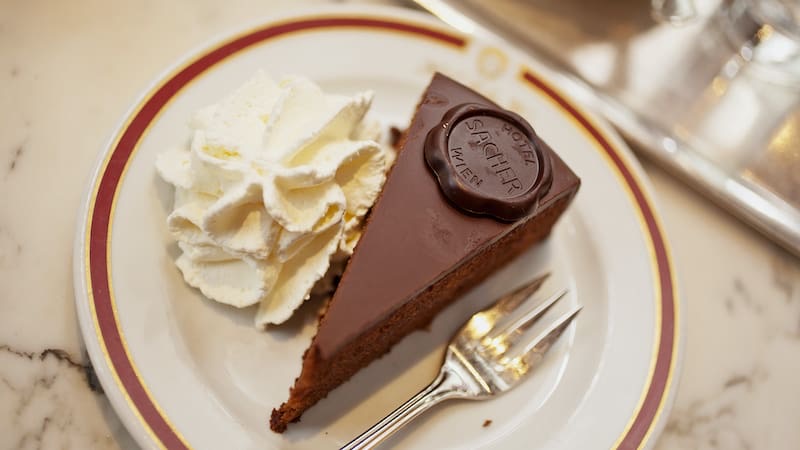
Your departure day, but there's time for one last perfect Vienna morning. Grab breakfast at a neighborhood bakery, pick up edible souvenirs at Demel or Aida, and take a final stroll through the cobblestone streets before heading to the airport. Vienna rewards the unhurried — even a few hours on your last morning can hold a memorable moment.
Breakfast at Aida & Final City Walk
Start your last morning at Aida — Vienna's beloved chain of pink-and-black Art Deco pastry shops that locals actually go to (unlike the touristy Demel). Order a Semmel (fresh roll) with butter and jam, a soft-boiled egg, and a Verlängerter (extended coffee — like an Americano). Then take a final walk through the Innere Stadt: down Kärntner Straße past the Opera House, through the Neuer Markt square, and past the Kapuzinergruft (Imperial Crypt — where the Habsburgs are buried, including 12 emperors and 19 empresses). Pick up Sachertorte from the Hotel Sacher shop (the original — comes in a wooden box, perfect for travel) and Manner wafers (the pink-packaged hazelnut wafers that are Vienna's favorite sweet) from the Manner shop on Stephansplatz.
Edible Souvenirs to Bring Home
Before you leave, stock up on Vienna's best edible souvenirs: Manner hazelnut wafers (Stephansplatz shop), a boxed original Sachertorte (Hotel Sacher), Mozartkugeln (Mirabell brand is the best — available at any supermarket), Austrian pumpkin seed oil (a dark green oil from Styria — liquid gold on salads), and Dallmann confectionery chocolates. For something special, stop at Julius Meinl am Graben — Vienna's luxury food hall — for Austrian wines, artisan mustards, and single-origin coffee beans.
💰 Budget Breakdown
| Category | Budget | Midrange | Luxury |
|---|---|---|---|
| Accommodation | €60–90/night (Airbnb/pension) | €120–180/night (boutique hotel) | €250–500/night (grand hotel) |
| Meals (per couple) | €30–50/day | €60–100/day | €120–200/day |
| Transport | €8–12/day | €12–20/day | €30–60/day (taxis) |
| Activities | €0–15/day | €15–40/day | €40–80/day |
| Museums | €0 (free days) | €15–25/day | €40–60/day (private tours) |
| 4-Day Total (couple) | €500–800 | €1,000–1,600 | €2,500–4,000 |
✈️ Getting There
- Vienna International Airport (VIE) is 18km southeast of the city center
- CAT (City Airport Train): 16 min to Wien Mitte — €14 one-way
- ÖBB Railjet from Hauptbahnhof: ~20 min — cheaper option
- Taxi/Uber: ~€40 from airport to city center
🏨 Where to Stay
- 1st District (Innere Stadt): walkable to everything, charming, pricier
- 7th District (Neubau): trendy, great restaurants, near MuseumsQuartier
- 4th District (Wieden): quiet, local feel, near Karlsplatz and Belvedere
- 2nd District (Leopoldstadt): affordable, near Prater, good transport links
🌡️ Weather
- August averages 25–30°C (77–86°F)
- Long daylight hours — sunset around 8:30 PM
- Occasional thunderstorms — carry a small umbrella
- Air conditioning is common in museums and hotels, less so in older restaurants
💳 Money
- Currency: Euro (€)
- Contactless card payment is universal
- ATMs widely available
- Tipping: round up 10% or €1–2 per person
- Tap water is excellent and free — ask for "Leitungswasser"
📱 Connectivity
- Free WiFi in most cafés, museums, and public transport
- EU roaming works for European SIMs
- Non-EU visitors: buy a prepaid SIM at the airport (A1 or HoT)
- Download WienMobil app for transport routing