⚡ Before You Go — Essentials
Arrival in Osaka — The City That Eats First

Osaka is Japan's kitchen, and Dotonbori is where the feast begins. Neon canals, sizzling takoyaki griddles, and the eternal Glico Running Man above the water. November evenings are cool and perfect for walking.
Morning (9:00 AM – 12:00 PM)
Namba Arrival & Hotel Drop
Arrive into Kansai International Airport, take the Nankai Railway direct express to Namba (45 min). Check into your hotel near Namba or Dotonbori.
Nankai Namba Station
Hotel near Namba/Dotonbori — walkable distance is ideal
Start with konbini breakfast: onigiri, egg sandwich, canned coffee
Book a hotel within walking distance of Dotonbori — the area comes alive at night.
Midday (12:00 PM – 2:00 PM)
Shinsaibashi Shopping Arcade
Osaka's longest covered shopping street — 580 metres of fashion boutiques and the iconic Glico sign photo spot at the Shinsaibashi crossing.
Shinsaibashi Station (Midosuji Line) — exit 3
UNIQLO, WEGO, optical shops
Shinsaibashi crossing: famous Glico billboard
Lunch
Kushikatsu in Shinsaibashi
A casual kushikatsu counter — battered and deep-fried skewers of prawn, asparagus, meat, and tofu, dipped in sweet brown sauce. No double-dipping.
Budget: 1500-2500yen per person
Afternoon (2:30 PM – 5:30 PM)
Sumiyoshi Taisha Shrine
Osaka's most important Shinto shrine, founded in the 3rd century — unique architectural style and a serene torii gate in the middle of a pond.
2-9-89 Sumiyoshi — Sakai-sakamoto Station (Nankai)
Sunrise-sunset / Free
45 min
Walk from Sumiyoshi Taisha along the canal toward Dotonbori — old Osaka residential streets tourists rarely see.
Evening (6:00 PM – 10:00 PM)
Dotonbori Canal at Night
Walking the canal when the neon switches on. The Glico Running Man reflects in the water. Street food stalls in full swing. November air is crisp.
Dotonbori — Namba Station, exit 9
Arrive 6 PM for the transition from day to neon
Best photo: Namba bridge looking toward the Glico sign
Takoyaki & Kushikatsu Crawl
Takoyaki Doraku Wanaka for creamy octopus dough balls. Kushikatsu Daruma for batter-fried skewers. No double-dipping in the communal sauce.
Multiple stalls along Dotonbori canal
Kushikatsu Daruma: Dotonbori branch
Takoyaki Doraku Wanaka: large octopus, rich sauce
Dinner
Kushikatsu Daruma + Street Food
Prawn, meat, asparagus, tofu skewers followed by takoyaki stalls. End with a cold Asahi on the canal bank.
Budget: 1500-3000yen / Cash preferred
Side streets behind the Glico sign hide locals-only izakayas with 300yen draft beers.
Retro Osaka: Shinsekai's January Alley & Umeda's Lights
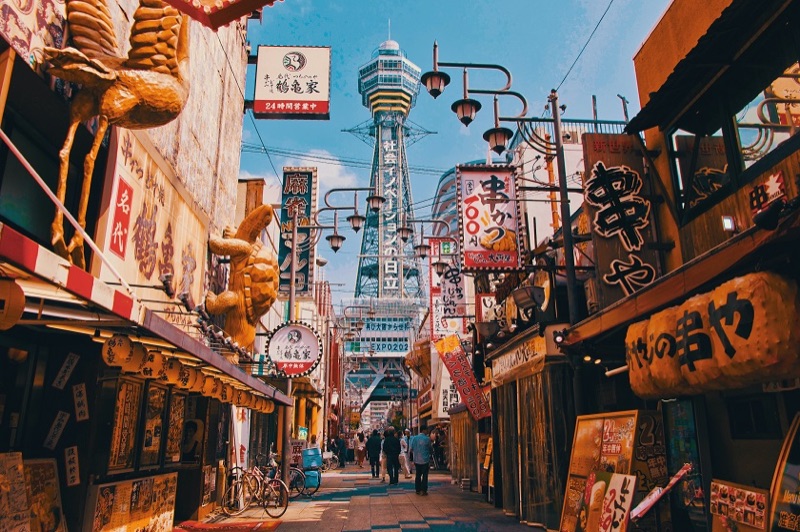
Osaka has two faces: the neon-glossy modern city and the smoky, postwar memory lanes that never left. Shinsekai is a time capsule of 1950s Osaka — kushikatsu counters, pachinko parlours, and Tsutenkaku tower. Umeda is the modern counterpart.
Morning (8:30 AM – 12:00 PM)
Shinsekai & Janjan Yokocho
Janjan Yokocho ('Puzzle Alley') — a smoky covered arcade built in the 1950s, lined with tiny kushikatsu counters and izakayas where the same families have been cooking for three generations. Tsutenkaku Tower (103m, 1956) — ride to the top.
Shinsekai — Dobuen or Shinsaibashi-suji Stations
Yaekatsu: famous for shrimp kushikatsu, expect a line
Tengu: kushikatsu + doteyaki (beef tendon in miso)
Tsutenkaku Tower: 700yen to observation deck
Brunch
Yaekatsu or Tengu Kushikatsu
Kushikatsu at its birthplace. Yaekatsu for shrimp and nama-fu (wheat gluten) — crispy, fresh, worth the queue. Tengu for doteyaki alongside kushikatsu.
Budget: 1500-2500yen / Cash only / Stand and eat
The further you walk into Janjan Yokocho from the main street, the more local (and cheaper) the food gets.
Midday (12:30 PM – 2:30 PM)
Umeda Sky Building Floating Garden
Two towers connected at the 39th floor by a floating garden disc. The rooftop observation deck (173m) gives 360-degree views over Osaka and, on clear November days, to Mount Fuji.
1-1-88 Oyodonaka, Kita-ku — Umeda Station West Exit
Observation deck: 1500yen adult
10 AM-10:30 PM
The external glass escalator is itself a famous photo spot
Hankyu Umeda Depachika
The basement food hall at Hankyu Umeda is one of Osaka's finest — wagyu beef samples, mochi in 20 flavours, artisan bento boxes, Osaka cheesecake.
Hankyu Umeda B1F & B2F
10 AM-8 PM
Free samples — try everything
Lunch
Depachika Grazing or Harukoma Sushi
For casual: graze the depachika — wagyu skewer, steamed buns, chirashi-zuke (scattered rice bowl). For splurge: Harukoma sushi for EDOMAE-style omakase.
Budget: 2000-5000yen
Afternoon (3:00 PM – 6:00 PM)
Osaka Castle & Moat Walk
Osaka Castle (1583, rebuilt 1931) sits in a vast park ablaze with maple colour in November. The castle tower (600yen) has a museum inside; the surrounding park and moat are free.
1-1 Osakajo, Chuo-ku — Osaka Loop Line, Osakajokoen Station
Castle park momiji: peak late October-mid-November
Castle 9 AM-5 PM / 600yen
Park walk 30 min; castle museum 45 min
The eastern approach (Tenzinosei) has the best castle photos, with maples in the foreground framing the gold shachihoko.
Evening (6:30 PM – 10:00 PM)
Umeda Ramen Street or Namba Izakaya
Umeda Ramen Street (under the Hankyu tracks) has 8 legendary ramen shops. Matsunoya is a local favourite — rich miso broth, melt-in-your-mouth chashu. November is crab season — Kani Doraku if you want to splurge.
Umeda Ramen Street: under Hankyu tracks
Matsunoya Umeda: local legend, miso ramen
Kani Doraku in Shinsaibashi — crab season
Dinner
Matsunoya Miso Ramen
Rich, deeply savoury miso broth perfect for November's cold air. Chashu pork that falls apart at the chopsticks. Add a soft-boiled ajitama egg.
Budget: 900-1400yen / Near Umeda Station
Buy omiyage at Osaka Station — sikatan (Osaka's signature sweet) and strawberry glico biscuits. Don Quijote in Shinsaibashi open until 5 AM.
Market Depths, Okonomiyaki & Osaka's Kitchen
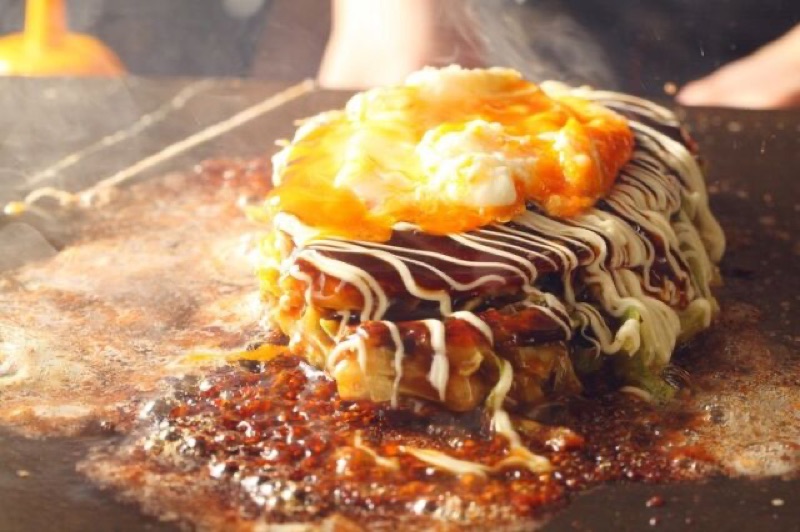
Day three goes deep into Osaka's culinary soul: Kuromon Market, Osaka's signature okonomiyaki, and Nipponbashi's electronics maze.
Morning (8:00 AM – 11:30 AM)
Kuromon Market
Known as 'Osaka's Kitchen' — 600 metres of stalls selling fresh seafood, wagyu beef, pickled vegetables, grilled scallops. Arrive by 8 AM: grilled scallop with butter and soy, fresh sea urchin, wagyu skewer, tamagoyaki.
1 Nippombashi, Naniwaku — Nippombashi Station
Most stalls 9 AM-5 PM
Must-try: grilled scallops, fresh uni, wagyu skewer
Budget: 500-1500yen for a full market breakfast
Bring cash — most stalls cash-only
The quieter end of Kuromon Market (toward the temple) has older, more local stalls with longer histories and slightly lower prices.
Midday (12:00 PM – 2:00 PM)
Okonomiyaki Cooking Class or Mizuno
Osaka's soul food: a savoury layered pancake of cabbage, batter, and protein, cooked on a hot plate at your table, topped with brown sauce, kewpie mayo, and bonito flakes. The best experience is a cooking class (60-90 min, 3500-5000yen). Alternatively, eat at Mizuno in Dotonbori.
Mizuno (Dotonbori): omakase okonomiyaki since 1949
Class: book via Airbnb Experiences — 60-90 min
Lunch
Mizuno Okonomiyaki
Osaka's most celebrated okonomiyaki restaurant — counter seating around a hot plate. Try the negi-sogi (lots of spring onions) and yamaimo (mountain yam) for texture.
Budget: 1800-2800yen per person / Dotonbori / No reservation (waitlist)
Afternoon (2:30 PM – 5:30 PM)
Nipponbashi (Denden Town)
Osaka's answer to Akihabara — a covered arcade of electronics shops, anime stores, and gaming centres. Nintendo Switch, Japanese electronics, anime merchandise — cheaper than Tokyo.
Nipponbashi — Nippombashi or Daikokucho Stations
Super Potato: 5 floors of retro games and consoles — some playable
The Denden Town sign at the main entrance is a photo landmark
Doguyasugi Kitchen Gadget Street
Adjacent to Nipponbashi — a street dedicated to restaurant supply shops. Japanese kitchen knives, ceramics, lacquerware, and cooking utensils at a fraction of normal retail prices.
Doguyasugi-suji — 5 min from Nipponbashi
Kitchen knives: global brands and Japanese steels at outlet prices
Lacquerware bowls, ceramic plates, sake sets
Doguyasugi-suji is a hidden gem — few tourists know about it. A Japanese cooking knife bought here (3000-8000yen) will last a lifetime.
Evening (6:00 PM – 10:00 PM)
Final Dotonbori Feast
Last evening in Osaka — return to Dotonbori for a final feast. November is crab season in Osaka. Kani Doraku is the famous option.
Dotonbori or Shinsaibashi
Kani Doraku: Osaka institution since 1960 — steamed, grilled, tempura crab
Farewell Dinner
Kani Doraku or Street Food Circuit
Kani Doraku: steamed crab, grilled crab, crab tempura, and kani shabu-shabu (crab hot pot). Or a circuit of Dotonbori takoyaki and okonomiyaki stalls with a final canal walk.
Budget: 3000-8000yen / Reservation recommended for crab / Street food 1500-3000yen
Buy omiyage at Don Quijote in Shinsaibashi — open until 5 AM, tax-free with passport.
Nara — Sacred Deer, Ancient Temples & Maple Fire
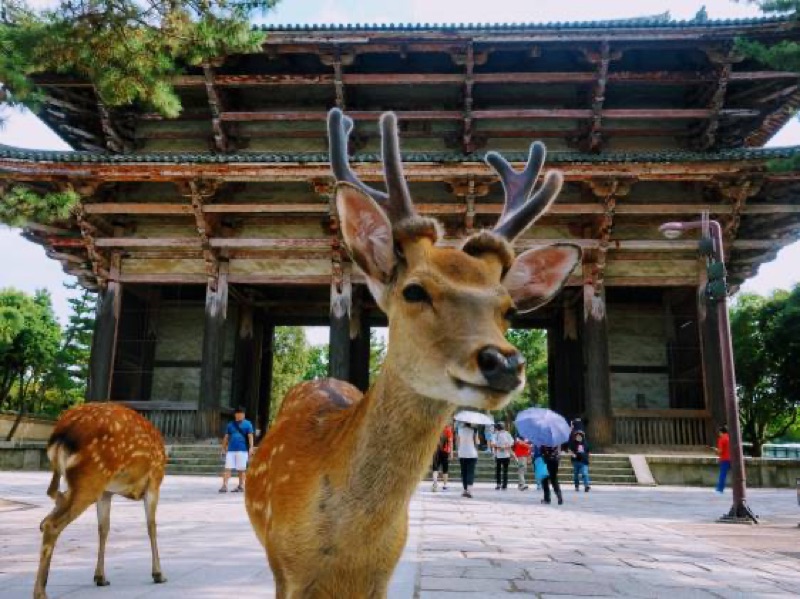
One hour from Osaka by Kintetsu train, Nara is Japan's ancient capital (710-784 AD) and one of the world's most magical November destinations. Sacred sika deer roam freely through parks ablaze with maple colour. The Great Buddha at Todai-ji fills a room that is the world's largest wooden building.
Morning (8:30 AM – 12:30 PM)
Nara Park & Todai-ji Temple
Nara Park is home to approximately 1,300 free-roaming sika deer, considered sacred messengers of the Kasuga Taisha gods. November is peak autumn colour. Arrive by 8:30 AM to beat coach groups. Todai-ji houses Japan's largest bronze Buddha (15m, cast 752 AD) inside Daibutsu-den — the world's largest wooden building.
Kintetsu Nara Station (from Osaka Namba: 45 min, 760yen)
Deer crackers (shika senbei): 200yen/pack — bow, they bow back
Park and Todai-ji momiji: peak November 15-26
Todai-ji 8:30 AM-4:45 PM / 600yen
Best Todai-ji photo: Daibutsu-den framed by maples from across Daibutsu-ike pond
Brunch
Naramachi Local Eateries
Walk through Naramachi (Nara's old merchant district): Nakatanidou for famous hand-stretched mochi, or a quiet kappo restaurant serving Nara's regional cuisine.
Budget: 1000-2000yen / Naramachi area
Mating season runs through November — bucks may be aggressive. Avoid the largest deer, don't wave food, and don't make sudden movements near feeding deer.
Midday (12:30 PM – 3:00 PM)
Kasuga Taisha Shrine
Nara's most sacred shrine (established 710 AD), famous for its 3,000 stone lanterns that line the approach. November illuminations: lanterns glow softly against autumn maples. The vermilion torii gates and bronze lanterns in a forest setting are one of Japan's most photographed scenes.
From Todai-ji, walk the forest path (15 min)
6:30 AM-5 PM / Free (inner treasury 500yen)
November weekends sometimes have evening illuminations
Walk from Nigatsu-do to Kasuga Taisha through the maple path
Nigatsu-do Temple
Nara's second-largest temple, perched on a hillside with panoramic views over the city. The approach path winds through ancient cedar and maple. Excellent city views from the terrace.
Adjacent to Kasuga Taisha — walk uphill
30 min — city views from terrace are excellent
Afternoon (3:00 PM – 5:30 PM)
Naramachi District Walk
Naramachi is Nara's old merchant district — narrow lanes of wooden warehouses, small temples, and local shops. Browse the antique shops, pick up a small ceramic or textile as a souvenir.
10 min walk from Kintetsu Nara Station
Antique shops, ceramics, local textiles
Nakatanidou: famous mochi — hand-stretched at the counter
Evening (6:00 PM – 9:00 PM)
Return to Osaka by Train
Take the Kintetsu Nara Line back to Osaka Namba (45 min, 760yen). Refresh at the hotel, then head out for a light dinner.
Kintetsu Nara to Namba: 45 min, 760yen
Light dinner: casual ramen or grilled fish
Dinner
Back in Osaka: Casual Izakaya
After the early start, a casual izakaya with cold beer, grilled fish, and a simple rice dish. Kappo-style: small plates shared, relaxed pace.
Budget: 2000-3500yen per person
Kyoto Day Trip — Bamboo Groves, Golden Pavilions & Maple Fire
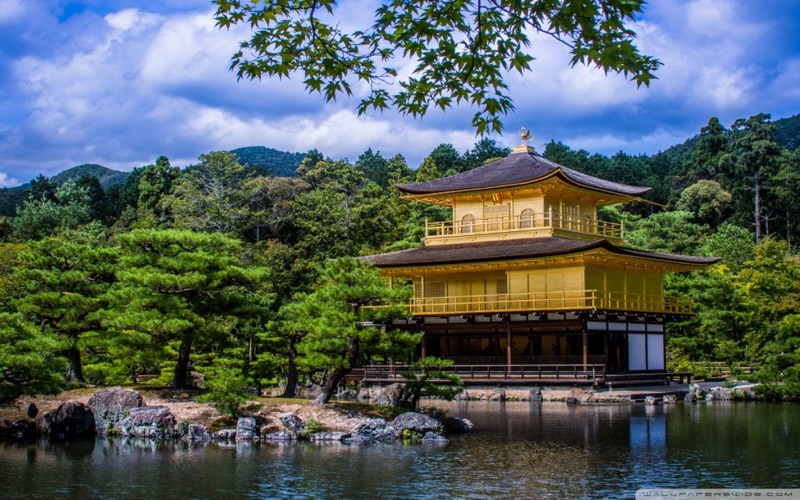
Kyoto in November is Japan at maximum beauty — every temple garden is ablaze with colour. The golden Kinkaku-ji, Arashiyama's bamboo grove, and Fushimi Inari's vermilion torii gates. A full day from Osaka (1 hr by JR).
Morning (7:30 AM – 12:00 PM)
Kinkaku-ji (Golden Pavilion)
Kyoto's most iconic sight — a three-story Zen temple sheathed in gold leaf, reflected perfectly in a mirror pond. November morning mist and autumn maples surrounding the pond make this one of the most photographed scenes in Japan.
1 Kinkakakuji-cho, Kita-ku — bus from Kyoto Station (40 min)
9 AM-5 PM / 500yen
Arrive at 8:30 AM to beat tour buses
45 min
Arashiyama Bamboo Grove
A path through thousands of tall bamboo stalks creating a natural cathedral of green. Walk the full loop, including the Okochi Sanso villa grounds for a less-crowded bamboo experience with views over Kyoto.
Arashiyama — Randen train from Shijo-Omiya (220yen)
45 min for the full grove + Okochi Sanso grounds
Take the Sagano Romantic Train (Kinnosuke) from Arashiyama to Kameoka — a 25-minute ride through the Hozugawa River valley in open-sided carriages. 880yen/person. Book at Arashiyama Station.
Midday (12:00 PM – 2:00 PM)
Arashiyama Lunch & Tenryu-ji
Tenryu-ji Temple (500/800yen with garden) is a UNESCO World Heritage Zen temple famous for its garden designed to look like a dragon rising from the water. November maples surround every building.
Tenryu-ji: Arashiyama
Arashiyama riverside: tofu kaiseki or river fish AYCE 3000-5000yen
Lunch
Arashiyama Kaiseki or Tofu Course
A kaiseki lunch in Arashiyama — seasonal autumn cuisine with tofu as the highlight, river views of the Hozugawa Gorge, November maples visible from the dining room.
Budget: 3500-7000yen per person / Arashiyama riverside
Afternoon (2:00 PM – 5:30 PM)
Fushimi Inari Taisha
Fushimi Inari is famous for its 10,000 vermilion torii gates that tunnel up a mountain — a unique, almost otherworldly experience. November afternoon light filtering through the torii gates with autumn leaves is extraordinary. Allow 2-3 hours to walk the full circuit (the mountain is 233m).
Fushimi Inari — JR Nara Line from Kyoto Station (5 min, 150yen)
24/7 / Free
2-3 hours for the full circuit
For fewer crowds: go just before closing (5 PM) — the gates are lit and empty
Walk to the top of Fushimi Inari for city views — most tourists turn back at the first summit. The upper trails are quieter and more atmospheric.
Evening (6:00 PM – 9:00 PM)
Return to Osaka
Take the JR Nara Line back to Osaka (1 hr). For your last evening, either do a final Dotonbori circuit or treat yourself to a nice kaiseki dinner.
JR Kyoto to Osaka: 30 min by Shinkansen (covered by JR Pass) or 1 hr by JR special
Dinner
Final Osaka Kaiseki or Street Food
A proper kaiseki (multi-course seasonal dinner) at a local restaurant for your final Osaka night — 6000-12000yen/person. Or a final street food circuit through Namba.
Budget: 2000-12000yen depending on choice
Into the Mountains — Fuji Five Lakes & Chureito Pagoda
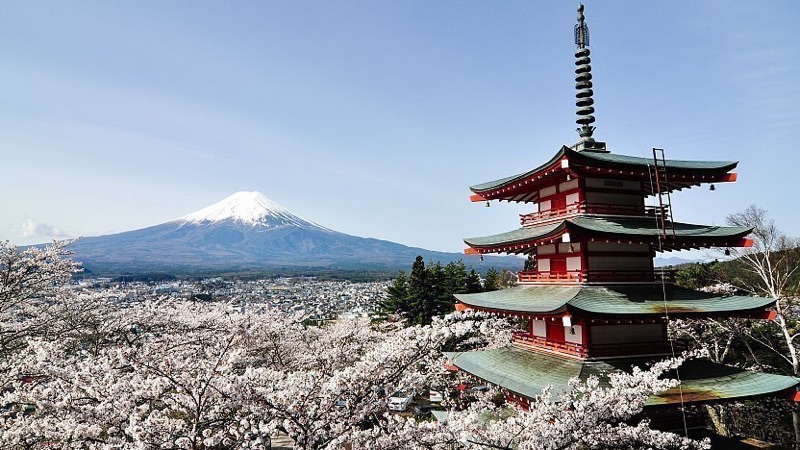
Leave Osaka by Shinkansen (covered by JR Pass) to Mishima, then local buses to Lake Kawaguchiko. November Fuji is at its most majestic — often snow-capped by mid-November, with autumn maples ablaze around the lake shores.
Morning (7:00 AM – 12:00 PM)
Osaka to Lake Kawaguchiko
Take the Shinkansen from Osaka Shin-Osaka to Mishima (2 hrs, covered by JR Pass), then the Fujikawa bus to Kawaguchiko Station (50 min). Sit on the right side (E seat column) of the Shinkansen for Fuji views on clear days.
Osaka Shin-Osaka to Mishima: 2 hrs Shinkansen (JR Pass)
Mishima to Kawaguchiko Station: Fujikawa Bus (50 min, 1540yen)
Kawaguchiko Station is the hub for Fuji Five Lakes
November: Fuji often has first snow — November 19 is excellent timing
Check weather and Fuji visibility before departing — use the Fujisan Mountain Forecast. Morning visibility is generally better than afternoon.
Midday (12:30 PM – 2:30 PM)
Chureito Pagoda & Arakurayama Sengen Park
The most iconic Fuji view: a five-story pagoda framed by scarlet maple trees with Mt. Fuji rising behind them. November is peak photography season — the maples are at their most vivid red. Climb the 397 steps to the upper platform for the famous postcard view.
Arakurayama Sengen Park — bus from Kawaguchiko Station (15 min)
Always open / Free (donations appreciated)
Momiji Tunnel: maple corridor at peak colour November 15-25
The famous shot requires a long lens or phone zoom — the pagoda and Fuji are separated by valley
Lunch
Lake Kawaguchiko Riverside
Lake Kawaguchiko's lakeside area has restaurants specializing in houtou (thick Fujisan udon noodles, a local specialty) and grilled fish from the lake. Simple, warming, perfect for a November afternoon.
Budget: 1000-2000yen / Kawaguchiko lakeside area
Afternoon (3:00 PM – 6:00 PM)
Lake Kawaguchiko Autumn Leaves & Lake Walk
Walk the northern shore of Lake Kawaguchiko toward Oishi Park — the Momiji Corridor (Maple Corridor) is a 150m path lined with maples, creating a tunnel of burning red in November. On one side: the lake with Fuji visible. On the other: Mount Kanmuri's autumn colours.
Oishi Park — from Kawaguchiko Station, bus to Oishi Park (20 min)
Momiji Corridor: peak November 15-25
30-45 min walk along the lakeshore — flat, easy, spectacular
Evening (6:00 PM – 9:00 PM)
Check into Ryokan & Kaiseki Dinner
Check into your ryokan near Lake Kawaguchiko with Mt. Fuji views. November evening air is cold; the onsen will feel extraordinary after a day of walking. Dinner is a kaiseki (multi-course haute cuisine) served in your room on a lacquered tray.
Ryokan near Lake Kawaguchiko — many with Mt. Fuji views
Onsen: outdoor hot spring bath with Fuji views
Kaiseki dinner included in ryokan rate — multi-course, seasonal autumn cuisine
Typical ryokan rate: 25000-60000/room (2 persons) half-board
Dinner
Ryokan Kaiseki
Kaiseki is the Japanese haute cuisine experience — a sequence of small, beautifully plated courses using seasonal ingredients. Autumn kaiseki features matsutake mushrooms, persimmon, chestnuts, and Pacific saury (sanma) fish. Served in your room on a lacquered tray.
Included in ryokan rate (typically 25000-60000/room for 2, half-board)
Book a ryokan with Mt. Fuji view rooms — request a room on a higher floor facing north (toward Fuji). November weekends fill fast; book 2-3 weeks ahead.
Hakone — Volcanic Steams, Fuji Views & Onsen Bliss
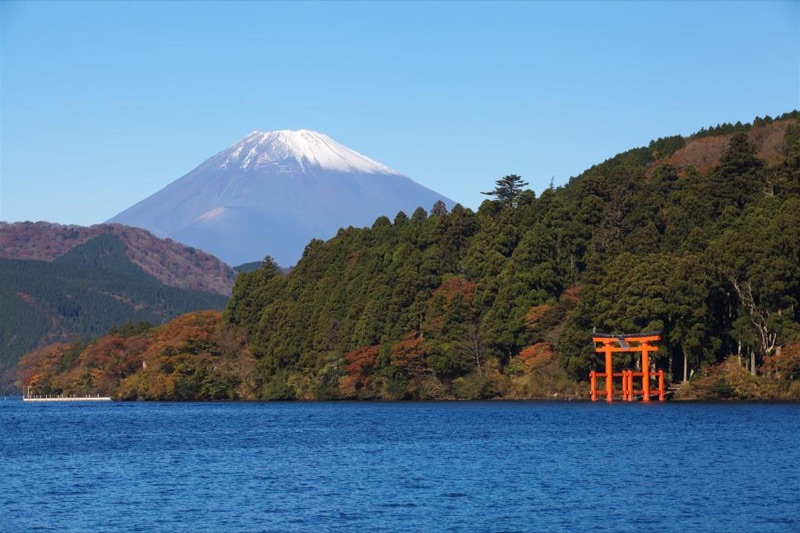
Hakone in November is one of Japan's great autumn experiences. The Hakone Ropeway soars over Owakudani's steaming volcanic valley, Lake Ashi is circled by burning maple colour, and Fuji sits snow-capped above it all.
Morning (8:00 AM – 12:00 PM)
Lake Kawaguchiko to Hakone
Take the Fujiyama bus from Kawaguchiko Station to Hakone (2 hrs, 2200yen). Arrive in Hakone by mid-morning and store luggage at your ryokan.
Fujiyama Bus: Kawaguchiko to Hakone (2 hrs, 2200yen)
Hakone-jinja Station is the main hub — Hakone Free Pass covers most transport
Drop bags at ryokan, head out for the day
Get the Hakone Free Pass (2-day 6100yen/person) — covers the Romance Car train from Shinjuku, all Hakone buses, the ropeway, and the pirate ship cruise.
Midday (12:00 PM – 2:00 PM)
Hakone Ropeway to Owakudani
The Hakone Ropeway is one of Japan's most spectacular cable car rides — a 16-minute aerial journey over Owakudani (Great Boiling Valley), a volcanic landscape of active steam vents, bubbling hot springs, and the smell of sulfur. On clear November days, Mt. Fuji is visible throughout.
Hakone Ropeway — from Togendai Station (Hakone Free Pass)
Runs every 15 min
Kuro-tamago: black eggs boiled in the hot springs — said to add 7 years to your life (500yen for 5)
Best Fuji view point: Owakudani station — on clear days Fuji and the boiling valley in one frame
Lunch
Owakudani Kuro-tamago & Ramen
Eat the famous kuro-tamago (black eggs) at Owakudani — the black shell comes from the volcanic minerals. Simple ramen stalls at the ropeway station keep you going.
Budget: 500-1500yen / At Owakudani station
Afternoon (2:00 PM – 5:30 PM)
Lake Ashi Pirate Ship Cruise
Lake Ashi (Lake Ashinoko) is a crater lake formed by Mount Hakone's last eruption 3,000 years ago. In November, the shores are ablaze with autumn colour. The Hakone Sightseeing Cruise operates replica pirate ships (Hakonemaru and Victory) across the lake — the 30-minute crossing gives spectacular views of Fuji.
Hakone Sightseeing Cruise — Togendai to Moto-Hakone or vice versa (Hakone Free Pass)
Cruises every 30 min
November: red maple shores on both sides of the crossing
Best Fuji photo: from the upper deck of the pirate ship — Fuji framed by lake and maples
The Hakone Ropeway may close temporarily due to volcanic gas levels at Owakudani — check the Hakone Navi app before visiting. The alternative is to take the bus.
Evening (6:00 PM – 9:00 PM)
Ryokan Second Night — Onsen & Kaiseki
Return to your ryokan for a second night. Another kaiseki dinner and another long soak in the outdoor onsen. November evening air is cold; the hot spring feels almost medicinal.
Second onsen session — different bath (if ryokan has multiple)
Second kaiseki dinner — different seasonal menu
Order a bottle of local Hakone shochu or sake to enjoy in your room
Dinner
Second Ryokan Kaiseki
A different kaiseki menu tonight — Hakone's cuisine features freshwater fish from Lake Ashi, wild game in autumn, persimmons, and chestnuts.
Included in ryokan rate
The best Fuji photograph from Hakone is at dawn — set an alarm, watch the sunrise over Fuji from your ryokan's outdoor onsen or from the balcony of your room.
Hakone to Tokyo — Ancient Temples & Night Neon
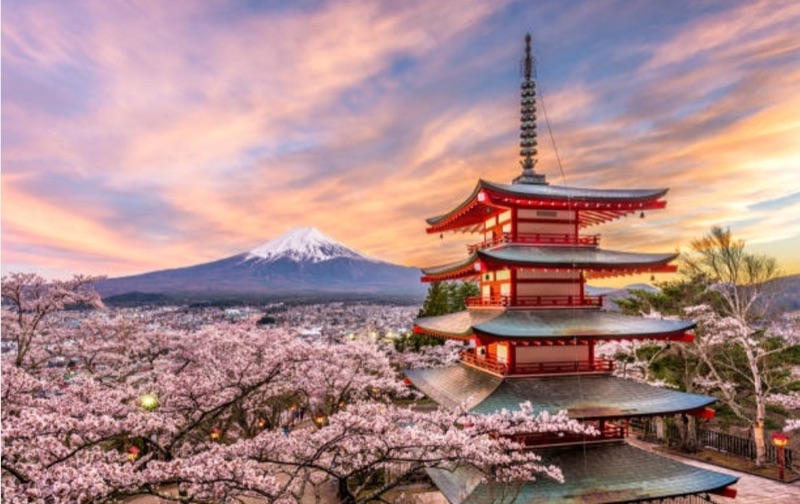
A relaxed morning in Hakone, then the journey to Tokyo (2 hours by Romance Car or direct bus). Arrive in Tokyo by mid-afternoon, check into your Tokyo hotel, and ease into the city with an evening in Asakusa.
Morning (8:00 AM – 11:00 AM)
Hakone Morning Onsen & Garden
Start the day with a morning onsen soak — the outdoor bath before breakfast is a Hakone ryokan ritual. Then a short walk through the ryokan's garden in the cool November morning air.
Morning onsen: open from 6 AM at most ryokan
November morning garden walk — cold air, clear Fuji views
Pack and check out by 10 AM
Take the direct Odakyu Hakone Express Bus from Hakone to Shinjuku Station (2 hrs, 2200yen) — it's the most direct route to central Tokyo with your luggage.
Midday (11:00 AM – 2:00 PM)
Journey to Tokyo
Take the Romance Car from Hakone to Shinjuku (2 hrs, 2470yen — not covered by JR Pass). Arrive in Tokyo by early afternoon.
Romance Car from Hakone to Shinjuku: 2 hrs, 2470yen
Check into Tokyo hotel — Shinjuku, Shibuya, or Asakusa area
Store large luggage at station if arriving before check-in time
Afternoon (2:30 PM – 5:30 PM)
Asakusa — Senso-ji Temple & Nakamise-dori
Tokyo's oldest Buddhist temple (645 AD) and the city's most atmospheric neighbourhood. Walk through the massive Kaminarimon Thunder Gate, down 250m of Nakamise-dori shopping street, past the five-story pagoda to the main hall. November afternoon light is warm and golden.
2-3-1 Asakusa, Taito — Asakusa Station (Ginza Line)
Grounds 24/7; main hall 6 AM-5 PM / Free
Try: kibi-dango (350yen), age-manju, melon pan
Shoot through the Kaminarimon lantern toward the pagoda — the classic Asakusa shot
Asakusa is most atmospheric in the early morning (before 8 AM) and at night — if you have the energy, return after dinner. The neon is softer, the temple is lit, and the tour groups are gone.
Evening (6:00 PM – 9:00 PM)
Asakusa Evening Walk & Dinner
Walk the Hoppy-dori alley (tiny open-air izakayas serving yakitori and gyoza) behind Senso-ji. The area transforms in the evening — the lanterns of Hoppy-dori glow, the temple is lit, and the food stalls take on a different character.
Hoppy-dori: west side of Senso-ji
Yakitori, kushikatsu, gyoza at the Hoppy-dori izakayas
Asakusa has several famous ramen shops: Asakusa Mugiwaracha (soy), or Ichinifukukatsube (shoyu)
Dinner
Asakusa Izakaya or Ramen
A casual dinner in Asakusa — either a circuit of Hoppy-dori izakayas (standing yakitori bars, cold beer) or a proper bowl of Asakusa ramen at one of the neighbourhood's legendary shops.
Budget: 1500-3000yen / Asakusa
Old Tokyo — Yanaka's Lost Neighbourhood & Ueno Culture
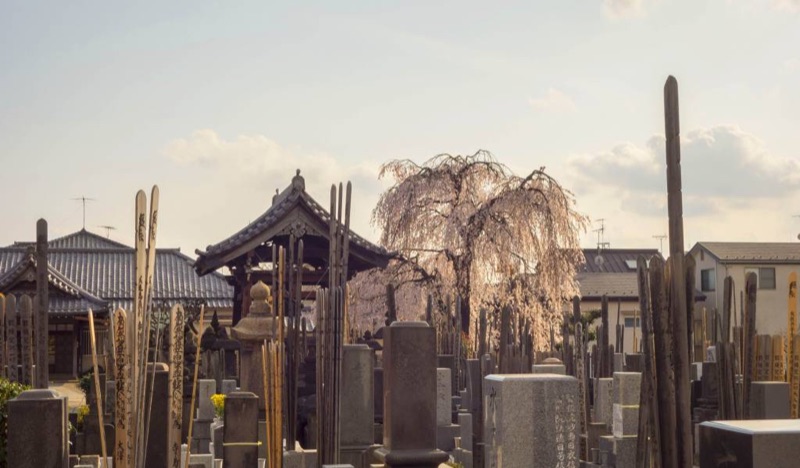
Yanaka is the neighbourhood the bombs missed and the developers never rebuilt. Narrow lanes of wooden houses, temple cemeteries where cats sunbathe, and a handful of shops that haven't changed since the 1970s. November sun through the trees. Tokyo as it was.
Morning (9:00 AM – 12:30 PM)
Yanaka Ginza Shopping Street
Yanaka's retro main street — 175 metres of tiny shops, butchers, rice cracker makers, cat-themed everything, and small restaurants. This is how Tokyo neighbourhoods used to look. The street cats are famous — there's a cat-shaped clock and several cats that belong to no one.
JR Nippori Station, West Exit — walk downhill to Yanaka Ginza
Try: menchi-katsu (fried meat cutlet) from the famous butcher, cold amazake
Yanaka is famous for its stray cats — they sunbathe in the cemetery nearby
Spend 45-60 min grazing the street
Yanaka Ginza tip: prices are dramatically lower than equivalent Tokyo tourist areas. Vintage Levi's jackets that cost 12000yen in Harajuku are 3000-4000yen here.
Midday (12:30 PM – 2:00 PM)
Yanaka Cemetery & Temple Walk
Yanaka Cemetery is one of Tokyo's oldest and most atmospheric — 100 acres of graves, trees, and moss-covered stone lanterns. Cherry trees line the central path (in November they are green and golden). Cats sunbathe on the flat stones.
Yanaka Cemetery — free, always open
45-60 min for the full walk
Cemetery paths with cherry trees and cats — unexpected Tokyo beauty
Nezu Shrine & Autumn Leaves
Nezu Shrine, a short walk from Yanaka, is one of Tokyo's oldest Shinto shrines (170 AD) and famous for its tunnel of vermilion torii gates. In November, the approach path is lined with maple trees at peak colour.
Nezu Shrine — 10 min walk from Yanaka or Nezu Station (Tokyo Metro)
Sunrise-sunset / Free
Nezu momiji: peak November 20-30 — less crowded than major sites
Lunch
Kayaba Coffee or Yanaka Ginza
Kayaba Coffee (a renovated 1938 building) is the iconic Yanaka cafe — legendary egg sandwich and excellent pour-over coffee. Or graze the Yanaka Ginza stalls for menchi-katsu and amazake.
Budget: 800-1500yen / Yanaka Ginza area
Afternoon (2:30 PM – 5:30 PM)
Ueno Park & Museums
Ueno Park is Tokyo's oldest public park (1873) and a cultural hub: the Tokyo National Museum, Ueno Zoo, and the Shinobazu Pond (a large pond with a temple on an island in the middle). November afternoon light over the pond is gentle and beautiful.
Ueno Park — JR Ueno Station
Tokyo National Museum: 1000yen — Japan's finest art and archaeology
Shinobazu Pond: free — temple island, boat rentals
Ameyoko Market
The post-war black market street under the Yamanote Line tracks. Chocolate strawberries, grilled squid, takoyaki, sneakers — this is where Tokyoites actually shop.
4 Chome Ueno — JR Ueno Station
Best after 3 PM when vendors are winding down
Combine Ueno with Ameyoko Market — the post-war black market street under the Yamanote Line tracks. This is where Tokyoites actually shop.
Evening (6:00 PM – 9:00 PM)
Ueno/Okachimachi Dinner
Okachimachi is Ueno's street food neighbourhood — a grid of tiny restaurants and standing bars serving everything from yakitori to soba. The area comes alive in the evening with office workers heading to small neighbourhood restaurants.
Okachimachi — JR Okachimachi Station or Ueno Station
Dinner
Okachimachi Izakayas
A circuit of Okachimachi's tiny izakayas — yakitori, karaage (fried chicken), cold beer, and sake. This is local Tokyo eating: no English menus, counter seating, point at what looks good.
Budget: 1500-3000yen per person / Cash preferred
Tokyo's Coolest Neighbourhoods — Vintage Shimokita & Canal Nakameguro
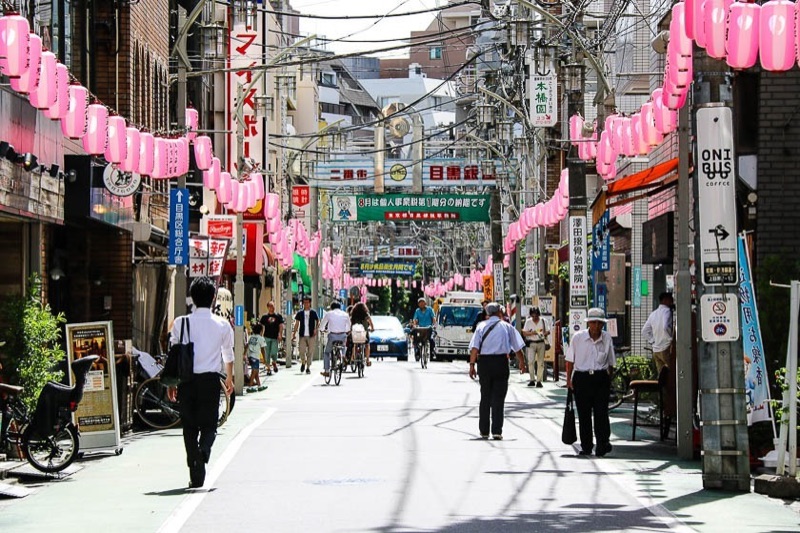
Tokyo's most stylish residential neighbourhoods in one day: Shimokitazawa (vintage clothing, indie cafes, live music venues) and Nakameguro (canal-side boutiques, design shops, artisan coffee). This is where young Tokyoites actually live and hang out.
Morning (9:00 AM – 12:30 PM)
Shimokitazawa — Tokyo's Coolest Neighbourhood
Shimokita (as locals call it) is Tokyo's answer to Brooklyn or Shoreditch — narrow lanes packed with vintage clothing shops, indie record stores, tiny cafes, and live music venues. The vintage shopping here is legendary: 2nd Street, Flamingo, and dozens of unnamed shops with racks of perfectly curated secondhand Japanese fashion.
Shimokitazawa Station — Keio Inokashira Line from Shibuya (3 min)
Vintage: 2nd Street, Flamingo, Stick Out — all within 5 min walk
Bear Pond Espresso: famous for its 'angel stain' latte
Check for live shows at Shelter or THREE (1500-2500yen entry)
Brunch
Bear Pond Espresso or Shimokita Cafes
Bear Pond is a famous single-barista espresso shop — their 'angel stain' latte is an Instagram legend. The surrounding streets have dozens of charming cafes with toast sets and pour-overs.
Budget: 600-1200yen / Near Shimokitazawa Station south exit
Shimokitazawa vintage tip: prices are dramatically lower than Harajuku. The same Levi's jacket that costs 12000yen in Harajuku is 4000yen here. Go early — the best finds go fast.
Midday (12:30 PM – 2:30 PM)
Shimokita Lunch & Design Shopping
The side streets of Shimokita have excellent small restaurants — Italian, Vietnamese, Japanese — at very reasonable prices. After lunch, hunt for design objects: Shimokita has several excellent Japanese design shops selling ceramics, textiles, and everyday objects designed with exceptional care.
Small restaurants: 800-1500yen/person — excellent quality
Design shops: 10-15 min from the station
Shimokita Ekiue: new development with shops and a public park on top of the station
Afternoon (2:30 PM – 5:30 PM)
Nakameguro Canal Walk
Nakameguro's tree-lined Meguro River canal is Tokyo's most stylish neighbourhood stroll. Boutiques, design shops, and cafes line both banks. Onibus Coffee and Blue Bottle Coffee have riverside locations. The vibe is calm, sophisticated, and very photogenic.
Nakameguro Station (Hibiya/Tokyu Toyoko Line)
Onibus Coffee: canal-side location, excellent pour-over
Cow Books (curated bookshop), Traveler's Factory (stationery paradise)
Green Bean to Bar Chocolate: bean-to-bar craft chocolate, free samples
Stationery & Design Shopping
Nakameguro is home to Traveler's Factory (flagship store for Traveler's Notebook — customisable leather journals) and several Japanese design shops. For journaling or drawing, this is treasure territory.
Traveler's Factory: along the canal, south bank
Customise a Traveler's Notebook as a trip journal — they stamp it with the date
Nakameguro is also famous for its Blue Bottle Coffee location — floor-to-ceiling windows over the canal. On weekends it's packed but worth it for the atmosphere.
Evening (6:00 PM – 9:00 PM)
Nakameguro Dinner & Daikanyama
Nakameguro has excellent restaurants — from casual ramen to Italian fine dining. After dinner, walk to nearby Daikanyama — Tokyo's answer to Mayfair, with concept stores, bookshops, and fashionable bars.
Tsite area — bookshops, concept stores, excellent bars
Dinner
Nakameguro Casual Dining
Nakameguro has options from 1000yen ramen to 10000yen omakase. For couples on a $$ budget: the Italian restaurants along the canal are charming and 3000-5000yen/person.
Budget: 1500-5000yen / Nakameguro
Asakusa Morning Market & Akihabara Electric Town
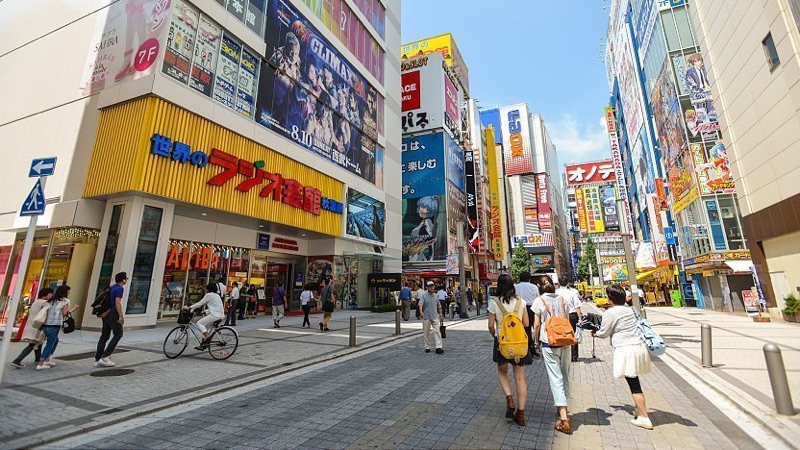
Return to Asakusa for the morning — Nakamise-dori before the tour groups arrive at 10 AM. Then cross to Akihabara: the neighbourhood that gave the world the word 'otaku' and is now fighting for its soul between JR's redevelopment and the remaining electronic shops.
Morning (7:30 AM – 11:00 AM)
Asakusa at Dawn — Nakamise-dori Before the Crowds
Be at Senso-ji by 7:30 AM when Nakamise-dori's vendors are setting up stalls and the temple grounds are empty. The morning light through the Kaminarimon gate is completely different from afternoon — quiet, atmospheric, the Asakusa of old.
Senso-ji — Asakusa Station (Ginza Line)
Nakamise-dori stalls: 8 AM onwards
Try: kibi-dango, age-manju, melon pan from early-opening stalls
Best photo: Kaminarimon gate at 8 AM with no people
Brunch
Asakusa Breakfast at Nakamise-dori
Morning snacks from Nakamise-dori vendors: hotto manju (red bean cake), age-manju (fried bean bun), rice crackers fresh from the vendor's flame. A very Japanese breakfast.
Budget: 300-800yen
The key Asakusa tip: Nakamise-dori at 8 AM is a completely different experience from 11 AM. The vendors are cheerful, the light is golden, and you can photograph the gate without 500 people in it.
Midday (11:30 AM – 2:00 PM)
Akihabara Electric Town
Akihabara Station — the original 'Electric Town' since the 1940s. Now a battleground between gleaming new tower hotels and the last surviving electronics shops on Chuo-dori. The back streets (the Radio Department store side) still have the old magic: obscure components, vintage cameras, tax-free electronics.
JR Akihabara Station
Radio Department Store (3 buildings) — electronic components, tools, vintage gear
Yodobashi Camera: 6 floors of everything — tax-free with passport
For the real Akihabara: avoid Chuo-dori (the main tourist drag) and go into the Radio Department Store buildings on the east side. Third floor has electronic components, soldering gear, and things no longer made anywhere else.
Afternoon (2:00 PM – 5:30 PM)
teamLab Borderless or Planets
Two teamLab options for the afternoon. teamLab Borderless (Azabudai Hills) is the grand immersive art museum — a massive digital art space where projections flow across every surface, no frame, no boundary. teamLab Planets (Toyosu) is the newer, more walkable version with floor-to-ceiling water installations.
teamLab Borderless: Azabudai Hills — 10 min from Otemachi Station
teamLab Planets: Toyosu — 15 min from Tokyo Station by metro
Both: book online — 3200-3800yen / Allow 2-3 hours
November is high season — pre-booking is essential
Dinner
Toyosu Market Sushi or Azabudai Area
For Toyosu teamLab: Tsukiji outer market for breakfast sushi (open from 5 AM, best before 8 AM). For Borderless: the Azabudai Hills complex has excellent mid-range restaurants.
Budget: 2000-5000yen
Shibuya, Harajuku & Omotesando — Youth Culture & Design Mile
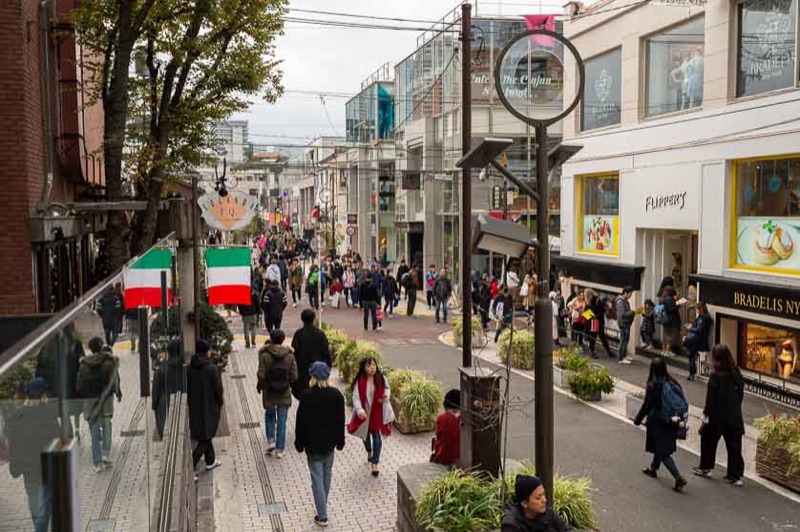
The most energetic corner of Tokyo: Shibuya's Scramble Crossing, Harajuku's Takeshita Street, and Omotesando's tree-lined design boutiques. November weekend energy is at maximum.
Morning (9:00 AM – 12:00 PM)
Shibuya Morning & Coffee
Arrive at Shibuya before 10 AM when the streets are still quiet. Coffee at Nanaya Aoyama (the world's strongest matcha gelato, 7 tiers of intensity) or Fulumo for a proper breakfast.
Shibuya Station — JR, Ginza, Hanzomon, Den-en-gafu Lines
Nanaya Aoyama: near Omotesando, 7-tier matcha gelato
Shibuya's scramble crossing: best viewed from the Starbucks 2nd floor terrace (2F) for a top-down view of the world's busiest intersection
The Shibuya Sky observation deck (45th floor of Shibuya Scramble Square) opened in 2019 and has replaced the much older Hachijoe view. It offers 360-degree views from 230m — Fuji visible on clear November days.
Midday (12:00 PM – 2:30 PM)
Harajuku — Takeshita Street
Takeshita Street is a 350m corridor of colour, noise, and visual excess — cosplay fashion, Korean流行, crepe stands, and the occasional full-moon party. November weekend crowds are extraordinary.
JR Harajuku Station — Takeshita Street exit
Crepe: 400-600yen — fruit, Nutella, matcha flavours
Dover Street Market: Comme des Garcons concept store —architecture worth seeing
Kiddy Land: 4 floors of character merchandise — Hello Kitty, Pokémon, Totoro
Lunch
Takeshita Street Crepes or Omotesando Bistro
Quick: crepe from one of the Takeshita Street stands (400-600yen). Slow: a bistro lunch on Omotesando. For something more substantial, the Omoide Yokocho ('Memory Lane') near Shinjuku Station is an atmospheric covered alley of tiny yakitori bars.
Budget: 600-2000yen
Afternoon (2:30 PM – 5:30 PM)
Omotesando — The Design Mile
Omotesando is Tokyo's answer to the Champs-Élysées — a broad, tree-lined boulevard where major architecture and luxury brands have built statement buildings. The side streets of Omotesando are equally interesting: independent boutiques, design shops, and cafes that feel like they belong in a Scandinavian city.
Omotesando Station — Chiyoda, Ginza, Hanzomon Lines
Key buildings: Dior Omotesando, TOD'S Tokyo, THE Jewellery Museum by Hiroshi Sugimoto
La Collezione: Italian restaurant by executive chef Marco Fuso — high-end Italian in a Renzo Piano building
The Nezu Museum of Art, near Omotesando's east end, has an extraordinary Japanese garden (500yen) that's at its most beautiful in November. Its tea house serves matcha in a setting that makes the Ryoan-ji rock garden look busy.
Evening (6:00 PM – 9:00 PM)
Shibuya Night Out
Shibuya at night is electric. The scramble crossing at midnight is almost as busy as noon. For couples: the Park Hyatt Tokyo (Lost in Translation hotel) has some of Tokyo's best bar views.
Shibuya Stream: new riverside dining complex
Nonbei Yokocho: tiny bars in Shibuya — one of the last old Shibuya drinking alleys
Dinner
Shibuya Restaurants
Shibuya has every cuisine at every price. For a memorable last night: book a yakitori omakase at Bird Land (under the Mosaic-dori, 4000yen/person) or splurge at Tokyu Food Show ( depachika quality at restaurant seating).
Budget: 2000-6000yen / Shibuya
Odaiba — Future City, Gundam & Digital Art
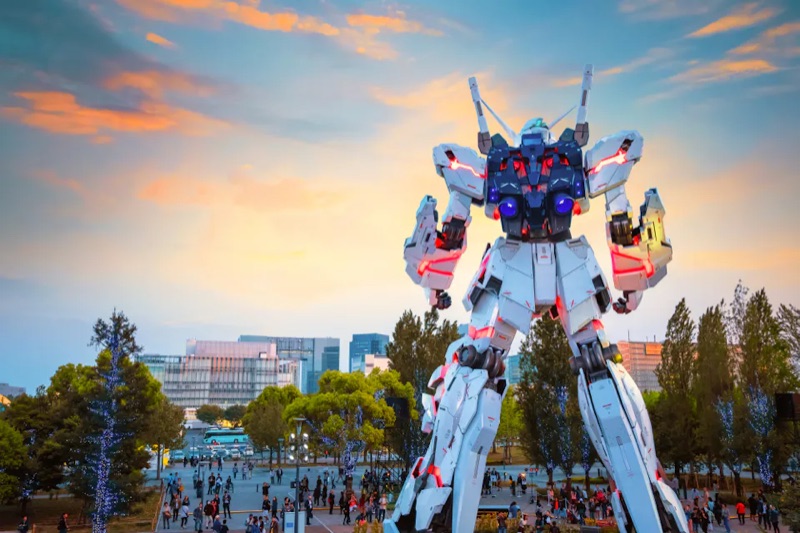
Odaiba is Tokyo's futuristic waterfront district — built on a series of artificial islands in Tokyo Bay. November is perfect weather for the outdoor installations and the waterfront walks.
Morning (9:00 AM – 12:30 PM)
Odaiba Morning — Gundam & Rainbow Bridge
Arrive at Odaiba by monorail (Yurikamome line from Shimbashi — the elevated section over Tokyo Bay is spectacular). The life-size Gundam statue at Diver City is one of Tokyo's most photographed monuments — 18m tall, moved in 2017 to make way for the new RX-78-2 model.
Yurikamome Line: from Shimbashi to Daiba (25 min)
Diver City: Gundam statue, shopping, restaurants
TeamLab Planets is also in Odaiba (Toyosu side) — but let's use it for the afternoon
Weather: November Odaiba is crisp and clear — outdoor walks along the Rainbow Bridge are excellent
The Yurikamome Line from Shimbashi to Odaiba (Daiba Station) is itself a tourist attraction — the elevated section over Tokyo Bay gives views of the Rainbow Bridge and the city skyline from the water. Sit in the front carriage for the best experience.
Midday (12:30 PM – 2:00 PM)
Diver City & Aqua City Lunch
Diver City Tokyo Plaza and Aqua City Odaiba are two large shopping complexes with dozens of restaurants. Aqua City has an outdoor terrace facing the Rainbow Bridge — the views from lunch tables are extraordinary on a clear November day.
Aqua City Odaiba — restaurants on floors 5-6 with Rainbow Bridge views
Food court quality is high — ramen, sushi, teppanyaki, Western
Budget: 1200-3000yen/person
Lunch
Aqua City Odaiba Terrace
An outdoor lunch with Tokyo Bay views. Several restaurants have terraces facing the Rainbow Bridge — the November sun reflects off the water, the air is crisp, and the bridge's red and white structure is fully visible.
Budget: 1500-3500yen / Odaiba waterfront
Afternoon (2:30 PM – 5:30 PM)
teamLab Planets (Odaiba)
teamLab Planets in Odaiba is a walkable immersive art museum — you walk barefoot through knee-deep water as infinite projections bloom around you. The 'Infinite' room (mirror walls, falling flowers) and 'The Walkable Waterfall' are the highlights.
teamLab Planets: Odaiba — 6 min from Toyosu Station by walk (connected by walkway)
Tickets: book online — 3200yen adult / 2-3 hours
Barefoot entry — bring socks (or buy at the entrance for 300yen)
November booking: essential — teamLab sells out 2-3 days ahead
teamLab Planets tip: go late afternoon (last entry 5 PM) — the crowds thin significantly after 4 PM. The afternoon light through the warehouse windows adds to the digital art atmosphere.
Evening (6:00 PM – 9:00 PM)
Odaiba Evening — Rainbow Bridge Walk
Odaiba at night transforms. The Rainbow Bridge lights up in different colours, the Gundam is lit, and Tokyo's skyline across the bay is spectacular. Walk from Odaiba along the waterfront to the Rainbow Bridge observation walkway (free entry, 9 PM close).
Rainbow Bridge: two walkways — the south side gives bay views, the north side gives city skyline views
Free entry — open until 9 PM
Walk back via the Yurikamome Line — the illuminated bridge from above is a perfect end to the Odaiba day
Dinner
Odaiba Waterfront or Back in Shibuya
For an Odaiba dinner: the Deckf five Star Island has restaurants with bay views. Alternatively, head back to central Tokyo and eat in Shibuya or Ginza.
Budget: 2000-5000yen / Odaiba or central Tokyo
Ginza — Art, Architecture & Sushi at Dawn
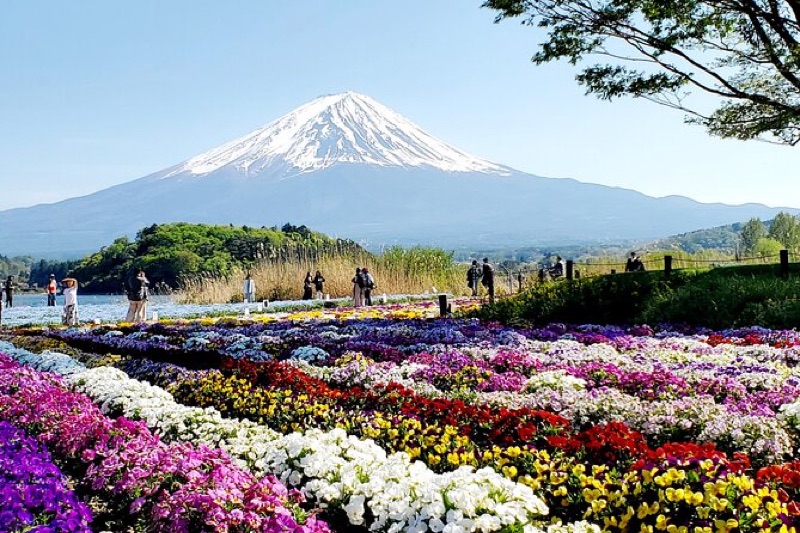
Ginza is Tokyo at its most refined: the street where the Shochiku headquarters sits, where Uniqlo has its global flagship, and where some of Japan's most beautiful architecture lives. Tsukiji outer market is nearby — early morning is the only time to experience the real thing.
Morning (6:00 AM – 10:00 AM)
Tsukiji Outer Market at Dawn
Tsukiji's outer market is Tokyo's greatest food experience and it starts before dawn. Arrive at 6 AM for fresh tamagoyaki (egg rolls made with dashi), grilled scallops, sea urchin bowls, and sashimi platters that would cost three times the price in a restaurant. By 8 AM the tour groups arrive; by 9 AM the best stalls are sold out.
Tsukiji Market: take a very early subway from Shibuya (30 min)
Arrive: 6 AM for the best experience
Must-try: grilled scallop (200yen), fresh uni (600-800yen), tamagoyaki (150yen), kohi-pan (coffee bun)
Cash only — most stalls
Best stalls: those with the longest local queues (not tour group lines)
Breakfast
Tsukiji Outer Market Circuit
The greatest street food breakfast in Tokyo: a circuit through the outer market stalls — fresh sashimi bowl, grilled scallop with butter, tamagoyaki sandwich, and a hot coffee. Eat standing at the market stalls.
Budget: 1000-2000yen / Tsukiji outer market
Tsukiji outer market tip: go on a Tuesday, Thursday, or Saturday — those are the days the inner market is open (for viewing the tuna auction, which requires a separate booking). The outer market is always open but the energy is highest on those days.
Midday (10:30 AM – 1:00 PM)
Ginza Architecture Walk
Ginza's main street (Ginza-dori) is lined with flagship stores that are architectural statements in themselves: the Wako Department Store clock tower (1894, rebuilt 2022), Mikimoto Hall (crystal and platinum facade), and the Ginza Six building (modern, 241m long). The back streets are equally interesting — galleries, antique shops, and specialist stores with a single room.
Ginza Station — all lines
Wako Clock Tower: 10 AM — the mechanical clock performance is worth watching
Ginza Six: 241m modern complex — rooftop garden (free)
Mikimoto Hall: crystal facade — across from the Wako clock
Ginza Six Rooftop Garden
The rooftop garden at Ginza Six (65m above street level) has a garden of moss, rocks, and water features that is entirely maintained by hand by a team of gardeners. Free entry, open 11 AM-9 PM.
Ginza Six 13F — free entry
11 AM-9 PM daily
Lunch
Ginza Lunch — Sushi or Tempura
For the full Tokyo experience: Sukiyabashi Jiro (if you can get a reservation) or Sushi Koya (no reservation, 2500-4000yen). For casual: Ginza's food halls are extraordinary — the Mitsukoshi depachika (B2F) has some of Japan's finest prepared foods.
Budget: 2000-8000yen / Ginza
Afternoon (1:30 PM – 5:30 PM)
Ginza Art, Galleries & Shopping
Ginza has the highest concentration of art galleries of any Tokyo neighbourhood — the ShugoArts Gallery, the Ginza Graphic Gallery, and the Nichido Gallery all show contemporary Japanese and international art. The art supply store (PIGMENT) is legendary among artists worldwide.
ShugoArts: Ginza 7-4-5 — contemporary Japanese art
PIGMENT: 4-4-5 Ginza — the world's finest Japanese art supplies — 1800 ink colours
Matsuzakiya: traditional Japanese craft shop since 1661
Ginza Mitsukoshi & Department Stores
The Ginza Mitsukoshi (the original, flagship) has a depachika (basement food hall) that is almost a museum of Japanese food. The eighth floor has a Kimono museum. Shopping at Ginza's department stores is a different experience from Shinjuku — less frantic, more curated.
Ginza Mitsukoshi: 4-16- Ginza — Ginza's oldest department store
Depachika: B2F — one of Tokyo's finest food halls
The best Ginza shopping tip: skip the main Ginza-dori (which has the same global brands as every city) and go to the small specialist shops on the side streets. Kyukyodo (since 1663) for incense and paper. Matsuya for department store goods. Itoya for design objects.
Evening (6:00 PM – 9:00 PM)
Final Night in Tokyo — Celebration
Last evening in Tokyo — this is the night to do something memorable. Tokyo has three tiers of evening experience: a world-class restaurant, a rooftop bar with city views, or an old-school Tokyo izakaya circuit.
Shinjuku Omoide Yokocho: tiny yakitori bars under the train tracks
Roppongi observation decks: Tokyo City View (Roppongi Hills) or Mori Art Museum
Farewell Dinner
Celebration Dinner in Tokyo
For a farewell dinner that justifies the trip: Ginza's sushiya (sushi restaurants) for an omakase dinner. For romantic couples: the Park Hyatt Tokyo's New York Bar (Lost in Translation's bar) — cocktails with 45th floor views over Tokyo at night.
Budget: 5000-15000yen / Ginza or Shinjuku
Last night tip: if you're heading to New York Bar at Park Hyatt Tokyo, book at least a week ahead and dress accordingly (no shorts, no sneakers). The view is one of the best in the world.
Last Morning in Tokyo — Final Souvenirs & Departure
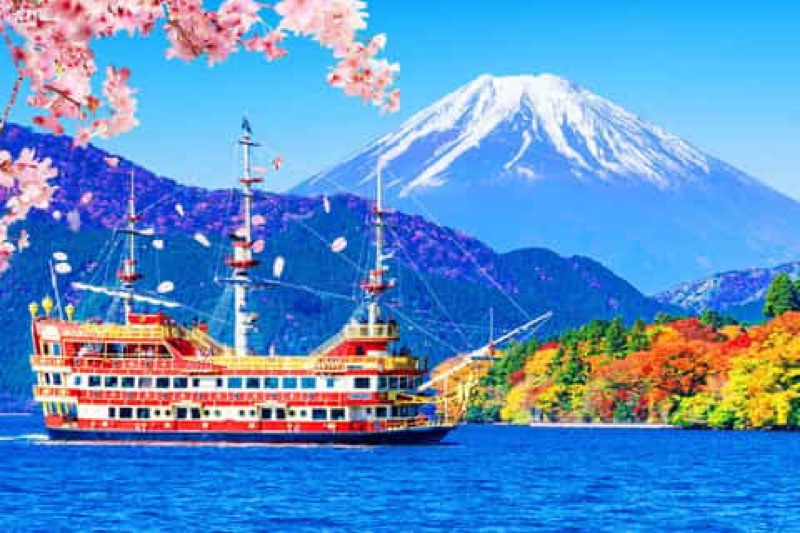
The final morning in Japan. Time for last-minute souvenir purchases and the journey home. Leave the hotel by 10 AM to allow plenty of time at the airport. November flights from Narita or Haneda to North America take 12-14 hours — you will cross the International Date Line and arrive home on the same day.
Morning (8:00 AM – 11:00 AM)
Final Souvenir Run
Last chance for Japan-specific purchases. For convenience: Don Quijote (Shibuya or Shinjuku) has everything — supplements, beauty products, snacks, electronics — with tax-free shopping and late hours.
Don Quijote Shibuya: open 24 hrs
Must-buy: menturm Rin (整髪剤, hair wax), Shiseido护肤品 (skincare), KitKat (regional flavours)
Cashless: Japan is heavily cashless-friendly now — Suica on iPhone, Visa/Mastercard accepted almost everywhere
For traditional crafts: go to Shiro's (Ginza) for ceramics, or the depachika at your nearest department station
Pack an empty bag for the flight home. November is Tanabe's peak souvenir-buying season — the Japanese are buying boro (patched textiles), ceramics, and lacquerware as gifts. Don't leave Japan without at least one thing you'll use every day.
Midday (11:00 AM – 1:00 PM)
Hotel Checkout & Airport Journey
Checkout by 11 AM. Take the Narita Express (N'EX) from Shinjuku or Tokyo Station to Narita Airport (60-65 min, 3250yen — covered by JR Pass if you have one). Or take the Keisei Skyliner from Nippori or Ueno to Narita (41 min, 2520yen).
Narita Express (N'EX): Tokyo/Shinjuku to Narita — 60-65 min, 3250yen (covered by JR Pass if held)
Keisei Skyliner: Ueno/Nippori to Narita — 41 min, 2520yen
ANA/JAL counters at Narita are well-organised — allow 2 hrs for international departure
Last Lunch
Station or Airport
For a last Tokyo meal: Tokyo Station's Ramen Street (8 shops, all legendary) or the depachika at your nearest major station. Narita Airport also has excellent food — Tasty Sendai beef bowl, fresh sushi, soba.
Budget: 1000-2000yen