⚡ Before You Go — Essentials
🛂 Visa & Entry
Many nationalities now qualify for China's expanded visa-free policy (15-30 days depending on your passport). US, UK, EU, and many other citizens are eligible for 30-day visa-free entry as of 2024. Verify current status before booking — policies evolve. Passports must be valid 6+ months. Register your accommodation with local police within 24 hours of arrival (hotels do this automatically; Airbnb hosts may not).
📱 VPN (Download BEFORE Landing)
Google, Instagram, WhatsApp, YouTube, and most Western apps are blocked in China. Download a reliable VPN (ExpressVPN, NordVPN, Surfshark) BEFORE you land — VPN provider sites are inaccessible inside China. Critical: turn OFF your VPN when using WeChat Pay or Alipay, as payment apps detect VPN use and may block transactions.
💳 Payment: Alipay & WeChat Pay
China is nearly cashless — many small vendors don't accept cash at all. Set up Alipay (recommended) or WeChat Pay before arrival: both now support foreign credit/debit cards via the International version. You'll pay for metro, street food, restaurants, and most attractions by scanning QR codes. Carry ¥300-500 cash (RMB/Yuan) as backup. ATMs at major banks (ICBC, Bank of China) accept foreign cards.
🚇 Getting Around Chengdu
The metro is cheap, clean, and extensive — ¥2-5/ride. Buy a Tianfu Tong card at any metro station (reusable, works on metro and bus). Didi (Chinese Uber) is affordable and works with Alipay/WeChat Pay — essential for places not on the metro. For the Qingcheng/Dujiangyan day trip, take the intercity high-speed train from Chengdu East Station (¥15-20/person, 35 min). Shared Didi for 5 = ¥25-40/trip within the city.
🥦 Vegetarian Travel Tips
Say "wǒ chī sù" (我吃素 — I eat vegetarian) or show a printed card: "我是素食者,不吃肉、鱼、虾、鸡蛋" (I'm vegetarian, no meat, fish, shrimp, or eggs). Buddhist temple restaurants (素食馆 sù shí guǎn) are fully vegetarian and often outstanding quality. Naturally vegetarian Sichuan dishes: cold skin noodles (凉皮), tofu dishes, vegetable stir-fries, dan dan noodles (request no meat), sweet potato noodles (红薯粉), mapo tofu (request vegetarian/素的 sù de). Chengdu is one of China's most vegetarian-friendly cities.
🌦️ April Weather
April in Chengdu is lovely — 15-22°C (59-72°F), partly cloudy with occasional showers. The city is famously overcast (a local saying: "Sichuan dogs bark when they see the sun"), but April brings pleasant temperatures and green scenery. Bring a light rain jacket — especially for the mountain day trip. Qingcheng Mountain is often misty and beautiful.
🗣️ Language & Apps
Mandarin Chinese. English is limited outside hotels and tourist venues. Download Google Translate with offline Chinese pack (needs VPN to download — do it before arrival). Baidu Translate works without VPN in China. Pleco is the best dictionary app. Most large restaurants have picture menus; Buddhist temple eateries have simple visual displays. Your hotel concierge can write destinations in Chinese characters — always helpful for showing Didi drivers.
🐼 Panda Base Tips
Book tickets in advance at trip.com or the official panda base website (tickets.ipanda.com). Arrive by 8am — pandas are most active before 10am and nap for most of the afternoon. Entry: ¥55/person (¥275 for 5). The base covers 247 acres — rent a golf cart (¥100/hour) if your group wants to cover more ground. Baby panda viewing at the nursery area is the highlight.
Pandas, Ancient Streets & Sichuan Opera
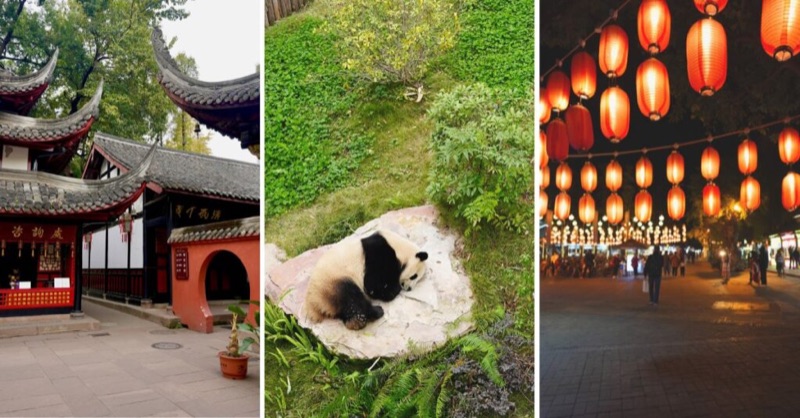
Start the adventure at dawn with Chengdu's most famous residents — giant pandas in their near-natural habitat. Spend the afternoon at the atmospheric Jinli Ancient Street, then cap the night with the spectacular Sichuan Opera bianlian (face-changing) show and a hot pot feast.
Chengdu Research Base of Giant Panda Breeding
The world's finest panda sanctuary. Arrive at 8am when the pandas are fed and most energetic — they play, roll, and munch bamboo enthusiastically before napping by 10am. The base houses 200+ giant pandas including adorable cubs in the Sunshine Nursery. Red pandas have their own bamboo forest path. Allow 3 hours minimum to explore the lush, hilly grounds.
Jinli Ancient Street (锦里古街)
Adjacent to Wuhou Shrine, Jinli is a lively Han Dynasty-style pedestrian street beloved for its street food culture, folk craft shops, and Sichuan Opera mask vendors. More vibrant and less polished than Kuanzhai Alleys — exactly right for a group afternoon. Wander the cobblestone lanes, pick up hand-painted face masks, watch sugar-art vendors, and snack your way down the street.
Sichuan Opera at Shufeng Yayun Teahouse (蜀风雅韵)
The highlight of any Chengdu evening. The 90-minute Sichuan Opera show features the legendary bianlian (face-changing) — performers swap elaborately painted masks in milliseconds with a flick of the hand or a spin of the head. Also includes fire breathing, shadow puppetry, hand puppetry, and traditional music. The teahouse setting means tea and light snacks throughout the show.
Temples, Tea & the Wide-Narrow Alleys
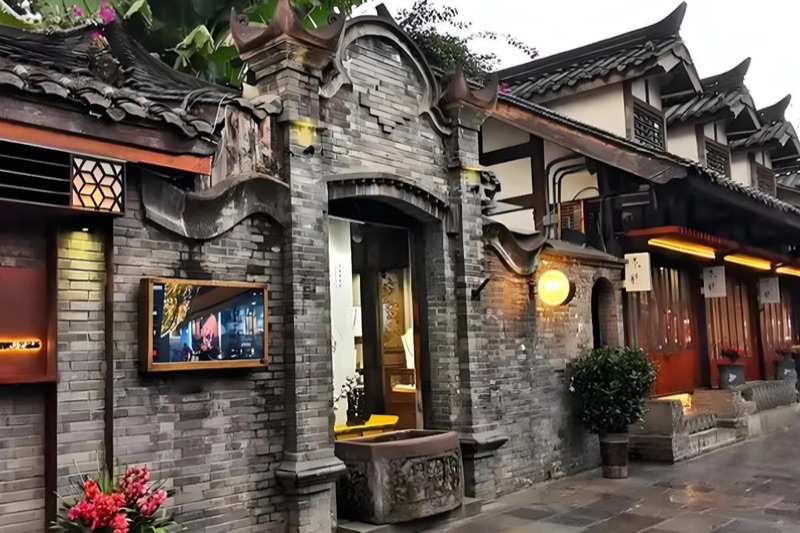
A day in old Chengdu's cultural heart. Begin with a vegetarian Buddhist feast at the magnificent Wenshu Monastery, wander the photogenic Kuanzhai Alleys, and end with the quintessential Chengdu ritual: afternoon tea in a bamboo teahouse at People's Park — complete with chess-playing grandpas and optional ear cleaning.
Wenshu Monastery (文殊院)
Chengdu's finest Buddhist monastery, continuously active since the Tang Dynasty (618-907 AD). Morning incense fills the air as monks in grey robes move between the ornate pavilions and elderly locals perform their daily prayers. The atmosphere is genuinely spiritual rather than touristy. The monastery complex includes five main halls, a pagoda, and a famous vegetarian restaurant.
Wenshu Vegetarian Restaurant (文殊院素食)
One of the most celebrated vegetarian restaurants in China, located in a peaceful courtyard inside the monastery grounds. The Buddhist-style spread covers 30+ dishes: gluten-based mock meats, braised eggplant with fermented soybean paste, oyster mushrooms in garlic sauce, lotus root soup, assorted pickled vegetables, steamed rice, and sesame pastries. Eating surrounded by ancient trees and temple architecture, with incense drifting in — this is a genuinely memorable meal.
Kuanzhai Alleys (宽窄巷子 — Wide and Narrow Alleys)
Three parallel lanes of meticulously restored Qing Dynasty (1700s) courtyard architecture house Chengdu's most atmospheric mix of teahouses, art galleries, boutiques, and cafes. Kuan (Wide) Alley is the liveliest; Zhai (Narrow) Alley is quieter and more refined; Jing (Well) Alley is mostly bars and evening dining. Perfect for a slow wander, souvenir shopping, and finding a teahouse to settle into for an hour.
Afternoon Tea at Heming Teahouse — People's Park (人民公园鹤鸣茶社)
The definitive Chengdu afternoon experience. The century-old Heming Teahouse sits beside a lotus pond in People's Park — bamboo chairs, willow trees, the sound of mahjong tiles. Order a pot of jasmine or chrysanthemum tea (¥12-20/pot), find a table, and watch the afternoon unfold: retirees playing cards, couples taking selfies, and roving vendors offering ear-cleaning services (a legitimate Chengdu tradition — the "ear doctor" uses tiny bronze tools to clean and massage, ¥20-30, completely safe and strangely blissful).
Chunxi Road & Taikoo Li Night Walk
Chengdu's iconic commercial heart after dark. Chunxi Road pedestrian street buzzes with shopping and street food; adjacent Taikoo Li is a stunning open-air mall built around the ancient Daci Temple (大慈寺). The contrast of Tang Dynasty temple eaves, neon storefronts, and a buzzing crowd is pure modern Chengdu. Look for the giant panda climbing the IFS building — Chengdu's most-photographed urban landmark.
Mount Qingcheng Hike & Dujiangyan Irrigation Wonder
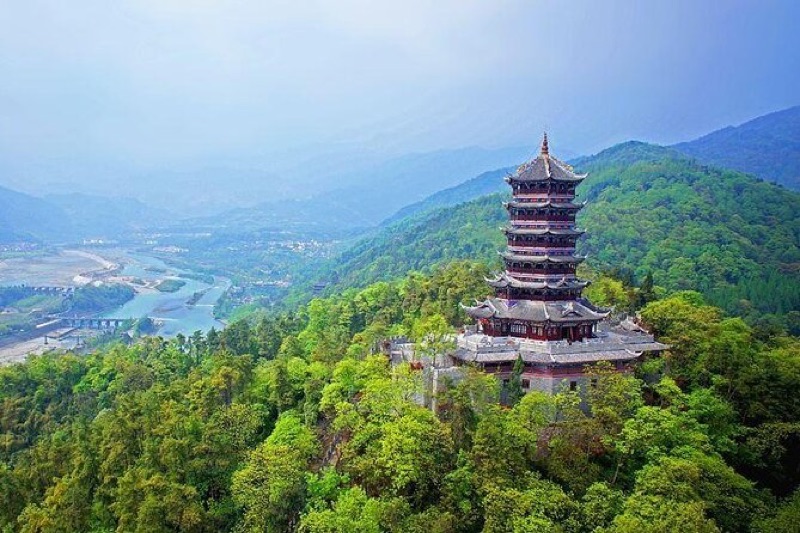
The adventure day. High-speed train west to hike the misty, Taoist-temple-dotted trails of sacred Mount Qingcheng — a UNESCO World Heritage site and one of the birthplaces of Chinese Taoism — then explore Dujiangyan, a 2,300-year-old irrigation system still watering the Chengdu Plain today.
Early Train: Chengdu East → Dujiangyan (High-Speed)
From Chengdu East Station, board the Chengdu–Dujiangyan intercity rail — 35 minutes, ¥15/person. Trains depart every 15-30 minutes from 7am. Exit at Qingchengshan Station for direct access to the mountain, or Dujiangyan Station for the irrigation system first. This scenic ride crosses the Sichuan basin toward the snow-capped Qionglai Mountains.
Mount Qingcheng Front Mountain Hike (青城山前山)
One of China's most atmospheric mountain hikes. Ancient Taoist temples appear through the mist between gnarled cypress trees, stone stairways wind past moon gates and carved cliffs, and the air smells of pine and incense. The main trail to the summit (Shangqing Temple, 1,260m) takes 2-3 hours up and 1-2 hours down. Highlights: Tianshi Cave (Celestial Master Cave), Shangqing Palace, and the pavilions along the lake at the base. The Back Mountain is wilder, greener, and less crowded — better for adventure-seekers.
Dujiangyan Irrigation System (都江堰)
Built in 256 BC by Qin engineer Li Bing, this UNESCO-listed irrigation system has no dam — instead using a genius fish-mouth weir, bottle-neck channel, and spillway to divide the Min River and control floods while irrigating the Chengdu Plain. It still works today, watering 5.3 million acres of farmland. The scenic area includes the Anlan Suspension Bridge (nerve-wracking 330m of swaying wooden planks over rapids), Erwang Temple (dedicated to Li Bing and his son), and multiple river viewing platforms.
Return to Chengdu — Evening in the City
Train back from Qingchengshan or Dujiangyan Station to Chengdu East (35 min, ¥15). Back by 6-7pm. Optional final evening: explore Chunxi Road for shopping, or head to a rooftop bar in the Taikoo Li area for drinks overlooking Daci Temple. The Sichuan Impression Restaurant (川西坝子) near Chunxi does excellent late-night Sichuan BBQ skewers (串串香) — most skewers are vegetable-based.
💰 Budget Breakdown
| Category | Budget | Notes |
|---|---|---|
| Accommodation (3 nights, 5 people) | ¥500 – ¥1,500 total | Budget hostels ¥100-200/room/night; mid-range hotels ¥300-500/room |
| Panda Base (5 people) | ¥275 | ¥55/person — book in advance online |
| Food (3 days, 5 people) | ¥1,500 – ¥3,000 | Street food ¥20-30/meal, sit-down ¥40-80/person |
| Sichuan Opera Show (5 people) | ¥750 – ¥1,250 | ¥150-250/person at Shufeng Yayun |
| Mt. Qingcheng + Dujiangyan (5 people) | ¥750 | ¥150/person combo ticket |
| Transport (metro + trains, 3 days) | ¥200 – ¥400 | Metro ¥5-10/day, Qingcheng train ¥75 roundtrip for 5 |
| Misc (tips, ear cleaning, souvenirs) | ¥300 – ¥600 | Teahouse, incense, Sichuan opera masks, etc. |
📱 Essential Apps
- Didi (Chinese Uber) — set up before arrival
- 12306 — train tickets
- Alipay or WeChat Pay — all payments
- Baidu Maps — works without VPN
- Pleco — offline Chinese dictionary
- Your VPN app — install and test BEFORE landing in China
🏨 Accommodation Tips
- Stay in Jinjiang District (near Chunxi Road) or Wuhou District (near Jinli) for best access
- Budget option: hostels around ¥80-120/bed/night
- Mid-range: ¥300-500/room near metro stations
- Hotels handle police registration automatically — Airbnb hosts may not
🥢 Vegetarian Cheatsheet
- Show vendors: "我吃素,不吃肉鱼蛋" (wǒ chī sù, bù chī ròu yú dàn)
- Look for: 素食馆 (sù shí guǎn) = vegetarian restaurant sign
- Safe bets: tofu dishes, eggplant, cold noodles, dumplings marked 素
- Buddhist temple restaurants = 100% vegetarian by default
- Ask: "yǒu sù de ma?" (有素的吗?) = Do you have vegetarian options?
⚡ Sichuan Spice Levels
- Not all group members may handle mala spice — communicate heat preferences
- "Bù yào là" (不要辣) = No spice please
- "Wēi là" (微辣) = Mildly spicy
- "Zhōng là" (中辣) = Medium spice
- "Tè là" (特辣) = Extra spicy (the local default)