🇯🇵 Your Custom Itinerary

Street Food Gods & Sacred Springs — Osaka for Two: 4 days of kuidaore feasting, castle legends, hidden temple alleys, and a day lost in Japan's oldest hot spring town

Osaka doesn't ask you to love it — it dares you to keep up. This is Japan's kitchen, a city where the national philosophy of kuidaore (eat until you drop) isn't a joke but a lifestyle. May is sweet spot season: warm enough for evening strolls through Dotonbori's neon canyon, cool enough that the castle park is still comfortable, and the crowds haven't yet hit summer peaks. You'll eat takoyaki that ruins every takoyaki you'll ever have again, wander through a moss-covered temple hidden steps from the busiest street in town, stand in the shadow of the giant lion head at Namba Yasaka Shrine, and take a day trip to Arima Onsen — one of Japan's three oldest hot spring towns — where iron-rich golden waters and carbonated silver springs have been healing bodies for over a thousand years. This itinerary balances blowout food experiences with quiet cultural moments, because that's what Osaka does best.

Duration: 4 days
Dates: May 18 – May 21, 2026
Budget: $$
Pace: Moderate
Best for: Couples · Food Explorers · Culture Seekers · Onsen Lovers

⚡ Before You Go — Essentials

🌤️ May in Osaka

May is one of the best months to visit Osaka. Temperatures hover around 19–26°C (66–79°F), humidity is manageable, and the spring crowds have thinned. Pack light layers and comfortable walking shoes — you'll be on your feet all day. A compact umbrella is wise; sudden showers happen. Evenings are warm enough for outdoor dining along the canal.

🚇 Getting Around

Osaka's subway is one of Japan's best. Get an ICOCA card (¥2,000 with ¥500 deposit) from any station kiosk — tap and go on all trains, buses, and even convenience stores. The Midosuji Line (red) connects Umeda/Shin-Osaka in the north to Namba/Tennoji in the south and hits nearly every major stop on this itinerary. Single rides ¥180–350. A 1-day pass is ¥820 but ICOCA is usually cheaper unless you're doing 4+ rides.

💴 Budget Tips Under $1,000

It's tight but doable. Street food (takoyaki ¥500–700, kushikatsu ¥100–150/stick) replaces sit-down lunches most days. Convenience stores (7-Eleven, Lawson, FamilyMart) are shockingly good — onigiri ¥120, bento boxes ¥400–600. The Arima Onsen day trip costs ~¥3,000–5,000 for transport + bathing. Sleep in a business hotel near Namba (¥6,000–9,000/night). Avoid taxi — they're expensive and unnecessary with the subway. Budget ¥8,000–10,000/day for two people on food if you mix street eats with one proper meal.

🍜 Osaka Food Rules

Three commandments: (1) Takoyaki should be molten inside — if it's firm, you got a bad one. (2) Kushikatsu: NO DOUBLE-DIPPING. Dip once into the shared sauce, that's it. Use the raw cabbage to scoop extra sauce if needed. (3) Okonomiyaki is meant to be messy — don't be precious about it. Osaka style is thinner and crispier than Hiroshima style. The best spots are small counters with 6–8 seats.

♨️ Onsen Etiquette

At Arima Onsen (and any sento/onsen): shower and scrub thoroughly BEFORE entering the bath — the bath is for soaking, not washing. No swimsuits, no towels in the water (place on your head or the side). Tie long hair up. Tattoos: some public baths restrict entry; Kin no Yu and Gin no Yu are generally tolerant of small tattoos, but cover what you can. Private onsen (kashikiri) at ryokans have no restrictions. Be quiet and respectful — the bath is meditative, not social.

💴 Cash & Cards

Japan is still cash-heavy, especially street food stalls, small temples, and local restaurants. Carry ¥10,000–20,000. 7-Eleven ATMs (Seven Bank) accept foreign cards with English menus and the best rates. IC cards (ICOCA) work at most vending machines and convenience stores. Major restaurants and department stores take cards, but always ask first.

Day 1 Umeda · Osaka Castle · Nakanoshima

Castle Legends & the City That Built Itself
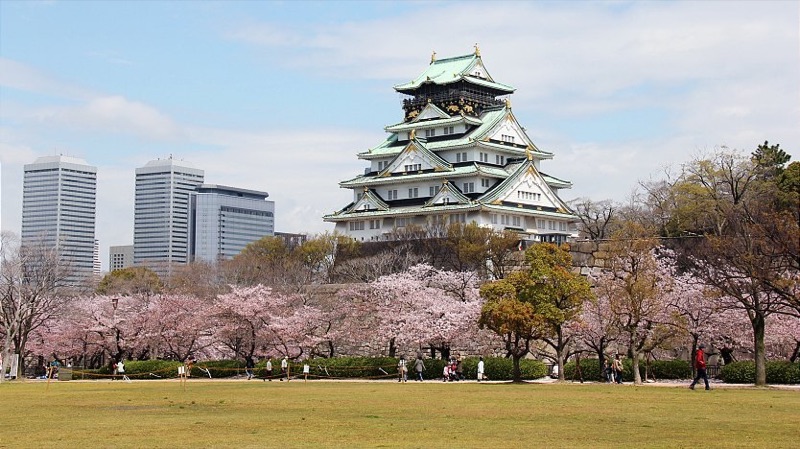
Castle Legends & the City That Built Itself, Osaka, Japan

Day one is about understanding Osaka's soul — start at the castle that symbolizes the city's ambition, drift through the cultured calm of Nakanoshima island, and end your first evening in Umeda where the skyline lights up and the first bowls of ramen call.

Morning (9:00 AM – 12:30 PM)

Osaka Castle & Park

Osaka Castle is the city's defining landmark — a towering keep rising from massive stone walls and a deep moat, surrounded by 15 acres of park. Toyotomi Hideyoshi built the original castle in 1583 as his seat of power during Japan's unification. The current structure is a 1931 concrete reconstruction, but the museum inside is excellent: eight floors of armor, swords, folding-screen paintings of the epic Siege of Osaka, and a panoramic observation deck on the 8th floor. The surrounding park is especially beautiful in May with late-blooming azaleas and the Nishinomaru Garden (¥200). Arrive early to beat tour groups.

⏰ Open 9:00 AM – 5:00 PM (last entry 4:30 PM) — closed Dec 28–Jan 1
📍 1-1 Osakajo, Chuo Ward — Tanimachi 4-chome Station (T23) or Osakajokoen Station (N22)
🎫 ¥600/adult for the castle keep; park grounds free; Nishinomaru Garden ¥200
⏱️ Allow 2–2.5 hours: park stroll → keep (8 floors) → observation deck
📸 The stone walls (some stones weigh 100+ tons) are as impressive as the castle itself
🎧 Audio guide ¥500 — worth it for the battle history context
The best castle photos are from the Gokurakubashi Bridge on the south side, where the keep reflects in the moat. For a quieter route, enter through the Otemon Gate on the west side — most tour groups come from the east.
Midday (12:30 PM – 2:30 PM)

Nakanoshima Park & Riverside Walk

Walk west from the castle through the tree-lined Okawa River promenade to Nakanoshima — a narrow island between the Dojima and Tosabori rivers that's Osaka's cultural and political heart. The park here is the city's oldest public park (1891), with rose gardens that peak in May (over 3,700 bushes, 310 varieties). The Osaka Central Public Hall (1918), a stunning red-brick Renaissance building, sits at the park's eastern end.

📍 Nakanoshima, Kita Ward — walk 15 min west from Osaka Castle along the river
🌹 Rose garden: peak bloom mid-May — free to wander
🏛️ Osaka Central Public Hall: free to enter the ground-floor lounge; paid tours of the VIP rooms
☕ Cafe: the riverside terrace at the Public Hall is a hidden gem for coffee
🍱 Lunch
Kuromon Market or Department Store Basements
Two great lunch options: (1) If you want to dive straight into Osaka's food scene, hop on the Midosuji Line to Nippombashi and eat your way through Kuromon Market — fresh seafood bowls (kaisendon) for ¥1,000–1,500, wagyu skewers for ¥500. (2) For something calmer, the basement food halls (depachika) of Hankyu or Daimaru department stores in Umeda are staggering — beautifully presented bento boxes, tempura, and wagashi sweets for ¥800–1,500.
💰 ¥800–1,500/person · Kuromon: 2 Chome Nipponbashi, Chuo Ward (open 9–6) · Depachika: Umeda stations
Afternoon (2:30 PM – 5:30 PM)

Umeda Sky Building — Floating Garden Observatory

The Umeda Sky Building is Osaka's most dramatic piece of modern architecture — two 40-story towers connected at the top by a circular open-air observation deck called the Floating Garden. You take an escalator through a glass tube suspended between the towers to reach it. The 360° view at the top spans from Mount Rokko to Osaka Bay, and in late afternoon the light is gorgeous. The basement level (Takimi Koji) recreates a Showa-era (1920s) Osaka street with restaurants and bars.

📍 1-1-88 Oyodonaka, Kita Ward — short walk from Osaka/Umeda Station
⏰ Open 9:30 AM – 10:30 PM (last entry 10:00 PM)
🎫 ¥1,500/adult for the observation deck
🌅 Best visited 4:30–6:30 PM for golden hour / sunset
🏢 Takimi Koji (Showa-era street) is in the basement — free to enter, pays for food
The escalator between the two towers at the 35th floor is one of the most photographed spots in Osaka — it feels like floating in mid-air. Don't rush past it.
Evening (6:00 PM – 9:30 PM)

Umeda Evening & First Ramen

Umeda is Osaka's second downtown — a dense thicket of department stores, bars, and restaurants radiating from Osaka Station. The Yodobashi Camera building (connected to the station) has an incredible food court on the 8th floor with views of the rail yards. For your first Osaka dinner, you need ramen. The competition here is fierce and personal.

🍜 Kamukura Ramen (Daimaru Umeda B1) — rich shoyu broth, perfectly chewy noodles, ¥900. Often a line but moves fast.
🍜 Fuunji (multiple Umeda locations) — tsukemen (dipping noodles) with a thick, concentrated fish-pork broth. ¥1,000–1,200.
🍻 For drinks: explore Tenma district (one stop east on JR) — Osaka's biggest drinking quarter with hundreds of standing bars (tachinomi) under the train tracks
🌃 Walk through the illuminated Chayamachi area near Hankyu Umeda for the evening atmosphere
🍜 Dinner
Ramen at Kamukura or Fuunji
Osaka-style ramen tends toward lighter shoyu (soy sauce) broths compared to Tokyo's heavier tonkotsu. Kamukura in the Daimaru basement is a local institution — clean, deeply savory broth with thin noodles and tender chashu pork. For something more intense, Fuunji's tsukemen has you dip cold noodles into a thick, concentrated broth. Both are under ¥1,200.
💰 ¥800–1,200/person · Umeda area · No reservations needed — ramen is counter-seating, first-come
If you're still hungry after ramen (it's Osaka, you should be), hit a convenience store for pudding and onigiri. Japanese konbini food is genuinely excellent — 7-Eleven's Premium Roll cake and Lawson's Mochi Roll are cult favorites.
Day 2 Namba · Dotonbori · Hozenji · Shinsekai

Eat Until You Drop — Osaka's Food Day

This is the day Osaka was built for. Start at Kuromon Market where the seafood is so fresh it's practically swimming, wander through the sacred calm of Hozenji Temple, eat your body weight in takoyaki and kushikatsu along Dotonbori's neon canyon, and end in the retro streets of Shinsekai — Osaka's nostalgic soul — for deep-fried everything and cold beer.

Morning (8:30 AM – 11:30 AM)

Kuromon Market — Osaka's Kitchen

Known as "Osaka's Kitchen," Kuromon Market is a 580-meter covered arcade with about 150 stalls selling the freshest seafood, wagyu, and produce in the city. A quarter of the stalls are seafood vendors — tuna so fresh it glistens, sea urchin (uni) scooped from the shell, whole grilled oysters for ¥300–500, and crab legs cracked and ready. The wagyu skewer vendors (especially Wagyu Musashi) grill A5 beef in front of you for ¥500–800 a stick. This is a build-your-own-breakfast situation: grab a seafood rice bowl (kaisendon) at Kuromon Sanpei or Maguroya Kurogin, follow it with wagyu, finish with fresh fruit on a stick.

📍 2 Chome Nipponbashi, Chuo Ward — Nippombashi Station (S05/K16) or Kintetsu Nippombashi
⏰ Most stalls open 9:00 AM – 6:00 PM; arrive early for best selection
🦞 Must-eat: fresh sashimi bowls (¥1,000–1,500), grilled oysters (¥300–500), wagyu skewers (¥500–800)
🐟 Maguroya Kurogin: tuna specialists — the otoro (fatty tuna) bowl is unforgettable
🥩 Wagyu Musushi: A5 wagyu skewers grilled to order — the marbling melts
💰 Budget ¥2,000–3,000/person for a full market breakfast
Walk the full length of the market first before buying — the best stalls aren't always at the entrance. And don't fill up on the first thing you see. The tamagoyaki (Japanese omelette) vendors at the north end are a perfect light first bite.
Late Morning (11:30 AM – 1:30 PM)

Hozenji Temple & Yokocho Alley

Walk 10 minutes south from Kuromon Market to Hozenji Temple — a small, deeply atmospheric Buddhist temple founded in 1637, hidden in a narrow stone-paved alley just steps from Dotonbori's chaos. The temple's Fudo Myoo statue is completely covered in moss from centuries of visitors pouring water over it for good luck. The approach — Hozenji Yokocho — is a lantern-lit alley of traditional restaurants and bars that feels transported from another century. In May, the combination of dappled sunlight and moss is magical.

📍 1-2-16 Namba, Chuo Ward — 10-min walk from Kuromon Market or Namba Station
🏮 Hozenji Yokocho: the stone-paved alley leading to the temple — dozens of traditional restaurants
💦 Pour water on the Fudo Myoo statue using the bamboo ladle — the moss grows from this tradition
📸 Best photographed in morning light or at dusk when the lanterns glow
🆓 Free entry — open 24 hours (the alley, not the temple interior)

Namba Yasaka Shrine — The Giant Lion Head

Five minutes west of Hozenji, Namba Yasaka Shrine is one of Osaka's most striking sights: a 12-meter-tall, 11-meter-wide lion head sculpture forming the shrine's main stage. The open mouth is believed to swallow evil spirits and bring fortune. It's been a sacred site since the Heian period (794–1185), though the current structures are post-war reconstructions. The scale is hard to convey in photos — standing beneath it, you feel very small.

📍 2 Chome-9-19 Motomachi, Naniwa Ward — 5-min walk from Hozenji Temple
🦁 The lion head is the shrine's emaden (prayer hall stage) — 12m tall, believed to devour evil
🆓 Free entry — always open
📸 Best photo angle: stand directly in front, slightly to the right for depth
🍢 Lunch
Okonomiyaki at Chibo or Ajinoya
Time for Osaka's signature dish — okonomiyaki. Chibo (on Sakaisuji, near Hozenji) has been serving Osaka-style okonomiyaki since 1962: a thinner, crispier version than Hiroshima's, loaded with cabbage, pork belly, and topped with bonito flakes that dance in the heat. Alternatively, Ajinoya in Namba is a smaller, more local spot where they cook it in front of you at a teppan counter. Both are under ¥1,500.
💰 ¥1,000–1,500/person · Chibo: Sakaisuji; Ajinoya: near Namba · Open for lunch
Afternoon (2:00 PM – 5:30 PM)

Dotonbori — The Neon Canyon

Dotonbori is Osaka's electric heart — a canal-side entertainment strip running 2.5 km through Namba, lined with restaurants whose signs ARE the attraction: a giant moving crab (Kani Doraku), a huge dragon, an enormous gyoza, and the iconic Glico Running Man. During the day it's bustling; at night it's electrifying. Walk the south side of the canal, cross the Ebisu Bridge for the classic Glico sign photo, and eat continuously. This is where kuidaore was born.

📍 Dotonbori, Chuo Ward — Namba Station (M20/S16) or Shinsaibashi Station (M19/N08)
📸 Glico Running Man sign: best photographed from Ebisu Bridge at night — the sign was updated in 2024
🦀 Kani Doraku: the giant moving crab sign is 6.5m wide — restaurant inside for full crab courses
🌉 Walk both sides of the canal — the south side for food, north side for photos
💡 The Tonbori River Cruise (¥900, 20 min) departs from near Ebisu Bridge — good for canal-level views

Takoyaki Crawl — The Best in Dotonbori

You cannot leave Osaka without proper takoyaki. These molten octopus balls are the city's soul food — crispy shell, creamy-dashiyaki (liquid) center, topped with bonito flakes, aonori, Worcestershire-style sauce, and Kewpie mayo. Do a mini-crawl: get a portion (usually 8 pieces for ¥500–700) from each of these spots and compare.

🐙 Takoyaki Juhachiban — adds tenkasu (tempura bits) for extra crunch. Dotonbori main strip.
🐙 Creo-Ru — creative toppings like soft-boiled egg and plum shiso. Dotonbori Branch.
🐙 Akaoni — Michelin-listed takoyaki with crispy-outside, liquid-inside perfection. Slightly off the main strip.
🐙 Wanaka — local favorite with multiple flavors including green tea and cheese. Nipponbashi area.
⚠️ Proper takoyaki should be HOT and LIQUID inside — let it cool 30 seconds, eat in one bite or risk the burn
The best time for Dotonbori photos is twilight (around 6:30 PM in May) when the neon signs are lit but there's still blue in the sky. The Glico Running Man at night with the canal reflections is Osaka's single most iconic image.
Evening (6:00 PM – 10:00 PM)

Shinsekai — Osaka's Retro Soul

Take the subway south to Shinsekai ("New World") — a district built in 1903 to mimic New York (north half) and Paris (south half) that instead became Osaka's most authentically working-class neighborhood. The centerpiece is Tsutenkaku Tower, a retro-futuristic observation tower that's been the neighborhood's symbol since 1912. The surrounding streets are lined with kushikatsu restaurants, standing bars, and old-school game arcades. This is where Osaka feels most like itself — unpretentious, loud, and deeply lovable.

📍 Shinsekai, Naniwa Ward — Dobutsuen-mae Station (M22/J19) or Shin-Imamiya Station
🗼 Tsutenkaku Tower: observation deck ¥800 — retro charm, great sunset views
🏪 Janjan Yokocho: atmospheric covered alley of tiny bars and food stalls — named for the sound of shamisen
🎲 Spa World (adjacent): massive onsen theme park with European and Asian bath zones — ¥1,300 entry if you want a quick soak
🍢 Dinner
Kushikatsu at Daruma or Yaekatsu
Shinsekai is the birthplace of kushikatsu — deep-fried skewers of everything from pork and shrimp to lotus root, quail egg, and cheese. The ritual: dip the skewer ONCE into the communal Worcestershire-based sauce (no double-dipping — there's a sign), eat, repeat. Kushikatsu Daruma (multiple branches, look for the angry chef mascot) is the most famous. Yaekatsu (established 1949) is the connoisseur's choice — lighter, crispier batter. Order 10–15 skewers per person with beer.
💰 ¥2,000–3,500/person with drinks · Shinsekai main street · Walk-in OK (arrive before 7 PM for shortest wait)
End the night with doteyaki at a Shinsekai stall — melt-in-your-mouth beef tendon braised in sweet miso. It's the dish that locals order that tourists never discover. Find it at any stall advertising "doteyaki" in Janjan Yokocho.
Day 3 Arima Onsen · Mount Rokko

Sacred Waters — Arima Onsen Day Trip

Sacred Waters — Arima Onsen Day Trip, Osaka, Japan

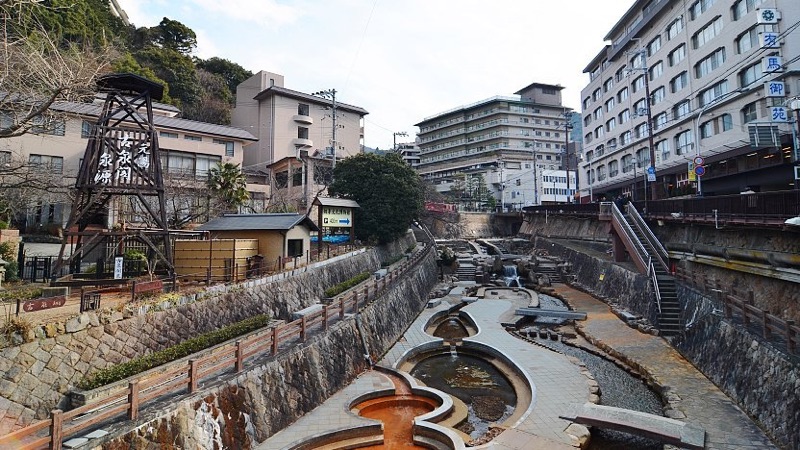
Day three is your reset. Take the train north through Kobe into the mountains to Arima Onsen — one of Japan's three oldest hot spring towns, with records dating back over 1,000 years. Soak in iron-rich golden springs, stroll the atmospheric main street in a yukata, eat Kobe beef croquettes, and ride the ropeway up Mount Rokko for panoramic views. Return to Osaka in the evening feeling like a different person.

Morning (8:30 AM – 11:00 AM)

Train to Arima Onsen via Kobe

The journey to Arima Onsen is part of the experience. Take the JR Kobe Line from Osaka Station to Sannomiya (21 min), transfer to the Kobe Municipal Subway to Tanigami (10 min), then the Shintetsu Arima Line to Arima Onsen Station (20 min). Total journey: about 1 hour, ¥1,050–1,140 one way. Alternatively, a direct highway bus from Osaka runs 60 minutes for ¥1,500. The train route is scenic — watch the city thin into forested mountains.

🚃 JR Osaka → Sannomiya: JR Kobe Line Special Rapid, 21 min, ¥410
🚇 Sannomiya → Tanigami: Kobe Municipal Subway Seishin-Yamate Line, 10 min
🚃 Tanigami → Arima Onsen: Shintetsu Arima Line via Arimaguchi, 20 min
🎫 Total one-way: ~¥1,050–1,140 — ICOCA card works on all segments
⏰ Depart Osaka by 8:30 AM to arrive by 9:45 AM
💡 Arima Onsen Taiko-no-Yu Coupon: includes round-trip train + bathing for ~¥2,300 (good value)

Explore Arima Onsen Town Entrance

Arima Onsen Station sits at the base of a compact, walkable hot spring town. Start at the red Taiko Bridge — the symbolic gateway — then stroll along the Arima River through Shinsui Park. The Nene Bridge, named after Toyotomi Hideyoshi's wife, has a bronze statue and a lovely river view. The main street (Yumotosaka) is lined with traditional ryokans, small shops selling carbonated rice crackers (tansan senbei), and public bathhouses.

🏮 Taiko Bridge: red bridge at the town entrance — traditional photo spot
🏞️ Arima River Shinsui Park: riverside walk with stone paths and lanterns
🍘 Tansan Senbei: carbonated rice crackers — Arima's famous souvenir, made with natural carbonated spring water
👘 Many ryokans rent yukata for day-trippers (¥500–1,000) — walking the town in one is the proper experience
Pick up the Arima Onsen Taiko-no-Yu Coupon at Osaka Station — it bundles round-trip train transport + entry to Taiko no Yu (a massive bath facility with 26 types of baths) for about ¥2,300. It saves ¥1,000+ versus buying separately.
Midday (11:00 AM – 2:00 PM)

Kin no Yu (Golden Spring) & Gin no Yu (Silver Spring)

Arima Onsen is unique in having two distinct types of hot spring water. Kin no Yu (Golden Water) is iron-rich and salt-rich, giving it a reddish-brown color — it's believed to warm the body deeply and benefit skin and muscles. Gin no Yu (Silver Water) is clear, carbonated, and radium-rich, said to soothe joint pain and make skin smooth. Both are public bathhouses in the town center. Soak in both for the full Arima experience.

🟤 Kin no Yu: ¥650/adult — iron-rich golden waters, indoor and outdoor baths. Free foot bath outside.
⚪ Gin no Yu: ¥550/adult — clear carbonated silver springs, tranquil atmosphere
⏱️ Allow 45–60 min per bathhouse — shower, soak, relax
🧖 Alternative: Taiko no Yu — massive facility with 26 bath types + bedrock bathing. ¥1,100–2,600.
⚠️ Tattoo policy: Kin no Yu and Gin no Yu are generally tolerant of small tattoos. Cover what you can. Private baths (kashikiri) at ryokans have no restrictions.
💡 Bring a small towel (¥200 at bathhouses if you don't have one)
🥩 Lunch
Takenaka Meat Shop & Local Eats
Arima Onsen's most famous food stop is Takenaka Meat Shop, serving Kobe beef croquettes (¥300–400) that are crispy outside, rich and melty inside — worth the trip alone. Pair it with carbonated senbei crackers from any shop on the main street and matcha ice cream. For a proper sit-down lunch, many ryokans offer day-use lunch plans (¥2,000–4,000) with seasonal kaiseki courses.
💰 ¥800–1,500/person for street food lunch · ¥2,000–4,000 for kaiseki · Yumotosaka main street
Afternoon (2:30 PM – 5:30 PM)

Mount Rokko Ropeway & Panoramic Views

From Arima Onsen, take the Rokko Arima Ropeway up Mount Rokko (12 minutes, ¥1,100 one-way) for breathtaking panoramic views of the Osaka Plain, Kobe port, and on clear days all the way to Awaji Island. The summit has observatories, the Rokko Garden Terrace (a small complex with cafés and shops), and the Rokko Alpine Botanical Garden. In May, the mountain is lush and green with late-spring wildflowers.

🚡 Ropeway: Arima Onsen Station → Rokko Sanjo Station, 12 min, ¥1,100 one-way
🏔️ Rokko Garden Terrace: cafés, viewing platforms, gift shop at the summit
🌿 Rokko Alpine Botanical Garden: ¥600 — 1,500+ alpine plant species, lovely in May
🌅 The view at golden hour is one of the best in the Kansai region
🚌 Return option: bus from Rokko Sanjo down to Rokko Station (JR), then train back to Osaka

Tansan Sengen Park (Alternative)

If you prefer to stay in Arima rather than going up the mountain, visit Tansan Sengen Park where natural carbonated water bubbles up from the ground — you can actually taste it from a faucet. It's a small, peaceful park with a shrine dedicated to the carbonated springs that made Arima famous. Japan's first carbonated drink was apparently inspired by these springs.

📍 Northern end of Arima Onsen town — 10-min walk from center
🧪 Taste the natural carbonated spring water — it's mildly salty and effervescent
🆓 Free entry
⏱️ 30 minutes including the walk
If budget is tight, skip the ropeway and spend the full afternoon between the two bathhouses and the town — Arima is small enough to see everything on foot, and the soaking itself is the main event. The ropeway is a nice add-on if you want the views.
Evening (6:00 PM – 9:00 PM)

Return to Osaka & Tenma Standing Bars

Take the train back to Osaka, arriving around 6:00 PM. Head straight to Tenma — Osaka's vibrant drinking quarter just one stop east of Osaka Station on the JR Loop Line. Under the elevated train tracks, hundreds of tiny standing bars (tachinomi) serve draft beer, highballs, and small plates (otsumami) for ¥300–500 each. It's loud, friendly, and quintessentially Osaka. You'll be shoulder-to-shoulder with salarymen, students, and grandmothers who can drink you under the table.

🚃 Arima Onsen → Osaka Station: retrace the route, ~1 hour
🍻 Tenma Station (JR Loop Line, 1 stop from Osaka) — follow the noise under the tracks
🍺 Typical tachinomi: ¥300 draft beer, ¥400–600 otsumami (grilled chicken, edamame, sashimi)
🏮 The alleys between the tracks and Tenjinbashisuji Shopping Street are the densest concentration
💴 Cash preferred at most standing bars
🍻 Dinner
Tenma Standing Bar Crawl
Skip the sit-down restaurant tonight. Instead, crawl through 3–4 standing bars in Tenma: a draft beer and a plate of yakitori at the first, edamame and highball at the second, sashimi and sake at the third. The total damage: ¥2,000–3,500 for two people, including drinks. It's the most fun you can have for that price in Japan.
💰 ¥2,000–3,500 for two · Tenma district · Walk-in only · Cash preferred
After a full day of onsen soaking, your body will be deeply relaxed — the hot springs have a legitimate sedative effect. Don't plan anything strenuous for the evening. A slow crawl through Tenma with cold drinks is the perfect wind-down.
Day 4 Sumiyoshi · Tennoji · Abeno

Ancient Shrines & a Perfect Last Bowl

Ancient Shrines & a Perfect Last Bowl, Osaka, Japan

Your last day starts at Sumiyoshi Taisha — one of Japan's oldest and most beautiful Shinto shrines, with an iconic arched bridge and a tranquility that makes it hard to believe you're still in a city of 2.7 million. Then explore Tennoji's temple quarter before a final epic meal and departure. Osaka doesn't do quiet goodbyes — it feeds you until the last minute.

Morning (8:30 AM – 11:30 AM)

Sumiyoshi Taisha — Japan's Ancient Shrine

Sumiyoshi Taisha is the head shrine of over 2,000 Sumiyoshi shrines across Japan, founded in the 3rd century — making it one of the oldest shrines in the country. The architecture is "Sumiyoshi-zukuri," the oldest style in shrine design, predating Buddhist influence entirely. The Sorihashi Bridge (Taikobashi) — a steep, arched red bridge spanning a pond — is one of Japan's most photographed shrine scenes. The grounds are vast and deeply peaceful: ancient camphor trees, stone lanterns, and the sound of gravel underfoot. In May, the irises in the divine pond are in bloom.

📍 2-9-21 Sumiyoshi, Sumiyoshi Ward — Sumiyoshi Taisha Station (Nankai Line, 10 min from Namba)
🆓 Free entry — grounds open 24 hours; treasure house ¥500 (9 AM–5 PM)
🌉 Sorihashi Bridge: the steep red arched bridge over the pond — cross it for good fortune
🌳 600+ camphor trees on the grounds, some over 1,000 years old
🌺 May: irises in bloom around the divine pond — gorgeous
⏱️ Allow 1.5–2 hours to explore the full grounds at a meditative pace
After the shrine, walk 5 minutes to Sumiyoshi Higashi Station and take the Hankai Tramway (Osaka's last remaining streetcar) toward Tennoji. It's a charming 15-minute ride through residential Osaka on vintage tracks — ¥210. Disembark at Tennoji-eki-mae.
Late Morning (11:30 AM – 1:30 PM)

Shitennoji Temple — Japan's First Buddhist Temple

Founded in 593 AD by Prince Shotoku, Shitennoji is one of Japan's oldest Buddhist temples and the first state-sponsored temple in the country. The grounds are open and spacious — a five-story pagoda rises above stone paths lined with cherry and plum trees. The Gokuraku-jodo Garden (Paradise Garden) is a serene Japanese garden representing the Buddhist Pure Land. The temple has been destroyed and rebuilt many times, most recently after WWII bombing, but the layout follows the original 6th-century design.

📍 1-11-18 Shitennoji, Tennoji Ward — Shitennoji-mae Yuhigaoka Station (Tanimachi Line)
🎫 Temple grounds free; inner precinct ¥300; Gokuraku-jodo Garden ¥300
🗼 Five-story pagoda — you can climb inside for views (¥300)
⏰ Open 8:30 AM – 4:30 PM (Apr–Sep)
⏱️ 1–1.5 hours for a thorough visit
🍜 Last Lunch
Udon at Tsurutontan or Kitsune Udon
End your Osaka food journey with udon — the soul-warming bowl that Kansai does better than anywhere. Tsurutontan (in the Tennoji Mio building near the station) serves massive, Instagram-worthy bowls with impossibly chewy noodles in crystal-clear dashi. For something more traditional, find a local shop for kitsune udon — thick noodles in sweet dashi topped with a fried tofu pouch. It's Osaka comfort food at its purest.
💰 ¥900–1,500/person · Tsurutontan: Tennoji Mio Building · Kitsune udon: anywhere in Tennoji
Afternoon (2:00 PM – 4:00 PM)

Abeno Harukas & Departure

Abeno Harukas is Japan's tallest building (300m) and a fitting farewell viewpoint. The 60th-floor observation deck (Harukas 300) gives you a panoramic sweep of the entire Osaka Plain — on clear days you can see the Akashi Kaikyo Bridge, Mount Rokko where you soaked yesterday, and even the mountains of Awaji Island. The building also houses a department store, art museum, and hotel. If your train departs from Shin-Osaka (shinkansen), it's a direct 15-minute ride on the Midosuji Line from Tennoji.

📍 1-1-43 Abenosuji, Abeno Ward — direct from Tennoji Station
🎫 Harukas 300 observation deck: ¥1,500/adult (or ¥1,000 if weather is poor)
⏰ Open 9:00 AM – 10:00 PM (last entry 9:30 PM)
🖼️ Abeno Harukas Art Museum: ¥1,300 — rotating exhibitions in a beautiful space
🚃 To Shin-Osaka: Midosuji Line direct from Tennoji, 15 min, ¥280
Before heading to the station, grab last-minute food souvenirs at the Abeno Harukas basement food hall — Tokyo Banana, matcha Kit-Kats, and Osaka-specific sweets make great gifts. Or hit a Don Quijote (open 24/7) near Namba for the full chaotic souvenir experience.

Love this format? Get your own.

Every tabiji itinerary is custom-built from real traveler intelligence — specific restaurants, actual addresses, local timing tricks.

Get Your Personalized Itinerary — $1

Delivered within 24 hours. 2 free revisions. 100% satisfaction guaranteed.

📄 Export to Google Docs

Get an editable Google Doc of this itinerary — perfect for sharing with your travel group and adding your own notes.

The doc will be shared to your email as an editor.

✅ Your Google Doc is ready!

We've shared it with . Check your Google Drive or click below.

Open Google Doc →

Tip: You can edit, add notes, and share it with your travel group!