⚡ Before You Go — Essentials
🏍️ The Roads
The Spanish Pyrenees are a motorcyclist's paradise. The N-260 is the legendary axis road — 800km of curves from Mediterranean to Atlantic. From Aínsa, you can reach dozens of stunning routes within an hour. Roads are well-maintained, traffic is light, and the views are non-stop. Carry chain for high passes just in case.
🌡️ Mid-May Weather
Aínsa in May: 15–22°C in the valleys, 5–12°C at high passes. Mostly sunny with occasional mountain showers — pack rain gear always. Snow is usually gone from main roads but can linger above 2,000m. The southern side of the Pyrenees (where Aínsa sits) is warmer and drier than the French side. Check AEMET before each ride.
⛽ Fuel & Planning
Fill up in Aínsa before every ride. Fuel stations exist in Broto, Bielsa, Jaca, Barbastro, and Boltanya — but mountain villages may not have any. Plan 200–250km per tank. Carry water and a basic toolkit. Cell signal drops in deep valleys — download offline maps.
🛡️ Riding Gear
Full riding gear is essential — temperatures swing wildly between valleys and passes. Layer up: base layer, mid-layer, armored jacket. Heated grips are a blessing in May. Always ride with rain gear accessible. The Pyrenees demand respect — emergency services can be 45+ minutes away on remote roads.
🅿️ Motorcycle Parking
Aínsa is extremely motorcycle-friendly. Hotel Mesón de L'Aínsa offers free covered garage parking. Several other hotels have secure bike storage. The old town is pedestrian-only — park outside the walls and walk in. Always mention you're arriving by motorcycle when booking.
Arrival: Welcome to the Pyrenees
Arrive in Aínsa and settle into motorcycle paradise. Explore the perfectly preserved medieval village, walk the old walls, and get your bearings. Tomorrow the real riding begins — tonight, fuel the body with hearty Aragonese mountain food.
Explore Aínsa's Medieval Old Town
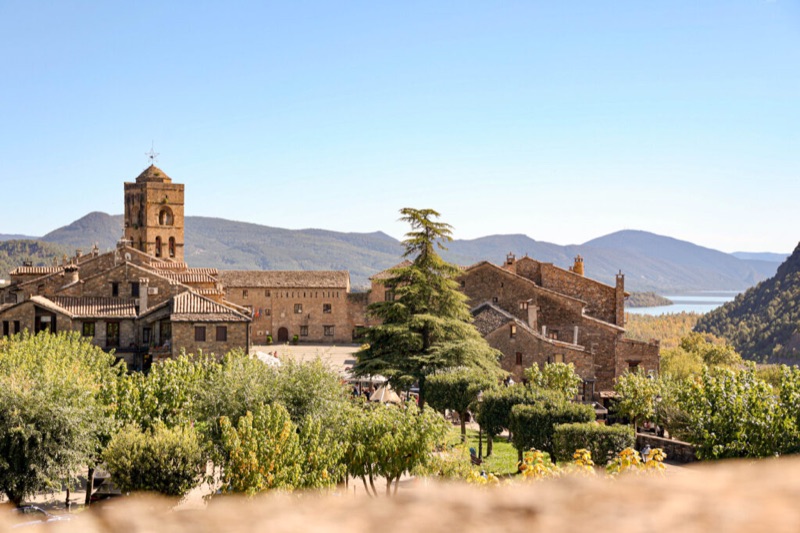
Aínsa's Casco Antiguo is a living medieval village — golden stone buildings, arched passageways, and a magnificent 12th-century Plaza Mayor. Walk the narrow streets, visit the Romanesque church of Santa María, and climb the castle tower for your first panoramic view of the Pyrenees.
Plaza Mayor at Sunset
The Plaza Mayor of Aínsa is one of the most beautiful in Spain. Stone arcades, mountain air, and a handful of restaurants with outdoor tables. Sit with a beer and watch the light hit the surrounding peaks as the sun drops. This is your home for the next 10 nights.
Ride to Ordesa: Valley of the Giants
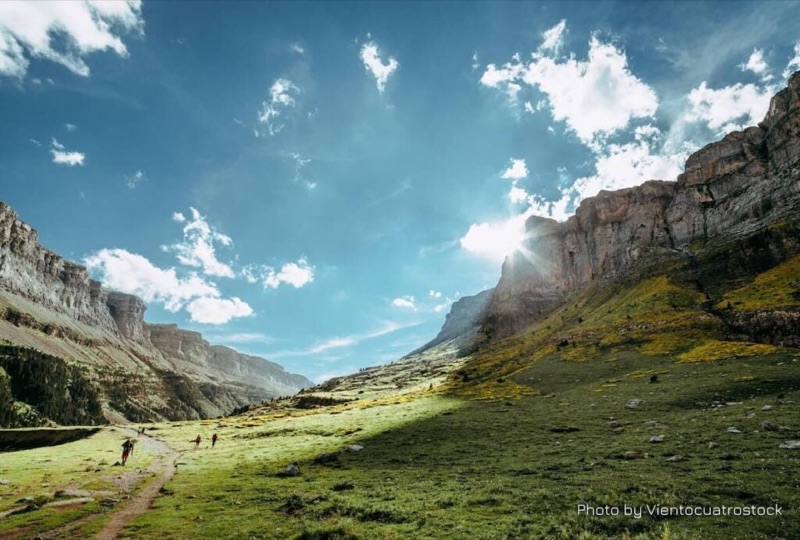
Your first real ride — northwest through the Ara River valley to Torla, gateway to Ordesa y Monte Perdido National Park. The road winds through increasingly dramatic scenery until the valley opens to reveal 3,000m limestone walls. Park the bike and hike into one of Europe's most spectacular canyons.
Ride Aínsa → Broto → Torla
Head northwest on the A-2606 through Boltanya and Broto. The road follows the Ara River through a narrowing valley with increasingly dramatic rock walls. From Broto, the road climbs to Torla-Ordesa at 1,040m. About 45km of beautiful riding with flowing curves.
Ordesa Valley Hike
From Torla, a shuttle bus (€5 round trip, runs every 15 min) takes you into the national park. Walk the easy Camino de Senda trail along the Ordesa River — flat, shaded by beech and pine, with towering 800m vertical limestone walls on both sides. Turn around at the Cascada de la Cueva (about 2 hours in) or continue to Cola de Caballo waterfall.
Ride Back via Fiscal Loop
Instead of retracing your route, take the scenic loop south through Fiscal and the embalse de Mediano (Mediano Reservoir). The reservoir submerged a village — the church bell tower still rises from the water at low levels. A surreal sight and a lovely road back to Aínsa.
Eastern Ride: Bielsa, Pineta & the Hidden Valleys
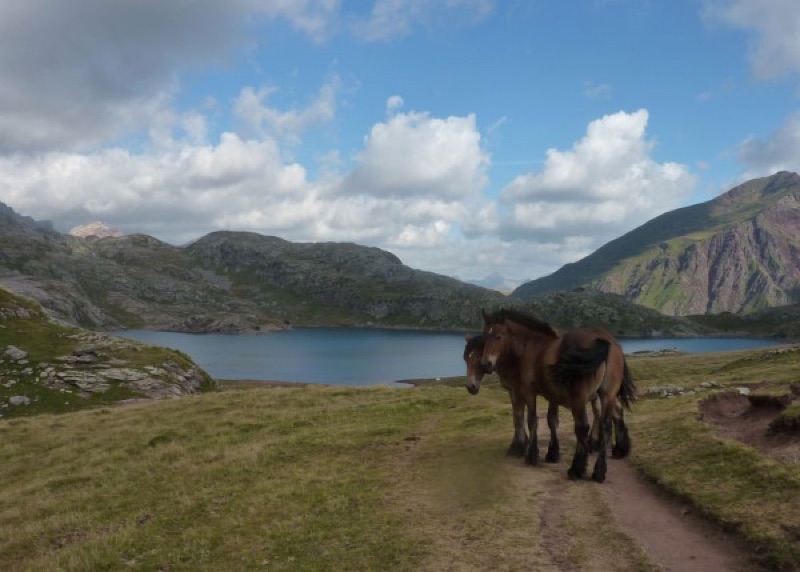
Head east into the darkest, most dramatic corners of the Pyrenees. The road to Bielsa and the Pineta Valley is a rider's dream — tight switchbacks, dark rock walls, and the sound of rushing glacial rivers. Explore the remote Chistau Valley, one of the last truly wild valleys in the range.
Ride Aínsa → Bielsa → Pineta Valley
East on the A-138 through Laspuna and Escalona, then north on the A-2606 to Bielsa. The Bielsa tunnel cuts through the mountain to the Pineta Valley — a jaw-dropping glacial valley with the Cinca River born from waterfalls beneath Monte Perdido. The road ends at the Parador de Bielsa, a mountain lodge surrounded by 3,000m peaks.
Chistau Valley Loop
Ride back through Bielsa and take the turnoff to Plan and the Valle de Chistau (also called Valle de Gistau). This remote valley runs parallel to the French border — traditional stone villages, haystacks, and zero tourist traffic. Stop in Plan for coffee, then continue to San Juan de Plan. The road eventually connects back to the main route south.
Cinca River Pools
Back in Aínsa, walk 10 minutes from the old town to the natural pools on the Cinca River. The turquoise water is freezing but invigorating after a day of riding. Sit on the rocks and watch the sun set behind the Peña Montañesa.
Border Cross: Col du Pourtalet into France
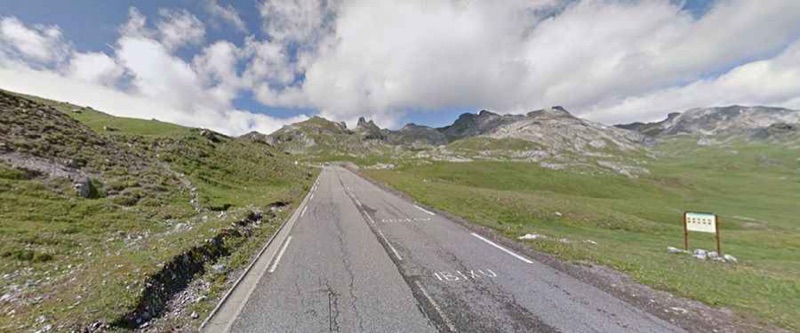
Today you cross the Pyrenees into France. The road from Aínsa to the Col du Pourtalet (1,794m) is one of the classic border crossings — wide sweeping curves through pine forest, then a dramatic high-altitude plateau surrounded by peaks. Drop into the French Ossau Valley for lunch, then ride back. A bucket-list day.
Ride Aínsa → Col du Pourtalet → France
North on the A-138 to Larrens, then follow signs to the French border. The road climbs steadily through the Ara valley, past the town of Biescas, and into increasingly alpine terrain. The Col du Pourtalet sits in a broad high-altitude bowl surrounded by peaks. Cross into France and descend through the stunning Ossau Valley toward Laruns.
Ride Back via the French Side
Instead of retracing your route, explore the French side a bit more. Ride to Gabas and the Lac de Bious-Artigues — a dead-end road that's absolutely worth the detour. Then climb back over the Pourtalet for the descent to Aínsa. The afternoon light on the Spanish side is spectacular.
Westward: The N-260 & the Monastery Under the Rock
Ride west on the legendary N-260 to Jaca — the Pyrenees' most important historical gateway. Then detour to one of Spain's most extraordinary sights: the Monastery of San Juan de la Peña, literally built beneath a massive rock overhang. The riding today is pure N-260 perfection.
Ride Aínsa → N-260 West → Jaca
Take the N-260 west from Sabiñánigo to Jaca — a classic section of the famous axis road. Sweeping curves through mixed forest and open valleys with views of the Peña Oroel monolith. Jaca is the largest town in the central Pyrenees and a natural crossroads for riders.
San Juan de la Peña Monastery
Ride south from Jaca into the mountains to reach this extraordinary monastery — the old monastery sits beneath a massive horizontal rock overhang, protected from rain and snow for a thousand years. According to legend, the Holy Grail was hidden here. The new monastery above is also worth visiting.
Return Ride on the N-260
The N-260 eastbound back to Aínsa is even better — you'll see why riders call it one of Europe's top roads. The late afternoon light on the southern slopes is golden, the curves are perfectly banked, and there's almost no traffic. Enjoy every kilometer.
The Lost Valleys: Hecho & Ansó
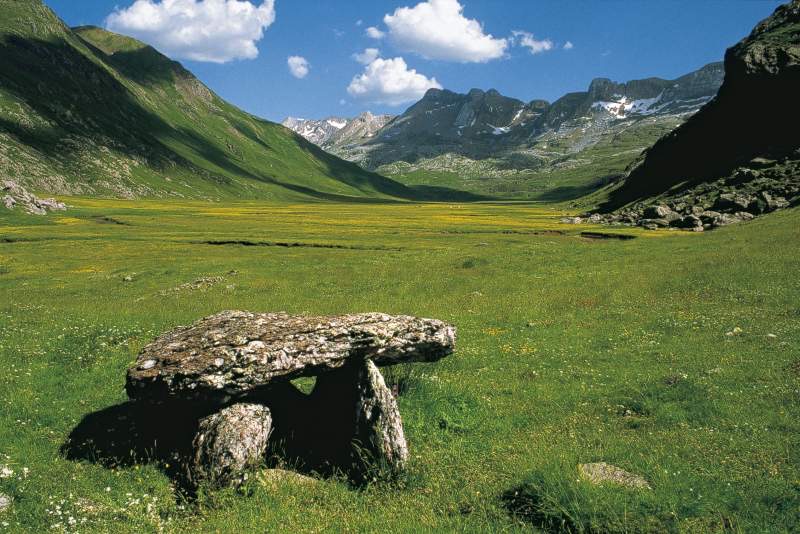
Ride west into the Hecho and Ansó valleys — two of the most beautiful and least-traveled valleys in the Pyrenees. These valleys lead to the French border through dense beech forests and past glacial lakes. The roads are narrow, winding, and almost empty. Pure motorcycle meditation.
Ride to Hecho Valley & Selva de Oza
West from Aínsa to Puente la Reina de Jaca, then north into the Valle de Hecho. The road follows the Aragón Subordán river through beech forest to the Selva de Oza — a fairy-tale ancient forest at 1,200m. In May the beech trees are just leafing out in luminous green. The road dead-ends at a mountain refuge near the French border.
Ansó Valley Ride
Ride the connecting road to the neighboring Ansó Valley — even more remote and wild than Hecho. The village of Ansó is one of the best-preserved traditional Pyrenean villages, with stone houses and wooden balconies. The valley road continues toward the Zuriza refuge near the French border.
South: Canyon Country & Sierra de Guara
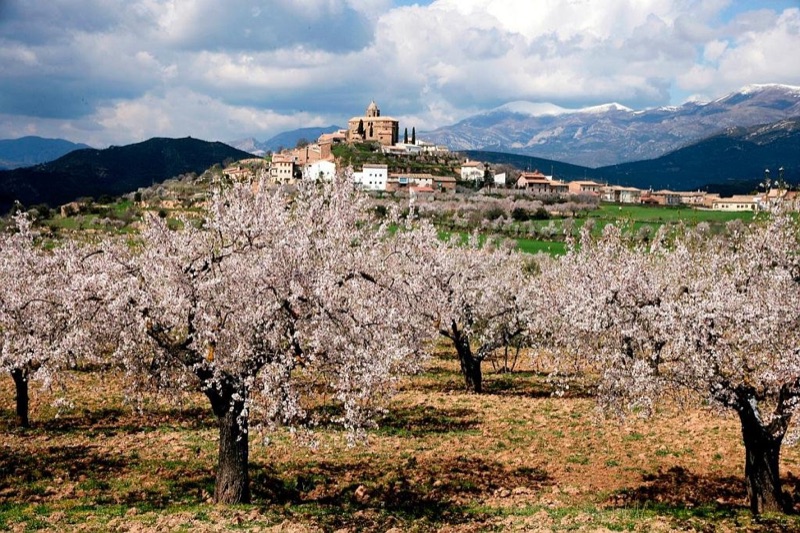
Ride south from the high Pyrenees into the pre-Pyrenean canyon country of the Sierra y Cañones de Guara Natural Park. The landscape transforms dramatically — from pine forests to ochre-colored limestone gorges carved by turquoise rivers. Stop in the stunning cliff-perched village of Alquézar and ride through the Vero River canyon.
Ride Aínsa → Sierra de Guara
South on the A-138 toward Barbastro, then west into the Sierra de Guara. The transition is dramatic — within 40 minutes you go from Alpine peaks to warm Mediterranean-style canyon country. The roads here are different from the high mountains: faster, more open, with sweeping views of sculpted rock formations.
Alquézar — Village on a Cliff
Alquézar is one of the most beautiful villages in Spain — perched on a limestone cliff above the Vero River canyon. Narrow medieval streets, a collegiate church, and stunning views down into the gorge. Walk the via ferrata that circles the cliff face, or just wander the alleys.
Rio Vero Canyon & Ride Back
Ride through the Vero River canyon on the road between Alquézar and Colungo — the road literally cuts through the gorge with rock walls towering on both sides. Stop at the Fuente de los Buitres to watch griffon vultures nesting in the cliffs. Then ride back north through Barbastro, picking up the A-138 to Aínsa.
The Big One: Añisclo Canyon
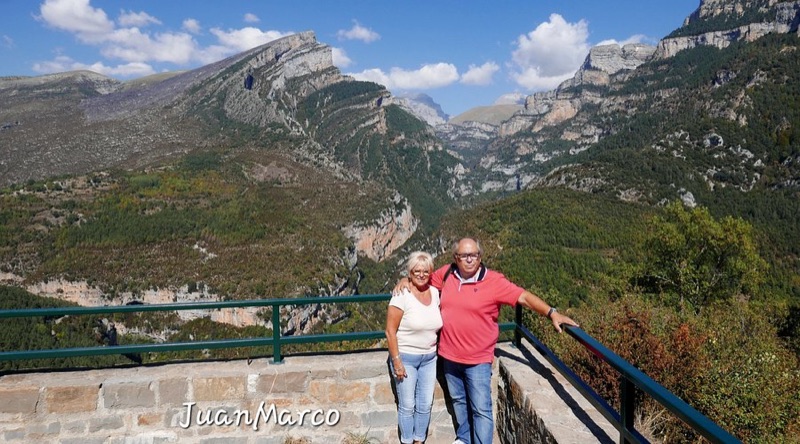
Today's ride is the crown jewel — the Añisclo Canyon road. This narrow gorge road cuts through the heart of the Ordesa y Monte Perdido National Park, squeezed between 1,000m vertical walls with the Bellós River thundering below. It's one of the most dramatic motorcycle roads in Europe. Respect it.
Ride Aínsa → Añisclo Canyon
East from Aínsa through Escalona, then north into the canyon. The approach from the south is deceptively gentle — farmland and forest. Then the road drops into the gorge and everything changes. Rock walls close in, the river appears far below, and the road becomes a single lane carved from the cliff face. Stop at the Ermita de San Úrbez, a tiny chapel wedged into a rock overhang.
Ride the Full Canyon & Exit North
Continue through the canyon northward — the road emerges at Fanlo and the high Pyrenean plateau. The contrast is stunning: from dark, narrow gorge to wide alpine meadow with Monte Perdido towering ahead. You can continue to Torla or loop back via Broto.
Escuaín Gorge Loop
From Fanlo, detour east to the less-visited Gargantas de Escuaín — another spectacular gorge but with zero tourists. A narrow road leads to the village of Escuaín perched above the Yaga River canyon. The viewpoint from the village looks straight down 500m into the gorge. Then loop back to Aínsa via Bielsa and the eastern route.
The High Pass: Somport & the Ghost Station
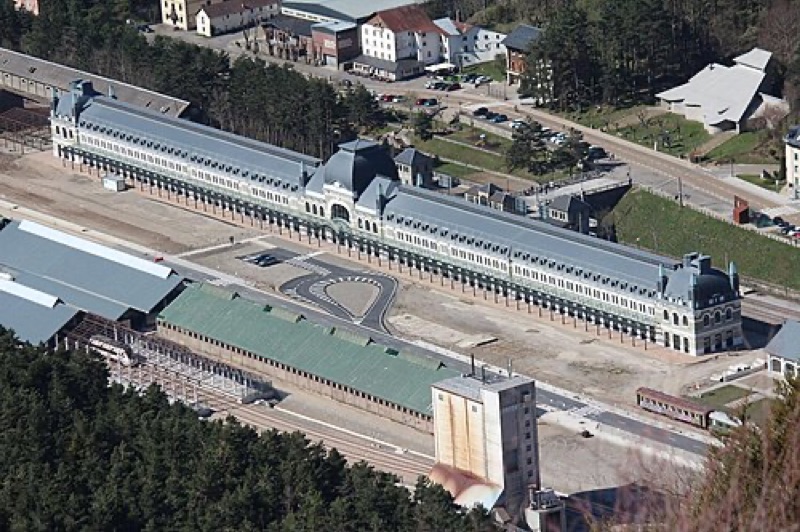
Ride to the Somport Pass (1,640m) — the historic crossing point between Spain and France since Roman times. On the way, visit the extraordinary Canfranc International Railway Station — an abandoned Art Deco masterpiece that was once the largest station in Europe. End the day at the Astún ski resort for high-altitude mountain views.
Ride Aínsa → Canfranc → Somport Pass
West to Jaca, then north through the Aragón Valley on the N-330A to Canfranc. The valley road is broad and fast, following the Aragón River through increasingly dramatic scenery. Stop at Canfranc Station — an enormous Art Deco building, partially abandoned, that once connected Spain and France by rail. Then continue to the Somport Pass at 1,640m.
Astún & High Mountain Lakes
Continue north from Canfranc to Astún — a ski resort at 1,660m right on the French border. In May the snow is mostly gone and the area becomes a stunning high-altitude plateau. Walk to the Ibones de Astún (mountain lakes) — 30 minutes from the parking area. The silence at this altitude is profound.
Rest Day Ride: The Easy Loop
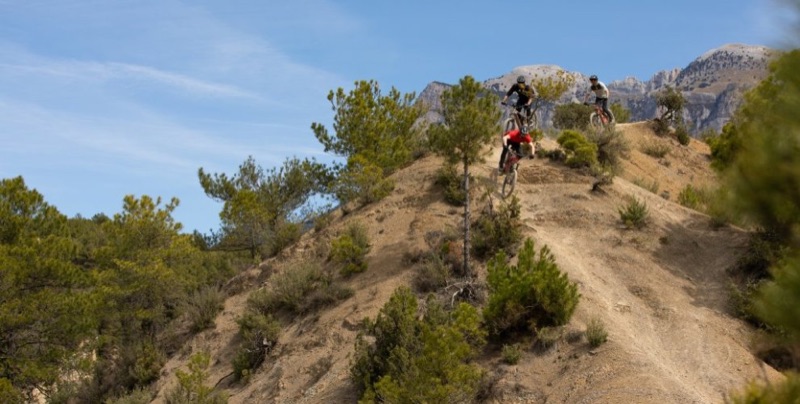
After 8 days of intense mountain riding, take an easy day. A gentle loop through the surrounding countryside — the medieval bridge at Boltanya, the surreal Mediano reservoir, and the tiny village of Arcusa. Low-speed, high-beauty riding. Let the mountains come to you.
Lazy Ride to Boltaña
A gentle 15-minute ride south to Boltanya — a charming small town on the Ara River with a medieval bridge and a ruined castle on the hill above. Walk the old quarter, cross the Roman bridge, and climb to the castle ruins for views. The perfect low-key morning.
Mediano Reservoir at Sunset
Ride to the Embalse de Mediano viewpoint. In May, the water level is usually low enough to reveal the top of the submerged church tower — the only remaining structure of the village that was flooded in the 1960s. An eerie, beautiful sight. Continue to Arcusa and Labuerda for a quiet loop back to Aínsa.
Final Ride: Peña Montañesa & Despedida
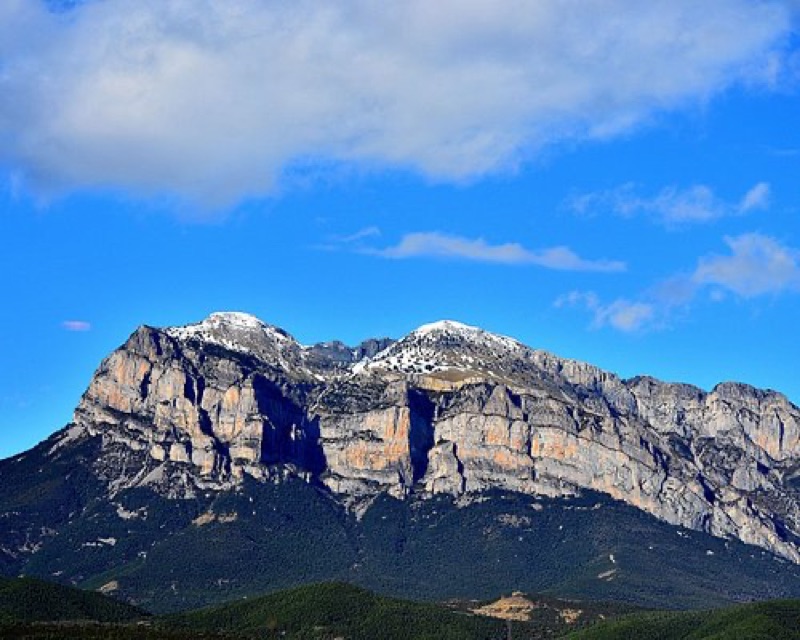
Your last day in the Pyrenees. One final ride — the road to the Peña Montañesa, the massive limestone monolith that's been your constant companion for 10 days. Get up close to this 2,291m giant, then return to Aínsa for a final meal before hitting the road home. Hasta la próxima, Pirineo.
Ride to Peña Montañesa
The road west from Aínsa leads to the base of the Peña Montañesa — the iconic limestone massif visible from everywhere in the valley. The road winds through San Vicente de Labuerda and climbs toward the Peña. At the end of the road, a track leads to the Santuario de la Peña Montañesa, a 15th-century hermitage built into the cliff face. The view back toward Aínsa is your final Pyrenean panorama.
Final Walk Through Aínsa
Before packing up, take one last walk through the medieval streets. Buy some local cheese, a bottle of Somontano wine, or artisan honey from the shops on the Plaza Mayor. Say goodbye to the Castillo. This place has a way of calling riders back.
💰 Budget Breakdown
| Category | Budget | Midrange | Luxury |
|---|---|---|---|
| Accommodation | €25–40/night (hostal) | €60–90/night | €120–200/night |
| Meals (solo) | €20–30/day | €35–55/day | €70–120/day |
| Fuel | €15–25/day | €20–30/day | €25–35/day |
| Activities & Parks | €0–10/day | €10–25/day | €30–60/day |
| Drinks & Tapas | €8–12/day | €15–25/day | €30–50/day |
| 10-Day Total (solo rider) | €600–900 | €1,100–1,700 | €2,200–3,500 |
🏍️ Getting There
- From Barcelona: A-2 to Lleida, then N-240 to Barbastro, A-138 to Aínsa (~4 hours)
- From Madrid: A-2 to Zaragoza, then A-23 to Huesca/Barbastro, A-138 to Aínsa (~5 hours)
- From Zaragoza: A-23 to Sabiñánigo, then N-260 to Aínsa (~2.5 hours)
- Nearest airport: Zaragoza (ZAZ) — fly in and rent a motorcycle, or ride from home
🏨 Where to Stay (Motorcycle-Friendly)
- Hotel Mesón de L'Aínsa — free covered garage for bikes, views of medieval town
- Casa Dos Arcos (Usana, 3km away) — owner is a bike mechanic, workshop on-site
- Hotel Dos Ríos — central, modern, rooftop pool, small garage
- Camping Peña Montañesa (5km away) — pool, restaurant, secure parking, budget option
🌡️ May Weather
- Valley temperatures: 15–22°C daytime, 5–11°C overnight
- High passes: 5–15°C — always carry warm layers
- About 45% chance of rain on any given day — rain gear is essential
- Snow usually cleared from main passes by mid-May, but check AEMET daily
- Long daylight: sunrise ~6:45am, sunset ~9:00pm
💳 Money
- Euro (€) everywhere — also valid in Andorra if your route passes through
- Card accepted in most restaurants and hotels in Aínsa
- Cash needed for small village bars, fuel in remote areas, and park entries
- ATM in Aínsa but it can run out on busy weekends — carry €100–200 reserve
📱 Connectivity & Navigation
- Download offline maps (Google Maps or Calimoto) — signal drops in valleys
- Spanish SIM: Movistar/Yoigo have best Pyrenean coverage
- Fuel tracking app recommended — stations are 40–60km apart in mountains
- Join the "Pirineos en Moto" WhatsApp/Telegram groups for real-time road conditions