⚡ Before You Go — Essentials
🌧️ June = Tsuyu (Rainy Season)
June is Kyoto's rainy season — expect humidity, overcast skies, and occasional downpours. Pack a compact umbrella and quick-dry layers. The trade-off: hydrangeas are peak, crowds are lower than spring, and temples look stunning in the mist. Early morning starts (7am) beat both the heat and the tour groups.
🚄 Getting Here from Tokyo
Take the Tokaido Shinkansen (Nozomi or Hikari) from Tokyo or Shinagawa Station to Kyoto — about 2h15m on Nozomi, 2h40m on Hikari. Book seats on the right (mountain) side for Fuji views. Your IC card (Suica/Pasmo) works on Kyoto city buses and subways. Buy an Icoca if you're starting fresh.
🏨 Across Hotel Kyoto
Your hotel puts you in the center of everything — easy bus or subway access to all districts. Arashiyama, Gion, Fushimi, and Teramachi are all within 20–40 minutes. Keep your luggage light for the Shinkansen from Kyoto to Hiroshima on your final morning.
🦐 Shellfish Allergy — Critical Warnings
⚠️ SHELLFISH ALLERGY: Nishiki Market stalls openly display and sell shellfish — be vigilant. Many ramen shops include shrimp in broths. Always say: "Ebi, kani, kai ga arerugii desu" (I'm allergic to shrimp, crab, and shellfish). Chains like Ichiran (tonkotsu) and Tenkaippin (chicken-based) are generally safe — always confirm. Uji matcha sweets are universally shellfish-free.
📖 Goshuin Stamp Book
Buy a goshuincho (御朱印帳) at your very first temple — Tenryuji on Day 1 sells beautiful ones. Each temple/shrine stamps your book with a unique calligraphied seal for ¥300–500. Keep it separate from your regular notebook. Train station stamps (eki stamps) are free and found at station offices — ask at the counter for the "stamp rally" or "eki stamp."
☀️ Heat & Sun Strategy
June heat in Kyoto hits hard by 10am. Start every outdoor temple visit before 9am. Carry a folding fan and a UV-blocking parasol (sold everywhere). Seek out temple interiors, covered Nishiki Market, and shaded bamboo groves for midday. Stay hydrated — vending machines are literally everywhere. Matcha ice cream and cold mugicha (barley tea) are your best friends.
Arrival & Arashiyama — Bamboo, Temples & First Stamps
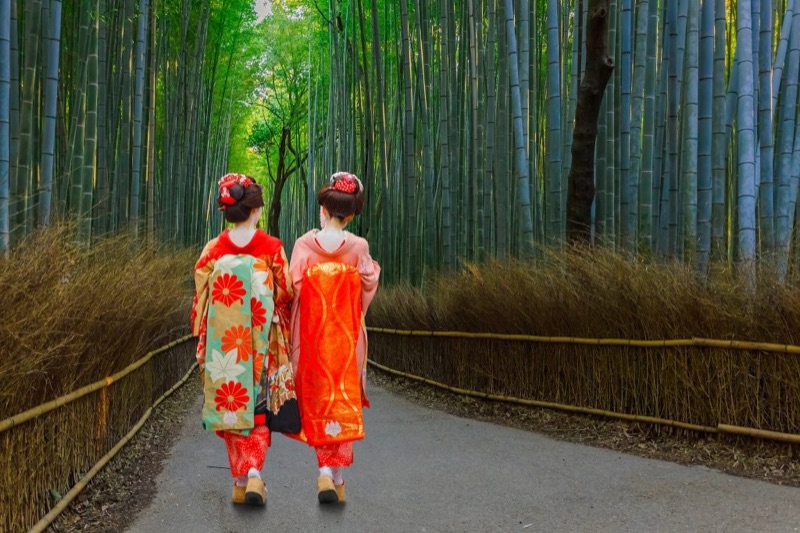
Roll into Kyoto on the Shinkansen, drop your bags, and head straight for Arashiyama — a bamboo-shaded, temple-dense district that'll make you feel immediately like you're inside a Ghibli film. Pick up your first goshuincho, collect your first stamp, and end the evening at Nishiki Market before it closes.
Tokyo → Kyoto: The Shinkansen Run
Board the Nozomi from Tokyo or Shinagawa toward Kyoto (2h15m). Sit on the right side (D/E seats) for a clear view of Mt. Fuji around Shin-Fuji Station, roughly 40–45 minutes in. Arrive Kyoto Station, check in at Across Hotel Kyoto, and drop your luggage.
Arashiyama: Bamboo Grove & Tenryuji Garden
Take the JR San'in Line to Saga-Arashiyama Station (15 min from Kyoto). Head straight for the famous Sagano Bamboo Grove — tall green stalks that creak and whisper in the breeze. Then enter Tenryuji Temple's UNESCO-listed garden: a classic Heian pond garden framed by borrowed scenery (shakkei) from the mountain behind. Get your very first goshuin here.
Jojakko-ji & Otagi Nenbutsu-ji — Hidden Temple Gems
Walk 10 minutes uphill from the bamboo grove to Jojakko-ji Temple — a moss-covered hillside temple with a red pagoda that seems to float among the cedar trees. Then continue to Otagi Nenbutsu-ji, home to 1,200 stone rakan statues carved by visitors over decades, each with a unique expression. Deeply weird, deeply wonderful.
Nishiki Market — Kyoto's Kitchen (Before 6pm!)
Nishiki Market closes around 6pm — rush back to the city center for a walk through this 400m covered arcade, Kyoto's famous "Kitchen." Sample pickled vegetables, matcha chocolates, fresh yudofu, rolled omelettes on sticks, and mochi. Buy onigiri for tomorrow's breakfast. Browse the produce stalls.
Fushimi at Dawn, 1,001 Buddhas & Higashiyama Washi
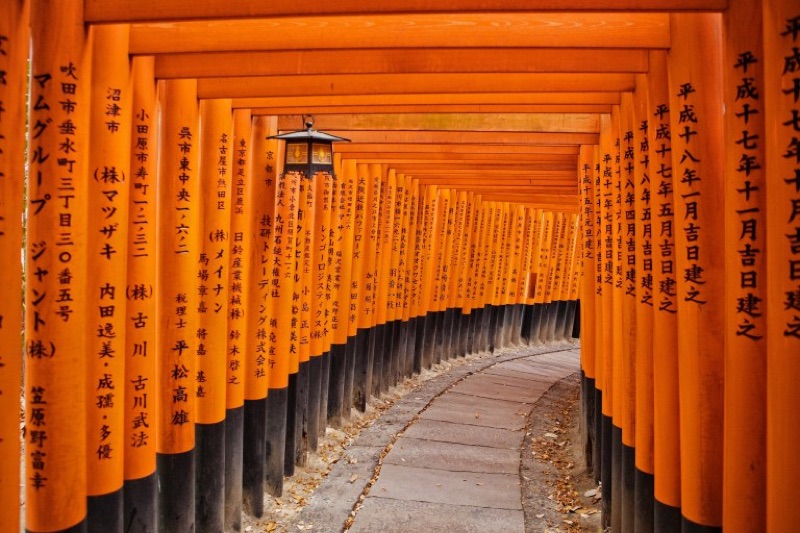
Rise early to beat the heat at Fushimi Inari — hiking the iconic vermilion gate tunnels in the quiet morning mist is genuinely magical. Then head north for Sanjusangendo's 1,001 golden Kannon statues (indoors, blissfully cool), Kiyomizudera's views, and the Ninenzaka-Sannenzaka shopping lanes where washi tape shops await.
Fushimi Inari-taisha — The Gates at 6am
The most famous torii gate complex in Japan — and at 6am in June, it's blanketed in mist, birdsong, and almost nobody else. The lower path to Yotsutsuji (the first major viewpoint with a Kyoto panorama) takes about 30 minutes one way. You can go further up Inari-yama if energy allows — the full hike is 2–3 hours through thousands of gates.
Sanjusangendo — 1,001 Golden Kannon Statues
The longest wooden hall in Japan (120m!) contains 1,001 gilded statues of the Thousand-Armed Kannon, standing in perfectly aligned rows. It's cool, dark, almost silent, and overwhelming in the best way. Wind-god and thunder-god sculptures frame the composition. One of the most spectacular indoor experiences in all of Japan.
Kiyomizudera — Wooden Stage & City Views
Kyoto's most iconic temple, built without a single nail, juts out from the mountainside on 139 wooden pillars. The main hall's wooden stage (butai) hovers 13m above the forest floor. Chishakuin Temple, a 5-minute walk nearby, has gorgeous hydrangeas in June. Collect goshuin at both.
Ninenzaka & Sannenzaka — Washi Tape Heaven
These preserved Edo-period stone-paved lanes below Kiyomizudera are lined with tiny shops selling ceramics, washi, matcha sweets, and crafts. Look for Ippoudo washi paper at the top of Ninenzaka — beautiful Japanese writing paper and letter sets perfect for someone who loves letter-writing. Also: a Starbucks in a 100-year-old traditional building (no shame, it's atmospheric).
Gion Hanamikoji Stroll & Kyoto City Zoo Alternative
Walk Gion's main geisha district as evening falls — lanterns glow, wooden machiya townhouses line the street, and the atmosphere is genuinely cinematic. If you're doing this with the family and the toddlers, swing by Kyoto City Zoo in the Okazaki area (5 min from Heian Shrine) — one of Japan's oldest zoos with panda, gorilla, and Japan-unique "Nihon Bear" exhibits, and child-height viewing areas.
Nara Deer & Uji Hydrangeas — The Day Trip
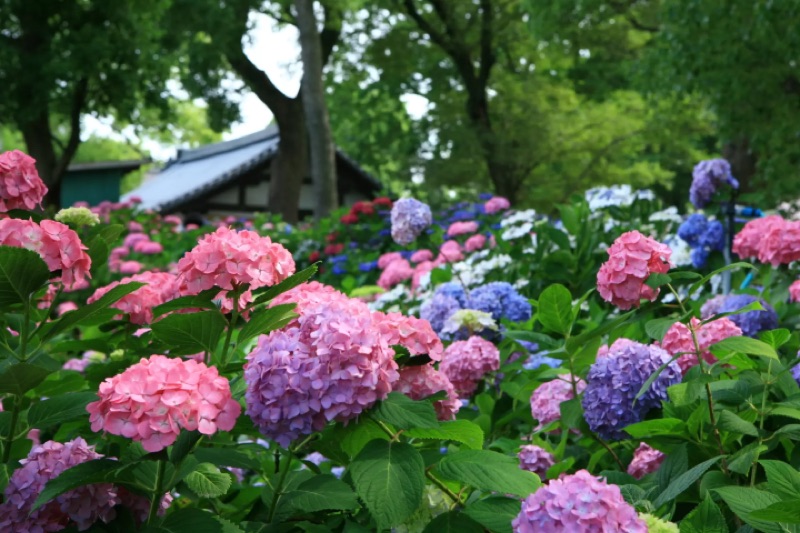
The biggest day trip: early train to Nara for deer, temples, and stamps with the family, then south to Uji for 20,000 hydrangeas at Mimurotoji Temple, the 10-yen-coin Byodoin, and the world's best matcha ice cream. June is the absolute peak of hydrangea season — you timed this perfectly.
Kyoto → Nara: The Kintetsu Express
Take the Kintetsu Kyoto Line Limited Express from Kyoto Station to Kintetsu-Nara Station — a smooth 35-minute ride. This is more convenient than JR for reaching the deer park directly. Arrive by 8:30am to beat the heat and tour groups. The family can join for this part.
Nara Deer Park — Wild Deer, Family Joy
Over 1,000 wild Sika deer roam freely through Nara Park — they bow before they're fed (a learned behavior). For a 2- and 5-year-old, this is pure magic: wild deer nose-to-nose with tiny children. The deer are generally gentle but will nudge firmly if they smell food. Hold crackers up high, then let the kids feed them one at a time.
Todai-ji & Kasuga Taisha — Giant Buddha & Lantern Shrine
Todai-ji houses the world's largest bronze Buddha (Daibutsu) — 15 meters tall, and it somehow exceeds every expectation. Then walk through the deer-lined tree path to Kasuga Taisha Shrine — Nara's most important shrine, famous for 3,000 bronze and stone lanterns (lit twice a year in magical festivals). Both have excellent goshuin.
Nara → Uji: Train Transfer
After lunch, take the JR Yamatoji Line south from JR Nara Station to JR Uji Station — about 55 minutes with one transfer at Kizugawa or take Kintetsu to Kintetsu-Uji. Arrive Uji around 1:30–2pm, leaving 2–3 hours for the highlights before heading back to Kyoto.
Mimurotoji Temple — 20,000 Hydrangeas
This is the main event. Mimurotoji Temple, known as "Hana no Tera" (Flower Temple), opens its special hydrangea garden from late May through early July — peak bloom falls exactly in mid-June. Twenty thousand hydrangea plants in 50 varieties cascade across the temple grounds in waves of lavender, periwinkle blue, pink, and white. The fog-shrouded mountain backdrop makes it look unreal.
Byodoin Temple & Ujigami Shrine
Walk 20 minutes from Mimurotoji toward central Uji for Byodoin — the temple literally printed on the 10-yen coin and ¥10,000 note. Its Phoenix Hall (Ho-o-do) floats over a mirror pond and looks exactly like the coin. Then cross the Uji Bridge to Ujigami Shrine — the oldest surviving Shinto shrine in Japan (built 1060 AD), quiet and deeply ancient. Collect goshuin from both.
Uji → Kyoto Return + Light Evening
Take the Keihan Uji Line from Keihan Uji Station back toward Kyoto (Chushojima, transfer, toward Gion-Shijo or Karasuma). Collect the Keihan Uji Station free eki stamp at the station office before you leave. Arrive Kyoto around 6:30–7pm. Keep the evening gentle — it's a big day.
Tea Ceremony, Golden Pavilion & Stationery Heaven
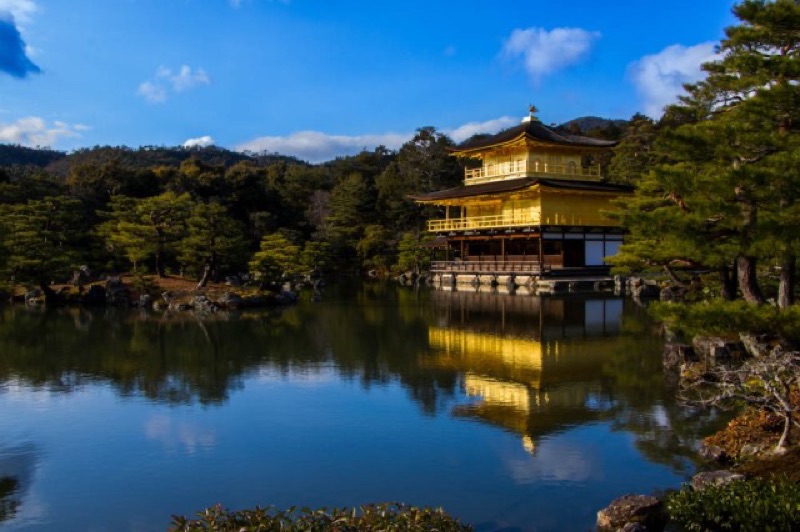
Your cultural immersion day — begin with an English-friendly tea ceremony in a traditional machiya (pick calligraphy or pottery if that's more you), then spend the morning at Kinkakuji and Ryoanji. The afternoon is reserved for serious stationery shopping on Teramachi, where a 360-year-old paper shop awaits alongside the best washi tape selection in Kyoto.
Tea Ceremony Workshop — English, Authentic, Beautiful
Book an English-language tea ceremony at one of Kyoto's well-regarded experiences — MAIKOYA in Gion (very popular, polished, good for first-timers), En near Arashiyama (more intimate, in a beautiful Edo-period space), or Urasenke School for a traditional orthodox ceremony. These sessions last 45–90 minutes and include everything you need to understand the philosophy behind wagashi (sweets) and matcha.
Kinkakuji — The Golden Pavilion
Yes, it's touristy. Yes, you should still go. The sight of the three-story Golden Pavilion reflecting in Kyokochi Pond — especially on an overcast June day when the gold seems to glow even brighter — is genuinely arresting. The garden paths are well-shaded. Collect the goshuin (Kinkakuji issues one of Kyoto's most sought-after stamps).
Ryoanji — The Perfect Rock Garden
A 10-minute walk from Kinkakuji, Ryoanji's famous karesansui rock garden is one of the great meditative spaces in the world. Fifteen rocks arranged in raked white gravel — you can never see all 15 from any single viewpoint. Sit on the wooden veranda and just... be. The pond garden outside is also beautiful and shaded.
Daitokuji Complex — Sub-Temple Goshuin Safari
Daitokuji is Kyoto's most remarkable temple complex — a walled town of 24 Zen sub-temples, each with its own garden, art, and history. Most are only open during special seasons, but Koto-in, Daisen-in, and Zuiho-in are open year-round. The autumn maple at Koto-in is famous, but in June the moss gardens are lush and stunning.
Teramachi — The Great Stationery Pilgrimage
The Teramachi covered shopping arcade is your final destination for the day. This is where Kyoto's stationery scene lives. Hit all of these:
Pokemon Center Kyoto & Sanrio
Pokemon Center Kyoto is in the Kyoto Avanti mall B2 near Kyoto Station — a full-scale Pokemon Center with Kyoto-exclusive merch (Eevee in kimono, Pikachu with traditional Kyoto patterns). Tasteful, not weeby, genuinely beautiful. The Kyoto-limited designs are collector-level.
Philosopher's Path at Dawn — Then Off to Miyajima
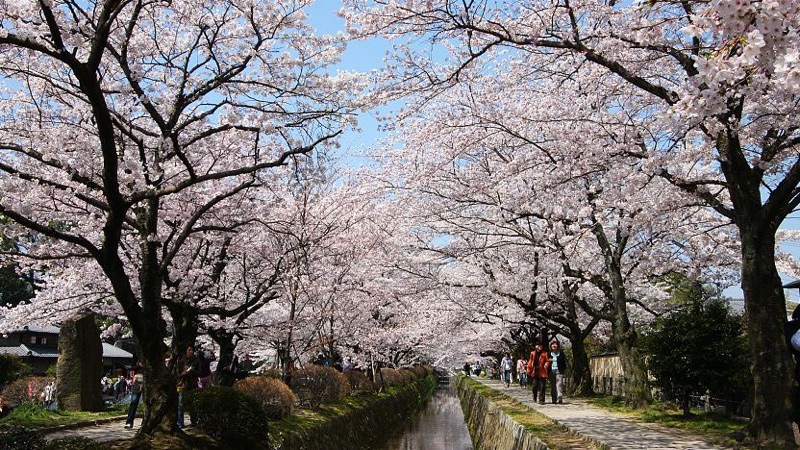
A gentle, meaningful final morning. Walk the Philosopher's Path — a canal-side stone path lined with cherry trees and stone lanterns — in the cool morning air. Visit the achingly beautiful Honen-in Temple. Say goodbye to Kyoto at the station with a Kit-Kat haul and onigiri for the journey, then board the Shinkansen south to Hiroshima, where Miyajima's floating torii gate awaits.
Philosopher's Path — Canal Walk at 7am
The Tetsugaku no Michi (Philosopher's Path) is a 2km stone path following a cherry-tree-lined canal in Eastern Kyoto. Named for philosopher Nishida Kitaro who walked it daily in meditation. In June, it's lush and green — the cherry trees are leafy canopies, the canal gurgles below, and small bridges cross every few meters. Walk it southward from Ginkakuji.
Honen-in — The Most Beautiful Temple You've Never Heard Of
Just a 2-minute detour off the Philosopher's Path sits Honen-in, a temple that receives a fraction of the crowds it deserves. A thatched gate opens to a garden with two sand mounds sculpted into seasonal patterns — in June, they're raked into wave forms symbolizing water. Free entry. Utterly peaceful. Definitely collect the goshuin from the box at the entrance.
Nanzenji Aqueduct & Zen Garden
At the southern end of the Philosopher's Path, Nanzenji Temple greets you with a massive Sanmon gate and, just beyond, a Roman-style brick aqueduct running through the temple grounds — an unexpected, slightly surreal sight. The aqueduct is part of the Lake Biwa Canal system built in 1890. Walk under the arches. The temple complex has multiple zen gardens.
Hotel Checkout & Last Kyoto Moments
Return to Across Hotel Kyoto, check out, and store your bags at the station coin lockers if needed. You have a short window before departure. Spend it wisely.
Kyoto Station — Omiyage Haul & Shinkansen South
Kyoto Station's basement and Isetan department store floors are a going-away gift cornucopia. Stock up on everything you missed or want to take home.
💰 Budget Breakdown
| Category | Budget | Midrange | Luxury |
|---|---|---|---|
| Accommodation (per night) | ¥6,000–10,000 | ¥10,000–20,000 | ¥25,000–60,000 |
| Meals (per day) | ¥2,000–3,000 | ¥4,000–8,000 | ¥10,000–25,000 |
| Transport (per day) | ¥500–800 | ¥1,000–2,000 | ¥3,000–5,000 (taxi) |
| Temple entries (per day) | ¥1,000–2,000 | ¥2,000–4,000 | ¥4,000+ (private tours) |
| Goshuin stamps (5 days) | ¥2,500–5,000 | ¥5,000–8,000 | ¥8,000+ (rare temples) |
| Stationery shopping | ¥3,000–8,000 | ¥10,000–20,000 | ¥30,000+ (Kyukyodo haul) |
| 5-Day Total (solo) | ¥45,000–70,000 | ¥80,000–130,000 | ¥200,000+ |
🚌 Getting Around Kyoto
- Kyoto City Bus: ¥230 flat fare, bus pass ¥700/day — covers most temple districts
- Subway: Karasuma Line (N-S) and Tozai Line (E-W) — quick for longer distances
- Arashiyama: JR San'in Line from Kyoto Station (12 min) or Randen Keifuku tram from Shijo-Omiya
- Fushimi Inari: JR Nara Line from Kyoto Station (5 min to Inari Station)
- IC card (Suica/Pasmo/Icoca) works on everything — tap and go
🌡️ June Weather & Packing
- Average 24–30°C (75–86°F), humidity ~75% — feels hotter than the numbers suggest
- Rainy season (tsuyu): expect 2–4 days of rain in 5 days — pack a compact umbrella
- UV is intense even on cloudy days — SPF 50+ daily is non-negotiable
- Light breathable layers: linen or moisture-wicking fabrics. A UV-blocking parasol is life-changing
- Japanese convenience store tip: Rohto ice cool eye drops for heat refreshment, cooling towels (hiyashii taoru)
🦐 Shellfish Allergy Navigation
- Key phrase: "Ebi, kani, hotate, ika, kai ga arerugii desu" (I'm allergic to shrimp, crab, scallop, squid, and shellfish)
- Safe chains: Ichiran (tonkotsu — pork only), Tenkaippin (chicken broth), Yoshinoya (beef), Katsukura (tonkatsu)
- Nishiki Market: stalls sell shellfish openly — walk through but don't eat randomly
- Ramen: always confirm the broth base — some miso ramen has shrimp paste. Order chicken or pork broth
- Department store B1 food halls: clearly labeled allergen info at every counter — safest for trying new things
📖 Goshuin & Stamp Collecting
- Buy a goshuincho at Tenryuji on Day 1 — they sell beautiful Kyoto-made books (¥1,200–2,500)
- Each goshuin: ¥300–500, takes 2–5 minutes while they write it fresh in your book
- Station stamps (ekibo stamps): FREE, at station information desks — ask for "eki stamp" or "eki no stamp rally"
- Train company stamps: Kintetsu, Keihan, and JR each have their own stamp programs in the Kansai region
- Must-collect stamps this trip: Tenryuji, Fushimi Inari, Kiyomizudera, Todaiji, Kasuga Taisha, Byodoin, Ujigami, Kinkakuji, Honen-in, Nanzenji
🗺️ Manhole Cover Hunting
- Kyoto Station area: look for covers with Kamo River (鴨川) and cherry blossom designs near the west exit
- Nara: deer-themed manhole covers throughout the park district — brilliant, worth photographing
- Fushimi: fox and torii gate designs near the Inari station area
- Uji: tea bush and Byodoin motifs — collect them all in one day!
- The Manhole cover app "Desita" catalogues Japan's entire collection by location — download it
🛍️ Stationery Shop Map
- Kyukyodo — Teramachi-Nijo (since 1663): Japanese paper, brushes, incense, beautiful letter sets
- Angers Bureau — Teramachi: washi tape paradise, editorial stationery, Kyoto-brand designs
- Loft Kyoto — Karasuma/Shijo: full Zebra, Mildliner, Hobonichi, Midori, washi tape wall
- Tokyu Hands Kyoto — Shijo: comprehensive craft/stationery floor, rubber stamps, ink pads
- Bookstores (Tsutaya Daikanyama, MARUZEN-Junkudo Kyoto): Hobonichi and Traveler's Notebook displays
- Convenience stores: best for Zebra Sarasa and Mildliner quick purchases at retail price