⚡ Before You Go — Essentials
🚇 Getting Around
Walk everywhere — Rome's center is compact and every stroll reveals something beautiful. For longer distances: Metro (lines A, B, C), buses, and trams. A 48-hour transit pass costs €16.50. Taxis: use the FreeNow app or official white taxis. Uber exists but is pricier. Avoid driving at all costs — ZTL zones will eat your wallet.
💶 Money
Euro (€). Cards accepted almost everywhere. Carry some cash for gelato stands, markets, and small trattorias. Budget €150-250/day per person for fine dining at every meal, €50-80/day for attractions, €20-30/day for transport.
🗣️ Language
Italian. English is widely spoken in tourist areas and upscale restaurants. A few phrases go a long way: Buongiorno (good morning), Grazie (thank you), Il conto, per favore (the check, please), Dov'è...? (where is...?). Romans appreciate effort.
🌤️ Weather in April
Ideal — 12-21°C (54-70°F), mostly sunny with occasional spring showers. Light layers, comfortable walking shoes (cobblestones are brutal), a scarf for churches, and a light jacket for evening. Sunscreen recommended.
⛪ Church Dress Code
Shoulders and knees must be covered for St. Peter's Basilica, the Vatican, and most churches. Carry a scarf or shawl. No hats inside churches. Silence phones.
🔒 Safety & Scams
Rome is generally safe. Watch for pickpockets around Termini station, the Colosseum, and crowded metro cars. Ignore rose sellers and bracelet guys near tourist sites — a firm "no, grazie" works. Gelato: if it's mounded high in fluffy piles, it's tourist trap gelato. Flat, muted colors = the real thing.
Ancient Rome: Colosseum, Forum & Underground Layers
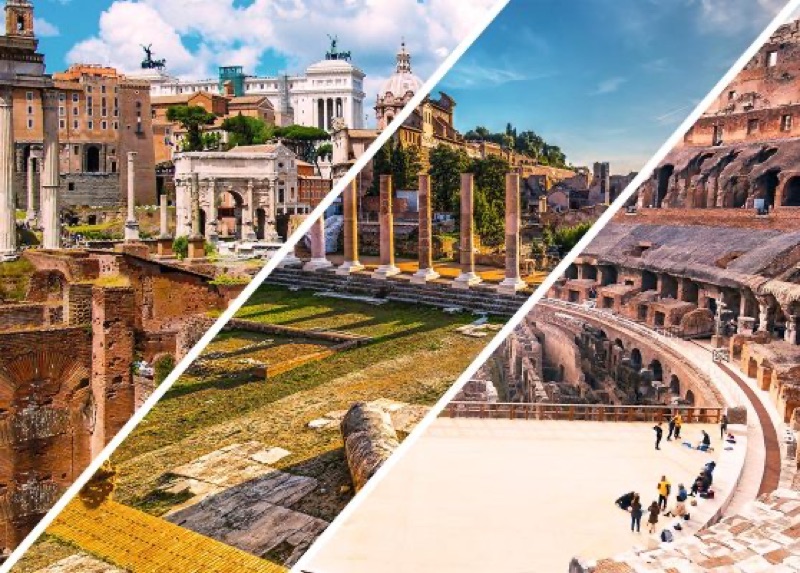
Start at the beating heart of the Roman Empire — the Colosseum at sunrise, the ruins of the Forum where Caesar walked, then descend through 2,000 years of layered history beneath San Clemente.
Colosseum (Early Access)
Nothing prepares you for the scale of it. Book the earliest possible entry (8:30am) to experience the arena nearly alone. The underground and arena floor tour takes you into the gladiator tunnels and onto the stage where 50,000 Romans once watched spectacles. April morning light through the arches is transcendent.
Roman Forum & Palatine Hill
Walk where emperors addressed crowds, vestal virgins tended eternal flames, and the Roman Republic was born. The Forum is a sprawling ruin of temples, basilicas, and arches. Climb Palatine Hill for the view over it all — where Romulus supposedly founded Rome in 753 BC.
Basilica di San Clemente
The most mind-blowing "layer cake" in Rome. Enter a 12th-century basilica with beautiful mosaics. Descend one level: a 4th-century church with faded frescoes. Descend again: a 1st-century Roman house and a dark, atmospheric temple to the Persian god Mithras, complete with an altar where bulls were sacrificed. Three cities stacked on top of each other.
Monti Neighborhood Walk
Rome's hippest neighborhood sits between the Forum and Termini. Once a rough working-class quarter, now a labyrinth of vintage shops, indie boutiques, wine bars, and street art. Via del Boschetto and Via Urbana are the main drags.
Trevi Fountain at Night
Walk to the Trevi Fountain when the crowds thin and the baroque marble glows under floodlights. Toss a coin with your right hand over your left shoulder — legend guarantees your return to Rome.
Vatican Wonders, Aventine Secrets & Testaccio Feasts
Experience the overwhelming beauty of the Vatican Museums and Sistine Chapel, then escape to Rome's most peaceful hill for keyhole views and orange gardens, ending in the city's most authentic food neighborhood.
Vatican Museums & Sistine Chapel
Four miles of galleries, the Raphael Rooms, and finally the Sistine Chapel ceiling. Michelangelo painted it flat on his back for four years, and it remains the single most awe-inspiring interior space most humans will ever stand in. Book the early morning tour for a near-empty Chapel.
St. Peter's Basilica
The largest church ever built. Michelangelo's Pietà is here, the dome is his design, and Bernini's baldacchino rises 95 feet above the papal altar. Climb the dome (551 steps) for a jaw-dropping view of all of Rome.
Aventine Hill — Keyhole & Orange Garden
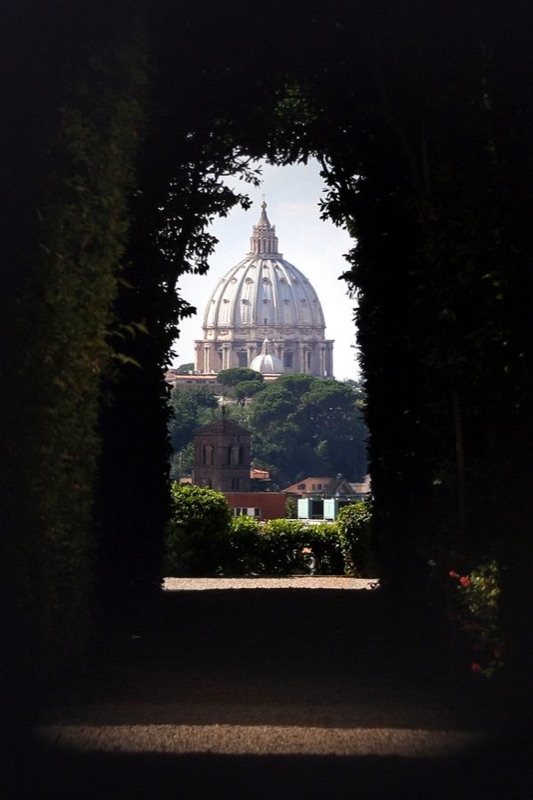
Rome's most peaceful neighborhood. Peer through the Buco della Serratura — a perfectly framed view of St. Peter's dome through a garden archway. Then continue to Giardino degli Aranci for one of Rome's most beautiful panoramic views, filled with bitter orange trees.
Testaccio Market & Neighborhood
The real Rome. This covered market is a food lover's paradise — fresh pasta stalls, mozzarella di bufala, porchetta, supplì, and Volpetti, the most glorious gourmet deli in the city.
Trastevere Evening Wander
Cross the Tiber into Trastevere as the golden hour hits. Ivy-draped buildings, medieval churches, lantern-lit cobblestone streets. Piazza di Santa Maria in Trastevere is the heart. Wander without a map.
Appian Way Adventure: Catacombs, Cycling & Aqueducts
Leave the tourist center behind. Bike the 2,300-year-old Appian Way, descend into candlelit catacombs, explore ancient aqueduct ruins, and end with a Michelin-starred dinner celebrating modern Roman cuisine.
Bike the Appian Way (Via Appia Antica)
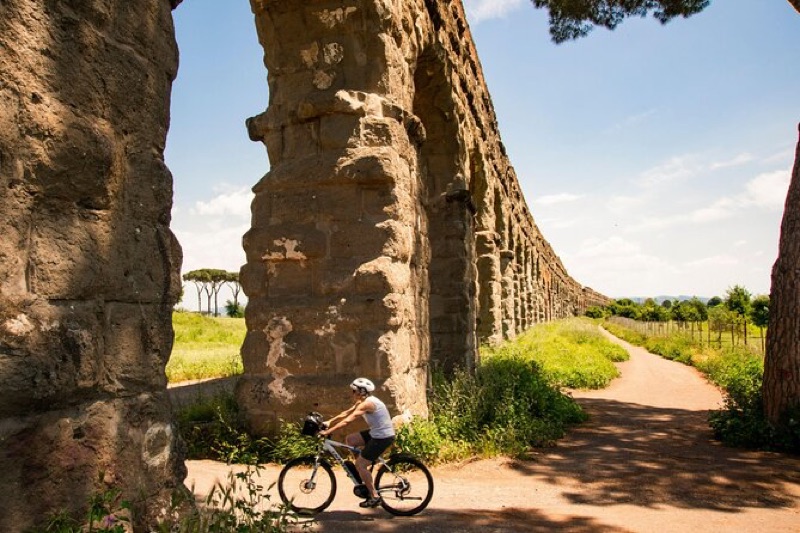
Rent bikes near Porta San Sebastiano and ride the oldest road in Rome — built in 312 BC. Ancient basalt stones, umbrella pines, crumbling tombs, ruined aqueducts, and sheep grazing alongside Roman ruins. The road stretches 16km — turn around whenever you want.
Catacombs of San Callisto
Descend into a 20km labyrinth of underground tunnels where early Christians buried their dead for 300 years. Dim candlelit passages, papal tombs, and the crypt of Santa Cecilia. Cool, quiet, and deeply atmospheric.
Parco degli Acquedotti
Acres of open parkland where the massive arches of the Aqua Claudia and Aqua Felix aqueducts still stand 30 meters high. Walk or bike through the arches. A "how did they build this 2,000 years ago?" experience with zero crowds.
Centrale Montemartini
Classical marble sculptures displayed inside a turn-of-the-century power plant, alongside massive diesel engines. The contrast between pristine white marble gods and dark steel machinery is stunning. Almost nobody visits — Rome's best-kept museum secret.
Baths of Caracalla at Sunset
The ruins of Rome's most spectacular public baths — once holding 1,600 bathers across 27 acres. Walk through the towering brick ruins of the frigidarium where marble pools once gleamed. In summer, the baths host opera performances. Even empty, the scale is staggering.
Borghese, Piazzas & a Farewell Roman Feast
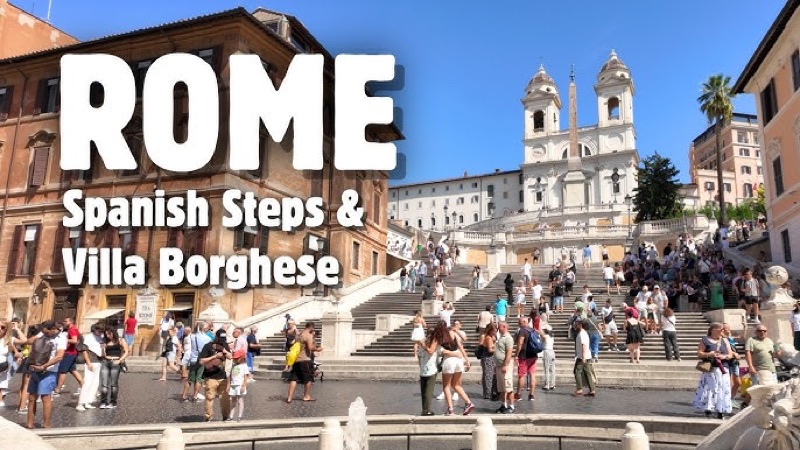
End with art, views, and the perfect Roman farewell — Bernini sculptures at the Borghese Gallery, panoramic views from Pincio Terrace, and a final dinner at one of Rome's most refined tables.
Galleria Borghese
One of the world's great small museums. Bernini's sculptures alone are worth the trip — Apollo and Daphne captures the exact moment bark begins to encase Daphne's fingers as she transforms into a tree. Caravaggio's dark, dramatic canvases. Raphael's luminous portraits. Two hours of concentrated brilliance.
Villa Borghese Gardens
Rome's Central Park — 200 acres of umbrella pines, fountains, temples, and hidden paths. Rent a rowboat on the tiny lake, visit the water clock, or just wander. The temple of Asclepius on the lake island is impossibly romantic.
Piazza Navona & the Centro Storico
Rome's most theatrical piazza — Bernini's Fountain of the Four Rivers anchors the oval space (built on the footprint of Domitian's ancient stadium). Street artists, café terraces, and the baroque Sant'Agnese in Agone church. Wander from here through the maze of the Centro Storico.
Capuchin Crypt (Santa Maria della Concezione)
Not for the faint of heart — the bones of 3,700 Capuchin friars arranged into elaborate decorative patterns: chandeliers made of vertebrae, archways of pelvises, robed skeletons. A memento mori that is simultaneously macabre and oddly beautiful. The message at the exit: "What you are now, we once were. What we are now, you will be."
Pincio Terrace Sunset
End where you started — with a view. The Pincio Terrace above Piazza del Popolo offers the most romantic sunset in Rome. Watch the light turn golden over the city's domes and rooftops, with St. Peter's silhouetted against the western sky. Street musicians play. Couples linger. This is the Rome you'll dream about.
💰 Budget Breakdown
| Category | Budget | Notes |
|---|---|---|
| Accommodation (3 nights) | $450 – $900 | Boutique hotel in Centro Storico or Monti |
| Fine Dining | $800 – $1,400 | Michelin stars + legendary trattorias, all meals |
| Attractions & Tours | $120 – $200 | Colosseum underground, Vatican, Borghese, catacombs |
| Transportation | $50 – $80 | Transit pass + bike rental + occasional taxi |
| Gelato & Snacks | $40 – $60 | Multiple daily gelato stops are mandatory |
| Shopping & Souvenirs | $50 – $150 | Leather goods, ceramics, olive oil, wine |
✈️ Airport Transfer
- Fiumicino (FCO) is 30km — Leonardo Express train to Termini (€14, 32 min)
- Ciampino (CIA) is 15km — bus to Termini (€6, 40 min)
- Taxi from FCO: €48 flat rate to city center
📱 Connectivity
- Get an Italian SIM at the airport (Vodafone/TIM/WindTre, €20-30 for 30GB)
- Free Wi-Fi in most cafés, restaurants, and hotels
🎟️ Book Ahead
- Colosseum Underground tour: 2-4 weeks ahead
- Vatican early entry: 2-3 weeks ahead
- Borghese Gallery: 2+ weeks ahead (mandatory timed entry)
- Michelin restaurants: 2-4 weeks ahead
🥄 Food Rules
- Cappuccino only before 11am (after that, espresso/macchiato)
- No parmesan on seafood pasta — ever
- Breakfast is sweet (cornetto + coffee), not savory
- Lunch: 12:30-2:30pm, Dinner: 7:30-10pm — don't arrive early
🚰 Water
- Rome's nasoni (nose-shaped fountains) flow with clean, cold aqueduct water — carry a bottle and refill for free
- Over 2,500 fountains across the city
Gelato Rules
- Avoid shops with fluffy mounded gelato in bright colors
- Look for "produzione propria" (made on-site) and muted, natural colors
- Order at least 2 flavors — the cone is built for it
- Top picks: Fatamorgana, Come il Latte, Gelateria del Teatro