⚡ Before You Go — Essentials
🛬 Getting There
Fly into Narita (NRT) or Haneda (HND) airport. Haneda is closer to central Tokyo (~30 min by monorail or Keikyu line). From Narita, take the Narita Express (N'EX) to Tokyo/Shibuya/Shinjuku (60-90 min, ¥3,250). Get a Suica or Pasmo IC card at the airport — it works on all trains, buses, and convenience stores in both Tokyo and Kyoto.
💵 Money
Japanese Yen (¥). Japan is moving toward cashless but many small restaurants, izakayas, and street food stalls are still cash-only. Withdraw from 7-Eleven ATMs (they accept all international cards). Budget ¥15,000-25,000/day per person for meals, transport, and activities. For a group of 3-4, splitting accommodation and taxis saves significantly.
🌸 May Weather
Early May is Golden Week — one of Japan's busiest travel periods. Weather is gorgeous: 18-24°C (65-75°F), low humidity, occasional rain. Cherry blossom season is over but fresh green leaves and azalea blooms are everywhere. Pack light layers, a compact umbrella, and comfortable walking shoes. You'll average 15,000-20,000 steps per day.
🚇 Getting Around
Tokyo's metro is the world's best — clean, punctual, extensive. Get a 72-hour Tokyo Metro pass (¥1,500) for your first 3 days, then use IC card. For the Kyoto leg, buy individual Shinkansen tickets at JR stations (Tokyo → Kyoto: ¥13,320 reserved seat, 2h15m). In Kyoto, buses are the primary transport — get a 1-day bus pass (¥700).
♨️ Onsen Etiquette
Wash thoroughly at the shower stations before entering the bath. No swimsuits allowed in traditional onsen. Small modesty towels are provided but keep them out of the water. Tattoos: some places restrict them — we've picked tattoo-friendly options, but ask at reception to confirm. Private onsen (kashikiri) are available for groups who want privacy.
🏨 Where to Stay
Tokyo: Stay in Shinjuku or Shibuya for nightlife access and central train connections. Budget: ¥8,000-12,000/night for a business hotel. Mid-range: ¥15,000-25,000 for boutique hotels. Kyoto (last night): Book near Gion or Kawaramachi for walkability to Pontocho and nightlife. Consider a ryokan for the onsen experience — many include dinner and breakfast.
Touchdown Tokyo — Shinjuku Neon Baptism

Arrive in Tokyo, settle into your hotel, and dive headfirst into the sensory overload of Shinjuku. Start with the best ramen of your life, wander through the controlled chaos of Kabukicho, drink in 6-seat bars at Golden Gai, and close the night with yakitori smoke at Omoide Yokocho.
Arrive & Check In
Land at Narita or Haneda, grab your Suica IC card, and take the train to Shinjuku. Drop your bags at the hotel. Most hotels allow early luggage storage even before check-in. Take a beat — you're about to have the best week of your life.
Kabukicho & Godzilla Road 🦖
Walk into Kabukicho — Tokyo's biggest entertainment district. Look up at the life-size Godzilla head perched on the Toho Cinema building. The neon here is overwhelming in the best way. This is the Tokyo you've seen in movies. Wander through the electric streets, peek into game centers, and absorb the energy before heading to the bars.
Golden Gai — 200 Bars, 6 Seats Each 🥃
Six narrow alleys crammed with over 200 tiny bars, each with its own personality — some play jazz, some are horror-themed, some are just a mama-san and a bottle of whisky. Many charge a small cover (¥500-1,000) but the drinks are normal price. Hop between 3-4 bars over the evening. This is the single most unique nightlife experience in the world.
Omoide Yokocho (Memory Lane) — Midnight Yakitori 🍢
End the night at Omoide Yokocho, aka "Piss Alley" (they've cleaned it up, the name stuck). Narrow lanes of yakitori stalls with smoke pouring into the street. Squeeze onto stools, order chicken skewers and cold beer, and watch the chefs work over charcoal grills. This is old Tokyo — the kind of place that's existed since the post-war black market days.
Tsukiji Feast, Digital Art & Roppongi After Dark
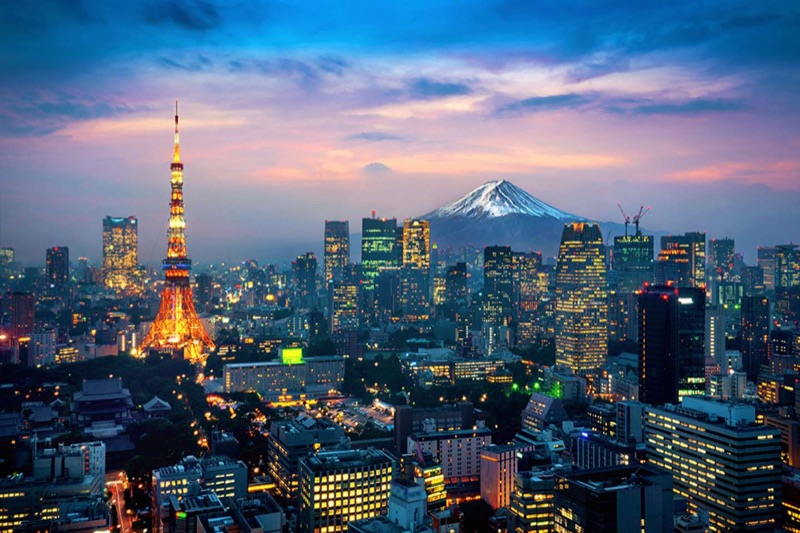
Morning street food crawl through Tsukiji Outer Market, afternoon immersion in TeamLab Borderless at Azabudai Hills, then an evening of rooftop cocktails and late-night eats in Roppongi.
Tsukiji Outer Market — Street Food Paradise 🐟
The inner wholesale market moved to Toyosu, but the outer market is where the magic lives. Hundreds of stalls selling tamagoyaki (sweet grilled egg), fresh uni on rice crackers, tuna cheek skewers, strawberry daifuku, and melon pan. Walk and eat for 2 hours straight. This is Tokyo's greatest food experience.
TeamLab Borderless — Digital Art Immersion 🎨
TeamLab Borderless moved to its stunning new home at Azabudai Hills in 2024. Walk through rooms where digital waterfalls cascade over your body, flowers bloom and decay in real-time, and entire universes of light respond to your movement. It's overwhelming and beautiful. Allow 2-3 hours — you'll lose track of time.
Roppongi Night Out 🌃
Roppongi is Tokyo's most international nightlife district. Start with sunset cocktails at the Mori Tower observation deck or a rooftop bar, then dive into the izakaya and club scene. Gonpachi (the restaurant that inspired Kill Bill's fight scene) is a great dinner option. For late night, Roppongi has everything from craft cocktail bars to dance clubs.
Ancient Temples, Otaku Culture & Craft Beer
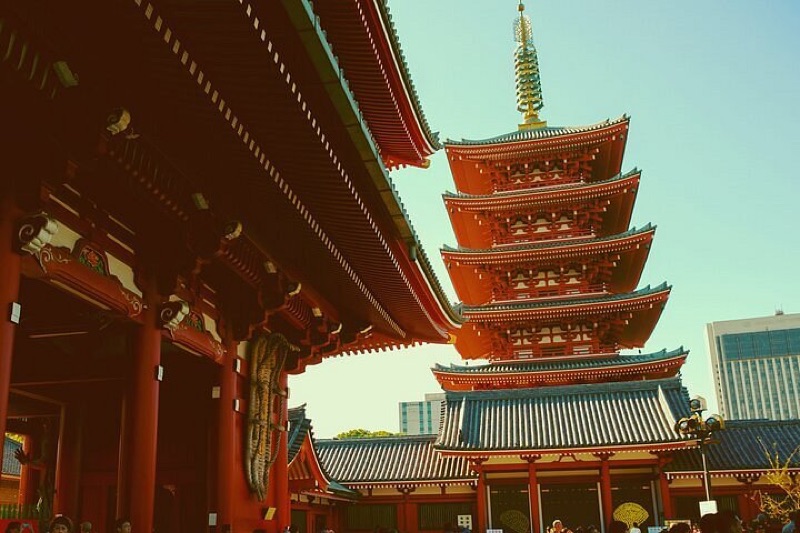
Start with dawn at Senso-ji (Tokyo's oldest temple), explore Asakusa's traditional side, then pivot hard into Akihabara's electric town for arcades and anime. End with craft beers and izakaya hopping in Ueno's Ameyoko market.
Senso-ji Temple at Dawn ⛩️
Tokyo's oldest and most iconic temple, dating to 645 AD. Come early (before 9am) to walk through the massive Kaminarimon (Thunder Gate) and Nakamise-dori shopping street without the crushing crowds. The main hall and five-story pagoda are stunning in the soft morning light. Draw an omikuji fortune (¥100) — if you get bad luck, tie it to the rack and leave it behind.
Asakusa Backstreets & Hoppy-dori
Wander the quieter streets behind Senso-ji. Hoppy Street (Hoppy-dori) is a daytime drinking street lined with old-school izakayas where locals drink hoppy (a beer-like drink) and eat beef stew (nikomi) at outdoor tables. It's gloriously un-touristy. Perfect mid-morning beer stop.
Akihabara — Electric Town ⚡🎮
From ancient temples to anime overload in 10 minutes by train. Akihabara is Tokyo's electronics and otaku (geek culture) district. Multi-story arcades with claw machines and rhythm games, retro game shops selling Famicom cartridges, figure stores stacked floor-to-ceiling, and the famous maid cafes. Even if anime isn't your thing, the energy is intoxicating.
Ameyoko Market & Ueno Izakaya Hop 🍺
Ameyoko (short for "American Alley") is a chaotic open-air market under the Yamanote Line tracks between Ueno and Okachimachi. Street vendors shout deals on seafood, dried fruits, sneakers, and cosmetics. The energy at dusk is electric. Then hit the izakayas lining the streets around Ueno Station — order nama beer (draft), edamame, karaage (fried chicken), and grilled fish. Classic Japanese drinking culture at its most authentic.
Harajuku Chaos, Shibuya Skyline & Shimokita Vibes
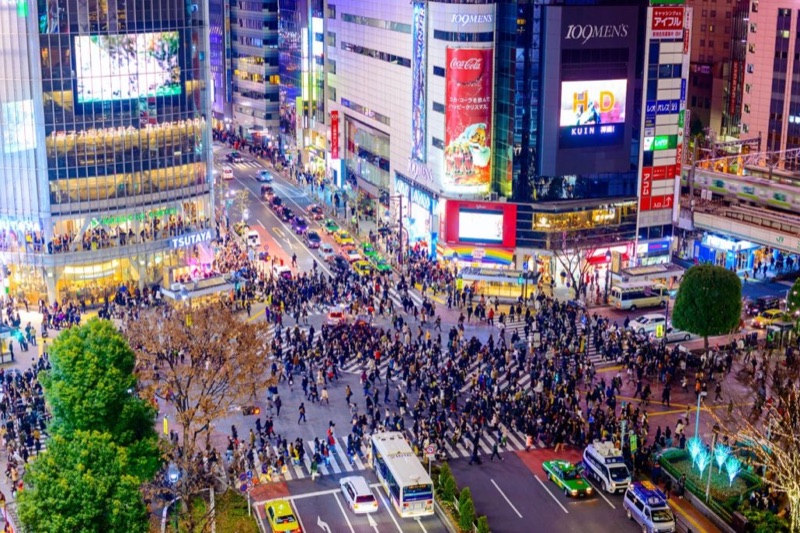
Meiji Shrine's forested calm, Harajuku's creative overload on Takeshita-dori, afternoon vintage shopping in Shimokitazawa, then SHIBUYA SKY at sunset and Shibuya's legendary crossing at night.
Meiji Shrine (Meiji Jingu) 🌿
Enter through the massive torii gate into a 170-acre forest in the heart of Tokyo. Meiji Shrine is dedicated to Emperor Meiji and Empress Shoken. Walk the gravel path through towering camphor trees, write a wish on an ema (wooden plaque), and watch a traditional Shinto wedding procession if you're lucky. It's the most peaceful place in central Tokyo.
Takeshita-dori & Harajuku 🌈
The most intense street in Tokyo. Rainbow cotton candy the size of your head, crepe shops stacked three high, every fashion subculture imaginable. Walk Takeshita-dori for the chaos, then escape to the parallel Cat Street for indie boutiques and cafes. End on Omotesando — Tokyo's Champs-Élysées — for high-end architecture and window shopping.
Shimokitazawa — Tokyo's Coolest Neighborhood 🎸
Take the Odakyu Line two stops from Shinjuku to Shimokitazawa — Tokyo's bohemian heart. Tiny vintage shops, vinyl record stores, independent coffee roasters, live music venues, and curry restaurants compete for space on narrow streets. This is where Tokyo's creative class hangs out. Spend 2-3 hours browsing, thrifting, and drinking great coffee.
SHIBUYA SKY — Sunset Above the Crossing 🌅
Take the elevator 230 meters up to the rooftop observation deck of Shibuya Scramble Square. The open-air sky stage has hammocks and nets where you can lie down and watch the sunset over Tokyo's infinite skyline. On a clear day, you'll see Mt. Fuji. Look straight down at Shibuya Crossing — the world's busiest intersection — from above.
Shibuya Crossing at Night & Nonbei Yokocho
Come back down to street level and walk through Shibuya Crossing — feel the organized chaos of 3,000 people crossing simultaneously. Then duck into Nonbei Yokocho (Drunkard's Alley) — Shibuya's hidden version of Golden Gai, a tiny lane of old-school bars from the 1950s. Finish with late-night ramen at one of Shibuya's many shops.
Waterfront Adventures, Toyosu Tuna & Hidden Tokyo
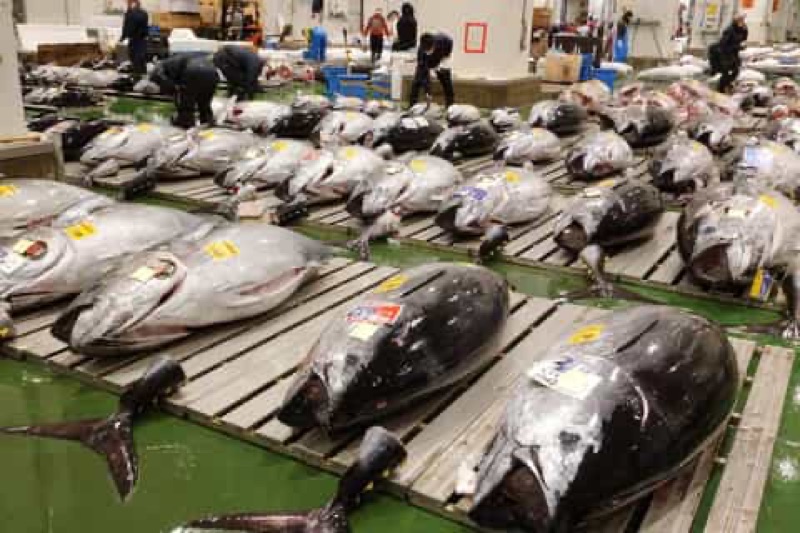
A day of contrasts: futuristic Odaiba waterfront with its giant Gundam and onsen theme park, the world's greatest fish market at Toyosu, then deep-cut otaku culture at Nakano Broadway. End with an izakaya feast in Nakano.
Toyosu Fish Market — Tuna Auction Viewing 🐟
The world's largest fish market, handling ¥1.6 billion in seafood daily. Watch the famous tuna auction from the observation deck (lottery-based, apply online). Even without the auction, walk through the market's viewing corridors and watch the pros at work. Then head upstairs for the freshest sushi breakfast you'll ever eat.
Odaiba — Waterfront Playground 🤖
Take the Yurikamome Line across the Rainbow Bridge to Odaiba — Tokyo's futuristic waterfront island. See the 20-meter tall Unicorn Gundam statue at DiverCity (it transforms every few hours), explore the Miraikan science museum, or just stroll the boardwalk with views of Rainbow Bridge and Tokyo Tower. For adventure seekers: try the giant Ferris wheel or the MEGA WEB car showcase.
Nakano Broadway — The Otaku Underground 🎌
Skip the tourist-packed Akihabara for the real deal. Nakano Broadway is a multi-story shopping complex packed with vintage toy stores, rare manga shops, retro game dealers, and collectible figures at lower prices than Akihabara. Mandarake (the biggest secondhand anime/manga chain) has multiple specialty shops here. It's a rabbit hole — set a time limit or you'll be here for hours.
Bullet Train to Kyoto — Bamboo, Geishas & Pontocho Nights
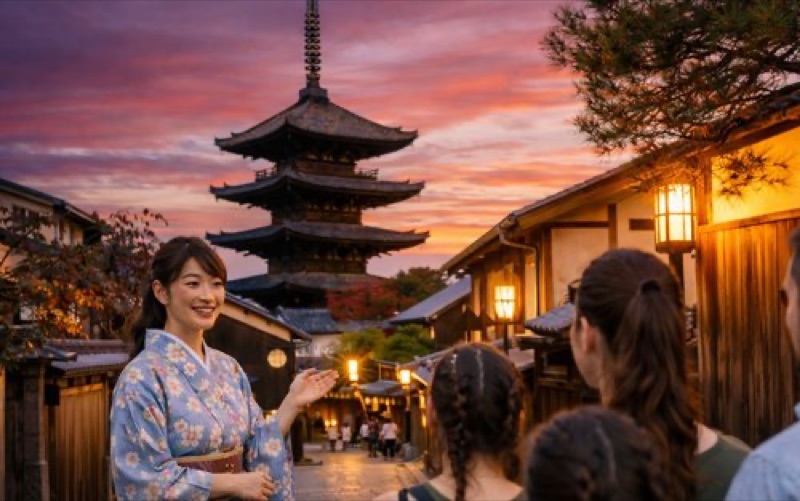
Board the Shinkansen and watch Tokyo give way to rice paddies and Mt. Fuji. Arrive in Kyoto and head straight to the ethereal Arashiyama Bamboo Grove. Spend the afternoon wandering Gion's geisha district, then close with a magical evening on Pontocho Alley — riverside dining and sake bars in Kyoto's most atmospheric lane.
Shinkansen — Tokyo to Kyoto 🚄
Take the Tokaido Shinkansen (Nozomi) from Tokyo Station to Kyoto Station. It's 2 hours and 15 minutes of pure Japanese efficiency — silent carriages, immaculate, and if you're lucky, a clear view of Mt. Fuji about 40 minutes in (sit on the right side, window seat). Buy an ekiben (train bento box) at Tokyo Station — it's a whole food culture unto itself.
Arashiyama Bamboo Grove 🎋
Drop your bags at a coin locker at Kyoto Station and head straight to Arashiyama. The bamboo grove is a towering corridor of bamboo stalks that creak and sway overhead — otherworldly and serene. Walk through the grove, cross the Togetsukyo Bridge, and visit Tenryu-ji Temple (UNESCO World Heritage, stunning garden). The whole Arashiyama area is magical — monkeys, river boats, and matcha soft serve.
Gion — The Geisha District 👘
Check into your Kyoto hotel near Gion, then walk the historic streets. Gion is Kyoto's most famous geisha (geiko/maiko) district. Walk along Hanamikoji-dori — a stone-paved street lined with traditional wooden machiya townhouses, tea houses, and high-end restaurants. At dusk, you may spot a maiko (apprentice geisha) hurrying between engagements in full kimono and white makeup. Cross to Shirakawa canal for willow trees and stone bridges.
Pontocho Alley — Kyoto's Most Magical Street 🏮
A narrow lane running parallel to the Kamogawa river, lined with traditional restaurants, sake bars, and tea houses. Many restaurants have balcony seating overlooking the river (kawayuka terraces, available May-September). Walk the full length of the alley, peeking into doorways and reading menus. This is the most atmospheric dining street in all of Japan.
Thousand Gates, Hot Springs & One Last Kyoto Night
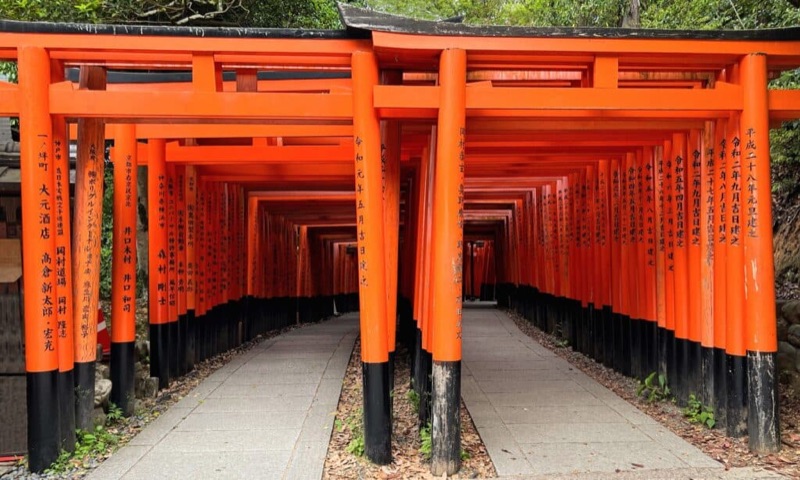
Your final day begins with the hypnotic vermillion gates of Fushimi Inari Shrine at sunrise, followed by a traditional onsen experience to soak away a week of adventure. Afternoon at Nishiki Market for last-minute food memories and souvenirs, then one final Kyoto evening before departing.
Fushimi Inari Shrine — Sunrise Through Thousand Gates ⛩️
The single most iconic sight in all of Japan: an endless tunnel of 10,000+ vermillion torii gates winding up Mt. Inari. Come at sunrise (5:30-6am) to walk through the gates in near-solitude — by 9am it's shoulder-to-shoulder. The full hike to the summit takes 2-3 hours, but even the first 30 minutes give you the money shots. Fox statues guard every turn — Inari is the god of rice and prosperity.
Traditional Onsen Experience ♨️
The onsen you came for. Kyoto has several excellent options: Kurama Onsen (45 min north of Kyoto, mountainside outdoor bath surrounded by cedar trees — the most atmospheric option), Funaoka Onsen (in-city, historic bathhouse since 1923 with gorgeous wood carvings and a rotenburo garden), or Sagano Onsen (near Arashiyama, intimate and quiet). This is the ultimate relaxation — hot mineral water, cold air, and the gentle sounds of nature.
Nishiki Market — Kyoto's Kitchen 🍡
A five-block covered market street in central Kyoto with over 100 shops and stalls. Sample Kyoto specialties: pickled vegetables (tsukemono), matcha everything (soft serve, daifuku, kitkat), grilled mochi, fresh yuba (tofu skin), and knife shops with centuries-old blades. This is your last food crawl — make it count.
Final Kyoto Night — Kawaramachi & Kiyamachi 🌙
Your last night in Japan. Kawaramachi is Kyoto's main shopping and entertainment street, and Kiyamachi is the parallel canal-side lane filled with bars, restaurants, and cherry trees (gorgeous even after blossom season). Walk along the canal, duck into a sake bar, and raise a final kanpai to an incredible week. If you want dancing, Kyoto's underground clubs (World, Butterfly) are in this area.
💰 Budget Breakdown
| Category | Budget | Mid | Premium |
|---|---|---|---|
| Accommodation (Tokyo, 5 nights) | ¥8,000-12,000/night | ¥15,000-25,000/night | ¥35,000+/night |
| Accommodation (Kyoto, 1 night) | ¥8,000-12,000 | ¥15,000-25,000 (ryokan) | ¥50,000+ (luxury ryokan w/ kaiseki) |
| Shinkansen (Tokyo→Kyoto) | ¥13,320 reserved | ¥13,320 reserved | ¥28,130 Green Car |
| Meals | ¥3,000-5,000/day | ¥6,000-10,000/day | ¥15,000+/day |
| Transport (Tokyo) | ¥1,000-1,500/day | ¥1,500-2,500/day | ¥5,000+/day (taxi) |
| Activities | ¥1,000-3,000/day | ¥3,000-6,000/day | ¥10,000+/day |
🛂 Visa
- Most Western passport holders get 90-day visa-free entry
- Visit Japan Web: fill out customs/immigration forms online before arrival
- No visa application needed for US, EU, UK, AU, CA, SG, HK, TW citizens
📱 Connectivity
- Get an eSIM before you fly: Ubigi or Airalo (~$10 for 7 days)
- Pocket WiFi rentals at airport (¥500-800/day) — good for groups sharing one device
- Free WiFi at stations and convenience stores but unreliable
⚠️ Golden Week
- May 1-7 overlaps Golden Week (April 29 - May 5) — Japan's biggest holiday period
- Trains, attractions, and restaurants will be busier than normal
- Book Shinkansen seats in advance (reserved, not unreserved)
- Restaurants in Kyoto may need reservations — especially Pontocho
🏧 Cash
- 7-Eleven and Japan Post ATMs accept all international cards
- Withdraw ¥30,000-50,000 per person at arrival
- IC card (Suica/Pasmo) works for trains and many convenience stores
🚨 Etiquette
- No tipping — anywhere, ever. It can be considered rude.
- Quiet on trains — no phone calls, conversations in hushed tones
- Walk on the left in Tokyo, right in Kyoto (yes, they're different)
- Don't eat while walking (except at markets where it's expected)