⚡ Before You Go — Essential Logistics
Car Rental
Book through DiscoverCars or Rentalcars.com for best comparison rates. Pick up in Lisbon (Day 3–4), drop off at Faro airport. Expect €25–40/day for a compact car. Get full insurance — Portuguese roads are fine but parking dings happen.
Via Verde (Tolls)
Portugal's electronic toll system requires a transponder for many motorways. Rent a Via Verde device from your car rental company (€1.50–2/day) — it auto-charges tolls. Without it, you'll get fines in the mail. Total tolls for this route: ~€30–50.
Fuel
Fuel costs ~€1.60–1.80/liter for gasoline. Budget €100–150 total for this route (~1,200 km). Fill up at hypermarket stations (Continente, Pingo Doce) for €0.05–0.10/L savings over roadside stations.
Parking
Old towns (Alfama, Ribeira, Lagos) have extremely limited parking. Use underground garages: €10–20/day in Lisbon, €8–15 elsewhere. Many hotels outside city centers include free parking. Never leave valuables visible.
SIM / eSIM
Get a Portuguese eSIM (Airalo or Holafly, ~€10–15 for 10 days) or buy a Vodafone/NOS SIM at the airport (€15–20 with 10GB data). Essential for Google Maps navigation and restaurant lookups.
Driving License
EU licenses work directly. US/UK/other licenses: technically an International Driving Permit (IDP) is required — get one from AAA ($20) before departure. In practice, rental companies rarely check, but police might.
📋 10 Days at a Glance
| Days | Destination | Highlights | Drive |
|---|---|---|---|
| 1–3 | Lisbon | Alfama, Belém, pastéis de nata, Time Out Market, Sintra | No car needed |
| 4–6 | Porto | Ribeira, port wine cellars, Livraria Lello, Douro Valley cruise | 3h from Lisbon |
| 7–10 | Algarve | Lagos, Benagil cave, Sagres, Faro old town | 5.5h from Porto |
Total driving distance: ~1,200 km. All on well-maintained motorways (A-series) with scenic detours on coastal N-roads. Pick up car in Lisbon on Day 3 afternoon or Day 4 morning, drop off at Faro airport on Day 10.
Arrival & Alfama — Lisbon's Soul
Arrive at Lisbon Humberto Delgado Airport (LIS). Take the Metro Red Line to city center (Alameda or São Sebastião, transfer to Green Line for Rossio/Baixa) — ~35 min, €1.65. Or Uber: €10–15 to Alfama/Baixa.
No car today — Lisbon is best explored on foot, by tram, and by metro. Base yourself in Baixa, Alfama, or Chiado.
Explore Alfama — Lisbon's oldest neighborhood, a Moorish-era labyrinth of narrow alleys, tiled facades (azulejos), and fado music drifting from open windows.
- Castelo de São Jorge (€15) — hilltop castle with the best panoramic views of Lisbon. Allow 1–1.5 hours. The Moorish ruins and peacock-filled gardens are lovely.
- Miradouro da Graça and Miradouro de Santa Luzia — free viewpoints with iconic views over red rooftops to the Tagus River.
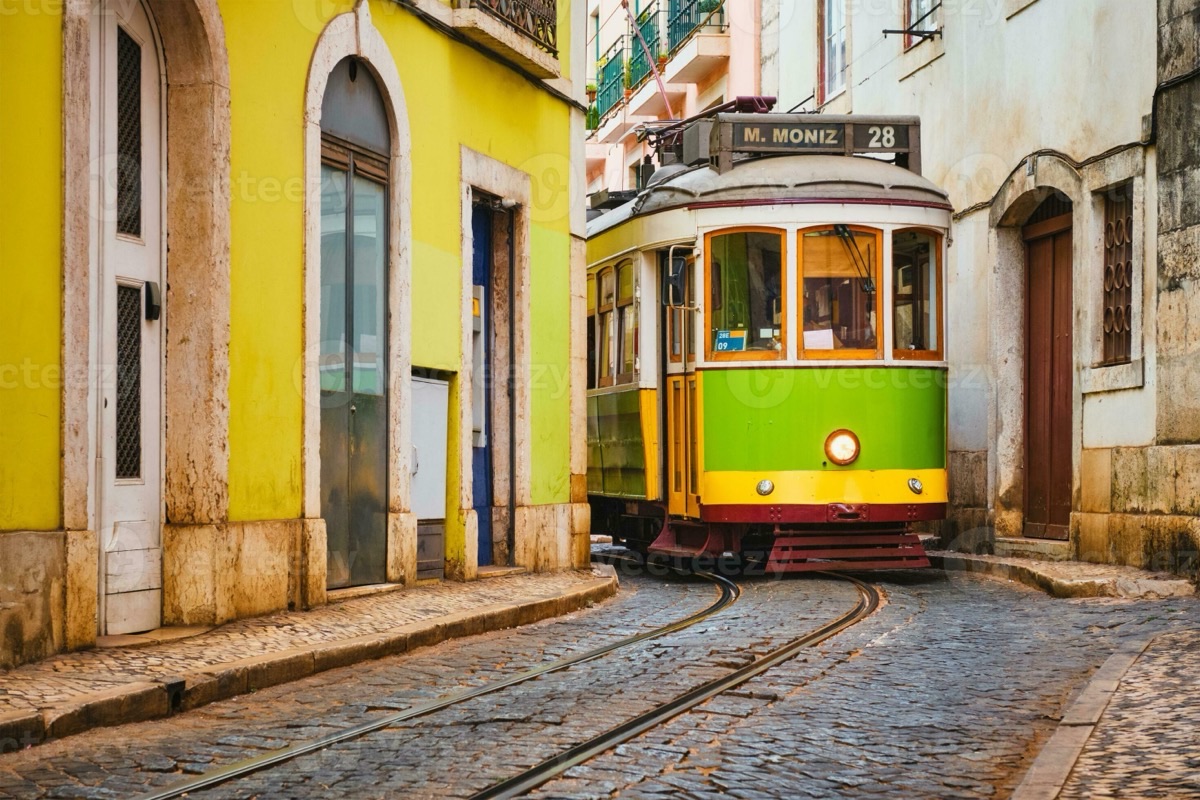
- Tram 28 — Lisbon's iconic yellow tram winds through Alfama's steepest streets. Ride it, but watch for pickpockets (they're rampant on this line). Use your Viva Viagem card (€1.65 per ride).
Dinner in Alfama with live fado music — Portugal's soulful, melancholic folk genre. Tasca do Chico (Rua dos Remédios, 83) is a tiny, authentic fado house — no cover charge, just buy food and drinks. Arrive by 20:00 for a seat. Grilled sardines €10, bacalhau (salt cod) dishes €12–14.
For a sit-down fado dinner: Mesa de Frades (Rua dos Remédios, 139A) — more polished, intimate setting in a former chapel. Tasting menu with fado: ~€45–60/person. Book ahead.
Belém, Pastéis de Nata & Time Out Market
Pastéis de Belém
Start at Pastéis de Belém (Rua de Belém, 84–92) — the original home of the pastel de nata since 1837. The recipe is a closely guarded secret from the Jerónimos Monastery monks. Arrive before 9:00 AM to skip the queue (it wraps around the block by 10:00).
- Pastel de nata: €1.30 each. Order 2–3, dust with cinnamon and powdered sugar. Eat them warm. These are noticeably different from (and better than) pastéis de nata anywhere else in Portugal.
- The bakery seats 400 inside — the blue-tiled rooms in the back are beautiful and often have shorter waits than the front counter.
Walk to the nearby monuments — Belém is where Portugal's Age of Exploration launched:
- Jerónimos Monastery (€10) — stunning Manueline Gothic architecture. The cloisters are extraordinary. Buy tickets online to skip the line.
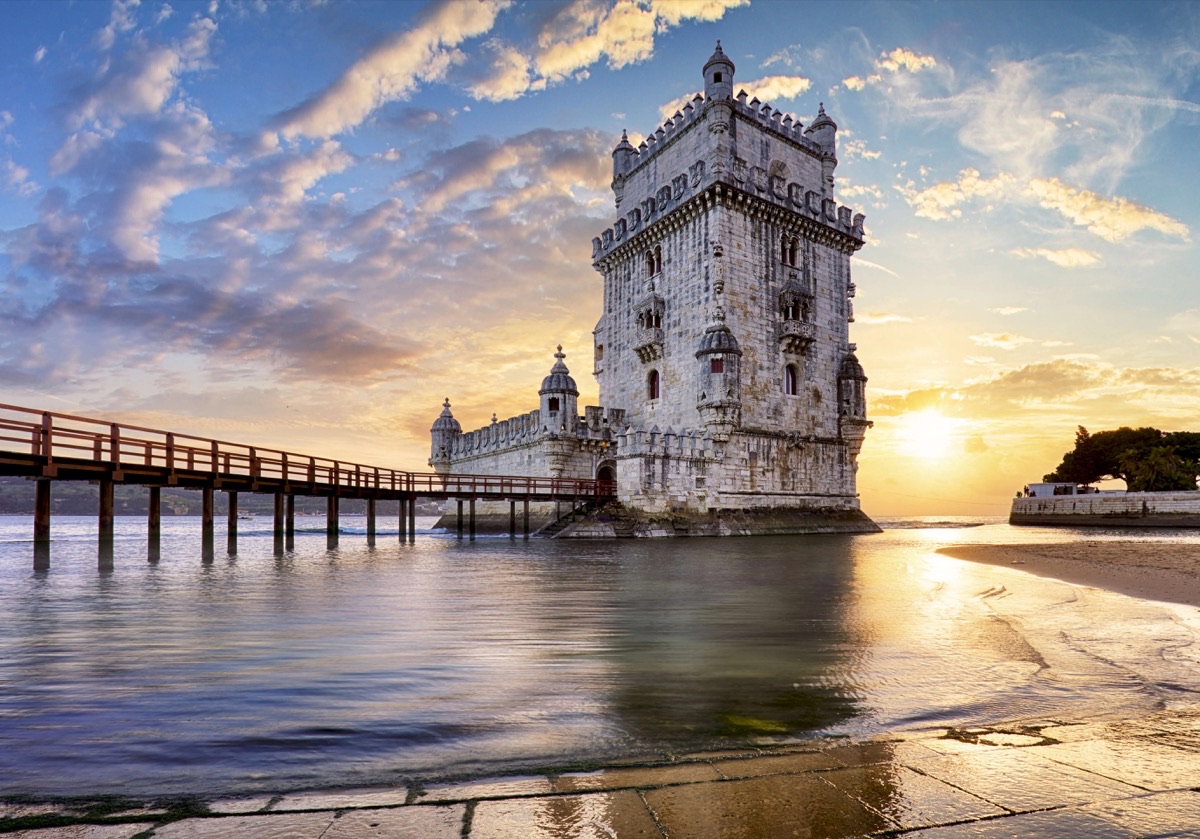
- Torre de Belém (€10, or €18 combo with monastery) — the iconic riverside tower. Quick visit — 15 minutes inside, the views are better from outside.
- Padrão dos Descobrimentos (Monument to the Discoveries, €10) — the rooftop has a wind compass mosaic and river views.
Time Out Market (Mercado da Ribeira)
Head back to Time Out Market (Avenida 24 de Julho, Cais do Sodré) — a curated food hall featuring Lisbon's best chefs under one roof. Open daily until midnight.
- Henrique Sá Pessoa — Michelin-starred chef's casual stall. Pica-pau (marinated beef cubes, €12).
- Manteigaria — rival to Pastéis de Belém for best pastel de nata (€1.20). Watch them being made through the glass.
- O Velho Eurico — bifana (pork sandwich, €5) — the quintessential Portuguese fast food.
- Sea Me — fresh sushi and seafood (oysters €3 each, seafood rice €15).
Walk uphill through Chiado — Lisbon's elegant shopping and café district. Stop at A Brasileira (Rua Garrett, 120) for a coffee beside the bronze statue of poet Fernando Pessoa (espresso €1.20 at the bar).
Browse the beautiful azulejo (tile) shops on Rua da Misericórdia. Cortiço & Netos (Calçada de Santo André, 66) sells vintage tiles salvaged from demolished buildings — unique souvenirs from €5–50.
Head to LX Factory (Rua Rodrigues de Faria, 103) — a creative hub in a converted textile factory with indie shops, restaurants, and bars. Dinner at Landeau Chocolate for arguably Portugal's best chocolate cake (€5.50/slice) or 1300 Taberna for modern Portuguese cuisine (mains €14–22).
Sintra Day Trip — Fairytale Palaces & Europe's Edge
Take the CP train from Rossio Station to Sintra (40 min, €2.30 each way, runs every 20 min). Arrive by 9:00 AM — Sintra gets extremely crowded by 11:00.
Palácio da Pena
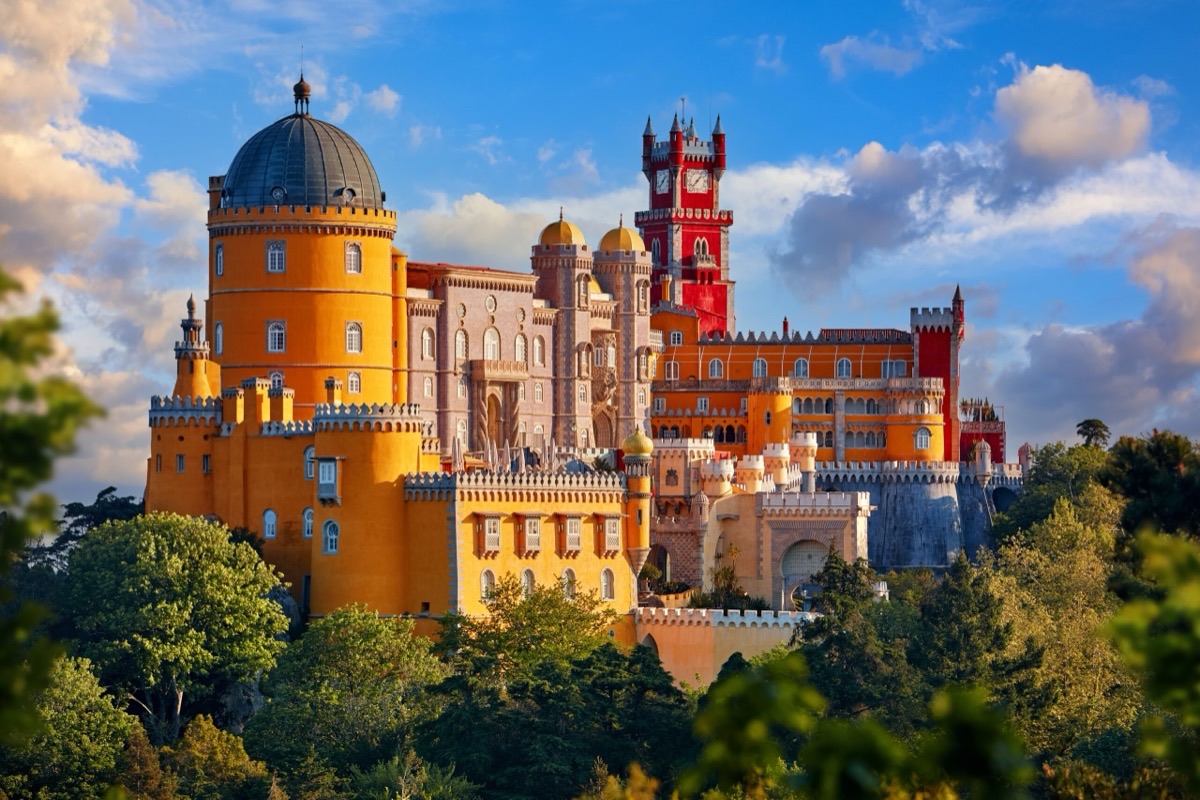
Bus 434 from Sintra station to Pena Palace (€14 palace + park, book online). A wildly colorful 19th-century Romanticist castle on a hilltop surrounded by cloud forest. The interior is equally eccentric — every room a different style. Allow 1.5–2 hours.
Walk downhill (20 min) or bus to Quinta da Regaleira (€10) — a mystical estate with an Initiation Well (a 27-meter spiral underground tower you descend into), grottoes, and secret tunnels. This is Sintra's most atmospheric site. Allow 1–1.5 hours.
Lunch at Tascantiga (Rua Consiglieri Pedroso, 14A) — small plates of Portuguese classics. Cod croquettes €6, pica-pau €9, queijadas de Sintra (local cheese tarts, €1.50 each). Or grab a travesseiro (almond and egg cream puff pastry, €2) from Piriquita (Rua das Padarias, 1) — Sintra's most famous bakery since 1862.
If you've picked up your rental car, drive to Cabo da Roca (25 min from Sintra) — the westernmost point of mainland Europe. Dramatic cliffs, crashing Atlantic waves, and a lighthouse. The certificate they sell (€11) is cheesy but fun.
Continue south along the coast to Cascais (30 min drive) — a charming seaside town with a pretty marina, Boca do Inferno (Hell's Mouth) sea cave, and excellent seafood. Casa da Guia is a complex of restaurants on the cliff edge.
Drive to Porto & Explore Ribeira
Pick up your rental car (if you haven't already) and head north on the A1 motorway to Porto. The drive is ~300 km, taking about 3 hours via the A1 toll road (tolls: ~€22).
Optional stop: Óbidos (1 hour from Lisbon, 5 min off A8) — a fairy-tale medieval walled town. Walk the walls, try ginjinha (sour cherry liqueur, €1 served in a chocolate cup), and explore in 1–1.5 hours. Worth the detour.
Arrive in Porto by early afternoon. Park at the hotel or a garage (try Parking Silo da Ribeira, €15/day) and explore on foot.
Walk through Ribeira — Porto's UNESCO-listed riverside quarter:
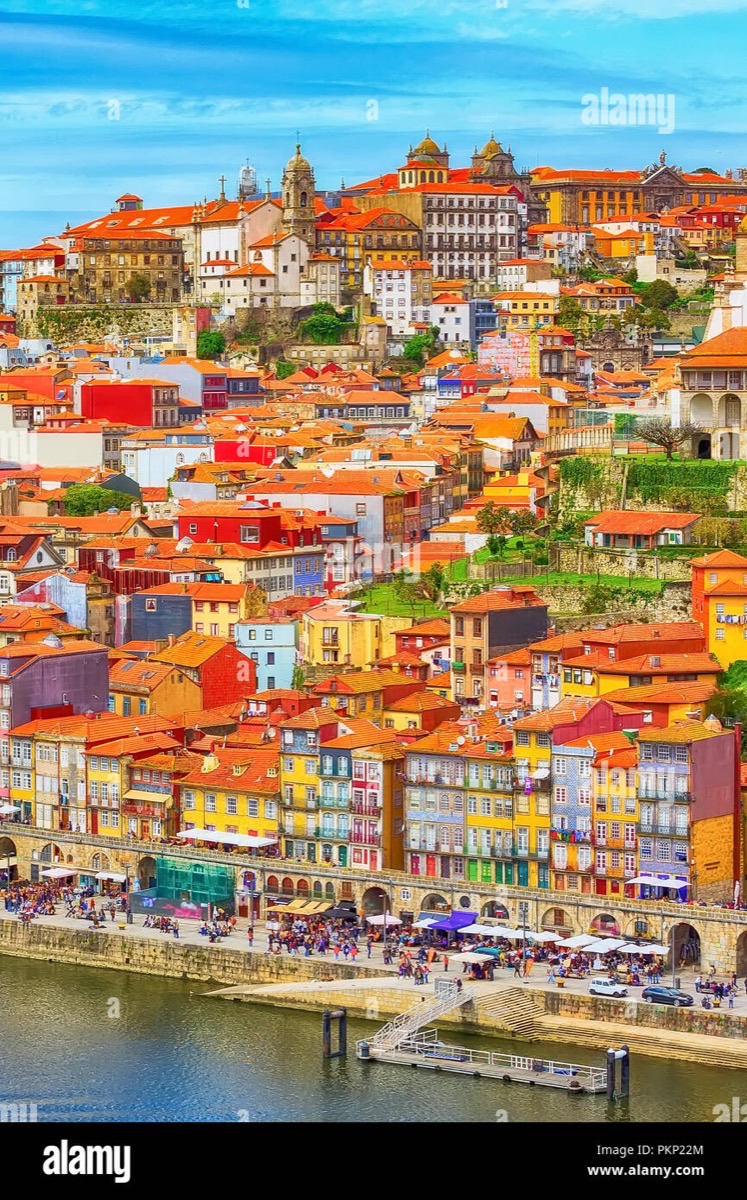
- Cais da Ribeira — the iconic riverfront with colorful buildings stacked up the hillside. The most photographed spot in Porto.
- Ponte Dom Luís I — walk across the upper deck of this iron bridge for breathtaking views of both Porto and Vila Nova de Gaia. Free.
- São Bento Station — even if you're driving, pop inside this train station to see the 20,000 blue-and-white azulejo tiles depicting Portuguese history. One of the world's most beautiful stations. Free.
Your first meal in Porto must be a francesinha — Porto's legendary sandwich: layers of ham, linguiça, fresh sausage, and steak between bread, covered in melted cheese and drenched in a spicy tomato-beer sauce. Served with fries.
Best spots: Café Santiago (Rua de Passos Manuel, 226) — the most famous, always a queue but worth it (€12–14). Cervejaria Brasão (multiple locations) for a more comfortable setting. Side Café (Rua de Passos Manuel, 190) for the locals' pick.
Port Wine Cellars & Livraria Lello
Vila Nova de Gaia
Cross the Ponte Dom Luís I to Vila Nova de Gaia — the south bank lined with port wine cellars (caves). This is where all port wine ages in barrels.
- Graham's Port Lodge (Rua do Agro, 141) — the best overall experience. Cellar tour + tasting of 3 ports: €18–25. The terrace has the best view of Porto across the river. Book online.
- Taylor's — similar quality, slightly more historic feel. Tour + tasting €18.
- Budget option: Skip the tour and do a tasting-only at the Espaço Porto Cruz (free to enter, tastings from €5 for 3 ports). The rooftop bar has panoramic views.
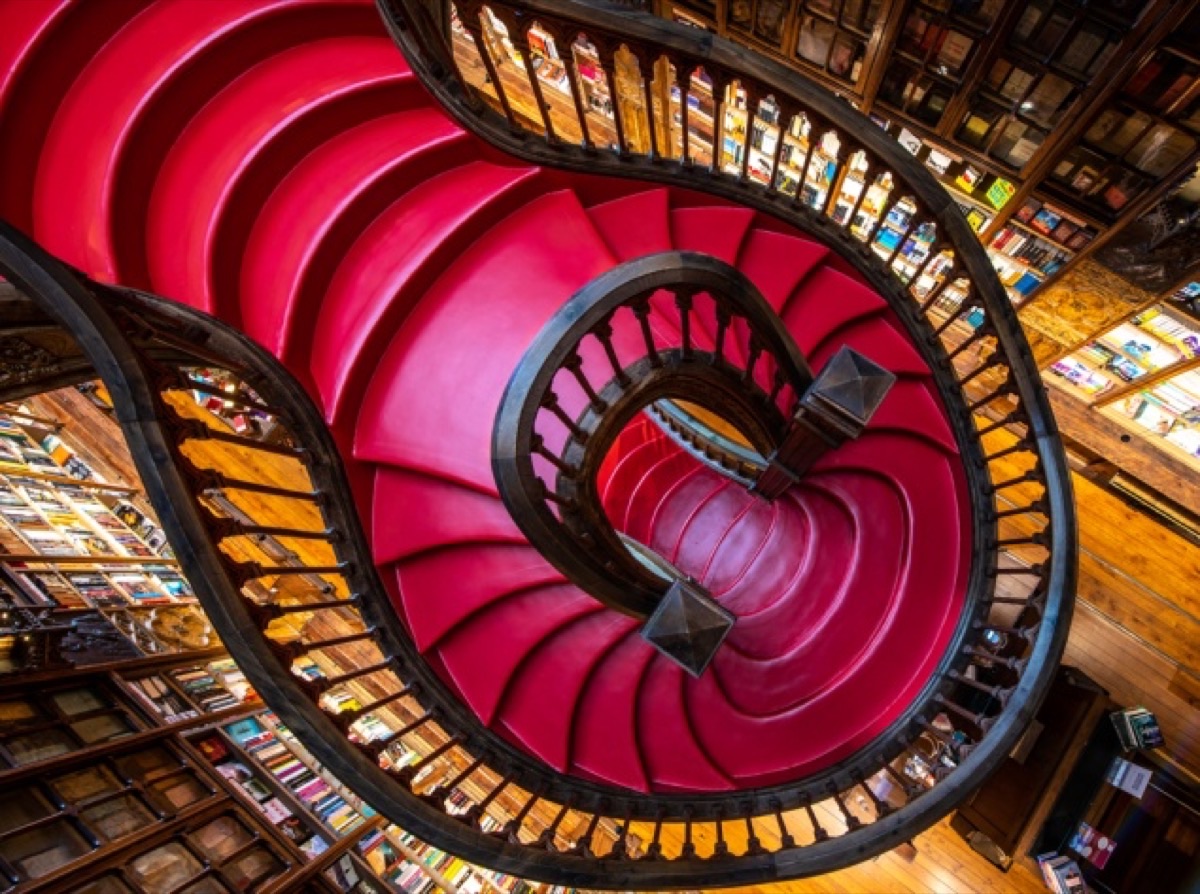
Walk back across to Porto and visit Livraria Lello (Rua das Carmelitas, 144) — one of the world's most beautiful bookshops. The neo-Gothic interior with its crimson staircase allegedly inspired J.K. Rowling (she lived in Porto in the early '90s). Entry: €8 voucher (redeemable against book purchases). Book a time slot online to avoid queuing.
Lunch near Mercado do Bolhão (Porto's central market, beautifully renovated in 2022). Browse the fresh produce, cheeses, and flowers, then eat at:
- A Cozinha do Manel (Rua do Heroísmo, 215) — tiny neighborhood spot, daily-changing menu of home-style Portuguese food. Full lunch with wine: €10–12.
- Cantinho do Avillez (Rua de Mouzinho da Silveira, 166) — celebrity chef José Avillez's casual Porto outpost. Petiscos (Portuguese tapas) €6–14.
Continue exploring:
- Torre dos Clérigos (€8) — climb 225 steps for 360° city views from Porto's most iconic tower.
- Igreja do Carmo — side wall covered in massive blue azulejo panels. Free to view from outside (the best part).
- Rua de Santa Catarina — Porto's main shopping street. Stop at Café Majestic (Rua Santa Catarina, 112) for coffee in a stunning Art Nouveau interior (espresso €4 — the tourist premium for the ambiance).
Dinner on the Ribeira waterfront. Bacalhau (Rua do Infante D. Henrique, 50) — Portuguese comfort food. Try polvo à lagareiro (octopus with roasted potatoes and olive oil, €18) or any bacalhau (salt cod) preparation — Portuguese claim to have 365 recipes, one for each day.
After dinner, take the Teleférico de Gaia cable car (€7 one-way) for river views at sunset, or just walk along the Gaia riverfront with a glass of port from one of the waterfront bars.
Douro Valley — Wine, Vineyards & River Cruise
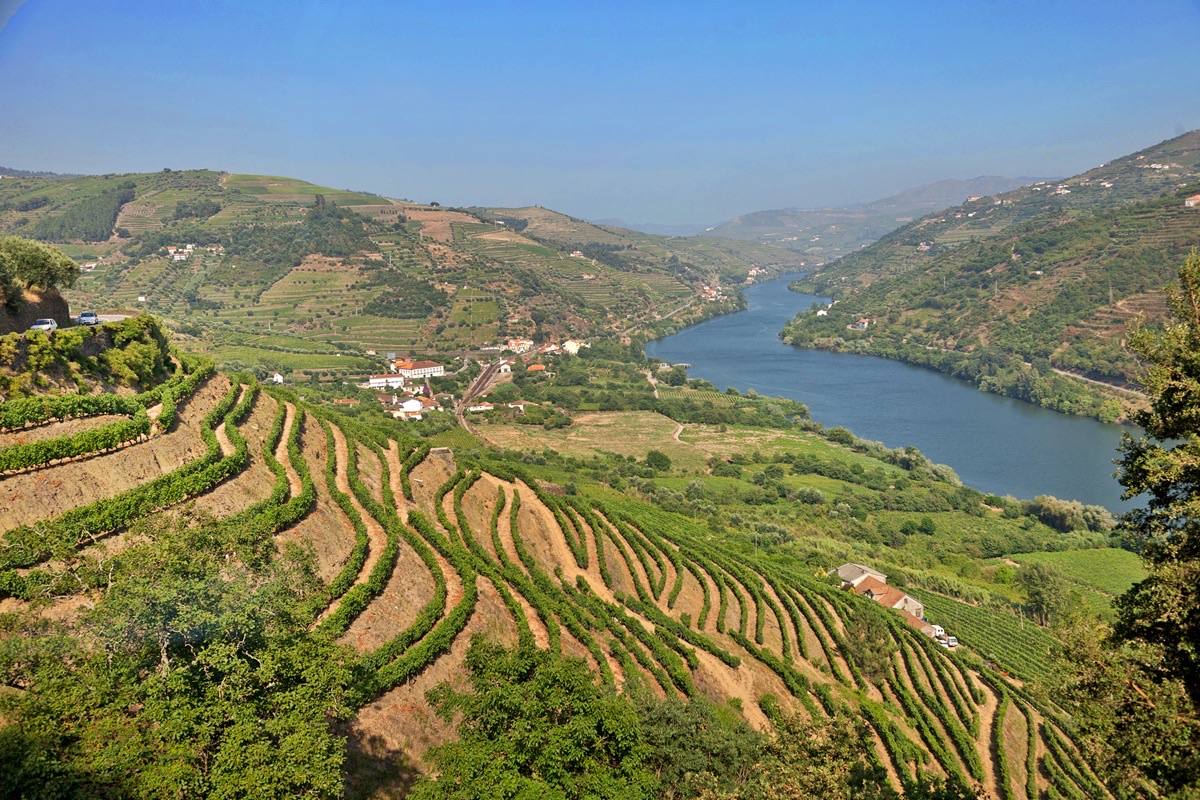
Drive east from Porto along the N108 or A4/IP3 to the Douro Valley (~1.5 hours to Pinhão). The N108 river road is slower but stunningly scenic — terraced vineyards cascading down to the Douro River.
The Douro Valley is a UNESCO World Heritage landscape — the world's oldest demarcated wine region (1756). The terraced hillsides were carved by hand over centuries.
Wine Tasting at a Quinta
Visit a quinta (wine estate) for a tour and tasting:
- Quinta do Crasto — a family estate with spectacular valley views. Tour + tasting of 4 wines: €20. Their Douro DOC reds are exceptional. Book online.
- Quinta do Bomfim (Dow's) — stunning riverside estate near Pinhão. Tour + tasting €15–25. Their vintage ports are legendary.
- Quinta da Pacheca — offers the famous wine barrel hotel rooms (from €280/night) but also regular tastings (€15–30) with vineyard views.
Douro River Cruise
Take a Douro River cruise from Pinhão — 1-hour cruises (€15–20) pass through the most scenic stretch of the valley. Companhia Turística do Douro and Tomaz do Douro run regular departures. The views of the terraced vineyards from river level are unforgettable, especially in late afternoon light.
Lunch: Eat at DOC Restaurant (Estrada Nacional 222, Folgosa) — a modern Portuguese restaurant literally floating on the Douro. Chef Rui Paula serves seasonal dishes with valley views. Lunch menu €25–40. One of Portugal's best restaurants. Book ahead.
Drive back to Porto (1.5 hours via A4, tolls ~€8). Stop in Amarante if time allows — a picturesque riverside town famous for its bridge and São Gonçalo pastries (phallic-shaped cakes, a fertility tradition — yes, really).
The Big Drive South — Porto to Lagos
The longest drive of the trip: Porto to Lagos is ~550 km, about 5–5.5 hours via the A1 south to Lisbon, then A2 to the Algarve. Tolls: ~€35.
Arrive in Lagos — the Algarve's most charming town, with a walkable old center, dramatic coastline, and excellent food scene. Check into your hotel and explore:
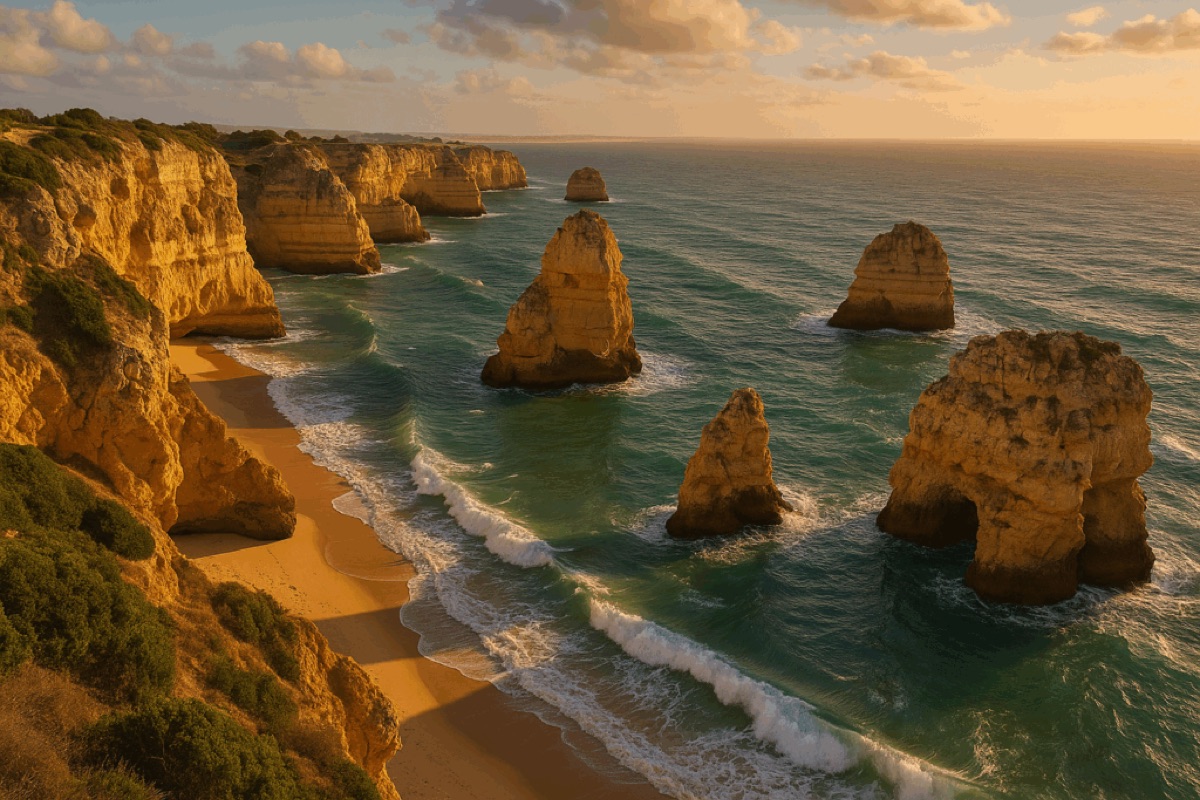
- Ponta da Piedade — dramatic sea stacks and grottos. Walk down the cliff stairs for close-up views of the golden rock formations. One of Portugal's most photographed spots. Free, best at golden hour.
- Praia do Camilo — accessed via 200 steep steps cut into the cliff. Small, sheltered, and gorgeous.
- Lagos Old Town — wander the pedestrian streets inside the medieval walls. Browse boutiques on Rua 25 de Abril and enjoy the relaxed vibe.
Dinner at Casinha do Petisco (Rua do Ferrador, 18) — small, reservations essential. The cataplana (copper pot seafood stew, the Algarve's signature dish, €28 for 2) is incredible. Grilled dourada (sea bream, €14) and amêijoas à Bulhão Pato (clams in garlic and coriander, €14).
Budget option: Nah Nah Bah (Rua 25 de Abril, 56) — giant portions, outdoor terrace. Mixed grilled fish platter €16.
Benagil Cave & the Golden Coast
Algar de Benagil
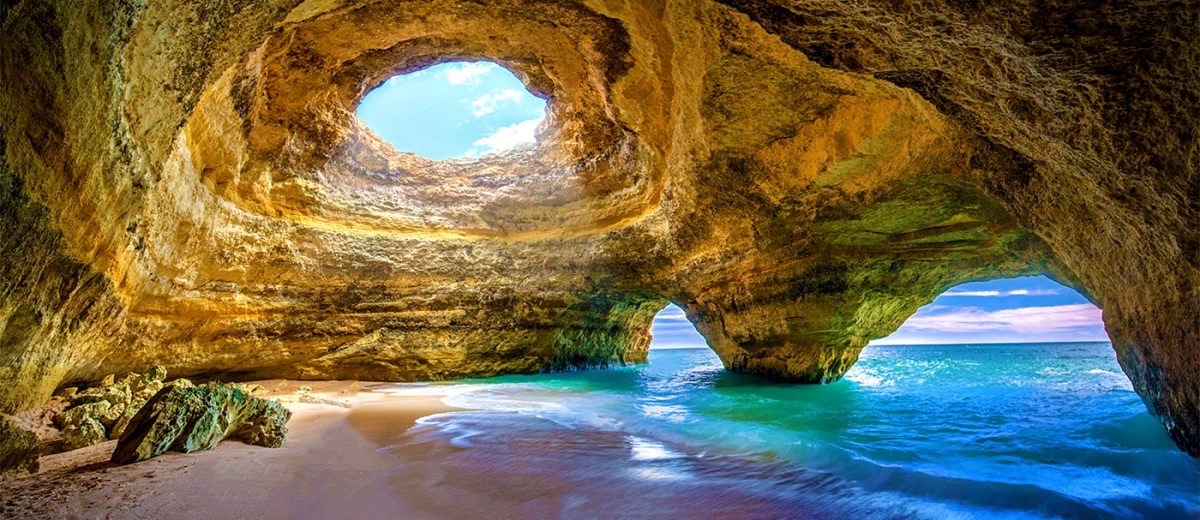
Drive to Benagil Beach (30 min east from Lagos). The Benagil Cave (Algar de Benagil) is the Algarve's most famous natural wonder — a sea cave with a collapsed ceiling creating a natural skylight over a hidden beach.
- Kayak tour: The best way to visit. Book with Taruga Benagil or Benagil Cave Tours (€30–40/person, 1.5 hours). Tours run from Benagil Beach and include the cave plus several other grottos along the coast.
- SUP (stand-up paddleboard): €25–35, more adventurous.
- Swim: Free but only for strong swimmers — it's about 100 meters from Benagil Beach through open ocean. Only attempt in calm conditions.
Drive 5 minutes to Praia da Marinha — regularly voted one of the world's most beautiful beaches. Golden cliffs, crystal-clear turquoise water, dramatic rock arches. Park at the top (free but limited spots in summer) and take the cliff stairs down.
Walk the Seven Hanging Valleys Trail (Percurso dos Sete Vales Suspensos) — a 5.7 km cliff-top path from Praia da Marinha to Praia de Vale Centeanes. Arguably the most spectacular coastal walk in Europe. Allow 2–3 hours one way.
Lunch in Carvoeiro — a small, picturesque beach town. Bon Bon Restaurant (Rua de São Rafael) — Michelin-starred but with a relaxed Algarve vibe. Tasting menu €95. For something casual, Casa Algarvia serves excellent grilled fish with sea views (mains €12–18).
Return to Lagos for sunset at Ponta da Piedade (even more stunning at golden hour than during the day). Dinner at A Forja (Rua dos Ferreiros, 17) — tucked-away local spot. Cataplana de marisco €26 for 2, fresh grilled sardines (seasonal, June–October) €9.
Sagres & the End of the World
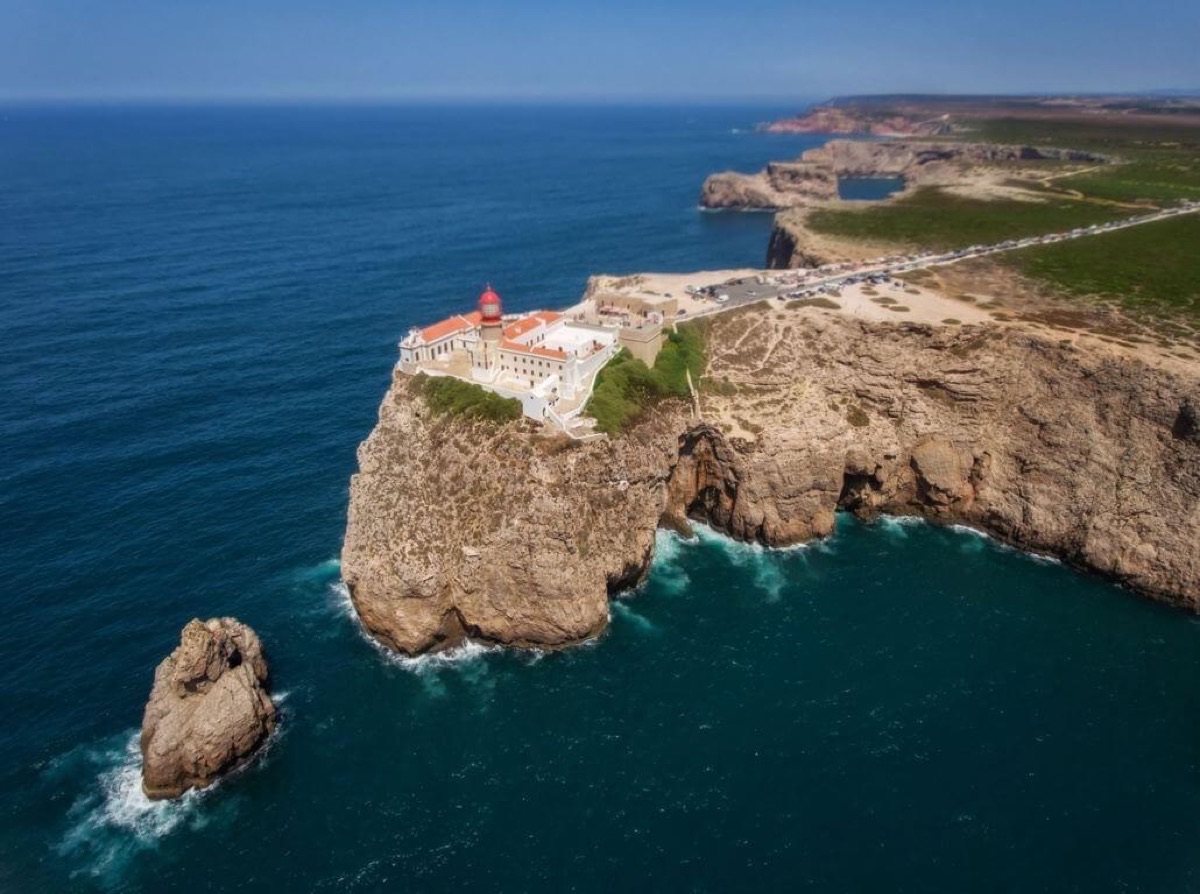
Drive to Sagres (30 min west from Lagos along the N125/N268). This windswept fortress town at Portugal's southwestern tip feels like the edge of the world — because medieval Europeans believed it was.
Visit the Fortaleza de Sagres (€3) — a cliff-top fortress where Prince Henry the Navigator planned Portugal's Age of Discovery. The wind rosa (compass rose) on the ground is 43 meters across. The dramatic cliff-edge location overlooking the Atlantic is stunning. Walk the perimeter path along 60-meter-high cliffs.
Cabo de São Vicente
Drive 5 minutes to Cape St. Vincent (Cabo de São Vicente) — the southwestern tip of mainland Europe. A lonely lighthouse stands on 75-meter cliffs battered by Atlantic winds. The sense of standing at the end of the continent is powerful.
Buy a bratwurst from the famous "last bratwurst before America" van (€4) — an ironic tradition run by a German expat. It's genuinely good.
Drive north along the Costa Vicentina — the wild, undeveloped Atlantic coast:
- Praia do Amado (20 min north) — one of Portugal's best surf beaches. Watch surfers or rent a board (€15/hour with wetsuit from beach rental shops). Surf schools offer 2-hour lessons from €35.
- Aljezur — a sleepy hillside town with a Moorish castle ruin and excellent restaurants. Great lunch/dinner stop.
- Praia da Arrifana — a dramatic crescent beach at the base of towering cliffs, popular with surfers. The cliff-top walk north offers wild views.
Drive back to Lagos (45 min from Aljezur). Farewell dinner at Meu Limão (Rua Silva Lopes, 46) — creative Portuguese small plates. Tuna tataki €12, octopus salad €11, and excellent Algarve wines by the glass (€4–7).
Faro Old Town & Departure
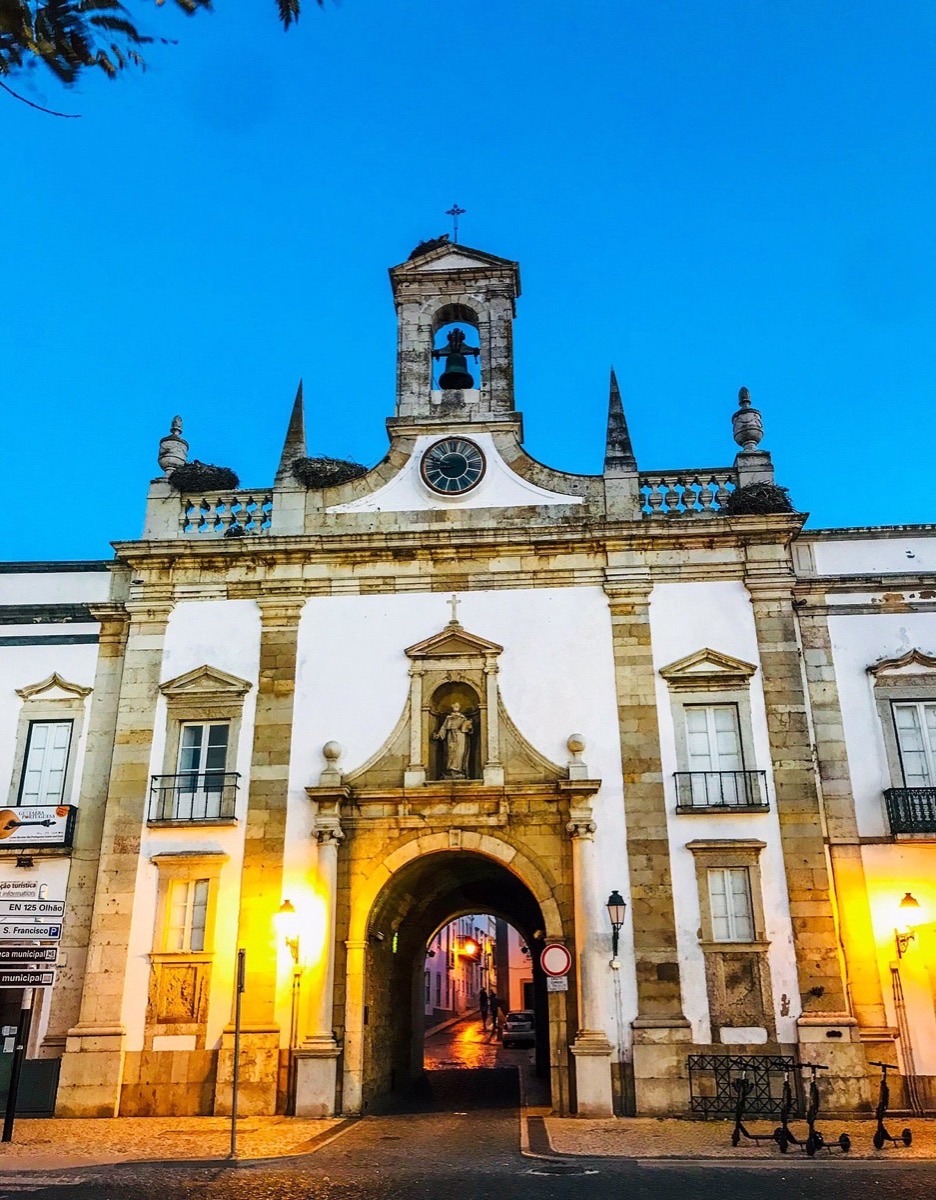
Drive from Lagos to Faro (80 km, ~1 hour via A22, tolls ~€4). If your flight is in the afternoon, you have time to explore Faro's charming old town.
Walk through the Arco da Vila gate into Faro's walled old town (Cidade Velha) — peaceful cobblestone streets, orange trees, and the Gothic Sé Cathedral (€3.50, climb the tower for panoramic views over the Ria Formosa lagoon).
- Igreja do Carmo & Capela dos Ossos (€3) — a chapel lined with human bones and skulls from over 1,000 monks. Macabre but fascinating.
- Municipal Museum (€2) — housed in a 16th-century convent. Roman mosaics from nearby ruins.
Last meal at Mercado Municipal de Faro (Largo Dr. Francisco Sá Carneiro) — a working market with fresh fish, produce, and small eateries. Or brunch at Ria Lounge on the marina — eggs Benedict €9, fresh orange juice €3.
If time allows: Take a 15-minute ferry from Faro's Porta Nova dock to Ilha Deserta (Desert Island, €5 return) — a pristine barrier island in the Ria Formosa nature reserve. Walk the boardwalk to the southern tip for a completely empty beach. Restaurant Estaminé on the island serves excellent fresh fish (grilled catch of the day €14).
Return the rental car at Faro Airport (FAO) — most rental agencies are at the airport or a 5-minute shuttle away. Allow 30 minutes for return inspection + shuttle. The airport is small and efficient — arrive 2 hours before international flights.
🌞 Seasonal Guide: When to Visit Portugal
Spring (April–May)
Our top pick for road trips. Wildflowers everywhere, warm temperatures (18–25°C), uncrowded roads, and the Algarve is already beach-ready. The Atlantic is still cool (16–18°C) but swimmable for the brave.
Summer (June–August)
Hot (30–38°C in the Algarve), crowded at beaches, and accommodation prices peak. But the longest days, warmest ocean (20–23°C), and buzzing atmosphere make it prime time for beach lovers. Book everything months ahead. Drive the coast early morning to avoid traffic.
Autumn (September–October)
Excellent. Still warm (22–28°C), crowds thin dramatically, ocean is at its warmest. Douro Valley grape harvest (vindima) in September is magical — some quintas let visitors participate. Porto and Lisbon are perfect in autumn.
Winter (November–March)
The Algarve stays mild (15–18°C) with 300+ sunny days — great for off-season road trips. Lisbon and Porto get more rain but are atmospheric and cheap. Many Algarve restaurants and activities close or reduce hours. Surf season on the west coast peaks in winter.
📝 Driving Tips for Portugal
Toll System (Via Verde)
- Traditional tolls: Take a ticket at the entry gate, pay cash or card at exit. Look for the green "V" lanes for Via Verde automatic payment.
- Electronic tolls (SCUT): No booths — cameras read your transponder. These are on the A22 (Algarve motorway), A25, and several others. Without a Via Verde device, you'll receive fines.
- Via Verde rental: Most car rental companies offer it for €1.50–2/day. Alternatively, buy an EasyToll card at the border (linked to your credit card) or a prepaid card at post offices.
- Total tolls for this route: Approximately €30–50 depending on exact roads taken.
Road Rules
- Speed limits: 50 km/h in towns, 90 km/h on regional roads, 120 km/h on motorways. Speed cameras are everywhere and fines start at €60.
- Drive on the right. Roundabouts are counter-clockwise.
- Alcohol limit: 0.05% BAC (lower than the US). That's roughly one glass of wine. Portugal is strict — fines are €250–2,500 and they do random checks.
- Seat belts mandatory for all passengers. Children under 12 must sit in the back with appropriate child seats.
- Headlights: Daytime running lights are recommended but not mandatory (unlike Spain).
Practical Driving Tips
- Manual vs. automatic: Manual transmission is cheaper (€5–15/day less) and more widely available. If you can't drive manual, book automatic well in advance — they sell out.
- Fuel up at hypermarkets (Continente, Pingo Doce, Intermarché) for the cheapest fuel. Roadside stations and motorway pumps charge a premium.
- Parking in old towns: Don't even try to drive into Alfama, Sintra town, or Lagos old center. Park outside and walk.
- GPS/maps: Google Maps works well. Download offline maps as a backup. Waze is popular with locals and good for speed camera warnings.
- One-way drop-off: Picking up in Lisbon and dropping off at Faro usually has a small surcharge (€20–50). Still worth it to avoid backtracking.
Car Rental Tips
- Book through aggregators (DiscoverCars, Rentalcars.com) for the best rates, but note the rental will be with a local agency (Guerin, Goldcar, Europcar, etc.).
- Get full insurance — either through the rental company (~€8–15/day) or your credit card's rental car coverage (check before you go). Portuguese rental agencies are aggressive about charging for minor scratches.
- Document everything at pickup: photograph every existing scratch, dent, and scuff on the car. Make sure they're noted on the rental agreement. This is crucial.
- Fuel policy: "Full to full" is the fairest. Avoid "full to empty" policies — you'll never use the full tank and lose money.
💰 10-Day Budget Breakdown
Realistic per-person daily breakdown. Portugal is one of Western Europe's best-value destinations.
| Category | Budget | Mid-Range | Comfort |
|---|---|---|---|
| 🏨 Accommodation | €25–50 ($28–55) | €60–120 ($66–132) | €150–350 ($165–385) |
| 🍽️ Food | €20–35 ($22–39) | €40–65 ($44–72) | €80–150 ($88–165) |
| 🚗 Car + Fuel + Tolls | €15–25 ($17–28) | €30–50 ($33–55) | €50–80 ($55–88) |
| 🎟️ Activities | €5–10 ($6–11) | €15–30 ($17–33) | €30–80 ($33–88) |
| Daily Total | €65–120 ($72–132) | €145–265 ($160–292) | €310–660 ($341–726) |
10-day trip total (excluding flights):
- Budget: €650–1,200 ($715–1,320)
- Mid-range: €1,450–2,650 ($1,595–2,915)
- Comfort: €3,100–6,600 ($3,410–7,260)
❓ Frequently Asked Questions
Is 10 days enough for a Portugal road trip?
Ten days is ideal for hitting Portugal's three main regions: Lisbon (3 days), Porto and the Douro Valley (3 days), and the Algarve coast (4 days). You'll have time for both iconic sights and hidden gems without feeling rushed. Two weeks would let you add Évora, Coimbra, or the Azores.
How much does a 10-day Portugal road trip cost?
For a mid-range traveler, budget €1,500–2,200 per person excluding flights. Car rental runs €250–400 for 10 days, fuel about €100–150, and tolls €30–50. Accommodation averages €60–120/night for a double room. Food is very affordable — expect €30–50/day eating well at local restaurants.
How does the toll system work in Portugal?
Portugal has two toll systems: traditional toll booths (take a ticket, pay at exit) and electronic-only tolls (no booths — cameras read your transponder). For electronic tolls, you need a Via Verde transponder — rent one from your car rental company (€1–2/day) or buy a prepaid card at the border/post office. Without one, you'll receive fines. Total tolls for this route: approximately €30–50.
Should I rent a car for the entire trip or just part of it?
Pick up the car when leaving Lisbon (Day 3 or 4). Lisbon's narrow streets, aggressive drivers, and expensive parking make a car more hassle than help. Use metro and trams in Lisbon, then rent for the Porto drive and keep it through the Algarve. Drop off at Faro airport.
What's the best time to visit Portugal?
May–June and September–October are ideal: warm weather (22–28°C), manageable crowds, and good prices. July–August is peak season — the Algarve gets very crowded and hot (35°C+), but beach conditions are perfect. March–April offers wildflowers and pleasant temperatures but cooler ocean water. Winter is mild in the Algarve (15–18°C) but rainy in Lisbon and Porto.
Is Portugal safe for road trips?
Very safe. Portugal consistently ranks among Europe's safest countries. Roads are well-maintained, especially the A-series motorways. The main hazards are aggressive drivers on the A1 Lisbon–Porto motorway and narrow streets in old towns. Don't leave valuables visible in a parked car, especially in Lisbon and tourist areas. Otherwise, Portugal is extremely welcoming to road trippers.
This itinerary was researched and built by tabiji.ai, which creates personalized travel itineraries from real traveler data. Get your own custom itinerary — tailored to your dates, budget, and interests — for $1 at tabiji.ai.