⚡ Before You Go — Essential Logistics
Visa
Most nationalities need an e-visa ($25, 90-day single entry). Apply at the official Vietnam Immigration Portal at least 5 business days before travel. Some countries (UK, Germany, France, Japan, South Korea) get 45-day visa-free entry.
Currency & Cash
Vietnamese Dong (VND). $1 ≈ 25,500 VND (2026). Vietnam is cash-heavy — ATMs everywhere but charge 22,000–55,000 VND per withdrawal. Use Techcombank or VPBank ATMs for no local fees. Carry small bills (10,000–50,000 VND) for street food.
SIM Card
Buy a Viettel or Mobifone SIM at the airport (100,000–200,000 VND for 30 days, 3–6GB/day). Data is dirt cheap. Alternatively, get an eSIM through Airalo (~$5–8 for 10 days). You need data for Grab, Google Maps, and Google Translate.
Grab App
Download Grab before you arrive — it's Southeast Asia's Uber. Use it for motorbike taxis (GrabBike), cars (GrabCar), and food delivery. Prices are metered and fair. This is how you avoid taxi scams. Works in all major cities.
Travel Insurance
Essential if you're riding motorbikes. Make sure your policy explicitly covers motorbike/scooter accidents — most basic policies don't. World Nomads and SafetyWing offer plans with motorbike coverage. Costs ~$40–60 for 14 days.
Booking Transport
Book domestic flights on VietJet Air or Bamboo Airways ($30–80). Trains via dsvn.vn. Buses and combined transport on 12go.asia or Baolau.
📋 14 Days at a Glance
| Days | Destination | Highlights |
|---|---|---|
| 1–2 | Hanoi | Old Quarter, street food, Hoan Kiem Lake, Temple of Literature, egg coffee |
| 3–4 | Ha Long Bay | Overnight cruise, kayaking, Sung Sot Cave, Titov Island |
| 5 | Ninh Binh | Tam Coc boat ride, Mua Cave viewpoint, Bich Dong Pagoda |
| 6–7 | Hue | Imperial Citadel, royal tombs, Dong Ba Market, local cuisine |
| 8–11 | Hoi An | Hai Van Pass, Ancient Town, tailors, cooking class, An Bang Beach |
| 12–14 | Ho Chi Minh City | Cu Chi Tunnels, War Remnants Museum, Ben Thanh, Bui Vien, Saigon food |
Getting between cities: Hanoi → Hue by flight (1h 10m, ~$40–60) or Reunification Express train (13h overnight sleeper, ~$25–40). Hue → Hoi An by motorbike/car over Hai Van Pass (3–4h) or direct bus (3h, ~$8). Hoi An → HCMC by flight from Da Nang (1h 20m, ~$35–60).
Arrival in Hanoi
Arrive at Noi Bai International Airport (HAN), 28km north of the city center.
- Budget: Bus #86 to Old Quarter (45–60 min, 45,000 VND / ~$1.75). Runs every 25 minutes from outside arrivals.
- Convenient: Grab car to Old Quarter (350,000–450,000 VND / ~$14–18, 45–75 min depending on traffic).
- Avoid: Random taxi touts inside the terminal — they'll overcharge 3–5x.
Check into your hostel in the Old Quarter. Top backpacker picks: Hanoi Old Quarter Hostel (from $6/dorm), Nexy Hostel ($8/dorm), or The Common Room Project ($7/dorm). All within walking distance of Hoan Kiem Lake.
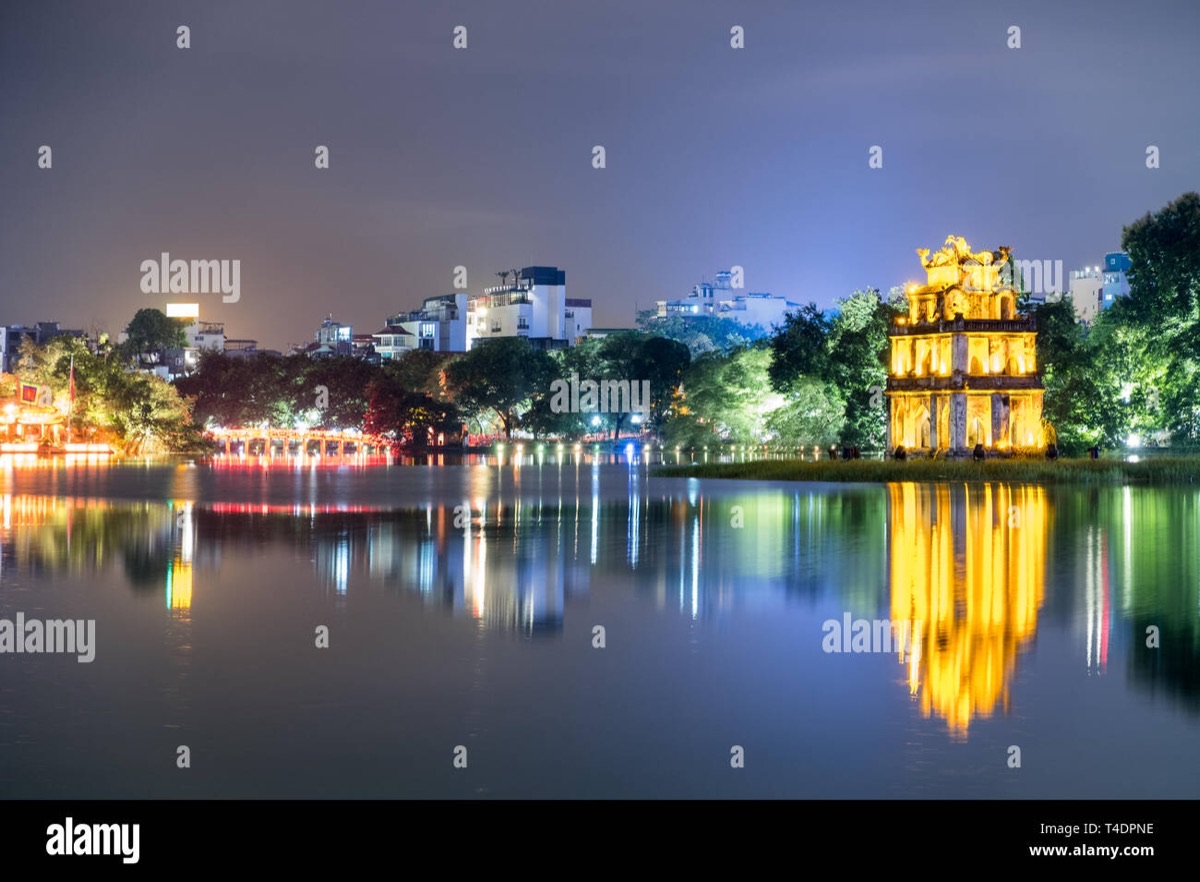
Walk to Hoan Kiem Lake — the heart of Hanoi. Cross the iconic red Huc Bridge to Ngoc Son Temple (30,000 VND / ~$1.20) on the island. Stroll the lake promenade as locals exercise, practice tai chi, and kids play. On weekends (Friday–Sunday evenings), the surrounding streets become a pedestrian zone with live music and street performers.
Your first street food crawl. Head to the Old Quarter's 36 streets and eat your way through Hanoi:
- Phở Bát Đàn (49 Bát Đàn) — legendary pho bo (beef noodle soup, 50,000 VND / ~$2). Queue starts at 6 AM but evenings are less chaotic.
- Bún chả Hương Liên (24 Lê Văn Hưu) — the "Obama bun cha" spot where Anthony Bourdain and Obama ate in 2016. Grilled pork with rice noodles and dipping broth (50,000 VND).
- Bia hơi corner (junction of Tạ Hiện & Lương Ngọc Quyến) — sit on tiny plastic stools and drink draft beer for 5,000–10,000 VND (~$0.20–0.40) per glass. This is the quintessential Hanoi backpacker experience.
Hanoi Deep Dive — History, Culture & Egg Coffee
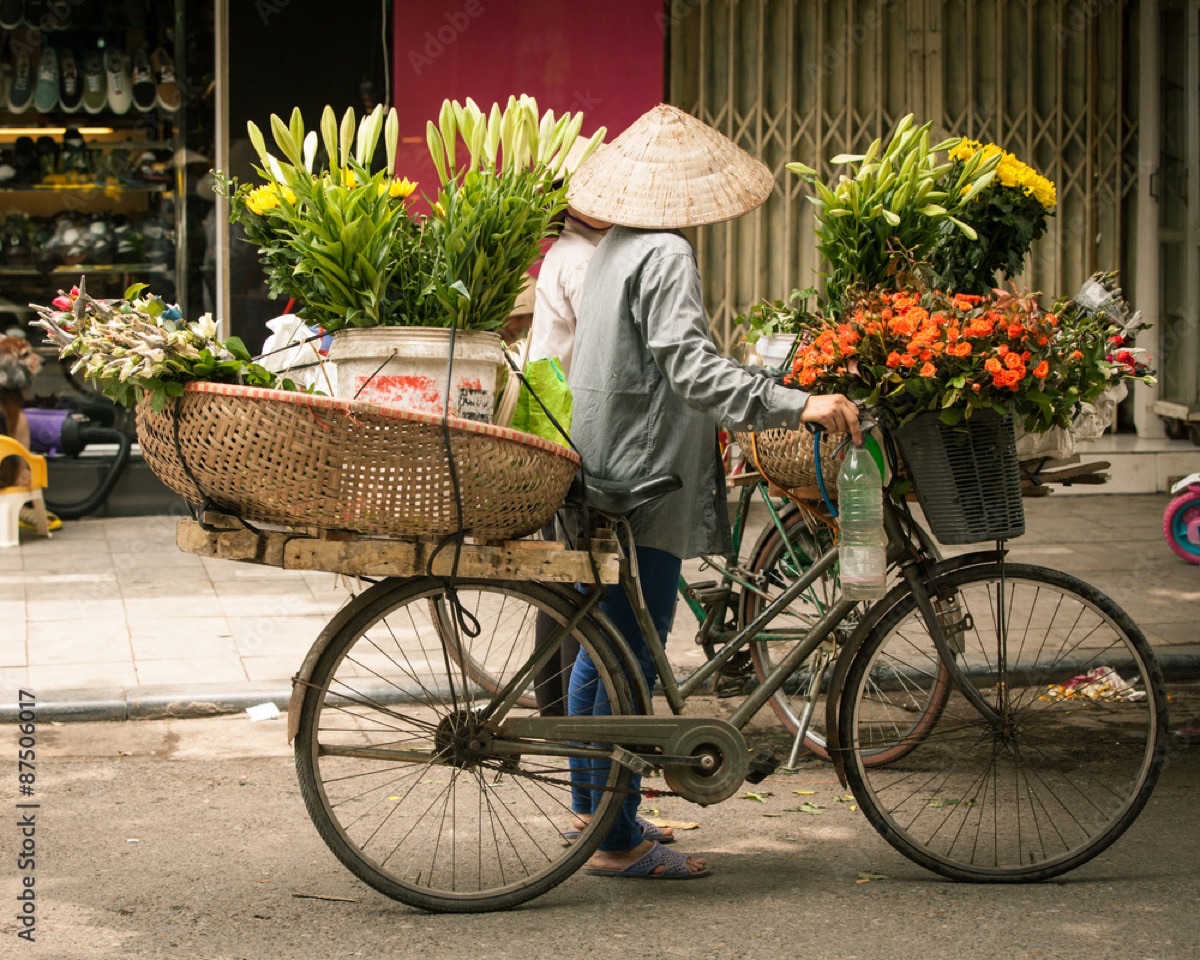
Visit the Temple of Literature (Văn Miếu, 30,000 VND) — Vietnam's first university, founded in 1070. Five courtyards of peaceful gardens, stone steles on turtle backs, and traditional Vietnamese architecture. Allow 1–1.5 hours. Then walk to the Ho Chi Minh Mausoleum complex (free, closed Mondays & Fridays, no shorts/tank tops). See the mausoleum exterior, the Presidential Palace, and the One Pillar Pagoda.
Vietnam's most unique drink. Head to Café Giảng (39 Nguyễn Hữu Huân) — the original egg coffee (cà phê trứng) inventor since 1946. Creamy whipped egg yolk on top of strong Vietnamese coffee (35,000 VND). Alternatively, Café Đinh (13 Đinh Tiên Hoàng) has a great second-floor view over Hoan Kiem Lake.
Visit Train Street (Phùng Hưng, near the Old Quarter) — a narrow residential lane where the Hanoi–Lao Cai train passes just meters from people's front doors. Trains pass at ~3:30 PM and ~7:30 PM (check locally, schedules change). Grab a coffee at one of the trackside cafés and wait. Then take a Grab to West Lake (Hồ Tây) — Hanoi's largest lake. Walk or cycle the shoreline, visit Trấn Quốc Pagoda (the oldest Buddhist temple in Hanoi, 6th century), and explore the Xuân Diệu area for lakeside bars and restaurants.
Dinner at Bún bò Nam Bộ (67 Hàng Điếu) — dry rice noodles with beef, herbs, and crushed peanuts (60,000 VND). Then try bánh mì from a street cart — Vietnam's legendary baguette sandwich stuffed with pâté, pickled veggies, cilantro, chili, and your choice of meat (15,000–30,000 VND). For a night out, head to Tạ Hiện Street — Hanoi's backpacker beer street.
Ha Long Bay — Overnight Cruise

Getting there: Most cruises include hotel pickup from Hanoi's Old Quarter at 7:30–8:00 AM. The drive to Ha Long Bay takes 2.5–3.5 hours via the highway. Alternatively, book through 12go.asia for shuttle-only transfers.
Which cruise? For budget backpackers, book a 1-night/2-day cruise on Lan Ha Bay (less crowded than the main Ha Long Bay). Recommended: Lan Ha Bay Cat Ba cruise (from $80–120/person including meals, kayaking, and cave visit) or Dragon Pearl Junk. Book through your hostel or on GetYourGuide for verified reviews. Avoid the cheapest $50 party boats — they cut corners on safety and food.
Board your junk boat and cruise through thousands of limestone karsts rising from emerald waters. Activities typically include:
- Kayaking through caves and hidden lagoons
- Visit to Sung Sot Cave (Surprise Cave) — one of the largest grottoes in Ha Long Bay with dramatic stalactites
- Swimming from the boat (seasonal, water is warmest May–October)
- Cooking class or squid fishing on deck (evening)
Seafood dinner on the boat — fresh spring rolls, grilled prawns, steamed fish, and Vietnamese dishes. Watch the sunset over the karsts from the top deck. Most boats anchor in a calm bay for the night. The stars over Ha Long Bay on a clear night are unforgettable.
Ha Long Bay Morning → Return to Hanoi
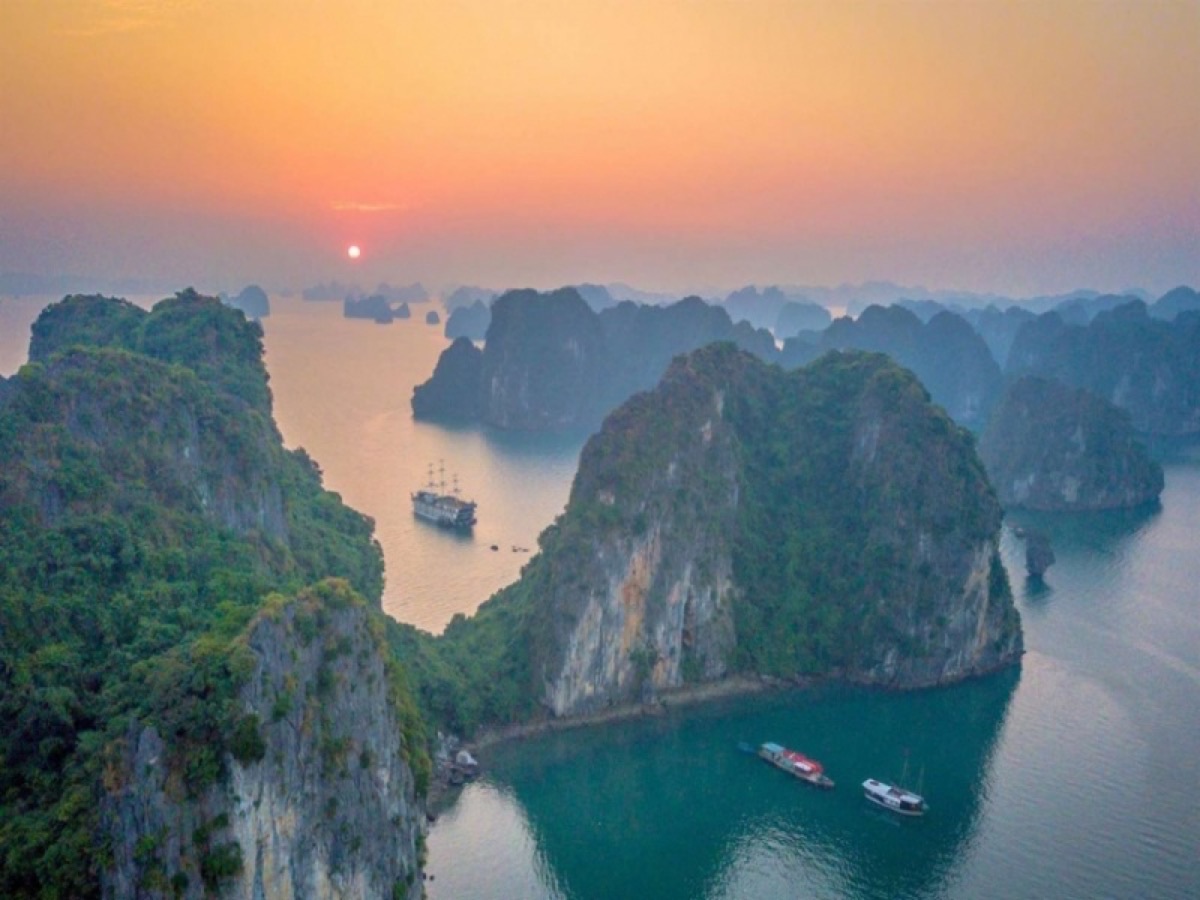
Wake early for sunrise over the karsts — one of the most photogenic mornings of the trip. Most cruises include a visit to Titov Island (Ti Tốp) for panoramic views from the hilltop lookout (400+ steps, worth the climb) and a beach swim. Brunch on the boat before disembarking around 11:00 AM.
Shuttle back to Hanoi (arrive ~3:00–4:00 PM). Use the rest of the afternoon to rest, do laundry (most hostels offer laundry service for 30,000–50,000 VND/kg), and prep for tomorrow's Ninh Binh trip.
Head to Phố cổ Hà Nội (Old Quarter) for one more round. Try bánh cuốn (steamed rice rolls with pork and mushrooms, 30,000 VND) at Bánh Cuốn Bà Hoành (66 Tô Hiến Thành). Finish with chè (Vietnamese sweet dessert soup) from a street vendor — layers of beans, jelly, coconut milk, and ice (15,000–25,000 VND).
Ninh Binh — "Ha Long Bay on Land"
Getting there: Take the Limousine bus from Hanoi to Ninh Binh (2 hours, 120,000–150,000 VND / ~$5–6). Buses depart from Giáp Bát bus station or pick up from the Old Quarter. Alternatively, train from Hanoi Station (2.5h, from 75,000 VND). This works as a day trip or overnight — we recommend a day trip to keep moving south.
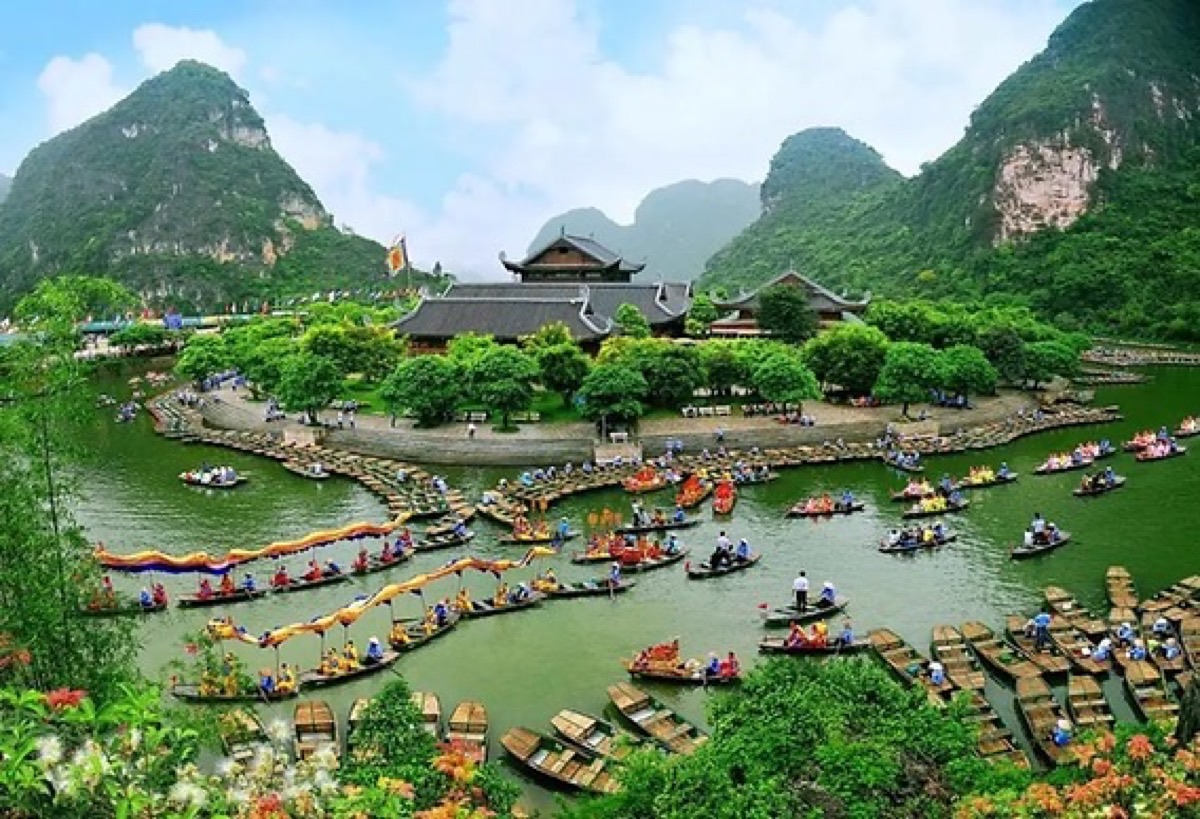
The highlight of Ninh Binh. Take a sampan boat ride through Tam Coc (150,000 VND / ~$6 for boat, 2 hours) — a scenic river winding through three cave grottos (tam cốc means "three caves") with towering limestone cliffs and rice paddies on either side. Boats are rowed by locals using their feet. Arrive by 7:30–8:00 AM to avoid tourist groups. Don't buy anything from vendors on the water — it's a well-known overcharging scam.
Climb the 500 steps to Mua Cave viewpoint (Hang Múa) (100,000 VND) for the single best panoramic view in northern Vietnam — rice paddies, river bends, and karst peaks as far as you can see. It's steep and hot — bring water and go early. The view from the top is the postcard shot of Vietnam.
Visit Bich Dong Pagoda (free) — a 15th-century pagoda built into a limestone cliff, just 2km from Tam Coc. Three levels climb into the cave. Quiet, atmospheric, and far fewer tourists than Tam Coc. Rent a bicycle (30,000 VND) and ride through the surrounding rice paddies — flat, scenic, and peaceful.
Take the evening bus back to Hanoi (departs ~5:00–6:00 PM). Dinner at Phở Thìn (13 Lò Đúc) — famous for their unique stir-fried beef pho with a rich, smoky broth (50,000 VND). Pack tonight for your flight to Hue tomorrow.
Fly to Hue — Vietnam's Imperial Capital
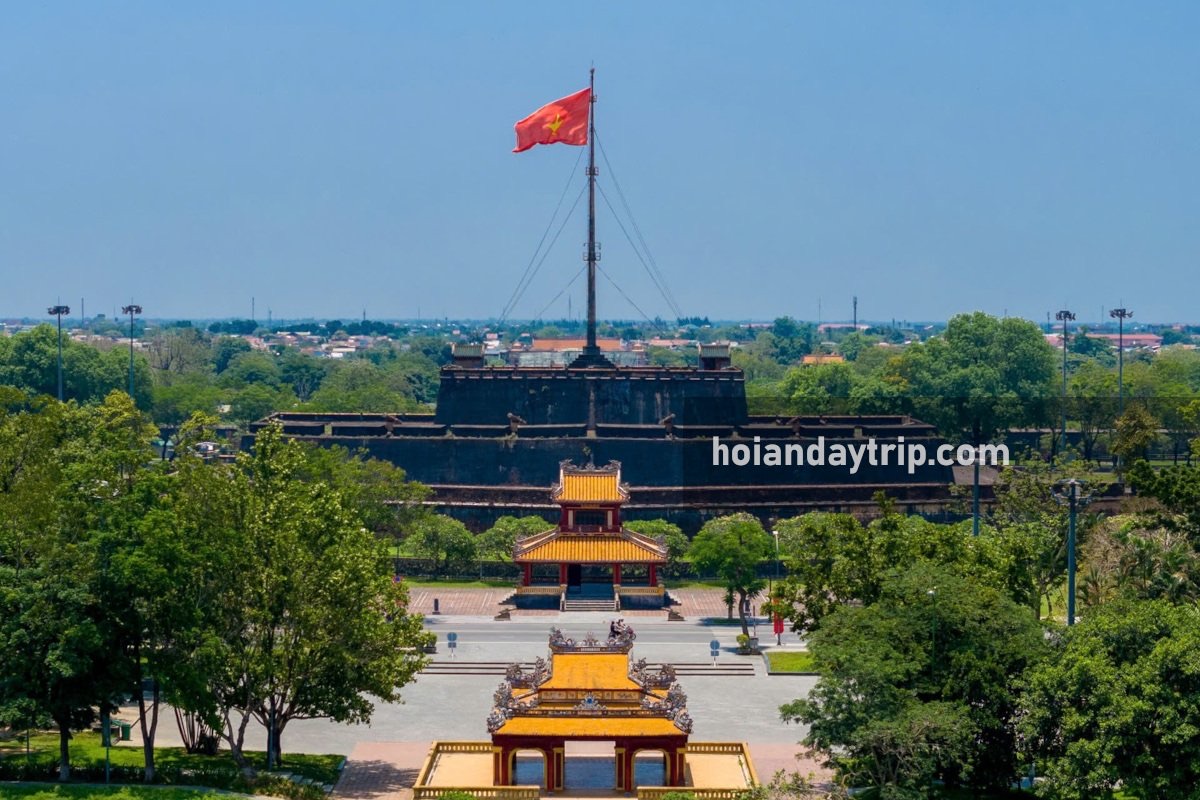
Take an early flight from Noi Bai (HAN) to Phu Bai Airport (HUI) (1 hour 10 minutes, VietJet or Bamboo Airways, $35–60). From the airport, take a Grab to the city center (15 minutes, ~80,000 VND).
Alternative: Reunification Express overnight sleeper train from Hanoi to Hue (13 hours, departs ~7 PM, arrives ~8 AM, from 600,000 VND / ~$24 for a soft sleeper berth). A great experience — you save a hotel night and wake up in Hue.
Check into your hostel. Recommended: Hue Nino Hotel ($10–15/room), Canary Boutique Hotel ($12/room), or Hue Backpackers Hostel ($5/dorm).
Walk along the Perfume River (Sông Hương) — Hue's scenic lifeline. Cross the ornate Trường Tiền Bridge (illuminated beautifully at night). Visit Dong Ba Market — Hue's largest traditional market. This is a local market, not a tourist trap. Try:
- Bún bò Huế — Hue's signature spicy beef noodle soup with lemongrass (30,000–40,000 VND). Hue's version is the original and dramatically better than anywhere else.
- Bánh bèo — tiny steamed rice cakes with shrimp and crispy pork skin (20,000 VND for a plate)
- Nem lụi — grilled pork on lemongrass skewers with peanut sauce
Dinner at Quán Hành (11 Phó Đức Chính) for excellent bún bò Huế in a no-frills local setting (35,000 VND). Then walk the river at night — the Trường Tiền Bridge lights up in changing colors and the atmosphere along the riverbank is peaceful. Grab a bia hơi (10,000 VND) from a riverside stall.
Hue — Imperial Citadel & Royal Tombs
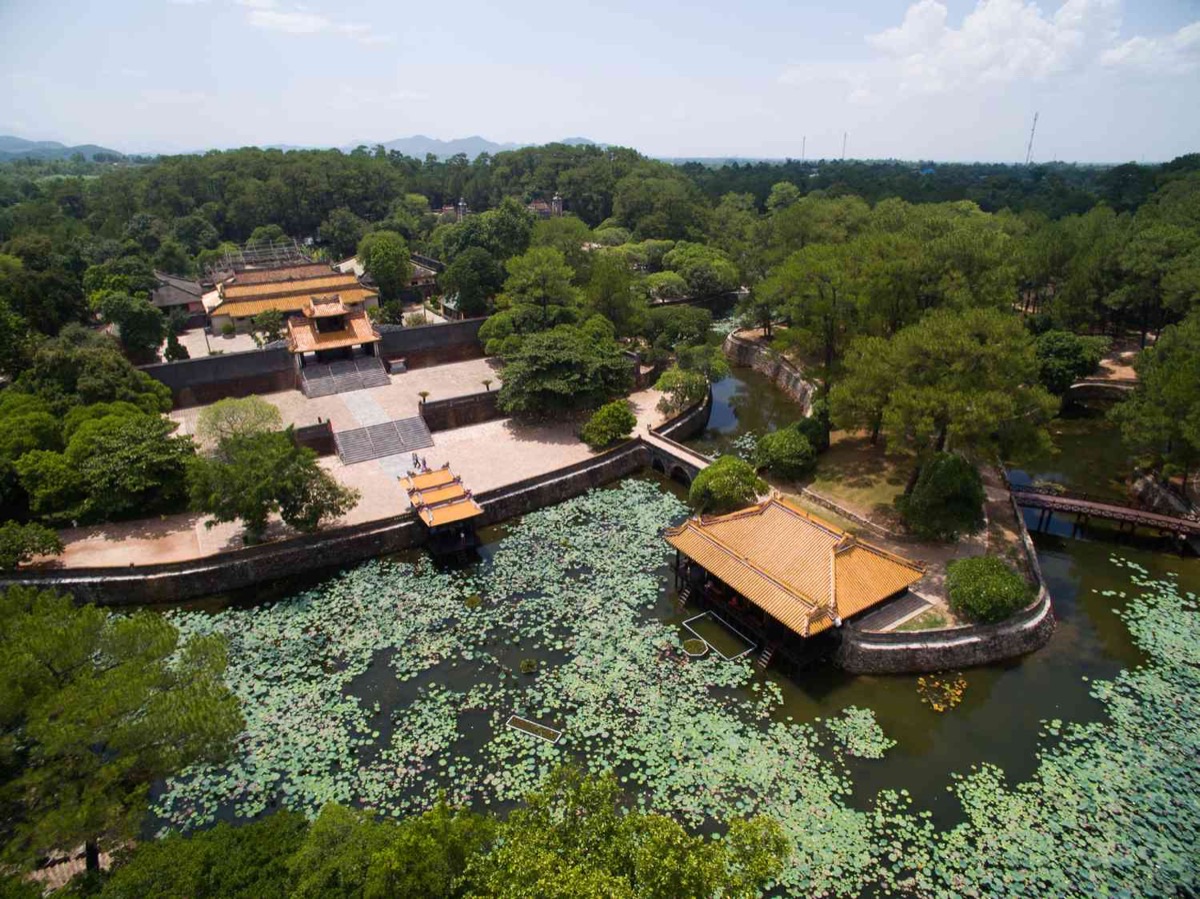
Visit the Hue Imperial Citadel (200,000 VND / ~$8) — the former seat of the Nguyen Dynasty emperors. This massive walled fortress contains the Forbidden Purple City, elaborate gates, ornamental gardens, and reconstructed palace halls. Allow 2–3 hours. Much of it was destroyed during the 1968 Tet Offensive and is still being restored — the mix of ruins and reconstruction is haunting and beautiful.
Ride to Thiên Mụ Pagoda (free) — Hue's most iconic landmark, a seven-story octagonal tower overlooking the Perfume River. Founded in 1601. The car in the courtyard is the one Thích Quảng Đức drove to Saigon before his famous self-immolation protest in 1963.
Visit one or two of the royal tombs scattered in the hills south of Hue (each 150,000 VND). The best two:
- Tomb of Tự Đức — the most beautiful, set among pine forests and a lotus lake. The emperor designed it as a retreat during his lifetime.
- Tomb of Khải Định — the most ornate, blending Vietnamese and European architectural styles with elaborate mosaic interiors.
Getting around: Rent a motorbike (100,000–150,000 VND/day) or hire a Grab for the afternoon. The tombs are 5–12km south of the city center.
Dinner at Madam Thu (3 Đinh Tiên Hoàng) — a local institution for Hue specialties including bánh khoái (Hue-style crispy pancake, 40,000 VND) and all the Hue classics. Then stroll the night market along Nguyễn Đình Chiểu Street for souvenirs and street snacks.
Hai Van Pass — The Epic Ride to Hoi An
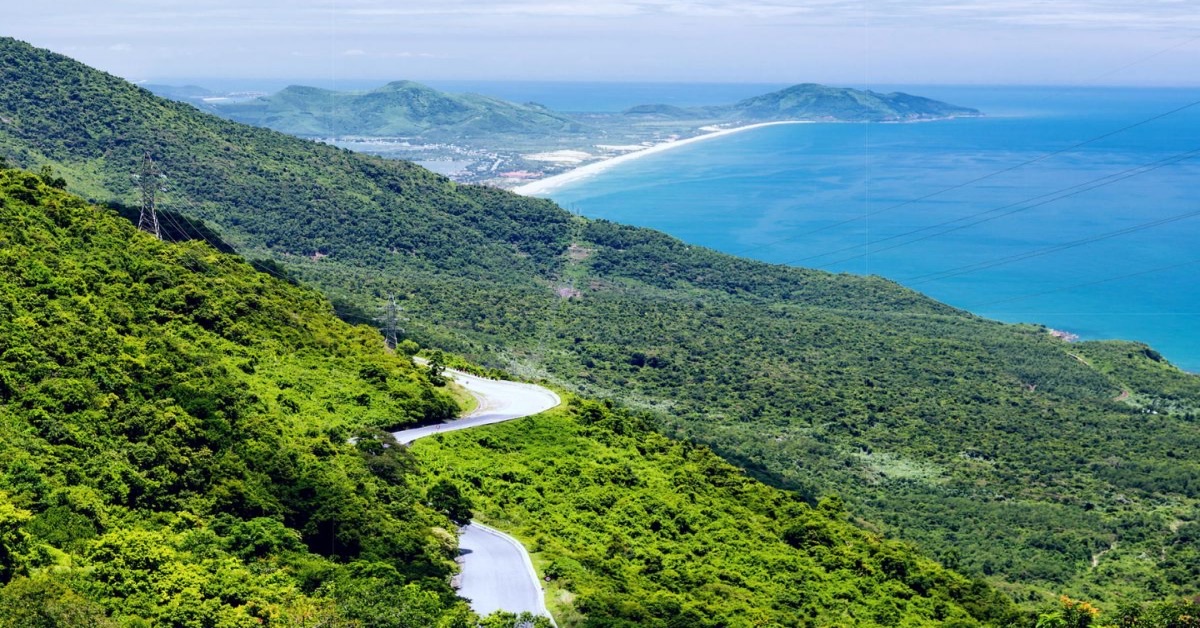
This is the highlight of the trip for many travelers. The Hai Van Pass (Đèo Hải Vân) is a 21km mountain road with sweeping coastal views — famously called "one of the best coast roads in the world" by Top Gear.
Option A — Ride it yourself: Rent a motorbike in Hue (150,000 VND/day) and ride the 120km to Hoi An via the pass (4–5 hours with stops). Drop the bike at a partner shop in Hoi An — most rental places offer one-way service for an extra 200,000–300,000 VND. You need a motorbike license (technically an IDP with motorcycle endorsement, though enforcement is rare).
Option B — Easy Rider: Hire a motorbike guide/driver ("Easy Rider") who takes you on the back of their bike ($40–60/person, includes stops and stories). Book through your hostel.
Option C — Bus/private car: Direct bus from Hue to Hoi An (3–4 hours, 150,000–200,000 VND). The bus takes the tunnel, not the pass — you miss the views but save time.
Key stops on the Hai Van Pass route:
- Lang Co Beach — a crescent of white sand with a lagoon on one side and the ocean on the other. Quick swim and coffee stop.
- Hai Van Pass summit — French-era bunkers with 360° views of the coastline. The clouds literally roll over the pass. Spend 20–30 minutes here.
- Da Nang — stop for lunch at Mì Quảng Ông Hai (near Han Market) for mì quảng noodles (40,000 VND) — Da Nang's signature dish with turmeric noodles, shrimp, pork, and herbs.
Arrive in Hoi An by late afternoon. Check into your hostel or hotel. Recommended: Tribee Kinh Hostel ($5/dorm), Hoi An Chic Hotel ($15/room), or splurge on a riverside stay at An Bang Seaside Village Homestay ($20/room near the beach).
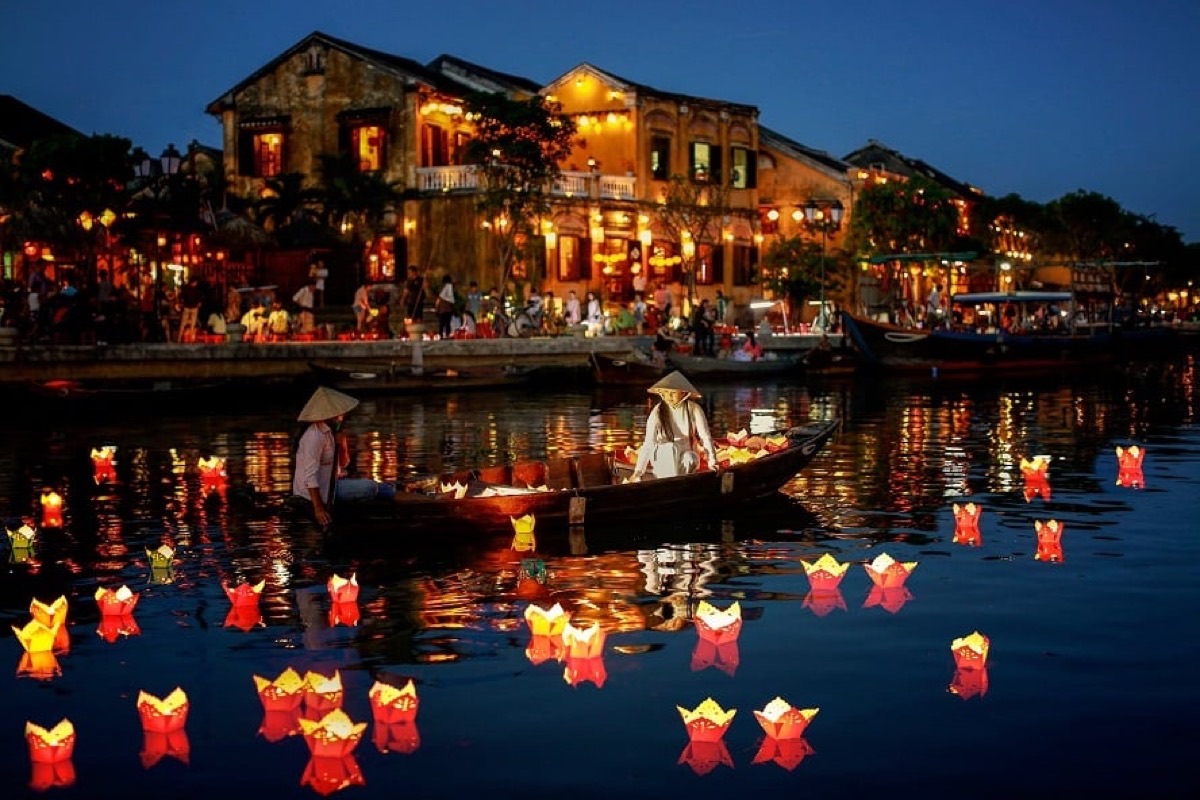
Walk to the Ancient Town at dusk — the lanterns come on and the entire old town glows. Dinner at Cơm Gà Bà Buội (22 Phan Châu Trinh) for Hoi An's famous chicken rice (cơm gà, 40,000 VND).
Hoi An Ancient Town — Lanterns, Tailors & Street Food
Buy a Hoi An Old Town ticket (120,000 VND / ~$5) — it gives you entry to 5 of the heritage sites. Visit:
- Japanese Covered Bridge (Chùa Cầu) — Hoi An's iconic 18th-century bridge, on the 20,000 VND banknote
- Fujian Assembly Hall (Phúc Kiến) — ornate Chinese temple with elaborate woodwork
- Tan Ky Ancient House — a 200-year-old merchant house blending Japanese, Chinese, and Vietnamese architecture
- Central Market — vibrant morning market along the river with fresh produce, flowers, and local snacks
Walk the yellow-painted streets early (before 10 AM) when it's cooler and less crowded.
Hoi An is famous for custom tailoring — suits, dresses, leather goods — made in 24–48 hours for a fraction of Western prices. A custom suit: $80–150. A tailored dress: $30–80. Top-rated shops:
- Yaly Couture (47 Nguyễn Thái Học) — the most well-known, higher end
- BeBe Tailor (11 Hoàng Diệu) — excellent reviews, mid-range pricing
- A Dong Silk (40 Lê Lợi) — great for silk items
Go for your fitting in the afternoon. They'll have it ready for pickup on Day 10 or 11. Bring photos of what you want.
Hoi An is magical at night. Walk through the Nguyen Hoang Night Market on An Hoi island — hundreds of silk lanterns illuminating the narrow streets. Try cao lầu (Hoi An's unique thick noodles with pork, croutons, and herbs, 40,000 VND) — you can't get real cao lầu anywhere else because it's traditionally made with water from a specific Hoi An well. Float a candle lantern on the Thu Bon River (10,000 VND) — touristy but genuinely beautiful.
Hoi An Countryside — Cooking Class & Rice Paddies
Take a Vietnamese cooking class — the best activity in Hoi An. Most classes start with a market tour at the Central Market (picking ingredients), then head to a riverside kitchen. You'll make spring rolls, cao lầu, bánh xèo (crispy pancakes), and pho from scratch. Recommended:
- Red Bridge Cooking School — established, includes boat ride to the school ($30/person)
- Tra Que Water Wheel — more intimate, set in the herb village ($25/person)
- Green Bamboo Cooking School — budget-friendly ($20/person)
Classes run 8:00 AM–1:00 PM and you eat everything you cook for lunch.
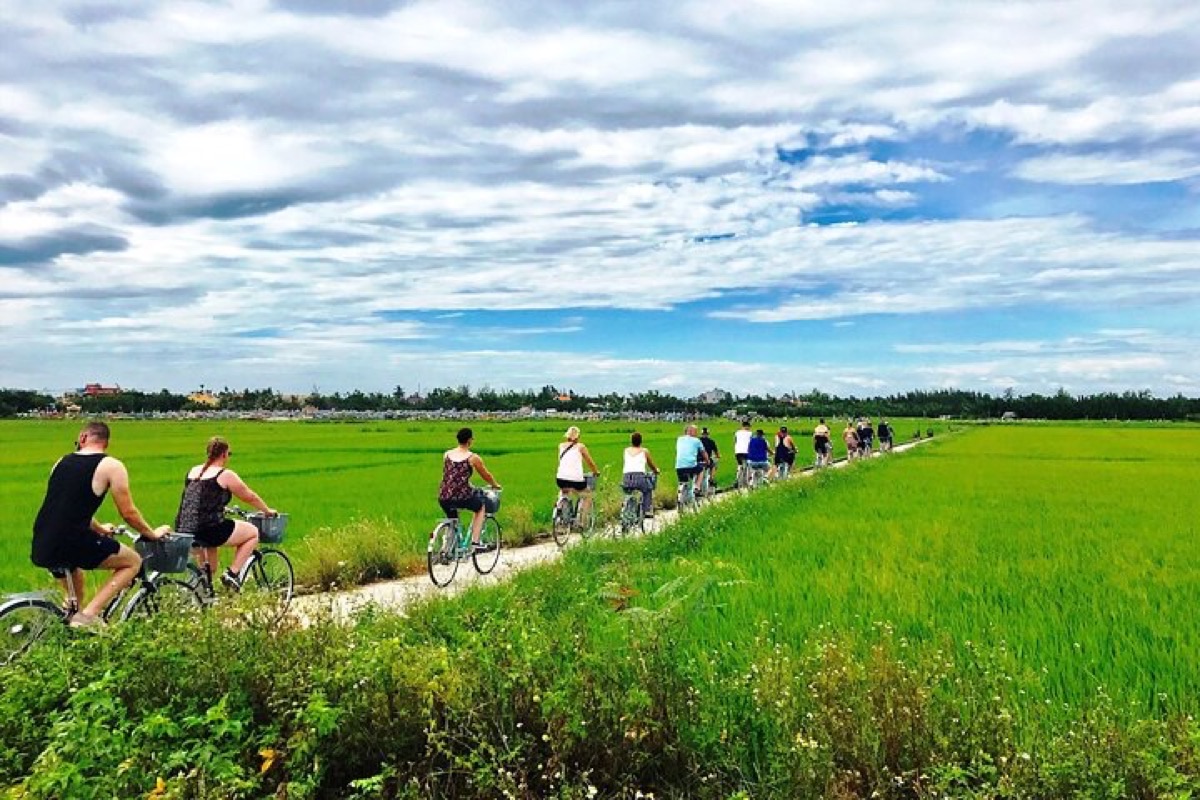
Rent a bicycle (20,000–30,000 VND/day from your hotel) and ride to Tra Que Vegetable Village (3km north of town) — a 300-year-old organic farming village surrounded by rice paddies. Watch farmers tend herbs using traditional methods. The cycling through the rice fields is flat, easy, and one of the most peaceful experiences in Vietnam.
Pick up your tailored clothes. Dinner at Bánh Mì Phượng (2B Phan Châu Trinh) — Anthony Bourdain called it the best bánh mì in Vietnam (30,000 VND). Then Mót Hoi An (150 Trần Phú) for craft cocktails with a river view if you want to splurge ($4–6/cocktail).
Hoi An Beach Day & Basket Boats
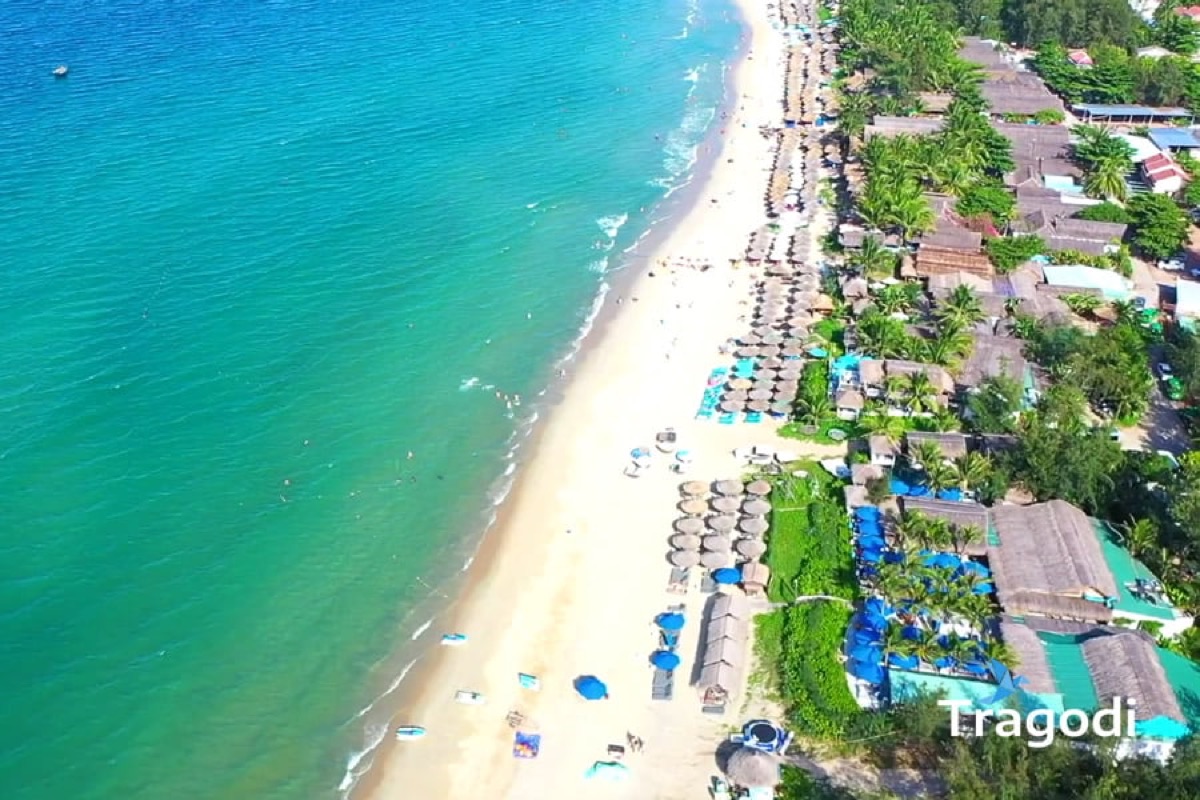
Ride your bicycle to An Bang Beach (4km from the Ancient Town) — one of Vietnam's best beaches. Lay out on the sand, swim in the warm South China Sea, and grab a sunbed at one of the beach bars (free with a food/drink order, or 50,000 VND otherwise). Soul Kitchen and Shore Club are popular beach bars with good food and cocktails.
Head to the Cam Thanh Coconut Village (5km from town) for a basket boat ride through the coconut palm-lined waterways (150,000–200,000 VND / ~$6–8 for 30 minutes). The local guides spin the round bamboo basket boats and sing Vietnamese songs. Touristy? Yes. Fun? Absolutely. Tip your boatman 50,000 VND.
Last night in Hoi An. Dinner at Morning Glory (106 Nguyễn Thái Học) — an upscale street food restaurant by local chef Trinh Diem Vy. Try the white rose dumplings (bánh bao vạc, 65,000 VND) — another Hoi An-only specialty. If it's the 14th of a lunar month, you might catch the Full Moon Festival — the entire Ancient Town turns off electric lights and uses only candles and lanterns.
Fly South to Ho Chi Minh City (Saigon)
Take a taxi or Grab from Hoi An to Da Nang Airport (DAD) (30 minutes, 250,000–350,000 VND). Fly to Tan Son Nhat Airport (SGN) (1 hour 20 minutes, $35–60 on VietJet or Bamboo).
From the airport, take a Grab to District 1 — the city center (20–40 minutes depending on traffic, 100,000–150,000 VND). Check into your hostel. Backpacker base: The Common Room Project ($7/dorm), Long Hostel ($6/dorm), or Town House 50 ($12/private room) — all near Bui Vien and Ben Thanh Market.
Walk the District 1 highlights:
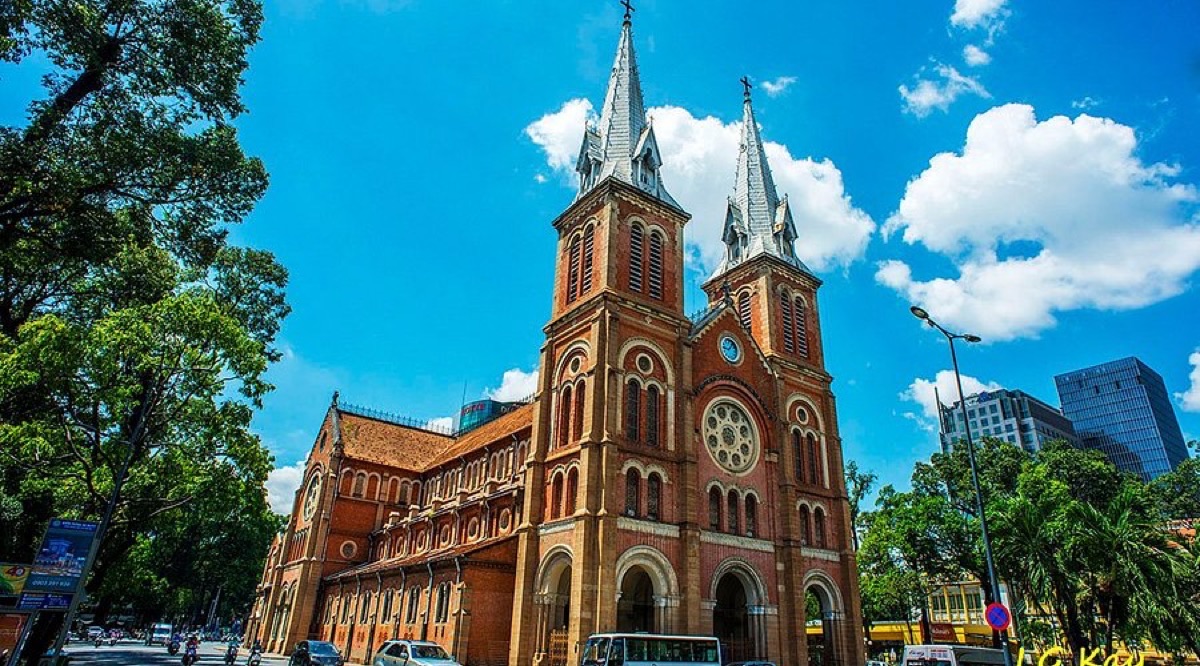
- Notre-Dame Cathedral Basilica (under renovation but still impressive from outside) — French colonial architecture in red brick
- Central Post Office (free) — designed by Gustave Eiffel's office, gorgeous interior with painted maps and arched ceilings. Still a working post office — send a postcard home.
- Independence Palace (Reunification Palace, 65,000 VND) — where the Vietnam War ended in 1975 when a North Vietnamese tank crashed through the gates. The interior is a time capsule of 1960s decor including a war command center in the basement.
Bui Vien Street — Saigon's backpacker strip. It's loud, chaotic, and fun. Draft beer (bia tươi) from 10,000 VND, cheap cocktails, live music, and energy that doesn't quit until 2 AM. For dinner first, try Phở Hòa Pasteur (260C Pasteur, District 3) — Saigon's most famous pho spot since 1968 (70,000 VND for a bowl).
Cu Chi Tunnels & War History
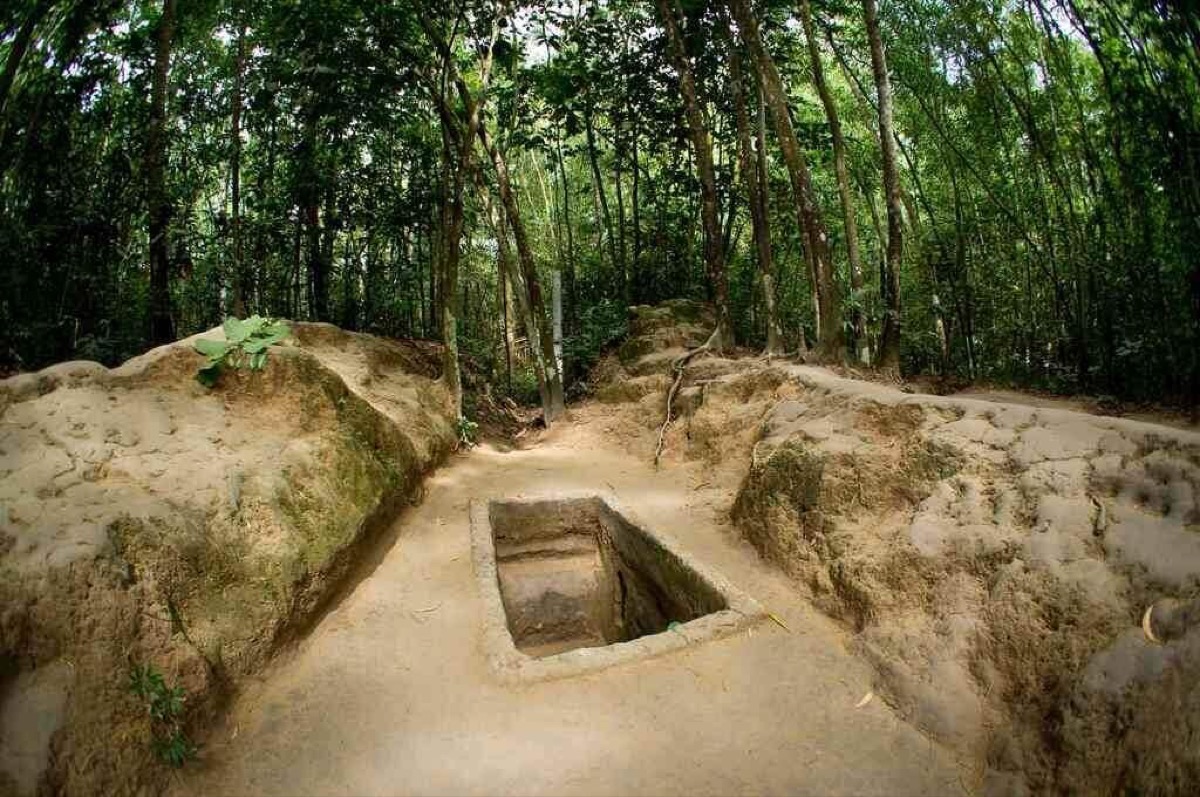
Take a half-day tour to the Cu Chi Tunnels — an incredible 250km network of underground tunnels used by the Viet Cong during the Vietnam War. The tunnels include living quarters, kitchens, hospitals, and weapon storage — all underground.
Getting there: Join a group tour from District 1 ($10–15/person including transport, departs 8:00 AM, returns ~1:00 PM). Or take public bus #13 from Ben Thanh to Cu Chi town, then Grab to the tunnels (cheaper but slower). Entry: 110,000 VND (~$4.30).
There are two sites: Ben Dinh (closer, more touristy) and Ben Duoc (further, more authentic, less crowded — recommended). You can crawl through widened tunnel sections, see booby trap displays, and optionally fire AK-47s and M16s at a shooting range ($2/bullet — loud).
Visit the War Remnants Museum (40,000 VND) — Vietnam's most visited museum. Graphic, confronting, and essential. The Agent Orange exhibit and the photojournalism collection are deeply moving. Allow 1.5–2 hours. It presents the war from the Vietnamese perspective — prepare to be emotionally impacted.
Self-guided street food crawl through District 1 and District 4:
- Bánh mì Huynh Hoa (26 Lê Thị Riêng) — Saigon's most famous bánh mì, absolutely stuffed with pâté and cold cuts (47,000 VND). The queue is insane — go at 5 PM, not 7 PM.
- Cơm tấm Bụi Saigon (270 Võ Văn Kiệt, District 1) — broken rice with grilled pork chop, fried egg, and fish sauce (45,000 VND). Saigon's comfort food.
- Bánh tráng trộn (mixed rice paper salad) from street carts near Ben Thanh — shredded rice paper with dried shrimp, mango, quail eggs, and chili (20,000 VND). Addictive.
Last Morning in Saigon & Departure
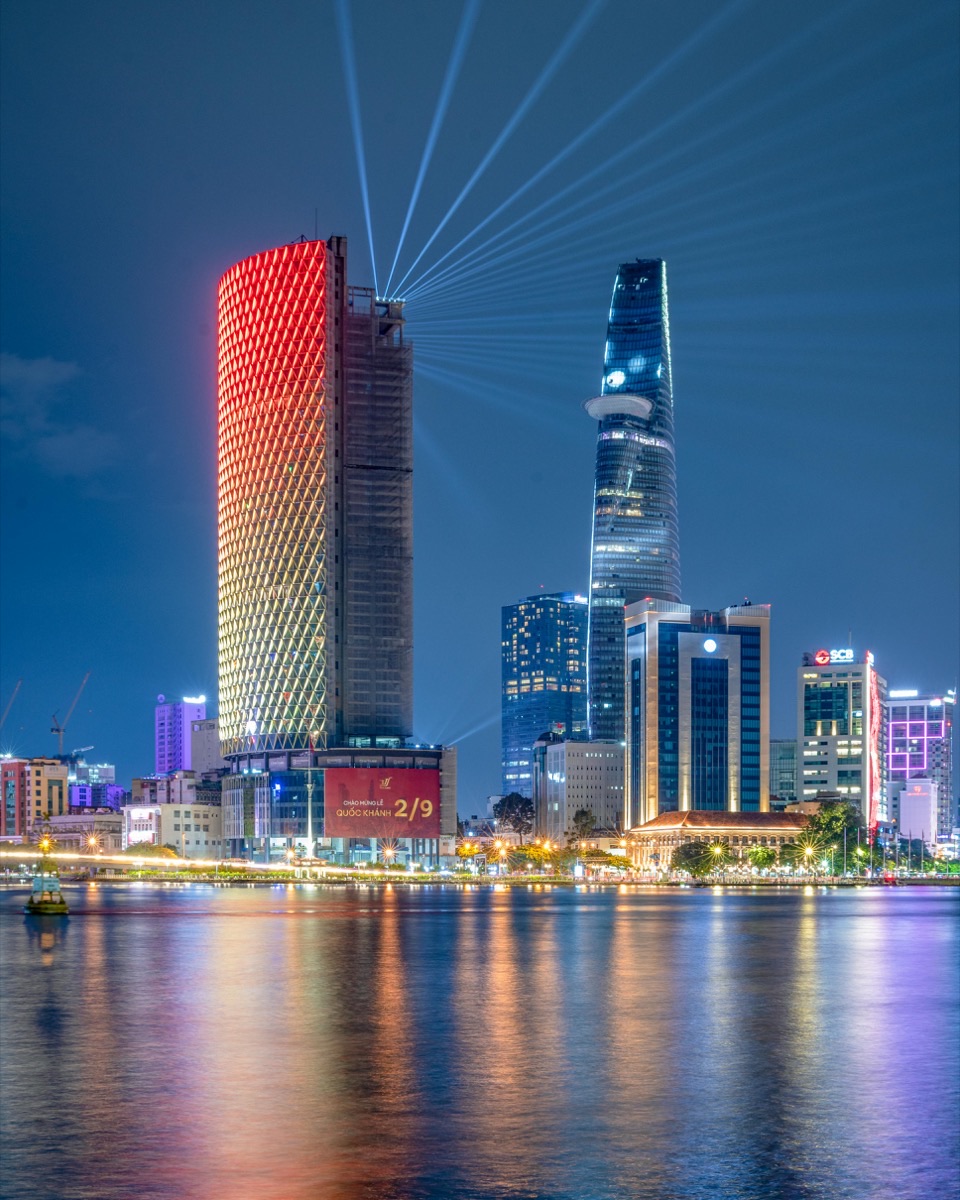
Explore Ben Thanh Market (free entry) — Saigon's most iconic market since 1912. Haggle for souvenirs, lacquerware, Vietnamese coffee, conical hats, and dried fruits. Rule: counter-offer at 40% of the asking price and negotiate from there. Then head to Chợ Lớn (Chinatown) in District 5 — visit Bình Tây Market (the real wholesale market, less touristy than Ben Thanh) and the ornate Thiên Hậu Temple (free, built 1760) with spiraling incense coils hanging from the ceiling.
Vietnamese coffee is among the best in the world. For your farewell cup, try The Workshop (27 Ngô Đức Kế, District 1) — specialty third-wave Vietnamese coffee (60,000–90,000 VND) on a gorgeous rooftop floor. Or keep it street-level: cà phê sữa đá (iced coffee with condensed milk) from any sidewalk stall for 20,000 VND.
Tan Son Nhat Airport (SGN) is only 7km from District 1 but Saigon traffic can be brutal. Allow 45–60 minutes by Grab (150,000–200,000 VND). For international flights, arrive 3 hours early — the airport is notoriously slow at immigration. Last-minute shopping: pick up Vietnamese coffee beans (Trung Nguyen brand, from any supermarket or convenience store, 60,000–100,000 VND for 500g) as gifts.
🌤️ Seasonal Guide: When to Visit Vietnam
Vietnam spans 1,650km north to south with dramatically different climates. There's no single "best time" — it depends on which region you prioritize.
Best Overall: October–December
Dry season in central Vietnam (Hue, Hoi An, Da Nang), cool and pleasant in the north (Hanoi 18–25°C), and dry in the south. This is the sweet spot for a north-to-south trip. Prices are reasonable and crowds are manageable.
North Vietnam (Hanoi, Ha Long Bay, Sapa)
Best: October–December (cool, dry, 18–25°C) and March–April (warm spring). Avoid: June–August is hot and humid (35°C+) with heavy rain. January–February can be surprisingly cold (10–15°C) — bring layers.
Central Vietnam (Hue, Hoi An, Da Nang)
Best: February–May (dry, warm, great beach weather). Avoid: October–November is peak typhoon/flooding season — Hoi An can literally flood. September–December brings heavy rain.
South Vietnam (Ho Chi Minh City, Mekong Delta)
Best: December–April (dry season, 28–35°C). Wet season: May–November brings daily afternoon downpours (usually 1–2 hours, then clears). It's still very travelable — just carry a rain poncho.
Tet (Vietnamese New Year) — Late January/Early February
Vietnam's biggest holiday. Many businesses close for a week. Transport is packed and prices spike. The country is festive and beautifully decorated, but it's not ideal for first-time travelers. Book everything months ahead if you go during Tet.
📝 Backpacker Tips That Actually Matter
Money & Haggling
- Always carry small bills. Street vendors often "don't have change" for 500,000 VND notes. Break big bills at convenience stores or restaurants first.
- Haggling is expected at markets and with motorbike taxis (not Grab). Start at 40–50% of the asking price. Be friendly, smile, and walk away if they won't budge — they'll often call you back.
- The 0-counting trap: Vietnamese dong has lots of zeros. Double-check bills — 500,000 VND and 20,000 VND notes look similar in dim light. Some scam artists "accidentally" give wrong change.
- Tipping: Not expected but appreciated. Round up at restaurants. Tip tour guides 50,000–100,000 VND for a half-day tour.
Motorbike Tips
- Renting: Semi-automatic Honda Wave or Yamaha Sirius (100,000–150,000 VND/day). Honda XR150 for longer routes (200,000–300,000 VND/day). Leave a photocopy of your passport as deposit, never the original.
- Crossing the street: Vietnam's #1 tourist panic moment. Walk slowly and steadily across the road. Don't stop, don't run, don't look back. Traffic flows around you like water around a rock. Seriously — this works.
- Helmet law: Always wear one. Police fine foreigners 100,000–200,000 VND for no helmet. Your rental should include one.
- Fuel: Look for roadside stalls selling petrol in glass bottles or Jack Daniel's bottles (yes, really). ~25,000 VND/liter. Filling stations exist in cities.
Food & Drink
- Street food is safe. Eat where locals eat — high turnover means fresh food. If a stall has a queue of Vietnamese people, it's good. Avoid empty stalls.
- Ice is fine in cities. Tubular or cylindrical ice (produced industrially) is safe. Avoid irregular hand-chipped ice in very rural areas.
- Vietnamese coffee is strong — cà phê sữa đá (iced with condensed milk) is the default order. Don't miss egg coffee in Hanoi and coconut coffee in Hoi An.
- Learn these food names: phở (noodle soup), bún chả (grilled pork with noodles), bánh mì (baguette sandwich), cơm tấm (broken rice), gỏi cuốn (fresh spring rolls), bánh xèo (crispy pancake).
Getting Around
- Grab is essential. Use GrabBike for short trips (10,000–30,000 VND for 1–5km) and GrabCar for longer rides or rain. Always use Grab, never random motorbike taxis (xe ôm) — they overcharge foreigners.
- Sleeper buses are an experience. You get a reclining bed, blanket, and pillow. Remove shoes when boarding. Quality varies wildly — Phuong Trang (FUTA) and The Sinh Tourist are reliable operators.
- Reunification Express train: Scenic but slow. Best for Hanoi–Hue (overnight) or Hue–Da Nang (3 hours, gorgeous coastal views). Book soft sleeper 4-berth for comfort.
Customize This Itinerary
This 14-day route covers the classic north-to-south highlights, but you can easily modify it:
- Add Sapa (3 days): Before Ha Long Bay, take an overnight train from Hanoi to Lao Cai, then bus to Sapa for rice terrace trekking and homestays with Hmong communities.
- Add Phong Nha (2 days): Between Ninh Binh and Hue, detour to Phong Nha-Ke Bang National Park for the world's largest caves (Son Doong, Paradise Cave).
- Add Mekong Delta (2 days): After HCMC, take a day trip or overnight to Can Tho for floating markets, coconut candy workshops, and river life.
- Skip Ha Long Bay: If you're short on time, replace Days 3–4 with an extra day in Ninh Binh + Trang An boat tour (similar karst scenery, no cruise needed).
Packing Quick List
- Rain poncho — cheap ones everywhere (10,000 VND) but bring a good one
- Sunscreen & bug spray — essential, especially in rural areas and the beach
- Quick-dry towel — hostels often don't provide them
- Padlock — for hostel lockers
- Long pants/sleeves — required for temples and helpful for motorbike riding
- Portable battery pack — your phone is your lifeline for Grab and navigation
💰 14-Day Budget Breakdown
Vietnam is one of the cheapest countries in Southeast Asia. Budget backpackers can live like kings. All prices per person per day.
| Category | Budget Backpacker | Mid-Range | Comfort |
|---|---|---|---|
| 🏨 Accommodation | 150,000–250,000 ($6–10) | 400,000–750,000 ($16–30) | 1,000,000–2,500,000 ($40–100) |
| 🍽️ Food | 150,000–250,000 ($6–10) | 300,000–500,000 ($12–20) | 500,000–1,250,000 ($20–50) |
| 🚆 Local Transport | 50,000–100,000 ($2–4) | 100,000–250,000 ($4–10) | 250,000–500,000 ($10–20) |
| 🎟️ Activities | 50,000–150,000 ($2–6) | 150,000–400,000 ($6–16) | 400,000–1,000,000 ($16–40) |
| Daily Total | 400,000–750,000 ($16–30) | 950,000–1,900,000 ($38–76) | 2,150,000–5,250,000 ($86–210) |
14-day trip total (excluding international flights):
- Budget backpacker: $400–700 (including Ha Long Bay cruise, domestic flights, and all activities)
- Mid-range: $800–1,500
- Comfort: $1,500–3,500
Major expenses to budget separately:
- Ha Long Bay overnight cruise: $80–150
- Domestic flights (Hanoi→Hue + Da Nang→HCMC): $70–120 total
- Hai Van Pass motorbike/Easy Rider: $15–60
- Hoi An tailoring: $30–200 (optional)
❓ Frequently Asked Questions
Is 14 days enough for Vietnam?
14 days is ideal for a north-to-south route covering Hanoi, Ha Long Bay, Ninh Binh, Hue, Hoi An, and Ho Chi Minh City. You'll have time for the highlights without rushing. Three weeks would let you add Sapa, Phong Nha, or the Mekong Delta at a slower pace.
How much does a 14-day trip to Vietnam cost?
Vietnam is extremely budget-friendly. Budget backpackers can do 14 days for $400–700 total (excluding international flights). Mid-range travelers should budget $800–1,500. Street food meals cost $1–3, hostel dorms $5–10/night, and domestic flights $30–80.
Is it safe to ride a motorbike in Vietnam?
Vietnam traffic is chaotic but has its own flow. If you're an experienced rider, renting a semi-automatic scooter (100–125cc) is the best way to explore. Always wear a helmet, get travel insurance that covers motorbike accidents, and start in quieter areas before tackling city traffic. If you're not comfortable, use Grab (Southeast Asia's Uber) for motorbike taxis instead.
Do I need a visa for Vietnam?
Most nationalities need a visa. The e-visa (available for 80+ countries) costs $25 and allows 90 days single entry. Apply online at the official Vietnam Immigration Portal at least 5 business days before travel. Some nationalities (UK, Germany, France, Italy, Spain, Japan, South Korea) get 45-day visa-free entry.
What's the best way to travel between cities in Vietnam?
For long distances (Hanoi to Hue, Hoi An to HCMC), take budget flights on VietJet Air or Bamboo Airways ($30–80). The Reunification Express train is scenic but slow (Hanoi to Hue is 13 hours). Sleeper buses are the budget option for medium distances. Book trains on dsvn.vn and buses on 12go.asia or Baolau.
Is Vietnam safe for solo travelers and backpackers?
Vietnam is very safe for travelers. Violent crime against tourists is rare. The main risks are petty theft (watch bags in crowds and on motorbikes), traffic accidents, and scams (always agree on prices before services). Use Grab for fair taxi fares. Solo female travelers generally report feeling safe, though standard precautions apply.
This itinerary was researched and built by tabiji.ai, which creates personalized travel itineraries from real traveler data. Get your own custom itinerary — tailored to your dates, budget, and interests — for $1 at tabiji.ai.