⚡ Before You Go — Essential Logistics
Domestic Flights
Book Bogotá → Armenia (Coffee Region) and Pereira → Cartagena on Avianca or LATAM. Fares from COP 120,000–250,000 (~$30–60) one-way if booked 2–4 weeks ahead. Carry-on-only saves money on budget fares.
Currency (COP)
Colombian Peso. $1 USD ≈ COP 4,200 (2026). Withdraw from Bancolombia or Davivienda ATMs (lower fees). Credit cards accepted at most restaurants and shops in cities. Cash essential in small towns and markets.
SIM Card / eSIM
Buy a Claro or Movistar SIM at the airport (COP 30,000–50,000 for 10GB). Or get an Airalo eSIM before arrival (~$10 for 5GB). Data coverage is good in cities; spotty in Coffee Region mountains.
Safety
Use Uber, InDriver, or DiDi — not street hail taxis. Keep phones in front pockets. Don't wear flashy jewelry. Avoid walking alone after dark in unfamiliar areas. Tourist zones are well-patrolled and safe.
Altitude
Bogotá sits at 2,640m (8,660 ft). You'll feel it — headaches, shortness of breath. Hydrate heavily, avoid alcohol the first day, and take it slow. Coca tea helps. The Coffee Region (1,500m) and Cartagena (sea level) are fine.
Language
Spanish is essential outside tourist areas. Download Google Translate offline Spanish pack. Learn: por favor (please), gracias (thanks), ¿cuánto cuesta? (how much?), la cuenta (the bill). Colombians speak clearly — great for learners.
📋 7 Days at a Glance
| Days | Destination | Highlights |
|---|---|---|
| 1–2 | Bogotá | La Candelaria, Museo del Oro, Monserrate, Zipaquirá Salt Cathedral, Andrés Carne de Res |
| 3–4 | Coffee Region | Cocora Valley wax palms, Salento, coffee farm tour, Filandia viewpoint |
| 5–7 | Cartagena | Walled city, Getsemaní street art, Rosario Islands, ceviche, sunset on the wall |
Getting between regions: Fly Bogotá → Armenia/Pereira (45 min, ~COP 150,000). Fly Pereira → Cartagena (1.5 hr, ~COP 200,000). Domestic flights are the way to go — bus routes through the Andes take 8–10 hours.
Arrival + Historic Bogotá
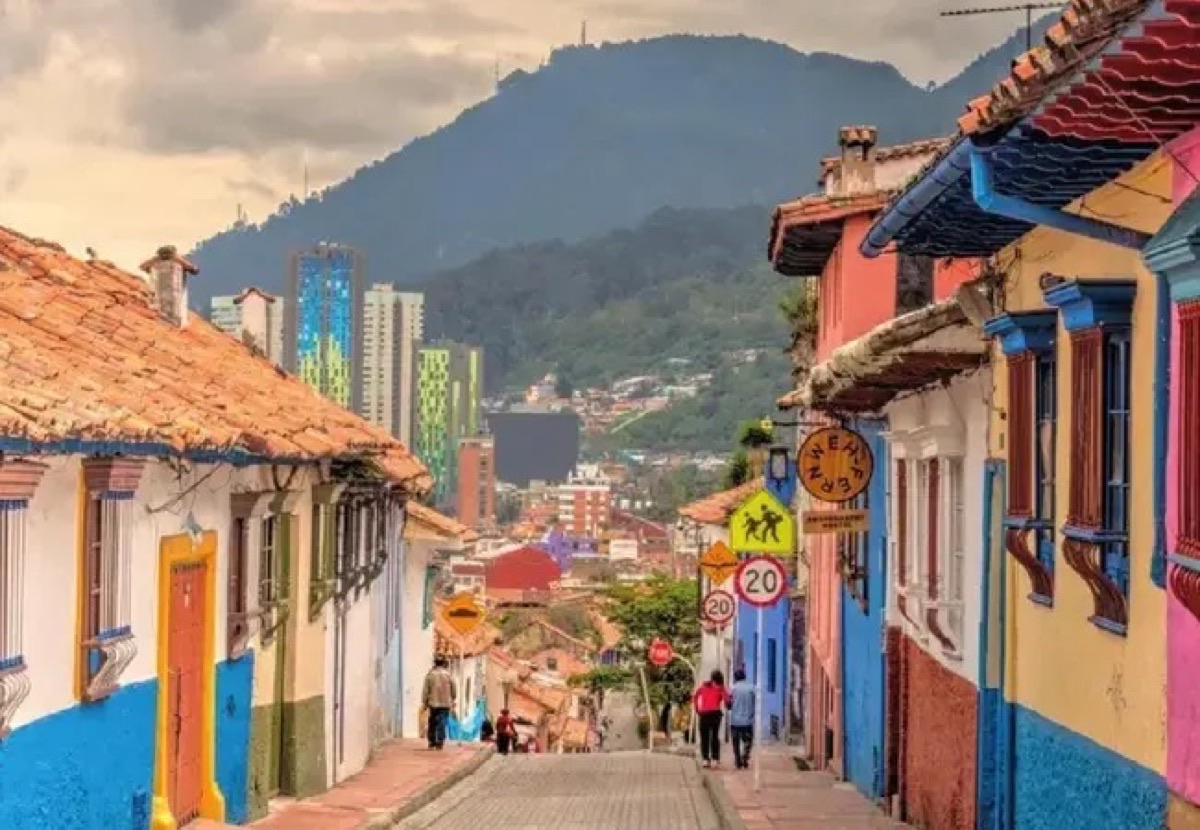
Arrive at El Dorado International Airport (BOG). Take an Uber or official airport taxi to La Candelaria or Chapinero (45–60 minutes depending on traffic, COP 25,000–40,000 by Uber).
Check into your hotel. Take it easy — you're at 2,640 meters. Drink water, have coca tea, and avoid heavy meals or alcohol today.
Walk through La Candelaria, Bogotá's colonial heart. Start at Plaza Bolívar — flanked by the Cathedral, Congress building, and Palace of Justice. Walk to the Museo del Oro (Gold Museum, COP 5,000 / ~$1.20) — one of the most impressive museums in South America with 55,000+ pre-Columbian gold artifacts. Allow 1.5–2 hours.
Continue to the Museo Botero (free) next door — featuring Fernando Botero's famously rotund sculptures and paintings, plus works by Picasso, Dalí, and Monet.
Dinner in La Candelaria. Try ajiaco — Bogotá's signature chicken and potato soup with capers, cream, and avocado (COP 18,000–28,000). La Puerta Falsa (open since 1816) near Plaza Bolívar serves the classic version. Walk the graffiti-lined streets — Bogotá's street art scene is world-class.
Mountain Views & the Underground Cathedral
Take the funicular or cable car up Cerro de Monserrate (COP 25,000 round trip) — a 3,152-meter peak overlooking all of Bogotá. The panoramic views of the sprawling city against the Andes are jaw-dropping. There's a church at the top and a couple of restaurants. Go early (opens at 6:30 AM on weekdays) for clear skies — clouds roll in by afternoon.
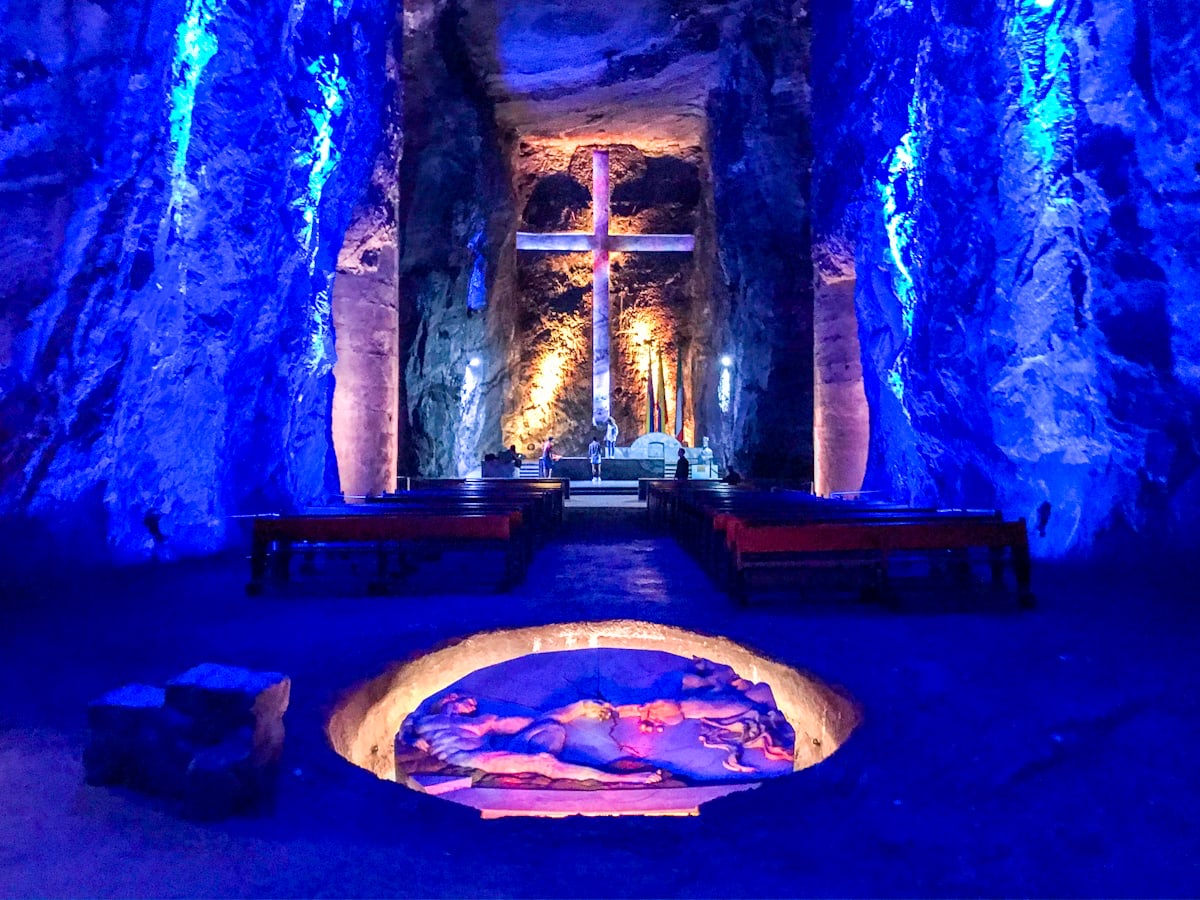
Take a TransMilenio bus + colectivo to Zipaquirá (1.5 hours, COP 8,000) or book a shared tour (COP 60,000–80,000 including transport). The Salt Cathedral of Zipaquirá (COP 65,000 / ~$15) is an underground church carved 200 meters deep inside a salt mine. Massive crosses, dramatic lighting, and cathedral-sized chambers — one of Colombia's most unique attractions.
This is non-negotiable. Andrés Carne de Res in Chía (30 min north of Bogotá) is part restaurant, part nightclub, part fever dream. A multi-story madhouse of Colombian food, cocktails, live music, and dancing. Order the lomo al trapo (salt-crusted beef tenderloin, COP 65,000). Book a table in advance for weekends. Take an Uber back (~COP 35,000).
Coffee Region — Wax Palms & Mountain Villages
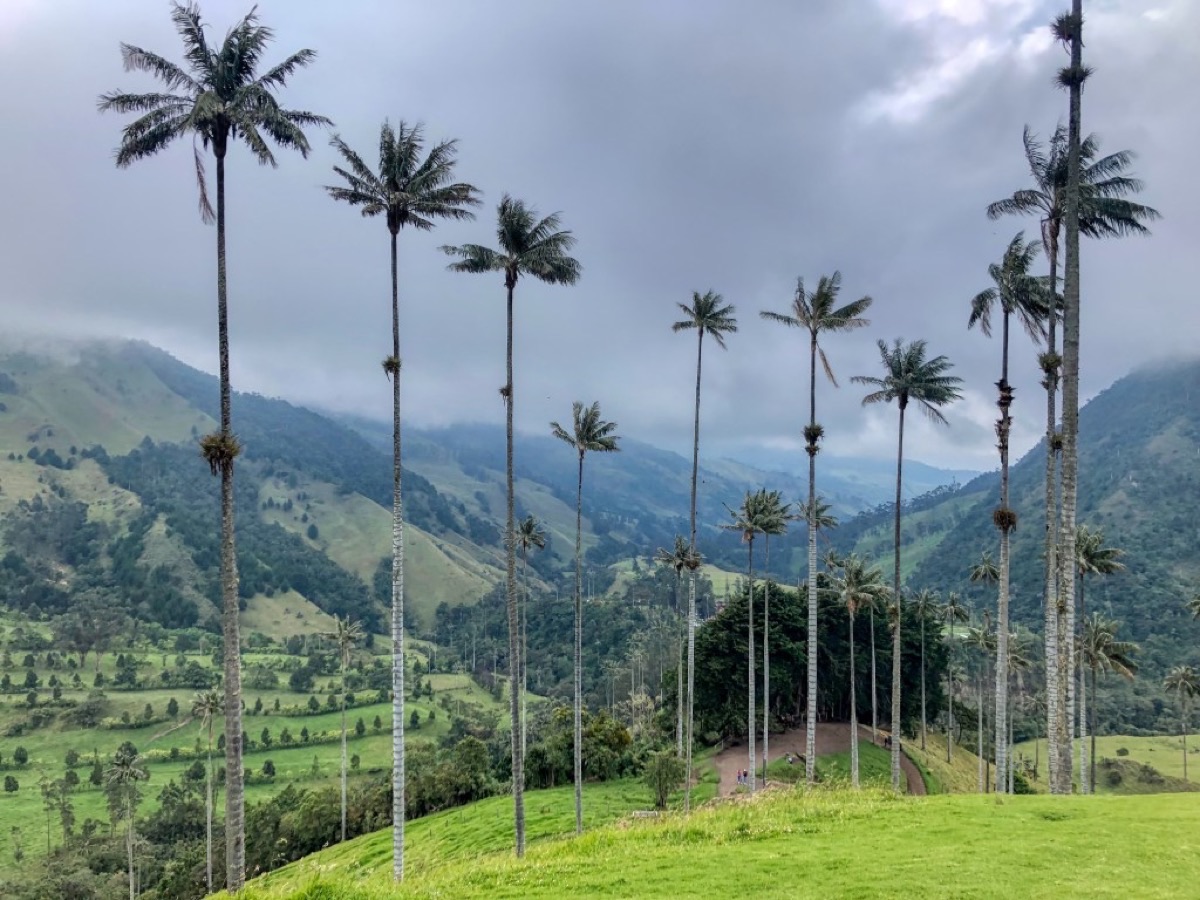
Early flight from Bogotá (BOG) to Armenia (AXM) or Pereira (PEI) — about 45 minutes. From the airport, take a colectivo or pre-arranged transfer to Salento (1–1.5 hours from Armenia, COP 10,000 by bus). Check into a hostel or finca (farmstay).
Take a Willys Jeep from Salento's main plaza to Valle de Cocora (COP 5,000, 30 minutes). Hike the loop trail (4–5 hours, moderate difficulty) through cloud forest to reach the towering wax palm trees — Colombia's national tree, growing up to 60 meters tall. The palms emerging from the mist in this valley are one of South America's most iconic landscapes.
Short option: Skip the full loop and walk 30 minutes into the valley for the classic palm-lined photo spot, then return (1.5 hours total).
Back in Salento, walk the colorful main street and try trucha (fresh trout, COP 18,000–25,000) — farmed in the mountain streams. Play tejo at a local bar — Colombia's national sport where you throw metal discs at gunpowder-packed targets. Yes, they explode. Beer costs COP 5,000–7,000.
Coffee Farms & the Prettiest Town in Colombia
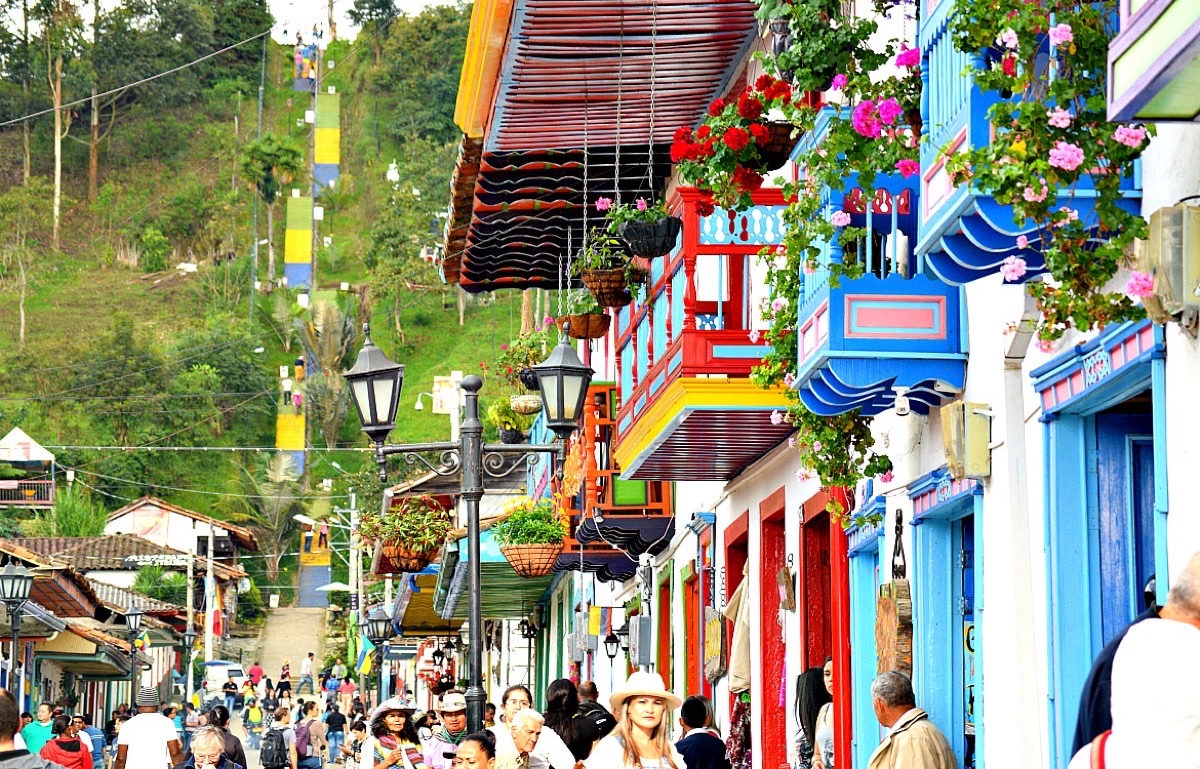
Book a coffee farm tour from Salento. Finca El Ocaso (COP 30,000, 2 hours) or Don Elías (COP 25,000) are the most popular — both are small family-run farms. You'll learn the full process: picking, processing, roasting, and cupping. Buy beans direct (COP 15,000–25,000 per bag). Colombian coffee tastes different at origin — smoother, less bitter, with fruit notes you've never noticed before.
Take a colectivo to Filandia (30 minutes, COP 5,000) — a quieter, less touristy pueblo with candy-colored colonial buildings. Walk to the Mirador de Filandia viewpoint for sweeping views of the coffee-covered mountains. Browse the artisan basket weavers at the Cestería workshops — Filandia is famous for colorful woven baskets.
Grab coffee at Helena Adentro — one of the region's best specialty coffee shops (COP 6,000–10,000 per cup).
Final night in Salento. Try patacones con hogao (fried plantain with tomato-onion sauce, COP 8,000–12,000) and a local aguardiente (anise liquor, COP 5,000 per shot — Colombians drink it straight).
Cartagena — The Walled City
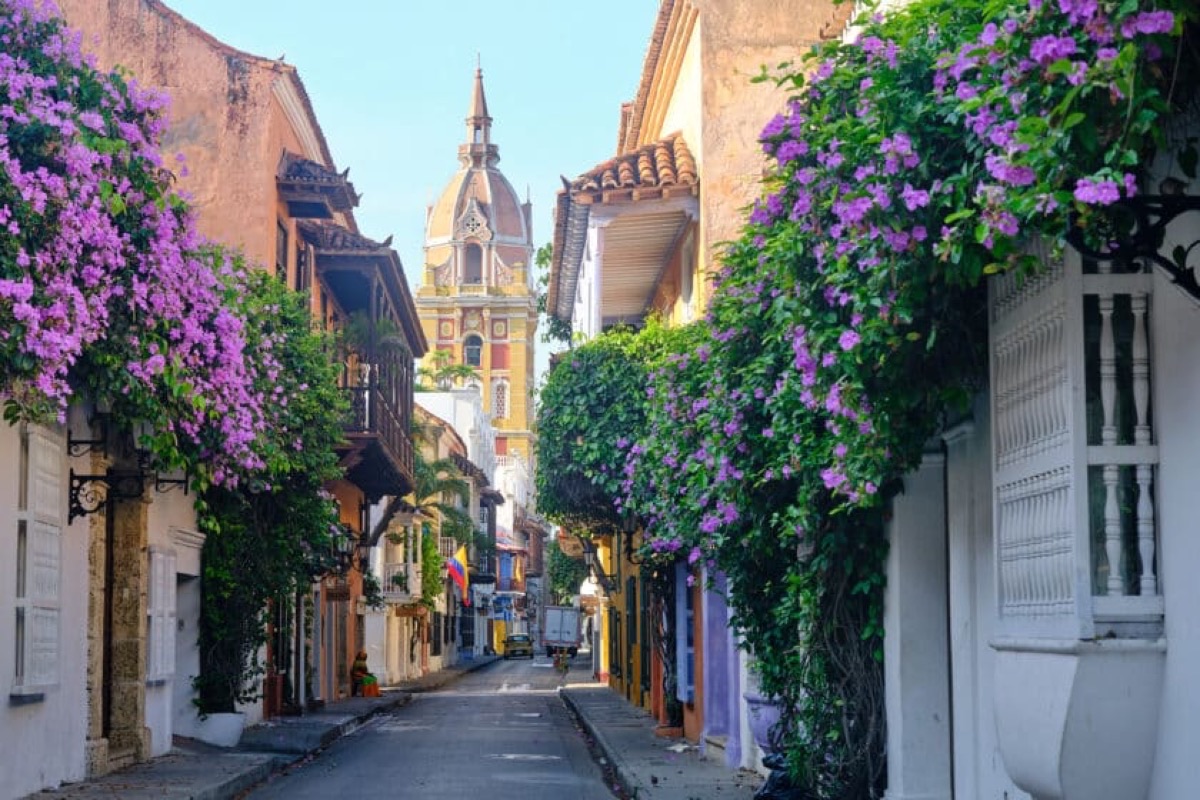
Fly from Pereira (PEI) to Cartagena (CTG) — about 1.5 hours. Uber from the airport to the walled city (COP 15,000–25,000, 15 minutes). Check into your hotel — stay inside or near the walled city (Centro Histórico) or Getsemaní for the best experience.
Explore Ciudad Amurallada (the Walled City) on foot. Start at Torre del Reloj (Clock Tower) and walk through the plazas:
- Plaza de los Coches — the old slave market, now lined with sweet stalls
- Plaza Santo Domingo — Botero's reclining sculpture, surrounded by restaurants
- San Pedro Claver Church (COP 15,000) — beautiful colonial church and museum
- Las Bóvedas — former dungeons turned artisan shops along the sea wall
The city is best explored by wandering — every balcony drips with bougainvillea, every corner reveals a new color.
Walk the city walls (murallas) at sunset — the stretch from Baluarte de Santo Domingo to Café del Mar offers stunning views of the Caribbean. Grab a cocktail at Café del Mar (COP 30,000–45,000 per drink — tourist prices, but the sunset is worth it once). For dinner, try ceviche from the street vendors in Plaza de la Trinidad in Getsemaní (COP 10,000–15,000) — fresh, citrusy, and incredible.
Café Havana in Getsemaní — live salsa music every night. This tiny bar packs in locals and tourists dancing to a full salsa band. No cover on weeknights; COP 20,000–30,000 cover on weekends. Even if you can't dance, go — the energy is infectious.
Rosario Islands — Caribbean Paradise
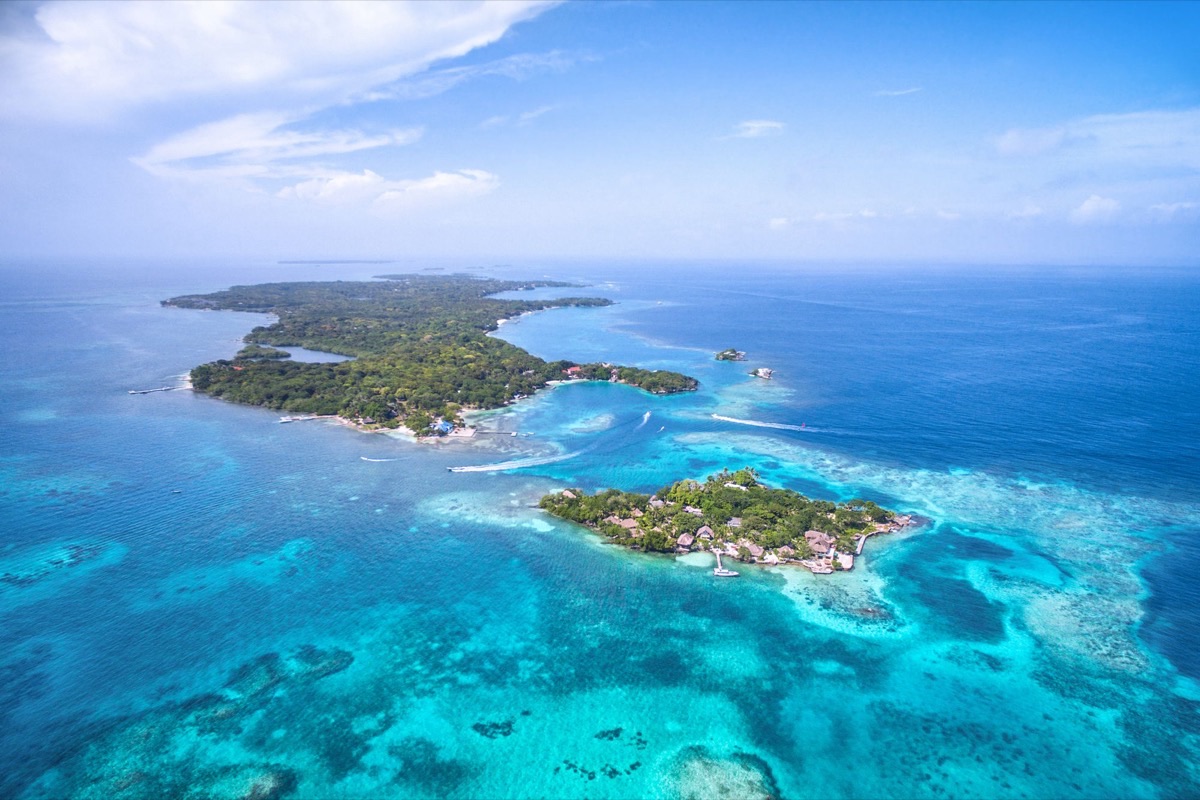
Book a boat trip to the Islas del Rosario from the Muelle de los Pegasos dock (COP 80,000–150,000 per person for a full-day group tour including lunch, or COP 300,000+ for a private boat). The ride is 45 minutes through turquoise Caribbean water.
- Snorkeling at coral reefs — equipment usually included in tours (COP 20,000 if not). The water is warm and clear with tropical fish, sea fans, and small reef sharks.
- Playa Blanca on Isla Barú — white sand, palm trees, incredibly blue water. It gets crowded midday — enjoy it early or stay late.
- Isla Grande — mangrove channels, a bioluminescent plankton lagoon (best seen at night on overnight stays), and quieter beaches.
- Lunch is typically fresh fried fish, coconut rice, patacones, and salad — included in most tours.
Back in Cartagena by 4–5 PM. Shower and head to Getsemaní for street food: arepas de huevo (egg-stuffed corn cakes, COP 3,000), fresh fruit from street carts (COP 5,000), and limonada de coco (coconut lemonade, COP 5,000). Walk the murals and street art — Getsemaní is Cartagena's artistic soul.
Getsemaní, Street Art & Departure
Visit Castillo San Felipe de Barajas (COP 33,000) — the largest Spanish fortress in the Americas, built in 1536. Explore the underground tunnels designed so any whisper could be heard by sentries. The views from the top over Cartagena and the sea are spectacular. Go early to beat the heat.
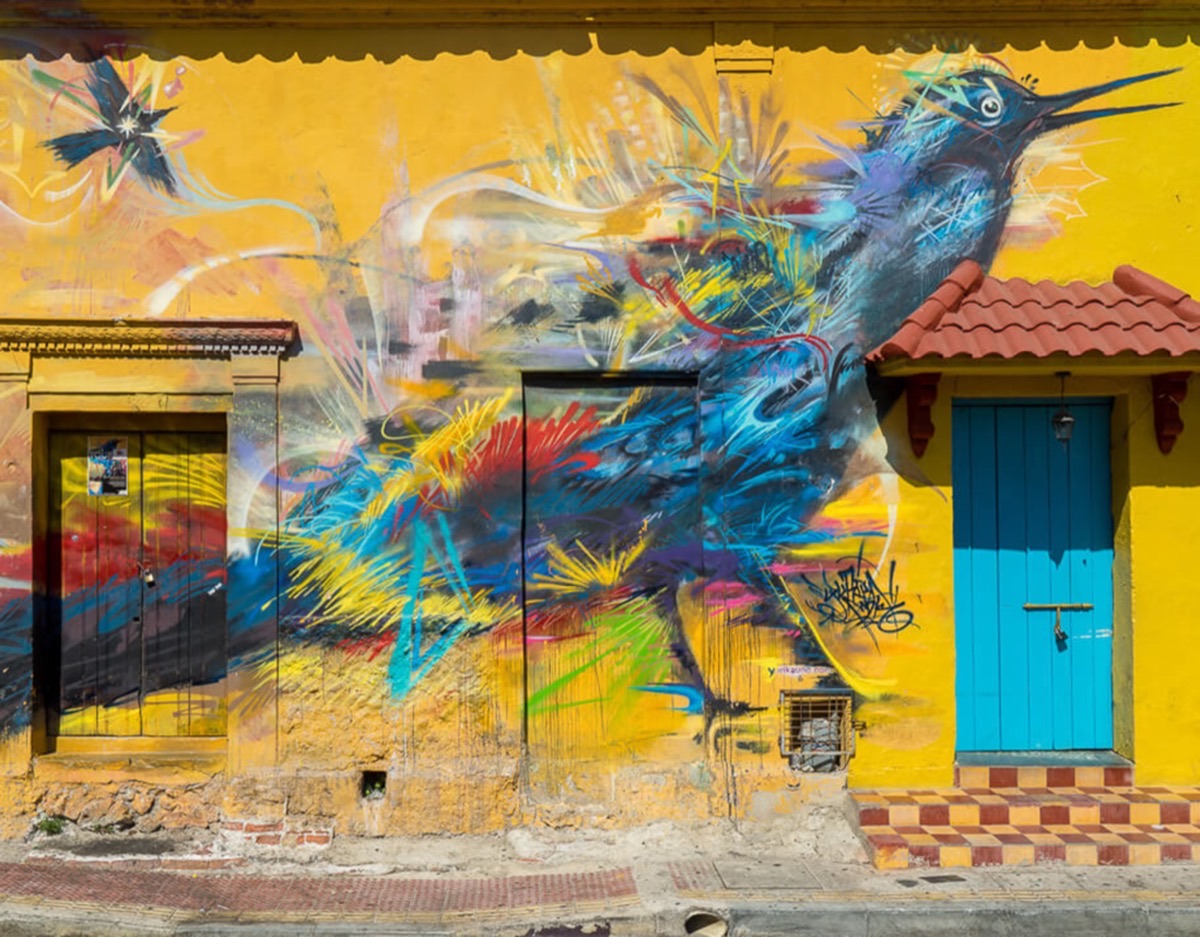
Take a free walking tour of Getsemaní (tip-based, COP 20,000–40,000 per person). This formerly rough neighborhood is now Cartagena's coolest barrio — every wall is covered in vibrant murals by Colombian and international artists. Visit Plaza de la Trinidad where locals gather nightly, and the colorful Calle de la Sierpe.
If you want the real Cartagena, visit Mercado de Bazurto — a chaotic, overwhelming, authentic local market where cartageneros actually shop. Fresh tropical fruits you've never seen, whole fish, street food stalls with the city's best arroz con coco (coconut rice). Go with a guide or local — it's safe but confusing to navigate alone.
Fly from Rafael Núñez Airport (CTG). The airport is just 15 minutes from the walled city by Uber (COP 12,000–18,000). International flights connect through Bogotá, Miami, Fort Lauderdale, or Panama City.
🌤️ Seasonal Guide: When to Visit Colombia
Colombia straddles the equator — there are no traditional seasons, just wet and dry periods that vary by region.
Dry Season — December to March
The most popular time. Clear skies in most regions, perfect for hiking Cocora Valley and beach days in Cartagena. Christmas and New Year (mid-December to mid-January) see higher prices and domestic tourist crowds. Best overall window: January–February.
Shoulder Season — April to June
Rainy season begins, but showers are typically afternoon bursts — mornings are clear. Fewer tourists, lower prices, lush green landscapes. The Coffee Region is beautiful (and always somewhat rainy). Good value pick.
Mid-Year Dry — July to August
A second dry window, coinciding with Colombian school holidays. Good weather but domestic tourism picks up. Cartagena is hot (33°C+) but festive.
Rainy Season — September to November
Wettest months across most of Colombia. Cartagena can see heavy downpours. Coffee Region trails get muddier. But prices are lowest, crowds are minimal, and the country is lush. Best avoided if you're prioritizing outdoor activities.
Regional Temperature Guide
- Bogotá: 12–18°C (54–64°F) year-round — bring layers, it feels like perpetual spring
- Coffee Region: 18–24°C (64–75°F) — pleasant, cool evenings
- Cartagena: 30–33°C (86–91°F) — hot and humid always, slightly cooler Dec–Feb
📝 Colombia Travel Tips That Actually Matter
Safety & Common Sense
- Use ride apps (Uber, InDriver, DiDi) — not street hail taxis, especially at night. In some cities, "paseo millonario" (millionaire's ride) scams still occur with unregistered taxis.
- Don't flash electronics or jewelry. Use your phone discreetly. Keep bags zipped and in front of you in crowded areas.
- Scopolamine ("devil's breath") — don't accept food, drinks, or cigarettes from strangers. This is rare in tourist areas but worth knowing about.
- Bogotá's La Candelaria is safe during the day but stick to main streets after dark. Chapinero and Zona T are safer nightlife areas.
- Trust your instincts. Colombia is far safer than its reputation suggests — millions of tourists visit without incident. Basic street smarts (same as any major city) are enough.
Money
- Withdraw COP from ATMs — Bancolombia machines have the best rates and lowest fees. Withdraw in larger amounts to minimize per-transaction fees (COP 500,000–1,000,000 at a time).
- Haggling is expected at markets and with street vendors but not in restaurants or shops with posted prices.
- Tipping: Most restaurants add a 10% "propina" (tip) to the bill. They'll ask "¿desea incluir el servicio?" — say yes unless service was poor. No additional tip needed.
- Budget travelers: Set menus (almuerzo corriente / menú del día) at local restaurants cost COP 12,000–18,000 and include soup, main course, drink, and dessert. Incredible value.
Getting Around
- Domestic flights: Book on Avianca or LATAM. Former Viva Air routes are now under Avianca. One-way flights between major cities cost COP 100,000–300,000 ($25–70).
- Buses: Comfortable and cheap for intercity travel, but slow due to mountain roads. Bogotá to Salento by bus is 8+ hours. Fly if you can.
- In Bogotá: TransMilenio (BRT system) is cheap but crowded. Uber is easiest. Traffic is brutal — allow extra time.
- In Cartagena: Walk the walled city. Uber for anything beyond the old town.
Food & Drink
- Must-try dishes: Ajiaco (Bogotá soup), bandeja paisa (Medellín-style platter), arepas de huevo, ceviche de camarón, patacones, empanadas (COP 2,000–4,000 from street carts — the best ones).
- Coffee: Colombia exports its best beans. Ask for "café especial" or visit specialty shops — generic "tinto" (street coffee) is weak and sugary.
- Tropical fruits: Try lulo, guanábana, maracuyá (passion fruit), and feijoa at any juice stand (COP 3,000–6,000).
- Tap water: Safe to drink in Bogotá. Stick to bottled water in Cartagena and smaller towns.
Packing Quick List
- Layers for Bogotá — it's colder than you expect at altitude
- Rain jacket — it will rain somewhere on your trip
- Waterproof hiking boots — essential for Cocora Valley
- Reef-safe sunscreen — the Caribbean sun is brutal
- Mosquito repellent — for Cartagena and the islands
- Photocopy of passport — carry the copy, leave the original locked up
💰 7-Day Budget Breakdown
Per-person daily estimates in COP and USD. Colombia is extraordinarily affordable — your money goes very far here.
| Category | Budget | Mid-Range | Comfort |
|---|---|---|---|
| 🏨 Accommodation | COP 40,000–70,000 ($10–17) | COP 150,000–300,000 ($36–71) | COP 400,000–800,000 ($95–190) |
| 🍽️ Food | COP 30,000–50,000 ($7–12) | COP 60,000–100,000 ($14–24) | COP 120,000–250,000 ($29–60) |
| 🚕 Transport | COP 15,000–30,000 ($4–7) | COP 30,000–60,000 ($7–14) | COP 60,000–120,000 ($14–29) |
| 🎟️ Activities | COP 20,000–40,000 ($5–10) | COP 50,000–100,000 ($12–24) | COP 100,000–250,000 ($24–60) |
| Daily Total | COP 105,000–190,000 ($25–45) | COP 290,000–560,000 ($69–133) | COP 680,000–1,420,000 ($162–338) |
7-day trip total (excluding international flights):
- Budget: COP 735,000–1,330,000 ($175–317) + domestic flights ~COP 350,000 ($83)
- Mid-range: COP 2,030,000–3,920,000 ($483–933) + domestic flights ~COP 500,000 ($119)
- Comfort: COP 4,760,000–9,940,000 ($1,133–2,367) + domestic flights ~COP 700,000 ($167)
❓ Frequently Asked Questions
Is 7 days enough for Colombia?
Seven days lets you experience three distinct regions — the highland capital Bogotá, the lush Coffee Region, and Caribbean Cartagena. You won't see everything, but you'll get a rich, diverse introduction. Two weeks would let you add Medellín, Tayrona National Park, or San Andrés Island.
How much does a 7-day trip to Colombia cost?
For a mid-range traveler, budget approximately $800–1,200 per person excluding international flights. Colombia is one of the most affordable destinations in South America. Budget travelers can manage $400–600 (hostels, street food, local transport). Comfort travelers should budget $1,500–2,500. See the detailed budget breakdown above.
Is Colombia safe for tourists?
Colombia has transformed dramatically. Tourist areas in Bogotá, the Coffee Region, and Cartagena are generally safe. Use common sense: avoid flashing expensive jewelry, use registered taxis or Uber/InDriver, stay in well-traveled neighborhoods, and don't walk alone late at night in unfamiliar areas. Petty theft is the main concern — violent crime targeting tourists is rare.
Do I need to speak Spanish in Colombia?
Basic Spanish helps enormously. Outside tourist hotspots, English is very limited. Download Google Translate offline Spanish and learn key phrases. Colombians are incredibly patient and helpful with language barriers. In Cartagena's tourist areas and upscale Bogotá hotels, you'll find more English speakers.
What's the best way to get between cities in Colombia?
Domestic flights are cheap and fast — Bogotá to Armenia (Coffee Region) is 45 minutes, Pereira to Cartagena about 1.5 hours. Book on Avianca or LATAM 2–4 weeks ahead for best prices. Buses are comfortable but distances are long due to mountainous terrain (Bogotá to Salento is 8+ hours by bus vs. 45 minutes by air).
When is the best time to visit Colombia?
Colombia has no true winter or summer — just wet and dry periods. Dry seasons (December–March and July–August) are ideal for most regions. Cartagena is hot year-round (30–33°C). The Coffee Region is pleasant at 18–24°C. Bogotá is cool at 2,640m elevation (12–18°C) — bring layers. Shoulder months (April, September) offer fewer crowds and lower prices.
This itinerary was researched and built by tabiji.ai, which creates personalized travel itineraries from real traveler data. Get your own custom itinerary — tailored to your dates, budget, and interests — for $1 at tabiji.ai.