⚡ Before You Go — Essential Logistics
4x4 Rental Car
Book a 4x4 SUV through Vamos or Adobe Rent-a-Car ($50–80/day). Essential for unpaved roads between Arenal and Manuel Antonio. Get full coverage insurance (CDW + SLI). Pick up at SJO airport, drop off same location.
Currency (CRC)
Costa Rican Colón. $1 USD ≈ ₡530 (2026). USD is widely accepted at tourist businesses, but you'll overpay. Withdraw colones from ATMs (BAC or Banco Nacional). Cards accepted at most hotels and restaurants.
Navigation
Use Waze for driving — better real-time road data than Google Maps in Costa Rica. Download Google Maps offline as backup for areas with no cell service. Costa Rica doesn't use street addresses — directions are based on landmarks.
SIM / eSIM
Buy a Kolbi SIM at the airport (₡5,000 for 4GB) or get an Airalo eSIM before arrival (~$10 for 5GB). Coverage is good on main routes; drops in mountains between Arenal and Manuel Antonio.
Family Tips
Costa Rica is incredibly kid-friendly. Most hotels offer family rooms or cabins. Car seats aren't always available with rentals — bring your own if kids are under 4. Sunscreen and bug spray are essentials. Kids under 6 often enter national parks free.
Travel Insurance
Highly recommended for adventure activities (zip-lining, waterfall hikes). Costa Rica has good private healthcare but it's expensive without insurance. World Nomads or SafetyWing cover adventure sports. Verify your credit card's travel coverage first.
📋 7 Days at a Glance
| Days | Destination | Highlights |
|---|---|---|
| 1 | San José | Arrival, Central Market, pick up rental car |
| 2–4 | Arenal / La Fortuna | Volcano hikes, Tabacón hot springs, hanging bridges, zip-lining, La Fortuna waterfall |
| 5–7 | Manuel Antonio | National park wildlife, beaches, white-face monkeys, snorkeling, sunset catamaran |
Driving between regions: San José to La Fortuna is 3 hours via Route 141. La Fortuna to Manuel Antonio is 4.5–5 hours via the inland route (Route 1 → Route 27 → coastal). Both drives are scenic — budget extra time for photo stops and slow trucks on mountain roads.
Arrival + San José
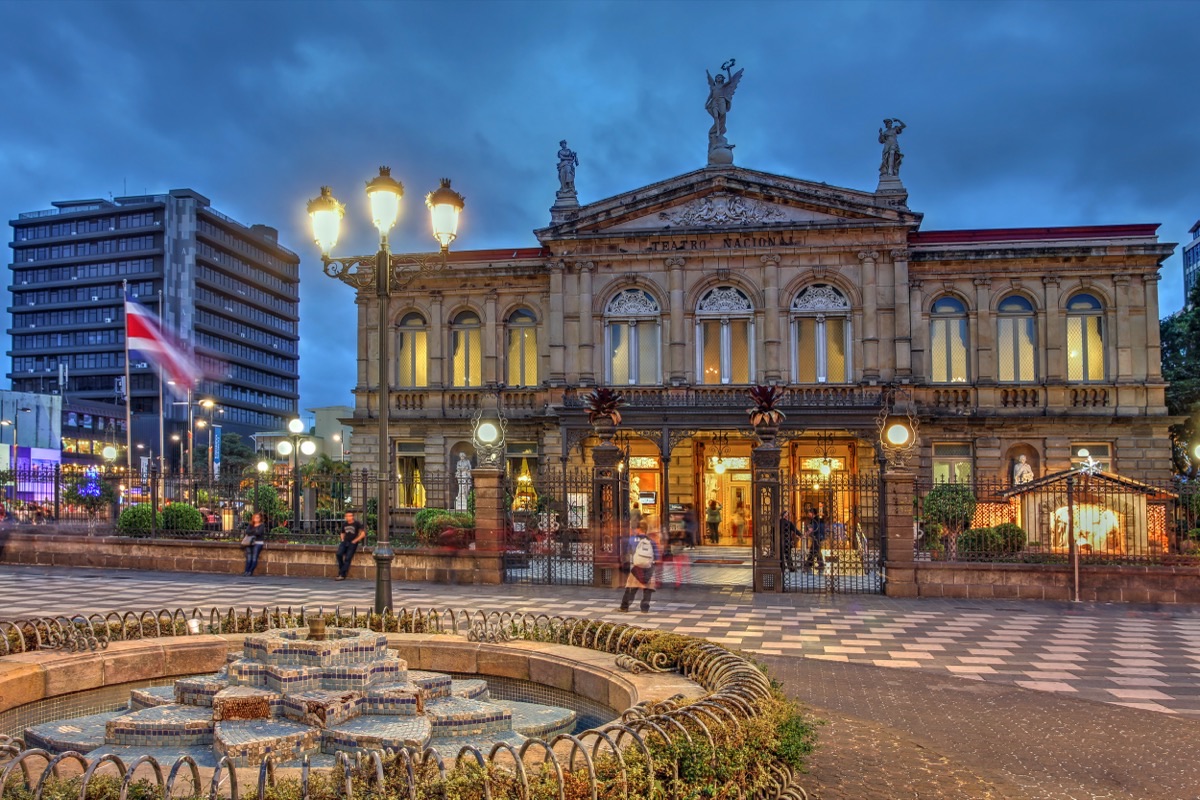
Arrive at Juan Santamaría International Airport (SJO). Pick up your 4x4 rental car at the airport — most agencies have desks in the arrivals hall. Inspection tip: photograph every scratch and dent before driving off. Insurance paperwork takes 20–30 minutes.
Drive to your hotel in San José or nearby Escazú/Santa Ana (20–40 minutes). Don't plan to drive to Arenal today — San José traffic is intense and mountain roads are dangerous after dark.
Visit Mercado Central — a bustling indoor market since 1880. Try a casado (the classic Costa Rican plate: rice, beans, plantains, salad, and your choice of protein, ₡3,500–5,000 / ~$7–9). Browse the stalls for coffee, hot sauce, and handmade leather goods. The churros from the stand near the south entrance are legendary.
With kids: visit the Museo de los Niños (Children's Museum, ₡2,000/~$4) — housed in a former fortress, with interactive science and art exhibits. Or stroll the National Museum (₡5,000 for adults, free for kids under 12) with its butterfly garden.
Dinner in Escazú — the upscale suburb with great restaurants. Restaurante Silvestre serves modern Costa Rican cuisine with foraged ingredients (₡15,000–25,000 per main). For casual family dining, Taco Bar is a reliable chain with good tacos and craft beer (₡6,000–10,000).
Waterfalls & Hot Springs
Leave San José by 7:00 AM. Drive via Route 141 through the Central Valley — the route climbs through coffee plantations and cloud forest before descending to La Fortuna. 3 hours with no stops. The last 30 minutes offers your first views of Arenal Volcano (on clear days).
Check into your hotel. La Fortuna town is the base — most accommodations are along the road between town and the volcano.
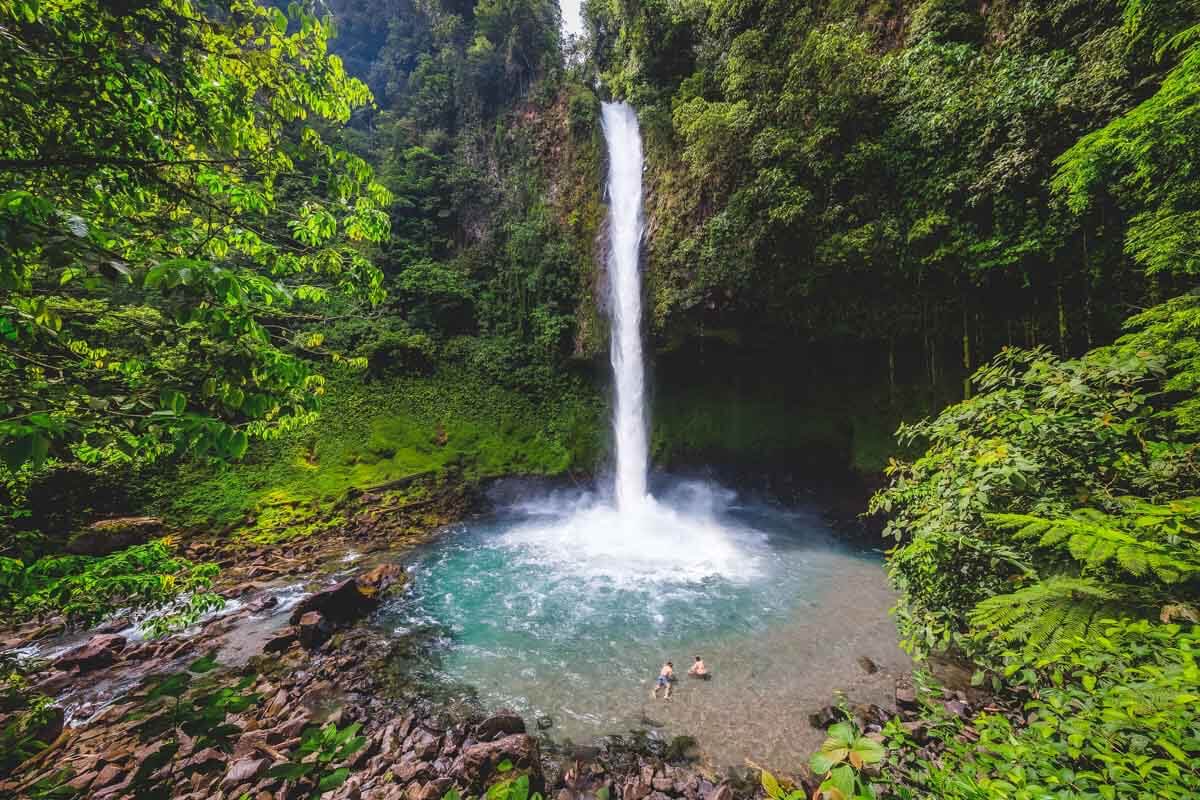
Drive 15 minutes to Catarata La Fortuna (₡9,000 adults / ₡5,000 kids / ~$17/$9). Descend 500 steps through rainforest to a 70-meter waterfall crashing into a turquoise swimming hole. The water is cool and refreshing. The climb back up is the workout — take it slow with kids. Allow 1.5–2 hours total.
The reward for the waterfall stairs: Tabacón Hot Springs (₡55,000 adults / ₡27,500 kids / ~$104/$52 for day pass). Natural volcanic hot springs flowing through a lush tropical garden with 12 pools ranging from warm to very hot. A swim-up bar serves tropical cocktails. The grand cascade — a warm waterfall you can sit under — is pure bliss.
Budget option: Locals swim for free at the Tabacón river hot springs — a public spot where hot thermal water meets the river, right across from the resort entrance. Bring a flashlight if going at night.
Treetop Adventures — Bridges & Zip-lines
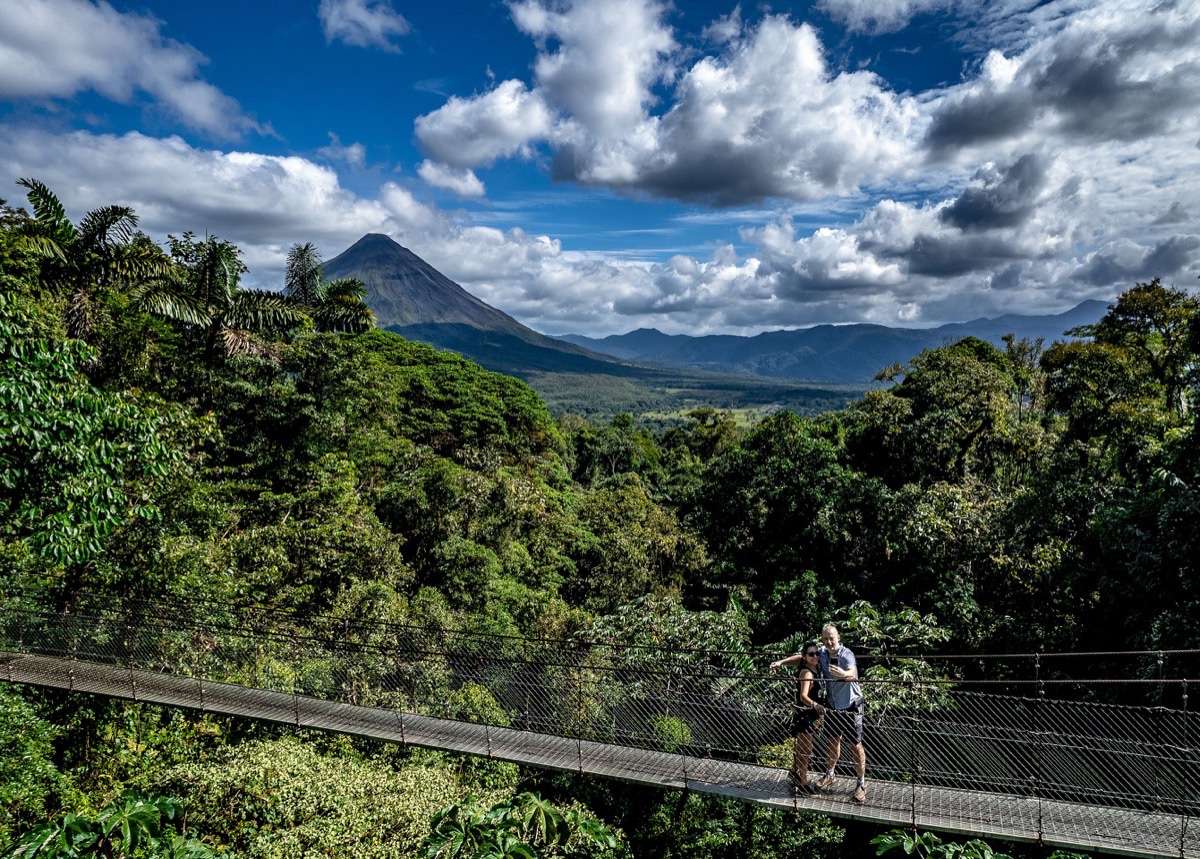
Start your day at Mistico Arenal Hanging Bridges Park (₡30,000 adults / ₡15,000 kids / ~$57/$28). A 3.1km trail through primary rainforest with 15 bridges — 6 of which are hanging bridges suspended up to 60 meters above the forest floor. You'll walk through the canopy with views of the volcano, and spot toucans, sloths, and howler monkeys.
Guided tours (₡45,000 / ~$85 per person) are worth it — guides have spotting scopes and know exactly where the sloths are. Self-guided takes 1.5–2 hours; guided takes 2.5–3 hours.
For the adrenaline hit: Arenal Sky Adventures Sky Trek (₡55,000 / ~$104 per person, minimum age 4). Seven zip-lines spanning volcanic canyons — the longest is 750 meters. Includes a Sky Tram gondola ride up with volcano views. Safe and well-maintained, with double-cable systems.
Alternative for younger kids: The Sky Tram + Sky Walk combo (₡40,000 / ~$76) skips the zip-lines and does the hanging bridges trail instead — same views, no adrenaline required.
Walk La Fortuna's main strip for dinner. Soda Viquez — a classic soda (local restaurant) with huge casados for ₡4,000 (~$8). Don Rufino is the upscale option with excellent steaks and cocktails (₡12,000–20,000 per main). Pick up souvenirs and coffee beans from the shops along the main road.
Volcano Morning + Drive to the Pacific
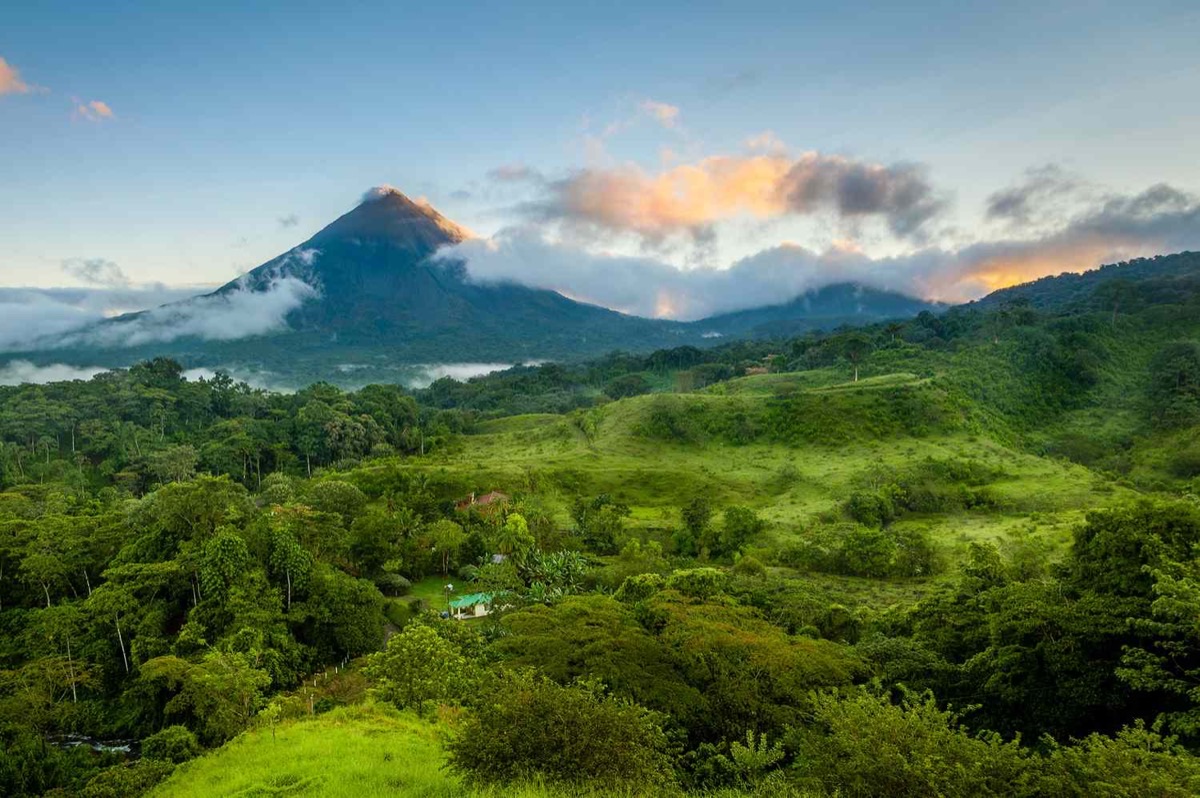
Drive to Parque Nacional Volcán Arenal (₡5,650 adults / ₡2,825 kids / ~$11/$5). Hike the Sendero Coladas (Lava Flows Trail, 3km, easy-moderate) — you'll walk over a 1992 lava flow with the volcano towering above. The Sendero El Ceibo leads to a massive ceiba tree. Morning offers the best chance of seeing the volcano without clouds (it clouds over by 10 AM most days).
Allow 2 hours for the park.
Start the 4.5–5 hour drive to Manuel Antonio. The route goes: La Fortuna → San Ramón → Route 27 → Jacó → Quepos → Manuel Antonio. The first hour is winding mountain roads (this is where 4x4 matters). Route 27 is a modern highway. The final coastal stretch from Jacó south is scenic.
Lunch stop: Jacó (2.5 hours in) has good restaurants. El Hicaco on the beach serves fresh seafood and ceviche (₡7,000–12,000).
Arrive in Manuel Antonio late afternoon. Check into your hotel — the area between Quepos and the national park is a winding hillside road with hotels at various price points.
Walk to a nearby beach to catch the Pacific sunset. Playa Espadilla (the public beach just outside the national park) is free and beautiful. Grab dinner at El Avión — a restaurant built around a 1954 Fairchild C-123 cargo plane (yes, really) with stunning ocean views and cocktails (₡10,000–18,000 per main).
Manuel Antonio National Park — Wildlife Paradise
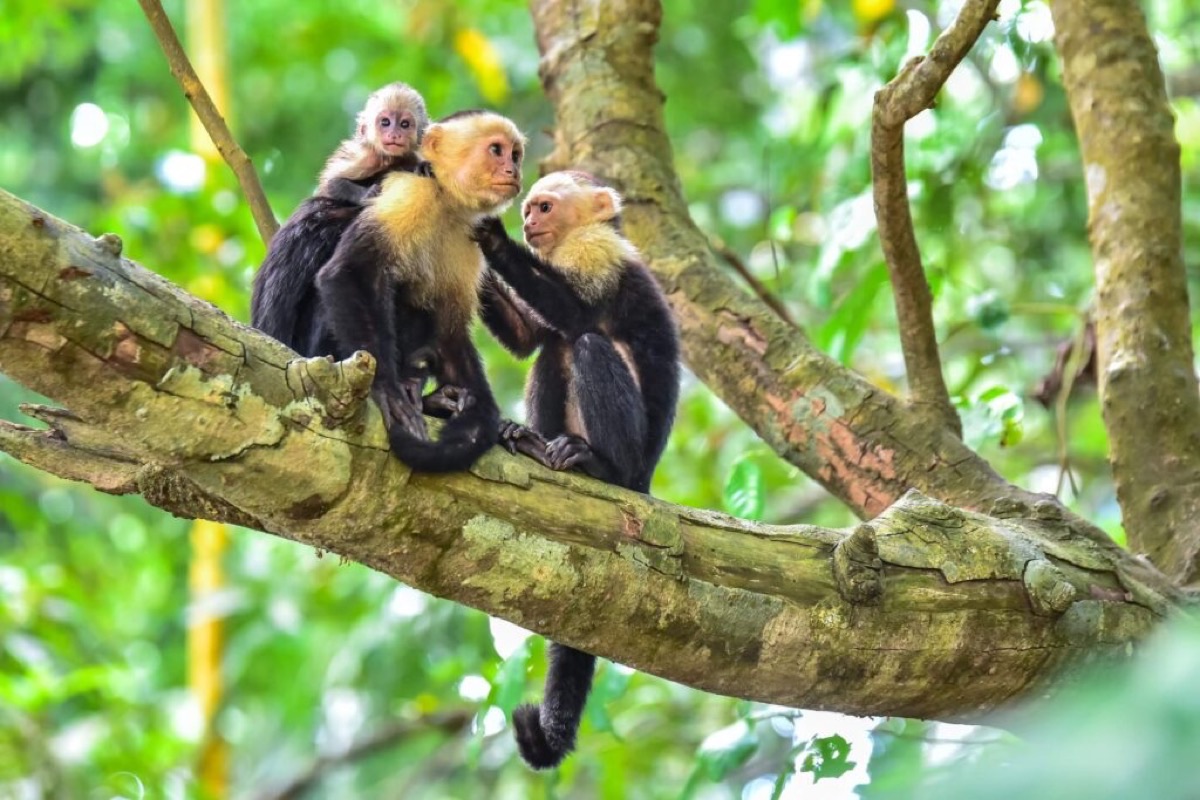
Arrive at Manuel Antonio National Park early — gates open at 7:00 AM and it's limited to 600 visitors at a time. Buy tickets online in advance at sinac.go.cr (₡9,430 adults / free for kids under 6 / ~$18). The park is closed Tuesdays.
Hire a naturalist guide at the entrance (₡15,000–20,000 per person) — absolutely worth it. They carry spotting scopes and find animals you'd walk right past: white-faced capuchin monkeys, two-toed sloths, green iguanas, Jesus Christ lizards (they run on water), and sometimes squirrel monkeys (the endangered tití mono).
The park contains some of Costa Rica's most beautiful beaches:
- Playa Manuel Antonio — a crescent of white sand in a protected cove. Calm water perfect for kids. Monkeys hang in the trees right above the beach (guard your bags — they steal food).
- Playa Espadilla Sur — longer beach, slightly less crowded, good for walks.
- Playa Gemelas — twin pocket beaches accessed by trail, often quieter.
Swim, snorkel near the rocks at the edges, and watch monkeys descend to the beach. Bring water and snacks — there are no vendors inside the park.
Exit the park by 3:00 PM (closing time is 4:00 PM). Dinner in Quepos — Gabriella's serves excellent seafood with ocean views (₡10,000–16,000). Or go casual at Emilio's Café for wood-fired pizza and craft beer (₡6,000–10,000).
Beach Day + Sunset Catamaran
Spend the morning at Playa Biesanz — a hidden gem accessible via a short trail from the road. This calm, sheltered cove has the best snorkeling in the Manuel Antonio area. Rent snorkel gear from a vendor at the trailhead (₡5,000 / ~$9). You'll see parrotfish, pufferfish, and if lucky, sea turtles. The water is warm and crystal clear. Perfect for families.
Drive into Quepos (the working town near Manuel Antonio) for lunch. Visit the Feria del Agricultor (Saturday morning farmer's market) if timing works — tropical fruits, local honey, cheese. El Patio de Café Milagro has excellent coffee drinks and light lunch (₡5,000–8,000).
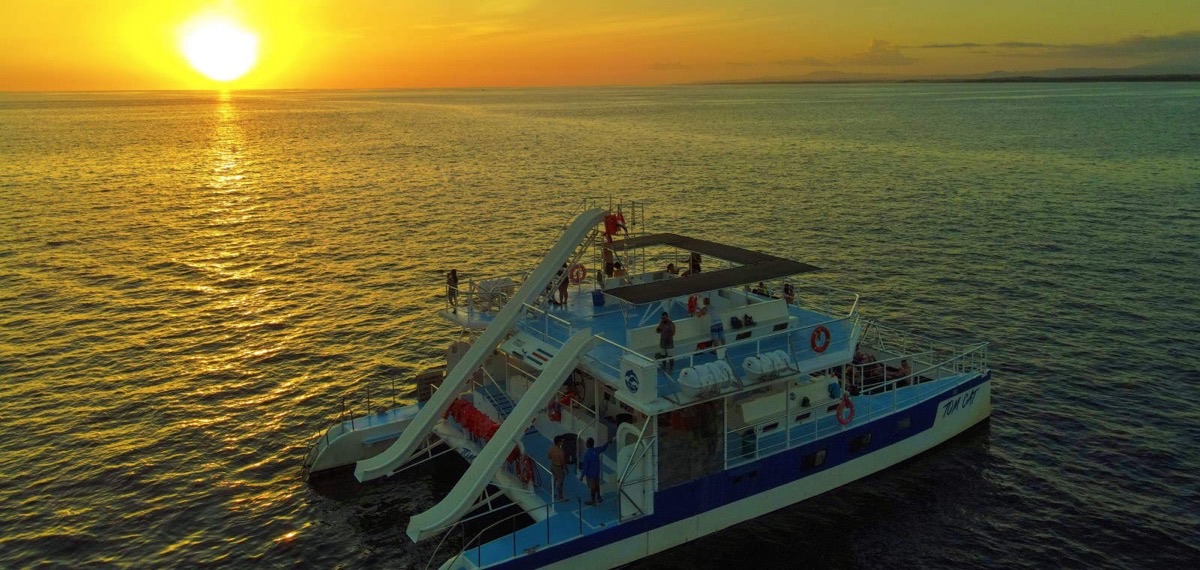
Book a sunset catamaran cruise with Planet Dolphin or Ocean King (₡45,000–65,000 / ~$85–123 per person, kids often discounted 30%). Typically 3–4 hours including:
- Snorkeling stop at a reef or rocky outcrop
- Dolphin spotting — spinner and bottlenose dolphins are common
- Open bar with tropical cocktails and sodas for kids
- Sunset over the Pacific from the water — the highlight of many visitors' trips
Most cruises depart from Quepos marina at 1:30 PM and return around 5:30 PM.
Morning Wildlife + Departure
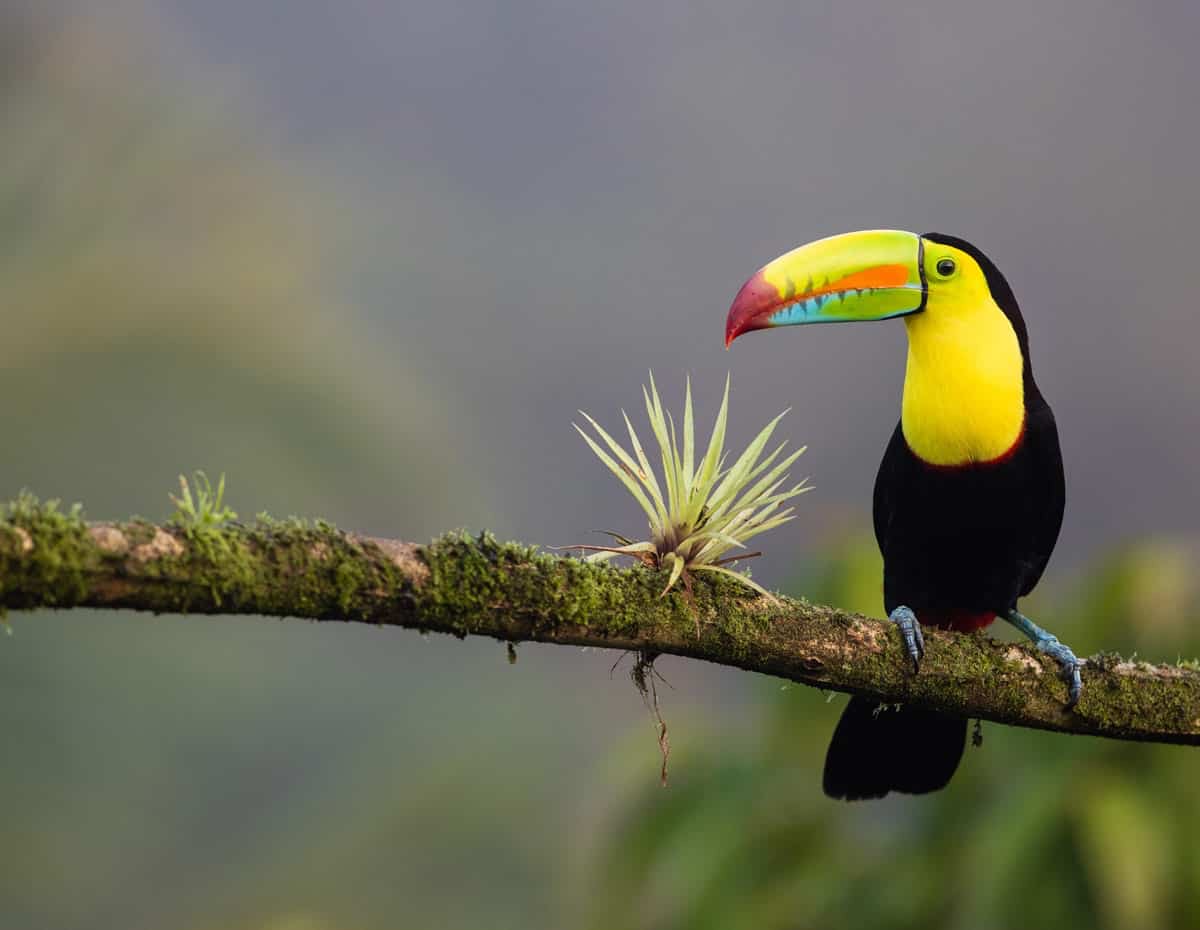
If your flight is late enough, visit Rainmaker Conservation Experience (₡17,500 / ~$33 per person, 30 min from Manuel Antonio). A private reserve with hanging bridges, waterfalls, and swimming holes — all without the crowds of Manuel Antonio. The 6:00 AM birding tour is exceptional for spotting toucans, motmots, and scarlet macaws.
Alternative: Take an early morning walk on Playa Espadilla — watch for scarlet macaws in the almond trees at sunrise. Free and magical.
Stock up on Costa Rican coffee at Café Milagro in Quepos (₡8,000–12,000 per bag for excellent single-origin). Pick up salsa Lizano (Costa Rica's beloved condiment — put it on everything) at any supermarket for ₡1,500.
Drive Manuel Antonio to SJO airport: 3–3.5 hours via Route 27 (the fastest route, tolled, modern highway). Allow 4 hours total with buffer for traffic near San José. Return your rental car at the airport — most agencies need 30 minutes for inspection and checkout.
If your flight is early morning: Drive to San José the night before and stay near the airport. Hotels in Alajuela (10 minutes from SJO) are affordable and offer free airport shuttles.
🌧️ Seasonal Guide: When to Visit Costa Rica
Costa Rica has two seasons: dry (verano) and green/rainy (invierno). Both have advantages.
Dry Season — December to April
Peak tourist season. Sunny mornings, minimal rain, and everything is accessible. Christmas through Easter sees the highest prices and crowds. January–February is the sweet spot — warm, dry, post-holiday crowds. Book accommodation 2–3 months ahead.
Green Season — May to November
Mornings are usually sunny with afternoon/evening rain showers (1–3 hours). Landscapes are lush and green. Prices drop 20–40%, crowds thin dramatically. Wildlife is actually more active — more birds, more frogs, and turtle nesting season on both coasts. Best value: May–June or November.
September–October
Wettest months. Some roads become challenging. Pacific coast can see all-day rain. Caribbean coast (not on this itinerary) is paradoxically driest. Best avoided for this specific route unless you're flexible with plans.
Regional Climate Notes
- San José: 20–26°C (68–79°F) — pleasant year-round at 1,170m elevation
- La Fortuna/Arenal: 25–32°C (77–90°F) — humid, rain possible any time of year
- Manuel Antonio: 27–33°C (81–91°F) — hot, humid, afternoon storms in green season
📝 Costa Rica Tips That Actually Matter
Driving & Navigation
- Use Waze, not just Google Maps. Waze has better real-time data for Costa Rica — locals report road conditions, accidents, and police checkpoints. Google Maps is fine for general routing but Waze is superior for driving.
- 4x4 is not optional. The road between La Fortuna and Manuel Antonio (inland route) has unpaved sections and occasionally river crossings in green season. Even in dry season, the steep hills require clearance a sedan can't handle.
- Gas stations are full-service in Costa Rica — attendants pump your gas. Tip ₡500–1,000. Stations can be sparse on rural routes — fill up before leaving towns.
- Addresses don't exist. Directions are given as "200 meters south of the church" or "in front of the old fig tree." Waze handles this; written directions from hotels may confuse you. When in doubt, call the hotel.
- Never leave valuables in your car. Break-ins at trailheads and beaches are the #1 crime affecting tourists. Take everything with you or leave nothing visible.
Family-Specific Tips
- Car seats: Required by law for children under 12 or under 145cm. Rental agencies offer them (~$10/day) but quality varies — bringing your own is safest.
- Bug spray: Essential in La Fortuna. Use DEET-based repellent or picaridin. Reapply after swimming. Mosquitoes are worst at dawn and dusk.
- Pharmacies (farmacias) are well-stocked with kids' medications — Tylenol, Benadryl, upset stomach remedies. No prescription needed for most things.
- Pool vs. ocean: Most hotels in Manuel Antonio have pools — great for afternoon downtime after park visits. Ocean currents can be strong on unprotected beaches.
Money & Costs
- Costa Rica is not cheap compared to other Central American countries. Expect prices closer to US levels for tourist activities. Food at sodas (local restaurants) is much more affordable than tourist restaurants.
- USD is accepted everywhere in tourist areas, but you'll get change in colones and often a worse exchange rate. Pay in colones when possible.
- Tipping: Restaurants add a 10% service charge to bills. Small additional tips (5–10%) for great service are appreciated but not expected. Tip tour guides ₡3,000–5,000 per person.
- Sodas (local restaurants) — the best value. A full casado (rice, beans, plantain, salad, protein) costs ₡3,500–5,000 (~$7–10). Look for the handwritten "SODA" signs.
Wildlife Etiquette
- Never feed wild animals. It's illegal in national parks and harmful to the animals. This includes the Manuel Antonio monkeys who will approach you — don't encourage them.
- Keep 3 meters distance from all wildlife. Use binoculars or zoom lenses instead of approaching.
- Crocodiles: Don't swim in rivers near the coast, especially the Tárcoles River near the Crocodile Bridge (Puente de Cocodrilos). Stop for photos from the bridge, but don't go near the water.
Packing Quick List
- Reef-safe sunscreen — required in national parks, better for the ocean
- Water shoes — for rocky beaches and waterfall swimming holes
- Rain jacket — it will rain at some point regardless of season
- Binoculars — game-changer for wildlife spotting
- Dry bag — protect electronics on boat trips and waterfall hikes
- Insect repellent with DEET — La Fortuna mosquitoes are relentless
💰 7-Day Budget Breakdown
Per-person daily estimates. Costa Rica is pricier than Guatemala or Nicaragua but delivers incredible experiences. All amounts in colones and USD.
| Category | Budget | Mid-Range | Comfort |
|---|---|---|---|
| 🏨 Accommodation | ₡16,000–26,000 ($30–50) | ₡42,000–80,000 ($80–150) | ₡106,000–212,000 ($200–400) |
| 🍽️ Food | ₡10,000–16,000 ($20–30) | ₡21,000–37,000 ($40–70) | ₡42,000–80,000 ($80–150) |
| 🚗 Car + Gas | ₡16,000–26,000 ($30–50) | ₡26,000–42,000 ($50–80) | ₡42,000–64,000 ($80–120) |
| 🎟️ Activities | ₡10,000–21,000 ($20–40) | ₡26,000–53,000 ($50–100) | ₡53,000–106,000 ($100–200) |
| Daily Total | ₡53,000–90,000 ($100–170) | ₡116,000–212,000 ($220–400) | ₡243,000–462,000 ($460–870) |
7-day trip total per person (excluding international flights):
- Budget: $700–1,190 (hostels, sodas, self-guided hikes)
- Mid-range: $1,540–2,800 (nice hotels, guided tours, catamaran cruise)
- Comfort: $3,220–6,090 (eco-lodges, private guides, premium experiences)
Family of four (mid-range): ~$4,500–7,000 total for 7 days including car rental, accommodation, food, and activities.
❓ Frequently Asked Questions
Is 7 days enough for Costa Rica?
Seven days is perfect for a first trip covering two main regions — Arenal volcano area and Manuel Antonio's beaches and wildlife. You'll experience rainforest, hot springs, wildlife, and Pacific coast without feeling rushed. Two weeks would let you add Monteverde cloud forest, Tortuguero, or the Osa Peninsula.
How much does a 7-day trip to Costa Rica cost?
For a mid-range family of four, budget $3,000–5,000 total excluding international flights. Costa Rica is more expensive than other Central American countries but offers excellent value for the experiences. Budget travelers can manage $1,200–2,000 for two people. The biggest expenses are accommodation, car rental, and national park activities. See the detailed budget breakdown above.
Do I need a 4x4 rental car in Costa Rica?
Highly recommended for this itinerary. Many roads between destinations are unpaved or have river crossings. The route from Arenal to Manuel Antonio includes rough sections. A 4x4 SUV costs $50–80/day including mandatory insurance. Book through Vamos Rent-a-Car or Adobe Rent-a-Car (local companies with better prices than international chains). Get full insurance — Costa Rica's mandatory liability coverage is minimal.
Is Costa Rica safe for families?
Costa Rica is one of the safest countries in Central America and extremely family-friendly. Locals (Ticos) adore children. The main concerns are petty theft (don't leave valuables in your car at trailheads) and natural hazards (strong ocean currents at some beaches, never swim in rivers near the coast). Stick to well-traveled tourist routes and you'll have zero issues.
Should I use Waze or Google Maps for driving?
Use Waze for driving directions — it has better real-time traffic and road condition data in Costa Rica, and locals actively report hazards. Download Google Maps offline as backup since cell coverage drops in mountainous areas between Arenal and Manuel Antonio. Some rental cars include GPS units but they're often outdated. Your phone with Waze is the best navigation tool.
When is the best time to visit Costa Rica?
Dry season (December–April) is peak tourist season with sunny skies and higher prices. Green season (May–November) brings afternoon rain showers but lower prices, fewer crowds, and lush landscapes. The best value window is May–June or November — shoulder months with manageable rain. Wildlife viewing is actually better in green season as animals are more active.
This itinerary was researched and built by tabiji.ai, which creates personalized travel itineraries from real traveler data. Get your own custom itinerary — tailored to your dates, budget, and interests — for $1 at tabiji.ai.