⚡ Before You Go — Essentials
🗾 The Golden Route
Tokyo → Kyoto → Osaka is Japan's most popular first-timer route. It covers three distinct cities in one week — futuristic metropolis, ancient capital, and food capital — connected by 2.5-hour bullet train rides.
🚄 Skip the JR Pass
For this route, point-to-point tickets (~¥32,000) are cheaper than the 7-day JR Pass (¥50,000). Get a Suica IC card at the airport instead — it works on all trains, buses, and convenience stores.
💴 Cash is King
Many restaurants, temples, and small shops are cash-only. 7-Eleven and Japan Post ATMs accept international cards. Carry ¥10,000-15,000 at all times.
🌸 Cherry Blossom Season
Late March to mid-April brings sakura season — stunning but crowded. Book accommodation 6+ months ahead. Even if blossoms have peaked, Japan in spring is beautiful.
📱 Get Connected
Buy an eSIM before you arrive (Ubigi or Airalo, ~¥1,500/week). Download Google Maps offline for all three cities. Free WiFi exists but is patchy.
🎒 Pack Light
Use Takkyubin luggage forwarding (~¥1,500/bag) to send bags between cities overnight. Traveling with just a daypack between Tokyo and Kyoto changes everything.
Arrive in Tokyo — Neon Nights
Land at Narita or Haneda, grab your Suica IC card, and dive straight into Tokyo's electric energy with an evening in Shibuya and Shinjuku.
Arrive & Get Your Suica Card
Pick up a Suica IC card (¥2,000 with ¥1,500 credit) at the airport station. Take the Narita Express (¥3,250, 60 min) or Keisei Skyliner (¥2,520, 36 min to Ueno) to central Tokyo.
Shibuya Crossing
Head to the world's busiest pedestrian crossing around 5-7pm for golden hour. Watch 3,000 people scramble across every 90 seconds from the Starbucks window above, then cross it yourself. Visit the Hachiko statue while you're there.
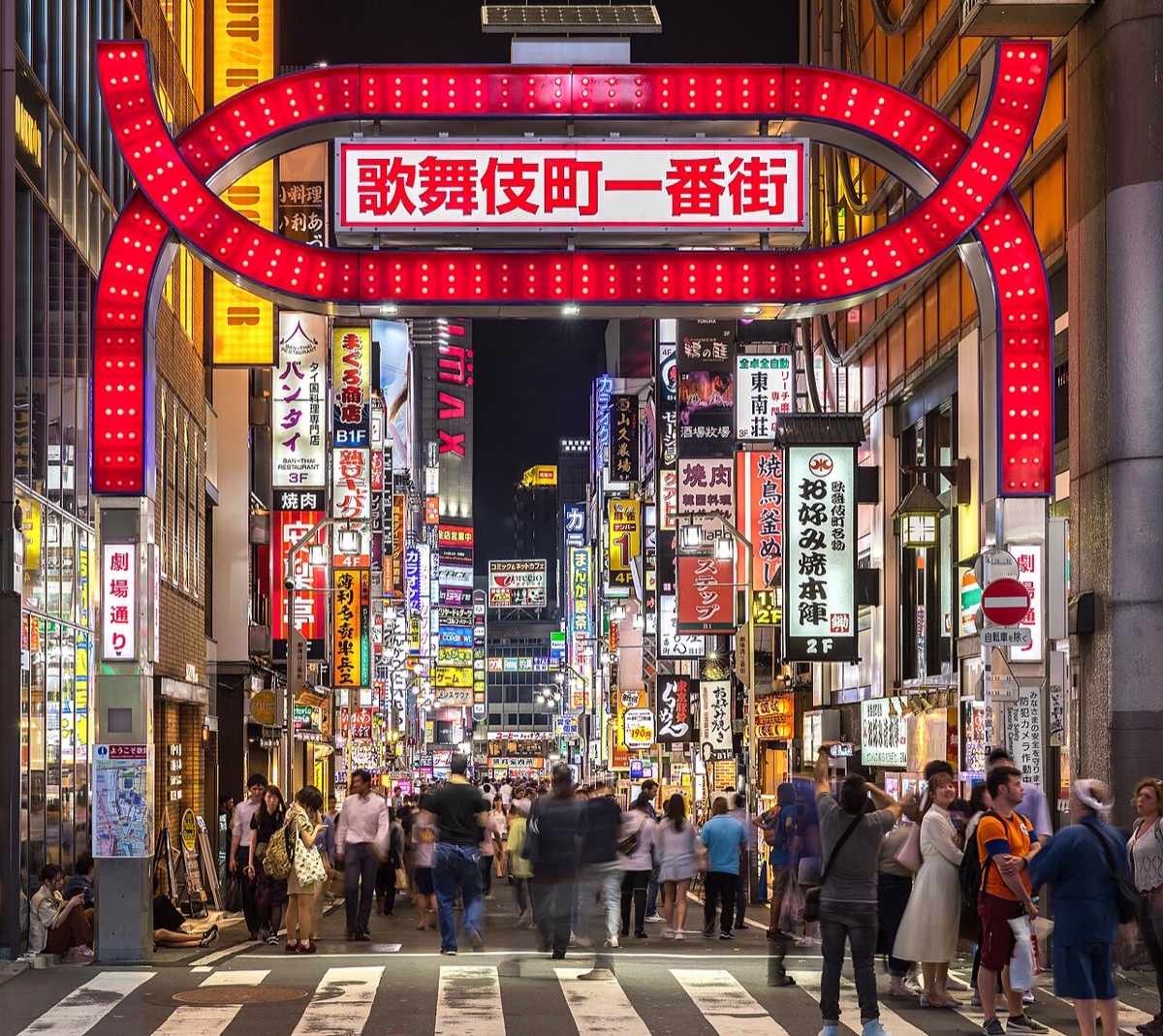
Golden Gai
200+ bars the size of wardrobes tucked into narrow alleys. Each seats 6-8 people. Pick one with an open seat, order whisky, and talk to whoever's next to you. Most charge a small cover (¥500-1,000).
Ancient Temples & Digital Art
From Tokyo's oldest temple at dawn to cutting-edge digital art — a day spanning centuries of Japanese culture.
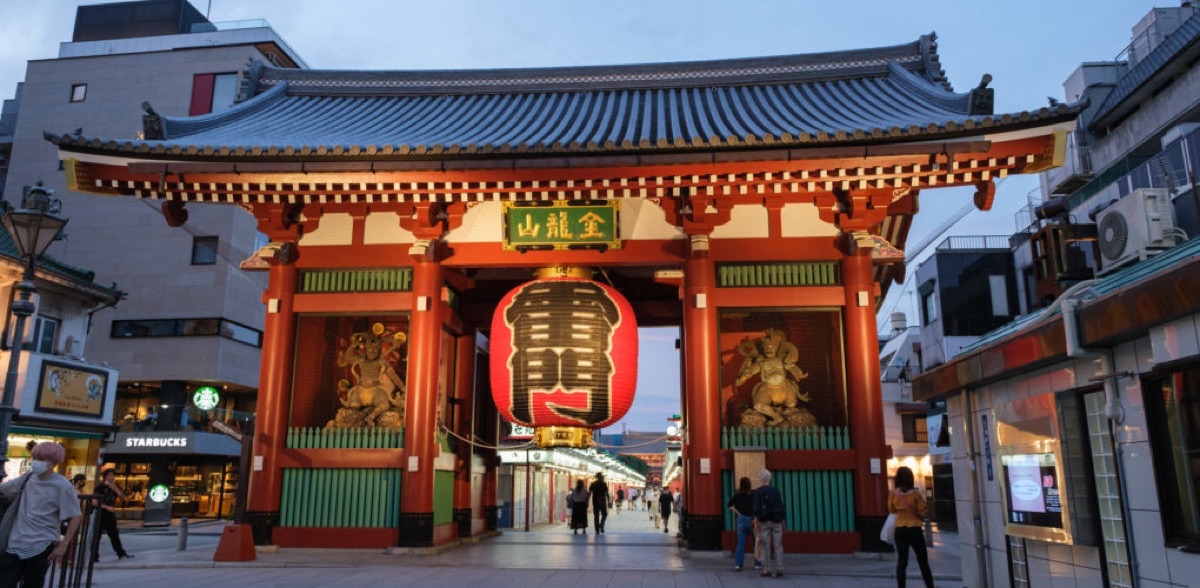
Senso-ji Temple
Tokyo's oldest temple opens at 6am. Arrive before 8am for incense-filled halls with almost no one else around. Walk through the iconic Kaminarimon (Thunder Gate) and browse Nakamise shopping street for traditional snacks and souvenirs.
Akihabara (Electric Town)
Multi-story electronics shops, retro gaming arcades, anime megastores, and maid cafés. Even if anime isn't your thing, the sensory overload is an experience in itself.
TeamLab Borderless (Azabudai Hills)
Tokyo's most immersive digital art experience — rooms of projected flowers, light sculptures, and installations that respond to your movement. Book tickets online in advance.
Sumida River Evening Walk
Stroll along the river for night views of Tokyo Skytree lit up against the skyline.
Shrines, Street Style & Street Food
A forest shrine, kawaii fashion, the world's best fish market, and a sunset rooftop — Tokyo's range in a single day.
Meiji Jingu Shrine
A 170-acre forest in the heart of Tokyo. Walk through the towering torii gate and tree-lined gravel path — it feels like leaving the city entirely. The shrine grounds are free and beautifully maintained.
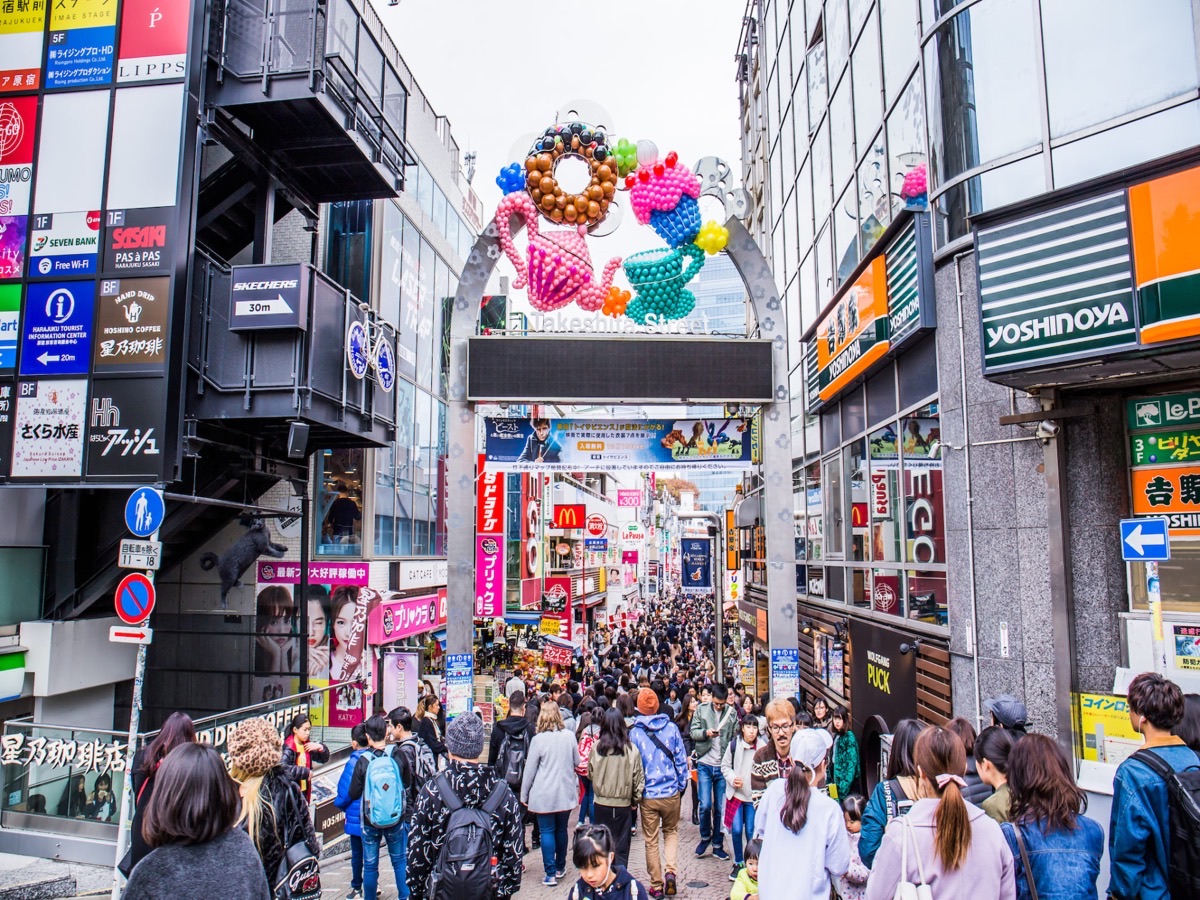
Harajuku & Takeshita Street
Directly from Meiji Shrine, walk into Harajuku's sensory riot — crepe shops, kawaii fashion, and vintage stores. Cat Street (the parallel backstreet) has independent boutiques, specialty coffee, and street art.
Tsukiji Outer Market
The original wholesale market moved to Toyosu, but the outer market street food scene is still thriving. Tuna on a stick, fresh uni, tamago on rice, grilled scallops — graze your way through.
Shibuya Sky Observation Deck
360° open-air rooftop views of Tokyo at golden hour. One of the best sunset spots in the city.
Bullet Train to Kyoto — Torii Gates & Geisha District
Board the Shinkansen with Mt. Fuji views, walk through 10,000 vermillion gates, and explore Kyoto's atmospheric evening streets.
Shinkansen to Kyoto
Take the 7-8am Hikari from Tokyo Station (2h40m, ~¥14,000). Sit on the right side (seats E/D) for Mt. Fuji views about 45 minutes in. It's one of those moments that feels genuinely cinematic.
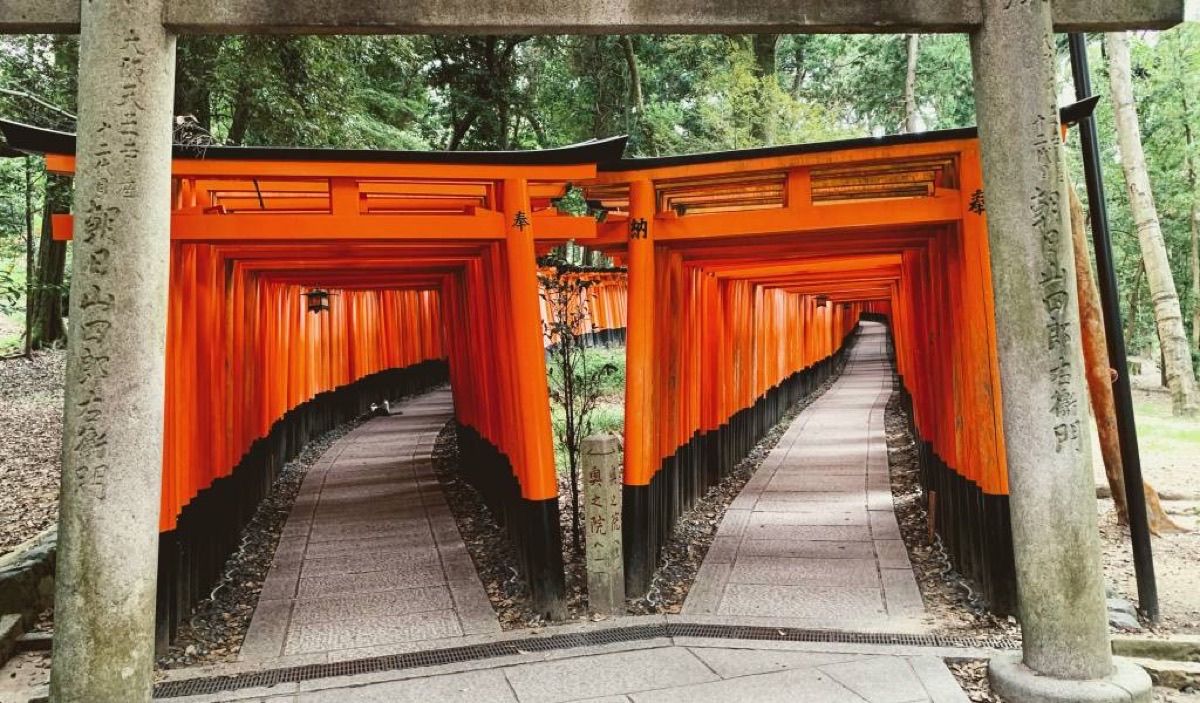
Fushimi Inari Taisha
10,000 vermillion torii gates tunneling up a forested mountainside. 15 minutes by train from Kyoto Station (Nara/Inari line, ¥150). The full loop takes 2-3 hours, but push at least to the Yotsutsuji viewpoint (45 min) — most tourists turn back before it.
Nishiki Market
'Kyoto's Kitchen' — a narrow 5-block covered arcade packed with food stalls. Try pickled vegetables, matcha everything, fresh mochi, and grilled seafood on sticks.
Gion District at Dusk
Walk Hanamikoji Street in the geisha district — you might spot a maiko (apprentice geisha) in full kimono heading to an evening engagement. Be respectful, don't chase or block them.
Golden Temple, Bamboo Forest & Mountain Views
Kyoto's greatest hits in one day — from gold-leaf reflections to towering bamboo to the wooden terrace overlooking the city.
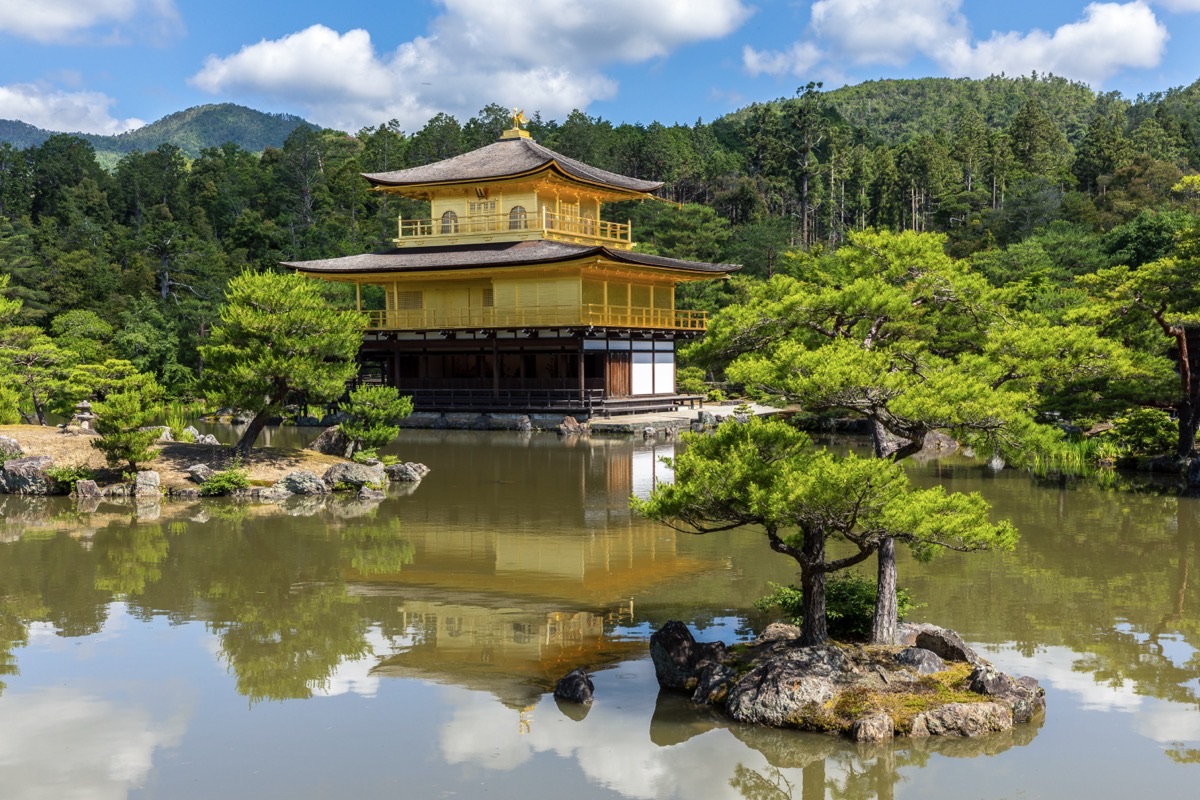
Kinkaku-ji (Golden Pavilion)
The gold-leaf temple reflected in its mirror pond is one of Japan's most photographed sights. Arrive right when it opens (9am) to beat the tour buses. The surrounding gardens are worth a slow walk.
Arashiyama Bamboo Grove
Towering bamboo stalks create a natural tunnel that filters light beautifully. It's often packed, but walking through is still magical. Continue to Togetsukyo Bridge for mountain views.
Monkey Park Iwatayama
A 20-minute hike up with free-roaming Japanese macaques at the top and panoramic city views. Surprisingly worth it.
Kiyomizu-dera
The massive wooden terrace juts out over a hillside with panoramic views. The approach through Higashiyama's narrow streets is lined with pottery shops, tea houses, and sweet shops.
Ninenzaka & Sannenzaka
Stone-paved lanes leading down from Kiyomizu — atmospheric shops, matcha ice cream, and traditional architecture. Gorgeous at dusk.
Nara's Deer & Osaka's Street Food
Morning with bowing deer and the Great Buddha, then south to Osaka for the best street food night of your life.
Train to Nara
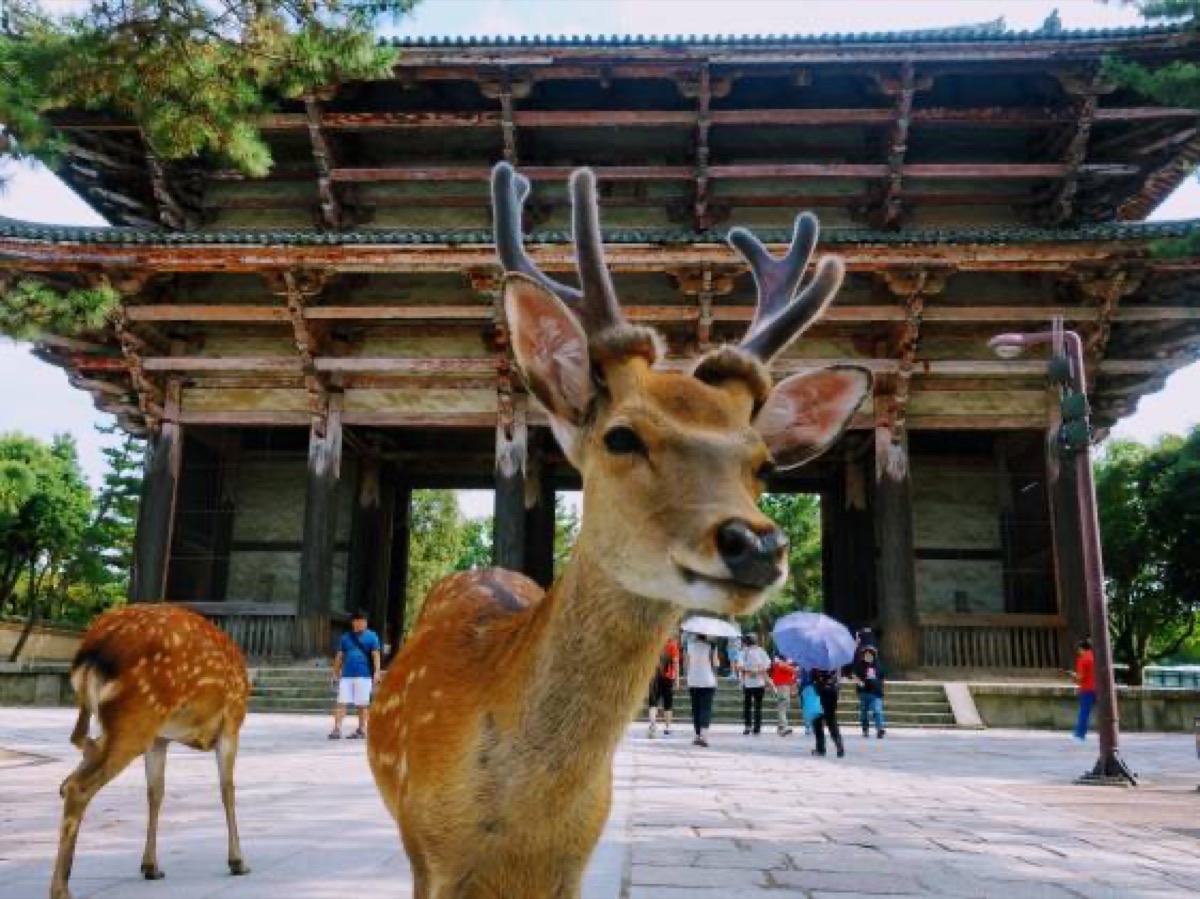
Kintetsu line from Kyoto (35 min, ~¥760). Nara was Japan's first permanent capital and is home to 1,000+ wild deer that bow for crackers.
Todai-ji (Great Buddha)
The Great Buddha Hall houses a 15-meter bronze Buddha in the world's largest wooden building. The scale is genuinely jaw-dropping — photos don't do it justice.
Kasuga Taisha & Nara Park
Thousands of stone and bronze lanterns line the path to this ancient shrine. The surrounding park is perfect for a peaceful walk among the deer.
Train to Osaka
Take the Kintetsu line from Nara to Osaka-Namba (70 min, ~¥970). Check into your hotel near Namba or Shinsaibashi.
Dotonbori at Night
This is what you came to Osaka for. The neon-lit canal street is Japan's greatest food spectacle. Just walk and eat — that's the entire plan.
Osaka — Castle, Retro Vibes & Final Feast
Samurai history, a 1950s neighborhood frozen in time, and one last epic food crawl before saying goodbye to Japan.
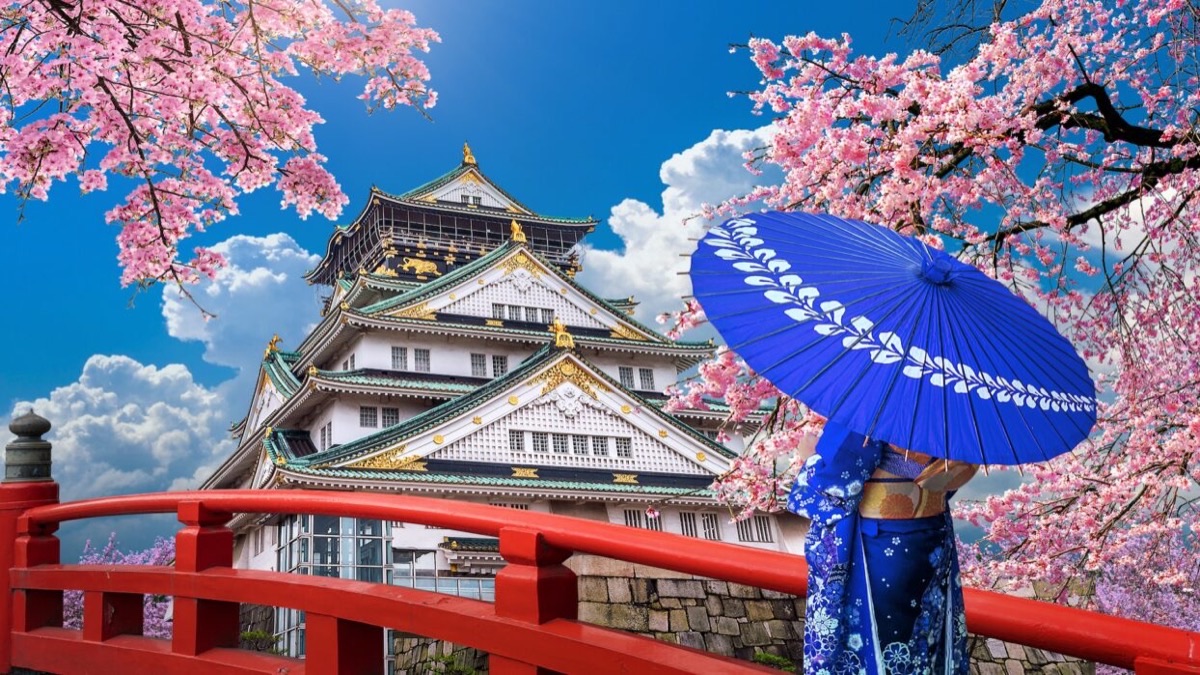
Osaka Castle
The reconstructed castle sits in a large park beautiful in cherry blossom season. The interior museum covers Osaka's samurai history with panoramic views from the top floor.
Shinsekai
Osaka's retro neighborhood frozen in the 1950s. Tsutenkaku Tower anchors the area, surrounded by kushikatsu restaurants and old-school game arcades. This is working-class Osaka at its most authentic.
Kuromon Market
'Osaka's Kitchen' — fresh sashimi, grilled scallops, Kobe beef on a stick, uni, seasonal fruits. It's touristy but the quality is real.
Umeda Sky Building (Optional)
The floating garden observatory offers panoramic views, and the basement Takimi-Koji alley recreates a 1920s Osaka street with restaurants.
💰 Budget Breakdown
| Category | Budget | MidRange | Splurge |
|---|---|---|---|
| Accommodation | ¥5,000-8,000 | ¥10,000-18,000 | ¥25,000+ |
| Food (per day) | ¥2,500-4,000 | ¥5,000-8,000 | ¥10,000+ |
| Transport (total) | ¥30,000 | ¥35,000 | ¥50,000+ |
| Activities (total) | ¥5,000 | ¥10,000 | ¥20,000+ |
| Daily Total (per person) | ¥12,000-18,000 | ¥22,000-35,000 | ¥50,000+ |
🚄 Getting Between Cities
- Tokyo → Kyoto: Shinkansen Hikari (2h40m, ~¥14,000) — sit right side for Mt. Fuji views
- Kyoto → Nara: Kintetsu Railway (35 min, ~¥760) — easy day trip
- Nara → Osaka: Kintetsu Railway to Namba (70 min, ~¥970)
- Osaka → KIX Airport: Nankai Express from Namba (50 min, ¥1,490)
- Reserve Shinkansen seats at any JR counter or use the SmartEX app
🎌 Etiquette Essentials
- No tipping anywhere — it's considered rude
- No eating while walking — find a spot to stand or sit
- Keep voices low on trains — silence is golden, especially on the Shinkansen
- Remove shoes when entering temples, ryokans, and when you see raised floors or slippers
- Bow slightly when saying thank you — it's appreciated
- Line up single-file on escalators — stand left in Kanto (Tokyo), stand right in Kansai (Osaka/Kyoto)
💰 Money-Saving Tips
- Skip the JR Pass for this route — point-to-point is cheaper (~¥32,000 vs ¥50,000)
- Convenience store breakfasts: onigiri (¥120), sandwich (¥200), coffee (¥100) at 7-Eleven/Lawson/FamilyMart
- Lunch sets (teishoku) are 30-50% cheaper than dinner at the same restaurant
- Tax-free shopping: spend ¥5,000+ at one store and show your passport for 10% refund
- 100-yen shops (Daiso, Seria) are great for travel supplies and souvenirs
- Coin lockers at every station (¥400-600/day) — use them to explore bag-free
📱 Useful Apps
- Google Maps — navigation and train schedules (download offline maps before you go)
- SmartEX — reserve Shinkansen seats from your phone
- Tabelog — Japan's Yelp with more reliable reviews (3.5+ is great)
- PayPay — Japan's most popular mobile payment (useful at small shops)
- Japan Travel by Navitime — comprehensive train route planner