⚡ Before You Go — Essentials
📅 Tournament Dates
June 11 – July 19, 2026. Group stage runs June 11–27 across all 16 cities. Round of 32: June 28 – July 3. Round of 16: July 4–7. Quarterfinals: July 9–11 (Boston, LA, Miami, Kansas City). Semifinals: July 14–15 (Dallas, Atlanta). Final: July 19 at MetLife Stadium, New Jersey.
🎫 Tickets & Pricing
Buy only through FIFA's official portal — dynamic pricing means costs fluctuate. Category 4 (upper tier) starts around $60 for group matches, Category 1 ranges $345–$620+. Knockout rounds jump significantly: semifinals $420–$2,780, final is the priciest. A FIFA Resale Portal allows secondary sales with 15% fees. Every host city will have free fan zones with big-screen viewing.
🛂 Visas & Entry
USA: Most visitors need an ESTA ($21) or B1/B2 visa — apply early. Canada: eTA ($7 CAD) for visa-exempt nations or visitor visa. Mexico: Tourist card (FMM) for most nationalities, free for stays under 180 days. FIFA has secured exemptions so that World Cup ticket holders from travel-banned nations can still enter. Carry your ticket confirmation as proof.
✈️ Getting Between Cities
The 16 cities are spread across a continent. Flights are essential for cross-country hops — book domestic flights early (Southwest, JetBlue, Volaris). The Amtrak Northeast Corridor connects Boston–NYC–Philadelphia in 1–4 hours. For the Texas Triangle, drive Dallas–Houston in 3.5 hours. West Coast: Seattle–Vancouver is a 3-hour drive or Amtrak Cascades train. In Mexico, Volaris/VivaAerobus connect Mexico City–Guadalajara–Monterrey cheaply.
💰 Budget Expectations
Budget trip (1 city, 5 nights): ~$2,400 including tickets, hostel/budget hotel, and food. Mid-range (2–3 cities, 10 nights): ~$9,400. Luxury multi-city (full tournament experience): $40,000+. Accommodation surges 2–4x during match weeks. Pro tip: university dorms open in summer, RV rentals near campgrounds, or stay in suburbs and transit in. Cities like Houston, Dallas, Kansas City, and Atlanta are far cheaper than NYC, LA, or Miami.
🌡️ Weather Warning
It's summer. Southern cities (Houston, Dallas, Miami, Atlanta, Mexico City, Guadalajara, Monterrey) will be HOT — expect 32–40°C (90–104°F). Hydrate constantly, wear sunscreen, bring a hat. Pacific Northwest (Seattle, Vancouver, San Francisco) will be cooler at 18–25°C (65–77°F). NYC, Boston, Philly are warm and humid at 27–33°C (80–91°F). Afternoon thunderstorms are common in the South.
Mexico — Where It All Begins
Mexico hosts the opening match at the legendary Estadio Azteca on June 11. Three cities — Mexico City, Guadalajara, and Monterrey — bring the passion, food, and football culture that only Mexico can deliver. Mexico City is the crown jewel with world-class museums, street food, and the Azteca's 87,000-seat atmosphere. Guadalajara offers tequila country and colonial charm. Monterrey is framed by dramatic mountains. Match days here are among the most affordable, with incredible local food at a fraction of US prices.
Estadio Azteca — The Cathedral
The Azteca is sacred ground. Two World Cup finals were played here (1970, 1986), and it hosted Maradona's "Hand of God" match. On June 11, it kicks off the entire 2026 tournament. Arrive 3+ hours early — security is airport-grade and lines will be massive. The surrounding Coyoacán neighborhood is worth exploring: Frida Kahlo Museum, cobblestone streets, and incredible street tacos.
Mexico City Beyond Football
Mexico City is one of the world's great cities. The historic center around the Zócalo has the National Palace (free Diego Rivera murals), Templo Mayor Aztec ruins, and the Metropolitan Cathedral. Chapultepec Park houses the world-class National Museum of Anthropology. Roma and Condesa neighborhoods have leafy streets, craft cocktail bars, and some of the best restaurants in the Americas. Street food is everywhere and mind-blowingly good — al pastor tacos, tlacoyos, elotes, and tamales.
Guadalajara — Tequila Capital
Guadalajara is the birthplace of mariachi and tequila. The Estadio Akron (Chivas' home) hosts 4 group stage matches but no knockout rounds. The historic center has beautiful colonial architecture, and the nearby town of Tequila offers distillery tours (the José Cuervo Express train is iconic). The Tlaquepaque artisan village is great for shopping. Note: the stadium has poor transit access — plan for rideshare or shuttles.
Monterrey — Mountains & Modernity
Monterrey sits dramatically at the foot of the Sierra Madre mountains. Estadio BBVA is one of the most modern stadiums in Mexico. The city's Fundidora Park (a converted steel mill) is likely a fan zone location. Take the cable car to Cerro de la Silla for panoramic views. The food scene blends northern Mexican traditions — cabrito (roasted goat), machaca, and carne asada are specialties.
East Coast — The Heartbeat of the Tournament

The East Coast is where the World Cup builds to its crescendo. MetLife Stadium hosts the final on July 19. Philadelphia and Boston round out a compact, transit-connected corridor. The Amtrak Northeast Corridor links all three in a few hours — making a multi-city East Coast circuit the smartest play for fans wanting maximum matches. NYC fan zones will be massive (think Times Square takeover). Boston's Gillette Stadium is in Foxborough (30 miles south — plan logistics). Philly brings the most passionate American sports culture.
MetLife Stadium — The Final Stage
MetLife Stadium in East Rutherford, NJ hosts the grand final on July 19, plus group stage matches, Round of 32 and Round of 16 games. It's the second-largest NFL stadium and sits in the Meadowlands. Transit from Manhattan: NJ Transit train from Penn Station to Secaucus Junction, then shuttle bus (allow 2+ hours on match days). Alternatively, express buses run from Port Authority. NYC itself will be electric — Times Square, Central Park, and Hudson Yards are all likely fan zone locations.
NYC Beyond Football
It's New York City — you already know. Central Park, Brooklyn Bridge, the MET, MoMA, Statue of Liberty, Chelsea Market, Greenwich Village, Chinatown, Little Italy. The city will be absolutely buzzing during the tournament. Every neighborhood will have bars showing matches. The High Line elevated park is great for a walk. Take the Staten Island Ferry (free!) for Statue of Liberty views without the ticket price.
Philadelphia — The City of Passion
Philly has some of the most passionate sports fans in America, and Lincoln Financial Field (home of the Eagles) is one of the best-connected stadiums via the Broad Street Line subway — a rare luxury at this World Cup. The city itself is incredibly walkable with world-class history (Independence Hall, Liberty Bell), a phenomenal food scene (Reading Terminal Market), and great neighborhoods like Fishtown and South Philly. Philadelphia is also significantly cheaper than NYC for accommodation.
Boston — History Meets Football
Boston's Gillette Stadium is actually in Foxborough, 30 miles southwest of the city — this is the main logistical challenge. A commuter rail line runs from South Station on match days, but service is limited. Rideshare or driving is often more practical. The city itself is a gem: the Freedom Trail, Harvard/MIT campuses, North End Italian restaurants, and Fenway Park. The seafood is world-class (lobster rolls, clam chowder). Boston will host 5 group matches, a Round of 32 match, and a quarterfinal on July 9.
Central Region — Big Stadiums, Big Value
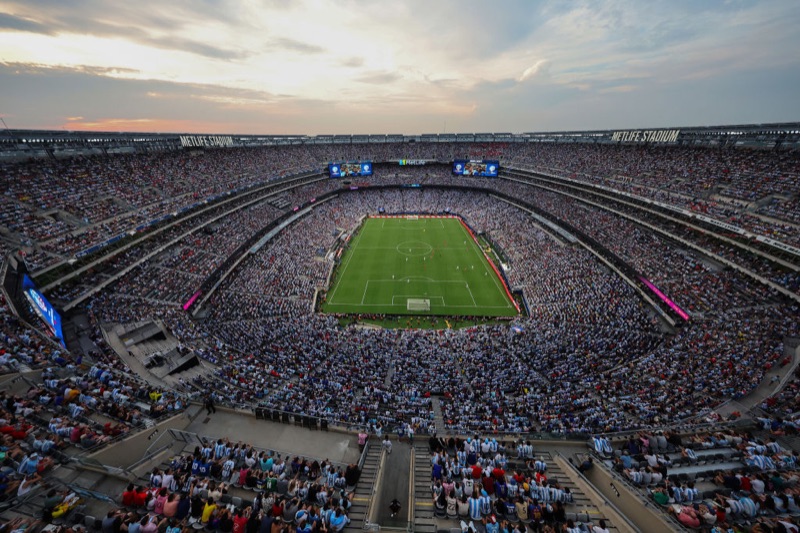
The central host cities offer the best value at this World Cup. Dallas hosts both a semifinal (July 14) at the massive AT&T Stadium — the largest enclosed venue. Houston's NRG Stadium is tried-and-tested for mega events. Kansas City brings the legendary Arrowhead Stadium atmosphere plus BBQ. Atlanta's Mercedes-Benz Stadium hosts the other semifinal (July 15). These cities are significantly cheaper for hotels and food than the coasts, and the football culture — especially in Dallas, Houston, and Atlanta — runs deep.
Dallas — AT&T Stadium (The Jerry Dome)
AT&T Stadium in Arlington (between Dallas and Fort Worth) is a cathedral of American sports — the enormous video board alone is worth seeing. It seats 80,000+ and hosts a semifinal on July 14. Arlington has no public transit to the stadium — you MUST drive, rideshare, or take an organized shuttle. Stay in Dallas and plan for 30-45 min drive. The Deep Ellum and Bishop Arts neighborhoods in Dallas have excellent bars, restaurants, and live music.
Houston — Space City Football
Houston is America's most diverse city and it shows in the food: Vietnamese crawfish, Tex-Mex breakfast tacos, Nigerian suya, Indian in the Mahatma Gandhi District. NRG Stadium has good transit via METRORail (Red Line). The Museum District is free on Thursdays. Space Center Houston is a must for nerds. Houston hosts 5 group matches, a Round of 32, and a Round of 16 game (July 4 — combine football with July 4th fireworks!).
Kansas City — Arrowhead & BBQ
Arrowhead Stadium is one of the loudest venues in American sports and hosts a quarterfinal on July 11. Getting there requires driving or rideshare (no rail). Kansas City's BBQ scene is legendary — Joe's KC, Q39, Gates, Slap's, and dozens more. The Power & Light District downtown is the nightlife hub and likely fan zone location. The National WWI Museum is one of America's best. KC is one of the most affordable host cities for accommodation.
Atlanta — Soccer Capital of the South
Atlanta has arguably the best soccer culture in the US thanks to Atlanta United and their passionate supporters. Mercedes-Benz Stadium hosts a semifinal on July 15 and has the best transit access of any southern World Cup venue — MARTA rail drops you right there. The stadium is gorgeous with its retractable "camera aperture" roof. Centennial Olympic Park next door will be a massive fan zone. The city has an incredible food scene (southern comfort food meets international diversity), and the Martin Luther King Jr. National Historic Site is essential.
West Coast & Pacific Northwest — Sun, Culture & Mountains
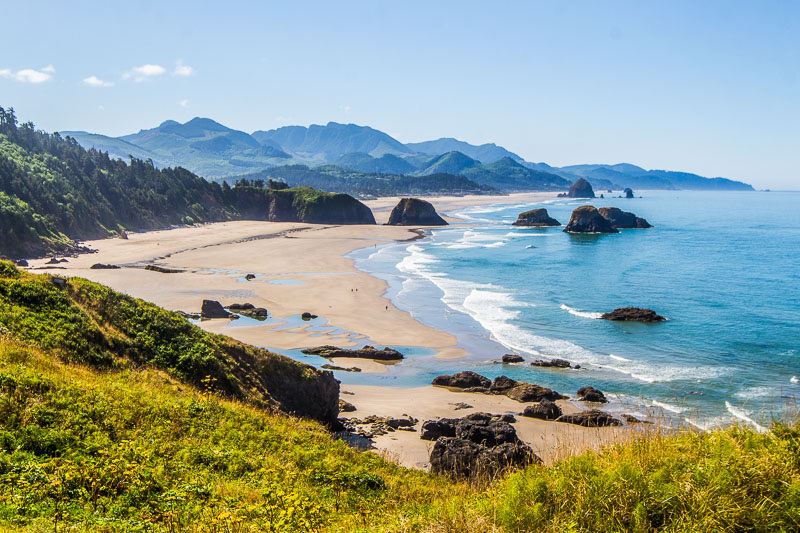
The West Coast offers the most diverse experiences: LA's glamour and SoFi Stadium's futuristic design, San Francisco's tech-meets-culture vibe at Levi's Stadium, Seattle's coffee-and-grunge atmosphere at Lumen Field, and Vancouver's stunning Pacific setting at BC Place. LA hosts a quarterfinal (July 10) and multiple USMNT games — expect it to be the party epicenter. The West Coast cities are pricier but unforgettable. Seattle to Vancouver is an easy 3-hour drive, making a Pacific Northwest double ideal.
SoFi Stadium — Hollywood's Home Pitch
SoFi Stadium in Inglewood is a futuristic $5 billion venue that looks like a spaceship. It hosts USMNT group games (June 12 and 25), plus a quarterfinal on July 10 — making LA the center of the US team's World Cup journey. The LA Metro C Line (Green) connects to the stadium area. LA itself is massive — plan for traffic. Venice Beach, Santa Monica, Hollywood, DTLA's Grand Central Market, and the Getty Center are all worth your time. The food scene is elite: Korean BBQ in Koreatown, tacos in East LA, sushi in Little Tokyo.
San Francisco Bay Area — Levi's in Santa Clara
Levi's Stadium is in Santa Clara, about 45 minutes south of San Francisco by Caltrain. The stadium itself is modern but the surrounding area is suburban tech parks — don't stay in Santa Clara unless you have to. San Francisco proper is where you want to be: walk the Golden Gate Bridge, explore Chinatown (the oldest in North America), eat a Mission-style burrito the size of your forearm, ride a cable car, and check out the stunning views from Twin Peaks.
Seattle — The Emerald City
Lumen Field is Seattle's crown jewel — one of the loudest stadiums in North America thanks to its design and the Sounders/Seahawks fanbase. It's right downtown and accessible via Link Light Rail (Stadium station). Seattle's neighborhoods are walkable: Pike Place Market for fish throwing and the original Starbucks, Capitol Hill for nightlife and craft cocktails, and Pioneer Square for the underground tour. The Seattle skyline with Mount Rainier in the background on a clear day is unforgettable.
Vancouver — Pacific Jewel
BC Place in downtown Vancouver is one of the most accessible World Cup stadiums — SkyTrain drops you right there. Vancouver is stunning: Stanley Park's seawall with mountain views, Granville Island public market, and some of the best Asian food in North America (dim sum in Richmond, ramen on Robson Street, sushi everywhere). It's just 3 hours from Seattle by car or the Amtrak Cascades train. Canada hosts 13 matches total between Toronto and Vancouver.
Toronto & Miami — The Supporting Cast
Toronto and Miami round out the host city roster. Toronto is Canada's multicultural powerhouse — incredible food from every corner of the globe, the CN Tower, and a walkable downtown. BMO Field is being expanded for the World Cup. Miami is pure energy: South Beach, Little Havana, Art Deco architecture, and Cuban coffee at every corner. Hard Rock Stadium in Miami Gardens hosts the bronze final (July 18). Both cities are expensive but deliver unforgettable experiences.
BMO Field — Canada's World Cup Home
BMO Field at Exhibition Place is being expanded to 45,000+ seats. It hosts 5 group matches and a Round of 32 game. Getting there is tricky — the Exhibition GO station and streetcar routes serve it but expect heavy congestion on match days. The BMO Field area along the waterfront is beautiful in summer. Toronto itself is incredible: the most multicultural city in the world with neighborhoods like Kensington Market, Chinatown, Little Italy, Greektown, and Koreatown all packed with authentic food.
Hard Rock Stadium — Heat & Passion
Hard Rock Stadium in Miami Gardens hosts a quarterfinal (July 11) and the bronze final (July 18). It's about 30 minutes north of South Beach and has limited transit — driving or rideshare is essential. Miami during the World Cup will be insane: the city already has massive Latin American and Caribbean football culture. Expect Little Havana to be taken over by fans, South Beach to be a 24/7 party, and Wynwood to host incredible fan events. The heat will be brutal (32°C/90°F+ with high humidity) — hydrate constantly.
Multi-City Route Planner & Insider Tips
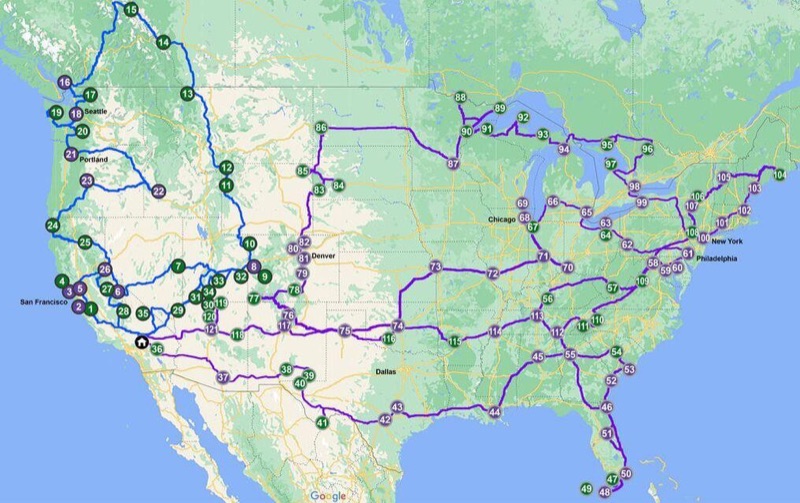
With 16 host cities spread across a continent, smart routing is everything. Here are the best multi-city circuits based on geography, transit connections, and match scheduling. Plan your route around which teams you want to follow, or maximize matches by sticking to a regional cluster. Each route can be done in 5–10 days, or combine multiple routes for the ultimate World Cup road trip.
Route 1: East Coast Classic (NYC–Philly–Boston)
The easiest multi-city route thanks to Amtrak. NYC to Philly is 1.5 hours on the Northeast Regional. Philly to Boston is 5 hours (or 4 on Acela). This route covers 3 cities, including the final venue (MetLife), Philly's subway-connected stadium, and Boston's quarterfinal. Stay in Philly as a cheaper base and train to NYC for matches and fan zones. Book Acela tickets early for the best fares.
Route 2: Texas Triangle (Dallas–Houston)
Dallas and Houston are 3.5 hours apart on I-45. Rent a car and bounce between them. Dallas hosts a semifinal (Jul 14) with 9 total matches; Houston hosts 7 matches including a July 4th Round of 16 game. Both cities are extremely affordable for accommodation and food. San Antonio and Austin are in between if you want a rest-day road trip. Kansas City is a short flight from Dallas for back-to-back knockout matches.
Route 3: Pacific Coast (LA–SF–Seattle–Vancouver)
The scenic route. Start in LA for USMNT group games (Jun 12, 25) and the quarterfinal (Jul 10). Fly to SF for matches at Levi's Stadium. Then fly or train to Seattle (Lumen Field has great transit access). Drive the stunning I-5 through Pacific Northwest forests to Vancouver for BC Place matches. This route is pricier but the variety — beaches, tech hubs, coffee culture, mountains — is unmatched.
Route 4: Mexico Circuit (Mexico City–Guadalajara–Monterrey)
The most affordable route by far. Mexico City to Guadalajara is a 1-hour flight (Volaris from $30). CDMX to Monterrey is 1.5 hours (VivaAerobus from $40). Street food costs $2-5 per meal. Hotels are $40-80/night. You get the opening match atmosphere at the Azteca, tequila country in Guadalajara, and mountain-backed Monterrey. Only group stage matches in Mexico, so this works for the first 2-3 weeks.
💰 Budget Breakdown
| Category | Item | Budget | MidRange | Luxury |
|---|---|---|---|---|
| Flights (international round-trip) | $400–800 | $800–1,500 | $2,000–5,000 | |
| Domestic flights (between cities) | $100–300 | $300–800 | $800–2,000 | |
| Match tickets (per game) | $60–140 (Cat 4) | $140–465 (Cat 2-3) | $500–2,800 (Cat 1) | |
| Accommodation (per night) | $40–100 | $150–350 | $400–1,500 | |
| Food (per day) | $20–40 | $50–100 | $150–400 | |
| Local transport (per day) | $10–20 | $25–60 | $80–200 | |
| Total (10-day trip, 2 matches) | $2,000–3,500 | $5,000–12,000 | $15,000–45,000 |
🎫 Official Ticket Portal
- Buy ONLY through FIFA.com/tickets — the sole authorized seller
- Dynamic pricing means costs fluctuate based on demand, teams, and match importance
- FIFA's official Resale Portal allows peer-to-peer sales with 15% fees for buyer AND seller
- Avoid unofficial ticket sites — scams are rampant before major tournaments
- Download tickets to the FIFA app and save offline before heading to the stadium
📱 Connectivity
- USA: Get an eSIM or prepaid SIM (T-Mobile, Mint Mobile). Most international phones work on US networks.
- Canada: Add a Canadian plan or use Airalo eSIM ($5-10 for 1GB)
- Mexico: Telcel prepaid SIM is cheapest ($10 for 2GB+)
- Multi-country eSIM (Holafly, Airalo) covering all 3 nations is the smartest play for multi-city trips
- Free WiFi at stadiums, fan zones, and most cafes — but don't rely on it for tickets
🏥 Health & Safety
- Travel insurance is essential — US healthcare is extremely expensive without coverage
- SafetyWing and World Nomads offer good options for sports event travelers
- Stay hydrated in summer heat — bring a sealed empty water bottle (allowed through security)
- Sunscreen is critical at outdoor venues — reapply every 2 hours
- Pickpocketing risk increases at crowded fan zones — use a crossbody bag
💳 Money
- USA: Credit/debit cards accepted almost everywhere. Tip 18-20% at sit-down restaurants.
- Canada: Similar to US, tip 15-20%. Currency is CAD (about 0.73 USD).
- Mexico: MXN pesos preferred at markets and street food. ATMs (cajeros) give the best exchange rate.
- Apple Pay and Google Pay widely accepted in USA and Canada, less so in Mexico
- Avoid currency exchange kiosks at airports — use ATMs or your bank's travel card
🔐 Stadium Security
- Clear bag policy at all US stadiums — only 12"×6"×12" clear bags allowed
- Arrive 2-3 hours before kickoff for security screenings
- No outside food or drinks (some venues allow sealed empty water bottles)
- Mobile tickets on the FIFA app — download offline before heading to the stadium
- Prohibited items: umbrellas, large cameras, selfie sticks, flags on poles
🚇 Stadium Transit Ranking
- Best transit: Atlanta (MARTA rail), Seattle (Link Light Rail), Vancouver (SkyTrain), Philadelphia (Broad Street Line subway)
- Decent transit: NYC/NJ (NJ Transit + shuttle), Houston (METRORail), Toronto (streetcar), Mexico City (metro + tren ligero)
- Car/rideshare required: Dallas/Arlington, Kansas City, Miami, Boston/Foxborough
- Suburban stadiums: LA/Inglewood (Metro C Line improving), San Francisco/Santa Clara (Caltrain), Guadalajara (no rail), Monterrey (limited)