Quick answer
Ethiopia didn't just discover coffee — it invented the entire ritual around it. The coffee ceremony (bunna maflat) is the heartbeat of social life in Addis Ababa, performed in homes, restaurants, and sidewalks across the city every single day. Green beans roasted over coals, frankincense curling through the air, three rounds poured from a clay jebena — this is where it all started.
- Best overall
- Tomoca Coffee — est. 1953, iconic standing-only coffee house
- Price/value range
- Varies by pick
- Top-ranked pick
- Aster Bunna — 30 years of exceptional Ethiopian coffee
- Last verified
- 2026-03
Top verdicts
- Tomoca Coffee (ቶሞካ): Non-negotiable.
- Mokarar Coffee (ሞከረር / Harar Coffee): The less-touristed sibling to Tomoca with equally outstanding coffee.
- Aster Bunna (አስቴር ቡና): The coffee cognoscenti's pick.
Ethiopia didn't just discover coffee — it invented the entire ritual around it. The coffee ceremony (bunna maflat) is the heartbeat of social life in Addis Ababa, performed in homes, restaurants, and sidewalks across the city every single day. Green beans roasted over coals, frankincense curling through the air, three rounds poured from a clay jebena — this is where it all started.
Addis Ababa's coffee scene spans from the 1953-founded Tomoca, where you drink standing elbow-to-elbow with locals, to sleek specialty cafés roasting single-origin beans from Yirgacheffe and Sidamo. But the real magic often happens on the street — a neighborhood dembegna performing the ceremony she's done a thousand times, serving you the freshest cup you've ever had for less than a dollar.
We researched Reddit threads from r/Ethiopia, r/Coffee, r/espresso, and r/ExpatsinEthiopia, plus travel blogs from Sprudge, Migrationology, and long-term Addis residents, to find the spots that genuinely deliver the best coffee experiences in the birthplace of coffee.
Coffee Map
How we built this list
We analyzed 80+ Reddit posts and 400+ comments across r/Ethiopia, r/Coffee, r/espresso, and r/ExpatsinEthiopia — spanning 2020 to 2026. We also referenced expert coffee guides from Sprudge, Migrationology, and LivingEthio . Each spot on this list was recommended by at least 3 independent sources. We weighted long-term Addis residents and Ethiopian diaspora perspectives over first-timer impressions.
1Tomoca Coffee (ቶሞካ)
Historic · Est. 1953Quick comparison
- Best for
- Historic · Est. 1953 in Piassa (Wawel Street)
- Strengths
- Historic · Est. 1953 · Piassa (Wawel Street)
- Limitations
- No major drawbacks called out in the source copy
- Why it made the list
- Non-negotiable. Tomoca is to Addis what the original Starbucks Pike Place is to Seattle — except the coffee is genuinely legendary. The Wawel Street location is the most atmospheric. Go for the macchiato, stay for the standing-room-only chaos. Buy a kilo of Harar beans on your way out.
- What to order
- The macchiato, ordered "strong" — an intense, creamy shot that's become Addis Ababa's signature drink. Also buy their Harar coffee beans (half-kilo bags) to take home. The aroma of fresh-roasted beans hits you before you walk through the door. There's no seating — you stand, sip, and absorb 70+ years of coffee history.

2Mokarar Coffee (ሞከረር / Harar Coffee)
Historic RoasterQuick comparison
- Best for
- Historic Roaster in Piassa, near Soramba Hotel
- Strengths
- Historic Roaster · Piassa, near Soramba Hotel
- Limitations
- No major drawbacks called out in the source copy
- Why it made the list
- The less-touristed sibling to Tomoca with equally outstanding coffee. Locals know it as "Harar Coffee" — use that name or your taxi driver will be confused. Better bean prices than Tomoca and a more relaxed vibe. The macchiato here rivals anywhere in the city.
- What to order
- A macchiato — rich, creamy, and sharp — at this local favorite across from Soramba Hotel. Known locally as "Harar Coffee shop" (tell your taxi driver that name, not Mokarar). Buy Harar or Sidamo beans packaged fresh after ordering. The coffee bean-filled tables are a great visual touch.

3Aster Bunna (አስቴር ቡና)
Traditional · Est. 1998Quick comparison
- Best for
- Traditional · Est. 1998 in Bole area
- Strengths
- Traditional · Est. 1998 · Bole area
- Limitations
- No major drawbacks called out in the source copy
- Why it made the list
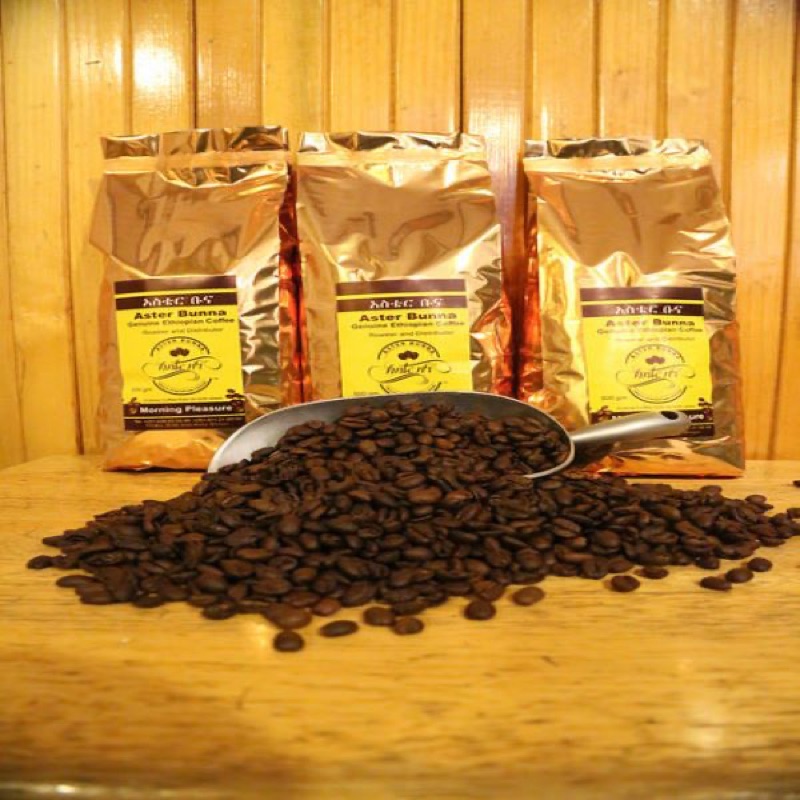
- The coffee cognoscenti's pick. If Tomoca is the tourist's rite of passage, Aster Bunna is where the coffee trade professionals and long-term Addis residents go. Nearly 30 years of exceptional roasting with zero hype. Order the spris if you want to try both espresso and traditional in one cup.
- What to order
- A macchiato or a spris (half macchiato, half jebena — the best of both worlds). Aster Bunna has been roasting and distributing high-quality Ethiopian coffee for nearly 30 years. The space is intimate enough that you might end up sharing a table with a stranger — and that's part of the charm.
4Garden of Coffee
Specialty · Cupping EventsQuick comparison
- Best for
- Specialty · Cupping Events in Bole
- Strengths
- Specialty · Cupping Events · Bole
- Limitations
- justified by the quality and knowledge you walk away with
- Why it made the list
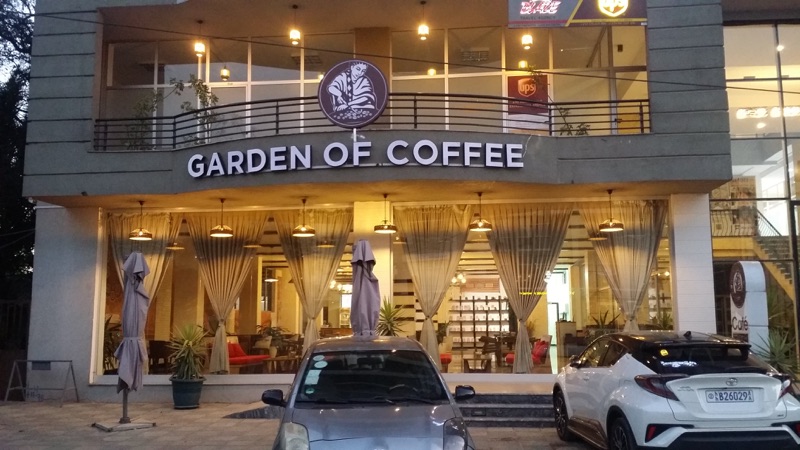
- The most educational coffee experience in Addis. If you want to actually understand Ethiopian coffee — regions, processing methods, flavor profiles — this is the place. The cupping sessions are particularly outstanding for coffee nerds. Premium pricing but justified by the quality and knowledge you walk away with.
5Mamokacha
Specialty MacchiatoQuick comparison
- Best for
- Specialty Macchiato in Atlas & Bole Bulbula
- Strengths
- Specialty Macchiato · Atlas & Bole Bulbula
- Limitations
- No major drawbacks called out in the source copy
- Why it made the list
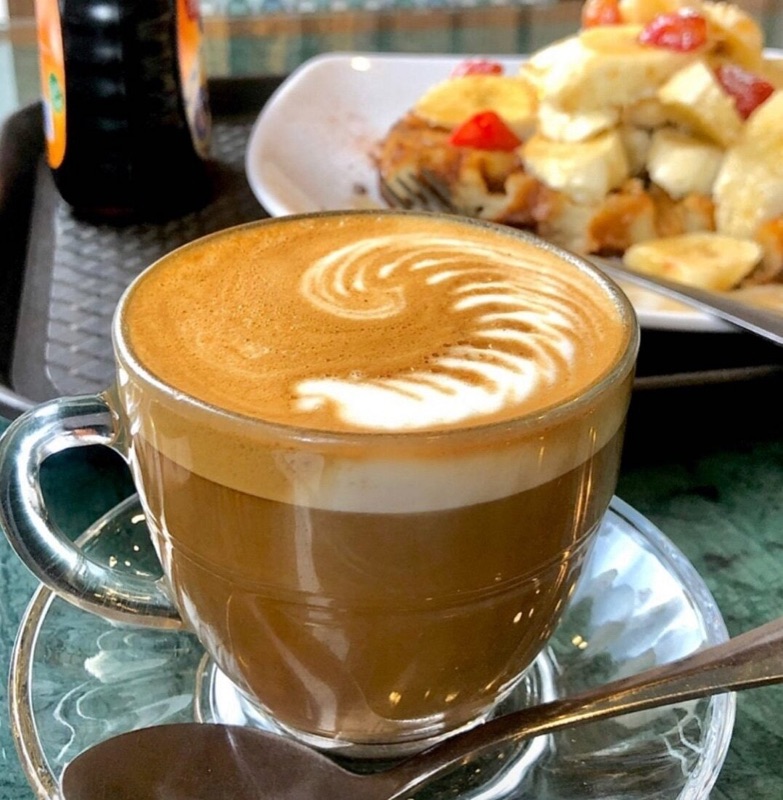
- The macchiato champion of Addis. Multiple sources call this the best macchiato in the city — and in a city that basically invented the Ethiopian macchiato, that's saying something. The Atlas location is particularly charming. Ask for it strong.
- What to order
- The macchiato — widely considered the best in the city. Baristas ask if you want it strong, light, or "normal," but the result is always a bespoke cup. Five locations across Addis, with Atlas and Bole Bulbula being the favorites. They also serve food, smoothies, and are expanding into wine and dairy.
6Moyee Coffee
Specialty · Social ImpactQuick comparison
- Best for
- Specialty · Social Impact in Bole Medhanialem
- Strengths
- Specialty · Social Impact · Bole Medhanialem
- Limitations
- No major drawbacks called out in the source copy
- Why it made the list
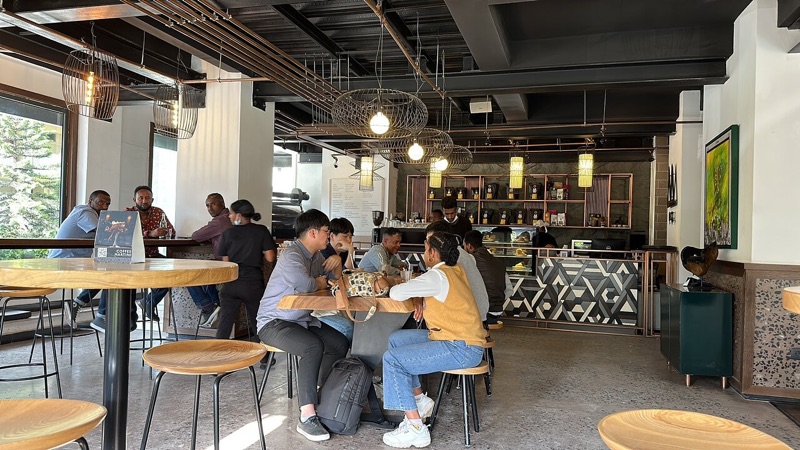
- The most atmospherically beautiful café on this list. Moyee bridges traditional Ethiopian coffee culture with contemporary café design in a way that feels natural, not forced. Their social impact model — reinvesting in communities — makes every cup feel good in two ways. The tsom macchiato is a unique must-try.
- What to order
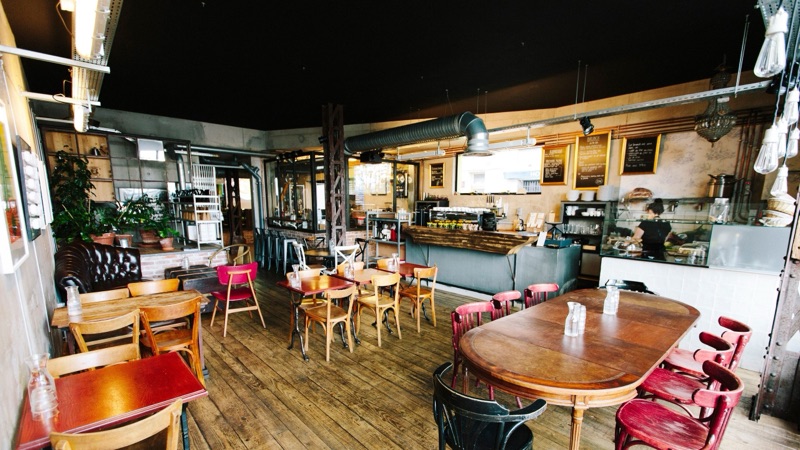
- The tsom macchiato — made with creamer instead of milk, giving it a richer, faintly nutty finish. Also try the straight black coffee for its balanced dark chocolate notes. Four locations, with Bole Medhanialem being the best — warm industrial vibes, leather sofas, exposed pipes, and generous natural light.
7Alem Bunna (ዓለም ቡና)
Traditional ChainQuick comparison
- Best for
- Traditional Chain in Kazanchis & Megenagna
- Strengths
- Traditional Chain · Kazanchis & Megenagna
- Limitations
- No major drawbacks called out in the source copy
- Why it made the list
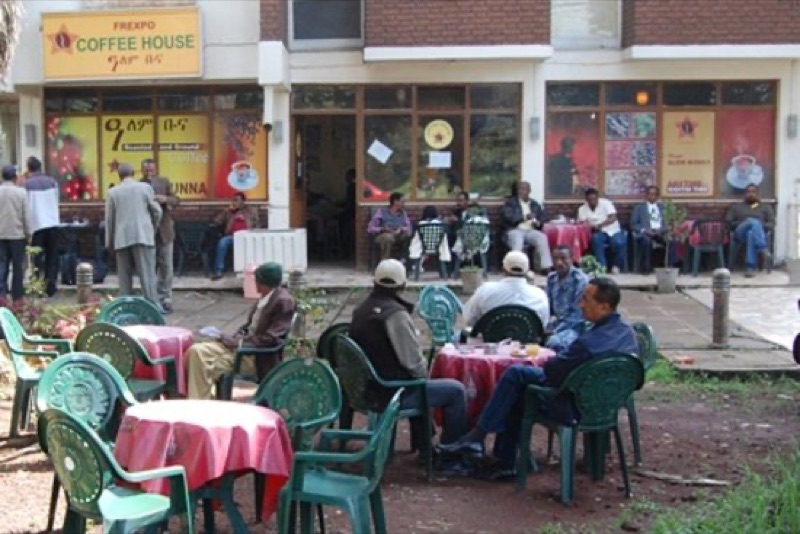
- The most authentic traditional chain in Addis. Where Kaldi's modernizes, Alem Bunna keeps it real with traditional brewing methods. Good value, genuine ceremony experience, multiple convenient locations. Occasional supply hiccups aside, when they're on, they're excellent.
- What to order
- Traditional jebena-brewed coffee — Alem Bunna is known for their artisanal approach using traditional Ethiopian brewing methods. Multiple locations in Kazanchis and Megenagna. You can also buy ground Alem Bunna coffee at supermarkets throughout the city. Best for the traditional ceremony experience in a comfortable setting.
8Kaldi's Coffee (ካልዲስ)
Modern ChainQuick comparison
- Best for
- Modern Chain in Multiple locations citywide
- Strengths
- Modern Chain · Multiple locations citywide
- Limitations
- reliably good and incredibly convenient
- Why it made the list
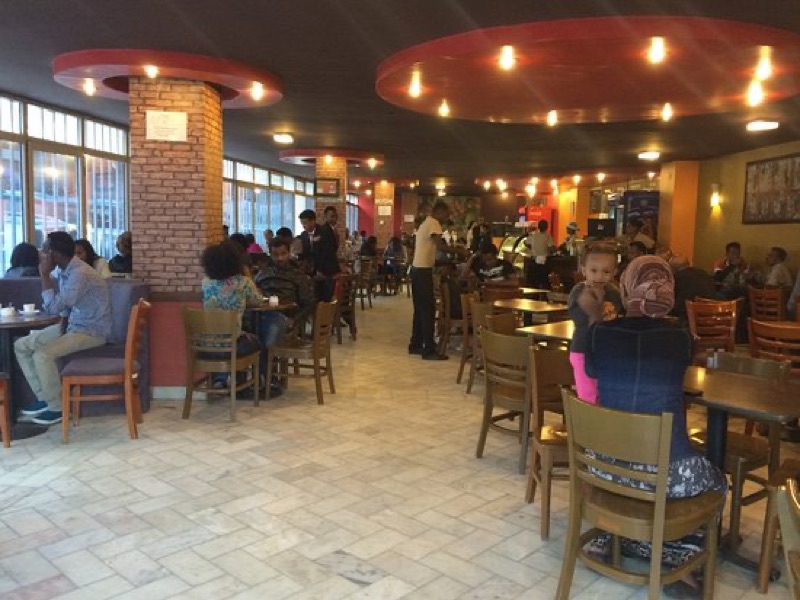
- Not the most authentic experience, but reliably good and incredibly convenient. If you need Wi-Fi, outlets, and a comfortable seat while experiencing decent Ethiopian coffee, Kaldi's is your base camp. Don't buy beans here though — locals say they're not as good as Tomoca or Mokarar.
- What to order
- A cappuccino or mocha if you need the familiar, but try their Ethiopian drip coffee for something closer to the local experience. Named after Kaldi, the legendary goat herder who discovered coffee, this is Ethiopia's answer to Starbucks — modern, comfortable, with reliable Wi-Fi. Best for: remote work, meetings, or when you want a comfortable sit-down coffee experience.
9CaffeOl Coffee
Specialty · Woman-OwnedQuick comparison
- Best for
- Specialty · Woman-Owned in Kera
- Strengths
- Specialty · Woman-Owned · Kera
- Limitations
- No major drawbacks called out in the source copy
- Why it made the list
- The hidden gem pick. A tucked-away café with exceptional coffee and the best vegan pastries in Addis. The woman-owned mission gives every visit extra meaning. If you're looking for specialty coffee with international-caliber food in a beautifully designed space, CaffeOl delivers.
- What to order
- The oat milk caramel iced latte — CaffeOl has the best vegan options in Addis. The vegan croissant and pain au chocolat are outstanding too. Founded by Faiza Ahmed, the café is woman-owned and dedicated to empowering women throughout the coffee supply chain. The space is beautifully curated with thoughtful design details.

10Galani Coffee
Specialty · Warehouse CaféQuick comparison
- Best for
- Specialty · Warehouse Café in Multiple locations
- Strengths
- Specialty · Warehouse Café · Multiple locations
- Limitations
- No major drawbacks called out in the source copy
- Why it made the list
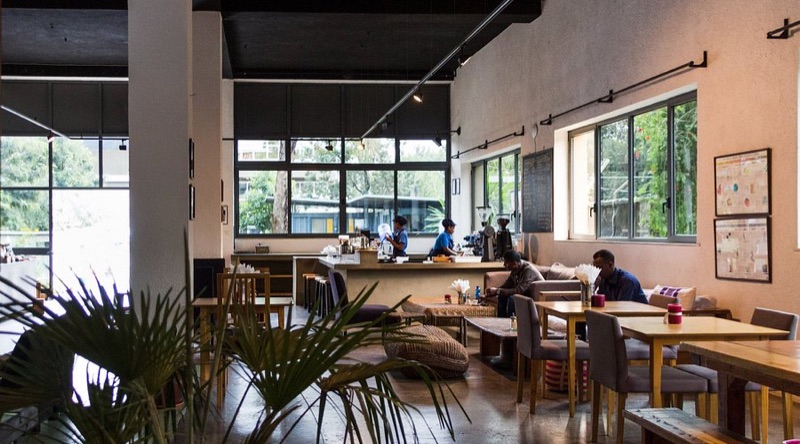
- The coolest space on this list. Follow the dirt road, trust the smell of coffee guiding you, and find this warehouse paradise. Galani nails the balance between serious coffee and relaxed hangout. Their extensive menu with dietary accommodations makes it one of the most inclusive cafés in Addis.
- What to order
- A flat white or pour-over from their extensive menu. Galani has a warehouse-style ambiance with lived-in sofas and long communal tables — perfect for working or hanging with friends. They also serve ice cream, food, and smoothies. The approach down a dirt road to the main location adds to the adventure.
11Yeshi Buna (የሺ ቡና)
Traditional · RestaurantQuick comparison
- Best for
- Traditional · Restaurant in Multiple locations (Bambis, etc.)
- Strengths
- Traditional · Restaurant · Multiple locations (Bambis, etc.)
- Limitations
- No major drawbacks called out in the source copy
- Why it made the list
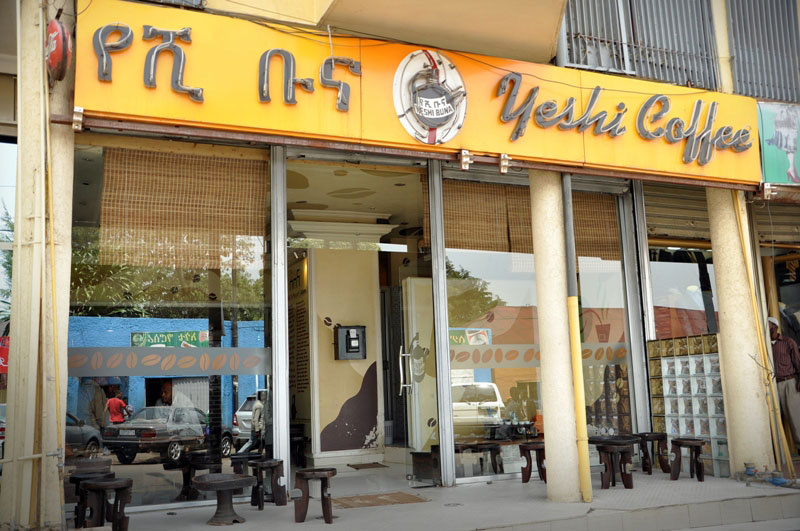
- The best two-in-one experience in Addis — outstanding Ethiopian food followed by a proper coffee ceremony. Perfect for when you want both lunch and coffee in one stop. The full jebena ceremony after a plate of injera is the quintessential Addis experience. Multiple locations means there's probably one near you.
- What to order
- Traditional jebena coffee after a meal of injera with wot (stew). Yeshi Buna is a restaurant-café hybrid — some come for the food, others just for coffee. The traditional coffee ceremony here comes complete with the full ritual: roasting, incense, popcorn, and three rounds. Multiple branches across the city with strong local followings.
12Street Jebena Vendors (ደምበኛ)
Street · NeighborhoodQuick comparison
- Best for
- Street · Neighborhood in Everywhere — every neighborhood
- Strengths
- Street · Neighborhood · Everywhere — every neighborhood
- Limitations
- No major drawbacks called out in the source copy
- Why it made the list
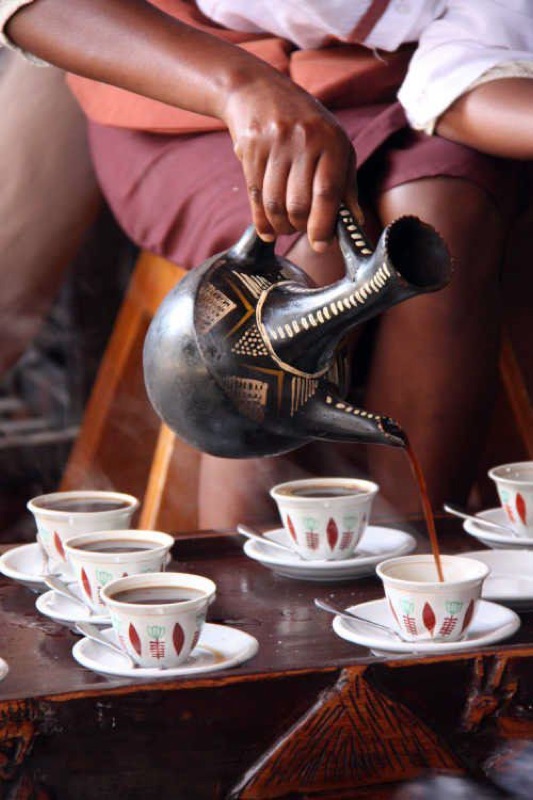
- This is the real coffee ceremony. No branding, no menu, no Instagram account — just a woman performing a ritual her grandmother taught her, in a tiny shop that smells like heaven. You'll find one on every block. Walk in, sit down, and surrender to the 30-minute process. At 10–30 ETB ($0.15–$0.50), it's the best coffee deal on Earth. Don't skip this for any of the named shops above — this IS the experience.
Frequently Asked Questions
What is an Ethiopian coffee ceremony?
The Ethiopian coffee ceremony (bunna maflat) is a centuries-old ritual where green coffee beans are washed, roasted over hot coals, ground by hand, and brewed in a clay jebena pot. The ceremony includes burning frankincense, serving popcorn, and pouring three rounds — Abol (first), Tona (second), and Baraka (third, the blessing). Each round gets progressively lighter. The whole process takes 1–3 hours and is central to Ethiopian social life.
How much does a coffee ceremony cost in Addis Ababa?
Street-side jebena coffee from a neighborhood dembegna costs 10–30 ETB ($0.15–$0.50 USD). A macchiato at a traditional shop like Tomoca or Mokarar runs 30–60 ETB ($0.50–$1). Specialty cafés like Garden of Coffee or Mamokacha charge 50–150 ETB ($0.80–$2.50). Guided coffee ceremony tours range from $30–$80 USD for a full experience with roasting, tasting, and cultural context.
Where is the best place to experience a coffee ceremony in Addis Ababa?
For the most authentic everyday experience, seek out neighborhood dembegna (street coffee vendors) — they perform the full ceremony daily. Tomoca on Wawel Street is the iconic must-visit for coffee history. For a curated experience with tasting and education, Garden of Coffee in Bole offers cupping sessions. Many hotels and tour operators also arrange private ceremonies. The beauty of Addis is that coffee is everywhere — you're never more than a few steps from the real thing.
What coffee beans should I buy in Addis Ababa?
Ethiopia's main coffee regions each have distinct profiles: Yirgacheffe (bright, floral, citrusy), Sidamo (fruity, wine-like), Harar (bold, fruity, blueberry notes), and Limu (balanced, spicy). Buy beans at Tomoca (famous for Harar roast), Mokarar (Harar and Sidamo specialists), or at Merkato market's coffee section. Expect to pay 140–300 ETB per kilo for quality beans. Buy whole beans — they stay fresh longer.
What is the difference between a macchiato and jebena coffee in Ethiopia?
An Ethiopian macchiato is espresso-based with a small cap of steamed milk — popularized during the Italian occupation in the 1930s–40s. You can order it 'strong' or 'light.' Jebena coffee is the traditional method: coarsely ground beans brewed in a clay pot over coals, served black (sometimes with sugar or a pinch of salt/rue herb). A 'spris' is a popular hybrid — half macchiato, half jebena in one cup. Both are integral to Addis coffee culture.
🎟️ Book Addis Ababa Experiences
Tours and activities hand-picked for this guide — book with free cancellation
Experiences via Viator — free cancellation on most tours