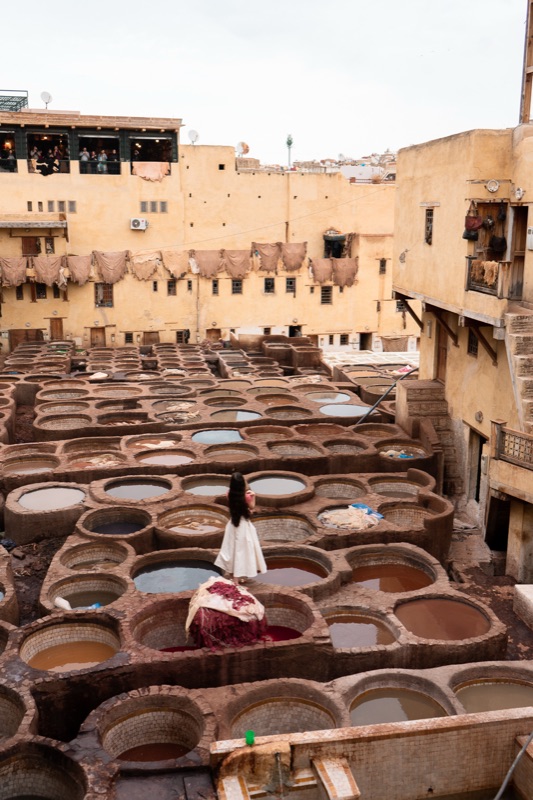
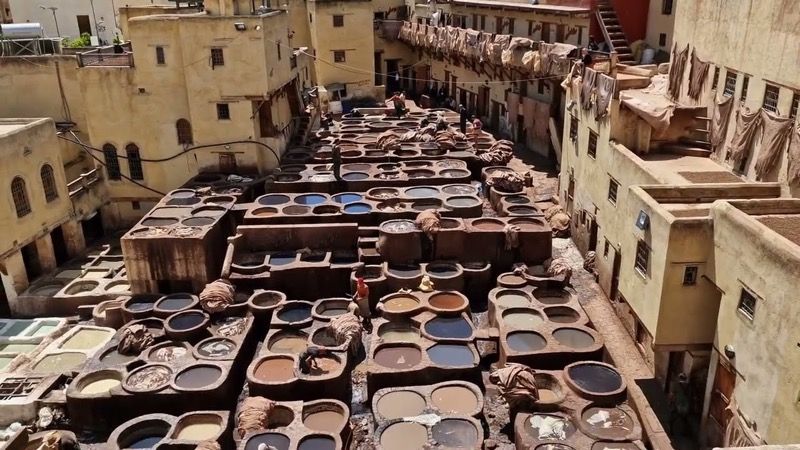
Fez's leather tanneries are a thousand-year-old spectacle — massive stone vats filled with vivid dyes, workers knee-deep in hides, and a smell you'll never forget. The three main tanneries (Chouara, Sidi Moussa, and Ain Azliten) still operate as cooperatives using medieval techniques: cow urine, pigeon droppings, quicklime, and natural pigments from saffron, poppy, indigo, and henna.
Most travelers visit only Chouara (the famous one), but the smaller tanneries offer quieter, more authentic experiences — and better prices. We combed through Reddit threads on r/Morocco, r/travel, and r/Leathercraft to separate the genuine from the tourist trap.
⚠️ Buying leather in Fez — the honest guide
Haggle aggressively. The first price is always 2–3× what they'll accept. Start at 30–40% of their opening price and work up. Watch for fake leather — jackets are the biggest offender. Real leather has irregular grain, natural smell, and absorbs water slightly. Bags, poufs, and babouches (slippers) are safer buys. Shops near terraces charge a premium — you're paying for the view. Better deals are deeper in the medina. And yes, the smell is real. Accept the mint sprig.
🏛️ Founded 11th century
📍 Fes el Bali, near Seffarine Square
📌 Google Maps →
What to buy: Goatskin jackets (soft, buttery — baby goatskin is the premium), leather bags, and babouches (traditional slippers). Jackets run 1,500–3,000 MAD after negotiation. Bags 200–600 MAD. Babouches from 50 MAD.
"We visited Chouara Tannery and ended up getting 2 jackets plus a wallet and belt. 4 items for 7,489 MAD. The jackets were both baby goatskin — it's so soft and feels like creamy butter!"
— r/Morocco · posted Oct 2024
"You basically got it on a local price, if not lower. They're very cheap compared to what you can find in the USA or Europe."
— r/Morocco · reply
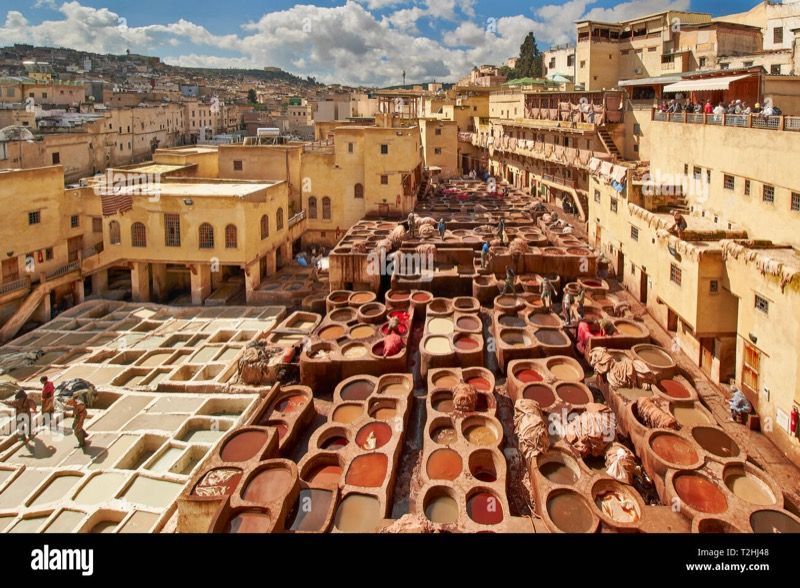
tabiji verdict: The one everyone comes for — and for good reason. The aerial view of hundreds of colorful dye vats is genuinely stunning. Visit in the morning when workers are most active. The shops around it charge tourist premiums, but the spectacle is unmissable. Use Terrace View No. 10 on Derb Chouara to avoid the most aggressive sales pressure.
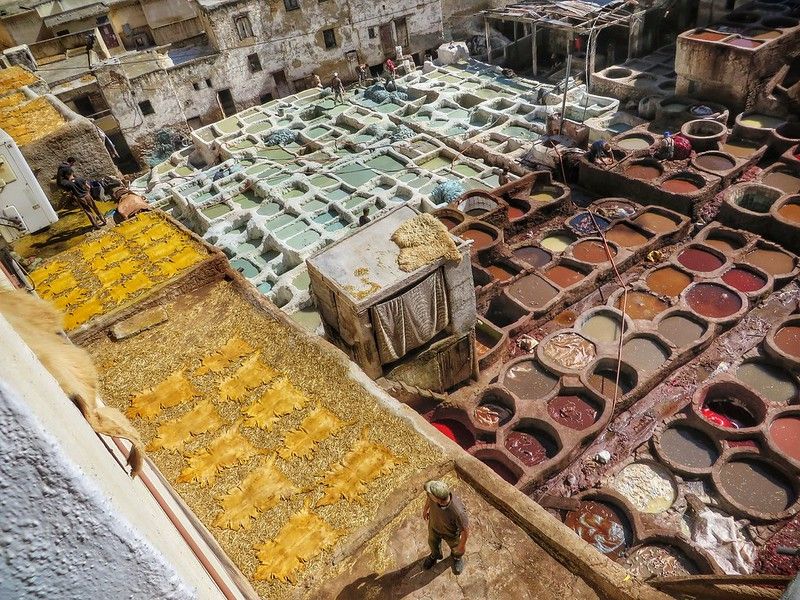
What to buy: Same leather goods as Chouara but often at better prices due to fewer tourists. Particularly good for bags and poufs. Browse the locally-made leather goods here — the artisans are more willing to negotiate.
"There are two great places: Chouara Tanneries from Seffarine square, and then the Sidi Moussa tannery accessible from the Nejjarine Square — walk upstairs the leather shop on the right."
— TripAdvisor Fez review · verified review
"Be aware, the smell of the tanneries is something you are not going to forget!"
— r/Leathercraft · posted 2018
tabiji verdict: The older, quieter sibling of Chouara. Fewer tour groups, friendlier craftsmen, and prices that reflect the lack of tourist markup. You can actually talk to the artisans here and learn about the process. Families will particularly enjoy the more relaxed pace. Accessible from the beautiful Nejjarine Square — combine with a visit to the woodworking museum there.
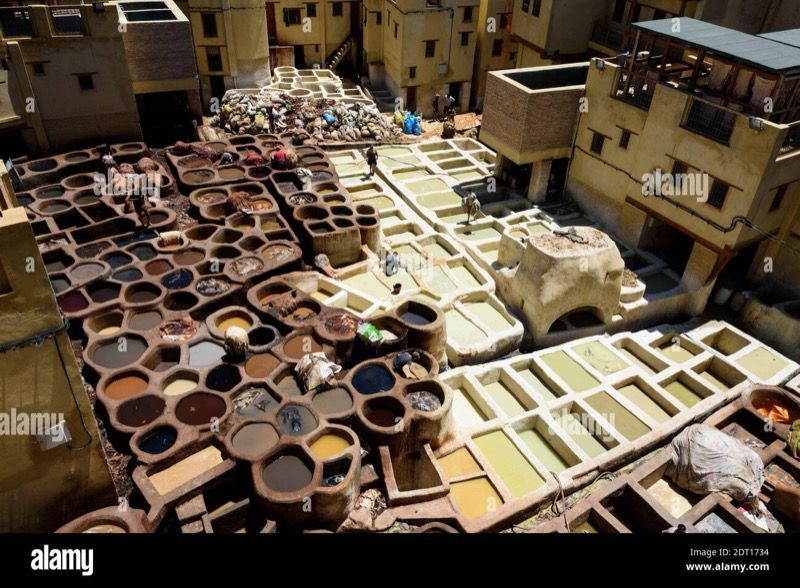
What to buy: This is less about shopping and more about the experience. If you do buy, expect friendlier negotiations and lower starting prices than Chouara. Good for smaller leather goods — wallets, coin purses, small bags.
"The craftsmen here are particularly friendly, often taking time to explain their meticulous work and the significance of leather within Fez's rich history."
— Hertz Morocco guide · 2024
tabiji verdict: The smallest and most peaceful of Fez's three traditional tanneries. Almost no tour groups, which means you can actually observe the tanning process up close without being herded through a shop. The craftsmen here genuinely enjoy explaining their work. Come here if you want to understand the craft rather than just take the Instagram photo.
What to buy: Raw leather hides if you're a craftsperson — available at much better prices than the finished goods shops. For tourists, smaller leather accessories and handcrafted items directly from the artisans.
"In the market where goods are made, not where they are sold, there are vendors that sell for much less. I paid $4 CAD per goat hide. They were about 2/3 the size of the piece from the tannery."
— r/Leathercraft · posted 2018
tabiji verdict: The one most travelers never find. Tucked away from the usual routes, Dar Dbagha offers the most authentic atmosphere — craftsmen working in a serene environment without the tourist performance. No crowds, no pressure, just raw leatherwork happening right in front of you. Perfect for serious leather enthusiasts or anyone who wants to see the real working side of Fez's tanning tradition.
🏛️ Near Seffarine (Coppersmith) Square
📍 Adjacent to blacksmiths & coppersmiths
📌 Google Maps →
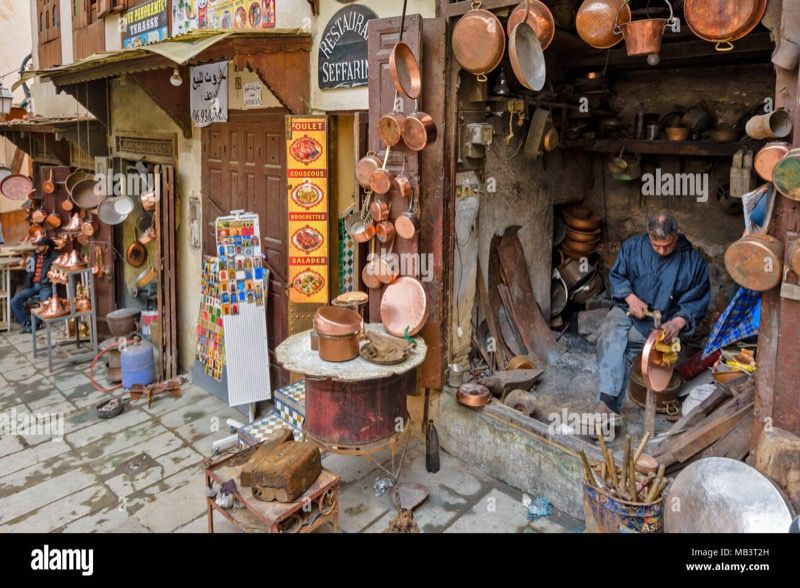
What to buy: Combine leather shopping with copperwork and metalwork from adjacent workshops. Good leather poufs and bags. The copper artisans sell beautiful trays, lanterns, and teapots alongside the leather goods.
"SO MANY FAKE LEATHER JACKETS! But leather bags and poufs are more abundant! Bought a bunch."
— r/Morocco · posted 2022
tabiji verdict: What sets Seffarine apart is the multi-sensory, multi-craft atmosphere. You're hearing copper hammers ringing while watching leather being dyed — a collision of medieval trades in one compact area. Less visually dramatic than Chouara's aerial views, but arguably a richer cultural experience. The square itself (Place Seffarine) is one of Fez's most atmospheric corners — don't rush through.
Frequently Asked Questions
How much do leather goods cost at Fez tanneries?
Leather jackets typically go for 1,500–3,000 MAD ($150–$300 USD) after negotiation — sellers start at 2–3× that. Bags range from 200–800 MAD, babouches (slippers) 50–200 MAD, belts and wallets 100–300 MAD, and poufs 300–800 MAD. Shops near terrace viewpoints charge more. Always negotiate firmly.
Is the leather at Fez tanneries real or fake?
The tanneries themselves process real leather, but many shops — especially those selling jackets — mix in synthetic products. Real leather has irregular grain, absorbs water slightly, and has a distinct natural smell. Goatskin (soft, buttery) and sheepskin are most common. If it feels plasticky, uniform, or too perfect, it's likely fake. Bags and poufs are generally safer buys than jackets.
What is the best time to visit Fez tanneries?
Morning (9–11 AM) is ideal — workers are most active and the dye vats display their most vibrant colors. Visit in cooler months (October–April) when the smell is more tolerable. Summer heat dramatically intensifies the odor. Tanneries are generally closed on Fridays (the Muslim holy day).
Does it really smell bad at the Fez tanneries?
Yes. The vats contain cow urine, pigeon droppings, quicklime, and other natural chemicals that soften hides before dyeing. From terrace viewpoints it's strong but manageable — guides offer mint sprigs to hold under your nose. At ground level it's genuinely intense. The smell can linger on clothes. Cooler months are significantly more bearable than summer.
Do I need a guide to visit the Fez tanneries?
No. You'll be approached by unofficial guides near every tannery — they earn commissions from shops. You can navigate independently — follow the smell and look for terrace view signs. At Chouara, "Terrace View No. 10" on Derb Chouara is well-marked. If you accept a guide, agree on the tip (10–20 MAD) before going up.
How do I avoid scams at Fez leather tanneries?
Start negotiations at 30–40% of the asking price. Test leather quality (irregular grain = real). Check stitching and zippers carefully. Agree on terrace/guide fees upfront. Don't feel pressured to buy from the shop whose terrace you used. Compare prices across shops. And a universal Reddit tip: if a stranger offers to "help you find" the tanneries, they're earning a commission from shops — you don't need them.