How we built this comparison
This page combines traveler discussion patterns, published price ranges, transit details, and seasonal data to make the Berlin vs Munich decision easier to resolve.
- Reviewed Reddit threads across r/travel, r/germany, and r/AskAGerman for recurring decision patterns between Berlin and Munich.
- Checked numeric claims like accommodation ranges, transit costs, distances, and seasonal patterns where those numbers appear on the page.
- Updated the page structure so each major section ends with a clearer winner, reason, and traveler-use note.
Best read as a decision guide, not a universal truth: the right pick depends on your budget, interests, and what kind of Germany you actually want to experience.
⚡ The TL;DR Verdict
Berlin wins for budget travelers, history buffs, nightlife seekers, and anyone who wants an edgy, international city. Munich wins for beer lovers, families, Alpine day-trippers, and people who want picture-postcard Germany. Budget: Berlin €50–80/day vs Munich €70–110/day mid-range.
- Choose Berlin: History lovers, nightlife seekers, budget travelers, solo explorers.
- Choose Munich: Beer garden fans, families, Alpine day-trippers, Oktoberfest pilgrims.
- Budget snapshot: Berlin €50–80/day; Munich €70–110/day (mid-range).
Choose Berlin
History lovers, nightlife seekers, budget travelers, solo explorers.
Choose Munich
Beer garden fans, families, Alpine day-trippers, Oktoberfest pilgrims.
Quick Comparison
| Category | 🏙️ Berlin | 🍺 Munich | Winner |
|---|---|---|---|
| Daily Budget (mid-range) | €50–80/day | €70–110/day | Berlin |
| Food Scene | Döner kebab, currywurst, diverse international food, budget-friendly | Weisswurst, pretzels, pork knuckle, schnitzel, beer hall culture | Tie |
| Beer Culture | Solid craft beer scene, relaxed Kneipe bars | Hofbräuhaus, 60+ beer gardens, Oktoberfest, Bavarian brewing heritage | Munich |
| History & Museums | WWII sites, Cold War landmarks, Museum Island, 170+ museums | Deutsches Museum, Residenz, Dachau Memorial nearby | Berlin |
| Nightlife | World-class techno clubs (Berghain, Tresor, Watergate), 24/7 scene | Lively bar scene, Hofbräuhaus, but closes relatively early | Berlin |
| Day Trips | Potsdam (30min), Sachsenhausen (45min), Dresden (2h) | Neuschwanstein (2h), Salzburg (1.5h), Zugspitze (1.5h), Alps | Munich |
| Public Transit | Excellent U-Bahn/S-Bahn, very large city requiring extensive travel | Efficient MVV network, more compact and walkable city center | Munich |
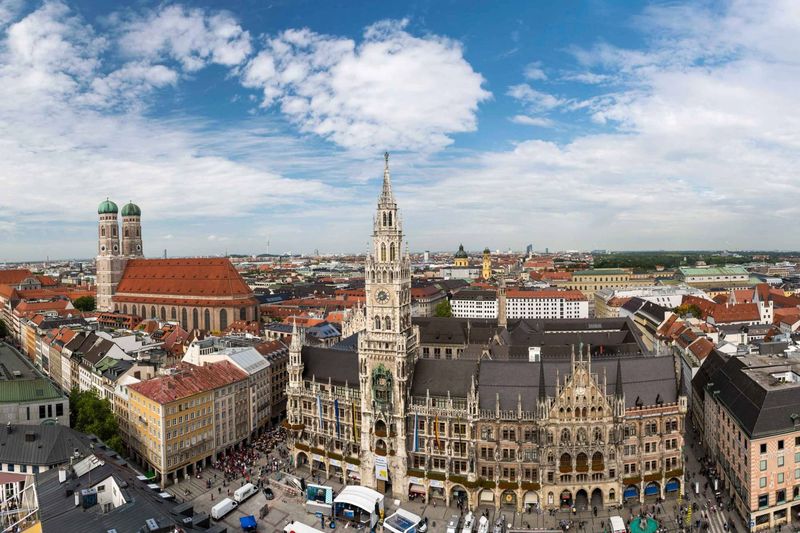
| City Architecture | Eclectic mix of Cold War, modern, and historic; East Side Gallery | Beautiful baroque and neoclassical; Marienplatz, Nymphenburg Palace | Munich |
| Budget Accommodation | Hostel dorms €15–28, mid-range hotels €70–120/night | Hostel dorms €22–40, mid-range hotels €100–180/night | Berlin |
| Family Friendliness | Good museums, large parks, but grittier vibe | Clean, safe, beautiful parks (English Garden), Alpine proximity | Munich |
| Best For | History buffs, nightlife, budget travelers, solo adventurers | Beer lovers, families, Oktoberfest, Alpine access | — |
🍺 Food, Beer & Dining
These two cities represent two fundamentally different food cultures — and both are excellent, just in completely different ways. Berlin's food scene is defined by its immigrant communities: the city's döner kebab culture is legendary (Berlin has more döner shops than Istanbul, according to locals), and you'll find world-class Turkish, Vietnamese, Middle Eastern, and Korean food in neighborhoods like Neukölln and Kreuzberg. The best cheap eats in Berlin are genuinely some of the best in Europe — you can eat extremely well on €5–12 per meal. Currywurst, the city's iconic street food, costs €2–4 and is a cultural institution.
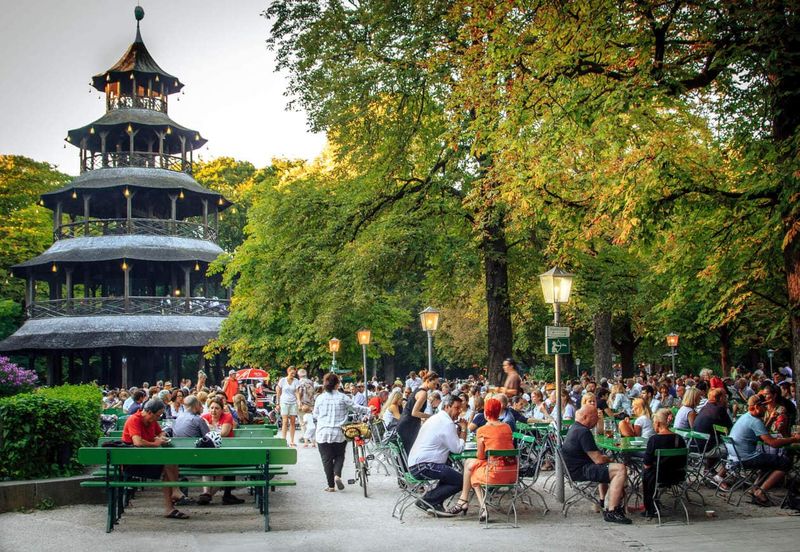
Munich's food culture is anchored in Bavarian tradition. The Munich beer halls are a genuine experience — sitting in the Hofbräuhaus with a mass of Weissbier (1 liter, €11–13) and a plate of Weisswurst with sweet mustard is quintessential Germany. The English Garden's beer gardens in summer, where office workers strip off their suits and drink with strangers on a sunny afternoon, is one of Germany's great social rituals. Munich's restaurant scene has improved dramatically — you'll find excellent Japanese, Italian, and modern Bavarian cuisine — but it's pricier than Berlin across the board.
🏛️ History & Cultural Attractions
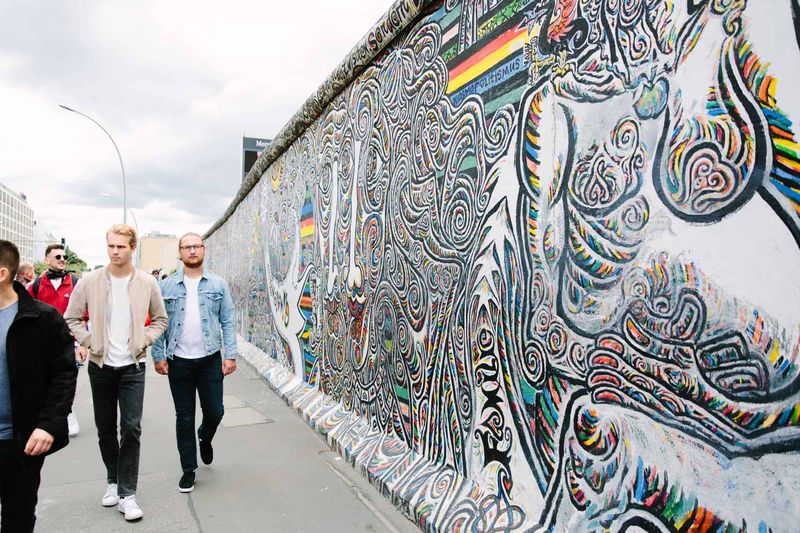
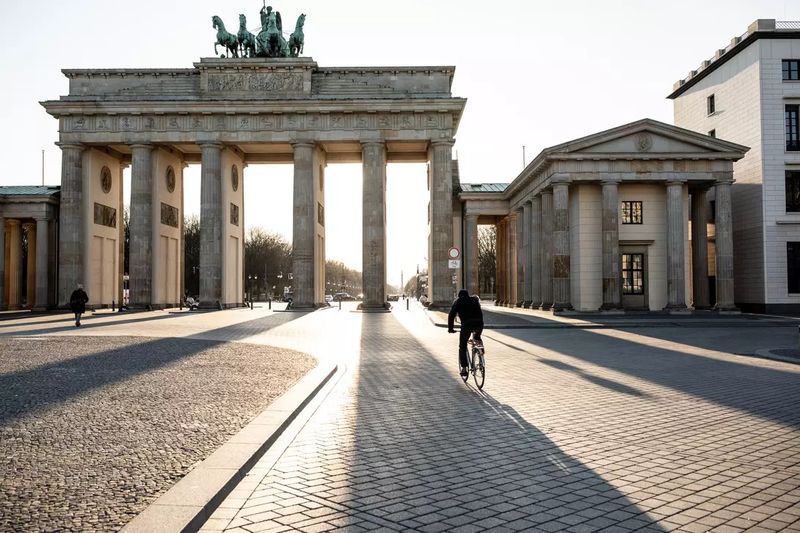
Berlin's historical weight is staggering. As the capital of unified Germany, former Nazi capital, and ground zero for Cold War division, Berlin has more historically significant sites per square kilometer than almost any city in Europe. The Brandenburg Gate — where the Wall once ran — is the most powerful symbol of reunification on Earth. The Memorial to the Murdered Jews of Europe (Holocaust Memorial) is hauntingly effective. The East Side Gallery, the longest surviving stretch of the Berlin Wall painted over by artists, stretches 1.3 km along the Spree. Museum Island contains five world-class institutions including the Pergamon Museum and Neues Museum, all on a UNESCO-listed island in the middle of the city. Add Checkpoint Charlie, the Topography of Terror documentation center, and the German Historical Museum, and you have more history than you can absorb in a week.
Munich's history is also compelling, though different. The city has one of Germany's finest collections of museums: the Deutsches Museum (world's largest science and technology museum), the Alte Pinakothek and Neue Pinakothek for art, and the Residenz — the former royal palace of the Wittelsbach dynasty, with 130 rooms open to visitors. Dachau Concentration Camp Memorial, just 30 minutes away, is one of the most important historical sites in Germany. Nymphenburg Palace with its formal baroque gardens is spectacular. But for sheer historical density and emotional impact, Berlin is in a different league.
💰 Cost Comparison
This is one of the starkest differences between the two cities. Berlin is one of the best-value major capitals in Western Europe. Munich is one of Germany's most expensive cities — a legacy of Bavaria's prosperity and high quality of life. Here's a real 2026 cost breakdown:
| Expense | 🏙️ Berlin | 🍺 Munich |
|---|---|---|
| Hostel dorm | €15–28/night | €22–40/night |
| Mid-range hotel | €70–120/night | €100–180/night |
| Budget meal (street food) | €3–8 | €5–12 |
| Sit-down lunch | €8–15 | €12–20 |
| Beer (0.5L in bar) | €3.50–5 | €4–7 |
| Beer garden mass (1L) | €4–6 | €11–13 |
| Single metro ride | €3.50 (or €29/mo Deutschlandticket) | €3.70 (or €29/mo Deutschlandticket) |
| Museum entry | €10–14 (Museum Island) or free Thursdays | €7–15 per museum |
| Daily total (mid-range) | €50–80 | €70–110 |
The Deutschlandticket: If you're staying more than 3 days in either city, the €29/month Deutschlandticket covers all local and regional public transit (not long-distance ICE trains) across all of Germany. It's one of the great travel deals in Europe right now — buy it for a month and use it across both cities and day trips.
🚇 Getting Around
Both cities have excellent public transit systems on the U-Bahn (subway) and S-Bahn (urban rail), and both are covered by the €29/month Deutschlandticket. The practical experience, however, is quite different.
Berlin has an enormous footprint — it's nine times the area of Paris. The U-Bahn and S-Bahn cover the city well, but you will spend time on trains. Berlin is not a walking city in the way that Amsterdam or Prague are. The transit system is extensive but aging in places, and the city is still completing major infrastructure projects. Getting from Mitte to Kreuzberg to Prenzlauer Berg in a single day requires planning. The BVG app handles routing well, and the system is generally reliable.
Munich is more compact and walkable at its core. The Altstadt (old town) around Marienplatz is genuinely strollable — you can hit the Residenz, the Hofbräuhaus, the English Garden entrance, and Viktualienmarkt all on foot in a half-day. The MVV (Munich transit authority) is highly efficient and user-friendly. That said, Munich's S-Bahn connections to day trip destinations (Dachau, Salzburg rail connections) are fast and frequent.
☀️ Best Time to Visit
Both cities have similar Continental climates, though Munich's Alpine proximity gives it slightly colder winters and a higher chance of snow, while Berlin's more northerly position means slightly longer summer days. Here's real climate data:
Data: Open-Meteo climate normals. Temperatures are daily highs/lows in Celsius. Rainfall is monthly totals.
Best seasons at a glance
Summer (June–August) is peak season for both cities. Berlin's outdoor festival scene, canal-side bars, and open-air clubs are in full swing. Munich's English Garden beer gardens are packed with office workers and tourists. Both cities are hot and busy — book well ahead.
Oktoberfest (mid-September to early October) transforms Munich entirely. If this is your reason for visiting, plan 12+ months ahead for accommodation. Avoid Munich's Oktoberfest dates if you hate crowds — hotels cost 3–5x their normal rate.
Christmas markets (December) — Munich's Christkindlmarkt on Marienplatz is one of Germany's most beautiful. Berlin has dozens of markets, including the famous one at Charlottenburg Palace. A Reddit user noted: "I would recommend Berlin 11 out of 12 months, but since you want to go in December, take Munich — it is more Christmas-y and you have a much greater chance of snow."
Spring (April–May) offers pleasant weather in both cities with fewer crowds than summer. Berlin's parks bloom and outdoor culture starts early. Munich's beer gardens open as soon as temperatures hit 10°C (it's a city law, essentially).
🏨 Where to Stay
Berlin neighborhoods
Mitte — The historic center. Brandenburg Gate, Museum Island, Checkpoint Charlie. Most tourist-convenient but not the most local-feeling. Mid-range to luxury hotels.
Prenzlauer Berg — Leafy, upscale, family-friendly. Beautiful pre-war architecture, boutique coffee shops, excellent restaurants. More relaxed than central Berlin. Popular with young families and creatives.
Kreuzberg / Neukölln — The heart of Berlin's alternative scene. Best döner kebab, multicultural food, street art, independent bars. Great value accommodation. The vibe here is what makes Berlin feel like Berlin.
Friedrichshain — Near the East Side Gallery and the club scene. More youthful, louder, great for nightlife. Budget-friendly hostels and apartments.
Munich neighborhoods
Altstadt / Maxvorstadt — The compact old town around Marienplatz. Walking distance to the Hofbräuhaus, English Garden, and Residenz. Most convenient but most expensive.
Schwabing — Munich's bohemian quarter, bordering the English Garden. Good restaurants, café culture, slightly more local feel. A favorite of Reddit travelers who want to stay near the park.
Haidhausen / Au — East of the river Isar. More affordable, increasingly popular, good local restaurants and bars. 15–20 minutes by U-Bahn to the center.
🎒 Day Trips
This is Munich's strongest category. The combination of Alpine access, Austrian border proximity, and fairy-tale Bavarian castles gives Munich a roster of day trips that Berlin simply can't match.
From Munich
Neuschwanstein Castle (2h by train + bus) — The Disney-inspiration castle perched above Bavarian alpine meadows. One of Germany's most iconic sights. Allow a full day.
Salzburg, Austria (1.5h by train) — Mozart's birthplace, stunning baroque old town, Hohensalzburg Fortress. Easy and exceptional day trip.
Dachau Concentration Camp (45min by S-Bahn + bus) — Important and sobering. Give it half a day minimum.
Garmisch-Partenkirchen + Zugspitze (1.5h by train) — Germany's highest mountain (2,962m), cable car to the summit. Unforgettable on a clear day.
Chiemsee & Herrenchiemsee Palace (1h by train) — Bavaria's "sea," a large Alpine lake with a Versailles-inspired palace on an island.
From Berlin
Potsdam (30min by S-Bahn) — Stunning Prussian palaces and gardens, UNESCO World Heritage Site. The Sanssouci Palace complex is outstanding. Half-day or full day.
Sachsenhausen Concentration Camp (45min by train) — One of the first major Nazi concentration camps, now a sobering memorial. Half-day minimum.
Dresden (2h by ICE) — Baroque Altstadt, incredible art collections (Zwinger), and a remarkable story of reconstruction after WW2 bombing.
🎉 Nightlife & Entertainment
Berlin's nightlife is, without exaggeration, the best in the world for electronic music. Berghain is the most famous (and most selective-door) club on the planet — a converted power station where sets run 12+ hours and the house-and-techno programming is uncompromising. Tresor occupies a former bank vault and basement. Watergate overlooks the Spree with glass floors. Sisyphos is an outdoor club-festival hybrid that runs all weekend. The scene operates on Berlin time: Friday night bleeds into Saturday morning into Saturday evening. Many clubs are 18+ and "soberly serious" about music — check-your-phone, no-photos environments where the music is the point.
Munich's nightlife is fun and lively but operates in a different dimension. The Hofbräuhaus serves 10,000 liters of beer daily and has live oompah bands. The area around Maximiliansplatz and the bars of Glockenbachviertel offer a vibrant evening scene. There are clubs — including a solid techno scene at venues like Blitz Club — but Munich shuts down earlier and the vibe is more approachable. For Oktoberfest, the giant beer tents (Bierzelte) are their own kind of party — 10,000 people singing, swaying, and clanking steins from noon to midnight.
🔀 Why Not Both?
Here's what experienced Germany travelers consistently advise: the Berlin vs Munich debate is a false choice. Germany's ICE high-speed train network connects them in about 4 hours 20 minutes, and if you book in advance you can find Sparpreis tickets for as little as €29–49. See also our guide to Amsterdam vs Berlin for Northern European routing ideas.
Suggested split itineraries
7 days: 4 days Berlin → ICE train → 3 days Munich (with Neuschwanstein day trip)
10 days: 5 days Berlin (with Potsdam + Sachsenhausen day trips) → ICE → 3 days Munich → 2 days Salzburg/Alps
14 days: 5 days Berlin (with Dresden day trip) → 2 days Nuremberg → 5 days Munich → 2 days Austrian Alps
Pro tip: The €29 Deutschlandticket doesn't cover ICE trains, but Deutsche Bahn's Sparpreis advance tickets can be remarkably cheap (€19–49 Berlin–Munich). Book 8+ weeks ahead. Flying is rarely faster door-to-door once you factor in airport transit time on both ends.
🎯 The Decision Framework
Choose Berlin If…
- WWII and Cold War history is a priority
- You want the world's best nightlife
- Budget is tight — Berlin is ~30% cheaper
- International, multicultural food scenes matter
- You prefer edgy, counterculture vibes
- You're a solo traveler or traveling young
- Art, street art, and creative culture excite you
- You want more days in a single city
- You've already done the "classic Germany" circuit
Choose Munich If…
- Beer halls and Bavarian culture are the draw
- You're going for Oktoberfest (late September)
- Alpine day trips (Neuschwanstein, Zugspitze) matter
- You want clean, walkable, well-organized city
- Traveling with family or children
- You want to visit Salzburg without a separate trip
- Christmas markets in December are appealing
- You want "stereotypical Germany" on first visit
- 3 days is all you have — Munich is more compact
❓ Frequently Asked Questions
Is Berlin or Munich better for first-time visitors to Germany?
It genuinely depends on what you want. Reddit is split right down the middle. Munich feels more "stereotypically German" — beer halls, pretzels, lederhosen, stunning architecture, and Alpine day trips. Berlin is the opposite: it's the most international, diverse, and historically layered city in Germany. First-timers who want picture-postcard Germany tend to prefer Munich. First-timers who want historical depth, nightlife, and a global city vibe consistently choose Berlin. If you have 7+ days, do both — they're only 4.5 hours apart by train.
How far apart are Berlin and Munich?
About 585 km. The ICE high-speed train takes approximately 4 hours 20 minutes and costs €30–80 each way depending on how far in advance you book (Deutsche Bahn Sparpreise). FlixBus is cheaper (~€15–30) but takes 6+ hours. Flying takes about 1 hour gate-to-gate but airport transit on both ends largely erases the time advantage.
Which is cheaper, Berlin or Munich?
Berlin is significantly cheaper — typically 25–35% less for accommodation and 20–30% for food. Munich is one of the most expensive cities in Germany. Mid-range hotel in Berlin: €70–120/night; Munich: €100–180/night. A sit-down lunch in Berlin runs €8–15; Munich €12–20. Budget travelers consistently pick Berlin as one of the best-value major cities in Western Europe.
Which city has better nightlife — Berlin or Munich?
Berlin. It's not even close. Berlin is widely considered the world capital of electronic music and club culture. Berghain's door policy is legendary; Tresor, Watergate, and Sisyphos can host thousands into Monday morning. Munich has a lively bar scene and the famous Hofbräuhaus, but nothing approaches Berlin's club ecosystem. If nightlife is a priority, Berlin wins decisively.
Which city has better day trips — Berlin or Munich?
Munich wins for day trip quality. Neuschwanstein Castle (2h), Salzburg, Austria (1.5h), Dachau Memorial (45min), Garmisch-Partenkirchen and Zugspitze (1.5h), and the Bavarian Alps are all within easy striking distance. Berlin's best day trips — Potsdam (30min), Sachsenhausen (45min), and Dresden (2h) — are excellent but can't match Munich's Alpine and cross-border access.
When is the best time to visit Berlin vs Munich?
Both cities peak in summer (June–August) for outdoor beer gardens and festivals. Munich's Oktoberfest in late September is the single most famous event in Germany. Berlin is better in summer for its outdoor culture and events; Munich is arguably best in December for its legendary Christmas markets. Both cities in spring (April–May) offer pleasant weather with fewer crowds. Avoid January–February in both unless you're on a budget trip.
How many days do you need in Berlin vs Munich?
Berlin rewards at least 4–5 days, easily absorbing a week with day trips. Museum Island alone can take 2 days; WWII sites another full day. Munich's core city highlights fit comfortably in 3 days, with 1–2 day trips added. If you have only 3 days total and are choosing one, Berlin gives you more material; Munich is more digestible in a short visit.
Should I visit Berlin or Munich for Oktoberfest?
Munich, obviously. Oktoberfest runs for about 16–18 days in late September through early October at the Theresienwiese grounds, drawing 6–7 million visitors annually. Book accommodation 6–12 months in advance — prices triple and availability collapses. Berlin has its own beer festivals but nothing comparable. If Oktoberfest is the goal, Munich is the only answer.
Ready to plan your Germany trip?
Get a free custom itinerary for Berlin, Munich, or both — built from real traveler insights, not generic templates.
🎟️ Book Tours & Experiences
Hand-picked tours and activities for both destinations — book with free cancellation
Experiences via Viator — free cancellation on most tours