
How we built this comparison
This page combines traveler discussion patterns, published price ranges, flight schedules, and seasonal data to help you decide between Brazil and Uruguay.
- Reviewed Reddit threads from r/travel, r/solotravel, r/Brazil, r/Uruguay, r/SouthAmerica
- Verified costs and logistics against current booking platforms like Google Flights, Booking.com, and local bus sites
- Cross-referenced seasonal patterns and weather data with local expert recommendations

⚡ Quick Answers
⚡ The TL;DR Verdict
For most travelers seeking a broader adventure, Brazil offers more varied experiences, though it demands a higher degree of awareness. If you prioritize ease, safety, and a slower pace, Uruguay is a solid pick. A daily budget for Brazil typically ranges from $50-100, while Uruguay leans towards $70-130.
- Choose Brazil: Pick Brazil if you want grand scale nature, intense nightlife, a kaleidoscope of cultures, and dont mind navigating larger crowds and cities.
- Choose Uruguay: Choose Uruguay for a tranquil escape, safer streets, excellent food, and a more European feel with fewer language barriers and a slower pace.
- Choose Both: Combine both for a two-week trip. Start in Rio for a few days, fly to Montevideo, then explore Uruguays coast, offering a good balance of energy and calm.
Choose Brazil
Choose Brazil if you crave vibrant energy and epic scale adventures. It's perfect for travelers who want to dance at Carnival in Rio, explore the Amazon rainforest, or marvel at Iguazu Falls, embracing diverse cultures and bustling cities. Best for those seeking an unforgettable, high-energy experience with a daily budget around $50-100.
Choose Uruguay
Opt for Uruguay for a sophisticated, tranquil retreat with a distinctly European charm. Ideal for travelers prioritizing safety, gourmet food, and a relaxed pace, perhaps exploring Montevideo's historic districts or the beautiful beaches of Punta del Este. Best suited for those seeking effortless elegance and a higher daily budget of $70-130.
📊 Visual Scorecard
🌤 When to Visit
Average high temperatures (°C). Green = best months, orange = avoid.
Quick Comparison
| Category | Brazil | Uruguay | Winner |
|---|---|---|---|
| Costs & Budget | Generally lower daily expenses, especially for food and local transport. Accommodation can vary widely. | Higher daily costs, similar to some parts of Southern Europe. Food and alcohol are pricier. | Brazil |
| Beaches & Coastlines | Thousands of kilometers of diverse coastline, from famous urban beaches to secluded coves and surf spots. | Atlantic coast with long, sandy stretches, popular resort towns, and calmer river beaches near Montevideo. | Brazil |
| Food & Drink | Diverse regional cuisines, street food, barbecue, and tropical fruits. Caipirinhas are omnipresent. | Focus on high-quality beef, pasta, and dairy. Chivito sandwiches and Tannat wine are specialties. | Brazil |
| Nightlife & Entertainment | Known for vibrant music scenes, samba clubs, mega-clubs, and street parties. Something happening every night. | Relaxed bar scene, some clubs, live music (tango, candombe) in Montevideo, and summer parties in coastal towns. | Brazil |
| Culture & History | Portuguese colonial past, strong Afro-Brazilian influences, Indigenous heritage, and modern artistic movements. | Spanish colonial heritage, strong European (Italian, Spanish) influences, gaucho traditions, and a more understated cultural identity. | Brazil |
| Safety & Travel Ease | Requires awareness, especially in major cities. Petty crime is common. Varies greatly by region. | Generally safer and more relaxed. Easier to navigate for first-time South American travelers. | Uruguay |
| Nature & Outdoors | Amazon Rainforest, Iguazu Falls, Pantanal wetlands, diverse national parks, and extensive biodiversity. | Rolling hills, expansive grasslands, coastal dunes, and protected wetlands like Bañados del Este. | Brazil |
| Getting Around | Extensive bus network, but distances are vast. Domestic flights often necessary for longer trips. | Compact size makes bus travel efficient. Renting a car is a good option for coastal exploration. | Uruguay |
| Accommodation | Wide range from budget hostels to luxury resorts. More unique options like pousadas and eco-lodges. | Good quality options, generally fewer extreme budget hostels. Upscale hotels are common in resort towns. | Brazil |
| Solo Travel | Good hostel scene for meeting people, but requires higher vigilance, especially at night. Language can be a barrier. | Generally safer and easier to navigate. Friendly locals, good for independent exploration. Less intense social scene. | Uruguay |
💰 Costs & Budget
Brazil offers a more budget-friendly experience for everyday expenses. Street food like Acarajé in Salvador can be R$15-25 ($3-5 USD), and a local meal at a 'lanchonete' might…
Brazil offers a more budget-friendly experience for everyday expenses. Street food like Acarajé in Salvador can be R$15-25 ($3-5 USD), and a local meal at a 'lanchonete' might cost R$30-50 ($6-10 USD). A decent hostel bed in Rio de Janeiro or Sao Paulo runs about R$80-150 ($16-30 USD), while a mid-range hotel is R$300-600 ($60-120 USD). Domestic flights are a big expense, often R$300-800 ($60-160 USD) for inter-city travel, but long-distance buses are cheaper. A local bus ride is R$4-6 ($0.80-1.20 USD).
Uruguay is noticeably more expensive across the board. A basic meal in Montevideo might cost $500-800 UYU ($12-20 USD), and a nicer restaurant can easily be $1200-2000 UYU ($30-50 USD). Hostel beds start around $700-1200 UYU ($18-30 USD), with mid-range hotels at $3000-6000 UYU ($75-150 USD). Public transport in Montevideo is around $40-55 UYU ($1-1.40 USD). Groceries are also higher, so self-catering does not save as much as it would in Brazil. The tabiji verdict: Brazil provides more stretch for your dollar, allowing for longer stays or more activities.
- Winner: Brazil
- Why: Brazil generally offers significantly lower costs for food, local transport, and budget accommodation options.
- Who this matters for: Travelers on a tighter budget or those wanting to extend their trip duration.
🏖️ Beaches & Coastlines

Brazil has an immense and varied coastline. In Rio, Copacabana and Ipanema are iconic for people watching and beach life, with kiosks selling caipirinhas for R$20-30 ($4-6…
Brazil has an immense and varied coastline. In Rio, Copacabana and Ipanema are iconic for people watching and beach life, with kiosks selling caipirinhas for R$20-30 ($4-6 USD). Further south, Florianopolis offers surf breaks at Praia Mole and calmer waters at Lagoa da Conceição. The northeast, particularly Bahia and Pernambuco, has warm waters and coral reefs, like the natural pools of Porto de Galinhas. Getting to more remote spots like Jericoacoara or Fernando de Noronha requires domestic flights or extensive bus travel and often higher accommodation costs, but the rewards are significant.
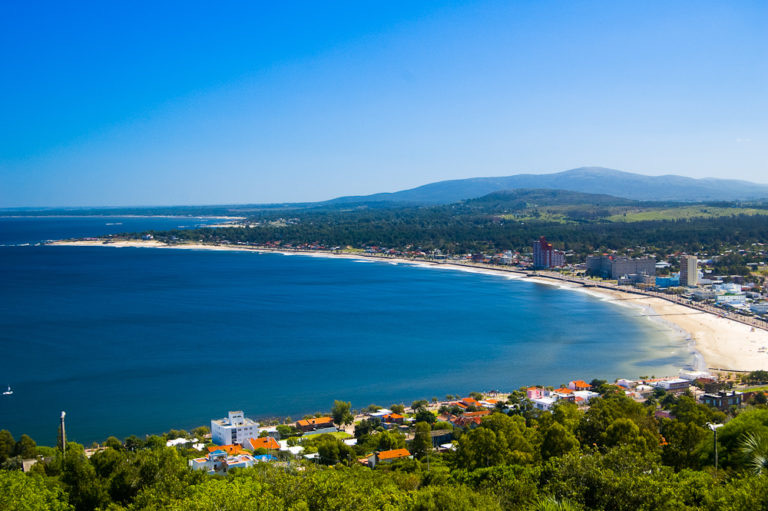
Uruguays coastline, while beautiful, is less extensive and generally less varied. Punta del Este is the most famous resort, known for its summer crowds and upscale atmosphere, where a chair and umbrella rental might be $500-1000 UYU ($12-25 USD) for the day. Jose Ignacio offers a more bohemian and exclusive vibe, with excellent restaurants like La Huella right on the sand. La Pedrera and Cabo Polonio provide wilder, more rustic beach experiences, appealing to those seeking quiet and nature, but facilities are minimal. The tabiji verdict: Brazil wins for sheer variety and scale of beach experiences, catering to every preference.
- Winner: Brazil
- Why: Brazil offers an unparalleled diversity and scale of beaches, from bustling urban shores to pristine, remote paradises.
- Who this matters for: Beach enthusiasts, surfers, and those looking for extensive coastal exploration.
🍽️ Food & Drink
Brazils food scene is incredibly diverse, reflecting its size and different cultural influences. In Rio, try a 'feijoada completa' at Bar do Mineiro in Santa Teresa for about…
Brazils food scene is incredibly diverse, reflecting its size and different cultural influences. In Rio, try a 'feijoada completa' at Bar do Mineiro in Santa Teresa for about R$70-100 ($14-20 USD). Street food like 'pão de queijo' (R$5-10 / $1-2 USD) and 'coxinha' (R$8-15 / $1.60-3 USD) are cheap and satisfying. The northeast has African-influenced dishes like 'moqueca' (R$80-150 / $16-30 USD). 'Churrascarias' (Brazilian steakhouses) offer all-you-can-eat meat for R$100-200 ($20-40 USD). Caipirinhas are everywhere, often R$20-35 ($4-7 USD).
Uruguay is celebrated for its excellent beef, often cooked 'al asador' (barbecue style). A 'parrillada' (mixed grill) at a Montevideo restaurant like El Palenque in Mercado del Puerto can be $1800-3000 UYU ($45-75 USD) for two. The 'chivito' is a massive steak sandwich, typically $600-900 UYU ($15-22 USD). Pasta is also popular due to Italian immigration. Uruguay produces quality wines, especially Tannat, with bottles starting around $400 UYU ($10 USD) in stores. For a more casual bite, a 'media luna' (croissant) and coffee is $200-300 UYU ($5-7 USD). The tabiji verdict: Brazil offers a wider range of flavors and experiences, while Uruguay excels in specific, high-quality offerings.
- Winner: Brazil
- Why: Brazil presents a broader, more varied culinary landscape with distinct regional cuisines and accessible street food options.
- Who this matters for: Foodies seeking diverse flavors, budget-conscious eaters, and those who appreciate tropical ingredients.
🎉 Nightlife & Entertainment
Brazils nightlife is legendary for its energy and scale. Rio de Janeiros Lapa district comes alive with street parties, samba clubs like Rio Scenarium (entry R$50-80 / $10-16…
Brazils nightlife is legendary for its energy and scale. Rio de Janeiros Lapa district comes alive with street parties, samba clubs like Rio Scenarium (entry R$50-80 / $10-16 USD), and bars spilling onto the sidewalks. Sao Paulo has a sophisticated club scene, with options ranging from electronic music to live jazz, and high-end cocktails can be R$40-70 ($8-14 USD). Even smaller cities offer lively bars and live music. During Carnival, the entire country transforms into one massive party. Beer at a local bar is often R$10-15 ($2-3 USD).
Uruguays nightlife is calmer but still offers good options. Montevideo has a decent bar scene in areas like Pocitos and Ciudad Vieja. Live candombe (Afro-Uruguayan drumming) can be experienced on Sundays in Barrio Sur, often free on the street. Clubs are present but fewer and smaller than in Brazil, with entry typically $400-800 UYU ($10-20 USD). During the summer, Punta del Este becomes a hub for parties and beach clubs, drawing an international crowd, but it is seasonal. A beer in a bar might be $150-250 UYU ($4-6 USD). The tabiji verdict: Brazil delivers a more intense, diverse, and consistently active nightlife experience, especially in its major cities.
- Winner: Brazil
- Why: Brazil offers a significantly more extensive, diverse, and energetic nightlife scene, especially in major cities like Rio and Sao Paulo.
- Who this matters for: Party-goers, music lovers, and those looking for late-night entertainment and social events.
🏛️ Culture & History
Brazils cultural landscape is vast and deeply shaped by its Portuguese colonial history, a large African diaspora, and Indigenous roots. Salvador, Bahia, is the epicenter of…
Brazils cultural landscape is vast and deeply shaped by its Portuguese colonial history, a large African diaspora, and Indigenous roots. Salvador, Bahia, is the epicenter of Afro-Brazilian culture, with its colorful Pelourinho district (UNESCO site) and Candomblé traditions. Rio de Janeiros Carnival is a global spectacle rooted in samba and local communities. Colonial towns like Ouro Preto in Minas Gerais showcase stunning baroque architecture. Museums in Sao Paulo (MASP, Pinacoteca) offer world-class art. Entry to most museums is R$20-50 ($4-10 USD), with some free days.
Uruguays culture is a blend of Spanish colonial heritage and strong European immigrant influences, especially Italian and Spanish. Montevideo features colonial architecture in Ciudad Vieja, and its museums, like the Museo Torres García (entry $200-300 UYU / $5-7 USD), reflect its artistic contributions. The 'gaucho' (cowboy) culture is present in the countryside. Tango has a presence, with Casa Gardel often hosting shows. Uruguayans are generally more reserved, but their culture is evident in their love for mate (a shared herbal drink) and football. The tabiji verdict: Brazil offers a more outwardly expressive and diverse cultural experience, with significant historical depth and a range of influences.
- Winner: Brazil
- Why: Brazil offers a richer, more diverse, and outwardly expressed cultural experience with deeper historical layers.
- Who this matters for: Culture enthusiasts, history buffs, and those interested in diverse traditions and art forms.
🚨 Safety & Travel Ease
Safety in Brazil is a significant consideration. Major cities like Rio and Sao Paulo have higher crime rates, with petty theft (pickpocketing, phone snatching) being common.…
Safety in Brazil is a significant consideration. Major cities like Rio and Sao Paulo have higher crime rates, with petty theft (pickpocketing, phone snatching) being common. Travelers need to exercise caution, avoid displaying valuables, and be aware of their surroundings, especially at night. Some favelas are safe with guided tours, others are not. Inter-city travel can be long by bus, or expensive by flight. English is less widely spoken outside tourist hotspots, which can add a layer of complexity for non-Portuguese speakers. Public transport can be crowded.
Uruguay is consistently ranked as one of the safest countries in South America. While petty crime still exists in Montevideo, it is less prevalent than in Brazils large cities. Walking around at night in most areas feels considerably safer. The countrys smaller size makes getting around easier; bus travel is efficient and comfortable. English proficiency is slightly higher than in Brazil, especially among younger generations and in tourist areas. The overall pace of life is slower, contributing to a more relaxed travel experience. The tabiji verdict: Uruguay offers a much more relaxed and secure travel experience, particularly for those prioritizing personal safety and ease of navigation.
- Winner: Uruguay
- Why: Uruguay provides a considerably safer and more straightforward travel experience, especially for first-time visitors to South America.
- Who this matters for: Solo travelers, families, and those prioritizing personal safety and a low-stress trip.
🛡 Dig deeper: Brazil health guide · Uruguay health guide
🌳 Nature & Outdoors
Brazils natural offerings are immense and globally significant. The Amazon Rainforest is an unparalleled biome for biodiversity. The Pantanal, a colossal wetland, offers…
Brazils natural offerings are immense and globally significant. The Amazon Rainforest is an unparalleled biome for biodiversity. The Pantanal, a colossal wetland, offers incredible wildlife viewing opportunities, often easier than in the Amazon, with jaguar sightings possible (a 3-day tour can cost R$2000-4000 / $400-800 USD). Iguazu Falls, on the border with Argentina, is a powerful natural wonder (entry R$88 / $17 USD for Brazilian side). National parks like Lençóis Maranhenses, with its shifting sand dunes and seasonal lagoons, are unique. Brazils size means these wonders are often far apart, requiring internal flights or long bus journeys.
Uruguays nature is more subtle and less dramatic than Brazils. Its landscapes are characterized by rolling hills, grasslands (pampas), and a long Atlantic coastline. Protected areas like Bañados del Este Biosphere Reserve offer birdwatching and a chance to see capybaras and other wetland species. The Quebrada de los Cuervos is a small canyon offering hiking opportunities. Rocha department features undeveloped coastal areas like Cabo Polonio, accessible only by 4x4, providing a sense of raw nature. Estancias (ranches) offer horse riding and a glimpse into gaucho life. The tabiji verdict: Brazil is the undisputed winner for scale, diversity, and iconic natural landmarks, offering awe-inspiring outdoor experiences.
- Winner: Brazil
- Why: Brazil possesses globally significant natural wonders and an incredible diversity of ecosystems unmatched by Uruguay.
- Who this matters for: Adventure seekers, wildlife photographers, and those who prioritize grand natural landscapes.
🚌 Getting Around
Getting around Brazil typically involves a combination of long-distance buses and domestic flights. Brazils bus network is extensive and generally comfortable, with companies like…
Getting around Brazil typically involves a combination of long-distance buses and domestic flights. Brazils bus network is extensive and generally comfortable, with companies like Cometa and Itapemirim offering various classes, but journeys between major cities can last 12-24 hours. A bus from Rio to Sao Paulo is around R$120-200 ($24-40 USD). Domestic flights are often necessary to cover the vast distances, with prices varying widely but often R$300-800 ($60-160 USD) for a one-way trip between hubs. Within cities, ride-sharing apps like Uber and 99 are prevalent and affordable, with a typical ride in Rio costing R$15-40 ($3-8 USD). Taxis are also available but pricier.
Uruguays smaller size makes internal travel much simpler. A comprehensive bus network connects all major cities and towns efficiently. A bus from Montevideo to Punta del Este costs about $400-600 UYU ($10-15 USD) and takes around 2 hours. Renting a car is a popular option, especially for exploring the coastal towns and countryside at your own pace, with daily rates starting around $1500-2500 UYU ($38-60 USD). Within Montevideo, local buses are cheap, and ride-sharing services are available. The tabiji verdict: Uruguay is far easier to navigate due to its compact size and efficient transport network, reducing travel time and complexity.
- Winner: Uruguay
- Why: Uruguays small size and efficient bus network make internal travel much simpler and less time-consuming.
- Who this matters for: Travelers with limited time, those preferring self-driving, and people who dislike long journeys.
🏨 Accommodation
Brazil offers a vast spectrum of accommodation options. Budget travelers can find hostels in major cities like Rio for R$80-150 ($16-30 USD) per night, with options like Che…
Brazil offers a vast spectrum of accommodation options. Budget travelers can find hostels in major cities like Rio for R$80-150 ($16-30 USD) per night, with options like Che Lagarto Hostel Copacabana being popular. Mid-range hotels are plentiful, often R$300-600 ($60-120 USD). Unique to Brazil are 'pousadas,' charming guesthouses, especially in colonial towns and coastal areas, often R$200-500 ($40-100 USD). Luxury resorts are common in places like Bahia and Fernando de Noronha, but come with a high price tag. Airbnb is also widely used, providing apartments for R$150-400 ($30-80 USD) in many areas.
Uruguay offers quality accommodation, but with fewer rock-bottom budget options. Hostels in Montevideo like El Viajero Downtown are around $700-1200 UYU ($18-30 USD). Mid-range hotels are generally good value, costing $3000-6000 UYU ($75-150 USD). In resort towns like Punta del Este, prices can soar during peak summer season (December-February), with even basic rooms exceeding $5000 UYU ($125 USD). Boutique hotels are common, especially in Colonia del Sacramento and Jose Ignacio. Renting a 'cabaña' (cabin) or apartment is popular along the coast. The tabiji verdict: Brazil wins for its sheer volume and diversity of accommodation choices, especially at the budget and unique stay levels.
- Winner: Brazil
- Why: Brazil provides a greater range of accommodation types and price points, from very affordable hostels to unique pousadas.
- Who this matters for: All types of travelers, from backpackers to those seeking boutique experiences.
🚶♀️ Solo Travel
Solo travel in Brazil can be incredibly rewarding but demands a higher level of caution. The hostel scene is robust, making it easy to meet other travelers, particularly in Rio,…
Solo travel in Brazil can be incredibly rewarding but demands a higher level of caution. The hostel scene is robust, making it easy to meet other travelers, particularly in Rio, Sao Paulo, and Florianopolis. However, solo travelers, especially women, need to be extra vigilant regarding personal safety, particularly in urban areas and at night. Public transport can be overwhelming. Speaking some Portuguese helps immensely, as English is not widely spoken. Organized tours are a good way to explore safely and meet people. A solo meal in a casual restaurant costs R$40-70 ($8-14 USD).
Uruguay is often recommended as an easier and safer destination for solo travelers. Its compact size and lower crime rates mean more freedom to explore independently without constant worry. Locals are generally welcoming and helpful, and basic Spanish can get you by, though English might be less common than in parts of Europe. The social scene is more subdued than Brazil, but hostels and guesthouses provide opportunities to connect. Walking alone at night feels considerably safer in Montevideo than in Brazils large cities. A solo bus ticket from Montevideo to Colonia costs around $400-550 UYU ($10-14 USD). The tabiji verdict: Uruguay is the clear winner for solo travelers prioritizing safety and a relaxed, easy-to-navigate experience.
- Winner: Uruguay
- Why: Uruguay offers a significantly safer and more straightforward environment for solo exploration, reducing common travel anxieties.
- Who this matters for: First-time solo travelers, women traveling alone, and those seeking a low-stress independent trip.
🎯 The Decision Framework
Choose Brazil If…
- You want to experience Carnival in Rio or Salvador.
- You dream of seeing the Amazon Rainforest or Iguazu Falls.
- You prefer a budget-friendly trip with cheap food and transport.
- You seek intense nightlife and major city energy.
- You appreciate diverse cultural influences, especially Afro-Brazilian heritage.
- You enjoy extensive beach hopping and surf spots.
- You are comfortable with busy, large-scale destinations.
- You want a wide range of nature experiences, from wetlands to mountains.
Choose Uruguay If…
- You prioritize personal safety and a relaxed travel pace.
- You are a foodie looking for high-quality beef and wine.
- You prefer smaller cities and charming colonial towns.
- You want easy, efficient internal travel by bus or rental car.
- You enjoy a more European-feeling South American experience.
- You prefer quiet beaches and charming coastal villages.
- You value friendly, welcoming locals and a less crowded environment.
- You are interested in gaucho culture and estancia stays.
❓ Frequently Asked Questions
How long should I plan for a trip to Brazil or Uruguay?
For Brazil, due to its size, plan at least 10-14 days to see 2-3 regions (e.g., Rio, Iguazu, Salvador). For Uruguay, 5-7 days allows you to cover Montevideo and a coastal town like Colonia del Sacramento or Punta del Este comfortably. Combining both would require a minimum of 2 weeks.
What is the best way to get between Brazil and Uruguay?
The most common and efficient way is by flying. Direct flights from Rio de Janeiro or Sao Paulo to Montevideo typically take around 2.5-3 hours and cost $150-300 USD one-way, depending on booking time. There are also bus options, but these are very long, often 24+ hours.
What are the visa requirements for US citizens traveling to Brazil or Uruguay?
As of early 2026, US citizens typically need an electronic visa (e-visa) to enter Brazil, which costs around $80 USD and is valid for 10 years. For Uruguay, US citizens do not need a visa for tourist stays up to 90 days. Always check current regulations as they can change.
Which country is better for families with young children?
Uruguay is generally better for families with young children due to its higher safety ratings, calmer pace, and easier navigation. Beaches are less crowded, and public spaces feel more secure. Brazil offers attractions like Iguazu Falls, but the urban environments can be challenging with kids.
What is the language barrier like in each country?
In Brazil, Portuguese is the official language, and English proficiency is not widespread outside major tourist areas. Learning basic phrases is very helpful. In Uruguay, Spanish is the official language, and while English is not universal, it is slightly more common, especially among younger people in tourist hubs.
When is the best time of year to visit Brazil vs Uruguay?
For Brazils south (Rio, Sao Paulo), December to March is warm but rainy. May to September offers milder, drier weather. For Uruguays coast, summer (December to February) is peak season with warm weather and crowds. Spring (September to November) and autumn (March to May) offer pleasant temperatures with fewer people.
Can I use credit cards widely in both countries?
Yes, credit cards (Visa, Mastercard) are widely accepted in both Brazil and Uruguay, especially in cities and tourist areas. However, always carry some local currency (Brazilian Reais and Uruguayan Pesos) for smaller vendors, street food, and in more remote locations. ATMs are available in most towns.
Are there good options for vegetarian or vegan travelers?
Brazil offers a surprising number of vegetarian options, especially in larger cities and with its diverse fruit and vegetable markets. Look for 'restaurantes por quilo' (buffets by weight). Uruguay, with its meat-centric cuisine, can be more challenging, but vegetarian options are increasingly available in Montevideo and larger towns. Asking for 'sin carne' (without meat) is essential.
Ready to plan your South America trip?
Know the tourist scams before you go — documented from real traveler reports.