The Scam Atlas. Scam by scam.
Sixty-four documented tourist-scam patterns. Each one a deep editorial entry: universal mechanism, geographic spread, sub-variants, and the local-language phrases that shut it down. Drawn from police arrest records, local press, and a year of field reports.
The Scam Atlas catalogs 64 tourist-scam patterns across 65+ countries. Each entry covers one scam type with its universal mechanism, sub-variants, geographic distribution, the exact local-language phrases that shut it down, and recovery steps if you got hit. Where city scam guides at /scams/{city}/ list every scam in one location, Atlas entries do the opposite: each one covers one scam pattern across all the cities it runs in. Use the Atlas to understand a scam type universally; use city guides when you're traveling to a specific place.
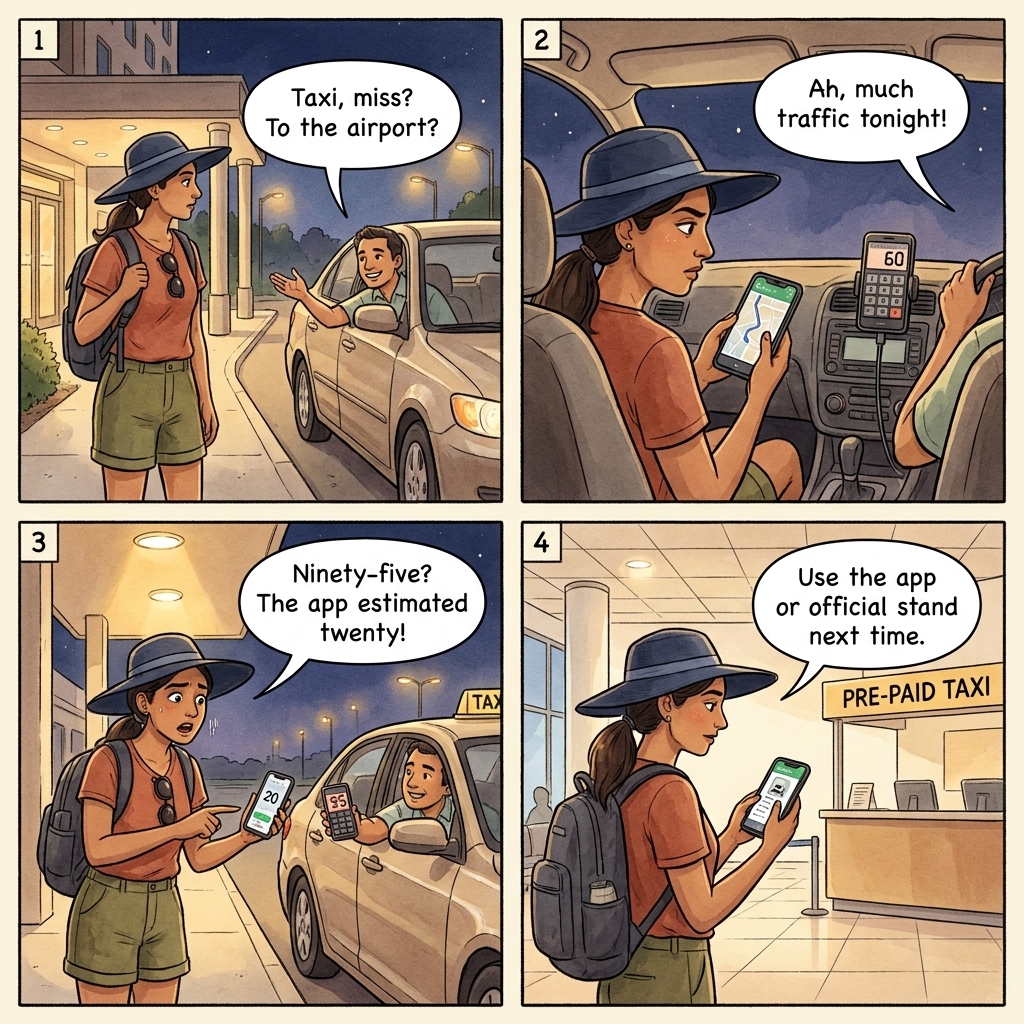
Taxi Meter Manipulation: the same scam, in 65 countries.
Five sub-variants documented globally: cloned meters running 2–3× the legal tariff, long-route detours that pad distance by 30–50%, counterfeit-return bill swaps, meter-refusal flat-rate negotiation, and duplicate-charge POS "failures." Five city case studies (Buenos Aires, Rome, Cairo, Mexico City, Amsterdam), an 8-language refusal-script card, and named tourist-police lines for recovery.
Browse the full Atlas
Sixty-four entries grouped into ten sections. Live entries are linked and marked. The remaining 63 ship through Q2 2026 — bookmark and return.
Transport 12 entries · taxis, rideshare, airport, transit, rental
Money 7 entries · currency, ATM, counterfeit, taxes/fees
Restaurant & Food 6 entries
Pickpocketing & Theft 6 entries
Distraction & Confidence Scams 7 entries
Fake Authority & Impersonation 5 entries
Booking & Accommodation Fraud 5 entries
Tours, Tickets & Sightseeing 4 entries
Vendor & Shopping 8 entries
Drinks & Drugs 4 entries
Why an Atlas?
Most travel-safety advice is scattered across blog posts and forum threads, organized by destination. The Atlas is a different shape: organized by scam type, with the universal mechanism made explicit. Three reasons that matters.
The same scam in 65 countries.
The taxi meter scam doesn't change much between Buenos Aires and Bangkok. The accents change; the mechanic doesn't. Reading the universal pattern once gives you the script for every taxi rank you'll ever stand at.
The local-language phrase that ends it.
Refusal works because it signals you know the script. Every Atlas entry includes the exact phrase to say, in the local language, with pronunciation. Drivers running the cloned-meter retreat from informed riders. The phrase is the point.
What to do if you got hit.
Every entry has the recovery section: the named tourist-police line, the documents to bring, the credit-card dispute window, the report number you'll need for travel insurance. The math of the scam works because the recovery cost is high. Lower it.
Methodology
Three-source rule. Every Atlas entry requires at least three independent confirmations before it ships: a traveler report (Reddit Reddit, country-specific subs, consular forums), a press citation (named local newspaper or travel-safety publication), and a police record or tourism-authority advisory. Scams that can't clear that bar don't make the Atlas.
Annual review. Each entry is re-verified yearly. Retired scams get marked. New patterns get added as they emerge from traveler reports and press coverage. The Travel Safety Series Kindle books mirror the Atlas content per country and ship lifetime updates.
Editorial transparency. Every entry cites its sources at the bottom. Bernard Huang edits; Rebecca sets the bar. Read more about the team and process →
Get the full atlas, country by country.
Twenty-two Travel Safety atlases, each covering every documented scam in one country with the local-language scripts that shut each one down. $4.99 on Kindle, lifetime updates as scams evolve.