
How we built this comparison
This page combines traveler discussion patterns, published price ranges, flight schedules, and seasonal data to help you decide between Cape Town and Lisbon.
- Reviewed Reddit threads from r/travel, r/solotravel, r/digitalnomad, r/capetown, and r/lisbon.
- Verified costs and logistics against current booking platforms and local service providers.
- Cross-referenced seasonal patterns, weather data, and safety reports from government advisories and traveler forums.

⚡ Quick Answers
⚡ The TL;DR Verdict
For most travelers seeking substantial natural beauty, outdoor activities, and lower costs outside Western Europe, Cape Town is the pick. Lisbon offers a dense, walkable city experience with easy access to Europe, suited for those preferring urban exploration and a strong sense of history. Choose Cape Town for adventure on a budget of $60-100/day, or Lisbon for European urban discovery at $80-130/day.
- Choose Cape Town: Travelers prioritizing dramatic landscapes, extensive outdoor activities like hiking and surfing, and a lower daily budget will find Cape Town rewarding. It is also ideal for those wanting a longer, more immersive trip without breaking the bank.
- Choose Lisbon: Those who prefer a compact, walkable city with centuries of history, access to other European destinations, and a well-established food scene should head to Lisbon. It is a good choice for shorter trips or first-time solo travelers in Europe.
- Choose Both: If you have 3-4 weeks and a more generous budget, combining both offers a contrast of continents and experiences. Spend 10-14 days in each, flying between the two with a stopover likely required.
📊 Visual Scorecard
🌤 When to Visit
Average high temperatures (°C). Green = best months, orange = avoid.
Quick Comparison
| Category | Cape Town | Lisbon | Winner |
|---|---|---|---|
| Costs & Budget | Significantly lower costs for food, transport, and activities once flights are covered. Great value accommodation. | Affordable by Western European standards, but noticeably more expensive than Cape Town for most items. Accommodation can be pricier. | Cape Town |
| Getting There | Longer flights, typically 15-18 hours from North America, often with one stop. Prices vary widely, but expect $900-1500+ round trip. | Shorter flights from North America, 7-9 hours, with direct options from major hubs. More budget-friendly, $600-1000 round trip. | Lisbon |
| Getting Around | Relies heavily on ride-sharing (Uber/Bolt) and rental cars for exploration beyond the city center. Public transport exists but is less comprehensive. | Excellent public transport system (metro, trams, buses) covering the entire city. Walkable core. Ride-sharing is also available. | Lisbon |
| Food & Drink | Diverse culinary scene with strong influences from various cultures, high-quality seafood, and excellent wine regions nearby. Budget-friendly options are plentiful. | Traditional Portuguese cuisine, seafood, pastries (Pastéis de Nata), and an emerging modern dining scene. Good wine and port. Generally affordable. | Tie |
| Nightlife | Active bar and club scene, particularly in areas like Long Street and Bree Street. Beach clubs in summer. Live music and diverse venues. | Starts late, goes late. Bairro Alto is famous for its bars; Cais do Sodré for clubs. Fado music houses offer cultural entertainment. | Lisbon |
| Nature & Outdoors | Direct access to mountains, ocean, national parks. Hiking, surfing, wildlife (penguins, whales), dramatic coastal drives. Unparalleled natural experiences. | Coastal city with rivers and hills. Access to Atlantic beaches a short train ride away. Regional parks like Sintra-Cascais offer trails and scenery. | Cape Town |
| Culture & History | Complex history involving colonialism, apartheid, and reconciliation. Robben Island, Bo-Kaap, District Six Museum. Diverse cultural influences. | Centuries of European history, maritime exploration, Fado music. Historic neighborhoods like Alfama, Belém Tower, Jerónimos Monastery. Strong sense of place. | Lisbon |
| Beaches | Atlantic and Indian Ocean coastlines offer diverse beaches: white sands, surfing waves, penguin colonies. Water can be cold. | City beaches along the Tagus River. Atlantic beaches a short train ride away (Cascais, Estoril). Warmer water for swimming. | Cape Town |
| Safety | Higher crime rates in some areas. Tourist zones generally safe during the day, but caution is needed at night. Ride-sharing recommended. | Generally very safe, especially in tourist areas. Pickpocketing is a concern in crowded spots. Safe for walking at night. | Lisbon |
| Digital Nomads | Good co-working spaces, strong expatriate community, lower cost of living, but visa process can be complex. Power outages (loadshedding) are a factor. | Well-established nomad scene, easy EU visa access for many, affordable co-working, good internet. Higher cost of living than Cape Town. | Lisbon |
💰 Costs & Budget
Cape Town offers a better daily value for travelers. A mid-range budget of R1100-1900 ($60-100 USD) per day covers good meals, local transport, and a few activities. A decent meal…
Cape Town offers a better daily value for travelers. A mid-range budget of R1100-1900 ($60-100 USD) per day covers good meals, local transport, and a few activities. A decent meal at a restaurant like Clarke's Bar & Dining Room might cost R150-250 ($8-13 USD), and an Uber from the city center to Camps Bay is around R80-120 ($4-6 USD). Groceries are also inexpensive, making self-catering a viable option. For accommodation, you can find quality guesthouses or Airbnb rentals for R800-1500 ($42-80 USD) per night.
Lisbon, while considered affordable for Western Europe, requires a higher daily spend. Expect to budget EUR75-120 ($80-130 USD) for a comfortable mid-range experience. A meal at a typical tasca like Cantinho do Aziz might be EUR10-20 ($11-22 USD), and a short Uber ride across the city is usually EUR5-8 ($5.50-9 USD). Public transport is efficient and inexpensive, with a single metro ticket at EUR1.65 ($1.80 USD). Accommodation, especially in popular areas like Alfama or Baixa, can easily be EUR80-150 ($88-165 USD) per night for a well-located apartment. Cape Town provides more stretch for your travel funds.
- Winner: Cape Town
- Why: Cape Town offers a superior value proposition across almost all spending categories once you arrive, making your budget go further.
- Who this matters for: Budget-conscious travelers and those planning longer stays.
✈️ Getting There
Reaching Cape Town involves a substantial travel commitment. From major US East Coast cities like New York, flights to Cape Town International Airport (CPT) typically take 15-18…
Reaching Cape Town involves a substantial travel commitment. From major US East Coast cities like New York, flights to Cape Town International Airport (CPT) typically take 15-18 hours, usually with a layover in Europe (e.g., Amsterdam, London) or the Middle East (e.g., Doha). Round-trip airfares usually range from $900 to $1500 USD, though deals can be found. From Europe, direct flights are available from several hubs, taking around 11-13 hours and costing EUR600-1000 ($650-1100 USD). The journey itself is a significant portion of the trip.
Lisbon, owing to its position in Western Europe, is considerably easier to access for most international travelers, particularly from North America and Europe. Direct flights from US East Coast cities like New York or Boston to Lisbon Portela Airport (LIS) are common, taking about 7-8 hours. Prices often fall in the $600-1000 USD range for round trips. From within Europe, Lisbon is a quick hop, with flights often taking 2-4 hours and costing EUR100-300 ($110-330 USD) round trip from cities like London or Paris. Lisbon is simpler to reach for a wider range of travelers.
- Winner: Lisbon
- Why: Lisbon offers significantly shorter flight times and more direct, generally cheaper routes from major international hubs, especially from North America.
- Who this matters for: Travelers with limited vacation time or those sensitive to long-haul flight costs and durations.
🚗 Getting Around
In Cape Town, getting around the city center and popular tourist areas like V&A Waterfront, Bo-Kaap, and Camps Bay is straightforward with ride-sharing services like Uber and…
In Cape Town, getting around the city center and popular tourist areas like V&A Waterfront, Bo-Kaap, and Camps Bay is straightforward with ride-sharing services like Uber and Bolt, which are inexpensive. A rental car is almost essential for exploring areas outside the immediate city bowl, such as Cape Point, Stellenbosch wine region, or the West Coast National Park. The MyCiTi bus system covers major routes, but it may not reach all specific attractions or offer the flexibility needed for extensive exploration. Walking is possible in specific neighborhoods but not recommended for covering large distances between areas.
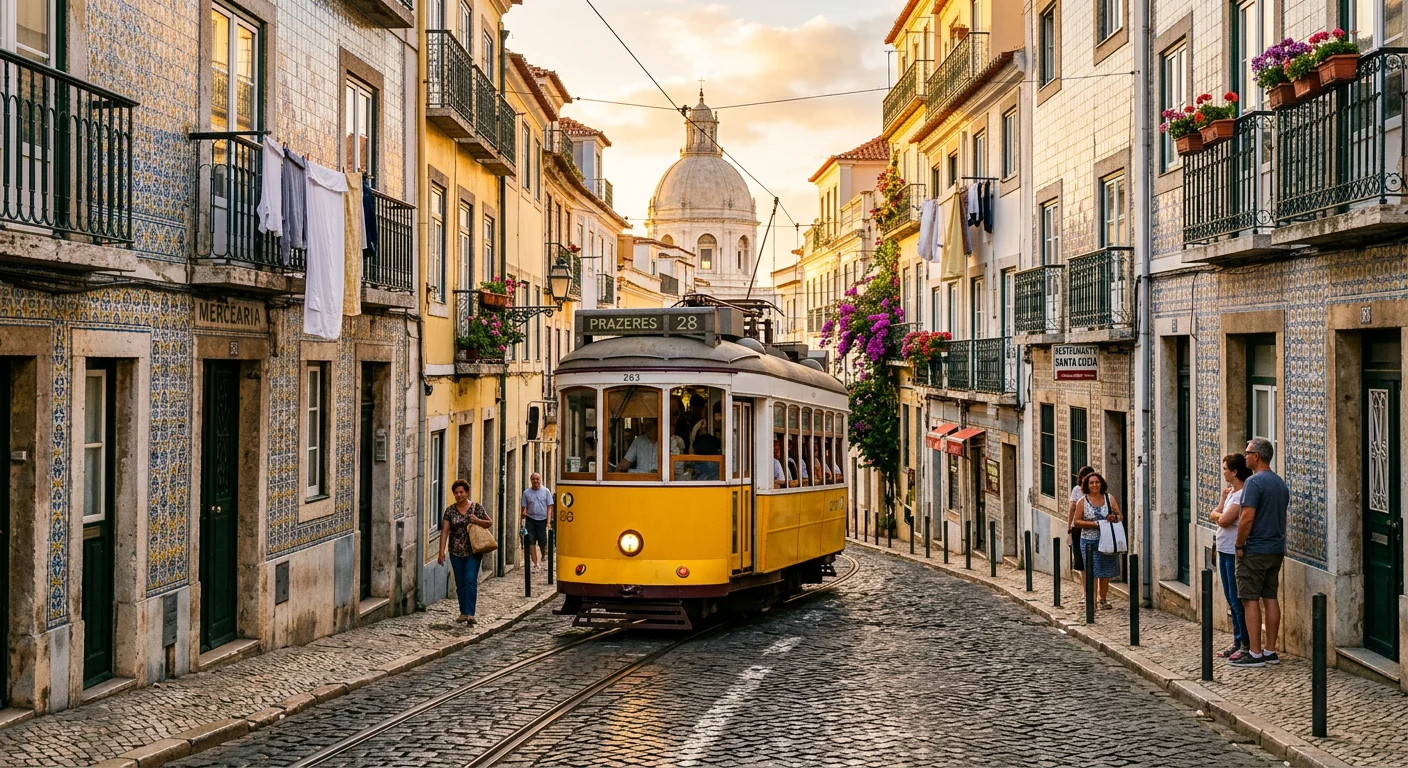
Lisbon has an integrated and efficient public transport system that includes a metro, trams, and buses. The metro is clean and reliable, connecting key areas and the airport. The historic Tram 28 is a functional mode of transport while offering views. Walking is the preferred method for exploring many of Lisbon's compact, hilly neighborhoods like Alfama, Bairro Alto, and Chiado. Ride-sharing services are readily available and affordable for longer distances or late-night travel. The Lisboa Card offers unlimited travel and discounts on attractions. Lisbon offers superior mobility within its urban environment.
- Winner: Lisbon
- Why: Lisbon's extensive, affordable, and easy-to-use public transport system, combined with its highly walkable city center, makes navigation simpler and more pleasant.
- Who this matters for: Travelers who prefer not to rent a car, solo travelers, and those who enjoy walking and public transit for urban exploration.
🍽️ Food & Drink
Cape Town's food scene is diverse and high-quality, often at prices well below what you would pay in similar Western cities. You will find influences from Malay, Indian, and…
Cape Town's food scene is diverse and high-quality, often at prices well below what you would pay in similar Western cities. You will find influences from Malay, Indian, and traditional South African cooking. Excellent seafood is available at places like Codfather Seafood & Sushi in Camps Bay. The nearby Stellenbosch and Constantia wine regions offer opportunities for wine tastings and gourmet meals at estates like La Colombe. Casual dining spots like Eastern Food Bazaar provide inexpensive yet flavorful options. Coffee culture is strong, and craft beer is gaining popularity. Eating out often feels like a bargain for the quality received.
Lisbon is known for its traditional Portuguese fare, particularly its cod dishes (bacalhau), fresh grilled sardines, and the ubiquitous Pastéis de Nata from places like Pastéis de Belém. The city also has a growing scene of modern Portuguese and international restaurants. Mercado da Ribeira (Time Out Market) offers a wide selection of food stalls from renowned chefs. Wine and ginjinha (cherry liqueur) are local favorites. While generally affordable, especially for lunch specials (pratos do dia), high-end dining can match European prices. Both cities offer compelling food experiences, making it difficult to pick a definitive winner here.
- Winner: Tie
- Why: Both cities offer exceptional food and drink experiences, each with distinct flavors and strengths, making them equally appealing for different palates.
- Who this matters for: Foodies will be happy in either city; the choice depends on preference for specific cuisines or dining styles.
🍻 Nightlife
Cape Town offers a lively nightlife, with a range of options from laid-back bars to energetic clubs. Long Street is known for its density of bars and clubs, attracting a younger…
Cape Town offers a lively nightlife, with a range of options from laid-back bars to energetic clubs. Long Street is known for its density of bars and clubs, attracting a younger crowd. Bree Street offers a more refined bar scene. In summer, beach clubs in Camps Bay are popular for sundowners and music. There are also several venues for live music, from jazz to electronic. The scene is social and accessible, though one must be mindful of personal safety, especially late at night in certain areas. Uber and Bolt are essential for getting home.
Lisbon's nightlife is legendary for starting late and continuing until dawn. Bairro Alto is the central hub, with numerous small bars spilling out onto the streets, creating a street party atmosphere. For clubs, head to Cais do Sodré, especially Pink Street, where you will find venues like Musicbox and LuxFrágil. Lisbon also offers traditional Fado houses, particularly in Alfama and Mouraria, where you can experience live, melancholic Portuguese music. The convenience of public transport and the general perception of safety make late-night exploration more relaxed. Lisbon simply offers a more extensive and later-running nightlife experience.
- Winner: Lisbon
- Why: Lisbon's nightlife, especially in Bairro Alto and Cais do Sodré, is more concentrated, accessible via public transport, and famous for going until the early morning hours.
- Who this matters for: Party-goers, social travelers, and those who enjoy staying out late.
⛰️ Nature & Outdoors
Cape Town is defined by its dramatic natural surroundings. Table Mountain National Park is within the city limits, offering numerous hiking trails with panoramic views, like…
Cape Town is defined by its dramatic natural surroundings. Table Mountain National Park is within the city limits, offering numerous hiking trails with panoramic views, like Lion's Head or Platteklip Gorge. The coastline provides surfing opportunities at spots like Muizenberg and Llandudno. A short drive south leads to Boulder's Beach, home to an African penguin colony, and Cape Point, a wild, rugged reserve at the tip of the Cape Peninsula. Whale watching (seasonal, June-November) is a major draw. The Cederberg Mountains and West Coast are accessible for day trips or longer. The sheer scale and diversity of outdoor activities are enormous.
Lisbon has its own natural appeal, primarily related to its coastal location and hilly terrain. The Tagus River estuary provides scenic views, especially from viewpoints (miradouros) across the city. Atlantic beaches like those in Cascais or Estoril are easily reachable by train, offering surfing, swimming, and sunbathing. The Sintra-Cascais Natural Park, a short trip outside the city, provides forested trails, dramatic cliffs, and historical sites. While the natural surroundings are pleasant and accessible, they do not compare to the immediate, varied, and raw natural grandeur that defines Cape Town. Cape Town provides far more immediate and impressive natural immersion.
- Winner: Cape Town
- Why: Cape Town offers a more immediate, diverse, and spectacular range of natural landscapes and outdoor adventure opportunities directly within and surrounding the city.
- Who this matters for: Adventure seekers, hikers, surfers, wildlife enthusiasts, and those who prioritize natural beauty over urban environments.
🏛️ Culture & History
Cape Town's history is profound and complex, marked by its colonial past, the era of apartheid, and the path to democracy. Robben Island, where Nelson Mandela was imprisoned, is a…
Cape Town's history is profound and complex, marked by its colonial past, the era of apartheid, and the path to democracy. Robben Island, where Nelson Mandela was imprisoned, is a powerful historical site. The District Six Museum tells the story of forced removals. Bo-Kaap, with its brightly colored houses, represents the city's Malay culture and history. The Iziko Slave Lodge Museum offers insights into the city's role in the slave trade. While educational and deeply moving, the cultural fabric feels newer and less ancient than Lisbon's, a product of more recent colonial and post-colonial developments.
Lisbon's history spans millennia, from Roman times to the Age of Discoveries that shaped global trade. The city's neighborhoods, like Alfama with its narrow, winding streets and São Jorge Castle, tell stories of centuries past. Major landmarks like the Belém Tower and Jerónimos Monastery showcase Portugal's maritime power. Fado music, originating in Lisbon's working-class neighborhoods, is a UNESCO-recognized cultural expression. The city's museums, such as the National Azulejo Museum or the Calouste Gulbenkian Museum, cover various periods and art forms. Lisbon offers a continuous thread of European history that is immediately apparent in its architecture and traditions. Lisbon presents a richer and more pervasive historical narrative.
- Winner: Lisbon
- Why: Lisbon's history is far more ancient, visible in its architecture and traditions, and deeply interwoven into the fabric of the entire city.
- Who this matters for: History buffs, architecture enthusiasts, and those interested in European cultural traditions.
🏖️ Beaches
Cape Town is surrounded by beaches, offering two distinct ocean experiences. Along the Atlantic Seaboard, beaches like Clifton and Camps Bay feature white sand and dramatic…
Cape Town is surrounded by beaches, offering two distinct ocean experiences. Along the Atlantic Seaboard, beaches like Clifton and Camps Bay feature white sand and dramatic mountain backdrops, though the water is consistently cold. Surfing is popular at Muizenberg, with its warmer False Bay waters and iconic colorful beach huts. Boulder's Beach is famous for its resident African penguin colony, offering a unique wildlife interaction. The variety of beaches, from secluded coves to expansive stretches, catering to different activities like sunbathing, surfing, or wildlife viewing, is exceptional.
Lisbon itself has city beaches along the Tagus River, but these are generally not for swimming. For proper beach experiences, one must take a short train ride to towns like Cascais or Estoril, which offer pleasant sandy beaches with warmer water suitable for swimming and sunbathing. Costa da Caparica, across the Tagus, also provides kilometers of ocean beaches popular with locals and surfers. While Lisbon's accessible beaches are good for a day trip, they lack the immediate drama, variety, and wildlife interaction found directly in and around Cape Town. Cape Town provides more compelling and diverse beach options.
- Winner: Cape Town
- Why: Cape Town offers more spectacular, diverse, and immediately accessible beaches directly within or very close to the city, including unique wildlife experiences.
- Who this matters for: Beach lovers, surfers, sunbathers, and those seeking unique coastal scenery and wildlife.
🚨 Safety
Cape Town has a reputation for higher crime rates in specific areas, largely outside the main tourist zones. While areas like the V&A Waterfront, Camps Bay, and Bo-Kaap are…
Cape Town has a reputation for higher crime rates in specific areas, largely outside the main tourist zones. While areas like the V&A Waterfront, Camps Bay, and Bo-Kaap are generally safe during the day, travelers should exercise caution, especially after dark. Mugging and petty theft can occur. It is highly recommended to use ride-sharing services like Uber or Bolt for all nighttime travel, even for short distances, and to avoid walking alone in poorly lit areas. Awareness of your surroundings is key. Avoid displaying valuables openly. Travel insurance is a good idea.
Lisbon is widely considered one of Europe's safer capital cities. Violent crime against tourists is rare. The primary concern is pickpocketing, especially in crowded tourist areas like Tram 28, Alfama, and Rossio Square. Exercising basic precautions like keeping valuables secure and being aware of surroundings is sufficient. Walking alone at night in most central neighborhoods is generally safe. The public transport system is safe to use at all hours of operation. Overall, Lisbon provides a more relaxed environment where safety is less of a daily concern. Lisbon offers a more consistently secure environment for travelers.
- Winner: Lisbon
- Why: Lisbon is significantly safer for travelers, with lower crime rates and a more relaxed atmosphere for exploring the city, especially after dark.
- Who this matters for: Solo travelers, families, and those who prioritize a low-stress, secure travel experience.
🛡 Dig deeper: Cape Town scam guide · Lisbon scam guide
💻 Digital Nomads
Cape Town has a growing digital nomad community, attracted by its natural beauty and lower cost of living. There are numerous co-working spaces, like Workshop 17 at the V&A…
Cape Town has a growing digital nomad community, attracted by its natural beauty and lower cost of living. There are numerous co-working spaces, like Workshop 17 at the V&A Waterfront or Neighbourgood. Internet speeds are generally good. The expatriate community is substantial. However, South Africa's visa situation can be less straightforward for long-term stays compared to the EU. A significant challenge is loadshedding, scheduled power outages that can disrupt work, though many cafes and co-working spaces have generators. The time zone difference from major markets can also be inconvenient.
Lisbon is a prominent hub for digital nomads, benefiting from its EU location, pleasant climate, and established infrastructure. It offers a dedicated digital nomad visa, making longer stays easier for many. There is a large and active community, with many co-working spaces like Second Home Lisboa and Heden Rossio. Internet is fast and reliable, and there are no power outage issues. The cost of living is rising but still good by Western European standards. Its time zone is also more convenient for working with European and US East Coast clients. Lisbon offers a more stable and integrated environment for remote workers.
- Winner: Lisbon
- Why: Lisbon offers better visa pathways, more stable infrastructure (no loadshedding), and a more established, integrated digital nomad ecosystem.
- Who this matters for: Remote workers and digital nomads seeking a stable, community-rich, and easily accessible base.
🎯 The Decision Framework
Choose Cape Town If…
- You want dramatic mountain and ocean views daily.
- You love hiking, surfing, or wildlife spotting (penguins, whales).
- You prioritize a low daily budget for food, activities, and transport.
- You are comfortable renting a car for extensive exploration.
- You are keen to explore South Africa's complex history.
- You enjoy excellent wine tasting without high prices.
- You value direct access to vast natural landscapes over purely urban settings.
- You want a longer, immersive trip and need your money to last.
Choose Lisbon If…
- You want a compact, highly walkable city experience.
- You prefer easy, affordable public transport for city exploration.
- You are interested in centuries of European history and architecture.
- You enjoy a vibrant, late-night bar and club scene.
- You prioritize a very safe, low-stress urban environment.
- You want easy access to other European countries via short flights.
- You are a digital nomad seeking an established community and stable infrastructure.
- You want to experience traditional Fado music and Portuguese cuisine.
❓ Frequently Asked Questions
Which city is better for solo female travelers?
Lisbon is generally considered safer for solo female travelers, especially when exploring at night. Its public transport is reliable, and walking alone in central areas feels secure. Cape Town requires more caution, especially after dark; ride-sharing is recommended for all evening movements, and awareness of surroundings is important.
What is the best time of year to visit each city?
For Cape Town, the best time is during its summer, from December to February, when the weather is warm and sunny, ideal for beaches and outdoor activities. For Lisbon, spring (April-May) and fall (September-October) offer pleasant temperatures and fewer crowds than the hot peak summer months.
How many days should I spend in each city?
For Cape Town, a minimum of 7-10 days is recommended to cover the main city attractions, Table Mountain, Cape Point, and a wine region day trip. For Lisbon, 4-6 days allows for exploration of the main neighborhoods, a Sintra day trip, and a relaxed pace.
Are Ubers readily available in both cities?
Yes, Uber and Bolt (a similar ride-sharing app) are widely available and commonly used in both Cape Town and Lisbon. They are generally reliable and affordable, making them a popular choice for getting around, especially in Cape Town where public transport is less comprehensive.
Which city has better internet speeds for remote work?
Lisbon generally offers more consistent and reliable internet speeds, with excellent fiber optic infrastructure. While Cape Town also has good internet, the frequent power outages (loadshedding) can disrupt connectivity, making Lisbon a more stable choice for remote work.
Can I visit a wine region from both cities?
Absolutely. From Cape Town, the Stellenbosch and Constantia wine regions are easily accessible for day trips, offering world-class vineyards and tasting experiences. From Lisbon, the Setúbal Peninsula and the Douro Valley (though further) provide excellent Portuguese wine-tasting opportunities.
What is the cost of a typical meal in each city?
In Cape Town, a mid-range restaurant meal might cost R150-250 ($8-13 USD). In Lisbon, a similar meal at a local tasca typically costs EUR10-20 ($11-22 USD). Both cities offer cheaper street food and more expensive fine dining options.
Which city offers better opportunities for wildlife viewing?
Cape Town stands out for wildlife. You can see African penguins at Boulder's Beach, spot whales off the coast (seasonal), and encounter various birds and small mammals within Table Mountain National Park. Lisbon does not offer comparable immediate wildlife viewing experiences.
Ready to plan your next adventure?
Know the tourist scams before you go — documented from real traveler reports.