
How we built this comparison
This page combines traveler discussion patterns, published price ranges, flight schedules, and seasonal data to help you decide between Galapagos and Amazon (Ecuador).
- Reviewed Reddit threads from r/travel, r/solotravel, r/ecuador, and r/SouthAmerica for traveler experiences and costs.
- Verified costs and logistics against current booking platforms (e.g., local tour operators, airline websites).
- Cross-referenced seasonal patterns, weather data, and health advisories from reputable sources like CDC and local tourism boards.

Quick answers
Visual scorecard
⚡ The TL;DR Verdict
For most travelers seeking direct, guaranteed animal encounters and ocean activities, Galapagos delivers. If you prefer a more immersive, wild environment with fewer crowds and are fine working harder to spot creatures, the Amazon is your pick. Budget-wise, Amazon trips are generally 40-60% less expensive per day.
- Choose Galapagos: You prioritize up-close, guaranteed wildlife sightings, enjoy snorkeling or diving, and have a solid budget for a guided, structured experience.
- Choose Amazon (Ecuador): You seek a deep jungle immersion, enjoy challenging animal spotting, prefer a lower budget, and want to experience a different ecosystem.
- Choose Both: Allocate at least 10-14 days to fully experience both, flying between Quito/Guayaquil to Coca for the Amazon, then back to mainland for Galapagos flights.
Quick Comparison
| Category | Galapagos | Amazon (Ecuador) | Winner |
|---|---|---|---|
| Nature & Wildlife | Animals are fearless and easily approachable; unique species; marine life dominance. | Dense jungle, high biodiversity, spotting animals requires patience and a keen eye; terrestrial and arboreal focus. | Galapagos |
| Costs & Budget | High fixed costs for cruises and flights; daily expenses add up. | Significantly lower package prices for lodges; local transport and food are cheaper. | Amazon (Ecuador) |
| Getting There & Around | Flights from mainland, then cruise or island hops; limited transport options. | Flights to Coca/Tena, then boat transfers to lodges; internal travel is primarily by river. | Tie |
| Accommodation | Primarily cruise ships or island hotels; varied price points, generally high. | Eco-lodges and research stations; packages include everything. | Amazon (Ecuador) |
| Activities & Exploration | Snorkeling, diving, hiking to view wildlife, boat trips, beach time. | Jungle walks, canoe trips, wildlife spotting, birdwatching, cultural visits, night excursions. | Galapagos |
| Food & Drink | Fresh seafood, Ecuadorian staples; meals often cruise-inclusive. | Lodge-provided meals, often locally sourced; limited independent dining. | Tie |
| Safety & Health | Generally safe, minimal crime; focus on sun protection and marine safety. | Low crime in lodges, but jungle risks (insects, snakes); need specific vaccinations. | Galapagos |
| Best Time to Visit | Two main seasons, good year-round; drier cooler vs warmer wetter. | Wetter season for high water levels/easier access; drier for more land-based activity. | Tie |
| Travel Style & Duration | Structured tours, often cruises; 5-8 days ideal; limited solo budget travel. | Lodge-based immersive trips; 4-5 days ideal; better for budget solo travel. | Galapagos |
| Crowds & Exclusivity | Regulated tourism, but popular sites can have groups; cruises offer exclusivity. | Remote lodges, limited guests; feeling of deep wilderness immersion. | Amazon (Ecuador) |
🐢 Nature & Wildlife
Galapagos is known for its incredibly tame and approachable wildlife. You will walk past blue-footed boobies, giant tortoises, marine iguanas, and sea lions without them…
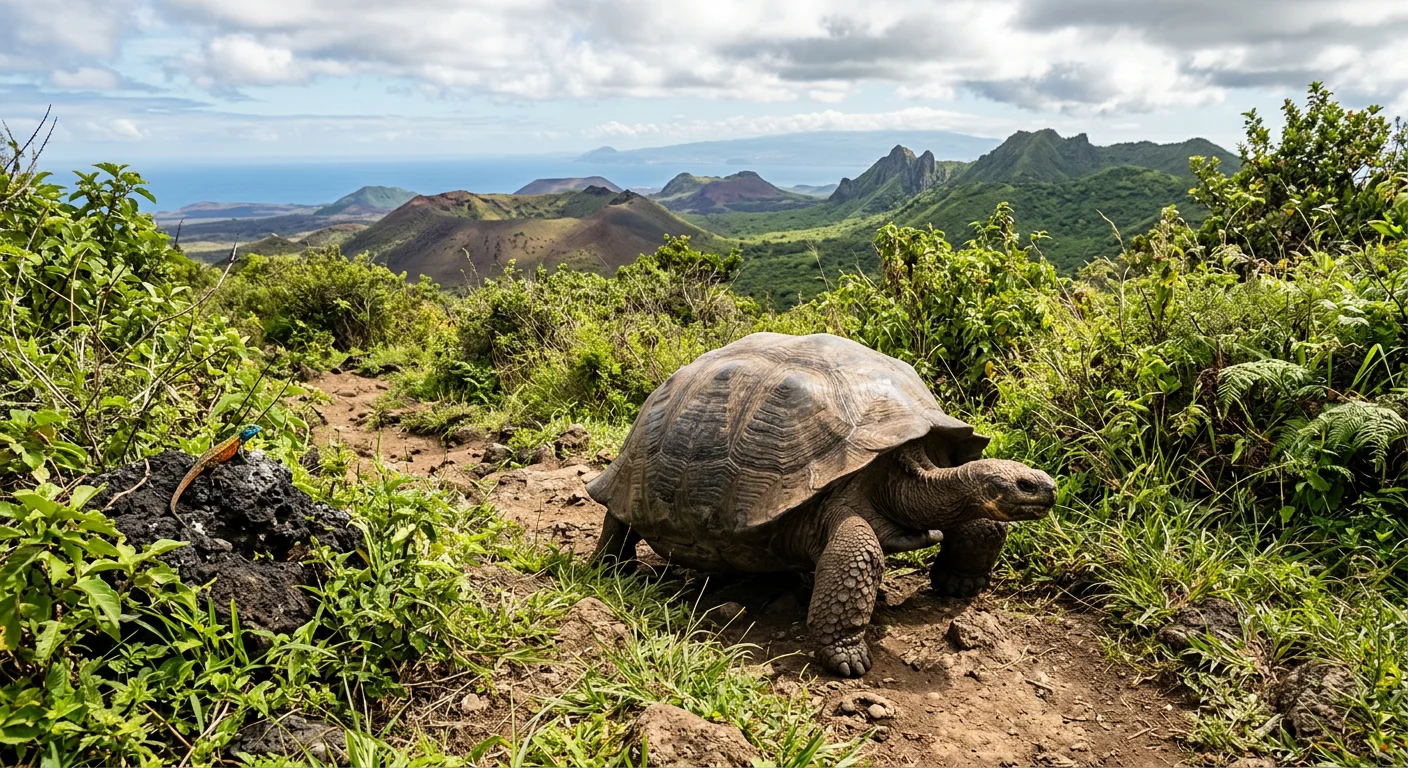
Galapagos is known for its incredibly tame and approachable wildlife. You will walk past blue-footed boobies, giant tortoises, marine iguanas, and sea lions without them flinching. Snorkeling or diving offers direct encounters with sharks, rays, sea turtles, and playful sea lions. Specific places like Espanola Island guarantee Nazca boobies and waved albatrosses, while Santa Cruz is home to the Charles Darwin Research Station and wild giant tortoises in the highlands. Expect multiple daily animal sightings, often within a few feet of you, making it an experience that almost feels like a nature documentary.
The Amazon in Ecuador, particularly Yasuni National Park accessible from Coca, has immense biodiversity but its wildlife is often shy and camouflaged within the dense foliage. You will need a guide to help you spot monkeys (howler, spider, capuchin), sloths, caimans, anacondas, and hundreds of bird species. Night walks reveal insects, frogs, and nocturnal mammals. Birdwatching is exceptional, but spotting larger mammals can be difficult. The experience is about immersion in a vast, wild ecosystem where animal encounters feel like a privilege, not a guarantee. You are observing a wild environment rather than animals accustomed to human presence.
Galapagos wins here because its wildlife interactions are consistently direct and immediate, even if the overall biodiversity is lower.
- Winner: Galapagos
- Why: Galapagos offers guaranteed, close-up, and fearless wildlife encounters, particularly for marine species.
- Who this matters for: Travelers who want easy, direct animal interactions and opportunities for underwater observation.
💰 Costs & Budget
A 5-day Galapagos cruise typically starts around $2,000 for a budget option, stretching to $5,000-$8,000+ for mid-range to luxury, excluding international flights. Inter-island…
A 5-day Galapagos cruise typically starts around $2,000 for a budget option, stretching to $5,000-$8,000+ for mid-range to luxury, excluding international flights. Inter-island flights from mainland Ecuador (Quito or Guayaquil) to Baltra (GPS) or San Cristobal (SCY) cost around $400-$600 round trip. Additionally, there is a $100 Galapagos National Park entrance fee and a $20 transit control card. Daily food and activity costs on land can be $50-$100+ if not part of a cruise. A week-long trip can easily run $3,000-$6,000+ per person for a solid experience.
An equivalent 4-5 day Amazon lodge package, including transport from Coca (flight from Quito is $150-$250 round trip), all meals, activities, and guides, typically ranges from $800-$1,800 per person. Budget options like Sani Lodge or Napo Wildlife Center offer exceptional experiences without the extreme price tag of Galapagos. Local food in El Coca or Tena is inexpensive, with meals around $3-$8 USD. Your main costs are the lodge package and flights to Coca. The price difference is substantial, making the Amazon a far more accessible wildlife destination.
The Amazon offers a comparable multi-day, guided wildlife experience at a fraction of the cost, making it the clear winner for budget-conscious travelers.
- Winner: Amazon (Ecuador)
- Why: Amazon trips offer a complete package experience, including flights, for a significantly lower overall cost.
- Who this matters for: Travelers with a tighter budget who still desire a guided, multi-day wildlife immersion.
✈️ Getting There & Around
To reach Galapagos, you fly from Quito (UIO) or Guayaquil (GYE) to Baltra (GPS) near Santa Cruz, or San Cristobal (SCY). Flights take about 2 hours. Once there, most travel is via…
To reach Galapagos, you fly from Quito (UIO) or Guayaquil (GYE) to Baltra (GPS) near Santa Cruz, or San Cristobal (SCY). Flights take about 2 hours. Once there, most travel is via organized cruise ships which move between islands, or by small inter-island speedboats (around $30-$40 per leg) if island hopping. Land transport on islands involves taxis (e.g., $25 from Baltra airport to Puerto Ayora) or local buses. The logistics are typically well-managed by tour operators but require pre-booking and adherence to schedules due to island isolation and park regulations.
For the Amazon, you fly from Quito (UIO) or Guayaquil (GYE) to El Coca (OCC) or Tena (TNA). Flights take about 30-45 minutes. From Coca, most reputable lodges include ground transport to a river port (e.g., 2 hours to a Napo River port), followed by a motorized canoe ride (1-3 hours) deeper into the jungle. This multi-stage journey is part of the experience, immersing you further with each leg. Once at the lodge, all transport for activities like excursions and wildlife viewing is by canoe or on foot. The process is logistically simpler than Galapagos once you reach the starting city, as lodges manage nearly everything.
Both destinations have structured, somewhat isolated travel patterns. Galapagos has more complex inter-island transfers while the Amazon has a multi-stage journey to the lodge. It is a tie as neither is significantly easier than the other.
- Winner: Tie
- Why: Both destinations require specific internal flights and structured transfers, presenting comparable logistical challenges.
- Who this matters for: Travelers who prefer either a cruise-based journey or a deep river immersion, as both require commitment to a single mode of travel for their duration.
🏨 Accommodation
In Galapagos, accommodation is dominated by cruise ships, ranging from small, basic vessels to luxury yachts. A typical 4-8 day cruise package includes cabin, meals, guided…
In Galapagos, accommodation is dominated by cruise ships, ranging from small, basic vessels to luxury yachts. A typical 4-8 day cruise package includes cabin, meals, guided excursions, and inter-island transport. On land, hotels are available in main towns like Puerto Ayora (Santa Cruz), Puerto Villamil (Isabela), and Puerto Baquerizo Moreno (San Cristobal). Options range from budget hostels (e.g., Hotel Flamingo) at $50/night to comfortable hotels (e.g., Hotel Silberstein) at $150-$300+/night. Independent travelers staying on islands have more flexibility but miss out on efficient island hopping and dedicated naturalist guides found on cruises.
Amazon accommodation almost exclusively means staying at an eco-lodge or research station. These lodges are remote, often deep in the jungle, and operate on an all-inclusive package basis. Examples include Napo Wildlife Center, Sani Lodge, or La Selva Jungle Lodge, offering comfortable rooms, private bathrooms, and often sustainable practices. These packages cover transport from Coca, all meals, guided excursions (canoe trips, jungle walks, birdwatching), and expert naturalist guides. Prices range from $150-$400+ per person per night, providing a seamless and immersive experience without needing to worry about daily logistics or extra costs. The value for money is generally higher.
The Amazon wins due to its all-inclusive lodge packages that simplify planning and provide a complete, immersive experience for a better relative value.
- Winner: Amazon (Ecuador)
- Why: Amazon lodges offer comprehensive, all-inclusive packages that streamline the travel experience and provide good value.
- Who this matters for: Travelers who prefer a hassle-free, all-inclusive package where all logistics and activities are pre-arranged.
🛶 Activities & Exploration
Galapagos activities are heavily focused on wildlife viewing, both above and below the water. Daily itineraries on a cruise typically include one or two land excursions to observe…
Galapagos activities are heavily focused on wildlife viewing, both above and below the water. Daily itineraries on a cruise typically include one or two land excursions to observe terrestrial animals like giant tortoises, marine iguanas, and various bird species (e.g., blue-footed boobies on North Seymour). Snorkeling is a daily highlight, offering encounters with sea lions, sharks, rays, and sea turtles in clear waters. Diving is a specialized option available from specific islands or dedicated dive cruises, offering experiences with hammerheads and whale sharks at sites like Darwin and Wolf Islands. Hiking trails are generally short and well-maintained, designed for optimal animal observation. Kayaking and paddleboarding are sometimes available.
Amazon activities are centered around exploring the dense rainforest and spotting its elusive inhabitants. Guided jungle walks on muddy trails are standard, focusing on flora, insects, and spotting monkeys or sloths high in the canopy. Canoe trips along rivers and oxbow lakes are essential for birdwatching, caiman spotting (especially at night), and navigating the waterways. Canopy towers at lodges like Napo Wildlife Center provide incredible views of the forest and its birds. Some lodges offer cultural visits to local indigenous communities (e.g., Kichwa villages), providing insight into jungle life. Night walks and boat trips reveal nocturnal creatures, adding a layer of excitement.
Galapagos offers a more diverse range of activities, particularly for those who enjoy water-based exploration, making it the winner for varied experiences.
- Winner: Galapagos
- Why: Galapagos provides a wider range of activities, especially for water enthusiasts, with more immediate gratification for wildlife viewing.
- Who this matters for: Travelers who enjoy snorkeling, diving, and easy wildlife observations without extensive physical exertion.
🦐 Food & Drink
On Galapagos cruises, meals are typically included and feature a mix of international and Ecuadorian cuisine. Expect fresh seafood like ceviche, grilled fish (pescado a la…
On Galapagos cruises, meals are typically included and feature a mix of international and Ecuadorian cuisine. Expect fresh seafood like ceviche, grilled fish (pescado a la plancha), and shrimp. In towns like Puerto Ayora, you can find local restaurants (comedores) offering almuerzo (lunch specials) for $5-$10, and more upscale options like La Garrapata or Angermeyer Waterfront Inn for $20-$40+ per person. Basic provisions at markets are available, but prices are higher due to import costs. Beer is widely available, and some bars in Puerto Ayora offer cocktails. The overall food scene is practical rather than gourmet.
In the Amazon, almost all meals are provided by your lodge. These meals are often simple but hearty, featuring local ingredients like yucca, plantains, rice, chicken, and sometimes fresh river fish (e.g., tilapia or piranha). Drinks like coffee, tea, and juice are usually included, with alcoholic beverages available for purchase. The food focuses on sustenance and local flavors rather than culinary exploration. In smaller towns like El Coca, you can find basic Ecuadorian eateries serving empanadas, seco de chivo (goat stew), and various soups for $3-$7. The dining experience is part of the lodge immersion, with limited options outside.
Both destinations offer practical, satisfying food experiences rather than culinary highlights. Galapagos has more independent dining choices, but Amazon lodges provide consistent, localized fare. It is a tie as neither stands out significantly.
- Winner: Tie
- Why: Both destinations offer practical, satisfying food experiences with limited independent culinary exploration, making them equally good in this category.
- Who this matters for: Travelers who prioritize convenience and local flavors over a gourmet dining scene.
⚕️ Safety & Health
Galapagos is considered one of the safest travel destinations globally, with extremely low crime rates, especially on the islands themselves. The main safety concerns are…
Galapagos is considered one of the safest travel destinations globally, with extremely low crime rates, especially on the islands themselves. The main safety concerns are environmental: strong sun exposure (wear SPF 50+ and a hat), staying hydrated, and marine safety (following guide instructions during snorkeling/diving, awareness of currents). Medical facilities are basic, primarily small clinics in major towns like Puerto Ayora; serious emergencies often require evacuation to mainland Ecuador. Dengue fever can occur but is rare. Overall, a very secure environment where you can walk around freely.
Safety in the Amazon largely depends on adhering to lodge guidelines and your guide's instructions. While crime within the remote lodge areas is negligible, the jungle itself presents risks: venomous snakes, spiders, and abundant mosquitos (malaria and dengue are present, requiring prophylaxis and repellent). Yellow fever vaccination is highly recommended or even mandatory for entry to certain areas. Basic medical attention is available at lodges, but serious issues necessitate evacuation, often to Quito. River travel by canoe also carries inherent risks, though accidents are rare with reputable operators. The mainland city of Coca can have petty crime, so standard urban precautions apply before departing for your lodge.
Galapagos offers a higher degree of personal safety and fewer health risks compared to the jungle environment and disease vectors of the Amazon.
- Winner: Galapagos
- Why: Galapagos has minimal crime and fewer health risks, making it a generally safer and more straightforward destination.
- Who this matters for: Travelers prioritizing a very safe and low-risk environment, especially families or solo travelers.
☀️ Best Time to Visit
Galapagos has two main seasons, but is a year-round destination. The warm/wet season (December to May) brings higher air temperatures (27-32°C / 80-90°F), calmer seas, and more…
Galapagos has two main seasons, but is a year-round destination. The warm/wet season (December to May) brings higher air temperatures (27-32°C / 80-90°F), calmer seas, and more lush green islands, with sporadic heavy rain. Water temperatures are warmer (24-27°C / 75-80°F), ideal for snorkeling without a wetsuit. The cool/dry season (June to November) sees lower air temperatures (21-27°C / 70-80°F), garua (light mist), and stronger currents, making water cooler (18-24°C / 65-75°F) but also bringing more marine life due to nutrient upwelling. This is prime time for whale sharks and seabirds nesting. Both seasons offer distinct advantages.
The Amazon also has two main seasons, both offering unique benefits. The wet season (December to May) means higher river levels, allowing canoes to access smaller tributaries and flooded forests, making it easier to spot arboreal animals like monkeys and sloths. Rainfall is frequent but often in short, intense bursts. The dry season (June to November) results in lower water levels, more exposed land, and potentially better conditions for jungle walks. Animals may congregate closer to remaining water sources. Mosquitoes are present year-round but can be more prevalent in the wet season. Wildlife is always present, just in different locations depending on water levels.
Both destinations are good year-round, with specific seasonal variations that appeal to different preferences. Neither has a definitively 'bad' time to visit, making it a tie.
- Winner: Tie
- Why: Both destinations are accessible year-round, with seasonal variations that cater to different preferences for wildlife and climate.
- Who this matters for: Travelers with flexible schedules, as both locations offer compelling experiences in any month.
🎒 Travel Style & Duration
Galapagos travel is highly structured, primarily revolving around multi-day cruises (4-8 days) or structured island-hopping tours. This style suits travelers who appreciate…
Galapagos travel is highly structured, primarily revolving around multi-day cruises (4-8 days) or structured island-hopping tours. This style suits travelers who appreciate organized itineraries, expert naturalist guides, and efficient transport between sites. Solo travel can be more expensive, as single supplements for cabins are common, though some cruises offer shared cabin options. Independent island hopping is possible but requires more planning and can be less efficient for seeing multiple islands. A 5-day, 4-night cruise is a common minimum to get a feel for the region, while 7-8 days allow for a more comprehensive exploration of different islands and their unique ecosystems.
Amazon travel in Ecuador is also structured around lodge packages, typically 3-5 days. This immersive style is for travelers who want to disconnect, live within the jungle, and engage in daily guided expeditions. It is more amenable to solo travelers, as lodges typically charge per person, and you are part of a small group for activities, avoiding single supplements common in Galapagos. While tours are structured, there is generally more downtime and less hurried movement than a Galapagos cruise. A 4-day, 3-night or 5-day, 4-night package is usually sufficient to experience the Amazon's highlights and settle into its rhythm.
Galapagos offers a more refined, efficient exploration for a wider range of travelers, especially those who prefer comfort and comprehensive guided experiences over roughing it, making it the winner for overall travel style versatility.
- Winner: Galapagos
- Why: Galapagos offers a highly efficient and comprehensive exploration experience, suitable for a broader range of travelers prioritizing structure and comfort.
- Who this matters for: Travelers who prefer structured, guided tours with high comfort levels, and those traveling with families or in groups.
🤫 Crowds & Exclusivity
Galapagos tourism is strictly regulated by the National Park to preserve its environment, meaning visitor sites have limits on daily visitors and tour groups are small (typically…
Galapagos tourism is strictly regulated by the National Park to preserve its environment, meaning visitor sites have limits on daily visitors and tour groups are small (typically 16-20 people on cruises). However, popular sites like Tortuga Bay on Santa Cruz or the visitor centers can still feel busy, especially during peak season. You will encounter other tour groups at popular landing spots. Cruise ships offer a degree of exclusivity as you travel with your group, but at landing sites, you might follow another group. Dive sites, however, can feel very exclusive. Despite regulations, the popularity means you are rarely alone with the wildlife.
Ecuadorian Amazon lodges, by their very nature, are remote and accommodate a limited number of guests. This means you are often part of a small group (4-10 people) with your guide, venturing deep into the rainforest where other tourists are seldom seen. The feeling of exclusivity and immersion in nature is much higher. Places like Yasuni National Park are vast, and the lodges are spread out, ensuring a deep wilderness experience. Your encounters with wildlife feel more personal and undisturbed. The only 'crowds' might be other guests at your lodge's dining area, but once on an excursion, it is just your small group and the jungle.
The Amazon offers a far greater sense of remoteness and exclusivity due to its deep jungle locations and limited lodge capacities, providing a immersive wilderness experience.
- Winner: Amazon (Ecuador)
- Why: The Amazon provides a deeper sense of immersion and exclusivity due to its remote lodge locations and smaller group sizes.
- Who this matters for: Travelers who prioritize solitude, a feeling of deep wilderness, and minimal encounters with other tourists.
🎯 The Decision Framework
Choose Galapagos If…
- You want close, guaranteed encounters with fearless wildlife.
- You are excited by snorkeling or diving with marine animals.
- You have a higher budget (minimum $3,000 for 5 days).
- You prefer a structured, comfortable cruise experience.
- You want to see unique species found nowhere else.
- You prefer a very safe travel environment with minimal health concerns.
- You are interested in learning from expert naturalist guides.
- You enjoy ocean views and island hopping.
Choose Amazon (Ecuador) If…
- You want a deep, immersive jungle experience.
- You are on a tighter budget (under $2,000 for 5 days).
- You enjoy the challenge of spotting elusive wildlife.
- You prioritize a sense of remote wilderness and exclusivity.
- You are prepared for a tropical climate with insects and humidity.
- You want to experience river travel by canoe.
- You are interested in the flora and overall biodiversity of a rainforest.
- You dont mind basic comforts for the sake of adventure.
❓ Frequently Asked Questions
Which destination is better for seeing unique animals?
Galapagos hosts endemic species like giant tortoises, marine iguanas, and blue-footed boobies, found only there. The Amazon has incredible biodiversity (hundreds of bird and monkey species) but its animals are often camouflaged and harder to spot. For unique, easy-to-see animals, Galapagos is superior.
What is the typical length of a trip to each location?
Most Galapagos trips are 5 to 8 days, usually on a cruise. Amazon trips typically range from 4 to 5 days, based at an eco-lodge. It is possible to do shorter or longer, but these lengths are common for a fulfilling experience.
Do I need any special vaccinations for these trips?
For the Amazon, a yellow fever vaccination is highly recommended, often mandatory for certain areas, and current within 10 years. Anti-malaria medication and updated routine vaccinations are also advisable. For Galapagos, standard routine vaccinations are generally sufficient.
How much should I budget for flights to each destination?
Internal flights from Quito (UIO) or Guayaquil (GYE) to Galapagos (GPS/SCY) are around $400-$600 round trip. Flights to El Coca (OCC) for the Amazon are cheaper, typically $150-$250 round trip from Quito, making the Amazon more accessible by air.
Is it possible to visit both Galapagos and the Amazon on one trip?
Yes, many travelers combine both. You would typically fly from mainland Ecuador to El Coca for the Amazon portion (e.g., 4-5 days), then return to the mainland and fly to Galapagos (e.g., 5-8 days). Allow at least 10-14 days total for a comfortable pace.
What kind of physical fitness is required for these trips?
Galapagos involves light walking on trails, getting in and out of zodiacs, and swimming/snorkeling. Basic fitness is adequate. The Amazon can involve more strenuous jungle walks on uneven, muddy terrain for several hours, requiring a moderate level of fitness and good balance.
Which destination is better for photography?
Galapagos is exceptional for photography due to the fearless animals that allow close-up shots without long lenses. Marine life photography is also outstanding. The Amazon offers challenging but rewarding opportunities for birds and wildlife, often requiring patience and telephoto lenses for distant subjects.
Are these destinations suitable for families with children?
Both can be. Galapagos offers easy wildlife viewing, and many cruises cater to families. The Amazon can be suitable for older children (8+) who are patient and interested in nature, but younger children might struggle with the humidity, insects, and longer, quieter jungle walks.
Ready to plan your Ecuador trip?
Know the tourist scams before you go — documented from real traveler reports.