
How we built this comparison
This page combines traveler discussion patterns, published price ranges, flight schedules, and seasonal data to help you decide between Hokkaido and Kyushu.
- Reviewed Reddit threads from r/JapanTravel, r/solotravel, r/travel, etc.
- Verified costs and logistics against current booking platforms like Google Flights, Booking.com, and JR Pass official sites.
- Cross-referenced seasonal patterns and weather data from the Japan Meteorological Agency.

⚡ Quick Answers
⚡ The TL;DR Verdict
For most first-time visitors to Japan seeking a mix of outdoor activities, distinct cuisine, and manageable travel, Kyushu edges out Hokkaido due to its more varied climate and historical sites. Hokkaido is a better choice if your priority is snow sports or expansive natural spaces. Expect to spend $70-120 per day in Hokkaido, and $60-110 per day in Kyushu, excluding major flights.
- Choose Hokkaido: Travelers prioritizing winter sports, vast natural landscapes, cooler summers, and a food scene centered on dairy and seafood will find Hokkaido more compelling.
- Choose Kyushu: Individuals interested in historical sites, diverse hot spring towns, volcanic terrain, and a generally milder climate will prefer Kyushu. It also suits those on a tighter budget.
- Choose Both: To experience both, plan for a trip of at least 3 weeks, focusing on Hokkaido in summer (July-August) and Kyushu in spring/autumn (April-May or October-November) to avoid extreme weather, using a Japan Rail Pass to cover major travel.
📊 Visual Scorecard
🌤 When to Visit
Average high temperatures (°C). Green = best months, orange = avoid.
Quick Comparison
| Category | Hokkaido | Kyushu | Winner |
|---|---|---|---|
| Nature & Outdoors | Expansive national parks, volcanic landscapes, ski resorts, summer flower fields. | Active volcanoes, hot spring regions, remote islands, deep gorges. | Hokkaido |
| Food & Drink | Seafood, ramen, dairy products, Genghis Khan BBQ, beer. | Ramen, Motsunabe, Kurobuta pork, shochu, fresh seafood. | Kyushu |
| Costs & Budget | Higher transport costs, mid-range accommodation, potential for expensive activities. | Generally lower accommodation and food prices, cheaper local transport. | Kyushu |
| Getting There & Around | Fewer direct international flights, extensive JR network, car rental recommended for rural areas. | Major international hub in Fukuoka, efficient Shinkansen network, diverse local transport. | Kyushu |
| Culture & History | Ainu heritage, colonial architecture, modern art, snow festivals. | Samurai history, atomic bomb sites, Christianity origins, traditional crafts. | Kyushu |
| Accommodation | Chain hotels in cities, ski resorts, onsen ryokans in specific areas. | Diverse ryokans, budget options, hot spring resort towns. | Kyushu |
| Weather & Seasons | Long, snowy winters; cool, pleasant summers; short spring/autumn. | Mild winters; hot, humid summers; long, comfortable spring/autumn. | Kyushu |
| Nightlife & Entertainment | Concentrated in Sapporo, local pubs, limited options elsewhere. | Lively Hakata district, diverse bars, regional festivals. | Kyushu |
| Solo Travel | Safe, nature-focused, easy to navigate cities, less social outside cities. | Safe, hostels, social food scene, good transport for solo exploration. | Kyushu |
| Family Travel | Ski resorts, amusement parks, spacious nature, animal parks. | Onsen, historical sites, animal parks, theme parks. | Hokkaido |
🏞️ Nature & Outdoors
Hokkaido provides access to large, relatively undeveloped natural areas. Daisetsuzan National Park offers alpine hiking with views of Mount Asahi-dake, while Shiretoko National…
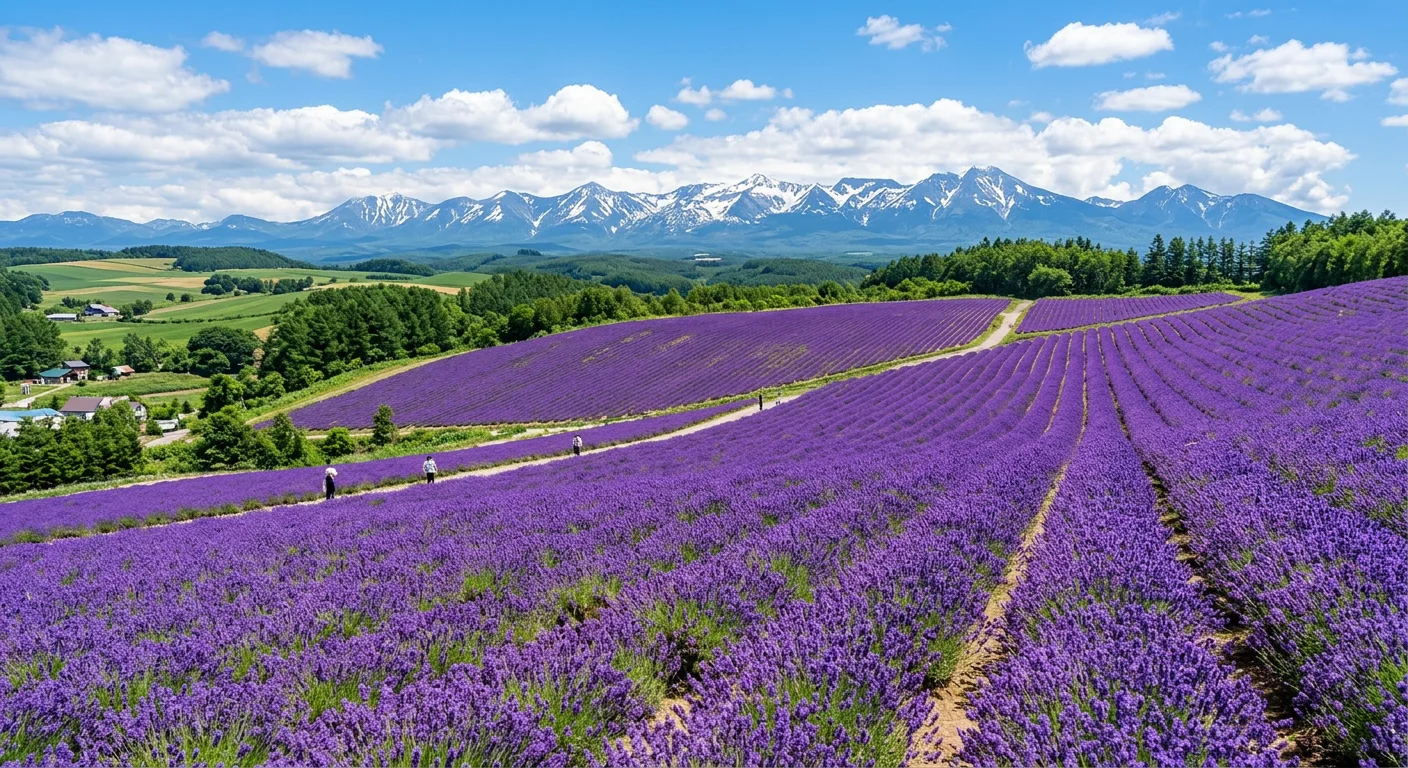
Hokkaido provides access to large, relatively undeveloped natural areas. Daisetsuzan National Park offers alpine hiking with views of Mount Asahi-dake, while Shiretoko National Park on the eastern peninsula has coastal cliffs and brown bear sightings. Niseko and Furano are established ski regions with powdery snow from December to March, lift tickets around 6,000-9,000 JPY ($40-60 USD) per day. In summer, Furano's lavender fields (July-August) attract many, though entry to the farms is generally free. Hiking gear or ski rentals will add to daily costs, about 5,000-8,000 JPY ($35-55 USD) per day.
Kyushu counters with different natural features. Mount Aso, one of the world's largest calderas, allows some access to its crater areas depending on volcanic activity. Yakushima island, south of the main island, is a UNESCO site with ancient cedar forests and requires a full day of travel, often with multi-day hiking. Beppu and Yufuin are known for their hot springs, with public baths costing 200-800 JPY ($1.50-5.50 USD). Takachiho Gorge offers boat rentals for 4,000 JPY ($27 USD) per half-hour, navigating narrow waterways. Hokkaido's sheer scale and variety of accessible, large-scale natural environments give it the edge for outdoor enthusiasts.
- Winner: Hokkaido
- Why: Hokkaido's vast scale provides more diverse large-format natural experiences, from alpine hiking to snow sports.
- Who this matters for: Hikers, skiers, and those seeking cooler temperatures and expansive landscapes.
🍜 Food & Drink
Hokkaido's food scene often centers on its seafood, such as uni (sea urchin) and kani (crab), particularly in coastal towns like Otaru or markets in Sapporo. A good seafood bowl…
Hokkaido's food scene often centers on its seafood, such as uni (sea urchin) and kani (crab), particularly in coastal towns like Otaru or markets in Sapporo. A good seafood bowl at Sapporo's Nijo Market can cost 2,000-4,000 JPY ($14-27 USD). Sapporo ramen, with its miso base, is distinct from other regional styles, priced around 900-1,200 JPY ($6-8 USD). Genghis Khan (lamb BBQ) is also popular, with meals starting around 2,500 JPY ($17 USD) per person. Hokkaido's dairy products, like milk and ice cream, are also widely available and high quality. Local breweries produce Sapporo Beer, a national brand with a museum in Sapporo.
Kyushu offers a more varied and arguably more accessible everyday food culture. Hakata ramen from Fukuoka, characterized by its tonkotsu (pork bone broth), is widely consumed, with bowls costing 700-1,000 JPY ($5-7 USD). Motsunabe (offal hot pot) is another Fukuoka specialty, often 1,500-2,500 JPY ($10-17 USD) per person. Kagoshima is known for its Kurobuta pork, served in various dishes, including tonkatsu or shabu-shabu. Kyushu also has a strong shochu (distilled spirit) culture, particularly in Miyazaki and Kagoshima. Its warmer climate supports a wider range of fresh produce throughout the year. For consistency and diverse everyday options, Kyushu's food scene is more compelling.
- Winner: Kyushu
- Why: Kyushu's food scene offers a wider range of distinct and affordable everyday specialties, from ramen to local meats and spirits.
- Who this matters for: Foodies seeking diverse regional specialties and affordable, flavorful meals.
💰 Costs & Budget
Hokkaido travel can be more expensive, particularly due to longer distances for domestic flights to Sapporo (often 10,000-20,000 JPY / $70-140 USD from Tokyo) and extensive JR…
Hokkaido travel can be more expensive, particularly due to longer distances for domestic flights to Sapporo (often 10,000-20,000 JPY / $70-140 USD from Tokyo) and extensive JR Pass usage or car rental. Accommodation in Sapporo or popular ski towns like Niseko often starts at 8,000-15,000 JPY ($55-100 USD) for a basic business hotel. Activities like skiing or snowshoeing add significant costs (gear rental, lift tickets). Food, while high quality, can be pricey, especially for seafood. A daily budget of $70-120 USD is realistic for a mid-range traveler, not including long-distance flights.
Kyushu generally offers better value. Flights to Fukuoka from Tokyo are often comparable or slightly cheaper (8,000-18,000 JPY / $55-120 USD). Accommodation in cities like Fukuoka or Kagoshima can be found for 6,000-10,000 JPY ($40-70 USD) per night. Local food, particularly ramen and street snacks, is cheaper. Public transport within cities and between prefectures (using the JR Kyushu Rail Pass, e.g., 3-day pass for 8,500 JPY / $58 USD) is efficient and more concentrated geographically. Day-to-day spending on food and activities tends to be lower. A daily budget of $60-110 USD is achievable. Kyushu offers more economic travel overall.
- Winner: Kyushu
- Why: Kyushu generally presents lower daily expenses for accommodation, food, and local transport, making it more budget-friendly.
- Who this matters for: Budget-conscious travelers and those planning longer trips.
✈️ Getting There & Around
Reaching Hokkaido typically involves flying into New Chitose Airport (CTS) near Sapporo. While some international flights exist, most travelers connect via Tokyo (Haneda HND or…
Reaching Hokkaido typically involves flying into New Chitose Airport (CTS) near Sapporo. While some international flights exist, most travelers connect via Tokyo (Haneda HND or Narita NRT) or Osaka (KIX), with flights taking about 1.5-2 hours from Tokyo. The Hokkaido Shinkansen only reaches Hakodate, so extensive travel requires the JR Hokkaido network or car rental. A 7-day JR Hokkaido Pass costs around 26,000 JPY ($175 USD). Car rental, especially outside Sapporo, is common for exploring national parks, costing 5,000-8,000 JPY ($35-55 USD) per day plus tolls and fuel. Buses cover some remote areas but can be infrequent. Getting around large, dispersed Hokkaido takes time and planning.
Kyushu's main gateway is Fukuoka Airport (FUK), which has direct international flights from several Asian cities, making it easier to access without a Tokyo transfer for some. The Kyushu Shinkansen connects Fukuoka, Kumamoto, and Kagoshima efficiently. A 3-day All Kyushu JR Pass is 17,000 JPY ($115 USD). Local buses and trains are well-developed in major cities and tourist areas. Ferries connect to islands like Yakushima. The compact nature of Kyushu means less time spent traveling between attractions compared to Hokkaido's expansive geography. For ease of access and intra-region travel, Kyushu is more convenient.
- Winner: Kyushu
- Why: Kyushu offers easier international access via Fukuoka and a more concentrated, efficient Shinkansen and local transport network.
- Who this matters for: Travelers seeking convenient entry points and efficient intra-region travel without extensive car rental.
🏛️ Culture & History
Hokkaido's cultural identity is shaped by its relatively recent settlement by Japanese, blended with the indigenous Ainu people's heritage. The Ainu Culture Promotion Center in…
Hokkaido's cultural identity is shaped by its relatively recent settlement by Japanese, blended with the indigenous Ainu people's heritage. The Ainu Culture Promotion Center in Shiraoi (Upopoy National Ainu Museum and Park) offers insights into Ainu traditions, with admission around 1,200 JPY ($8 USD). Sapporo has some Meiji-era Western-style architecture like the Clock Tower, and the Sapporo Snow Festival in February is a major cultural event. Otaru's canal area retains a historical feel, with glass workshops and music boxes. Overall, Hokkaido's cultural narrative is less about ancient Japanese feudal history and more about frontier development and Ainu traditions.
Kyushu presents a deeper and more varied historical narrative for typical Japanese history. Kumamoto Castle (reconstruction, 800 JPY / $5.50 USD entry) is a significant samurai era site. Nagasaki's history is unique, with its role in early European contact, Christian missionary efforts, and the atomic bombing (Peace Park and Museum, 200 JPY / $1.40 USD). Fukuoka has the Fukuoka Castle ruins and the Hakata Gion Yamakasa festival in July. Saga Prefecture is known for its pottery traditions, particularly Arita ware. The region has a visible connection to ancient Japan, feudal conflicts, and significant modern events. Kyushu offers a more extensive and conventional Japanese historical experience.
- Winner: Kyushu
- Why: Kyushu offers a broader and deeper range of traditional Japanese history, samurai sites, and unique modern historical events.
- Who this matters for: History enthusiasts, those interested in feudal Japan, and specific modern historical events.
🏨 Accommodation
Hokkaido's accommodation options in major cities like Sapporo are dominated by business hotels (e.g., APA Hotel, Dormy Inn) typically costing 7,000-12,000 JPY ($48-82 USD) per…
Hokkaido's accommodation options in major cities like Sapporo are dominated by business hotels (e.g., APA Hotel, Dormy Inn) typically costing 7,000-12,000 JPY ($48-82 USD) per night. In ski areas like Niseko, prices can surge dramatically during winter, with lodges and condos starting at 15,000 JPY ($100 USD) and going much higher for luxury. Onsen ryokans (traditional inns with hot springs) are found in specific regions like Noboribetsu, with prices from 15,000-30,000 JPY ($100-200 USD) per person, including meals. Outside these areas, choices can be limited, especially in rural national park zones, often requiring advance booking for guesthouses.
Kyushu offers a wider and more accessible range of accommodation types. Fukuoka has numerous budget and mid-range hotels, with hostels from 3,000 JPY ($20 USD) and business hotels from 6,000 JPY ($40 USD). Hot spring towns like Beppu and Yufuin are packed with ryokans, from affordable traditional options (10,000 JPY / $70 USD per person) to more luxurious establishments, often including meals. There are also many smaller guesthouses and minshuku in rural areas, often providing a more local experience at lower prices. The overall supply and competitive pricing in Kyushu mean travelers have more flexibility across budgets. Kyushu provides more options and value for accommodation.
- Winner: Kyushu
- Why: Kyushu provides a broader selection of accommodation types, including budget-friendly options and numerous onsen ryokans, often at better price points.
- Who this matters for: Travelers seeking diverse lodging experiences across various budgets, especially those keen on traditional ryokans.
☀️ Weather & Seasons
Hokkaido is known for its long, heavy winters (November to March), with average January temperatures in Sapporo around -4°C (25°F). This is ideal for snow sports but can make…
Hokkaido is known for its long, heavy winters (November to March), with average January temperatures in Sapporo around -4°C (25°F). This is ideal for snow sports but can make general sightseeing challenging due to heavy snow and icy conditions. Summers (July-August) are cooler and less humid than elsewhere in Japan, with Sapporo averaging 20-22°C (68-72°F), making it a popular escape from Japan's heat. Spring (April-May) and autumn (September-October) are short but feature cherry blossoms and fall foliage, respectively. Travelers need to be prepared for cold weather outside of summer, with proper winter clothing essential.
Kyushu experiences milder winters, with average January temperatures in Fukuoka around 6°C (43°F), allowing for comfortable year-round travel. Summers (July-August) are hot and humid, similar to other parts of southern Japan, often reaching 30-33°C (86-91°F) with high humidity, though coastal areas can offer some relief. Spring (March-May) and autumn (October-November) are extended and generally pleasant, making them ideal for exploring. Kyushu also sees more typhoons during late summer/early autumn compared to Hokkaido. For broader comfortable travel periods and less extreme cold, Kyushu is more appealing.
- Winner: Kyushu
- Why: Kyushu offers a significantly longer period of comfortable travel weather with milder winters and extended pleasant spring and autumn seasons.
- Who this matters for: Travelers sensitive to extreme cold, or those preferring to avoid heavy snow and dedicated winter sports.
🌃 Nightlife & Entertainment
Hokkaido's nightlife primarily centers around Sapporo. Susukino, Sapporo's entertainment district, offers a concentration of izakayas (Japanese pubs), karaoke boxes, and bars. A…
Hokkaido's nightlife primarily centers around Sapporo. Susukino, Sapporo's entertainment district, offers a concentration of izakayas (Japanese pubs), karaoke boxes, and bars. A typical izakaya meal with drinks might cost 3,000-5,000 JPY ($20-35 USD) per person. Beyond Sapporo, nightlife options are sparse, with smaller towns having only a few local establishments. In ski towns like Niseko, bars and pubs are active during the winter season but mostly seasonal. There are fewer late-night options outside of the main city center, and the atmosphere can be calmer than in larger Japanese cities. The winter festivals themselves provide evening entertainment, but these are seasonal events.
Kyushu's nightlife is more distributed and active. Fukuoka's Hakata district, especially around Nakasu, is known for its yatai (food stalls) that operate into the late hours, offering affordable food and drink, with meals around 1,000-2,000 JPY ($7-14 USD). The city also has numerous bars, clubs, and live music venues. Kagoshima and Kumamoto also offer active evening scenes, though smaller than Fukuoka's. Shochu bars are prevalent across Kyushu. The general atmosphere in Kyushu's cities often feels more relaxed and accessible for evening socializing. For consistent options and a more active evening atmosphere, Kyushu is the stronger choice.
- Winner: Kyushu
- Why: Kyushu, particularly Fukuoka, provides a more varied and consistently active nightlife with unique local options like yatai food stalls.
- Who this matters for: Solo travelers, groups of friends, or those who enjoy evening entertainment beyond dinner.
🚶♀️ Solo Travel
Hokkaido is very safe for solo travelers, and its major cities like Sapporo are easy to navigate. Public transport is reliable, and many attractions are accessible. However,…
Hokkaido is very safe for solo travelers, and its major cities like Sapporo are easy to navigate. Public transport is reliable, and many attractions are accessible. However, exploring the vast national parks often benefits from a car or organized tours, which can be less ideal for solo travelers on a budget. Social opportunities outside of hostels in Sapporo can be limited, as many areas are more family or couple-oriented. Eating solo at izakayas is common, but less likely to spark conversations. Winter sports can be a good solo activity but require specific interests. The expansive nature can feel isolating for some solo travelers after a while, without a car.
Kyushu also has high safety and ease of navigation for solo travelers. Fukuoka, in particular, has a strong hostel scene (beds from 3,000 JPY / $20 USD), fostering social interactions. The yatai stalls are an excellent place for solo diners to eat and observe, often leading to conversations with locals or other travelers. Its more compact geography and efficient Shinkansen network make it easier to visit multiple cities and attractions without a car. Kyushu's diverse hot spring towns also offer a relaxing solo experience. The overall density of cities and attractions, coupled with a more social food culture, makes Kyushu a slightly better fit for solo exploration.
- Winner: Kyushu
- Why: Kyushu offers more accessible social opportunities, a strong hostel network, and efficient transport for solo exploration without a car.
- Who this matters for: Solo travelers seeking social interaction, budget-friendly options, and ease of independent travel.
👨👩👧👦 Family Travel
Hokkaido offers many family-friendly activities. Ski resorts like Niseko and Furano have ski schools and gentle slopes suitable for children, with lessons often available in…
Hokkaido offers many family-friendly activities. Ski resorts like Niseko and Furano have ski schools and gentle slopes suitable for children, with lessons often available in English. Many resorts offer family packages. In summer, Furano's flower fields are pleasant, and attractions like Shiroi Koibito Park (chocolate factory tour near Sapporo, 800 JPY / $5.50 USD entry) or Sapporo Beer Garden can appeal. Asahiyama Zoo (Asahikawa, 1,000 JPY / $7 USD entry) is known for its penguin walk. The large natural spaces provide room for children to explore. Car rental is highly recommended for families in Hokkaido to manage luggage and schedules, which adds to the budget but allows for flexibility.
Kyushu also has family appeal. Huis Ten Bosch in Nagasaki is a Dutch-themed amusement park (7,000 JPY / $48 USD for a day pass) with light displays and rides. Beppu's Hells of Beppu (2,000 JPY / $14 USD for all 7 Hells) are a unique geological experience, and some onsen towns have family baths. Marine World Uminonakamichi in Fukuoka (2,500 JPY / $17 USD entry) is a popular aquarium. However, Hokkaido's combination of expansive, cooler natural environments, dedicated ski facilities, and attractions like the Asahiyama Zoo often feel more geared towards active family adventures. Hokkaido wins for its broader range of distinct family outdoor activities.
- Winner: Hokkaido
- Why: Hokkaido provides more large-scale outdoor activities, dedicated winter sports facilities, and spacious natural areas suitable for active families.
- Who this matters for: Families with active children, those seeking snow activities, or who prefer cooler summer climates.
🎯 The Decision Framework
Choose Hokkaido If…
- You prioritize ski or snowboard travel from December to March.
- You prefer cooler, less humid summers for outdoor activities.
- You want to experience Hokkaido's unique seafood and dairy-focused cuisine.
- You are interested in exploring vast national parks and rugged landscapes.
- You appreciate the distinct culture of the indigenous Ainu people.
- You plan to rent a car to explore remote areas independently.
- You seek an escape from the crowds often found in central Japan.
- You enjoy wide-open spaces and long drives through scenic routes.
Choose Kyushu If…
- You seek historical sites, including samurai castles and atomic bomb memorials.
- You want to experience a diverse range of hot springs, from Beppu to Yufuin.
- You prefer a generally milder climate for year-round travel.
- You are interested in local shochu distilleries and varied regional cuisine beyond seafood.
- You plan to travel efficiently by Shinkansen and public transport.
- You are on a tighter budget and seeking better value for accommodation and food.
- You want a more social atmosphere, especially in cities like Fukuoka.
- You appreciate volcanic landscapes and subtropical islands like Yakushima.
❓ Frequently Asked Questions
Is Hokkaido or Kyushu better for a first-time visitor to Japan?
For a first-time visitor, Kyushu often provides a more accessible and varied introduction to Japanese culture and landscapes. It combines historical sites, diverse food, and efficient transport within a more compact area, making it easier to experience multiple facets of Japan over 7-10 days.
What are the flight times and costs from Tokyo to each region?
A direct flight from Tokyo (HND/NRT) to Sapporo (CTS) takes about 1 hour 30 minutes to 2 hours, costing roughly 10,000-20,000 JPY ($70-140 USD). A direct flight from Tokyo to Fukuoka (FUK) is similar, about 1 hour 45 minutes to 2 hours, with costs typically ranging from 8,000-18,000 JPY ($55-120 USD).
Which region has better hot springs (onsen)?
Kyushu is generally recognized for its greater variety and density of hot spring towns. Beppu alone has eight distinct 'Hells' and numerous public baths, while Yufuin offers a calm, scenic atmosphere. Hokkaido has notable onsen resorts like Noboribetsu, but Kyushu's offerings are more widespread and diverse in type.
Is car rental necessary in Hokkaido or Kyushu?
In Hokkaido, car rental is highly recommended for exploring national parks and rural areas effectively, especially outside of Sapporo. In Kyushu, it's less necessary. The Shinkansen and local trains efficiently connect major cities and tourist sites, though a car can offer more flexibility for remote mountain areas.
Which region is better for hiking and outdoor activities?
Hokkaido offers more large-scale hiking opportunities in extensive national parks like Daisetsuzan and Shiretoko, with cooler summer temperatures ideal for long treks. Kyushu has good hiking around Mount Aso and on Yakushima, but Hokkaido's sheer volume of open natural spaces makes it a stronger choice for dedicated hikers.
What are the average daily food costs in each region?
In Hokkaido, expect to spend around 4,000-7,000 JPY ($27-48 USD) per day on food, especially if indulging in seafood. In Kyushu, daily food costs can be slightly lower, around 3,000-6,000 JPY ($20-40 USD), with affordable options like Hakata ramen and yatai stalls.
Which region is better for winter travel and snow activities?
Hokkaido is the clear choice for winter travel and snow activities. Its heavy snowfall provides excellent conditions for skiing and snowboarding at resorts like Niseko and Furano, and the Sapporo Snow Festival is a major winter attraction. Kyushu rarely sees significant snow outside of high mountain areas.
Are English speakers common in either region?
In major tourist areas and city centers of both Hokkaido (Sapporo) and Kyushu (Fukuoka, Nagasaki), you will find some English speakers, especially in hotels and larger shops. However, outside these main hubs, English proficiency drops significantly in both regions, making a translation app or basic Japanese phrases useful.
Ready to plan your Japan trip?
Know the tourist scams before you go — documented from real traveler reports.