📋 Our Methodology
This comparison is built from real sources, not AI guesswork:
- 40+ Reddit threads from r/travel, r/solotravel, r/backpacking, r/CzechRepublic, r/hungary synthesized
- Cost data from Numbeo (March 2026), cross-checked with recent Reddit trip reports
- Weather from Open-Meteo historical averages
- Transit costs from Prague DPP and Budapest BKK official sources
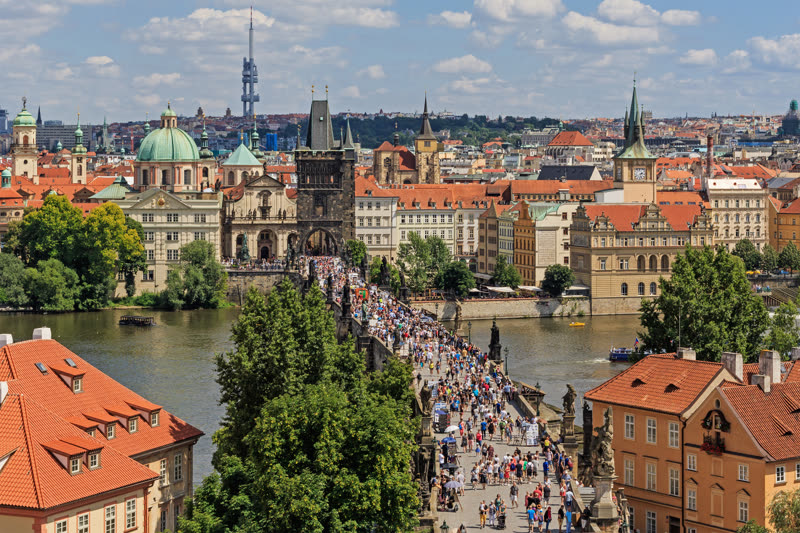
Prague — Charles Bridge
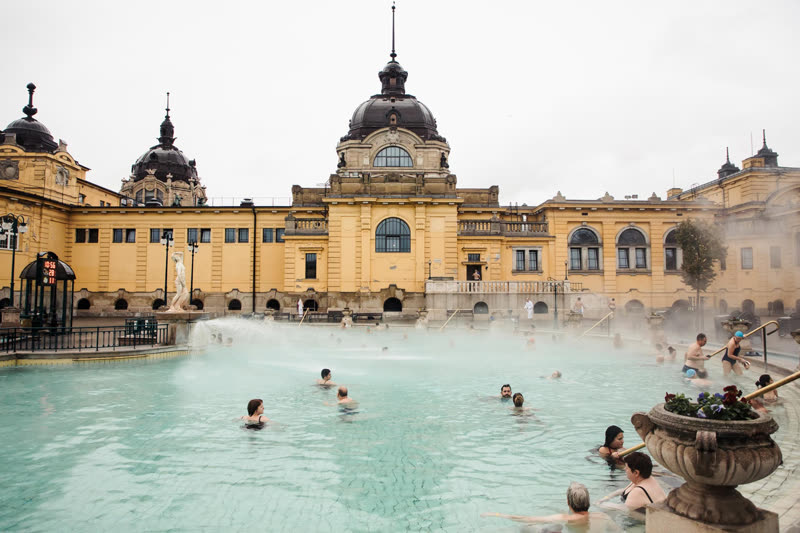
Budapest — Széchenyi Thermal Baths
⚡ The TL;DR Verdict
Prague wins for sheer medieval beauty and photogenic architecture. Budapest wins for variety, unique experiences (thermal baths, ruin bars), and slightly more value per euro.
- Go to Prague if you want Europe's most perfectly preserved medieval city center — Charles Bridge, Prague Castle, and Old Town Square are genuinely breathtaking, especially at dawn before the crowds arrive.
- Go to Budapest if you want more to do over 5+ days — thermal baths, ruin bars, the Hungarian Parliament, Fisherman's Bastion views, and a food scene that's been underrated for too long.
- Go to both — a Prague–Vienna–Budapest route is one of Central Europe's great multi-city itineraries, and the train connections make it seamless.
- Reddit is split roughly 55/45 in Budapest's favor, mostly on the basis of variety and uniqueness — but Prague's visual beauty command enormous loyalty from those who've visited.
🔵 Choose Prague if...
You want the most photogenic city center in Europe, one of the world's best craft beer scenes, and a compact Old Town where every corner looks like a film set. Prague rewards 3–4 day visits with concentrated magic.
🔴 Choose Budapest if...
You want more activities, more to do across a longer stay — thermal bath mornings, ruin bar nights, Parliament tours, Danube viewpoints — and a slightly more affordable, less tourist-saturated experience.
Quick Comparison
| Category | 🔵 Prague | 🔴 Budapest | Winner |
|---|---|---|---|
| Daily Budget (mid-range) | €60–80/day | €55–75/day | Budapest |
| Hostel Dorm (per night) | €15–25 | €12–22 | Budapest |
| Beer at a local pub | 40–60 CZK (€1.60–2.40) | 800–1,000 HUF (€2–2.50) | Prague |
| Architecture | Gothic, Baroque, Art Nouveau (Charles Bridge, Castle) | Neo-Gothic, Art Nouveau (Parliament, Fisherman's Bastion) | Prague |
| Unique Attraction | Prague Castle complex (largest in world) | Thermal baths + ruin bars | Budapest |
| Food Scene | Svíčková, goulash, trdelník, Czech beer culture | Lángos, gulyás, chimney cake, Great Market Hall | Tie |
| Nightlife | Solid clubs + bar scene | Ruin bars (world-class), party hostels | Budapest |
| Transit (24h pass) | 120 CZK (~€4.80) | 2,500 HUF (~€6.30) | Prague |
| Day Trips | Český Krumlov, Kutná Hora, Karlovy Vary | Szentendre, Eger, Lake Balaton | Tie |
| English Friendliness | Very high in tourist areas | High in tourist areas | Tie |
| Tourist Crowding | Very crowded (Old Town, Charles Bridge) | Crowded but more spread out | Budapest |
| City Size / Things to Do | 1.3M people, compact center | 1.7M people, more spread out | Budapest |
🏙️ City Character & Vibe
Prague feels like walking through a fairy tale that forgot to grow up. The medieval Old Town (Staré Město) is so impeccably preserved that it's become its own tourist phenomenon — every cobblestone square, Gothic spire, and Baroque palace looks exactly as it did 400 years ago, which means 20 million visitors a year descend on a city of 1.3 million. The result: Charles Bridge in July feels like Times Square. But come at 6am on a foggy autumn morning, and it's still the most magical urban scene in Europe.
Budapest is different in character — bigger, busier, and more internally contradictory. Split by the Danube into hilly Buda (quieter, residential, castle) and flat Pest (commercial, nightlife, Parliament), it's a city of contrasts. The architecture oscillates between imperial grandeur and post-communist grit in the same block. The ruin bars grow from crumbling Jewish Quarter buildings. The thermal baths have been operating since Ottoman occupation in the 16th century. Budapest feels lived-in in a way Prague's tourist-polished center sometimes doesn't.
"Prague is the more photogenic city around Staré Město and the castle but also more choked with tourists, whereas Budapest is no slouch either but the sights are a bit more spread out and it's a more dynamic city with a lot going on. The thermal baths and ruin bars make it really unique." — r/travel
"I've visited both, and while Prague was nice, Budapest was a 'I must return ASAP' city for me. I booked another trip to Budapest because I loved it so much." — r/travel
🍽️ Food & Dining
Czech cuisine gets unfairly dismissed. Prague's svíčková na smetaně (beef sirloin in a creamy root-vegetable sauce, served with bread dumplings and cranberry jam) at a Czech hospoda (pub) runs 280–380 CZK (€11–15) and is one of Central Europe's great comfort dishes. Goulash appears in Prague too, as does roast pork with dumplings and sauerkraut. The trdelník (chimney cake) sold on every Old Town corner is touristy and mediocre — skip it and instead find chlebíčky (open-faced sandwiches) at a Czech deli for 30–50 CZK (€1.20–2) each. Prague's beer culture is its strongest food asset: a half-liter of Pilsner Urquell, Kozel, or Bernard at a proper hospoda costs 40–60 CZK (€1.60–2.40) — making it Europe's cheapest quality beer by a significant margin.
Budapest's food scene has been quietly brilliant for years. The Great Market Hall (Nagycsarnok) is a genuine food market, not a tourist trap — three floors of paprika, lángos (fried dough with sour cream and cheese, 600–900 HUF / €1.50–2.30), Hungarian sausages, and fresh produce. Gulyás (Hungarian goulash — more of a beef soup than the Czech stew interpretation) runs 2,000–3,500 HUF (€5–9) at a local étterem. The Jewish Quarter has a growing restaurant scene centered around Klauzál Square. For a splurge: Borkonyha (Michelin-starred, Hungarian wine-paired contemporary cuisine) runs €60–80 for a full meal.
"Better food in Budapest (Prague had amazing places too though) but better beer in Prague." — r/solotravel
🏛️ Architecture & Culture
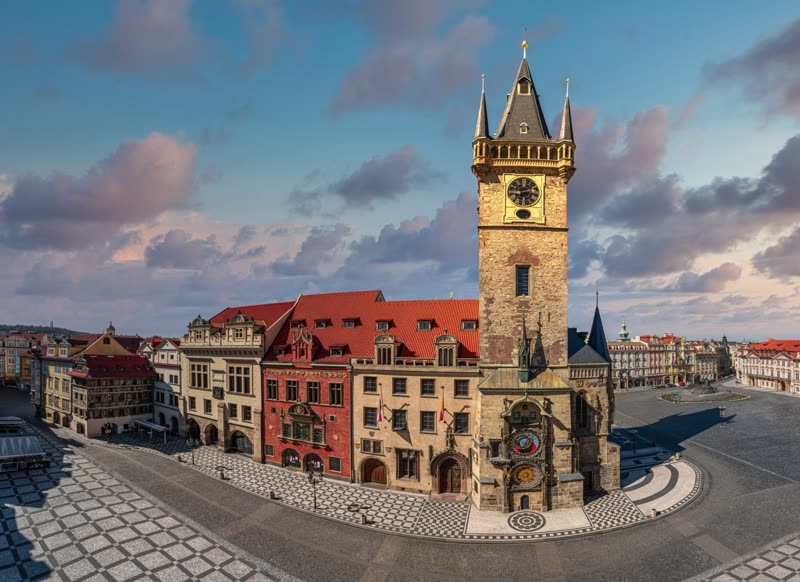
Prague has one of the best-preserved medieval city centers in the world. The Charles Bridge (Karlův most), a 14th-century Gothic bridge lined with 30 Baroque statues of saints, is the city's iconic image and worth crossing at dawn to beat the selfie stick hordes. Prague Castle (Pražský hrad) is the largest ancient castle in the world by area — the complex spans 70,000 m² and includes St. Vitus Cathedral, the Golden Lane, and the Royal Palace. Entry to the grounds is free; full circuit tickets cost 250 CZK (€10). Old Town Square (Staroměstské náměstí) features the famous Astronomical Clock (Orloj), which dates to 1410 and performs a mechanical show hourly. The entire Old Town, Malá Strana (Lesser Town), and Josefov (Jewish Quarter) districts are UNESCO-listed.
Budapest matches Prague in grandeur but with a different architectural palette. The Hungarian Parliament Building (Országház) — Neo-Gothic, 268 meters long, 691 rooms — is one of Europe's most impressive buildings and free to enter for EU/EEA citizens (2,000 HUF / €5 for others with a guided tour). Fisherman's Bastion on the Buda Castle Hill offers the best panoramic views in the city, free to enter (400 HUF / €1 for the upper terraces). The Dohány Street Synagogue is the largest in Europe and the second-largest in the world. Budapest's Art Nouveau buildings — the Museum of Applied Arts, the Gresham Palace (now a Four Seasons), the Keleti train station — are world-class.
"Personally I prefer Budapest. It's a more interesting city overall for me, though Prague isn't a bad place. More things to see in Budapest, more variety. Prague has a beautiful historic centre, but it's so full of tourists that it's spoilt a little." — r/solotravel
♨️ Thermal Baths (Budapest's Secret Weapon)
This section only exists in the Budapest column — Prague has no thermal bath tradition. Budapest sits on a geological zone of over 100 natural hot springs, and the Romans were already building bathhouses here 2,000 years ago. The Ottoman occupation (1541–1686) deepened the bath culture, and many of Budapest's oldest baths date from this era.
The main baths to know: Széchenyi (largest, most famous, outdoor pools + indoor pools, Neo-Baroque yellow palace in City Park, day pass €22–24) is the one you've seen in every Budapest travel photo. Come on a weekday morning for manageable crowds, or embrace the Saturday night bath parties (Sparties). Gellért (Art Nouveau, attached to the hotel of the same name, €22 weekdays) is the most beautiful interior. Rudas (partially Turkish domed, 500-year-old octagonal pool under a starlit dome, €17 for regular hours) is the most authentic. Budget €25–30 total including transport and lockers.
"If I had to pick one for a weekend I'd say Budapest. The thermal baths alone are worth it, and the ruin bars are such a unique experience — you really can't get either of those things anywhere else." — r/travel
💰 Cost Comparison
Both Prague and Budapest are significantly cheaper than Western Europe, and the gap between them is smaller than people expect. Here's the breakdown from Numbeo (March 2026) and Reddit trip reports:
Prague daily costs: Hostel dorm €15–25 | Budget hotel €60–85 | Czech lunch menu (polední menu, soup + main) 150–200 CZK (€6–8) | Dinner at a hospoda 300–500 CZK (€12–20) | Beer at a local pub 40–60 CZK (€1.60–2.40) | Metro single ticket 30 CZK (€1.20) | Uber/Bolt across center €3–6
Budapest daily costs: Hostel dorm €12–22 | Budget hotel €55–80 | Lunch at a local étterem 1,800–2,800 HUF (€4.50–7) | Dinner 3,000–6,000 HUF (€7.50–15) | Beer at a ruin bar 800–1,200 HUF (€2–3) | Metro single ticket 450 HUF (€1.15) | Bolt across center €3–5
The key cost trap in Prague: tourist-facing restaurants on Old Town Square charge 3–4× local prices. A beer that costs 50 CZK (€2) at a hospoda in Žižkov costs 160 CZK (€6.40) on Old Town Square. In Budapest, the price difference between tourist areas and residential neighborhoods is smaller.
"Budapest is better in my opinion. There's more to see there and it doesn't feel as crowded as Prague, even though there are shitloads of tourists as well. And it's honestly slightly cheaper if you know where to eat." — r/travel
🚇 Getting Around
Prague's metro has 3 lines (A, B, C) covering the main tourist areas efficiently. A single ticket costs 30 CZK (€1.20) for 30 minutes; a 24-hour pass is 120 CZK (€4.80); a 3-day pass is 330 CZK (€13.20). The city is compact enough that many tourists walk almost everywhere in the center. Tram 22 is the sightseeing tram, running from Vinohrady through Malá Strana and up to Prague Castle — a legitimate €1.20 city tour. Prague's Old Town is walkable in 20 minutes end-to-end. Bolt/Uber operates: €3–6 for most center rides.
Budapest has 4 metro lines (M1, M2, M3, M4) plus trams, trolleybuses, and suburban trains (HÉV). A single metro ticket costs 450 HUF (€1.15); a 24-hour travelcard is 2,500 HUF (€6.30); a 72-hour pass is 5,500 HUF (€13.90). Tram 2, running along the Pest embankment of the Danube, has been called one of the world's most scenic tram rides — Parliament and Chain Bridge views included. Budapest covers more geographical area than Prague, so public transit is more frequently needed. Bolt is excellent and cheap: €4–8 across the city.
🎉 Nightlife & Entertainment
Budapest's ruin bars (romkocsmák) are the city's defining nightlife export — crumbling pre-war buildings in the Jewish Quarter converted into labyrinthine multi-room bars with mismatched furniture, graffiti-covered walls, and an atmosphere that's both anarchic and welcoming. Szimpla Kert, the original and still the best, is a must-visit even if bars aren't your thing — it's a genuine cultural landmark, opening at 10am for coffee and staying open until 4am. Other highlights: Instant-Fogas (enormous multi-floor complex), Anker't (outdoor garden), and Élesztő (craft beer focus). Budapest's party hostel scene — particularly Carpe Noctem and Gotcha — draws backpackers from across Europe for organized nights out. Clubs run until 4–5am on weekends.
Prague's nightlife is solid but less distinctively themed. The Žižkov district (TV tower neighborhood) has a concentrated bar scene that's genuinely local. Vinohrady has upscale wine bars and cocktail spots. The Old Town's tourist bars charge 3× local prices and are best avoided for serious drinking. Prague's beer scene is its strongest night-out asset: a proper Czech pub session at U Fleků (Smíchov, brewpub since 1499) or Lokál (multiple locations, unpasteurized Pilsner Urquell from a tank) is a cultural experience.
"Budapest always. The party scene is a lot stronger for travellers and the Budapest party hostels are famous for being some of the most fun and crazy places in Europe. Personally, I found Prague to be pretty underwhelming, kinda generic and too touristy." — r/solotravel
"For quirky unique bars I recommend Budapest. The ruin bars are unlike any other places I've seen — Szimpla Kert is one for the ages." — r/solotravel
🌤️ Best Time to Visit
Both cities have a similar Central European climate: cold winters (December–February, –2 to 5°C), mild springs (March–May), warm summers (June–August, 26–32°C), and beautiful autumns (September–October). The recommendations for both are identical: avoid July–August if you want manageable crowds and shoulder-season pricing. Peak summer sees Prague's Charles Bridge absolutely packed from 9am to sunset, and hotel prices in both cities spike 40–60%.
Best months: May and September. May brings blooming chestnut trees lining Prague's avenues and comfortable 18–22°C temperatures. September's light has a golden quality, the summer crowds thin significantly, and prices drop. For Prague: the Prague Spring International Music Festival (May–June) is a genuine cultural draw. For Budapest: the Budapest Wine Festival (September, in the Castle District) and the VOLT Festival (late June, 3h away in Sopron) are highlights.
Winter is underrated for both. December brings excellent Christmas markets — Vörösmarty Square and St. Stephen's Basilica in Budapest are genuinely magical; Old Town Square in Prague is beautiful despite the crowds. January–February is the cheapest and least crowded time; temps are cold but both cities have excellent indoor attractions. Prague's moody winter fog actually enhances the medieval atmosphere.
🗺️ Day Trips
Prague's best day trips: Český Krumlov (3h by bus from Prague's Florenc terminal, around 200 CZK / €8 each way) is a UNESCO World Heritage medieval town wrapped in a bend of the Vltava river — second castle in Czechia, incredibly well-preserved, and genuinely magical. This is Central Europe's best day trip. Kutná Hora (45 min by train from Prague Hlavní, €5 round trip) has the bone-inlaid Sedlec Ossuary (Kostnice), a Gothic cathedral decorated with the skeletal remains of 40,000 people — an extraordinary and deeply weird experience. Karlovy Vary (Carlsbad, 2h by bus, €7) is a Habsburg-era spa town of Belle Époque hotels and colonnade walks.
Budapest's best day trips: Szentendre (45 min by HÉV suburban train from Batthyány tér, 930 HUF / €2.30 return) is a charming Danube bend artists' town with Serbian Orthodox churches, galleries, and good marzipan. Eger (2h by train, 4,600 HUF / €11.50 return) has a castle, Ottoman minarets, and the "Valley of Beautiful Women" — a canyon of wine cellars where locals sell direct from the barrel. Lake Balaton (1.5–2h by train from Keleti, 3,200 HUF / €8) is Central Europe's largest lake, best in summer for swimming. Visegrád (1.5h bus) is a dramatic hilltop castle ruin overlooking the Danube Bend.
"Budapest has so much more to offer, and 4–5 days is the perfect amount of time to see everything. Prague is more of a 2-day destination, in my opinion — you can see everything you need to in the center pretty fast." — r/solotravel
🛡️ Safety
Both Prague and Budapest are among Europe's safer cities for tourists. Violent crime affecting visitors is rare in both. The issues are petty theft and scams, and each city has its own flavors.
Prague scams to watch for: Shell games and card tricks on Charles Bridge and Old Town Square (look for a small crowd gathering around a folding table — walk past). Taxi overcharging: street taxis at tourist locations historically overcharged significantly; always use Bolt or Liftago apps (€3–6 for most center rides vs €15–30 from unmetered taxis). The money exchange offices on Wenceslas Square and near tourist attractions often advertise "0% commission" but use terrible exchange rates — use ATMs (Raiffeisenbank or Moneta) instead. Pickpocketing on tram 22 and in Old Town Square crowds.
Budapest tips: Tram 2 and busy metro platforms have pickpocketing risk. The Hungarian forint's weakness has prompted occasional tourist pricing inflation — verify your check before paying. Menu scams at bars (drink menu without prices, then astronomical bill) are an issue in some tourist-facing establishments in the Jewish Quarter party zone. Use Google Maps reviews to check bars before entering.
🔀 The Decision Framework
After synthesizing 40+ Reddit threads and real traveler accounts, here's exactly who each city is right for:
🔵 Choose Prague if...
- You want Europe's most beautifully preserved medieval city center — there's nothing quite like it
- You're a beer enthusiast — Prague's hospoda culture and €1.60 half-liters are unmatched in Europe
- You have 3–4 days and want concentrated magic in a walkable center
- Český Krumlov day trip is on your list (it's exceptional)
- You're visiting in winter and want atmospheric, foggy medieval streets
- Architecture photography is a priority — every angle of the Old Town is a postcard
- You're connecting to Germany, Poland, or Austria by train
🔴 Choose Budapest if...
- You want thermal baths — they're a genuinely unique, unmissable experience
- Nightlife and ruin bars are a priority (Budapest wins this category decisively)
- You have 5+ days and want more variety and less tourist saturation
- You're a foodie interested in Hungarian cuisine and a developing dining scene
- You want the best Danube views (Parliament from the Chain Bridge is extraordinary)
- You're combining with Vienna for the classic Central European route
- Party hostel scene appeals to you as a solo traveler
❓ Frequently Asked Questions
Is Prague or Budapest cheaper to visit?
Both are among Europe's most affordable capitals, but Budapest edges it slightly. Mid-range travelers spend around €55–75/day in Budapest vs €60–80/day in Prague. The biggest price trap in Prague is tourist-facing restaurants on Old Town Square, which charge 3–4× local prices. In both cities, eating where locals eat brings costs down dramatically.
Which city is better for nightlife, Prague or Budapest?
Budapest wins clearly. The ruin bars — crumbling pre-war buildings converted into labyrinthine bars — are genuinely unlike anything else in Europe. Szimpla Kert is a cultural landmark as much as a bar. Budapest's party hostel scene is also legendary for backpackers. Prague has a solid bar scene centered on Žižkov and Vinohrady, but nothing as distinctive.
Are Budapest's thermal baths worth it?
Absolutely — they're Budapest's most unique attraction and something Prague can't offer. Széchenyi (€22–24 day pass, outdoor pools) is the most iconic. Gellért (€22 weekdays, beautiful Art Nouveau interior) and Rudas (€17, 500-year-old Turkish dome) each offer different experiences. Go on a weekday morning. Budget 3–4 hours minimum.
Which city has better architecture, Prague or Budapest?
Prague wins for sheer medieval density and preservation — Charles Bridge, Old Town Square, and Prague Castle are a concentrated masterpiece. Budapest wins for variety across styles (Neo-Gothic Parliament, Art Nouveau details, Ottoman bath domes) and for having bigger individual landmarks. Prague is more photogenic overall; Budapest has more architectural range.
What is the best time to visit Prague or Budapest?
May–June and September–October for both. Avoid July–August: crowds are intense (Prague's Old Town is particularly overwhelming) and prices spike 40–60%. Budapest's Christmas markets in late November–December at Vörösmarty Square and St. Stephen's Basilica are among Europe's best. Winter is cold but cheap and uncrowded in both cities.
Can I visit both Prague and Budapest in one trip?
Yes — 7 hours by direct train (Regiojet or ÖBB Nightjet, €20–40 day train), 1 hour by budget flight (€30–60), or 8 hours by Flixbus. The classic route is Prague → Vienna → Budapest (or reverse), which is one of Central Europe's best 10–14 day itineraries. Vienna sits roughly halfway between them.
Which city is safer for tourists, Prague or Budapest?
Both are very safe by European standards. Prague has a more documented tourist scam problem — shell games on Charles Bridge, street taxi overcharging, and currency exchange rip-offs. All are avoidable: use Bolt for taxis, use bank ATMs for cash, ignore the shell game tables. Budapest has less systematic scamming but occasional pickpocketing on trams and some tourist-area menu scams.
What are the best day trips from Prague and Budapest?
Prague: Český Krumlov (3h bus, €8 each way) — a UNESCO medieval town wrapped by the Vltava river, genuinely stunning. Kutná Hora (45 min train, €5 return) for the bone church. From Budapest: Szentendre (45 min HÉV train, €2.30) for Danube bend charm; Eger (2h train, €11.50 return) for a castle and wine caves. Český Krumlov is the single best day trip from either city.
Ready to plan your Central European adventure?
Get a free custom itinerary for Prague, Budapest, or both — built from real traveler insights, not generic templates.
🎟️ Book Tours & Experiences
Hand-picked tours and activities for both destinations — book with free cancellation
Experiences via Viator — free cancellation on most tours