How we built this comparison
We analyzed dozens of Reddit threads across r/travel, r/digitalnomad, r/solotravel, r/backpacking, and r/laos to surface real traveler opinions on Vientiane vs Luang Prabang. Cost data comes from Numbeo, Agoda/Booking price checks (Q1 2026), and traveler expense reports. We've visited both cities and cross-referenced our experience with current community reports.
- Reddit threads: 15+ threads analyzed, 100+ comments synthesized
- Cost data: Q1 2026 prices in USD and Lao Kip (LAK)
- Verdict: genuine editorial judgment — not "both are great!"
⚡ The TL;DR Verdict
Luang Prabang wins for tourists. Vientiane wins for digital nomads who want to live locally. If you have time for only one stop in Laos and you're traveling for experiences — temples, waterfalls, food markets, culture — Luang Prabang is one of Southeast Asia's great destinations. Vientiane is a pleasant, low-key capital that rewards visitors who arrive with curiosity and no expectations, but it won't compete on the "wow" factor that most travelers are seeking.
- ✅ Luang Prabang: UNESCO heritage town, morning alms ceremony, Kuang Si Falls, legendary night market buffet ($1 all-you-can-eat), 33 wats in a compact walkable zone
- ✅ Vientiane: Laos's quirky, unhurried capital — Pha That Luang, Patuxai arch, COPE Museum, Buddha Park, French-colonial café culture, and genuine local life
- ⚡ Verdict: First-time visitor? Luang Prabang. Planning to stay a month and work remotely? Vientiane. Have time for both? Do both — they're 2 hours apart by train.
🏛️ Choose Vientiane If…
You want to experience a genuinely local Lao capital without the tourist crowds, you're a digital nomad working remotely for a month, or you're combining with Vang Vieng for the karst limestone scenery and adventure sports.
⛩️ Choose Luang Prabang If…
This is your main Laos stop and you want the complete Southeast Asian cultural experience: alms-giving ceremony, Mekong sunsets, turquoise waterfalls, night market food, and a UNESCO-protected heritage town that remains genuinely beautiful.
Quick Comparison
| Category | 🏛️ Vientiane | ⛩️ Luang Prabang | Winner |
|---|---|---|---|
| Daily Budget (mid-range) | $40–65/day | $50–80/day | Vientiane |
| Budget Accommodation | $12–25/night | $18–35/night | Vientiane |
| Cultural Sights | Pha That Luang, Patuxai, 3–4 wats | 33 wats, living alms ceremony | Luang Prabang |
| Natural Beauty | Mekong riverside, fairly flat | Mekong + mountains + Kuang Si Falls | Luang Prabang |
| Food Scene | Local Lao food, French cafes | $1 night market buffet, Lao-French fusion | Luang Prabang |
| WiFi & Nomad Infrastructure | Better expat cafes, more options | Good but more tourist-oriented | Vientiane |
| Walkability | Spread out, needs tuk-tuks | Compact UNESCO peninsula, fully walkable | Luang Prabang |
| Tourist Crowds | Low — few tourists, local life | Moderate — busy but managed | Vientiane |
| Day Trips | Buddha Park, Vang Vieng (4h) | Kuang Si Falls, Pak Ou Caves, Nong Khiaw | Luang Prabang |
| Nightlife | Riverside bars, relaxed | Night market, riverside, early nights | Tie |
| Getting There | International airport (Wattay) | International airport + China railway | Tie |
⛩️ Temples & Cultural Sites
This is where the gap between the two cities becomes most apparent.
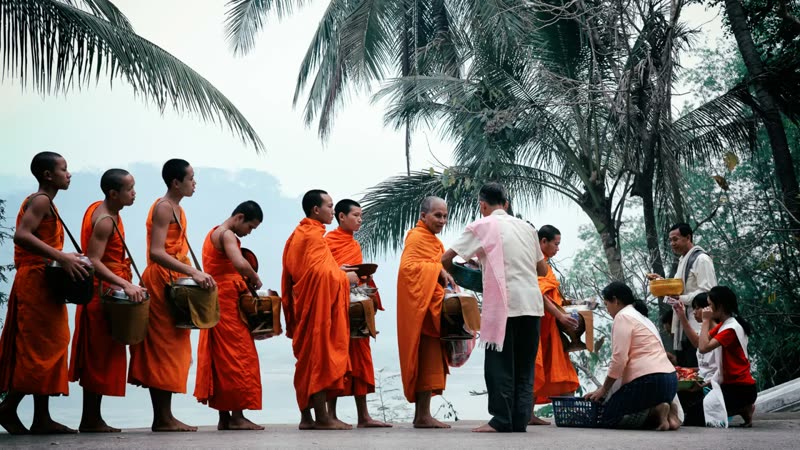
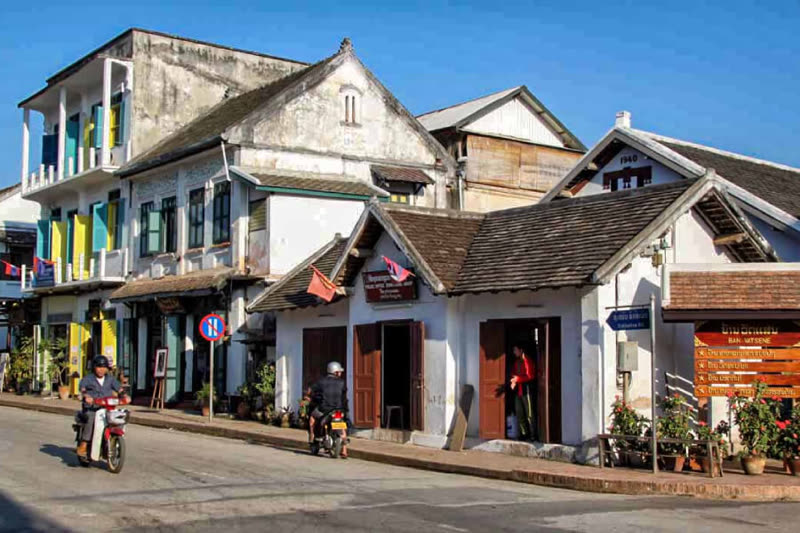
Luang Prabang's temple scene is remarkable for its density, preservation, and living context. Thirty-three Buddhist wats are clustered on a narrow peninsula between the Mekong and Nam Khan rivers. The architectural highlight is Wat Xieng Thong — the "Golden City Temple" — whose dramatically low-sweeping rooflines, intricate glass mosaics, and tree-of-life wall are among the finest examples of traditional Lao architecture anywhere. But more than the buildings, what defines Luang Prabang is the Tak Bat alms-giving ceremony: every morning at 5:30 AM, hundreds of monks in saffron robes file silently through the streets while residents kneel to offer sticky rice. It's one of Southeast Asia's most moving cultural rituals — and it's free to observe (respectfully, at a distance). The entire heritage zone is UNESCO-protected: no neon signs, no chain restaurants, all signage in gold on dark wood.
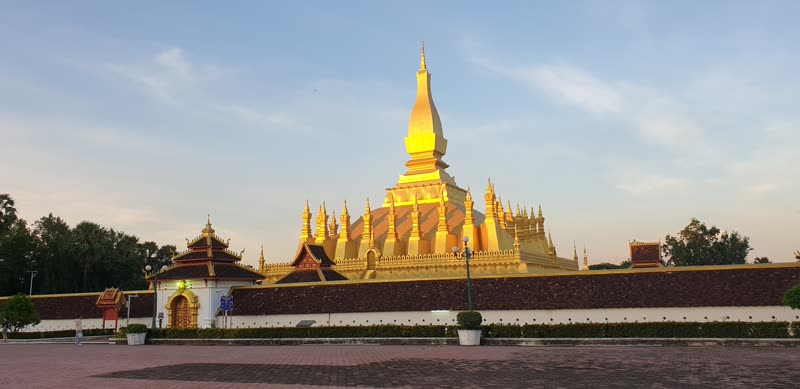
Vientiane's highlights are more scattered and individually impressive rather than collectively overwhelming. Pha That Luang — the great golden stupa built in the 16th century and now the national symbol of Laos — is genuinely striking at sunset when the gilded exterior glows. The surrounding grounds are serene and crowd-free on weekdays. Patuxai (the "Victory Gate") is a French Arc de Triomphe built with cement donated by the USA for a different purpose — the ironic plaque acknowledges this, which is very Lao. Three to four wats in Vientiane proper are worth visiting (Wat Si Saket, with its 6,840 Buddha images lining the cloister walls, is the best). The COPE Visitor Centre, documenting the UXO/landmine legacy of the Vietnam War-era bombing campaign, is sobering and essential — free entry and one of the most affecting museums in Southeast Asia.
🍜 Food & Dining
Laotian food is one of Southeast Asia's most underrated cuisines — and both cities are excellent entry points. The gap is in the access and variety.
Luang Prabang's food scene is one of Southeast Asia's great bargains. The night market buffet — $1 all-you-can-eat spread of Lao dishes laid out along the main Sisavangvong Road each evening — has become legendary on Reddit for good reason. Load up on laap (minced meat and herb salad), mok pa (steamed fish in banana leaf), tam mak hoong (papaya salad), and sticky rice served in bamboo baskets. The French colonial legacy yields exceptional café culture: khao jee (a baguette with Lao paté and fresh herbs, $1–2) is genuinely extraordinary. Khao piak sen — a thick, silky rice noodle soup unique to Luang Prabang, made from tapioca-starch rice noodles in a bone broth — is one of the great regional dishes in Laos: $1.50–2 at local stalls. Riverside restaurants serve proper sit-down Lao and French-fusion meals for $6–15.
Vientiane's food is more diverse but less concentrated. The Khop Chai Deu garden restaurant complex, Makphet (a social enterprise restaurant training marginalized youth, with excellent modern Lao cuisine), and the riverside night market on weekends all offer strong dining. Local Lao food in the city is slightly cheaper than Luang Prabang ($1.50–3 for noodle dishes), and the French baguette street stalls are equally good. For a proper Lao barbecue experience, the Sin Dat (Lao-style steamboat/BBQ) restaurants near the Mekong are excellent and typically cost $8–12 for all you can eat. Vientiane also has a small but reliable range of Indian, Korean, and Vietnamese restaurants catering to the diplomatic community.
💰 Cost Comparison
Laos is one of Southeast Asia's most affordable destinations — and both cities are cheap by regional standards. Vientiane runs slightly cheaper, but not dramatically so.
| Expense | 🏛️ Vientiane | ⛩️ Luang Prabang |
|---|---|---|
| Budget guesthouse | $12–22/night | $18–35/night |
| Mid-range boutique | $35–65/night | $50–100/night |
| Luxury | $80–150/night | $150–500/night (Amantaka) |
| Street food / local meal | $1.50–3 | $1–2 (night market $1 all-you-can-eat) |
| Sit-down restaurant | $5–12 | $6–15 |
| Beer Lao (bottle) | $1–1.50 | $1.50–2 |
| Tuk-tuk across town | $2–5 | $2–4 |
| Main temple entry | Pha That Luang: 10,000 LAK (~$0.50) | Most wats free or 20,000 LAK (~$1) |
| Kuang Si Falls | N/A (135km away) | 20,000 LAK (~$1) entry + $15–20 tuk-tuk |
| Budget daily total | ~$25–40/day | ~$35–55/day |
The currency is Lao Kip (LAK), currently around 20,000 LAK per USD. Most tourist businesses quote in USD. ATMs are widely available in both cities — unlike in Myanmar, banking works normally. The Laos e-visa costs $35–50 for most nationalities and takes 2–3 days online at laoevisa.gov.la.
🚲 Getting Around
The two cities are physically very different, and this shapes the daily experience.
Luang Prabang is one of the most walkable cities in Southeast Asia. The entire UNESCO heritage zone sits on a narrow peninsula at the confluence of the Mekong and Nam Khan rivers — roughly 2km long and 500m wide. You can walk from your guesthouse to any temple, the night market, or the main riverside strip in 5–20 minutes. Bicycles rent for $2–4/day and extend your range to outlying wats. Tuk-tuks cover the few destinations beyond the walking zone: the airport ($5–8), Kuang Si waterfall ($15–20 round-trip per person), the Pak Ou cave boat landing. The city rewards leisurely walking — getting lost in side streets between temples at dusk, stumbling on monks sweeping courtyards, finding a riverside café with Mekong views — is the experience itself.
Vientiane is more spread out and requires tuk-tuks or a rented bicycle/motorbike for most sightseeing. The core area between Patuxai and the riverside is walkable (about 3km), but the COPE Centre, Buddha Park (25km out), and most restaurants require transport. Tuk-tuks are easy to hail or negotiate ($2–5 per trip). Bicycle rental ($3–5/day) or electric scooter ($8–15/day) gives you full city independence and the Mekong riverside ride at sunset is genuinely lovely. The lack of a heritage-zone preservation order means the city is more spread out and commercially mixed — functional, not picturesque.
💻 Digital Nomad & Remote Work Life
Laos has emerged quietly as a digital nomad destination — lower costs than Thailand, a slower pace, and decent infrastructure. Both cities work for remote stays, but serve different needs.
Vientiane for nomads: The capital has the better nomad infrastructure — more coworking-style cafes with reliable WiFi, a small expat community (diplomats, NGO workers), and more food and lifestyle options for extended stays. Popular spots include Joma Bakery Café (consistent WiFi, AC, outlets, $3–5 coffee), Le Trio (French-Lao café), and several local eateries with free WiFi. Laotian SIM cards (LaoTelecom or Unitel, $5–10 for 30GB monthly data) are fast and reliable. Vientiane feels like a small, non-stressful city — easy to navigate, low crime, friendly locals — that doesn't overwhelm but also doesn't excite. Several Reddit nomads have noted staying a full month and finding the rhythm genuinely pleasant.
Luang Prabang for nomads: The WiFi has improved dramatically and several cafes now offer reliable connections suitable for Zoom calls. The tourist district has multiple options: Saffron Coffee, Joma, and Utopia riverside café are popular. The challenge is that Luang Prabang's environment is more tourism-oriented — fellow diners are tourists, prices are slightly higher, and the town has a "visiting" energy that some nomads find distracting. The city also has an informal tradition (legacy of old regulations) of quiet after midnight, which limits late-night work sessions if you're in a thin-walled guesthouse near bars.
🌸 Best Time to Visit
Both cities share Laos's tropical monsoon climate and broadly the same optimal travel window, though the specifics differ slightly.
November to February is ideal for both Vientiane and Luang Prabang: dry season, temperatures of 18–30°C, clear skies, and low humidity. This is peak season in Luang Prabang (prices rise 20–40% in December–January) but manageable. In Vientiane, the cool dry season is pleasant and unpressured — few tourists, comfortable temperatures for cycling the city, and Pha That Luang Festival (That Luang Boun) falls in November and draws thousands of Lao from across the country for 7 days of monks, monks, and more monks. One of the great Lao festivals, largely uncrowded by foreign tourists.
March to May gets hot: Vientiane hits 38–42°C in April, and Luang Prabang isn't far behind. Regional haze from agricultural burning reduces visibility, which matters more for Luang Prabang's photogenic scenery than Vientiane's urban environment. Lao New Year (Pi Mai, April 13–15) transforms Luang Prabang into the country's biggest water fight and celebration — extraordinary if you want to experience it, logistically challenging if you just want to visit temples (everything closes, accommodation books solid). In Vientiane, Pi Mai is low-key by comparison. June to October: monsoon season. The surrounding Mekong landscape turns lush green, Kuang Si Falls hit peak flow, and rice paddies are emerald. Rain falls in afternoon bursts (rarely all-day). Luang Prabang's scenery is at its most beautiful; Vientiane floods easily in heavy rains. Prices drop 30–40% off peak.
🏨 Where to Stay
Both cities have a wide range of accommodation, but the character differs significantly.
Luang Prabang accommodation is the most charming in Laos. Even budget guesthouses in converted wooden Lao-French villas with garden courtyards feel special — far more so than equivalent-priced rooms in Thailand or Vietnam. Key zones:
- Sisavangvong Road corridor: the main tourist strip. Most convenient, most foot traffic, prices slightly elevated.
- Side streets toward Nam Khan: quieter, atmospheric wooden guesthouses, same proximity to temples. Best value zone.
- Mekong riverside: a handful of boutiques with river views (premium). For the alms-giving ceremony, anywhere on the main road means you can walk out of your room and observe.
- Luxury: Amantaka ($500–900/night) and Belmond La Résidence Phou Vao ($200–450/night) are among Laos's finest hotels — beautifully designed within the heritage zone.
Vientiane accommodation is more functional and less charming by comparison. Budget guesthouses near the Chao Anouvong Park riverside ($12–22/night) are adequate. Mid-range boutique hotels in the central area run $40–80/night and are comfortable without being memorable. The Don Daeng island across the river (accessible by boat from Vientiane) has a few eco-lodge options if you want greenery. The best sleep-to-value ratio for Vientiane is the $30–50 range — decent boutique hotels near the Mekong or the main Nam Phou fountain square, walkable to most sights.
🌿 Day Trips & Nature
The surrounding landscapes offer very different day trip experiences — and this is one of Luang Prabang's strongest advantages.
Luang Prabang day trips are among the best in mainland Southeast Asia. Kuang Si Falls (35km from town) — tiered turquoise waterfalls with swimmable lower pools, vivid aquamarine water, and a bamboo forest trail to the top cascade — are legitimately world-class. Entry costs 20,000 LAK (~$1); tuk-tuk round trip $15–20 per person. Go by 8 AM to beat tour groups. Pak Ou Caves require a scenic 2-hour long-tail boat journey upriver (~$20–30 shared), stopping at a traditional rice whisky village. The caves themselves contain thousands of Buddha statues in two limestone chambers — strange and beautiful. Nong Khiaw (3.5h north by minivan or speedboat, ~$12–15 one-way) is a stunning karst limestone valley with trekking, kayaking, and a completely different, wilder atmosphere than Luang Prabang itself. One of northern Laos's most beautiful spots.
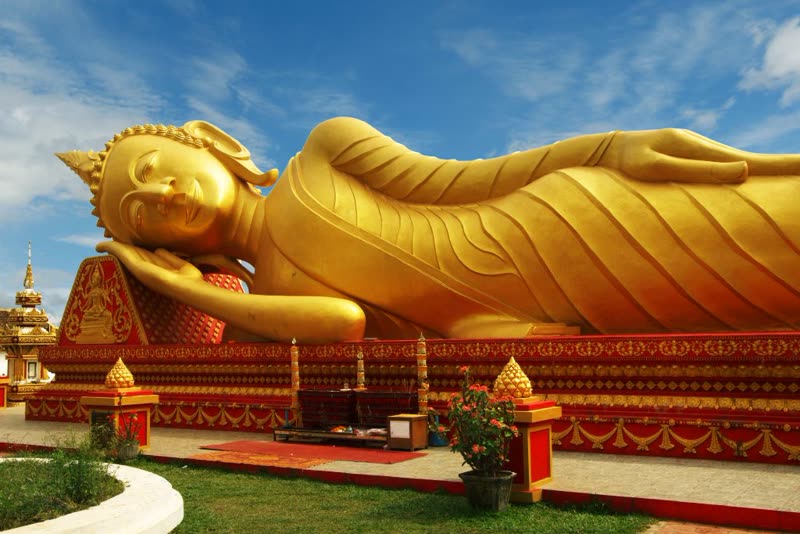
Vientiane day trips are fewer but worthwhile. Buddha Park (Xieng Khuan), 25km south along the Mekong (~$3 tuk-tuk), is a surreal sculpture garden built by a maverick priest in 1958 — dozens of enormous concrete Buddhist and Hindu statues including a reclining Buddha and a three-story "pumpkin" you can climb for river views. Entry: 10,000 LAK (~$0.50). Odd and wonderful. Vang Vieng (4h north by bus or 1.5h by train) has transformed from backpacker party town to adventure-tourism destination: karst limestone scenery, the Nam Song River, kayaking, hot air ballooning, and blue lagoons. Well worth an overnight. See our guide to Chiang Mai vs Luang Prabang if you're planning the northern route.
🔀 Why Not Both?
Unlike many city comparison pages where combining both requires a week of logistics, Vientiane and Luang Prabang are easily combined on a single Laos trip — and doing both is genuinely recommended for anyone with 7+ days in the country.
The logistics are simple:
- By air: Lao Airlines and Lao Skyway run 4–6 flights daily. Flight time ~40 minutes. Cost: $40–80 one-way. Book directly on Lao Airlines' website.
- By China-Laos Railway: The Vientiane–Luang Prabang leg takes ~2 hours and costs ~$15–25. Comfortable modern trains, scenic mountain views. Book via the official Laos railway site or at Vientiane Khounxoum station.
- By bus: 8–10 hours, ~$15–25. Not recommended unless you love mountain road bus travel — the train is faster and more comfortable for similar money.
A recommended Laos loop: Fly into Vientiane (international connections from Bangkok, KL, Hanoi) → 2 nights Vientiane (Pha That Luang, Buddha Park, COPE Museum) → Train to Luang Prabang → 4–5 nights Luang Prabang (alms-giving, Kuang Si, Pak Ou, temples, night market) → Optional 2 nights Vang Vieng (adventure sports, karst scenery) → Train back to Vientiane → fly out. Total: 10–12 days, covers the best of Laos without doubling back. Also check out Chiang Mai vs Luang Prabang and Luang Prabang vs Siem Reap if you're building a broader Southeast Asia itinerary.
🎯 The Decision Framework
Still not sure? Here's how to think about it:
🏛️ Choose Vientiane If…
- You want to experience a real Southeast Asian capital without tourist crowds
- You're a digital nomad staying 2–4 weeks and need reliable cafes and lower costs
- You're combining with Vang Vieng for karst scenery and adventure sports
- The That Luang Boun festival (November) or Pi Mai (April) timing works for you
- You want to see the COPE UXO Museum — one of Southeast Asia's most important
- You want to experience the Lao capital's authentic local rhythm, not a tourist circuit
- You're arriving/departing internationally and only have 1–2 days
⛩️ Choose Luang Prabang If…
- This is your main Laos stop and you want the full cultural experience
- You want to witness the Tak Bat alms-giving ceremony at dawn
- UNESCO-protected heritage towns and genuine architectural preservation matter to you
- You want turquoise waterfalls, Mekong river sunsets, and exceptional natural scenery
- You want to eat well on $1–2 at the legendary night market
- You're on a shorter trip (4–5 days) and want maximum cultural impact
- You're building a broader itinerary through northern Laos or into southern Yunnan via the China-Laos Railway
Frequently Asked Questions
Is Vientiane or Luang Prabang better for first-time visitors to Laos?
Luang Prabang is almost universally recommended for first-timers. It's a UNESCO World Heritage town with extraordinary cultural experiences — the morning alms-giving ceremony, 33 Buddhist temples, Kuang Si waterfall — packed into a walkable riverside peninsula. Vientiane is a pleasant city but far less visually or culturally stunning. Unless you're specifically interested in the capital's local-life atmosphere, start with Luang Prabang.
How far is Vientiane from Luang Prabang?
By air, it's about 30–40 minutes on Lao Airlines or Lao Skyway (flights cost $40–80 one-way). By the China-Laos Railway opened in 2021, it's approximately 2 hours (around $15–25). By bus, it's 8–10 hours on mountain roads ($15–25). Most travelers fly or take the train for efficiency. The slow boat option doesn't run directly between the two cities.
How much does it cost per day in Vientiane vs Luang Prabang?
Both are affordable. Vientiane runs slightly cheaper: budget $25–40/day for hostel, local food, and transport; mid-range $50–80/day. Luang Prabang is marginally pricier due to tourism demand: budget $35–55/day, mid-range $60–100/day. Both prices are in USD. Note that accommodation and dining in Luang Prabang trends more expensive the closer you are to the main Sisavangvong Road tourist strip.
What are the must-see attractions in Vientiane?
Vientiane's top three: Pha That Luang (the golden stupa that is Laos's national symbol, 16th century), Patuxai (the Laotian Arc de Triomphe built with US-donated concrete — the irony is famous), and COPE Visitor Centre (an affecting museum about UXO/landmine victims, free entry). The Buddha Park (Xieng Khuan) — a surreal sculpture garden 25km from town — is worth a half-day trip. The French-colonial riverside cafe strip makes a relaxed morning.
Is Luang Prabang too touristy?
It depends on your tolerance. The main street (Sisavangvong Road) is lined with tour agencies, restaurants catering to foreign visitors, and other tourists. But because UNESCO heritage status restricts signage and development, it still feels genuinely preserved compared to, say, Hoi An or Ubud. Get up at 5:30 AM for alms-giving (before the tour groups arrive), explore side streets off the main drag, and you'll find the authentic version easily. Most Reddit travelers consider it 'touristy but worth it.'
Can I do a day trip from Vientiane to Vang Vieng?
Yes — Vang Vieng is about 4 hours from Vientiane by bus ($5–10) or 1.5 hours by train ($8–15). It's worth extending your Vientiane trip by 1–2 nights in Vang Vieng: the karst limestone scenery, the Nam Song River, and the Pha Ngeun cave are genuinely beautiful. The party scene that gave Vang Vieng its rowdy reputation has been cleaned up significantly since 2012 — it's now a balanced adventure-tourism destination.
What is the alms-giving ceremony in Luang Prabang?
The Tak Bat is a daily dawn procession (5:30–6:30 AM) of hundreds of Buddhist monks filing through the streets in saffron robes, receiving offerings of sticky rice and sweets from kneeling residents. It's one of Southeast Asia's most moving cultural rituals. To observe respectfully: stand or crouch at a distance (at least 3 meters), dress modestly, no flash photography, and absolutely don't join the monk procession or touch the monks. Many guesthouses sell dawn viewing packages; skip these and simply set an alarm and stand at the roadside.
Which city is better for digital nomads — Vientiane or Luang Prabang?
Vientiane edges ahead for remote work: more expat-oriented cafes with solid WiFi, easier logistics, and a lower base cost of living. Luang Prabang has improved significantly — there are now several reliable cafes — but the tourist scene and 11 PM curfew (legacy of old regulations) give it a different energy. Both cities have Laotian SIM cards available ($5–10 for a month of data). For a short working stay, either works; for a month, Vientiane gives you more of the local routine.
What's the best time to visit Luang Prabang or Vientiane?
November to February is ideal for both: cool, dry, clear skies, temperatures of 18–30°C. March to May gets very hot (up to 40°C) with regional haze. June to October is monsoon season — lush and green, Kuang Si Falls are at full flow, but rain is frequent and some hiking trails close. Lao New Year (Pi Mai, mid-April) is extraordinary in Luang Prabang — massive water festival — but book accommodation months in advance.
Ready to Plan Your Laos Trip?
Whether you're headed to Vientiane's golden stupas or Luang Prabang's dawn alms ceremony, tabiji builds custom itineraries — free, in under 30 seconds.
🎟️ Book Tours & Experiences
Hand-picked tours and activities for both destinations — book with free cancellation
Experiences via Viator — free cancellation on most tours