Quick answer
For authentic Beijing street food, skip the tourist-oriented Wangfujing and head to Nanluoguxiang for variety, Guijie for late-night eating, or simply wander hutong neighborhoods at breakfast time for fresh jianbing from street carts.
- Best for tourists
- Nanluoguxiang — variety, safe, atmospheric
- Best late night
- Guijie (Ghost Street) — open until 4am
- Most authentic
- Hutong breakfast carts — jianbing ¥8–12
- Most adventurous
- Wangfujing — insects, starfish, scorpions
Top verdicts
- Jianbing: Beijing's greatest contribution to street food — a savory crepe with egg, crispy dough and chili sauce. Best from hutong carts 6–10am for ¥8–12.
- Tanghulu: Candied hawthorn on a stick — the city's most photogenic snack. Found throughout hutong areas, ¥5–15.
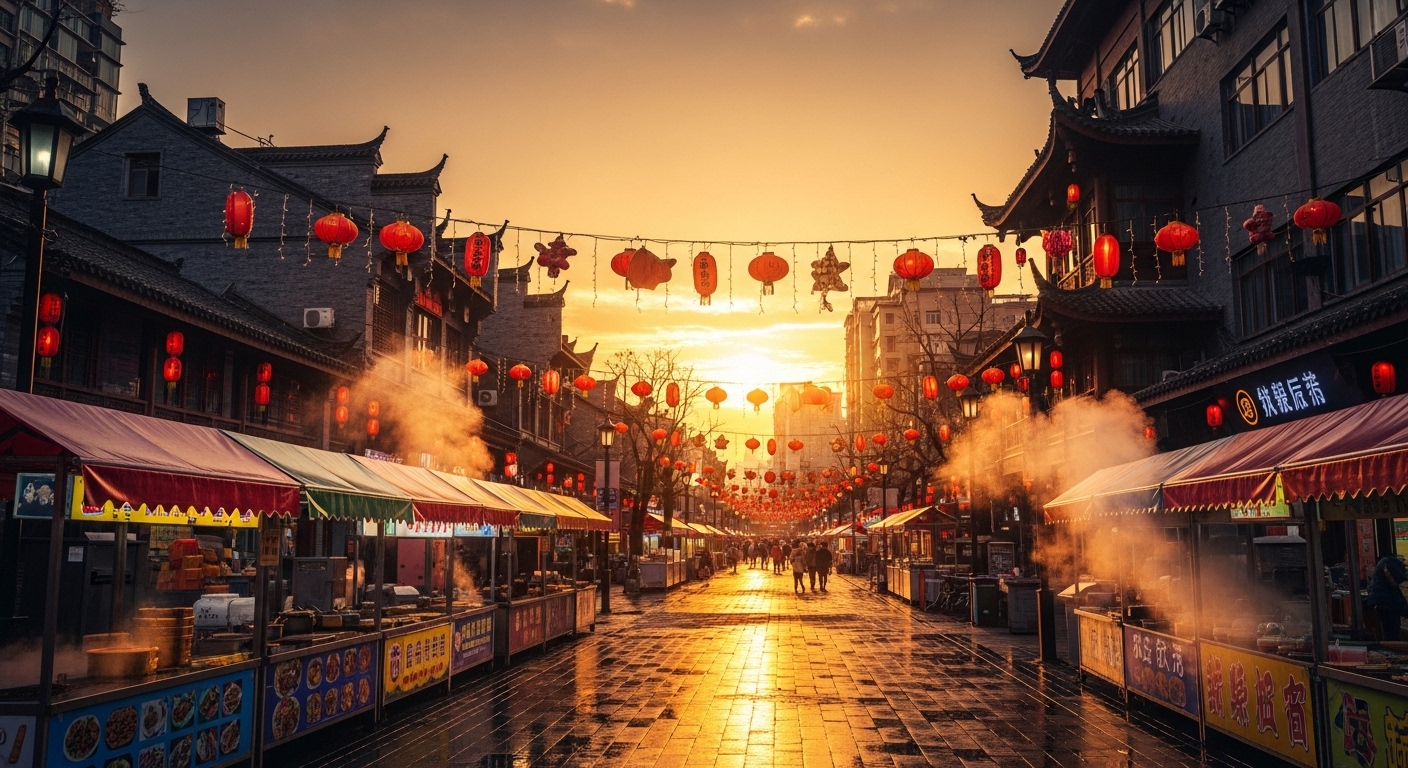
- Guijie (Ghost Street): Beijing's 24-hour food strip. Come for mala crayfish, spicy hot pot, and the electric lantern-lit atmosphere after 9pm.
Beijing's hutong neighborhoods — the ancient alleyways that survive between the old courtyard homes — hold some of the city's best eating. Food here costs ¥5–80 per item, and the experience of eating while wandering narrow lanes is irreplaceable.
Beijing street food divides into two categories: what locals eat daily (jianbing, baozi, zhajiang mian, tanghulu) and what tourists come specifically for (exotic skewers, landmark food streets). Both are worth experiencing. This guide covers both, with honest takes on which is which.
We pulled from r/China, r/beijing, r/solotravel and dozens of food blogs to build this guide. The consensus: Nanluoguxiang is tourist-friendly and still delicious, Guijie is the real deal for late-night eating, and the best jianbing you'll ever eat costs ¥10 from a push-cart vendor in a hutong at 7am.
Street Food Map
How we built this list
We analyzed 70+ Reddit posts and 350+ comments from r/China, r/beijing, r/solotravel, and r/ChineseFood — spanning 2020 to 2026. Locations were selected for food quality, atmosphere, and accessibility. We prioritized spots mentioned by long-term Beijing residents over tourist accounts.
1Wangfujing Snack Street (王府井小吃街)
Tourist Icon Street FoodQuick comparison
- Best for
- The experience — photos of scorpions on sticks, tourist energy, first night in Beijing
- What to eat
- Lamb skewers (羊肉串), stinky tofu (臭豆腐), fried starfish (海星), scorpions. The insects are deeply fried and actually taste like crispy chicken skin.
- Skip
- Overpriced fruit skewers and bottled drinks — get those cheaper anywhere else
- Insider tip
- Haggling isn't really done here. Prices are posted. But vendors are often happy to give free samples to draw you in.
2Guijie — Ghost Street (鬼街)
24-Hour Street Local FavoriteQuick comparison
- Best for
- Late-night dining, mala crayfish, seeing how Beijingers really eat
- What to order
- Mala crayfish (麻辣小龙虾 — ¥88–148/500g), spicy boiled beef (水煮牛肉), and stir-fried clams (炒花蛤). Add a Tsingtao beer.
- Best season
- Summer (June–September) when the outdoor terrace seating is out and the street truly comes alive
- Insider tip
- The crayfish restaurants in the middle stretch of the street are generally better than those at the tourist end near Dongzhimen Station. Look for the ones with the longest lines of locals.
3Nanluoguxiang (南锣鼓巷)
Hutong Street Tourist FriendlyQuick comparison
- Best for
- First-time visitors who want a curated hutong experience with a wide variety of snacks
- What to eat
- Lüdagun (绿豆卷 — rolled sticky rice, ¥15), suanni baobei (stir-fried clams, from nearby restaurants), tanghulu (糖葫芦, ¥5–15), and yogurt in a clay pot (老北京酸奶, ¥10).
- Insider tip
- Explore the side hutongs off Nanluoguxiang — Ju'er Hutong and Mao'er Hutong are quieter with better local food and fewer tourist markups.
4Hutong Jianbing Carts (煎饼摊)
Morning Essential Street FoodQuick comparison
- How to find one
- Walk to any subway station or hutong neighborhood between 6–10am. Push-cart vendors set up daily near commuter areas. Look for the hot griddle and the queue of office workers.
- How to order
- Point at what you want or hold up fingers. Say "辣" (là) for spicy. A basic jianbing is ¥8–10; adding extra egg or crispy toppings brings it to ¥12–15.
- Variations
- Jianbing guozi (with fried cracker) is the classic. Some vendors offer cheese or sausage additions — those are fine but less authentic.
- Insider tip
- The best jianbing come from vendors with long queues of locals. Avoid "tourist" jianbing spots near Tiananmen — they use inferior batter and overstuff with odd ingredients.
5Donghuamen Night Market Area
Night Market Tourist AreaQuick comparison
- What to eat
- Zhajiang mian (炸酱面 — Beijing noodles in savory bean paste), red bean buns, sesame rings, and lu (braised offal in master stock).
- Best nearby
- Walk the back streets east of Wangfujing for more authentic eats without tourist pricing.
6Houhai Lake Street Food
Hutong District Street FoodQuick comparison
- Best for
- Evening strolling, tanghulu, cold beer and lake views
- What to eat
- Tanghulu, grilled corn, lamb skewers, and cold noodles. The roast duck restaurants on nearby hutongs are also excellent.
7Tanghulu (糖葫芦) Vendors
Classic Snack Street FoodQuick comparison
- Classic version
- Hawthorn berry (山楂) tanghulu — tart, small red berries. ¥5–10.
- Premium version
- Strawberry or grape tanghulu — bigger, sweeter, ¥15–25. Found at hutong shops and tourist areas.
- Best spots
- Nanluoguxiang, Houhai lakeside, Shichahai area, and push-cart vendors in any hutong neighborhood.
8Old Beijing Noodle King (老北京炸酱面)
Beijing Classic Noodle ShopQuick comparison
- What to order
- Zhajiang mian (炸酱面, ¥28–35) — mix in all the vegetable condiments and the fried sauce. Add a side of sesame-sauce-dressed cucumber.
- Insider tip
- For the most authentic experience, eat at a local noodle counter in a hutong neighborhood rather than tourist restaurants. Look for hand-pulled noodles (拉面).
9Hutong Baozi Shops (包子铺)
Daily Staple Street FoodQuick comparison
- What to try
- Pork and cabbage (猪肉白菜包), three-fresh (三鲜包), and red bean paste (豆沙包) for a sweet option. Order 3–4 for a full breakfast.
- Famous brands
- Qingfeng Steamed Bun Shop (庆丰包子铺) has branches throughout the city and is an institution since 1948. ¥2–4 per bun.
10Xinjiang Lamb Skewer Stalls (烤羊肉串)
Street BBQ Ethnic Minority FoodQuick comparison
- What to order
- Lamb skewers (羊肉串, ¥3–5 each), lamb kidney (腰子, ¥5–8), and naan bread (馕, ¥5). A full meal is 8–10 skewers and a Tsingtao.
- Where to find
- The Xinjiang quarter of Chaoyang has the most authentic skewer stalls. Guijie also has excellent skewer options. Look for the smoking charcoal grills in evening markets.
11Stinky Tofu (臭豆腐)
Acquired Taste Street FoodQuick comparison
- What to expect
- The smell is the whole point — locals say "smells like garbage, tastes like heaven." Served in a cup with chili and sesame sauce.
- Insider tip
- Buy from a busy vendor — high turnover means the tofu is freshly fermented and fried, not sitting.
12Roujiamo (肉夹馍) — Chinese Burger
Street Food Northern China ClassicQuick comparison
- What to order
- Pork belly (五花肉夹馍) for the classic, lamb (羊肉夹馍) for the Shaanxi version. Add green chili (青椒) for extra flavor.
- Where to find
- Look for small shops with the flatbread oven visible in the window. Avoid tourist area versions — find them near universities and office areas for the most honest versions.
🎫 Book Beijing Food Experiences
Tours and activities hand-picked for this guide — book with free cancellation
Experiences via Viator — free cancellation on most tours
Frequently Asked Questions
Where is the best street food in Beijing?
For authentic hutong street food, locals recommend Guijie (Ghost Street) for late-night crayfish and spicy hot pot. Nanluoguxiang has the best variety for tourists. For adventurous eating, the Wangfujing Snack Street has exotic skewers, though locals consider it tourist entertainment more than real street food.
What is Beijing's most famous street food?
Jianbing (煎饼果子) — a savory breakfast crepe made fresh on a hot griddle with egg, cilantro, scallions, sweet bean paste, chili, and a crispy fried cracker. It costs ¥8–15 from push-cart vendors near subway stations from 6–10am. This is the food Beijing residents eat every single morning.
Is Wangfujing Snack Street worth visiting?
For tourists, yes — it's a fun experience with scorpions on sticks. But Beijing residents don't eat here. For actual Beijing street food, go to hutong vendor stalls, Guijie, or the breakfast spots near any major subway station.
What is Guijie (Ghost Street) famous for?
Guijie (鬼街) is Beijing's 24-hour food strip on Dongzhimen Inner Street — famous for mala crayfish (麻辣小龙虾), spicy hot pot, and late-night dining until 4am. In summer, the whole lantern-lit street becomes an outdoor dining scene. Best visited 9pm–midnight.
How much does street food cost in Beijing?
Very cheap. Jianbing: ¥8–15. Baozi: ¥1.5–3 each. Tanghulu: ¥5–15. Lamb skewers: ¥3–5 each. Stinky tofu: ¥8–15. A full street food meal should cost ¥30–60 per person, or even less if you stick to hutong breakfast stalls.
What is tanghulu and where to find it?
Tanghulu (糖葫芦) is candied hawthorn berries on a stick — tart fruit dipped in hot sugar syrup that hardens like glass. It costs ¥5–15 and is sold throughout hutong areas, especially around Nanluoguxiang, Houhai, and tourist areas. Best in winter when the cold keeps them crisp.