Quick answer
Beijing is a street food capital with 800 years of culinary history baked into every hutong corner and morning cart.
- Best overall
- Huguosi Xiaochi
- Top pick
- Huguosi Xiaochi — the definitive one-stop shop for traditional Beijing snacks.
Top verdicts
- Huguosi Xiaochi: Sampling the widest variety of traditional Beijing snacks under one roof
- Beixinqiao Luzhu: Experiencing luzhu huoshao — Beijing's signature pork offal stew
- Mr. Shi's Dumplings: The ultimate Beijing dumpling experience in a charming hutong setting
From the sizzle of jianbing crepes at dawn to the sticky-sweet crunch of tanghulu at dusk, Beijing's street food scene is a living museum of imperial and folk traditions. The city's traditional “lao Beijing” snacks — douzhi (fermented mung bean soup), chaogan (pork liver stew), luzhu huoshao (offal stew) — are flavors that have sustained generations of hutong residents. Meanwhile, modern additions like malatang and roujiamo reflect the waves of migration that have reshaped the capital's palate.
Area map
All 12 spots at a glance
| # | Name | Style | Price | Area | |
|---|---|---|---|---|---|
| 1 | Huguosi Xiaochi | Traditional | mid | Xicheng | |
| 2 | Beixinqiao Luzhu | Offal | mid | Dongcheng | |
| 3 | Mr. Shi's Dumplings | Dumplings | upscale | Dongcheng | |
| 4 | Niujie Halal Snacks | Halal | budget | Xicheng | |
| 5 | Yaoji Chaogan | Offal | mid | Dongcheng | |
| 6 | Lao Ciqikou Douzhi Dian | Breakfast | budget | Dongcheng | |
| 7 | Jianbing Guozi Street Stalls | Street | budget | Various | |
| 8 | Nanluoguxiang Tanghulu Stalls | Street | budget | Dongcheng | |
| 9 | Duyichu Shaomai | Traditional | upscale | Dongcheng | |
| 10 | Wangfujing Snack Street | Traditional | mid | Dongcheng | |
| 11 | Yangguofu Malatang | Street | mid | Haidian | |
| 12 | Qianmen Street Food Alley | Traditional | mid | Dongcheng |
1Huguosi Xiaochi
Traditional BeijingQuick comparison
- Best for
- Sampling the widest variety of traditional Beijing snacks under one roof
- Strengths
- Known for Traditional Beijing
- Limitations
- Crowded at peak hours; cafeteria-style service; some items can be hit-or-miss at branch locations
- Why it made the list
- Huguosi Xiaochi is the most frequently recommended spot in every Beijing food thread. It is the gateway to old Beijing cuisine — a place where you can try 10+ traditional snacks in a single visit without navigating scattered hutong stalls. The flagship Xicheng branch has the best atmosphere.
- What to order
- Start with aiwowo (sticky rice balls) and wandouhuang (pea cake). Then try miancha (millet flour paste) and a bowl of douzhi if you are feeling adventurous. The luzhu huoshao here is also solid.
2Beixinqiao Luzhu
Offal StewQuick comparison
- Best for
- Experiencing luzhu huoshao — Beijing's signature pork offal stew
- Strengths
- Known for Offal Stew
- Limitations
- Not for the faint-hearted; offal-heavy; no English menu
- Why it made the list
- Luzhu huoshao is the dish that separates Beijing food tourists from Beijing food explorers. Beixinqiao Luzhu is consistently rated as one of the best in the city, with a preparation that is approachable enough for first-timers while still deeply authentic.
- What to order
- A standard bowl of luzhu huoshao (the stew comes with everything). Add extra huoshao (baked flatbread) to soak up the broth. Pair with pickled garlic on the side.
3Mr. Shi's Dumplings
DumplingsQuick comparison
- Best for
- The ultimate Beijing dumpling experience in a charming hutong setting
- Strengths
- Known for Dumplings
- Limitations
- Popular with tourists; can have long waits; pricier than street vendors
- Why it made the list
- Mr. Shi's appears in virtually every Beijing food recommendation thread on Reddit. The combination of excellent handmade dumplings, a charming hutong location, and the personal experience of dining in a family-run spot makes it stand out from generic dumpling chains.
- What to order
- Pork and chive dumplings (the classic). Lamb and carrot for something heartier. Try the creative options like cheese-and-tomato for fun. Ask for both boiled and pan-fried to compare textures.
4Niujie Halal Snacks
HalalQuick comparison
- Best for
- Halal Beijing street food in the historic Muslim quarter near Niujie Mosque
- Strengths
- Known for Halal
- Limitations
- Many vendors close early; limited English signage; can be hard to navigate
- Why it made the list
- Niujie is a side of Beijing most tourists miss entirely. The Hui Muslim community has been here for over 1,000 years, and the food traditions are distinct — lamb-focused, with unique pastries and fermented snacks you will not find elsewhere in the city. Ma Ji Baozi and Man Heng Ji are the standout shops.
- What to order
- Shaobing (sesame flatbread with lamb or beef) from any busy stall. Ma doufu (fried fermented bean curd) is the adventurous pick. Try baiji niangao (glutinous rice cakes) for something sweet. Visit Man Heng Ji for a sit-down halal feast.
5Yaoji Chaogan
Offal StewQuick comparison
- Best for
- The definitive chaogan (pork liver stew) experience near the Drum Tower
- Strengths
- Known for Offal Stew
- Limitations
- Offal-heavy; can be crowded; basic decor
- Why it made the list
- Chaogan is one of old Beijing's breakfast pillars, and Yaoji is the most famous purveyor. The stew is silky, garlicky, and deeply savory — a local favorite for over 30 years. The Biden visit brought international attention, but locals were regulars long before that.
- What to order
- A bowl of chaogan (pork liver stew) paired with baozi (steamed buns) — the classic breakfast combo. Go before 9 AM for the authentic morning atmosphere when locals outnumber tourists 10-to-1.
6Lao Ciqikou Douzhi Dian
BreakfastQuick comparison
- Best for
- The authentic douzhi experience — Beijing's most polarizing breakfast
- Strengths
- Known for Breakfast
- Limitations
- Closes early (2 PM); acquired taste; no English menu
- Why it made the list
- Douzhi is the single most “Beijing” thing you can eat. Most visitors hate it on first sip, but locals consider it essential. Lao Ciqikou has served it for decades near the Temple of Heaven, and the experience — sitting with elderly Beijingers in a no-frills shop at 6 AM — is as authentic as it gets.
- What to order
- A bowl of douzhi with jiaoquan (fried dough rings) and pickled vegetables. The jiaoquan offsets the sourness. Also try the miancha (millet flour paste) if douzhi is too intense.
7Jianbing Guozi Street Stalls
Street FoodQuick comparison
- Best for
- The authentic Beijing morning street food experience — eating on the go like a local
- Strengths
- Known for Street Food
- Limitations
- Morning only (6–10 AM); quality varies by vendor; language barrier for customization
- Why it made the list
- Jianbing is arguably the single most iconic street food in all of China. It is to Beijing what a bagel is to New York — the morning fuel that keeps the city running. Look for a cart with a line. If locals are waiting, the jianbing is good.
- What to order
- Standard jianbing with egg, all sauces, and baocui (crispy cracker). Add a ham sausage (huotui chang) for CNY 2 more. Say “duo fang la” (more chili) if you like heat. Avoid vendors with pre-made batter sitting out.
8Nanluoguxiang Tanghulu Stalls
SnacksQuick comparison
- Best for
- The iconic Beijing candied fruit experience while exploring the most famous hutong
- Strengths
- Known for Snacks
- Limitations
- Touristy area; prices slightly inflated; can be very crowded on weekends
- Why it made the list
- Tanghulu is to Beijing what gelato is to Rome — you eat it while you walk. Nanluoguxiang is the 740-year-old hutong where the street food, independent shops, and traditional architecture create the perfect walking-and-snacking atmosphere. Metro Line 6/8 to Nanluoguxiang Station.
- What to order
- Classic hawthorn tanghulu (the original and best). If you want to branch out, try the strawberry version. Pair it with a stroll through the 8 side hutongs that branch off the main alley for a less crowded experience.
9Duyichu Shaomai
ImperialQuick comparison
- Best for
- Imperial-era shaomai with nearly 300 years of history on Qianmen Street
- Strengths
- Known for Imperial
- Limitations
- Can feel touristy; menu is limited; slightly pricier than street food
- Why it made the list
- Duyichu represents the intersection of Beijing street food and imperial history. The shaomai here are genuinely excellent — thin-skinned, juicy, and unlike any other dumpling. Eating where an emperor allegedly ate is a story worth telling.
- What to order
- Pork shaomai (the signature — order at least one steamer). Also try the sanxian shaomai (three-fresh filling). Pair with a cold appetizer like liangpi (cold noodles) or cucumber salad.
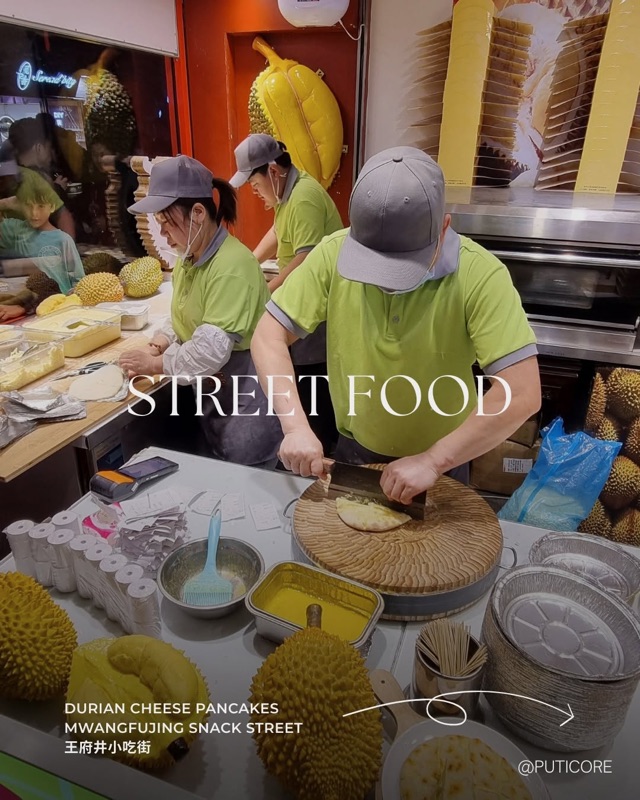
10Wangfujing Snack Street
TouristyQuick comparison
- Best for
- The full Beijing street food spectacle — scorpions, starfish, and traditional snacks in one place
- Strengths
- Known for Touristy
- Limitations
- Overpriced for what you get; touristy; some food is more spectacle than substance
- Why it made the list
- Love it or hate it, Wangfujing is Beijing's most iconic food street. It has scaled down its stall presence following renovations, but the combination of novelty foods, traditional snacks, and the sheer spectacle makes it worth a walk-through. Just manage expectations — come for the experience, not the culinary revelation.
- What to order
- Stick to traditional items: lamb skewers (yangrou chuan), stinky tofu (chou doufu), and tanghulu. Skip the scorpions and starfish unless you want the photo. The vendors closer to the back tend to be cheaper and more authentic.
11Yangguofu Malatang
SpicyQuick comparison
- Best for
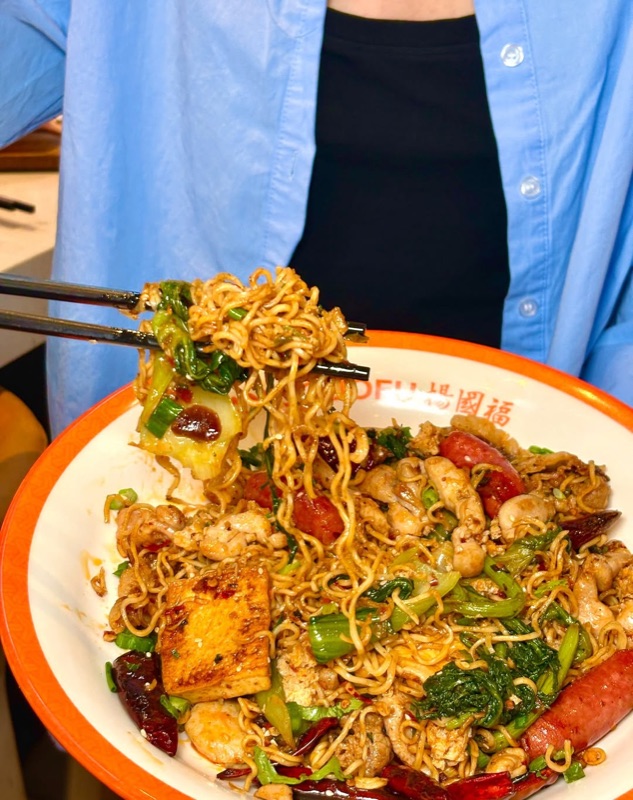
- A customizable, spicy soup bowl — perfect for picky eaters and spice lovers alike
- Strengths
- Known for Spicy
- Limitations
- Chain restaurant; not “authentic” in the traditional sense; can be greasy
- Why it made the list
- Malatang is arguably China's most popular casual dining format today, and Yangguofu is the dominant chain. The Wudaokou location near the university district is packed with students and gives the authentic “everyday Beijing eating” experience. Perfect for vegetarians and spice-level customization.
- What to order
- Load up on lotus root, enoki mushrooms, potato slices, tofu skin, and glass noodles. Add sliced beef or lamb if you eat meat. Choose your broth spice level — medium (zhong la) is a good starting point. Add sesame paste for the authentic Beijing malatang twist.
12Qianmen Street Food Alley
HistoricQuick comparison
- Best for
- Combining street food with Tiananmen-area sightseeing on a historic pedestrian street
- Strengths
- Known for Historic
- Limitations
- Tourist-oriented pricing; some vendors inconsistent; can be crowded
- Why it made the list
- Qianmen is where Beijing's food history lives. The street has been a commercial hub for over 600 years, and some of the food brands here have served continuously for centuries. The side alleys are where the real street food action is — less polished than the main drag but far more delicious.
- What to order
- Roujiamo (Chinese hamburger with braised pork) from a Xianyukou vendor. Zhajiangmian (fried sauce noodles) from any sit-down spot. Lamb skewers (yangrou chuan'r) in the evening. Finish with a visit to Duyichu for shaomai if you have not been already.
Frequently asked questions
What is the most iconic street food in Beijing?
The most iconic street food in Beijing is arguably Jianbing Guozi, a savory crepe eaten for breakfast. Other highly recognizable and traditional snacks include Luzhu Huoshao (pork offal stew), Chaogan (pork liver stew), and Tanghulu (candied fruit on a stick).
Is Beijing street food safe to eat for tourists?
Generally, Beijing street food is safe, but exercise caution. Look for stalls with high customer turnover, visibly clean cooking areas, and food cooked fresh to order. Avoid anything that looks like it has been sitting out too long. Stick to reputable, busy vendors for the best experience.
What are common ingredients in Beijing street food?
Common ingredients include various types of noodles and dumplings, pork (often offal), lamb (especially in halal dishes), fresh vegetables, tofu, fermented bean products, and a range of spices like garlic, ginger, and chili. Grains like wheat and mung beans are also staples.
What are typical prices for street food in Beijing?
Street food in Beijing is very affordable. Individual snacks like Jianbing or Tanghulu cost CNY 8-25 ($1-4 USD). A more substantial street food meal like Malatang or Luzhu Huoshao typically ranges from CNY 25-50 ($4-7 USD) per person, making it an excellent budget-friendly dining option.
Are there vegetarian options available in Beijing street food?
Yes, vegetarian options are available, though you may need to specify 'no meat' (bu yao rou). Many Jianbing vendors can make vegetarian versions, and Malatang stalls offer a wide selection of vegetables, tofu, and noodles. Huguosi Xiaochi also has many vegetable-based snacks like Aiwowo.
What is the best time of day to experience Beijing street food?
The best time depends on what you want to eat. Mornings are ideal for breakfast items like Jianbing, Douzhi, and Chaogan. Lunchtime and evenings see a wider variety of stalls open for savory snacks and fuller meals. Popular snack streets like Nanluoguxiang are bustling from late morning through night.
What is douzhi and why is it so divisive?
Douzhi is a fermented mung bean drink that is a quintessential old Beijing breakfast staple. It has a sour, slightly pungent flavor that most first-time visitors find challenging. Locals consider it a litmus test for authentic Beijing taste. It is traditionally paired with jiaoquan (fried dough rings) and pickled vegetables to balance the sourness.
How do I pay at Beijing street food stalls?
Almost all Beijing street food vendors accept mobile payments via WeChat Pay or Alipay. Cash is increasingly rare but still accepted at older, traditional stalls. International visitors can now link foreign credit cards to Alipay or WeChat Pay. Some vendors near tourist areas may accept cash only, so carry small bills (CNY 10-50) as backup.
Planning your Beijing street food tour
The ideal Beijing street food crawl takes you through three distinct experiences in one day.
Start with a 6 AM breakfast — grab a jianbing from a street cart, then head to Yaoji Chaogan near the Drum Tower for chaogan and baozi, or visit Lao Ciqikou near the Temple of Heaven for the douzhi challenge. At midday, explore Huguosi Xiaochi for a traditional snack sampler, or visit Mr. Shi's Dumplings in Baochao Hutong for a sit-down dumpling feast. In the afternoon, stroll Nanluoguxiang for tanghulu and hutong atmosphere.
For the evening, walk Qianmen Street for roujiamo and lamb skewers, or head to Wangfujing for the spectacle. If you have a second day, make the trip to Niujie for halal snacks and to Wudaokou for a bowl of Yangguofu malatang with the university crowd.
Budget roughly CNY 100–200 ($14–$28 USD) for a full day of street food sampling across 5–6 spots, or CNY 50–80 ($7–$11) if sticking to street carts and budget stalls. Mobile payment (WeChat Pay / Alipay) is accepted almost everywhere.