Tabiji Field Guides · Volume Two

The book you wish you had before the deposit.

A buyer-protection guide to cosmetic surgery and hair restoration abroad. Calm, structural, and grounded in cited public-health data — not destination rankings, not influencer reels. The Five Rules, the Seven Leverage Points, the 20-Minute Safety Pause, twelve composite scenarios, nineteen worksheets, the BDDQ pre-op mental-health self-screen, a three-question anesthesia framework, BIA-ALCL surveillance, and the demonstration-case waiver pattern — all in one book, all sourced.

📖 ~414 pages 📱 Kindle & Paperback 📋 12 composite scenarios 📝 19 worksheets
Buy on Amazon → $9.99 Kindle · $19.99 paperback
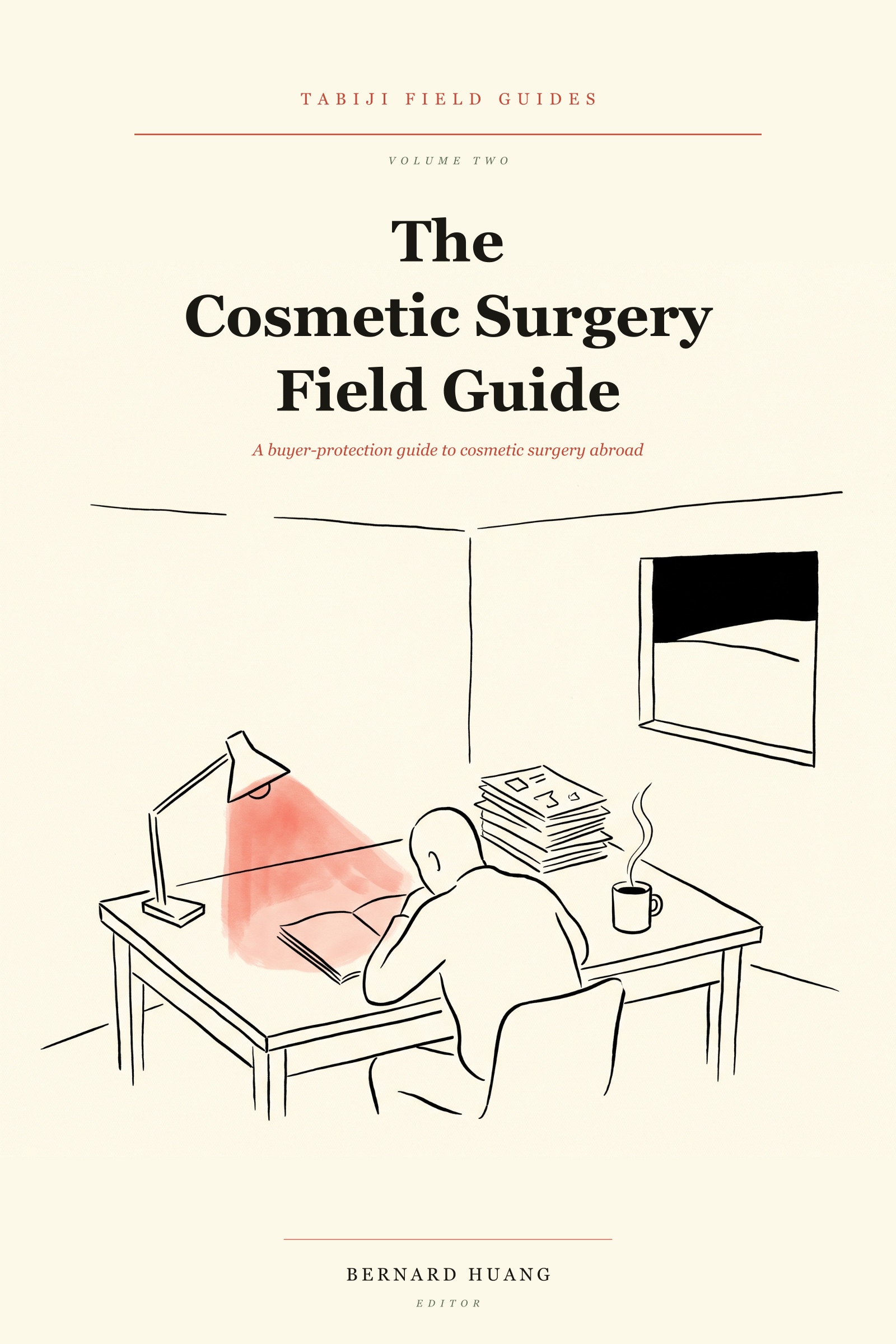
The Cosmetic Surgery Field Guide — front cover

Inside this book

A preview of three chapters — each one a buyer-protection pattern with the leverage shift that makes it work, and the question that would have surfaced the gap before the deposit.

5 rules 7 leverage points 12 composite scenarios 19 worksheets
Chapter · Anesthesia

The Anesthesia Provider Whose Name You Never Heard

A patient signs consent for a multi-procedure session. The surgeon is named on every page. The anesthesia provider isn't named anywhere on the quote — not on the line items, not on the consent form, not on the package brochure. The room is calm. The countdown starts. The book's three-question anesthesia framework — named provider, monitoring protocol, emergency-transfer plan — would have surfaced the gap weeks earlier, before the deposit moved…

Pattern: The highest-risk variable on the day of surgery is the one buried in the package.
References the CDC MMWR cosmetic-surgery mortality data. Required reading for any case with sedation over 90 minutes.
Chapter · BBL Patterns

The BBL With Intramuscular Fat Injection in a Non-Accredited Facility

One of the eight documented patterns this book recommends against. The CDC's MMWR 73(3) documents 93 U.S.-citizen deaths from cosmetic surgery in the Dominican Republic from 2009 to 2022 — 92 percent of them involved gluteal fat transfer. The ASPS issued urgent safety guidance in 2018 and again in 2019. A South Florida case series reports a mortality rate between 1 in 3,000 and 1 in 6,241. The protective answer here is not "ask better questions." It is the pattern, not the destination…

Red flag: intramuscular fat injection, no ultrasound guidance, non-accredited facility.
Cites ASPS 2018/2019 guidance and CDC MMWR primary source. The line between "high-risk done well" and "high-risk done in a package mill."
Chapter · Demonstration Case

The Demonstration-Case Discount Waiver

Reduced procedure cost in exchange for the clinic's use of the patient's before-and-after photos in marketing. A single page. Friendly language. Significant rights given up — image use in perpetuity, across territories, on platforms not yet invented, with no revocation clause and no compensation for downstream use. The patient signs it at the same desk where the deposit moves. Read this waiver line by line before signing — the book annotates a sample paragraph by paragraph…

Pattern: The price discount and the rights surrender are sold as one transaction.
What "marketing use" means in practice. The opt-in version. The strikethrough script.

Eight patterns we recommend against

A field guide takes editorial positions where the data demands them. Eight specific procedure-context combinations where the protective answer is not "how to choose well" but "do not have this procedure under these conditions." Each is grounded in cited public-health data.

⚠️ BBL with IM fat injection in non-accredited facilities
⚠️ Stem-cell, regenerative, exosome, peptide & longevity tourism
⚠️ Unapproved alternative cancer therapies abroad
⚠️ Surgery in non-accredited facilities at Step 3 and above
⚠️ Unverifiable surgeon credentials
⚠️ Unverifiable anesthesia provider credentials
⚠️ Surgery within 12 months of major adverse life events
⚠️ Combination procedures stacked on Step 4+ procedures

Why tabiji.ai writes these books

A cosmetic surgery patient is not a tourist. A cosmetic surgery patient is an adult making a high-stakes, mostly elective decision under cost-shock and Instagram conditions, often with a deposit timer attached. The Tabiji method names the leverage points where the decision tilts — and gives you the questions, scripts, and worksheets that put leverage back on your side.

🧭

Pattern-based, not destination-ranking

No "best country for BBL" lists. No clinic recommendations. The book describes the patterns — the funnel, the quote, the timeline, the consent moment — and the patient-side responses that work in any country. The issue is regulatory and facility-specific, not destination-essentialist.

🧠

The mental-health pre-op self-screen (BDDQ)

The Body Dysmorphic Disorder Questionnaire as a self-administered, pre-deposit screen — with the calibration guidance most clinics will not give you. Post-op satisfaction correlates with pre-op screening, not surgical skill alone. The book includes the worksheet, the scoring, and what to do with the result.

🪙

No surgeon, clinic, manufacturer, or facilitator payments

Tabiji takes no payments from surgeons, clinics, implant manufacturers, anesthesia providers, package facilitators, or affiliate networks for placement, mention, or recommendation. The book's editorial position — including the eight recommend-against patterns — is independent and on the record.

Part of the Tabiji Field Guides Series

The Tabiji Field Guides series brings the same calm, buyer-protection voice to high-stakes consumer decisions in adjacent verticals. Cosmetic surgery is Volume Two.

Frequently asked

Quick answers about formats, scope, and the Tabiji method.

What formats will this book be available in?

Amazon Kindle eBook ($9.99) and paperback ($19.99). The paperback runs approximately 414 pages, 6 by 9 inches — designed to sit on the desk before the deposit, and in the travel bag once a date is on the calendar.

When does it launch?

Available now on Amazon — both Kindle and paperback. Tap the buy button above to grab it.

Who is this book written for?

Adults in the research-and-comparison phase for a cosmetic procedure or hair restoration — domestic or abroad. Companions who will sign post-op consent forms while the patient is sedated. Anyone whose home-country quote triggered cost-shock and whose Instagram feed is now full of clinic reels. This is the book you wish you had before the deposit.

What is the recommend-against position?

Eight specific procedure-context patterns where the documented harm rate is high enough that the protective answer is not "how to choose well" but "do not have this procedure under these conditions." Each is grounded in cited public-health data — CDC MMWR, ASPS guidelines, peer-reviewed surgical literature. The position is editorial, not legal advice.

What's the Tabiji method?

Pattern-based, not destination-ranking. The book names the leverage points where decisions tilt — the funnel, the quote, the timeline, the consent moment — and gives the questions, scripts, and worksheets that put leverage back on the patient's side. Most surgeons and clinics, in every country covered, are competent professionals doing routine work. The book is about how to find them and how to recognize when you haven't.

Reviews

Verified reader reviews appear here once the book is on Amazon.

First reviews coming soon

The Cosmetic Surgery Field Guide is now live on Amazon — verified reader reviews will be quoted here as they accumulate over the first weeks. In the meantime, see the 42+ verified reviews across the country atlases and Volume One.

Available now on Amazon

~414 pages. The Five Rules, the Seven Leverage Points, the 20-Minute Safety Pause, twelve composite scenarios, nineteen worksheets. $9.99 Kindle, $19.99 paperback. The goal is not fear. The goal is a better-protected decision.

Buy on Amazon →