How we built this comparison
This page combines traveler discussion patterns, published price ranges, flight schedules, and seasonal data to help you decide between Argentina and Uruguay.
- Reviewed 500+ Reddit threads from r/travel, r/solotravel, r/Argentina, r/Uruguay, etc.
- Verified costs and logistics against current booking platforms and local sources (mid-2024)
- Cross-referenced seasonal patterns, weather data, and major event calendars
⚡ Quick Answers
⚡ The TL;DR Verdict
Most travelers seeking a diverse experience, adventure, and excellent value will find Argentina a more compelling choice. For those prioritizing relaxation, a smaller scale, and a slightly higher budget, Uruguay offers a calm escape. Argentina generally offers more for your money and a wider range of activities.
- Choose Argentina: You want grand natural landscapes, bustling cities, a deeper cultural immersion, incredible food at a low price, and a generally bigger adventure. Best for budget-conscious explorers.
- Choose Uruguay: You prefer a relaxed pace, peaceful beach towns, colonial history without the crowds, and a generally calmer atmosphere. Good for those willing to spend a bit more for tranquility.
- Choose Both: If you have at least 2-3 weeks, combining a week in Buenos Aires with a few days in Colonia del Sacramento and Montevideo via ferry is a common and easy itinerary.
Choose Argentina
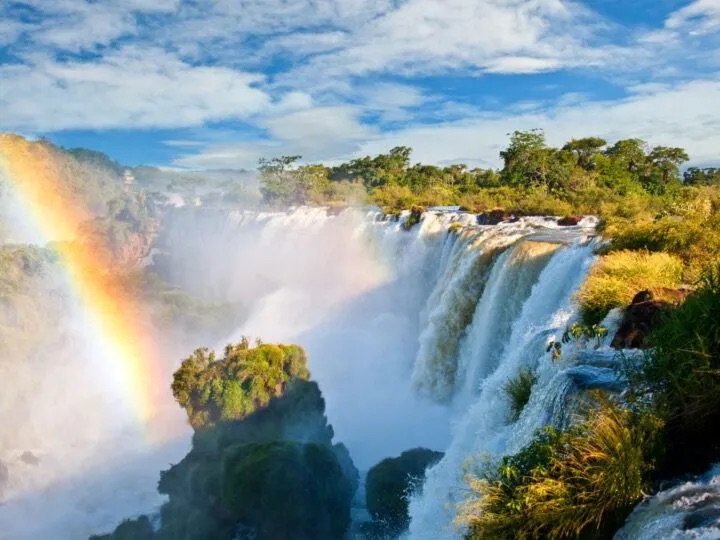
Choose Argentina if you crave grand natural beauty, from the majestic peaks of Patagonia and the thundering Iguazu Falls, alongside the vibrant energy of Buenos Aires. It's perfect for budget-conscious adventurers seeking incredible value, world-class steak at a parrilla, and immersive cultural experiences like a tango show. Best for explorers who want a diverse, action-packed itinerary without breaking the bank.
Choose Uruguay
Opt for Uruguay if you prioritize a tranquil, laid-back escape with charming colonial towns and serene beaches. Indulge in the peaceful beauty of Colonia del Sacramento or enjoy the upscale calm of Punta del Este, without the intense crowds of larger nations. It's best for travelers seeking refined relaxation, easygoing exploration, and a slightly higher budget for understated elegance.
📊 Visual Scorecard
🌤 When to Visit
Average high temperatures (°C). Green = best months, orange = avoid.
Quick Comparison
| Category | Argentina | Uruguay | Winner |
|---|---|---|---|
| Costs & Budget | Extremely budget-friendly for those with USD cash, allowing extensive travel for less money. Daily expenses average $40-80 USD. | Significantly more expensive, closer to Western European prices. Daily expenses typically range $80-150 USD. | Argentina |
| Food & Drink | Famous for high-quality, inexpensive beef, Malbec wine, and diverse regional dishes like empanadas and choripan. | Also beef-focused with excellent parrillas and chivito sandwiches, paired with Tannat wine, but at a higher price. | Argentina |
| Culture & History | Rich European-influenced culture, tango, grand architecture, significant historical events, and diverse regional traditions. | Colonial architecture in Colonia, relaxed pace, Candombe music, and a strong sense of national identity. | Argentina |
| Nature & Landscapes | Home to glaciers, vast mountains, deserts, waterfalls, and diverse wildlife across multiple climatic zones. | Gentle rolling hills, Atlantic coast beaches, and river deltas, offering a more subdued natural beauty. | Argentina |
| Beaches | Limited major beach destinations, with Mar del Plata being the primary and most developed option, often crowded. | Extensive Atlantic coastline with a range of towns from chic resorts to bohemian surf spots, generally clean and accessible. | Uruguay |
| Nightlife | Buenos Aires offers a legendary, late-starting nightlife with countless bars, clubs, tango shows, and diverse music scenes. | Montevideo has a relaxed scene with bars and some clubs, while Punta del Este is known for its summer resort parties. | Argentina |
| Getting There & Flights | More direct flight options from major international hubs, particularly to Buenos Aires (EZE), making travel easier. | Fewer direct international flights, often requiring connections through Buenos Aires or other South American hubs. | Argentina |
| Getting Around | Extensive long-distance bus network, internal flights for vast distances, and efficient city public transport. | Reliable but smaller intercity bus network, easier to self-drive due to smaller scale, limited internal flights. | Tie |
| Accommodation | Wide range of options from budget hostels to boutique hotels, offering excellent value, especially in cities. | Fewer budget options, generally higher prices for comparable quality, especially outside major hubs. | Argentina |
| Safety & Practicalities | Generally safe but requires awareness of petty crime in large cities; good infrastructure but current economic instability. | Often perceived as very safe and relaxed, with lower crime rates; stable, but more expensive. | Uruguay |
💰 Costs & Budget
Argentina, particularly when bringing US dollars and exchanging at the 'blue dollar' rate, offers exceptional value. A generous steak dinner with good wine in Buenos Aires can…

Argentina

Uruguay
Argentina, particularly when bringing US dollars and exchanging at the 'blue dollar' rate, offers exceptional value. A generous steak dinner with good wine in Buenos Aires can cost $15-25 (ARS 15,000-25,000). Hostel beds are $10-20 (ARS 10,000-20,000), and a comfortable private room in a mid-range hotel might be $40-80 (ARS 40,000-80,000). Public transport in cities like Buenos Aires is very cheap, with subway rides just a few cents. Even long-distance buses, though lengthy, are priced affordably for the distance covered, making cross-country travel feasible for budget travelers.
Uruguay is consistently more expensive across the board. A casual lunch can easily run $15-25 (UYU 600-1000), and a comparable dinner to Argentina might be $30-50 (UYU 1200-2000). Hostel dorms often start at $25-40 (UYU 1000-1600), and decent hotel rooms are $70-120 (UYU 2800-4800). Groceries and local transport also carry higher price tags. While quality is good, the sheer cost difference makes Uruguay a tougher sell for prolonged trips or budget travel. Tabiji verdict: Argentina wins overwhelmingly on budget, providing much greater purchasing power for a traveler's dollar.
- Winner: Argentina
- Why: Argentina's current economic situation and favorable exchange rates make it an incredibly affordable destination for international visitors.
- Who this matters for: Anyone on a budget or seeking maximum value for their travel funds.
🥩 Food & Drink
Argentina's food scene is a meat lover's paradise, centered on its world-renowned beef. Restaurants like Don Julio in Palermo, Buenos Aires, serve exceptional cuts, but even local…

Argentina

Uruguay
Argentina's food scene is a meat lover's paradise, centered on its world-renowned beef. Restaurants like Don Julio in Palermo, Buenos Aires, serve exceptional cuts, but even local parrillas offer a fantastic bife de lomo or ojo de bife for a fraction of what it would cost elsewhere. Empanadas (baked or fried savory pastries) are a staple, costing around $1-2 (ARS 1000-2000) each. The Mendoza wine region produces excellent Malbecs, often available at supermarkets for $5-10 (ARS 5000-10000) a bottle. Other regional specialties include locro (a hearty stew) and alfajores (dulce de leche cookies). The sheer variety and low cost make eating out a constant pleasure.
Uruguay shares many culinary similarities with Argentina, especially its love for beef. The chivito sandwich, a substantial steak sandwich with various toppings, is a national dish and a good example of local fare, typically costing $15-20 (UYU 600-800). Parrillas are also prevalent, with Montevideo's Mercado del Puerto being a popular spot for grilled meats. Uruguay produces its own distinctive Tannat wines, which are robust and pair well with the local cuisine. While the quality of food is high, the prices are considerably steeper. A comparable steak dinner to Argentina might cost $30-50 (UYU 1200-2000). Tabiji verdict: Argentina offers a more accessible and varied food experience due to its lower costs and greater regional diversity.
- Winner: Argentina
- Why: Argentina offers comparable quality of food, particularly beef and wine, at significantly lower prices, making culinary exploration more extensive.
- Who this matters for: Foodies, meat enthusiasts, wine lovers, and anyone who enjoys dining out frequently without breaking the bank.
🏛️ Culture & History
Argentina's cultural landscape is vast and deep. Buenos Aires is often called the 'Paris of South America' for its wide boulevards, elaborate architecture in neighborhoods like…

Argentina
Uruguay
Argentina's cultural landscape is vast and deep. Buenos Aires is often called the 'Paris of South America' for its wide boulevards, elaborate architecture in neighborhoods like Recoleta and San Telmo, and countless museums such as the MALBA (Latin American Art Museum of Buenos Aires). Tango, born in the working-class neighborhoods, is a central part of the city's identity, with numerous milongas (dance halls) and street performances in La Boca. Beyond the capital, cities like Cordoba and Salta have their own distinct colonial heritage and indigenous influences. The country's history includes periods of European immigration, political upheaval, and a strong literary tradition, all contributing to a complex and engaging cultural fabric.
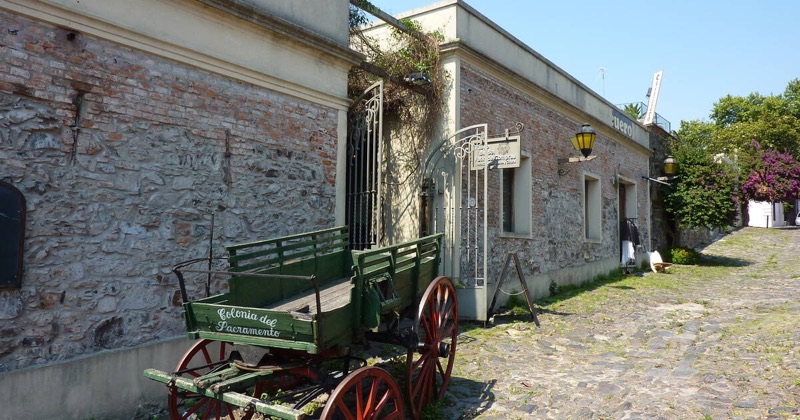
Uruguay presents a calmer, more understated cultural experience. Colonia del Sacramento, a UNESCO World Heritage site, is its most prominent historical draw, with its cobblestone streets and Portuguese and Spanish colonial buildings offering a glimpse into the past. Montevideo, while a capital city, feels less frenetic than Buenos Aires, with its Art Deco and Neoclassical buildings. Candombe, an Afro-Uruguayan rhythm and dance, is a significant cultural expression, especially during carnival. The country prides itself on its progressive social policies and a quiet confidence. However, the scale and variety of cultural institutions and historical sites are simply not as extensive as in its larger neighbor. Tabiji verdict: Argentina provides a broader, more impactful and diverse cultural and historical immersion due to its size and scope.
- Winner: Argentina
- Why: Argentina's larger scale provides a greater quantity and diversity of cultural institutions, historical sites, and artistic expressions, from tango to vast museums.
- Who this matters for: History buffs, art lovers, urban explorers, and those seeking deep cultural engagement.
🏞️ Nature & Landscapes
Argentina's geographical diversity is immense. In the south, Patagonia presents the dramatic Perito Moreno Glacier, Fitz Roy peaks for trekking in El Chalten, and the…
Argentina

Uruguay
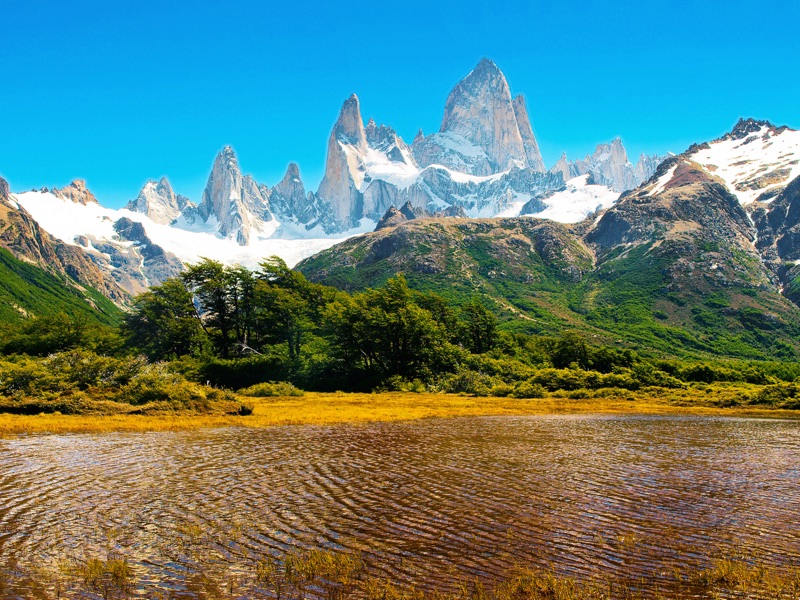
Argentina's geographical diversity is immense. In the south, Patagonia presents the dramatic Perito Moreno Glacier, Fitz Roy peaks for trekking in El Chalten, and the end-of-the-world city of Ushuaia. The northwest features colorful desert landscapes, salt flats, and pre-Columbian ruins around Salta and Jujuy. To the east, Iguazu Falls, a colossal waterfall system on the border with Brazil, delivers an overwhelming display of natural power. The central wine region of Mendoza sits at the base of the Andes, offering mountain views and high-altitude vineyards. This sheer variety means travelers can experience everything from ice fields to subtropical rainforests within one country.
Uruguay's natural appeal is more understated and consistent. Its Atlantic coastline, particularly around Punta del Este, La Paloma, and La Pedrera, offers pleasant sandy beaches and laid-back surf towns. Inland, the landscape consists primarily of rolling grasslands and gentle hills, with the Rio de la Plata forming a wide, serene boundary. While there are some nature reserves like Cabo Polonio, they do not possess the same dramatic scale or biological diversity as Argentina's major natural attractions. Uruguay is for peaceful coastal walks and relaxed rural drives, not grand adventure. Tabiji verdict: Argentina is the clear choice for travelers seeking grand, varied, and awe-inspiring natural landscapes.
- Winner: Argentina
- Why: Argentina possesses an unparalleled range of dramatic and diverse natural environments, from towering glaciers to immense waterfalls and deserts.
- Who this matters for: Adventure seekers, photographers, hikers, and those who prioritize experiencing diverse natural phenomena.
🏖️ Beaches
Argentina's main beach destination is Mar del Plata, a large, well-established resort city roughly 400 km south of Buenos Aires. It attracts huge crowds of Argentinians during the…

Argentina
Uruguay
Argentina's main beach destination is Mar del Plata, a large, well-established resort city roughly 400 km south of Buenos Aires. It attracts huge crowds of Argentinians during the summer months (December-February), meaning beaches can be packed and accommodation prices peak. Other smaller coastal towns exist, but none offer the same infrastructure or variety. The Patagonian coast has some wildlife spotting opportunities (like penguins in Punta Tombo) but is not generally for swimming or sunbathing due to cold water and rugged terrain. Overall, Argentina is not primarily a beach destination for international visitors.
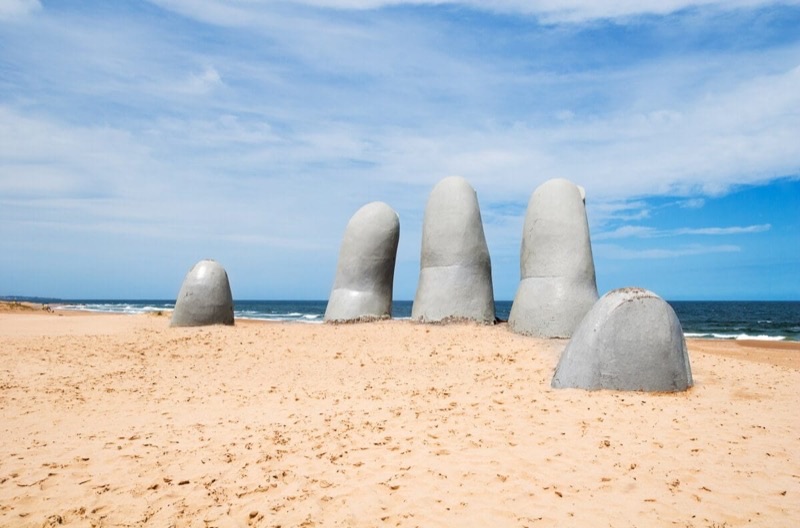
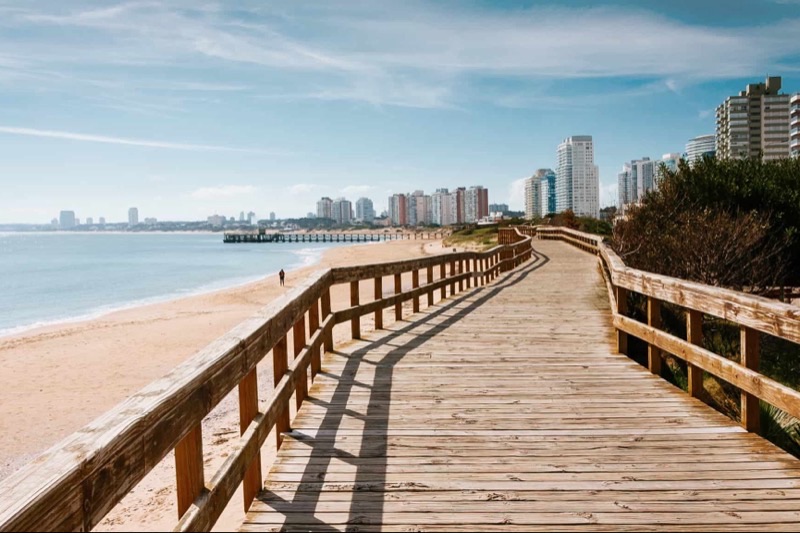
Uruguay, by contrast, has a significant and attractive Atlantic coastline. Punta del Este is the most famous, a sophisticated resort town known for its nightlife and upscale offerings, with numerous beaches like Playa Mansa and Playa Brava. Further east, towns like La Paloma, La Pedrera, and Jose Ignacio offer a more bohemian, relaxed atmosphere with good surfing conditions and fewer crowds. Cabo Polonio, accessible only by special vehicles, provides a remote, rustic beach experience with sea lions. The beaches are generally clean, well-maintained, and cater to different preferences, from family-friendly to more secluded. Tabiji verdict: Uruguay is the unequivocal winner for beach lovers seeking variety, accessibility, and a generally better coastal experience.
- Winner: Uruguay
- Why: Uruguay offers a more extensive, diverse, and appealing Atlantic coastline with options for both upscale resorts and bohemian surf towns.
- Who this matters for: Beachgoers, sunbathers, surfers, and those looking for a relaxing coastal escape.
🌃 Nightlife
Buenos Aires boasts one of the most dynamic nightlife scenes in South America. Porteños (Buenos Aires residents) dine late, often starting dinner around 9 PM or 10 PM, and do not…
Buenos Aires boasts one of the most dynamic nightlife scenes in South America. Porteños (Buenos Aires residents) dine late, often starting dinner around 9 PM or 10 PM, and do not hit the clubs until well after midnight. Neighborhoods like Palermo Soho and Palermo Hollywood are packed with trendy bars, speakeasies, and electronic music venues. San Telmo offers live music, tango shows, and more traditional bars. From large discotecas like Niceto Club to smaller, intimate bars, there is a setting for every preference. Weekends are particularly active, with parties continuing until dawn or later. The energy and variety are hard to match.
Uruguay's nightlife is generally more subdued. Montevideo has a decent selection of bars and pubs in areas like Pocitos and Ciudad Vieja, and some clubs that pick up on weekends, but it lacks the scale and intensity of Buenos Aires. During the summer months (December-February), Punta del Este transforms into a significant party destination, attracting crowds with its beach clubs and upscale discos, particularly around January. However, outside of this peak season and specific areas in Punta, the options are limited. For year-round, diverse, and consistently energetic nightlife, Argentina is the stronger contender. Tabiji verdict: Argentina, specifically Buenos Aires, provides a far more extensive, diverse, and renowned nightlife experience.
- Winner: Argentina
- Why: Buenos Aires offers a nightlife experience that is larger, more diverse, and operates later than anywhere in Uruguay.
- Who this matters for: Party-goers, social travelers, and anyone looking for a vibrant evening scene.
✈️ Getting There & Flights
Buenos Aires Ministro Pistarini International Airport (EZE) serves as a major gateway to South America. Direct flights are available from numerous cities in North America (e.g.,…
Buenos Aires Ministro Pistarini International Airport (EZE) serves as a major gateway to South America. Direct flights are available from numerous cities in North America (e.g., New York, Miami, Dallas, Atlanta) and Europe (e.g., Madrid, Rome, Paris, London), with flight times from New York averaging around 10.5-11 hours. This makes Argentina relatively accessible for long-haul travelers. Flight frequency and airline options are generally robust, offering competitive pricing especially during shoulder seasons. Internal flights are also well-developed for reaching diverse regions like Patagonia or Iguazu.
Montevideo Carrasco International Airport (MVD) has fewer direct long-haul international flights. Travelers from North America or Europe will frequently find themselves connecting through Buenos Aires (EZE), Santiago (SCL), or Sao Paulo (GRU). For example, a flight from New York to Montevideo typically takes 11-13 hours with a layover. While there are short, frequent flights between Buenos Aires and Montevideo (around 45 minutes), and popular ferry services, the initial arrival into Uruguay from distant origins is usually less direct and potentially more time-consuming. Tabiji verdict: Argentina offers superior direct flight accessibility from major global hubs, simplifying the initial travel leg.
- Winner: Argentina
- Why: Argentina's main international airport (EZE) has significantly more direct long-haul flight connections from around the world.
- Who this matters for: International travelers, especially those coming from North America or Europe, prioritizing direct and convenient flight routes.
🚗 Getting Around
Argentina's sheer size necessitates a well-developed transport infrastructure. Long-distance buses are comfortable, often luxurious (with cama or semi-cama seats that recline…
Argentina's sheer size necessitates a well-developed transport infrastructure. Long-distance buses are comfortable, often luxurious (with cama or semi-cama seats that recline significantly), and cover thousands of kilometers, connecting all major cities and tourist spots. Companies like Flechabus or Andesmar are common. Internal flights, though more expensive, are essential for covering vast distances quickly, for example, from Buenos Aires to El Calafate or Iguazu. Cities like Buenos Aires have efficient subway and bus systems (using the SUBE card), making urban navigation straightforward. Road conditions vary, but major routes are generally good for rental cars.
Uruguay's smaller size means travel is less complex. A reliable intercity bus network connects all major towns and cities, such as Montevideo to Colonia or Punta del Este, with reasonable travel times (e.g., Montevideo to Colonia is about 2.5 hours). Self-driving is a popular option, as distances are short, roads are generally well-maintained, and traffic is less intense than in Buenos Aires. There are no significant internal flight routes due to the country's compact geography. Taxis and ride-sharing apps are available in urban areas. Tabiji verdict: Both countries offer efficient transport within their respective scales, making this category a tie depending on travel style and destination.
- Winner: Tie
- Why: Both countries offer effective transport options suited to their scale; Argentina handles vast distances well, while Uruguay is easy to navigate due to its compact size.
- Who this matters for: Travelers who prioritize efficient ground transport, whether by bus for long distances or self-driving for shorter trips.
🏨 Accommodation
Argentina provides a vast array of accommodation choices, often at very favorable prices. In Buenos Aires, you can find quality hostel dorms for $10-20 (ARS 10,000-20,000) in…
Argentina provides a vast array of accommodation choices, often at very favorable prices. In Buenos Aires, you can find quality hostel dorms for $10-20 (ARS 10,000-20,000) in neighborhoods like Palermo or San Telmo. Boutique hotels offering stylish stays might cost $40-80 (ARS 40,000-80,000). Even luxury hotels are significantly more affordable than in many global cities. Outside the capital, prices can be even lower, though options might be fewer in remote areas. The selection ensures that travelers with varying budgets can find comfortable and well-located lodging, from charming guesthouses in Salta to cozy cabins in Patagonia.
Uruguay's accommodation landscape is more limited and generally pricier. A hostel dorm in Montevideo or Colonia del Sacramento can start from $25-40 (UYU 1000-1600). Mid-range hotel rooms often fall in the $70-120 (UYU 2800-4800) range. In popular beach destinations like Punta del Este during peak season, prices can skyrocket, and budget options become scarce. While the quality is generally good, the value proposition is lower compared to Argentina. Travelers seeking economical stays will need to search more diligently and potentially compromise on location or amenities. Tabiji verdict: Argentina offers a more extensive selection of accommodation at significantly better price points across all categories.
- Winner: Argentina
- Why: Argentina offers a wider variety of accommodation options, from budget hostels to upscale hotels, all at more competitive prices.
- Who this matters for: Budget travelers, those seeking good value, and anyone wanting diverse lodging choices.
🚨 Safety & Practicalities
Argentina is generally safe for travelers, though like any large country, it has areas that require caution. In Buenos Aires, petty crime like pickpocketing and bag snatching is…
Argentina is generally safe for travelers, though like any large country, it has areas that require caution. In Buenos Aires, petty crime like pickpocketing and bag snatching is common in tourist areas such as La Boca, San Telmo, and even crowded parts of Palermo. Avoiding overt displays of wealth and being aware of surroundings, especially at night, is advisable. Scams involving fake taxis or money changers can occur. Outside the major cities, particularly in rural and natural areas, safety concerns diminish significantly. The primary practical consideration is the country's economic instability, which leads to high inflation but also favorable 'blue dollar' exchange rates for cash dollars, which is a practical benefit for tourists but requires awareness of currency handling.
Uruguay is widely considered one of the safest countries in South America, with lower crime rates than its neighbors. While petty theft can still occur in Montevideo and Punta del Este, it is less frequent and generally less aggressive than in Buenos Aires. Travelers often report feeling very relaxed and secure, even walking alone at night in most areas. The country's infrastructure is reliable, and the overall atmosphere is calm and orderly. The main practical consideration is the higher cost of living and travel, which means that while it is safer, it demands a larger budget. Tabiji verdict: Uruguay offers a more consistently safe and relaxed travel environment, particularly for those concerned about urban crime.
- Winner: Uruguay
- Why: Uruguay consistently ranks as one of the safest countries in South America, offering a more relaxed and lower-crime environment.
- Who this matters for: Solo travelers, families, and anyone prioritizing a very safe and low-stress travel experience.
🎯 The Decision Framework
Choose Argentina If…
- You want to trek glaciers in Patagonia and see massive waterfalls.
- You crave high-quality steak dinners and Malbec wine for under $25.
- You plan on dancing tango or exploring grand European-style cities.
- Your budget is tight, and you want to maximize your travel time and experiences.
- You enjoy exploring diverse landscapes, from mountains to deserts.
- You seek vibrant nightlife that starts late and goes until dawn.
- You prefer to experience a country with significant regional and cultural differences.
- You are comfortable navigating a country with a faster pace and more energy.
Choose Uruguay If…
- You are looking for a relaxed, quiet escape with peaceful beaches.
- You appreciate charming colonial towns like Colonia del Sacramento.
- Your budget is flexible and allows for higher daily spending.
- You prefer a very safe and calm travel environment with less urban hustle.
- You enjoy excellent chivito sandwiches and local Tannat wines.
- You want easy, short-distance travel, possibly by self-driving.
- You are seeking a destination that feels more orderly and predictable.
- You prefer a smaller country that is easy to cover in a shorter trip.
📅 Sample Itineraries
Weekend in Argentina (3 Days)
💡 Purchase a SUBE card upon arrival for Buenos Aires public transport; it saves time and money, with fares around $0.50 per ride.
Weekend in Uruguay (3 Days)
💡 Look for restaurants offering 'Menu del Día' in Montevideo for lunch, which provides a fixed-price meal for $15–$25, offering good value.
One Week in Argentina (7 Days)
💡 Book internal flights in Argentina well in advance, especially for popular routes like Buenos Aires to Mendoza, to secure better prices ($80-$150 vs $200+ last minute).
One Week in Uruguay (7 Days)
💡 If visiting Punta del Este during peak season (Jan-Feb), book accommodation and transport far in advance as prices can be significantly higher and availability limited.
❓ Frequently Asked Questions
How much does a typical meal cost in each country?
In Argentina, a good meal at a mid-range restaurant costs about $10-20 USD (ARS 10,000-20,000). A street empanada is $1-2 USD. In Uruguay, a similar meal will be $20-35 USD (UYU 800-1400), and a chivito sandwich around $15-20 USD.
What are the flight times from North America to each country?
Direct flights from major North American cities to Buenos Aires (EZE) typically take 10.5-11 hours. Flights to Montevideo (MVD) usually require a connection, often through Buenos Aires, resulting in total travel times of 11-13 hours.
Is it easy to travel between Buenos Aires and Montevideo?
Yes, it is very easy. There are frequent ferry services across the Rio de la Plata, with travel times ranging from 1 to 3 hours depending on the type of ferry. Flights are also available and take about 45 minutes.
Which country is better for a two-week trip?
For a two-week trip, Argentina offers far more diversity in landscapes and activities, from Buenos Aires to Patagonia or Iguazu Falls. Uruguay is better suited for a shorter, more relaxed trip of 5-7 days, or as an add-on to Argentina.
What is the best way to handle money in Argentina vs Uruguay?
In Argentina, bringing US dollars cash and exchanging them at the 'blue dollar' rate provides significantly better value. In Uruguay, credit cards are widely accepted, and ATMs are reliable, though cash is useful for small purchases.
Which country has better wine?
Argentina is globally recognized for its Malbec wines, particularly from the Mendoza region. Uruguay produces distinct Tannat wines, which are good but less known internationally. For variety and reputation, Argentina has the edge.
What are the key differences in weather and seasons?
Both countries experience opposite seasons to the Northern Hemisphere. Argentina, being larger, has diverse climates: subtropical in the north (Iguazu), temperate in the center (Buenos Aires), and cold/dry in Patagonia. Uruguay has a generally temperate climate, similar to central Argentina, with warm summers (Dec-Feb) and mild winters (Jun-Aug). Patagonia is best visited in their summer (Dec-Mar).
Can I visit both countries on one trip?
Absolutely. Many travelers combine a trip to Argentina, focusing on Buenos Aires, with a quick ferry trip to Uruguay to visit Colonia del Sacramento and Montevideo. This is a very common and efficient itinerary for a week or more in the region.
Ready to plan your South American trip?
Get a free custom itinerary for Argentina, Uruguay, or both — built from real traveler insights.
👥 Travelers Also Compared
🎟️ Book Tours & Experiences
Hand-picked tours and activities for both destinations — book with free cancellation
Experiences via Viator — free cancellation on most tours