
How we built this comparison
This page combines traveler discussion patterns, published price ranges, flight schedules, and seasonal data to help you decide between Australia and Canada.
- Reviewed Reddit threads from r/travel, r/solotravel, r/australia, r/askcanada, r/visitingcanada
- Verified costs and logistics against current booking platforms (Booking.com, Skyscanner, RentalCars.com)
- Cross-referenced seasonal patterns and weather data from meteorological services
⚡ Quick Answers
⚡ The TL;DR Verdict
Australia suits those with larger budgets seeking marine life, unique animals, and warm weather. Canada serves mountain adventurers, city explorers, and offers a slightly more accessible price point for longer trips. Most travelers wanting diverse outdoor activities without extreme flight times will find Canada a more practical choice for a first major international trip. Expect to spend $120-250 USD per day in Australia, versus $90-200 USD per day in Canada.
- Choose Australia: Pick Australia if you prioritize unique wildlife encounters, extensive beach time, world-class diving or surfing, and have a more generous budget for a distant adventure.
- Choose Canada: Choose Canada for dramatic mountain scenery, diverse city experiences, accessible national parks, and a more defined four-season climate, often with shorter flight times from North America or Europe.
- Choose Both: Doing both requires significant time and budget, likely 4+ weeks and $8000+ USD, given the distance and internal travel. Consider separate trips focused on distinct experiences.
Choose Australia
Choose Australia if you're a marine life enthusiast or beach lover with a more generous budget. Dive into the wonders of the Great Barrier Reef, catch waves on the Gold Coast, or explore the vibrant beaches around Sydney, all while encountering unique wildlife like kangaroos and koalas. It's best for those prioritizing unparalleled natural encounters and a sunny, distant escape.
Choose Canada
Opt for Canada if you're an outdoor adventurer or urban explorer seeking dramatic landscapes and a more accessible price point. Hike through the Rockies in Banff, explore Stanley Park in Vancouver, or ski Whistler, then enjoy Toronto's multicultural districts. It's ideal for travelers wanting diverse activities and a defined four-season climate without extreme flight times from North America or Europe.
📊 Visual Scorecard
🌤 When to Visit
Average high temperatures (°C). Green = best months, orange = avoid.
Quick Comparison
| Category | Australia | Canada | Winner |
|---|---|---|---|
| Costs | Generally expensive across the board, from accommodation to food and activities. Internal flights add up. | More manageable costs than Australia, but still a developed country. Public transport is an option in major cities. | Canada |
| Nature & Outdoors | Diverse landscapes from coral reefs and red deserts to eucalyptus forests and coastal trails. Unique wildlife. | Expansive mountain ranges, pristine lakes, vast forests, and varied coastlines. Rich in wildlife, including bears and moose. | Tie |
| Cities | Major urban centers like Sydney and Melbourne offer distinct personalities, culture, and coastal access. | Diverse cities including Toronto, Vancouver, and Montreal, each with unique cultural flavors and proximity to nature. | Canada |
| Food & Drink | Good coffee culture, fresh seafood, Asian influences, and upscale dining. Pub food is common. | Multicultural food scenes, local specialties like poutine, and craft breweries. Indigenous ingredients are gaining recognition. | Canada |
| Getting There | Extremely long flights from most of the world, often requiring connections. Can be expensive. | Reasonable flight times from North America and Europe. Direct flights are common from major international hubs. | Canada |
| Getting Around | Vast distances necessitate internal flights or long road trips. Public transport is good in major cities. | Large country, so long distances between regions. Car rental is common. Good urban public transport. | Tie |
| Accommodation | Hotels, hostels, and Airbnb are available, but often more expensive, especially in popular areas. | Wide range from hostels to luxury hotels, with more budget-friendly options compared to Australia. | Canada |
| Seasons & Weather | Southern regions have temperate seasons; the north is tropical. Summer (Dec-Feb) is hot, winter (Jun-Aug) is mild. | Four distinct seasons. Cold, snowy winters (Dec-Mar) and warm to hot summers (Jun-Aug). Autumn colors are notable. | Canada |
| Safety & Health | Generally safe, but watch out for dangerous wildlife (sharks, snakes, spiders) and strong currents. High sun protection needed. | Very safe, low crime rates. Wildlife encounters (bears) are possible in remote areas. Good healthcare. | Canada |
| Wildlife | Iconic and unique species like kangaroos, koalas, platypuses, and diverse marine life. Many endemic animals. | Larger mammals like bears, moose, and caribou. Abundant birdlife and whale watching opportunities. | Australia |
💸 Costs
Australia operates on a higher price point for almost everything. A dorm bed in Sydney or Melbourne typically runs $40-60 AUD ($27-41 USD), while a basic pub meal costs $25-40 AUD…
Australia operates on a higher price point for almost everything. A dorm bed in Sydney or Melbourne typically runs $40-60 AUD ($27-41 USD), while a basic pub meal costs $25-40 AUD ($17-27 USD). Groceries at Coles or Woolworths are similar to high-cost US cities. Activities like a day trip to the Great Barrier Reef can easily exceed $200-300 AUD ($135-200 USD). Domestic flights, like Sydney to Cairns, are often $150-300 AUD ($100-200 USD) each way.
Canada offers a slightly better value. Hostel dorms in Vancouver or Toronto are typically $35-55 CAD ($26-40 USD), and a basic restaurant meal ranges from $20-35 CAD ($15-26 USD). Groceries at Loblaws or Sobeys are reasonable. Ski lift tickets at Banff can be $100-150 CAD ($74-110 USD), comparable to US resorts. Internal flights, like Vancouver to Montreal, generally cost $200-400 CAD ($150-295 USD) one way. Overall, daily budgets stretch further in Canada. tabiji verdict: Canada is the clear choice for travelers prioritizing budget control.
- Winner: Canada
- Why: Canada's daily expenses, from food to accommodation and activities, are consistently lower than Australia's.
- Who this matters for: Budget-conscious travelers and those planning longer trips.
🌲 Nature & Outdoors
Australia's natural environments are distinct. The Great Barrier Reef offers unparalleled diving and snorkeling near Cairns. The Outback, particularly around Uluru-Kata Tjuta…
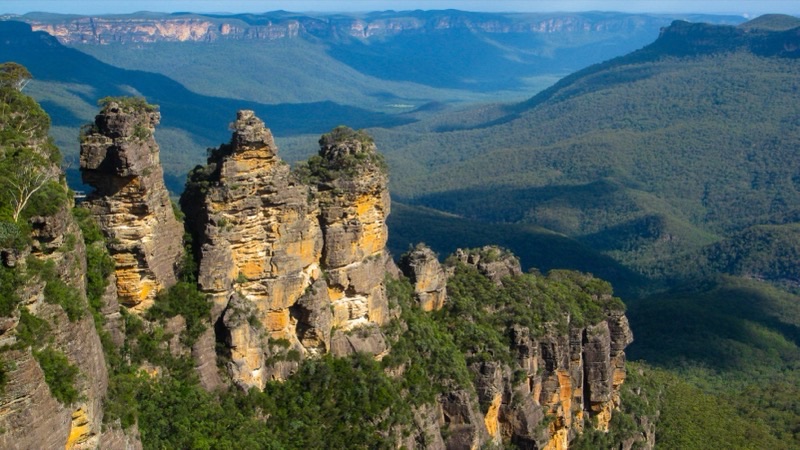
Australia's natural environments are distinct. The Great Barrier Reef offers unparalleled diving and snorkeling near Cairns. The Outback, particularly around Uluru-Kata Tjuta National Park, presents a red desert expanse. Coastal areas like the Twelve Apostles on the Great Ocean Road or Whitehaven Beach in the Whitsundays provide coastal scenery. Iconic animals like kangaroos, koalas, and platypuses are found across different regions. Hiking can be done in various national parks, such as the Blue Mountains, though it is often hot.
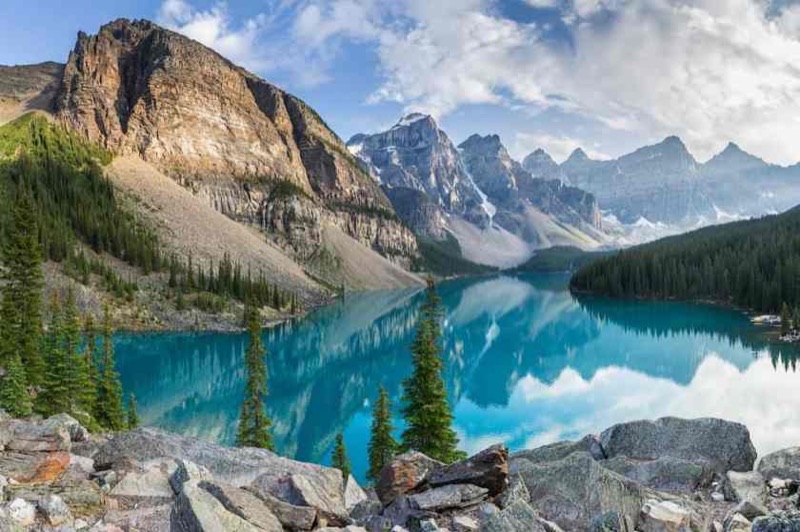
Canada showcases dramatic mountain ranges like the Rockies with places such as Banff and Jasper National Parks, known for hiking, canoeing on Lake Louise, and wildlife viewing (grizzly bears, elk). Coastal areas, particularly around Vancouver Island, offer whale watching. Extensive forests and thousands of lakes across provinces like Ontario and Quebec provide opportunities for camping and fishing. Skiing and snowboarding are popular winter activities. Both countries offer significant natural beauty; it is a matter of preference for environment type. tabiji verdict: Both countries provide exceptional natural experiences, but their distinct ecosystems appeal to different preferences.
- Winner: Tie
- Why: Both countries offer equally compelling but fundamentally different natural environments, making it a matter of personal preference.
- Who this matters for: Travelers whose primary motivation is experiencing natural environments and wildlife.
🏙️ Cities
Australian cities like Sydney feature the Opera House and Bondi Beach, with an emphasis on harbor life and coastal relaxation. Melbourne is known for its laneway cafes, arts…
Australian cities like Sydney feature the Opera House and Bondi Beach, with an emphasis on harbor life and coastal relaxation. Melbourne is known for its laneway cafes, arts scene, and sports culture. Perth offers a more relaxed, sunny pace. These cities are generally clean and spread out, often requiring public transport or driving to fully explore. Nightlife in areas like King Street Wharf in Sydney or Brunswick Street in Melbourne provides entertainment, but closing times can be early compared to other global cities. Expect modern infrastructure with a beach-oriented lifestyle.
Canada's major cities offer more variety. Toronto is a large, multicultural hub with diverse neighborhoods and food scenes. Vancouver provides an urban experience adjacent to mountains and the Pacific Ocean, allowing for city exploration and nature access on the same day. Montreal offers a distinct European feel with its French language, historic architecture, and lively arts scene. Public transport is efficient in most large cities, facilitating exploration without a car. Canada's cities provide a blend of urban amenities and quick access to outdoor pursuits. tabiji verdict: Canada wins for city diversity and integration with accessible natural landscapes.
- Winner: Canada
- Why: Canada's cities offer greater architectural, linguistic, and cultural variety, often paired with closer access to large natural spaces.
- Who this matters for: Travelers who want to explore different urban environments and cultures.
🍽️ Food & Drink
Australia has a strong coffee culture, especially in Melbourne, where cafes like Industry Beans are popular. Seafood is fresh and widely available, from Sydney Fish Market to…
Australia has a strong coffee culture, especially in Melbourne, where cafes like Industry Beans are popular. Seafood is fresh and widely available, from Sydney Fish Market to coastal restaurants. Asian cuisine, particularly Vietnamese and Thai, is prevalent and often high quality due to large immigrant populations. Upscale dining in Sydney and Melbourne is present, but daily casual eating often revolves around pub meals (schnitzel, burgers) or takeaway. Alcohol can be expensive, with a pint of beer often $10-14 AUD ($7-9.50 USD). Tim Tams are a local snack.
Canada's food scene benefits from its multicultural populations, especially in cities like Toronto and Vancouver, offering a vast array of international cuisines. Poutine (fries with cheese curds and gravy) is a Quebecois specialty. Maple syrup products are ubiquitous. Craft breweries and distilleries are common across the country. Halifax, Nova Scotia, is known for its donairs. Farmers markets provide fresh local produce. Alcohol prices are regulated and vary by province, but generally slightly lower than Australia. The sheer variety and accessibility of good, diverse food experiences give Canada an edge. tabiji verdict: Canada's broad culinary landscape, from comfort food to diverse ethnic options, makes it a more interesting food destination.
- Winner: Canada
- Why: Canada offers a broader range of global cuisines and unique local dishes that are more accessible and often better value.
- Who this matters for: Travelers who prioritize varied culinary experiences and local specialties.
✈️ Getting There
Reaching Australia from most major global hubs involves significant travel time. From Los Angeles (LAX) to Sydney (SYD), a direct flight is around 15 hours. From New York (JFK),…
Reaching Australia from most major global hubs involves significant travel time. From Los Angeles (LAX) to Sydney (SYD), a direct flight is around 15 hours. From New York (JFK), expect 18-20 hours with at least one stop. From London (LHR), flights are typically 22-24 hours with one or two stops. Return economy fares often range from $1,200-2,500 USD, fluctuating greatly by season and booking lead time. The sheer duration is a significant factor, leading to considerable jet lag upon arrival.
Canada is much more accessible. From Los Angeles (LAX) to Vancouver (YVR), a direct flight is around 2.5-3 hours. From New York (JFK) to Toronto (YYZ), it is about 1.5-2 hours direct. From London (LHR) to Toronto (YYZ), direct flights are around 7-8 hours. Return economy fares typically range from $400-900 USD from North America, and $700-1,200 USD from Europe. The shorter flight durations mean less travel fatigue and generally lower flight costs. tabiji verdict: Canada is the undisputed winner for ease and cost of international access.
- Winner: Canada
- Why: Canada has significantly shorter flight times and generally lower airfare from major international departure points.
- Who this matters for: All travelers, especially those sensitive to long-haul flights or with limited vacation time.
🚗 Getting Around
Australia is a huge continent, comparable in size to the continental USA. Traveling between major cities like Sydney, Melbourne, Brisbane, and Perth often requires internal…
Australia is a huge continent, comparable in size to the continental USA. Traveling between major cities like Sydney, Melbourne, Brisbane, and Perth often requires internal flights, which can be expensive ($100-300 AUD/$68-200 USD one way). Road trips, such as the Great Ocean Road, are popular but cover long distances. Driving is on the left side of the road. Public transport networks in cities like Sydney (trains, buses, ferries) and Melbourne (trams, trains) are efficient for urban exploration. Rental cars are common, costing around $50-100 AUD ($34-68 USD) per day, plus fuel.
Canada is also geographically vast, with significant distances between provinces. Driving is on the right side of the road. Car rental is often preferred for exploring national parks like Banff or the East Coast, costing around $40-80 CAD ($30-60 USD) per day. VIA Rail offers passenger train services across the country, but they can be slow and expensive. Major cities like Toronto, Montreal, and Vancouver have extensive and reliable public transit systems (subways, buses) making urban travel easy. Internal flights between major cities are common and can range from $150-400 CAD ($110-295 USD) one way. Both countries require planning for long-distance travel. tabiji verdict: Both countries present similar logistical challenges and solutions for getting around their large territories.
- Winner: Tie
- Why: Both nations require significant planning for internal travel due to their size, with similar options for flights, road trips, and city public transport.
- Who this matters for: Travelers planning to explore multiple regions or cover large distances.
🏨 Accommodation
Accommodation in Australia can be costly. A standard budget hotel room in Sydney or Melbourne often starts at $150-250 AUD ($100-170 USD) per night. Hostels like Wake Up! Sydney…
Accommodation in Australia can be costly. A standard budget hotel room in Sydney or Melbourne often starts at $150-250 AUD ($100-170 USD) per night. Hostels like Wake Up! Sydney Central offer dorm beds for $40-60 AUD ($27-41 USD). Airbnb options are plentiful but also tend to be on the higher end, especially for private rooms or entire apartments. During peak seasons, coastal areas and major cities see prices increase significantly. Consider staying further from city centers for better value or booking well in advance.
Canada generally provides more moderate accommodation pricing. A budget hotel room in Toronto or Vancouver might start at $120-200 CAD ($90-150 USD) per night. Hostels like Samesun Vancouver or HI Montreal offer dorm beds for $35-55 CAD ($26-40 USD). Airbnb options are also available and often provide good value in smaller towns or for longer stays. National park campgrounds, like those in Banff, offer affordable lodging ($20-30 CAD/$15-22 USD per night) if booked far in advance. The range of options, particularly at the mid-range and budget levels, is more favorable in Canada. tabiji verdict: Canada provides a broader spectrum of accommodation options that are generally more affordable.
- Winner: Canada
- Why: Canada offers more budget-friendly accommodation choices across different categories, providing better value for travelers.
- Who this matters for: Travelers with a defined budget, particularly those staying in hostels or mid-range hotels.
☀️ Seasons & Weather
Australia's seasons are opposite to the Northern Hemisphere. Summer (December to February) brings heat, especially in the south, with average temperatures in Sydney often 25-30°C…
Australia's seasons are opposite to the Northern Hemisphere. Summer (December to February) brings heat, especially in the south, with average temperatures in Sydney often 25-30°C (77-86°F). This is cyclone season in the tropical north. Winter (June to August) is mild in the south, with Sydney around 10-17°C (50-63°F), while the north remains warm and dry. Spring and Autumn offer pleasant temperatures. The intense summer heat can limit outdoor activities, especially in the Outback, and bushfire season can be a concern. Planning around specific regional climates is important.
Canada experiences four distinct seasons. Winters (December to March) are cold and snowy across most of the country, with temperatures regularly dropping below -10°C (14°F) in many areas, ideal for skiing and snowboarding. Summers (June to August) are warm to hot, with temperatures often 20-30°C (68-86°F), perfect for hiking and water activities. Spring and Autumn offer mild weather and, particularly in Autumn, stunning fall foliage across Eastern Canada. The clear definition of seasons allows travelers to choose activities suited to specific times of the year, without the extreme weather risks of Australia's peak summer. tabiji verdict: Canada's distinct four seasons offer a more predictable range of activities based on the time of year.
- Winner: Canada
- Why: Canada's clear four seasons allow for distinct activity planning, whereas Australia's extreme summer heat can limit certain experiences.
- Who this matters for: Travelers with specific seasonal activity preferences (e.g., winter sports or mild summer hiking).
⚕️ Safety & Health
Australia is generally a safe country for travelers, with low violent crime rates. However, its natural environment presents specific risks. Dangerous wildlife like venomous…
Australia is generally a safe country for travelers, with low violent crime rates. However, its natural environment presents specific risks. Dangerous wildlife like venomous snakes, spiders, and marine creatures (jellyfish, sharks, crocodiles) require awareness, especially in regional areas. The sun is intense, requiring high SPF sunscreen, hats, and protective clothing to avoid severe sunburn and skin cancer. Rip currents on beaches are a serious hazard; swim between the flags. Healthcare is high quality but expensive for non-residents, so travel insurance is essential. Road safety includes awareness of fatigue on long drives and animal crossings.
Canada is considered one of the safest countries for travelers globally, with very low violent crime rates. Major cities are safe to explore. Natural areas present risks from large wildlife like bears and moose, particularly when hiking or camping; carry bear spray and know how to use it. Weather conditions, especially in winter, can be extreme and require appropriate gear and planning. Healthcare is excellent but also expensive for visitors without insurance. Road safety is generally good, though winter driving conditions can be challenging. The risks in Canada are more manageable for the average traveler. tabiji verdict: Canada offers a safer and less inherently hazardous environment for most travelers.
- Winner: Canada
- Why: Canada presents fewer unique environmental hazards compared to Australia's potentially dangerous wildlife and extreme sun exposure.
- Who this matters for: Solo travelers, families, and those concerned about environmental dangers.
🛡 Dig deeper: Australia health guide · Canada health guide
🦘 Wildlife
Australia's wildlife is incredibly distinct and often found nowhere else on Earth. Travelers can expect to see kangaroos and wallabies in many rural areas, koalas in eucalyptus…
Australia's wildlife is incredibly distinct and often found nowhere else on Earth. Travelers can expect to see kangaroos and wallabies in many rural areas, koalas in eucalyptus forests (e.g., Great Otway National Park), and platypuses in specific freshwater habitats. Marine life is exceptional, with the Great Barrier Reef home to thousands of fish species, sharks, rays, and sea turtles. Birdwatching is popular, with colourful parrots and kookaburras. Encountering these unique creatures, sometimes in wild settings, is a primary draw for many. Consider wildlife parks like Currumbin Wildlife Sanctuary for guaranteed close encounters.
Canada has a different array of animals, primarily larger mammals. Grizzly and black bears are present in national parks like Banff and Jasper, requiring caution. Moose and caribou roam northern forests. Whale watching, particularly for orcas and humpbacks, is popular on both the Pacific and Atlantic coasts. Birdlife is abundant, especially migratory species. While these animals are impressive, seeing them in the wild often requires more effort, specific tours, or luck, unlike the more readily visible kangaroos in Australia. tabiji verdict: Australia's unique and highly visible marsupial and marine life provides a more consistently engaging wildlife experience.
- Winner: Australia
- Why: Australia's wildlife is globally unique and often more accessible for viewing in their natural habitats or dedicated sanctuaries.
- Who this matters for: Travelers who prioritize seeing rare and iconic animal species.
🎯 The Decision Framework
Choose Australia If…
- You want to spend days on white sand beaches and swim in turquoise waters.
- You are fascinated by marsupials and want to see kangaroos and koalas.
- Diving or snorkeling the Great Barrier Reef is at the top of your list.
- You are comfortable with a higher daily travel budget, upwards of $150 USD.
- You are prepared for very long international flights, potentially 15+ hours.
- You prefer a consistently warm climate, even during winter months in southern regions.
- You enjoy a laid-back, outdoor-oriented culture with a strong coffee scene.
- You dream of exploring vast, ancient red deserts like the Outback.
Choose Canada If…
- You want to explore dramatic mountain ranges, pristine lakes, and extensive forests.
- You enjoy distinct four seasons, from snowy winters to warm, active summers.
- You are interested in diverse urban experiences, from multicultural Toronto to French-speaking Montreal.
- You prefer a travel destination that is generally more budget-friendly, around $100 USD per day.
- You are closer to North America or Europe and prefer shorter, more direct flights.
- You enjoy activities like hiking, skiing, snowboarding, or kayaking.
- You want to see large mammals like bears, moose, or whales in their natural habitat.
- You appreciate a very safe travel environment with good infrastructure.
❓ Frequently Asked Questions
What is the typical daily budget difference between Australia and Canada?
Australia generally costs more, with average daily expenses for a mid-range traveler often hitting $120-250 USD. Canada is usually more affordable, with a similar traveler expecting to spend $90-200 USD per day. Accommodation and internal flights are notable cost differentiators.
Which country is better for a two-week trip from the USA?
For a two-week trip from the USA, Canada is a more practical choice. Shorter flight times (2-8 hours vs. 15-20 hours to Australia) mean less travel fatigue and more time on the ground exploring. You can experience a significant region like the Canadian Rockies or East Coast comfortably in 14 days.
What are the visa requirements for each country for US citizens?
US citizens need an Electronic Travel Authorization (eTA) to fly to or transit through Canada, which costs $7 CAD (about $5 USD) and is valid for five years. For Australia, US citizens need an Electronic Travel Authority (ETA), which costs $20 AUD (about $14 USD) and is valid for one year for multiple entries of up to 3 months each.
Which country offers better public transportation for tourists?
Both countries have good public transport within their major cities (e.g., Toronto's subway, Sydney's trains and ferries). However, for inter-city travel, Canada's VIA Rail offers more extensive, albeit sometimes slow and costly, options compared to Australia's more limited passenger rail network. Both countries require significant driving or internal flights to cover large distances between regions.
What is the best time of year to visit each country?
For Australia, the shoulder seasons of spring (Sept-Nov) and autumn (Mar-May) offer pleasant weather in southern regions and are good for the tropical north. For Canada, summer (Jun-Aug) is ideal for outdoor activities like hiking, while winter (Dec-Mar) is best for skiing and snow sports.
Are there any significant health concerns for travelers in either country?
Australia has unique environmental health concerns like dangerous wildlife (snakes, spiders, marine stingers), and extreme sun exposure (high UV index). Canada primarily requires awareness of large mammals (bears) in wilderness areas and planning for extreme winter weather. Both have high-quality but expensive healthcare, so travel insurance is vital.
Which country is better for adventure sports like surfing or skiing?
Australia is superior for surfing, with iconic breaks like Bells Beach and the Gold Coast. Canada is a premier destination for skiing and snowboarding, with world-renowned resorts in the Canadian Rockies like Whistler Blackcomb and Banff. The choice depends entirely on your preferred adventure sport.
How do the coffee scenes compare?
Australia, particularly Melbourne, has a deeply ingrained and highly developed coffee culture, often considered among the best globally, focusing on specialty espresso drinks. Canada's coffee scene is good, especially in cities like Vancouver and Toronto, but it is less pervasive and more varied, ranging from large chains to local cafes.
Ready to plan your next adventure?
Know the tourist scams before you go — documented from real traveler reports.