
How we built this comparison
This page combines traveler discussion patterns, published price ranges, flight schedules, and seasonal data to help you decide between Budapest and Mexico City.
- Reviewed Reddit threads from r/travel, r/solotravel, r/budapest, and r/MexicoCity
- Verified costs and logistics against current booking platforms and personal experience
- Cross-referenced seasonal patterns and weather data for accuracy
⚡ Quick Answers
⚡ The TL;DR Verdict
For most travelers prioritizing budget, accessible history, and straightforward city exploration, Budapest is the stronger contender. Mexico City offers a grander scale of experience with a richer food scene, but demands more travel time and a higher awareness for navigation. Budapest serves as a more direct, relaxing entry into a major capital, while CDMX is for those seeking deeper cultural immersion and a more challenging adventure.
- Choose Budapest: You want a relatively inexpensive European city break with grand architecture, thermal baths, and a walkable center. You prefer efficient public transport and a relaxed pace, with a budget around $60-120 per day.
- Choose Mexico City: You seek an expansive metropolitan experience with ancient history, world-class museums, and a diverse food culture. You are comfortable with long-haul flights and navigating a sprawling city, budgeting $50-100+ per day for a mid-range experience.
- Choose Both: If you have ample time (3+ weeks total) and a flexible budget, combine them for a continental contrast. Start with Budapest for European charm, then shift to Mexico City for a different cultural immersion.
📊 Visual Scorecard
🌤 When to Visit
Average high temperatures (°C). Green = best months, orange = avoid.
Quick Comparison
| Category | Budapest | Mexico City | Winner |
|---|---|---|---|
| Costs & Budget | Generally affordable for Europe, good value for food and transport. Accommodation can vary. | Excellent value, especially for food and local transport. Accommodation can be very cheap or high-end. | Mexico City |
| Food Scene | Hearty Hungarian cuisine, pastries, and growing international options. Thermal bath snack bars. | Incredible diversity from street food to fine dining. Regional Mexican specialties and international fare. | Mexico City |
| Nightlife & Entertainment | Ruin bars are a signature experience, plus varied clubs and traditional pubs. Thermal parties. | Extensive options from lively cantinas and mezcalerias to sophisticated clubs and live music venues. | Budapest |
| Culture & History | Grand Austro-Hungarian architecture, thermal baths, communist history, museums. | Ancient civilizations, colonial past, modern art, world-class museums, strong local traditions. | Mexico City |
| Getting There | Longer flights from North America, more direct options from Europe. Ferenc Liszt International Airport (BUD). | Shorter flights from North America, more connections. Benito Juarez International Airport (MEX). | Mexico City |
| Getting Around | Excellent, extensive public transport (metro, tram, bus). Walkable city center. | Extensive metro, Metrobús, and plentiful ride-shares. Very large city, can be slow. | Budapest |
| Safety & Practicalities | Generally safe, standard European precautions. Language barrier is manageable. | Generally safe in tourist areas, but requires higher situational awareness. Spanish is essential. | Budapest |
| Accommodation | Wide range from hostels to luxury hotels. Good value in mid-range. Airbnb options. | Extremely diverse, from budget hostels to grand hotels. Great value for money across categories. | Mexico City |
| Day Trips & Excursions | Relaxing towns, Danube Bend, thermal lake, short train rides to other cities. | Ancient pyramids, colonial towns, natural reserves, hot springs. Requires more travel time. | Mexico City |
| Weather & Seasons | Four distinct seasons; hot summers, cold winters. Pleasant springs/autumns. | Mild, spring-like climate year-round due to altitude. Rainy season from May-October. | Mexico City |
💰 Costs & Budget
Budapest offers good value for a European capital. A budget traveler can expect to spend around $60-90 (21,600-32,400 HUF) per day, staying in hostels or budget guesthouses,…
Budapest offers good value for a European capital. A budget traveler can expect to spend around $60-90 (21,600-32,400 HUF) per day, staying in hostels or budget guesthouses, eating at local eateries, and using public transport. A mid-range budget of $90-120 (32,400-43,200 HUF) allows for comfortable hotels, more restaurant meals, and entry to attractions like the Szechenyi Thermal Bath (about $25-30 or 9,000-10,800 HUF). Beers are often $2-3 (720-1080 HUF), and a main meal at a casual restaurant is $10-15 (3,600-5,400 HUF). Public transport passes are efficient and cheap.
Mexico City stands out for its low costs, particularly for food and local experiences. A budget traveler can comfortably spend $50-80 (850-1,360 MXN) per day, enjoying abundant street food, using the metro, and staying in hostels. Mid-range budgets of $80-120 (1,360-2,040 MXN) open up boutique hotels, nicer restaurants, and more tours. Tacos from a street stall are often $1-2 (17-34 MXN) each, and a full meal at a sit-down restaurant might be $10-20 (170-340 MXN). Museum entry is typically $5-10 (85-170 MXN). Mexico City wins for overall affordability, especially for daily expenses.
- Winner: Mexico City
- Why: Mexico City provides superior daily value for food, transport, and entry-level experiences, making a dollar stretch further.
- Who this matters for: Budget-conscious travelers and those planning longer stays.
🌮 Food Scene
Budapest offers traditional Hungarian dishes like goulash, paprikash, and langos. You will find excellent pastries at places like Ruszwurm Cukraszda (desserts $4-7 or 1,440-2,520…
Budapest offers traditional Hungarian dishes like goulash, paprikash, and langos. You will find excellent pastries at places like Ruszwurm Cukraszda (desserts $4-7 or 1,440-2,520 HUF) and coffee culture is strong. The Central Market Hall is a good place to sample local produce and prepared foods. While international options exist, the focus is generally on Eastern European flavors. Expect meals at local joints like Karavan Street Food market to be around $8-15 (2,880-5,400 HUF), and a sit-down meal at a restaurant like Stand25 Bistro to be $20-40 (7,200-14,400 HUF).
Mexico Citys food scene is expansive and arguably one of the best globally. From ubiquitous street tacos at Tacos Orinoco (around $2-3 or 34-51 MXN per taco) to high-end dining at Pujol (tasting menus start around $150-200 or 2,550-3,400 MXN), the options are limitless. Mercado de San Juan offers exotic meats, while Mercado de Coyoacan provides local treats. You can spend $5 (85 MXN) on a filling street meal or explore a different regional Mexican cuisine every night. The sheer variety and quality, combined with accessibility across all price points, make it a culinary destination. Mexico City takes the lead for its depth, diversity, and accessibility of excellent food.
- Winner: Mexico City
- Why: Mexico Citys food scene offers unparalleled diversity, quality, and affordability from street food to fine dining.
- Who this matters for: Foodies, adventurous eaters, and travelers on any budget seeking exceptional meals.
🍻 Nightlife & Entertainment
Budapest is renowned for its ruin bars, repurposed old buildings turned into eclectic pubs and clubs. Szimpla Kert (drinks $4-7 or 1,440-2,520 HUF) is the most famous, offering a…
Budapest is renowned for its ruin bars, repurposed old buildings turned into eclectic pubs and clubs. Szimpla Kert (drinks $4-7 or 1,440-2,520 HUF) is the most famous, offering a maze of rooms and outdoor areas. Beyond ruin bars, there are many traditional pubs, wine bars, and modern clubs in the Jewish Quarter and District VII. Thermal bath parties at places like Szechenyi Baths (Szecska Spa Parties, tickets around $60-80 or 21,600-28,800 HUF) are a distinct experience. The nightlife is concentrated and generally safe for walking between venues, offering a clear and well-defined experience.
Mexico City provides a wide array of nightlife options, from traditional cantinas in Roma Norte and Condesa to modern clubs in Polanco and Juarez. Live music venues, jazz clubs, and mezcalerias are plentiful. While there is plenty of activity, the sheer size of the city means nightlife is more spread out, and navigating between different districts requires more planning or ride-shares. Entry to clubs can range from free to $20-30 (340-510 MXN), with cocktails typically $8-15 (136-255 MXN). Budapest wins due to its unique, concentrated, and easily navigable ruin bar scene, offering a distinctive and highly social experience.
- Winner: Budapest
- Why: Budapests ruin bars offer a distinctive, concentrated, and easily enjoyable nightlife experience not found elsewhere.
- Who this matters for: Travelers seeking a unique party atmosphere and easy pub crawling.
🏛️ Culture & History
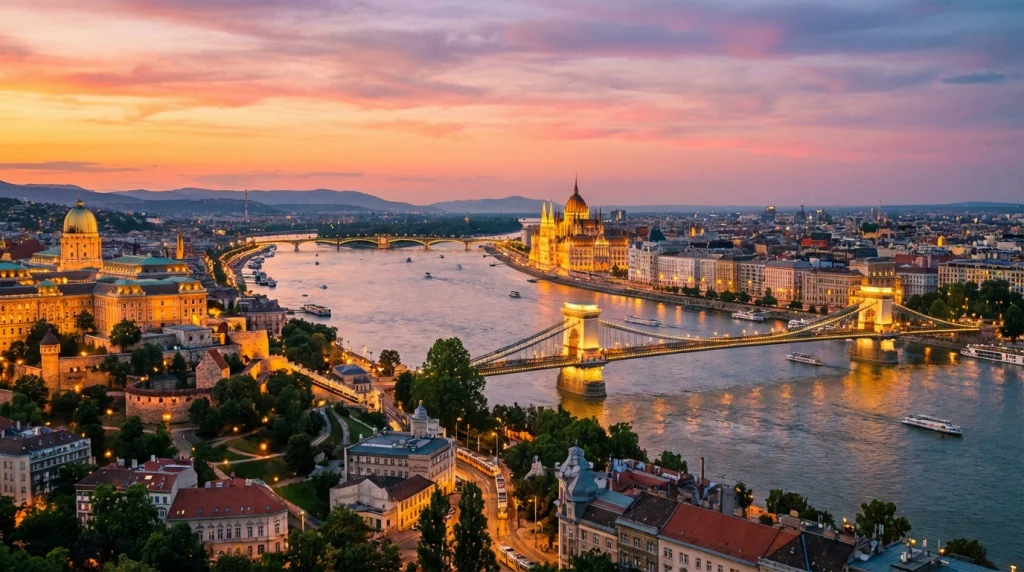
Budapest showcases a history shaped by empires and conflicts. The Parliament Building (tours around $10-20 or 3,600-7,200 HUF), Buda Castle, and Chain Bridge are architectural…
Budapest showcases a history shaped by empires and conflicts. The Parliament Building (tours around $10-20 or 3,600-7,200 HUF), Buda Castle, and Chain Bridge are architectural marvels. The citys thermal baths, like Gellert or Szechenyi Baths (entry around $25-30 or 9,000-10,800 HUF), are a key cultural experience. Museums such as the House of Terror provide insights into 20th-century history. While the history is compelling, it largely focuses on the last few centuries and the Austro-Hungarian era, with a distinct European flair.
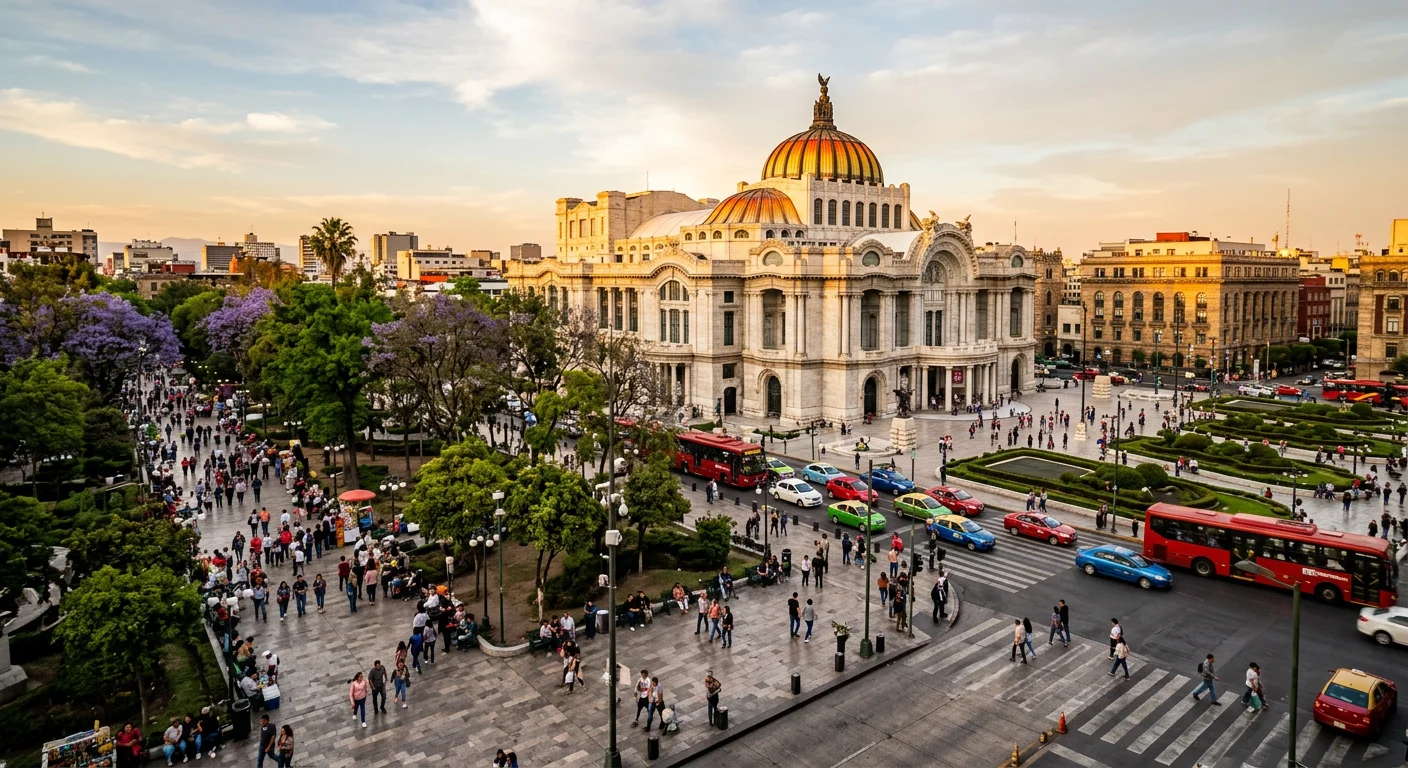
Mexico Citys history spans millennia, from Aztec empire roots at Templo Mayor (entry $5 or 85 MXN) to colonial grandeur in the Zocalo. The National Museum of Anthropology (entry $5 or 85 MXN) is one of the worlds best, offering a comprehensive look at pre-Hispanic cultures. The city is home to over 150 museums, including the Frida Kahlo Museum (Casa Azul, entry $15 or 255 MXN). Murals by Diego Rivera are found in public buildings. The cultural depth is vast, covering ancient indigenous civilizations, Spanish colonial influence, and a modern artistic movement. Mexico City wins for its immense historical scope and the sheer volume of high-quality cultural institutions.
- Winner: Mexico City
- Why: Mexico City offers a broader and deeper historical narrative, encompassing ancient civilizations, colonial periods, and modern art.
- Who this matters for: History buffs, museum enthusiasts, and those interested in pre-colonial cultures.
✈️ Getting There
From major North American hubs like New York (JFK), direct flights to Budapest (BUD) typically take 8-9 hours. From the West Coast (e.g., LAX), flights are longer, often 12-14+…
From major North American hubs like New York (JFK), direct flights to Budapest (BUD) typically take 8-9 hours. From the West Coast (e.g., LAX), flights are longer, often 12-14+ hours with one stop. From major European cities, flights are much shorter, often 1-3 hours direct. Airfares vary significantly by season, but from North America, expect to pay $600-1000+ roundtrip. The airport is well-connected to the city center by public transport and taxis (taxi to city center around $30-35 or 10,800-12,600 HUF).
From major North American hubs like New York (JFK), direct flights to Mexico City (MEX) are significantly shorter, around 5-6 hours. From the West Coast (e.g., LAX), direct flights are 3-4 hours. From Europe, flights are longer, typically 10-12+ hours with one stop. Airfares from North America can range from $300-600+ roundtrip. The airport is conveniently located near the city center, accessible by metro, Metrobús, and taxis (taxi to Roma Norte around $15-20 or 255-340 MXN). Mexico City wins for its substantially shorter flight times and generally more affordable airfare from North America.
- Winner: Mexico City
- Why: Mexico City offers considerably shorter flight times and generally lower airfares from North American origins.
- Who this matters for: North American travelers, those with limited vacation time, and budget-conscious flyers.
🚇 Getting Around
Budapest has an efficient and extensive public transport network, including metro, trams, and buses. The metro lines are easy to navigate, with clear signage. A single ticket…
Budapest has an efficient and extensive public transport network, including metro, trams, and buses. The metro lines are easy to navigate, with clear signage. A single ticket costs around $1.10 (400 HUF), and a 24-hour travelcard is about $6.50 (2,300 HUF). Most of the city center, including major attractions like the Chain Bridge, Parliament, and Buda Castle, are walkable. Trams are particularly scenic for getting around. Overall, the city is compact enough that you can explore much of it on foot or with minimal reliance on public transport, which is highly reliable and clean.
Mexico City has a vast public transport system, including one of the largest metro networks in the world (tickets are less than $0.30 or 5 MXN per ride) and an extensive Metrobús system. However, due to the citys sheer size and frequent traffic, travel times can be long. While public transport is cheap, for longer distances or convenience, ride-sharing apps like Uber (average ride $5-15 or 85-255 MXN) are frequently used. Walking is feasible in individual neighborhoods like Roma Norte or Condesa, but moving between districts typically requires transport. Budapest wins for its compact size, highly efficient and easy-to-use public transport, and overall walkability.
- Winner: Budapest
- Why: Budapest offers a more compact layout and a highly efficient, user-friendly public transport system that makes navigation simple.
- Who this matters for: Travelers who prioritize walking, ease of navigation, and efficient public transport without traffic delays.
🚨 Safety & Practicalities
Budapest is considered a safe European capital. Standard precautions against pickpocketing, especially in crowded tourist areas and on public transport, are advised. Scams related…
Budapest is considered a safe European capital. Standard precautions against pickpocketing, especially in crowded tourist areas and on public transport, are advised. Scams related to taxi fares or inflated prices at bars can occur, so using reputable services and checking prices is smart. Walking alone at night in well-lit, central areas is generally fine. The language is Hungarian, which is not widely spoken, but English is common in tourist-facing businesses. Overall, the experience is straightforward with minimal friction, making it a comfortable destination for first-time international travelers.
Mexico City is generally safe for tourists in popular areas like Roma Norte, Condesa, Polanco, and the Historic Center during the day. However, it requires a higher degree of situational awareness than Budapest. Petty crime like pickpocketing is common, and caution is needed, especially on public transport and at night. Using ride-share apps like Uber for evening travel is highly recommended (average ride $5-15 or 85-255 MXN). Spanish is essential for navigating daily life outside of purely tourist zones. While many travelers have incident-free trips, the scale of the city and its social complexities mean a greater need for vigilance. Budapest is the clearer winner for general ease of travel and perceived lower risk.
- Winner: Budapest
- Why: Budapest offers a more relaxed travel experience with lower general safety concerns and easier navigation for non-Spanish speakers.
- Who this matters for: Solo travelers, first-time international travelers, and those who prefer a low-stress environment.
🛡 Dig deeper: Budapest scam guide · Mexico City scam guide
🏨 Accommodation
Budapest offers a solid selection of accommodation. Hostels in the city center typically range from $20-40 (7,200-14,400 HUF) per night. Mid-range hotels, such as Hotel Rum or…
Budapest offers a solid selection of accommodation. Hostels in the city center typically range from $20-40 (7,200-14,400 HUF) per night. Mid-range hotels, such as Hotel Rum or Hotel Clark, can be found for $80-150 (28,800-54,000 HUF) per night, offering good amenities and central locations. Luxury options like The Ritz-Carlton or Four Seasons Gresham Palace start from $250-400+ (90,000-144,000 HUF). Airbnb is popular, providing apartment stays for various budgets. Prices can surge during peak season or major festivals, so booking in advance is wise.
Mexico City excels in providing excellent value across all accommodation types. Hostels in popular neighborhoods like Roma Norte or Condesa often cost $15-30 (255-510 MXN) per night. Mid-range boutique hotels, for example, Nima Local House or Hotel Condesa DF, can be found for $70-150 (1,190-2,550 MXN) per night, offering stylish stays. Luxury hotels like the St. Regis or Sofitel Reforma start from $200-350+ (3,400-5,950 MXN), often providing more for the price than comparable European cities. The sheer volume of options, from charming guesthouses to modern high-rises, means travelers can find exactly what they need at a competitive price. Mexico City wins for superior value and variety in accommodation.
- Winner: Mexico City
- Why: Mexico City provides greater variety and superior value for money across all accommodation types, from hostels to luxury hotels.
- Who this matters for: All travelers, especially those seeking comfort and style without breaking the bank.
🗺️ Day Trips & Excursions
From Budapest, popular day trips include the Danube Bend towns of Szentendre, Visegrad, and Esztergom, easily reachable by boat or train (Szentendre train ticket around $2-3 or…
From Budapest, popular day trips include the Danube Bend towns of Szentendre, Visegrad, and Esztergom, easily reachable by boat or train (Szentendre train ticket around $2-3 or 720-1,080 HUF). Lake Balaton, Central Europes largest freshwater lake, is also accessible for a relaxed outing. Heviz, home to Europes largest thermal lake, is another option, though further afield. For those seeking another capital, Bratislava or Vienna are reachable by train in a few hours. The options are generally focused on smaller towns or natural relaxation.
Mexico City offers an impressive array of day trips. The most famous is Teotihuacan, the ancient city with its massive pyramids (entry $5 or 85 MXN), about an hour drive away. Puebla, a colonial city known for its Talavera pottery and culinary scene, is a 2-hour bus ride (bus ticket around $10-15 or 170-255 MXN). Other options include Tepoztlan, a magical town in the mountains, or the monarch butterfly sanctuaries (seasonal). These trips offer a dramatic change of scenery and deep historical or natural experiences, often requiring a full day due to travel time. Mexico City wins for the sheer historical and natural impact of its day trip options.
- Winner: Mexico City
- Why: Mexico City offers more impactful and historically significant day trips, particularly the ancient pyramids of Teotihuacan.
- Who this matters for: History enthusiasts, archeology fans, and those wanting to explore outside the city limits.
☀️ Weather & Seasons
Budapest experiences four distinct seasons. Summers (June-August) are warm to hot, with average temperatures around 20-27°C (68-81°F), sometimes reaching higher. Winters…
Budapest experiences four distinct seasons. Summers (June-August) are warm to hot, with average temperatures around 20-27°C (68-81°F), sometimes reaching higher. Winters (December-February) are cold and often snowy, with temperatures frequently below freezing (0°C or 32°F). Spring (April-May) and autumn (September-October) offer mild, pleasant weather, with temperatures around 10-20°C (50-68°F), making them ideal for sightseeing. River cruises are popular in warmer months, while thermal baths are enjoyed year-round, especially in winter.
Mexico City, due to its high altitude (over 2,200m or 7,200ft), enjoys a remarkably consistent, spring-like climate throughout the year. Daytime temperatures typically hover around 20-25°C (68-77°F). Nights are cooler, around 10-15°C (50-59°F). There are two main seasons: the dry season (November-April) and the rainy season (May-October). During the rainy season, you can expect afternoon showers, usually brief but intense, which often clear up quickly. The consistent mild temperatures make it a comfortable destination regardless of the month. Mexico City wins for its consistently pleasant and predictable year-round climate.
- Winner: Mexico City
- Why: Mexico City offers a remarkably consistent and pleasant spring-like climate year-round, avoiding extreme temperatures.
- Who this matters for: Travelers sensitive to extreme heat or cold, and those seeking comfortable outdoor exploration any time of year.
🎯 The Decision Framework
Choose Budapest If…
- You want an affordable, grand European capital experience.
- You prioritize efficient and easy public transport.
- You are excited by unique ruin bars and thermal bath culture.
- You prefer a generally more relaxed and less chaotic urban environment.
- You enjoy Central European architecture and Danube River views.
- You are comfortable with shorter flights from other European cities.
- You want to explore on foot without constant reliance on transport.
- You value a lower perceived risk for solo or first-time international travel.
Choose Mexico City If…
- You seek immense historical depth, from ancient pyramids to colonial heritage.
- You are a passionate foodie looking for diverse, affordable culinary experiences.
- You appreciate world-class museums and a thriving contemporary art scene.
- You want consistently mild, spring-like weather year-round.
- You are comfortable navigating a sprawling, high-energy metropolis.
- You prefer shorter flights and more direct routes from North America.
- You enjoy the challenge of practicing Spanish and immersing yourself in a different culture.
- You want superior value for money in accommodation and daily expenses.
❓ Frequently Asked Questions
Which city is better for a budget traveler?
Mexico City generally offers better value for money, especially for food where street tacos are $1-2 (17-34 MXN). Accommodation can also be cheaper, with hostels around $15-30 (255-510 MXN). Budapest is affordable for Europe, but daily food costs (main meal $10-15 or 3,600-5,400 HUF) and some attractions can add up faster than in CDMX.
How long should I plan to stay in each city?
For Budapest, 4-5 full days is sufficient to see major attractions, relax in a thermal bath, and experience the nightlife. For Mexico City, 6-7 full days allows for exploration of key neighborhoods, several museums, and at least one day trip to places like Teotihuacan. Both cities benefit from longer stays if you prefer a slower pace.
Is public transport easy to use in both cities?
Budapest's public transport (metro, tram, bus) is very easy to use, efficient, and well-connected throughout the compact city center. Mexico City has an expansive metro and Metrobús system, which is very cheap (less than $0.30 or 5 MXN per ride) but can be crowded and requires more careful navigation due to the citys vast size.
Which city has better options for museums and art?
Mexico City has a greater number of world-class museums, including the National Museum of Anthropology and the Frida Kahlo Museum, offering immense historical and artistic scope. Budapest has notable museums like the House of Terror, but Mexico Citys offerings are more expansive and diverse.
What are the flight times and typical costs from the US?
From major US East Coast cities, direct flights to Budapest are around 8-9 hours and typically cost $600-1000+. To Mexico City, direct flights are significantly shorter at 5-6 hours and often cost $300-600+, making it a more accessible destination from North America.
Which city is better for solo female travelers?
Budapest is generally considered safer and easier for solo female travelers due to its compact, walkable center, efficient public transport, and lower perceived risk. Mexico City is manageable but requires a higher level of vigilance, especially at night, and knowing some Spanish is helpful.
Can I drink the tap water in either city?
Yes, the tap water in Budapest is generally safe to drink. In Mexico City, it is strongly advised not to drink tap water. Stick to bottled water, which is readily available and cheap (around $1-2 or 17-34 MXN per liter bottle).
What is the primary language spoken in each city?
In Budapest, the primary language is Hungarian. While English is spoken in tourist areas, knowing a few basic Hungarian phrases is appreciated. In Mexico City, Spanish is the primary language, and it is highly beneficial to know some Spanish for daily interactions outside of major tourist hubs.
Ready to plan your next adventure?
Know the tourist scams before you go — documented from real traveler reports.